Master Investors in Businesses: Identify, Attract, Secure Funding 2026

The world of startup funding in 2026 is bigger and faster than ever before. With thousands of new companies getting money each quarter, it’s easy to feel lost, whether you’re a founder looking for cash or an experienced investor looking for the next big thing. This guide is for anyone trying to make sense of the busy world of investors in businesses.
The main problem today is too much information. There are so many funding announcements, different kinds of money, and endless advice. This information overload makes it hard to see clearly. For example, over 78,000 startups have received funding recently, spanning from early pre seed venture capital rounds to much larger investments 2026 data shows Startup Funding Rounds Database (2026). Each funding round has its own rules and types of investors, making it difficult to find the right fit. This means that the signals from different investors are often broken up, or "fragmented," which slows down important decisions for everyone. It’s like trying to hear a clear message in a very noisy room.
This guide will give you a simple, practical way to understand the funding world. We’ll help you map out the different types of investors in businesses, such as angel investors and large venture capital firms. Knowing the right terms and categories is helpful; sometimes, "another word for investors" might be backers, funders, or capital providers, but each has specific meanings in the startup world. We’ll show you how to figure out who is best to talk to for your needs, whether you’re a founder reaching out for money or a corporate strategist watching for new trends. We will also help you learn how to keep an eye on what’s happening in the market, so you can make smarter choices faster.
Staying on top of market signals, especially in fast-moving areas like AI, is key. If you want daily insights into artificial intelligence and other big technology developments, consider getting The AI Newsletter Worth Reading. It helps you cut through the noise and get clear updates. This guide will set you up to move forward with confidence in the complex funding landscape of 2026.
Why understanding the investment landscape matters for business strategy
Knowing the world of money and funding is super important for any business that wants to grow. It’s not just about getting cash. It’s about knowing how the choices of investors in businesses can change your company’s path, from how fast you grow to how you might sell your company one day.
Think of it this way: different investors in businesses look for different things. Some, like those providing pre seed venture capital, like very new ideas with big potential, even if they’re risky. Others, like bigger venture capitalists vs angel investors, might prefer companies that are already making some money. Their preferences shape which companies get funded and which don’t. For example, in 2026, many investors are really interested in AI and biotech, showing a clear preference for these areas. This means if your business is in one of these "hot" sectors, you might find it easier to get money. But if you’re not, it might be harder unless you have a very strong plan.
Also, how much risk investors in businesses are okay with changes over time. When investors are feeling brave, they might put money into newer, riskier ideas. When they are more careful, they might only choose companies that are very safe bets. This willingness to take risks directly impacts what kinds of new ideas can even get off the ground.
Understanding all this helps you make smart choices for your company. It lets you plan better for growth options.

Do you want to grow slowly with your own money, or do you want to grow really fast with outside investment? Your choice depends a lot on what kind of investors in businesses are out there and what they want.
Knowing about investor activity is also key for keeping an eye on your rivals. If your competitor just got a lot of money, you need to understand who gave them that money and why. This kind of competitive intelligence helps you see what other companies are doing and how you can stay ahead. It’s like knowing what moves the other players on the field are making. For example, reports show that a lot of capital is focusing on certain fast-growing sectors in 2026, which means it’s important to know if your rivals are getting a piece of that bigger pie. You can find out more about these trends in reports like Startup Funding Trends 2026: What 17611 VC-Backed ….
Finally, understanding the investment landscape helps you plan for the future of your company, especially when it comes to an exit strategy. An "exit strategy" means how you or your early investors in businesses will eventually sell your share of the company or take it public. This could be selling to a bigger company or offering shares to the public on a stock market (called an IPO). The types of investors you have, and what they hope to get in return, will guide this plan. For example, the venture capital outlook for 2026 talks about how IPOs and company sales (M&A) are key for investors to get their money back. So, by understanding these trends, you can set your business up for a strong future. You can also explore the bigger picture of different investment types by looking at the private equity landscape 2026.
Continuing from our talk about why knowing the investment world is so important, let’s dive into who these investors in businesses actually are. Not all money comes from the same place, and knowing the different types of another word for investors can help you choose the right partner for your company’s journey.
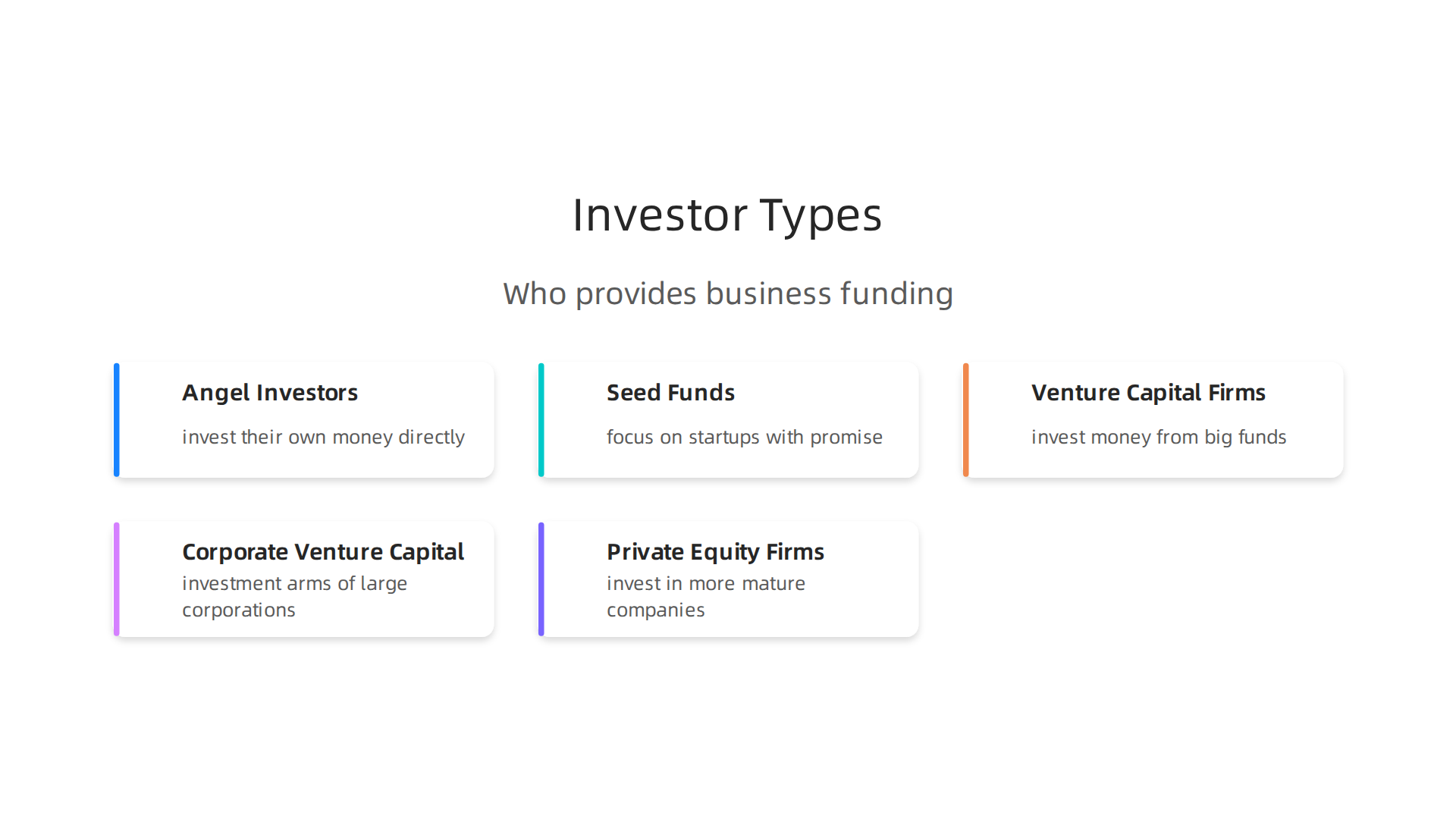
Each kind of investor has their own reasons for giving money and specific types of businesses they like to fund.
Who the investors in businesses are: types, motivations and what they fund
Think of investors in businesses as different kinds of helpers, each bringing unique strengths and goals.
Angel Investors
These are usually wealthy individuals who invest their own money directly into very new businesses, often in the early "pre-seed" or "seed" stages. They are often former entrepreneurs themselves and might give smaller amounts of money, typically from a few thousand dollars to a few million. Angel investors are motivated by helping new ideas grow, a passion for innovation, and the chance for a big return if the startup becomes very successful. They often provide more than just money; they also share advice and connections.
Seed Funds
These funds are like a step up from angel investors. They focus on startups that have passed the very first idea stage and are starting to show some promise. They offer pre seed venture capital and seed funding, which is a bit more structured than angel investments. They look for strong teams and ideas that can grow fast. Many startups get their first big push from these types of investors, helping them build their product and get their first customers. For instance, in 2026, many startups are securing funds even at the pre-seed stage, as shown in the Startup Funding Rounds Database (2026).
Venture Capital Firms (VCs)
Venture capital firms invest money from big funds that come from institutions like pension funds or universities. They look for companies that are already showing real growth and have a clear path to becoming very large. VCs typically invest larger amounts of money, ranging from a few million to hundreds of millions of dollars, in exchange for a part of the company. They often join the company’s board of directors and are very involved in helping the business grow, offering guidance on strategy, hiring, and more. A look into how startups get funded shows that there can be over 25 funding stages, from pre-seed to even post-IPO, according to research on Using Machine Learning to Demystify Startups’ Funding. If you’re wondering how to find such investors in businesses, there are great guides available, like how to find investors for a startup in 2026. Some VCs specialize in certain regions, like some prominent venture capital firms for small businesses.
Corporate Venture Capital (CVC)
These are investment arms of large corporations. Instead of just wanting financial returns, CVCs often invest in startups that can help their parent company’s main business. They might be looking for new technologies, products, or markets that fit with their own strategic plans. For a startup, this can mean not just money but also access to the larger company’s resources, customers, or distribution channels.
Private Equity (PE) Firms
Private equity firms generally invest in more mature companies, sometimes buying them entirely or taking a large ownership stake. Their goal is to make the company more valuable over a few years and then sell it for a profit. They often use a lot of borrowed money to make their investments. Unlike VCs who focus on high-growth startups, PE firms might look for stable companies that can be made more efficient or expanded through mergers. Understanding the strategy of firms like Audax Private Equity Strategy and Performance can give you insight into their approach. Finding good people for these firms often involves specialized [private equity recruiting firms].
Each of these investors in businesses provides capital at different stages of a company’s life and comes with their own set of expectations and help. Choosing the right type of investor means understanding what your business needs and what you are willing to give in return. To keep learning about the latest in the investment world and cutting-edge tech, consider subscribing to The AI Newsletter Worth Reading.
Choosing the right type of investors in businesses means understanding what your business needs and what you are willing to give in return. Once you know the different kinds of investors out there, the next big step is figuring out which ones are the best fit for your company. This helps you focus your efforts and find partners who truly believe in your vision and can help it grow.
How to identify and prioritize potential investors for your business
Finding the right investors in businesses is a bit like finding the right puzzle piece. It needs to fit perfectly.

You want to look for people or groups who understand your business, like what you’re doing, and have money set aside for companies just like yours.
Practical ways to score investors
Here are some simple things to look at when you’re thinking about potential investors:
- Stage Fit: Does the investor usually put money into companies at your stage? For example, if you’re a brand-new startup, you’d look for angel investors or seed funds. If you’re growing fast, you might look at venture capital firms. Knowing this helps you avoid wasting time on investors who only fund much bigger or smaller companies. It’s important to understand the differences between types like venture capitalists vs angel investors to match your needs.
- Sector Focus: Do they invest in businesses like yours? Some
another word for investorsonly focus on tech, others on healthcare, or maybe food. An investor who understands your industry can offer better advice and connections. - Check Size: How much money do they usually invest? If you need $1 million and an investor only gives out $50,000, they aren’t the right fit. On the flip side, if they only invest $10 million and you only need $1 million, they might think your business is too small for them.
- Track Record: Look at what other companies they have invested in. Have those companies done well? Do they have a good reputation? You can learn a lot about how an investor acts by looking at their past successes and failures. This shows their history and how they work with other businesses.
Investors also do their own checking on your business, called due diligence. They look at things like your financial health, legal papers, and how well your team works together. An investment due diligence checklist for 2026 often includes checking for things like strong business plans, clear proof that your idea works, and good company management.
They check these points to make sure their investment is safe and has a good chance to grow, as detailed in an Investment Due Diligence Checklist (7 Pillars, Buyer Side) in 2026.
How to build your list of investors
Making a list of potential investors in businesses can feel like a big job, but you can break it down into simple steps:
- Start Broad: Think about the kind of investor you need based on the criteria above. Do you need
pre seed venture capital? Or maybe a private equity firm? - Do Your Homework: Use online tools and news sites to find investors who match your criteria. You can search for
venture capital firms in san diegoif you’re in that area, or for firms that focus on your specific industry. Many sources talk about how to master deal sourcing, which is the process of finding these potential investors. - Dig Deeper: Once you have a list, look at each investor’s website. See their portfolio of companies they’ve invested in. Read their blog posts or news mentions to understand their thinking.
- Prioritize Your List: Put your best matches at the top. These are the investors who fit your stage, sector, and check size the most. Also, consider if they might be a good personal fit for you and your team.
- Get Ready for Outreach: Prepare a short, clear summary of your business. When you reach out, make it personal. Explain why you think they would be a great partner for your business, showing that you’ve done your homework. Many guides explain how to do Investor Outreach in 2026, offering templates and tips to get a good response.
By carefully identifying and prioritizing your potential investors in businesses, you’ll increase your chances of finding the right financial partners to help your company succeed.
When investors in businesses decide to put their money into a startup, they don’t just guess. They do a deep dive, called due diligence, to check everything about the company. This helps them know if their investment is safe and likely to grow. It’s like checking a car before you buy it. You look under the hood, check the tires, and take it for a test drive.
Here’s how these another word for investors evaluate a startup:
What Investors Look For: Key Checks
When investors perform due diligence, they often focus on several key areas to understand the startup’s health and potential.
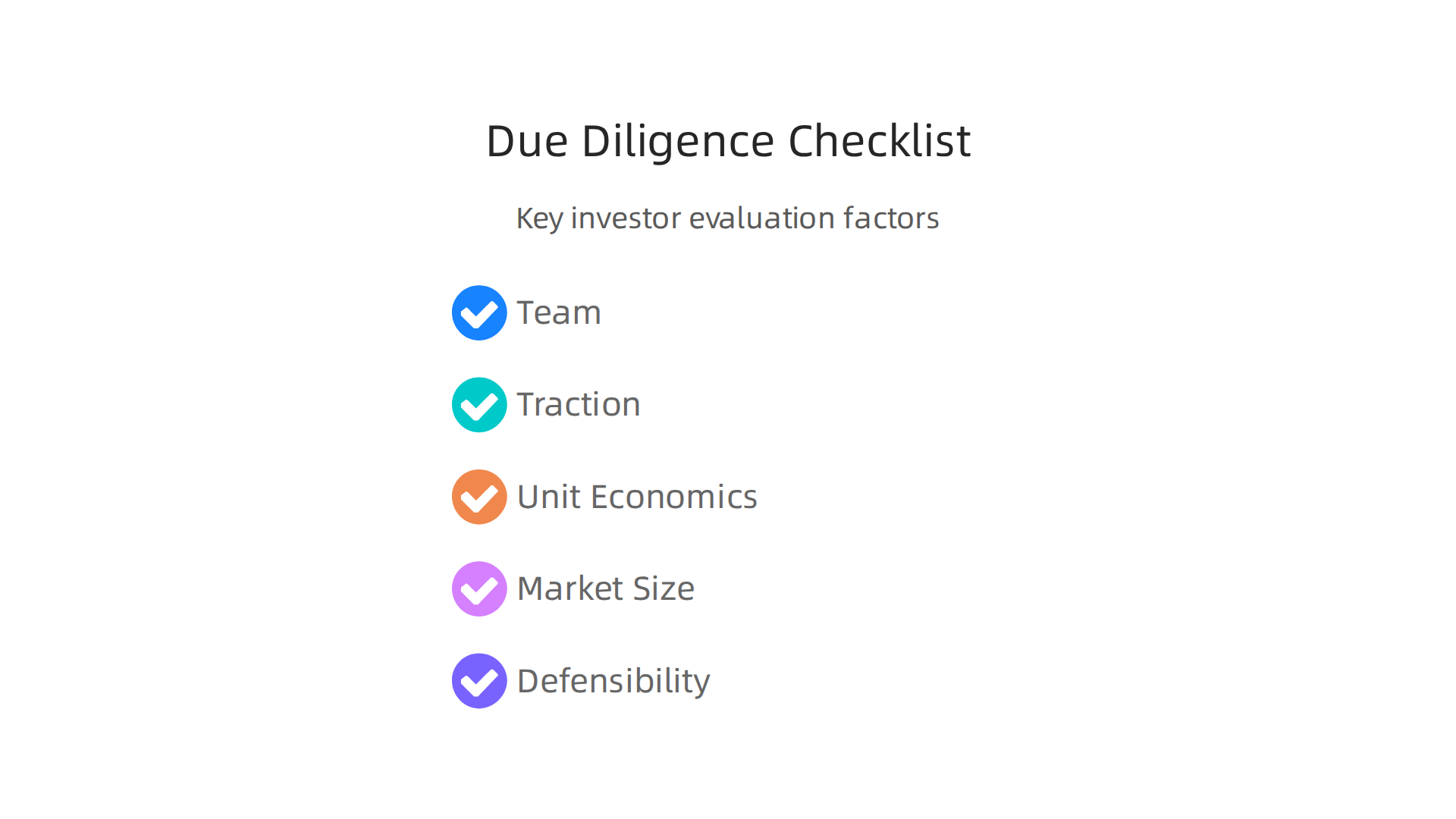
These are like the main parts of their checklist:
- The Team: Who is running the show? Investors want to see a strong, experienced team that works well together. They look for leaders who know their industry inside out and can handle challenges. A good team makes them feel more confident about the business’s future.
- Traction Metrics: This means showing proof that your business idea actually works and people like it. Maybe you have a growing number of customers, good sales, or positive feedback. These numbers and stories show that your idea isn’t just a dream, but something real that’s catching on.
- Unit Economics: Simply put, do you make more money from each customer or product than it costs you to get or make it? For example, if it costs $5 to get one customer, but that customer brings in $10, then your unit economics are good. If it costs $10 to get a customer who only spends $5, that’s a problem. This is a very important part of how
investors in businessesdecide if a company can be profitable. - Market Size: How big is the problem your business is solving? And how many people or companies have that problem? A big problem means a big market, which means more potential customers and more money to be made. Investors want to see that your business can grow very large, not just stay small.
- Defensibility: What makes your business special and hard for others to copy? Is it a unique technology, a strong brand, special partnerships, or patents? Investors want to know that your business has something that will protect it from competitors and keep it successful for a long time. These checks ensure they are backing a solid idea, as detailed in guides like The Art of Due Diligence: Critical Factors for Evaluating Potential Investments.
How Due Diligence Changes by Investor Type
The depth of due diligence can change a lot based on who is investing and how much money they plan to put in.
- Smaller Investments: For smaller amounts, like from an angel investor or early
pre seed venture capitalfirms, the checks might be less detailed. They still look at the team and the idea, but they might not dig as deep into every financial record. They might rely more on their gut feeling and the early signs of traction. - Larger Investments: When big
venture capital firms in San Diegoor other large investment companies are putting in millions, their due diligence is much more thorough. They will hire lawyers and accountants to check every single document, every financial statement, and every contract. They might even talk to your customers and suppliers. This is because they have a lot more to lose, and they need to be extra sure about their decision. A comprehensive check might include reviewing things like historical performance and cash flow analysis, as noted in resources for Navigating Private Equity Due Diligence.
No matter the size of the investment, the goal for all investors in businesses is the same: to understand the risks and rewards. They want to find companies that have a clear path to success and a strong foundation. For more insights on securing funding, you can learn how to find investors for a startup in 2026.
Staying updated on market trends and investor insights, especially in fast-moving fields like AI, can give you an edge.
The AI Newsletter Worth Reading
Staying updated on market trends and insights is indeed a smart move for any startup founder or investors in businesses. It’s like knowing the weather before you plan a big trip. Smart another word for investors don’t just look at a startup’s internal health. They also keep a close eye on the bigger picture: what’s happening in specific industries and the economy as a whole. This helps them decide when and where to put their money for the best growth.
How Big Picture Trends Guide Investors
Investors use several key signals to understand the market. These signals help them figure out the right time to invest, how much a company might be worth, and where the best opportunities are.
1. Sector Momentum: Where the Action Is
Certain industries get more attention and money than others at different times. In 2026, for example, Artificial Intelligence (AI) continues to be a huge draw for investors in businesses. Reports show that AI and biotech are leading the way in venture capital funding, with a big surge in deals this year, deploying billions of dollars into these areas. This means if your startup is in a hot sector like AI, you might find it easier to get funding than if you’re in a less popular one. The funding landscape is becoming more concentrated in sectors with strong momentum, rather than spread thinly across all industries. To learn more about which companies are leading, check out information on AI companies in 2026: what founders and investors need to know.
2. Startup Valuations: What’s a Company Worth?
The excitement around certain sectors also impacts how much startups are valued. For instance, companies working with AI often get higher valuations than those without AI at later stages of funding. This "AI valuation premium" shows how much pre seed venture capital firms and other investors believe in the future of these technologies. This trend highlights a "bifurcated" market, where capital flows heavily into a few high-growth areas, causing big differences in company values. Looking at the broader Venture Capital in 2026: AI, Liquidity & Startup Funding Explained can give you more context.
3. Macro Indicators: The Economy’s Pulse
Beyond specific industries, the overall health of the economy plays a huge role. Things like interest rates, inflation, and how much people are spending can affect how much money is available for investing. If the economy is strong and growing, venture capital firms in San Diego and other places might be more willing to take risks. However, if there are worries about the economy, investors might become more cautious, making it harder for startups to raise money. Even with some cautious views, experts like KPMG suggest a "constructive and balanced venture capital environment" for investors in businesses in 2026, thanks to steady capital flow and better chances for companies to exit. For a detailed look into what big players are doing, understanding the private equity landscape 2026: top firms trends and where the smart money flows is vital.
By keeping an eye on these big trends and signals, investors in businesses can make smarter choices about where to put their money. This proactive approach helps them identify promising startups and manage risks in the ever-changing market of 2026.
Knowing about big market trends is a great first step. But how do you use that knowledge to actually get funding? For founders, it’s about making smart moves to connect with investors in businesses and build strong relationships. This means knowing who to talk to, how to talk to them, and how to keep the conversation going.
A Practical Playbook for Reaching Out to Investors
Connecting with funders doesn’t have to be a mystery. Here’s a simple guide to help you approach investors, build helpful relationships, and follow through.
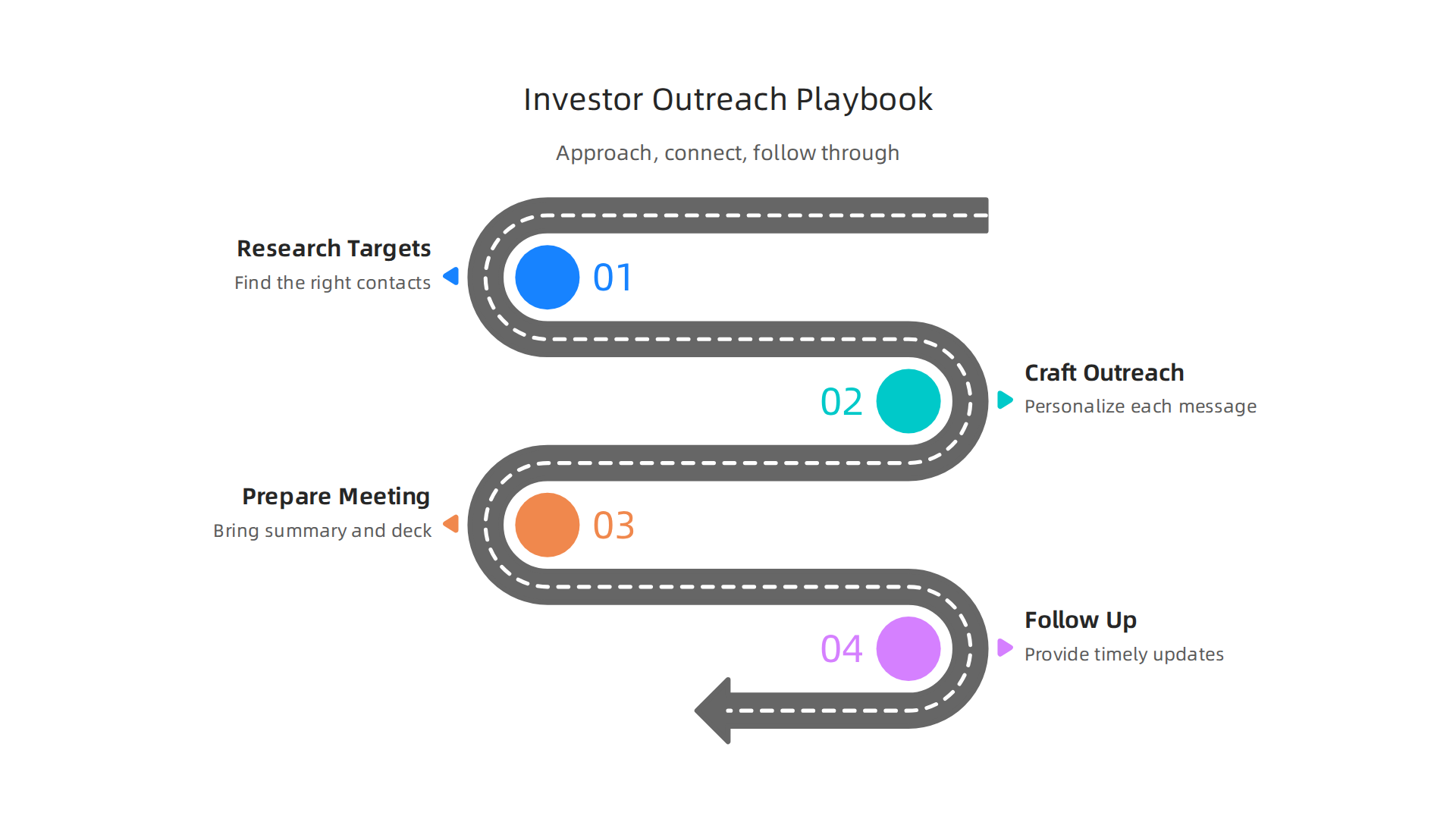
1. Research Your Target Investors
First, you need to find the right people to talk to. This means doing your homework. Look for venture capitalists or angel investors who have already put money into companies like yours. Think about the hot sectors we talked about before, like AI. If your startup is in AI, you’d look for pre seed venture capital firms known for investing there. You can create a list of potential funders based on what they’ve invested in, their industry focus, and how much money they typically give. For a step-by-step guide on finding these opportunities, you can learn how to master deal sourcing. You might even look for venture capital firms in San Diego if your startup is based there, to find local support.
2. Crafting Your Outreach Message
Once you know who to reach out to, make your message special for each one. Don’t send the same email to everyone. Show them you’ve done your research. Mention something specific about their past investments or why your company fits what they’re looking for. Keep your message short and to the point. Tell them quickly why you’re reaching out and what’s in it for them. Getting your outreach right is key to getting a response in 2026, as discussed in Investor Outreach in 2026: Templates, Cadence & Benchmarks. For more helpful tips, read our guide on how to find investors for a startup in 2026.
3. Getting Ready for the Meeting
If an investor wants to meet, that’s great! Get ready by having a simple one-page summary of your business and a full pitch deck. Your one-pager should quickly show your problem, solution, what you’ve achieved so far, and your team. The pitch deck should tell a clear story and explain what you need from them. Practice what you’ll say. Be ready to talk about how your startup fits into current market trends and why it’s a good investment right now. Understanding the differences between Venture Capitalists vs Angel Investors can also help you tailor your pitch.
4. Following Up Like a Pro
After your meeting, follow up quickly with a thank-you note. Then, keep them updated on your progress, but don’t bother them too much. A good follow-up plan helps keep the conversation going. You can use special tools to keep track of who you’ve talked to and when you last connected. This is how many private equity recruiting firms manage their contacts. Using these best practices can improve your deal sourcing.
The key to all these steps is making it personal. When you understand what an investor is looking for and show how your startup fits their goals, you create value for both sides. This smart way of approaching investors in businesses helps build strong connections and increases your chances of getting funded.

And if you want to stay super sharp on the latest tech changes, especially in AI, consider subscribing to The AI Newsletter Worth Reading.
Summary
This guide breaks down the fast-moving startup funding world of 2026 to help founders and investors cut through the noise. It explains the main investor types — angels, seed funds, VCs, corporate venture arms, and private equity — and shows what each expects at different stages. You’ll learn how market momentum (notably AI and biotech) changes valuations and where capital flows, how to build and prioritize a list of target investors, and what investors will check during due diligence (team, traction, unit economics, market size, defensibility). The article also gives a practical outreach playbook: research targets, craft personalized messages, prepare a one-pager and pitch deck, and follow up to build relationships. After reading, you’ll be able to identify the right investors, prepare for investor scrutiny, and run a focused fundraising process in 2026’s crowded market.