
The Biggest Investment Companies of 2026 and Their Impact on Startups and Investors

Introduction
Have you ever wondered who really controls the money flowing through global markets? The answer might surprise you. The world’s biggest investment companies manage trillions of dollars combined. In fact, the top 500 asset managers worldwide hit a record $139.9 trillion in assets under management (AUM) in late 2025, according to the Thinking Ahead Institute. That is an almost impossible number to wrap your head around.
BlackRock alone leads the pack with a staggering $14.04 trillion in AUM, followed by Vanguard at $12 trillion, based on the latest Earthian AI rankings.
These numbers keep growing every year. So why should you care?
Here is the thing. For founders and investors, knowing which firms dominate the landscape matters a lot. When you understand how the biggest investment companies operate, you can make smarter decisions about where to seek funding, how to position your startup, and which partners to trust.

Whether you are looking at capital group for traditional asset management, KKR private equity for buyout funding, or top VC firms for early stage bets, each type of firm has its own playbook.
But the landscape gets confusing fast. There are so many names out there. One equity partners, for example, operates very differently from a giant like BlackRock. And the difference matters when you are trying to raise capital or build strategic partnerships.
This article breaks down the biggest investment companies in 2026 with real data and clear analysis. We look at who leads by AUM, how private equity giants like KKR stack up, and what trends are shaping the industry. We also share actionable insights that can help you navigate the startup funding world with confidence.
Ready to see which firms truly move the markets? Let us dive in.
If you want to stay on top of who is raising money and where the smart capital is flowing, browse funding news regularly. It helps you spot opportunities before everyone else does.
The Shifting Landscape: Who Are the Biggest Investment Companies in 2026?
So the numbers we covered in the intro are huge. But here is the real question: which firms actually run the show in 2026? The answer changes faster than most people realize.
Let us start with the giants. According to the latest real-time rankings from asset manager leaders including BlackRock at $14.04 trillion and Vanguard at $12 trillion. These two alone manage more money than most countries produce in a year. And they keep pulling ahead.
But the pecking order shifts more than you might think. Fidelity, Charles Schwab, and Morgan Stanley (which owns E*TRADE) round out the top spots, as you can see in the top 10 investment companies by assets in 2026. Then you have firms like State Street Global Advisors and JPMorgan Chase, each managing between $4 trillion and $5 trillion.
Here is the thing. While these asset management giants grab headlines, the biggest investment companies also include private powerhouses. KKR private equity has been on a tear, closing record buyout deals. Capital group continues to be a major force in traditional active management. And newer entrants like Brookfield have aggressively expanded into infrastructure and alternative assets.
What is driving these changes? Two big forces.
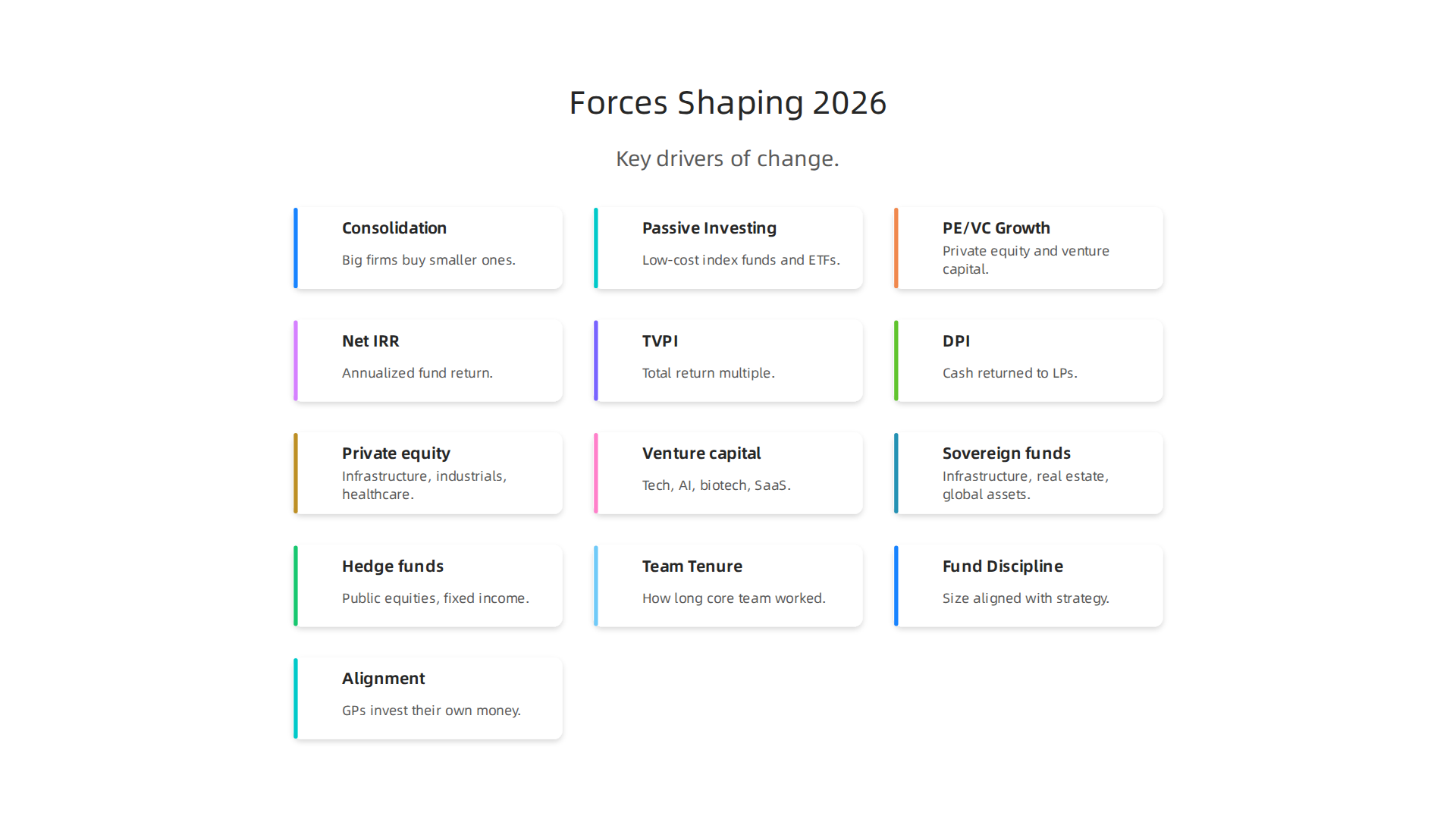
First, consolidation. Big firms keep buying smaller ones. Morgan Stanley snapped up E*TRADE. BlackRock acquired several data analytics firms to strengthen its Aladdin platform. This trend is not slowing down in 2026.
Second, the rise of passive investing. Low cost index funds and ETFs keep funneling money to Vanguard, BlackRock, and State Street. The world’s 500 largest asset managers now hold a record $139.9 trillion in AUM, driven largely by North American passive flows.
But here is a shift that matters for founders. Private equity and venture capital firms are gaining ground. The top VC firms are raising bigger funds than ever before. Firms like one equity partners are carving out specific niches. And new players from outside traditional finance keep entering the market.
Smart investors use data to spot these shifts before they become obvious. That is why it helps to discover startup project opportunities using AI and data analytics. It gives you an edge when tracking where money is moving.
The landscape is not static. The firms on top could look completely different five years from now. Right now, the old guard still rules, but challengers are closing in fast.
Want to see who is putting money to work right now? Browse Funding News for the latest rounds and investor moves.
Beyond AUM: How Top Investment Firms Create Value for Limited Partners
Bigger assets do not always mean better returns. That is the first thing any limited partner (LP) learns. A pension fund or university endowment does not care how many trillions BlackRock manages. They care about one question: how much cash will this fund actually put back in my pocket?
That is why sophisticated LPs look past the biggest investment companies by total assets. Instead, they focus on three key metrics that reveal true value creation.
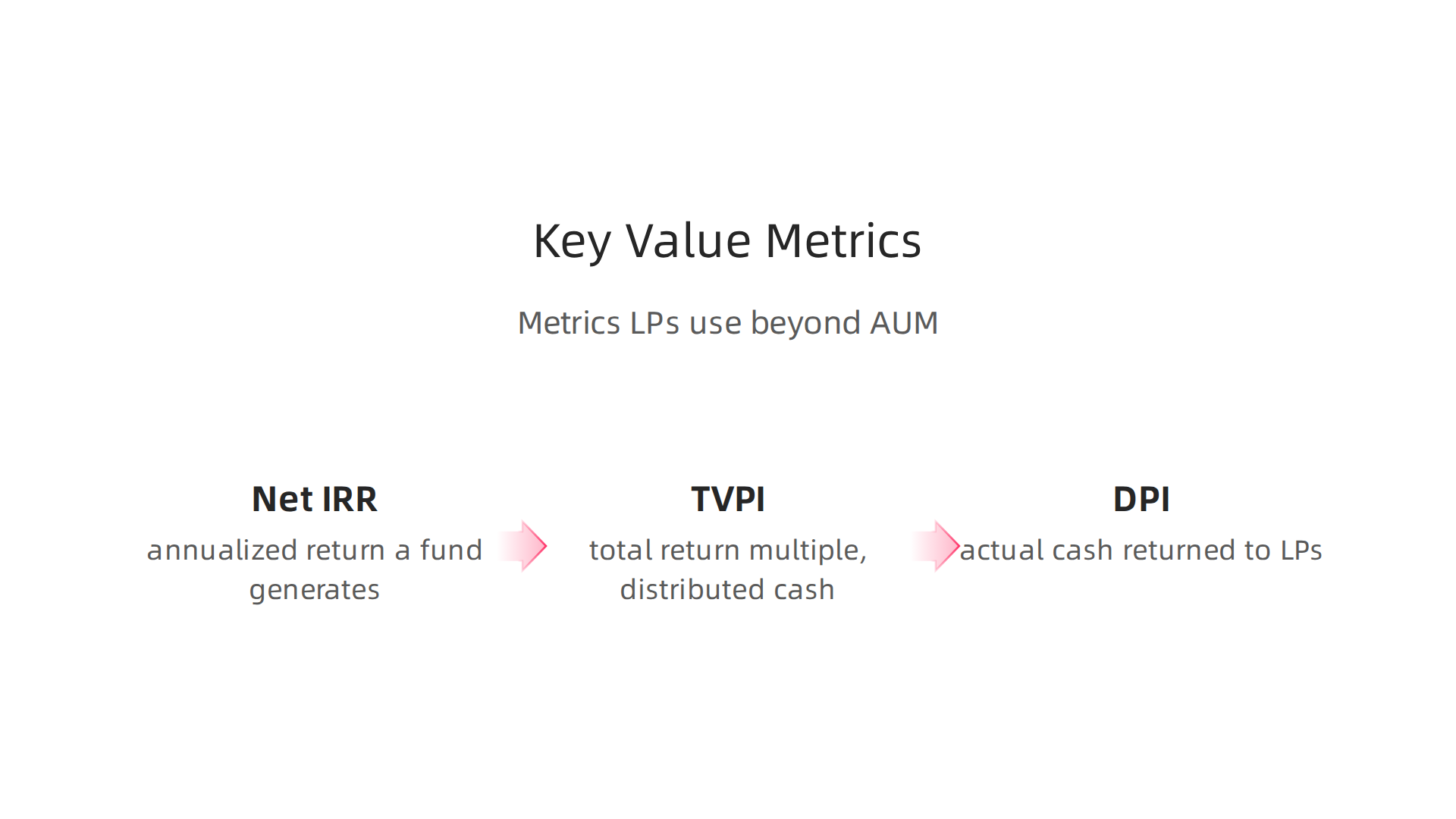
Net IRR (internal rate of return) measures the annualized return a fund generates, adjusted for the time value of money. A top-quartile private equity fund might target a net IRR above 20%. But IRR can be misleading if a fund returns cash early, so LPs pair it with other numbers. As TAGHASH explains, "IRR shows time-adjusted performance," while other metrics fill in the gaps.
TVPI (total value to paid-in capital) shows the total return multiple, including both distributed cash and remaining value. A TVPI of 2.5x means the fund has created $2.50 for every $1 contributed. This gives a full picture of value creation, as Dynamo Software details.
DPI (distributed to paid-in capital) is the most concrete metric of all. It tells you how much actual cash the fund has returned to LPs. A high DPI means the firm has already delivered real profits, not just paper gains. According to Qapita, an example fund might show DPI of 0.6x, meaning it has returned 60% of LP capital so far.
Firms like KKR private equity and top VC firms differentiate themselves by delivering strong numbers across all three metrics, not just one. They also prove they can repeat their success across multiple fund vintages. A firm that hits a home run on Fund I but struggles on Fund II raises red flags.
Consistency is the real differentiator. In a competitive fundraising environment, LPs reward firms that show predictable, high-quality outcomes year after year. Capital group, for instance, has built a reputation for steady performance across market cycles. One equity partners has carved out a niche by focusing on sector-specific deals with repeatable results.
Savvy LPs now use data analytics to track these metrics in real time. They compare firms side by side and spot trends before they become obvious. That is why many institutional investors are learning to discover startup project opportunities using AI and data analytics to sharpen their due diligence.
The firms that win in 2026 are not always the ones with the fattest AUM numbers. They are the ones that deliver real value, consistently, and prove it with the metrics that matter.
Want to stay ahead of which funds are actually performing? Get Free Updates from The Deep View Newsletter, which delivers simple daily insights on the trends shaping investment markets.
Geographic Reach: Where the Biggest Firms Are Betting Their Capital
Where does the money actually go? That is one of the biggest questions for any limited partner tracking the biggest investment companies.

You cannot just look at total assets. You need to know which regions the top firms are betting on and why.
The geographic map of global capital is shifting fast in 2026. Here is what the data shows.
Europe is gaining ground fast. For the first time ever, Europe has overtaken North America as the most attractive destination for private market investment, according to the 2026 Global Investor Survey from Adams Street Partners. This is a major shift. Firms like KKR and capital group are increasing their European allocations, drawn by regulatory stability and attractive valuations in sectors like industrials and healthcare.
Asia is evolving, not slowing. The opportunity in Asia is moving away from pure AI model builders toward companies that apply technology in practical ways, according to Lighthouse Canton’s analysis of shifting global capital. One equity partners has been active in this space, targeting sector-specific deals in Asian supply chain and logistics companies. Top VC firms are also paying more attention to Southeast Asian and Indian startups where applied tech is driving real revenue growth.
Emerging markets are making a comeback. The Franklin Templeton Global Investment Outlook 2026 points to broadening opportunities in emerging debt and equity. Lower interest rates in developed economies are pushing yield-hungry investors toward higher-growth regions. The McKinsey Global Private Markets Report 2026 confirms that private capital flows into Latin America, Africa, and the Middle East are rising after years of hesitation.
Geopolitics is the wild card. Cross-border investment is more complicated than ever. Trade tensions, sanctions, and shifting regulations force firms to be strategic about where they deploy capital. The Amundi Global Investment Views January 2026 highlights how central bank easing and AI-led capex are recalibrating portfolios across regions. Firms that can navigate these geopolitical shifts while maintaining strong returns will stand out.
For LPs, this means diversification is not just about asset class anymore. It is about geographic exposure too. The biggest investment companies are placing their bets across multiple regions, and the smartest LPs are following the money.
Want to stay ahead of where capital is flowing next? Get Free Updates from The Deep View Newsletter, which delivers simple daily insights on the trends shaping global investment markets.
Sector Specialization: From Tech to Infrastructure – The Focus of Leading Investors
You already know that the biggest investment companies are spreading their bets across the globe. But geography is just one piece of the puzzle. The other major factor is sector focus. Which industries are these top firms betting on in 2026? And why does it matter for you as a limited partner or startup founder?
Here is the short answer. The smartest capital is flowing into three big buckets: technology, infrastructure, and healthcare. And each type of firm plays a different role.
Technology still leads the pack. AI, cloud computing, and cybersecurity remain the top priorities for most top VC firms and growth equity players. According to the BlackRock Thematic Investing Outlook 2026, AI and infrastructure are "shaping markets and portfolios" for the years ahead. Firms like capital group and KKR private equity are not just funding AI startups. They are buying into the data centers and energy infrastructure that make AI possible. That is a double play: own the technology and own the pipes that deliver it.
Infrastructure is the quiet giant. The energy transition, digitalization, and the need for more resilient supply chains are driving massive capital into roads, grids, ports, and renewable energy projects. The J.P. Morgan Outlook 2026 highlights "interesting investment opportunities across public markets (e.g., utilities and industrial producers of electrical equipment)." Private equity and sovereign wealth funds are piling in. The McKinsey Global Private Markets Report 2026 confirms that infrastructure is now a core allocation for most large institutional investors. One equity partners, for example, has been targeting sector-specific infrastructure deals in logistics and industrial assets.
Healthcare and real estate are steady bets. Not every firm chases the latest tech trend. Some prefer more predictable returns. The Morgan Stanley Alts In Focus 2026 Outlook covers real estate and infrastructure as two of four core alternative asset classes. Healthcare is also drawing attention because of aging populations and biotech innovation. The top VC firms with healthcare expertise are investing in drug discovery platforms and digital health tools.
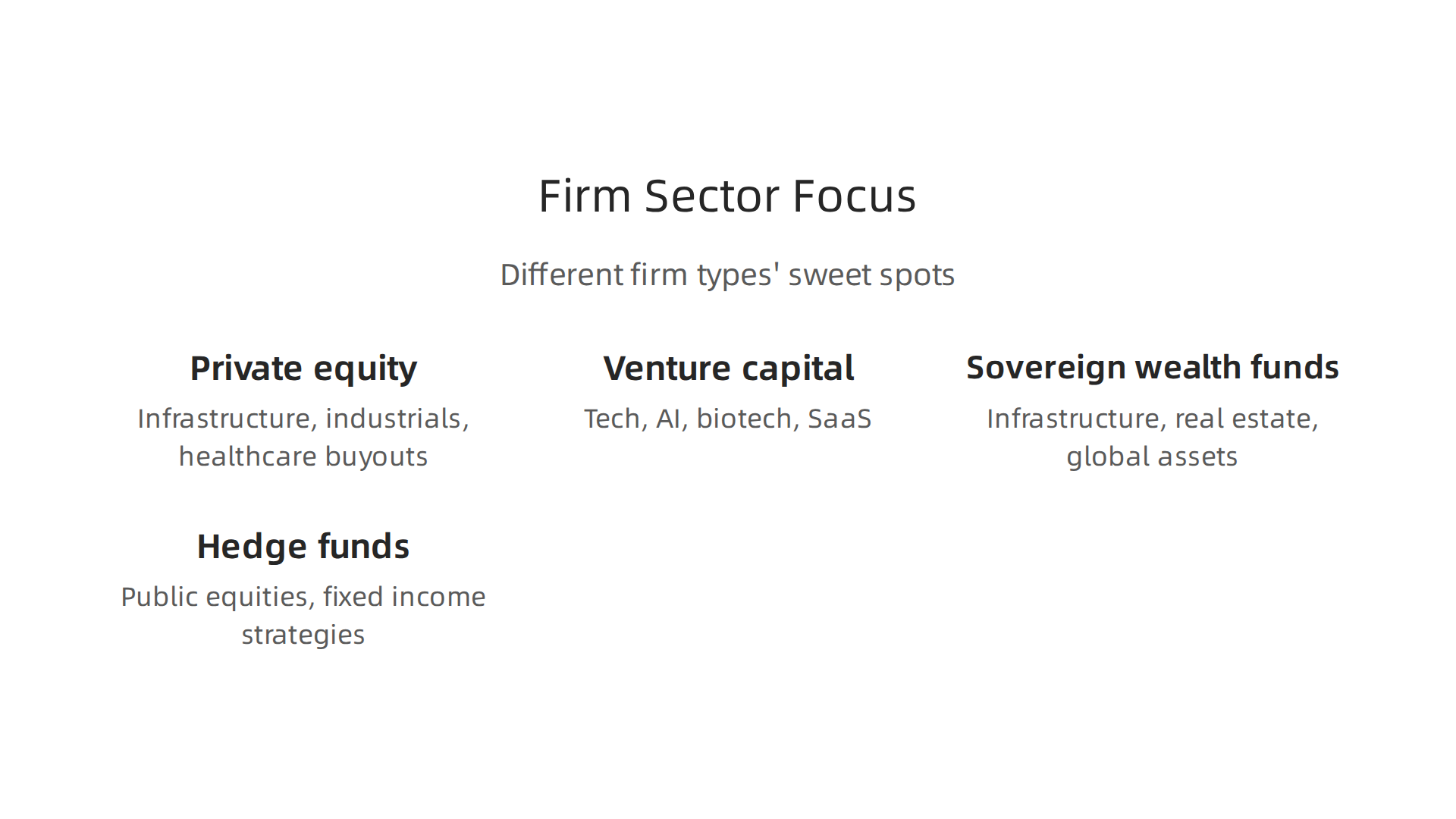
**Different firm types have different sweet spots.
**
| Firm Type | Typical Sector Focus |
|---|---|
| Private equity (like KKR) | Infrastructure, industrials, healthcare buyouts |
| Venture capital | Tech, AI, biotech, SaaS |
| Sovereign wealth funds | Infrastructure, real estate, diversified global assets |
| Hedge funds | Public equities, fixed income, event-driven strategies |
The sector focus of these biggest investment companies lines up directly with long-term megatrends: digitization, energy transition, and demographic shifts. If you are a startup founder building in one of these areas, you are in the right place. Investors are hungry for deals that solve real problems in applied tech and essential infrastructure.
Want to know which sectors are attracting the most funding right now? Browse Funding News on Startup Funding News Today for the latest roundups. We track where the capital is actually going, so you can make smarter moves.
The Rise of AI and Data-Driven Investing Among Top Global Firms
You saw how the biggest investment companies are betting on sectors like tech and infrastructure. But here is the real story for 2026. These firms are not just picking sectors. They are using artificial intelligence to make smarter, faster decisions across every stage of investing.

From finding deals to checking risks, AI is changing the game.
AI is now a core tool for deal sourcing and due diligence. Top firms use machine learning to scan thousands of startups, news articles, and financial reports. They look for patterns humans might miss. For example, quantitative firms like Two Sigma have long used AI to find market opportunities, and in 2026 they say the real opportunity lies in combining AI with fundamental analysis. Smaller firms are catching up too. According to Citizens Bank, "agentic AI" is now transforming financial operations for private equity and venture capital teams. If you are a startup founder, this means investors are finding you before you even pitch. You can learn more about how to position your startup for these AI-driven searches by reading our guide on discovering startup project opportunities using AI and data analytics.
AI also improves portfolio monitoring. Once a deal is done, the work is not over. Firms like KKR and Capital Group use AI tools to track company performance, flag risks, and spot trends in real time. Morgan Stanley’s investment bankers note that AI is now driving M&A as firms seek to acquire AI expertise and gain market share. The BlackRock Investment Institute expects another $5-8 trillion in AI-related capital spending through 2030. That is a huge wave of money flowing into companies that use AI well.
But there are challenges too. The same tools that make investing faster can also create new risks. Data privacy and cybersecurity are the top concerns for CEOs using AI, according to BCG. Algorithms can be biased if trained on bad data. Regulators in the US, Europe, and Asia are paying close attention. Firms that ignore these ethical considerations may face fines or reputational damage.
The takeaway? AI is not just a buzzword for the biggest investment companies. It is a competitive necessity. If you want to stay ahead of these shifts, you need clear, reliable information every day.
That is why we recommend The Deep View Newsletter. It delivers simple daily AI insights straight to your inbox. No fluff. Just what matters for investors and founders. Subscribe Free and never miss the next big trend.
How Startup Founders and VCs Can Use Insights from the Biggest Investment Companies
The way big firms invest in 2026 tells you a lot about where money is going next. If you are a startup founder or a venture capitalist, you can use their moves as a playbook. You just need to know what to look for.
**What founders should look for when approaching top-tier investors.

** The biggest investment companies like KKR Private Equity and Capital Group do not randomly pick deals. They follow clear patterns. In 2026, many of them are focusing on companies that apply AI to real world problems, not just build the models. According to Adams Street Partners’ Global Investor Survey, Europe has become the most attractive region for private capital for the first time. That shift matters. If your startup is based in Europe or solving problems for European industries, you have a better chance of getting noticed. Also, large firms now scan thousands of startups using AI. That means your online presence, pitch deck, and product page need to be clean and data rich. Our guide on discovering startup project opportunities using AI and data analytics shows you how to position yourself for these algorithms.
How VCs can benchmark their own funds against top vc firms. If you manage a venture fund, you should compare your strategy to what the giants are doing. For example, top vc firms and private equity players are now using AI for portfolio monitoring and risk management. The McKinsey Global Private Markets Report 2026 provides detailed data on fee structures, sector allocations, and fundraising trends. You can check if your fund is growing at the same pace or if you are missing a key sector like infrastructure or thematic investing, as highlighted by BlackRock’s Thematic Outlook. One Equity Partners and similar midsize firms are also adopting AI tools to stay competitive. If you are not using AI for due diligence yet, you are already behind.
Leveraging market intelligence from large firms to identify trends. You do not have to be a giant to benefit from their research. Reports from Franklin Templeton, Amundi, and J.P. Morgan are free or low cost. Franklin Templeton’s Global Investment Outlook 2026 notes broadening opportunities in emerging debt and US smaller cap stocks. Amundi’s Global Investment Views discusses AI led capital spending and regional strategies. Reading these reports helps you spot trends early, before they become crowded.
The bottom line: pay attention to what the biggest investment companies are doing. Use their data to make smarter decisions. And stay updated with concise reporting on every funding round and investor move.
Browse Funding News for the latest insights delivered simply.
Key Metrics to Evaluate an Investment Company’s Performance and Stability
Looking at the biggest investment companies is one thing. But how do you know if a firm is actually good at what it does? You need to look beyond the big number you see in headlines. AUM, or assets under management, tells you size, not skill. Here are the real metrics that matter.
Beyond AUM: IRR, TVPI, and co-investment opportunities. The first thing savvy investors check is the fund’s performance numbers. The most common ones are IRR, TVPI, and DPI. IRR, or internal rate of return, shows how fast your money grows over time. TVPI, or total value to paid-in capital, shows the total return including money still in the fund. DPI, or distributed to paid-in, shows cash actually returned to investors. A detailed guide from Breaking Into Wallstreet explains all these metrics with real examples. For a quick look at what healthy numbers look like, Qapita shares a typical fund summary showing an IRR of 18% and TVPI of 2.3x. That means for every $1 you put in, the fund has created $2.30 in total value. But watch out: a fund can look great on TVPI while having low DPI, meaning it has not actually returned much cash yet. That matters for your cash flow. Also, pay attention to co-investment opportunities. When a firm offers co-investments, it often means they want to keep their best deals for trusted partners. That is a sign of stability and good relationships.
The role of team tenure, fund size discipline, and alignment of interests. Numbers do not tell the whole story. The people running the fund matter just as much.
Check how long the core team has worked together. A team that has been through market ups and downs together is less likely to panic. Fund size discipline is another sign. If a firm raises a fund that is too big for its team or strategy, performance usually drops. Top vc firms like Capital Group and One Equity Partners are known for keeping fund sizes in line with their deal flow. Also, look at alignment of interests. Do the general partners have their own money in the fund? How much do they charge in fees? Firms that put their own capital at risk and keep fees reasonable tend to perform better over time.
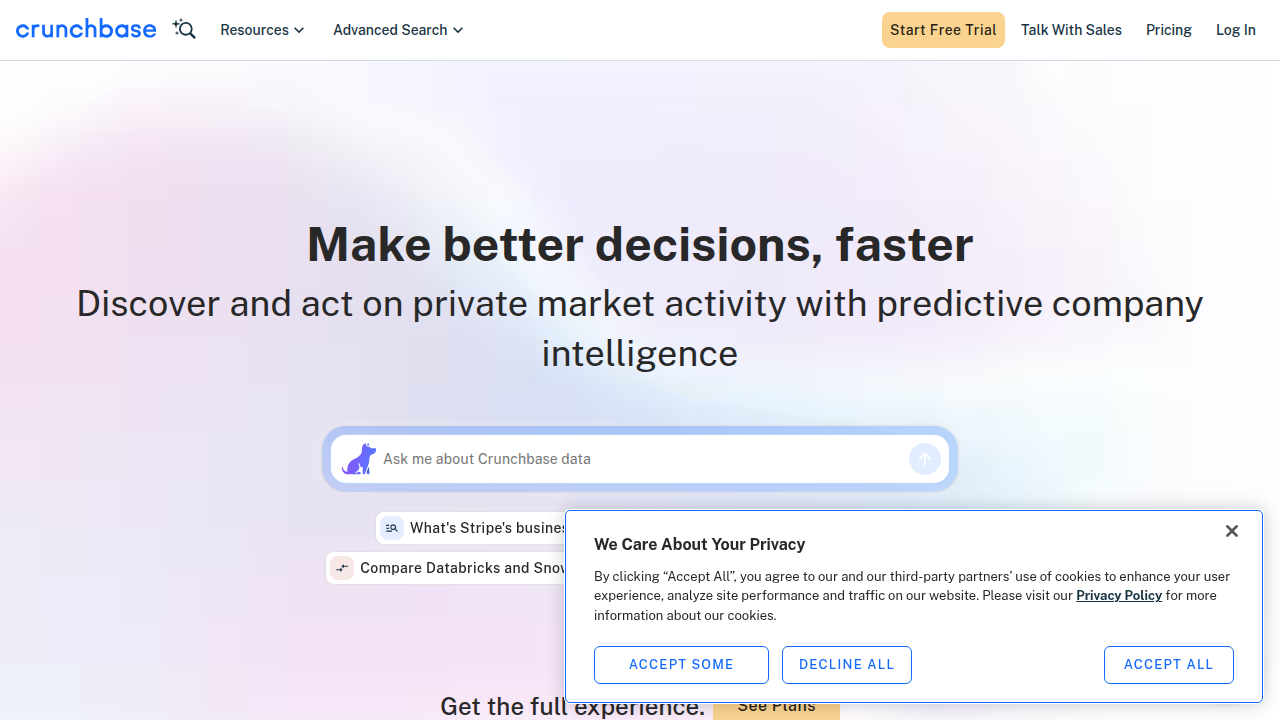
How to use public filings and third-party databases for due diligence. You do not have to guess or rely on what the firm tells you. Public filings are available for many big firms. In the US, firms registered with the SEC file Form ADV, which shows AUM, number of clients, fee structures, and even disciplinary history. Third-party databases like PitchBook, Crunchbase, and Preqin give you fund performance data, team backgrounds, and past deal history.
If you are evaluating a firm, check if their reported returns match what third-party sources show. You can also use AI tools to scan these databases faster. For instance, our guide on Originality AI vs Genspark AI for startup analysis compares tools that help verify claims and spot red flags.
The bottom line: do not be dazzled by a big AUM number. Dig into IRR, TVPI, DPI, team quality, and fund discipline. Use public filings and databases to confirm what the firm says.
Want to stay ahead of every funding round and investor trend? Get clear daily updates straight to your inbox.
Subscribe Free to The Deep View Newsletter for simple daily AI and startup insights.
Summary
This article maps the biggest investment companies in 2026 and explains why their moves matter for founders, VCs, and limited partners. It reviews leading asset managers (BlackRock, Vanguard and others) and shows that headline AUM masks the metrics LPs actually care about—IRR, TVPI and DPI—and why consistent performance and team quality beat sheer size. The piece breaks down where capital is flowing geographically (Europe rising, Asia evolving, emerging markets returning), which sectors attract the most funding (AI, infrastructure, healthcare), and how AI and data analytics are transforming deal sourcing, due diligence and portfolio monitoring. Practical guidance explains how founders should position themselves for AI-driven investor searches, and how investors can benchmark funds and use public filings and databases for cleaner due diligence. Read it to understand the landscape, spot where smart capital is moving, and use concrete metrics and tools to make better funding or investing decisions.