
Private Equity Landscape 2026 Top Firms Trends and Where the Smart Money Flows

Introduction: Navigating the Private Equity Landscape in 2026
If you are an investor or a startup founder, you have probably noticed that private equity firms are making headlines like never before. That is not a coincidence. In 2026, the private equity industry is sitting on a massive pile of uninvested cash. According to the Private Equity Report: 2025 Trends and 2026 Outlook, dry powder reached close to $1.1 trillion last year. That is a record amount of money waiting to be put to work.
But the landscape is not just about money. It is also changing fast. Technology is shaking up how deals get done. AI tools are helping firms find the best investments faster. Global competition is heating up as US funds expand into Europe and other regions. At the same time, interest rates are starting to ease, making it cheaper to borrow for big buyouts.
So what does all this mean for you? Whether you are looking for funding or trying to understand where the largest private equity funds are placing their bets, you need a clear map of the terrain.

This article breaks down the top players you should know, including firms like Palladium Equity Partners, Webster Equity Partners, and Bloom Equity Partners. We will also look at how they pick their targets and what sectors they are betting on.
But first, a quick heads up. The private equity world moves fast, and staying informed is half the battle. If you want to keep up with how AI is reshaping dealmaking and investment strategy, consider The AI Newsletter Worth Reading for clear daily updates. For a deeper look at how one firm operates in the lower middle market, check out our analysis of Audax Private Equity’s lower middle market strategy.
Ready to dive in? Let us start by looking at what is driving the biggest trends in private equity right now.
The State of Private Equity in 2026: Key Metrics and Trends
So what does the private equity landscape actually look like right now? A few big numbers tell the story.
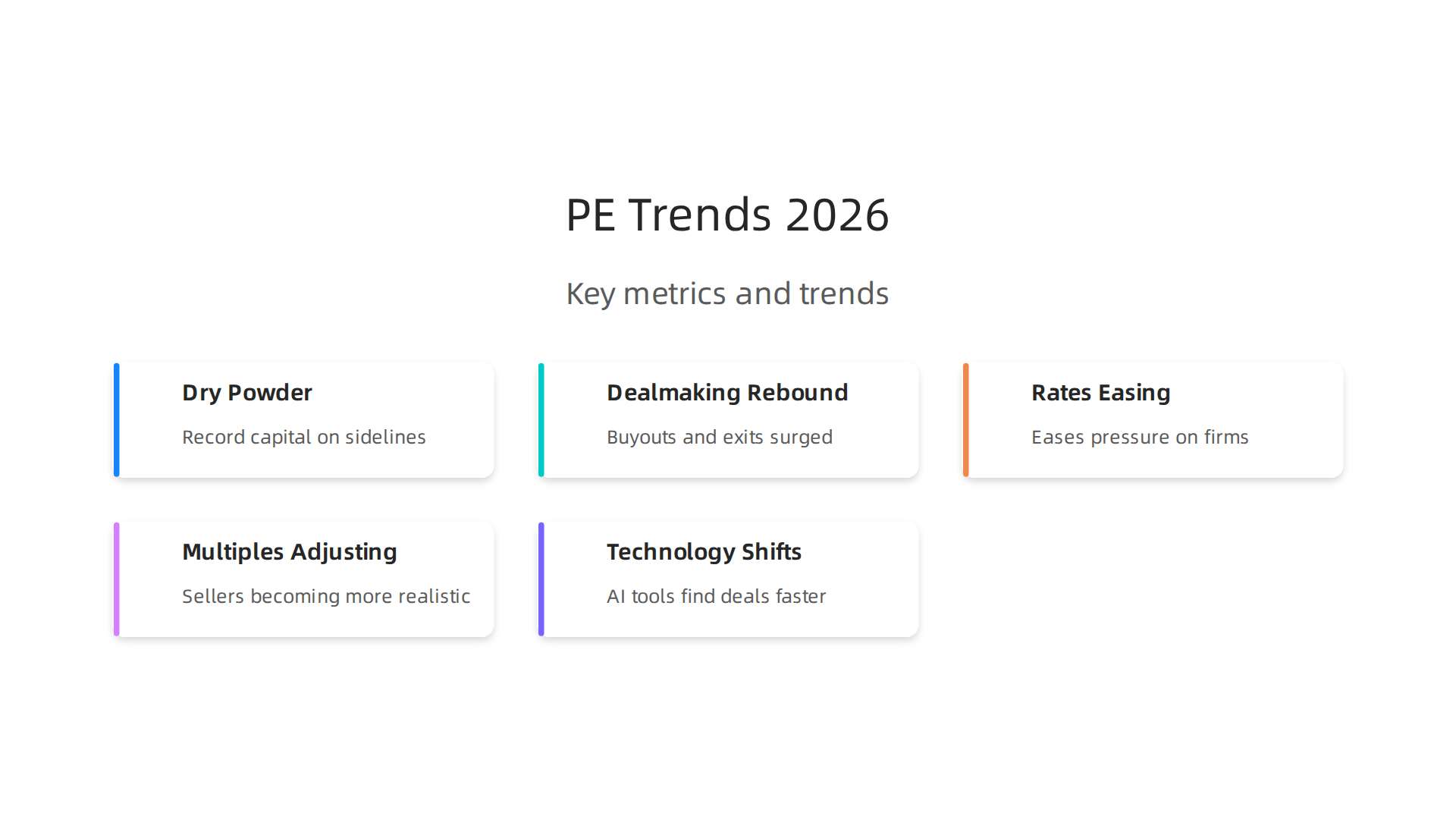
First, there is the record dry powder we talked about. That money sitting on the sidelines creates both a huge opportunity and a ton of pressure. Firms have to put that capital to work, which means competition for good deals is fierce. According to the Global Private Equity Report 2026 from McKinsey, dealmaking roared back in 2025 after three slow years. Buyouts surged, exits rebounded, and IPOs started to reemerge. The fog has lifted.
But here is the thing. Even with all that activity, the types of deals are changing. Interest rates have been high for a while, and that made borrowing expensive. Now rates are starting to ease. That shift is letting firms breathe a little easier and pay more for the right targets. At the same time, valuation multiples are adjusting. Sellers are becoming more realistic about what their companies are worth. That is good news for buyers who have been waiting for prices to come down.
Technology is shaking up the game in a big way too. Private equity firms are no longer just relying on spreadsheets and gut feelings. AI tools are helping them find potential investments faster, analyze company data deeper, and even manage their portfolio companies better after the deal closes. For example, a firm like Palladium Equity Partners or Bloom Equity Partners might use AI to spot trends in the healthcare or tech sectors before anyone else does. If you are curious about how founders and investors are using AI to make smarter choices, you can read more about how AI is used for startup success.
The bottom line? The largest private equity funds are sitting on mountains of cash, they are getting smarter about where they put it, and the environment is slowly becoming more friendly for big deals. For Webster Equity Partners and others playing in the lower middle market, the next 12 months look full of chances to move fast and win.
Top Private Equity Firms by Assets Under Management (AUM) in 2026
Now let’s look at who is leading the pack. When people talk about the largest private equity funds, a few names always come up. Blackstone, KKR, and Apollo have been at the top of the rankings for years. And in 2026, they are still dominating.
Here is a quick look at the numbers. These three firms alone manage well over $100 billion each in assets. Blackstone leads the industry with over $1 trillion in total assets under management across all of its strategies. KKR and Apollo sit right behind, each managing hundreds of billions of dollars. That scale gives them a massive edge. They can write bigger checks, attract the best talent, and weather market downturns better than smaller firms.
But the ranking has shifted in some interesting ways. These megafunds are no longer just buyout shops. They have expanded heavily into credit, infrastructure, real estate, and insurance. That diversification has helped them grow their AUM even when traditional buyout fundraising slowed down. According to the private equity outlook for 2026 from Bain & Company, buyout fundraising dropped 16 percent in 2025 to $395 billion, but other categories like infrastructure funds saw strong growth. The firms that adapted fastest to this shift are the ones pulling ahead.
So what is driving all this AUM growth? Two main things. First, strong fundraising. The largest private equity funds continue to raise enormous pools of capital from pension funds, endowments, and sovereign wealth funds. Second, portfolio performance. When the companies these firms own perform well and increase in value, it lifts their entire asset base. That is the flywheel effect that keeps the biggest players getting bigger.
For founders and investors watching this space, understanding which firms dominate the AUM rankings helps you know where the smart money is flowing. If you want a deeper look at the biggest names in investing, check out this guide to the biggest investment companies of 2026 and how they shape startup funding.
The takeaway is clear. The top firms are not sitting still. They are moving into new asset classes, using their scale to win, and growing their AUM faster than ever. And with interest rates easing and dry powder still high, 2026 is shaping up to be another big year for the biggest funds in the game.
Want to stay ahead of the curve on how AI is changing private equity and startup investing? The Deep View Newsletter delivers clear daily AI updates straight to your inbox.
Sector Focus: Where the Smart Money Is Flowing in 2026
Now that we know which firms are leading, let’s talk about where they are putting all that money to work in 2026. The largest private equity funds are not just writing checks randomly. They are laser-focused on specific sectors where they see the strongest growth and the best risk-adjusted returns.

Three sectors stand out this year: technology, healthcare, and energy transition.
Together, these areas are pulling in the biggest share of capital from private equity firms. According to the Private Equity Report 2025 Trends and 2026 Outlook from Cherry Bekaert, PE is increasingly concentrating on key growth verticals like technology (especially AI-related infrastructure), healthcare, and energy infrastructure. That is where the smart money is flowing.
Let’s break each one down.
Technology and AI. This is the hottest space. Private equity firms are pouring capital into AI-related infrastructure, data centers, and software platforms that can be transformed with AI. Think of it as the digital backbone of the future. But the sector is not simple. The PwC private equity deals midyear outlook for 2026 notes that technology faces a more complex environment because AI is disrupting legacy software holdings. Some investments get harder to exit. But for sponsors who know how to create value, the upside is huge. Firms like Bloom Equity Partners have built a reputation for targeting tech-enabled companies that can benefit from operational improvements.
Healthcare. This sector remains the most resilient for PE deployment. Think take-privates of public healthcare companies and platform roll-ups in healthtech. Consolidation in healthtech surged last year as PE firms bought scalable telehealth, data analytics, and digital patient care platforms. The aging population and rising healthcare costs create steady demand. Webster Equity Partners has been especially active in healthcare services and technology, using a buy-and-build strategy to grow portfolio companies. Palladium Equity Partners also has a strong healthcare focus, particularly in the lower middle market.
Energy transition and climate tech. This is the emerging high-growth vertical. With governments pushing for net-zero targets and AI-fueled power demand skyrocketing, energy infrastructure is a massive opportunity. Private equity firms are on the sell side in some traditional energy assets, but they are actively investing in renewable energy, battery storage, and grid modernization. Climate tech startups are also catching the eye of PE as they mature and need growth capital.
Consumer and retail? Those are more selective. PE is focusing on large CPG carve-outs and retail take-privates where they see room for cost-cutting and operational improvement. But overall, consumer gets less love in 2026 due to margin pressure from inflation and changing spending habits.
If you want to understand which AI companies are attracting the most interest from investors, check out this breakdown of the AI companies in 2026 that founders and investors need to know.
The bottom line: smart money follows structural trends. And in 2026, those trends are tech, health, and energy.
The Role of AI and Data Analytics in Private Equity
Smart money does not stop at choosing the right sectors. The top private equity firms are also using powerful technology to find better deals, make faster decisions, and grow their portfolio companies. In 2026, AI and data analytics have become essential tools for the largest private equity funds.
Think about it this way. A private equity firm might review hundreds of potential deals each year. Doing that manually takes forever. But with AI, firms can scan news articles, social media, hiring patterns, and patent filings to spot promising companies early. According to the practical guide on AI for private equity in 2026, top firms now review three to five times more proprietary opportunities than they did in 2022, with the same size deal teams. That is a massive advantage.
AI also speeds up due diligence. What used to take four weeks can now be done in two, with deeper coverage. The 2026 Private Equity AI Radar from FTI Consulting found that 95% of funds report their AI initiatives meet or exceed their original business case. That means AI is not a gamble. It is paying off.
Predictive modeling is another big win. Private equity firms use data analytics to forecast how a company will perform after acquisition. They look at revenue trends, customer behavior, and cost structures. This helps them decide which companies to buy and how to improve them. The Bain & Company Private Equity Midyear Report 2026 notes that firms are building repeatable models for underwriting and value creation. Data analytics is no longer a nice to have. It is a core part of how firms create value.
So what does this mean for you as an investor or founder? In 2026, the private equity firms that win are the ones that use data better than their competitors. They are not just betting on the right sectors. They are using AI to make smarter bets within those sectors.
If you want to stay ahead of these trends, The AI Newsletter Worth Reading delivers clear daily updates on how artificial intelligence is reshaping industries, including private equity. It helps you understand the tools and strategies that are separating the winners from the rest.
And if you are curious about which AI platforms compared for startups and enterprises in 2026 are gaining traction, that article breaks down the top choices. Knowing these tools can help you spot which companies PE firms might target next.
Co-Investment and Direct Deal Structures: A Growing Trend
The same push for control and transparency that is driving AI adoption is also reshaping how money moves into private equity. Limited partners are no longer happy to just write a check and wait ten years for results. In 2026, they want more say, lower fees, and direct exposure to the best deals.
This shift is driving a huge rise in co-investments. Instead of putting all their money into a large blind pool fund, LPs are asking to invest directly alongside the general partner in specific companies. The benefit? They skip the management fees and carried interest on that portion of capital. They also get to build their own expertise in a specific sector.
According to insights on the private equity trends in 2026, LPs are more selective and demanding than ever. They are pushing for bespoke side letters and better terms. Co-investment is one of the most powerful tools they have to achieve this.
Here is how deal structures are evolving to meet this demand:
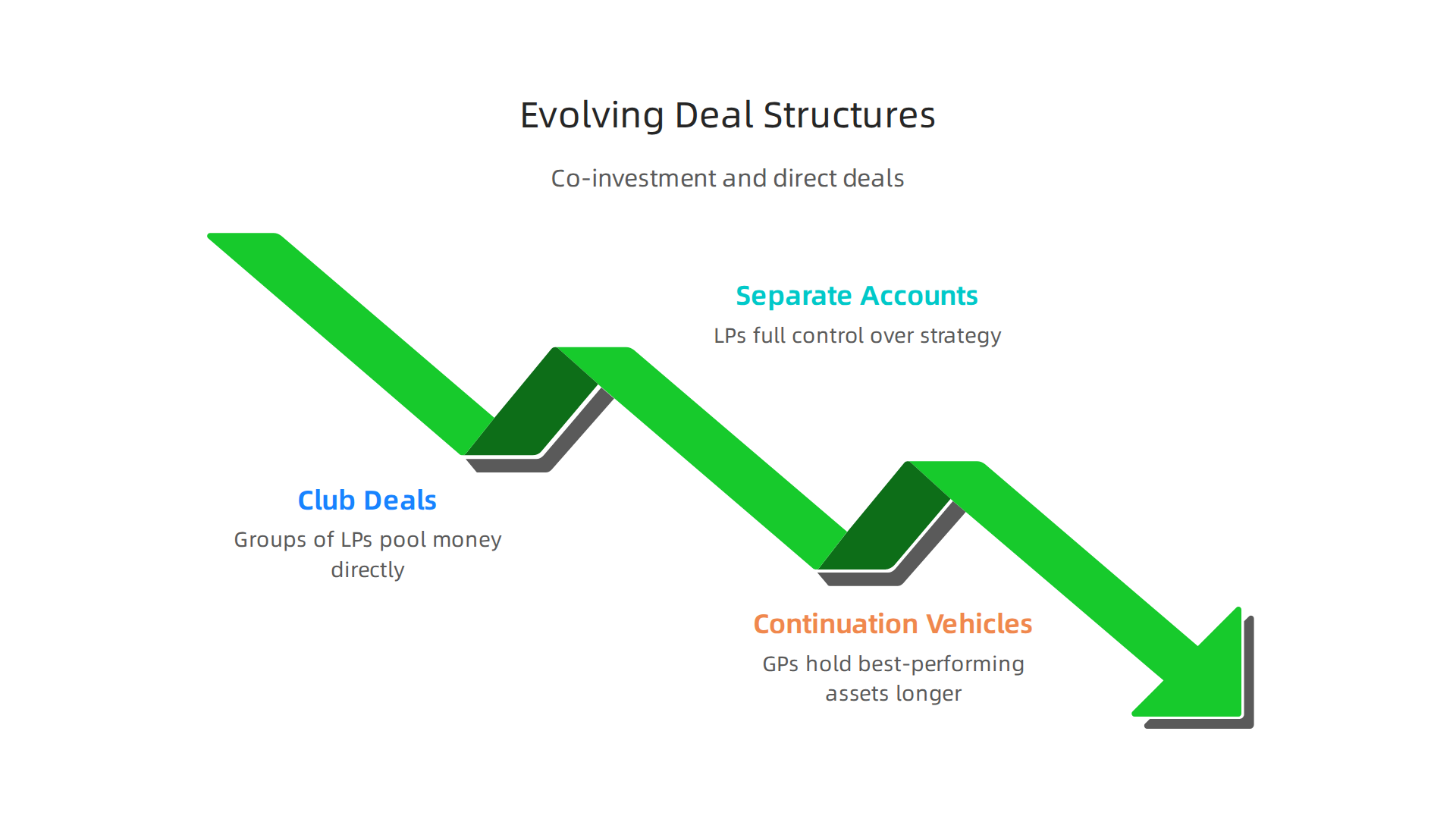
- Club Deals: Groups of LPs pool money together to buy a company directly, sometimes even without a traditional GP leading the deal.
- Separate Accounts: Large LPs like pension funds set up their own dedicated investment vehicles, giving them full control over strategy and asset selection.
- Continuation Vehicles: GPs hold onto their best-performing assets longer by rolling them into a new vehicle, often with co-investment from existing or new LPs who want more exposure.
Technology is the key that unlocks these structures for smaller players. Platforms that offer deal flow data and analytics are no longer just for the largest private equity funds. New software tools allow smaller family offices and institutional investors to access vetted co-investment opportunities that were once reserved for the biggest partners. They can perform due diligence, track performance, and manage their direct investments all in one place.
This trend fundamentally changes the relationship between capital and control.

The Global Private Equity Report 2026 from McKinsey highlights that the growth of secondaries and continuation vehicles is no longer a temporary fix. It is now a permanent, structural part of the market. Private equity firms that rely solely on traditional blind pool models are losing ground to those that offer flexible, direct deal structures.
For founders, this is a positive development. It means that when you look for a partner, you might find a direct investor like Palladium Equity Partners or Webster Equity Partners rather than just a giant fund. It creates more options for sourcing capital and building relationships.
If you want to understand which companies are leading this charge, exploring the biggest investment companies of 2026 is a great next step. These firms are shaping the deal structures that will define the market for the rest of the decade.
Geographic Hotspots: Where Are Private Equity Deals Happening in 2026?
For decades, the answer to "where are the deals?" was simple: the United States. In 2026, the map looks very different. Money is flowing across borders at a pace we have not seen before, and new regions are stealing the spotlight.
Europe takes the lead
For the first time in recent memory, Europe has overtaken North America as the most attractive region for private market investment. According to the Navigating the 2026 Private Equity Landscape report from SS&C Technologies, limited partners now rank the United Kingdom and Europe above the US for new allocations. A survey from Adams Street Partners confirms this, with 61% of LPs favoring Europe compared to 54% for North America. You can explore the full 2026 Global Investor Survey from Adams Street Partners for deeper data.
The US stays strong, but faces new competition
The US remains the single largest market for private equity firms. Total deal value still runs in the hundreds of billions, driven by technology, healthcare, and financial services. But the US share of global PE capital is shrinking as other regions grow faster.
For founders raising capital, knowing these shifts matters. If you are building in New York, understanding NYC tech startups in 2026 funding trends and investor strategies can give you an edge.
Asia-Pacific and emerging markets rise
Japan and Germany are surprising hotspots. The Tokyo Stock Exchange is pushing companies to sell non-core assets, creating opportunities for the largest private equity funds. India and Southeast Asia are drawing growth capital as their tech ecosystems mature.
Latin America is attracting investors looking for higher returns at lower entry prices. The Global private equity report 2026 from Forvis Mazars highlights that cross-border investment is now a core growth engine for PE firms worldwide.
Regulation shapes the flow
New rules in the US and Europe are changing how cross-border deals work. Geopolitical tensions are forcing private equity firms to be more selective. Firms that understand local regulations and build regional expertise are winning the best opportunities.
Staying ahead of where capital is moving takes constant attention. For quick daily updates on the technology trends driving these shifts, subscribe to The AI Newsletter Worth Reading. It delivers clear AI insights that help you spot opportunities early.
Due Diligence and Valuation Trends in 2026
Beyond geography, the nuts and bolts of how private equity firms evaluate deals have changed dramatically. Due diligence is no longer just about checking financials and talking to customers. In 2026, it covers much more ground.

What due diligence now includes
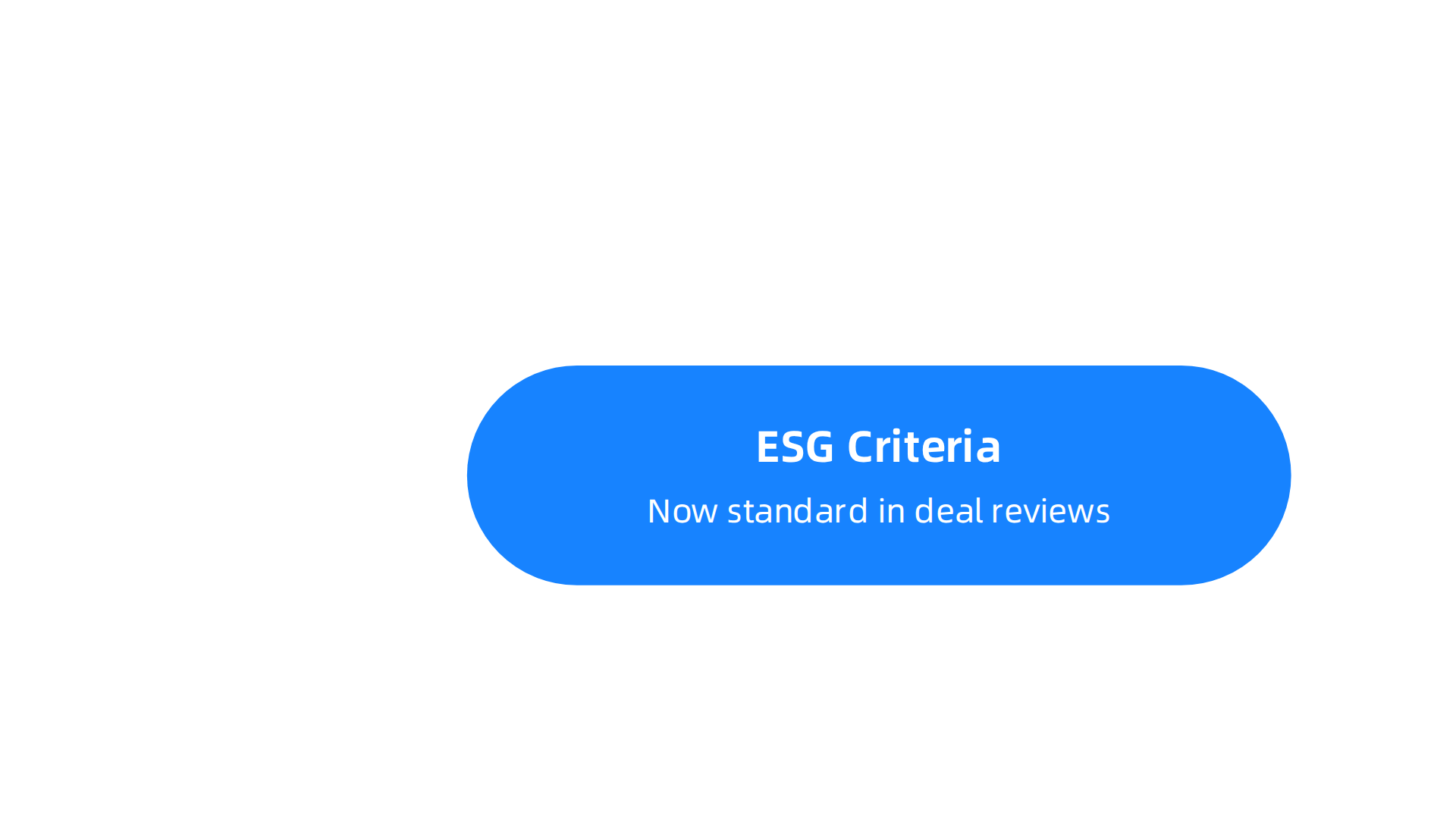
The checklist has grown. Environmental, social, and governance (ESG) criteria are now standard in most deal reviews.
Many of the largest funds also require thorough cybersecurity audits before signing. Buyers want to know if a company has data vulnerabilities that could become liabilities later.
According to the Private Equity Report: 2025 Trends and 2026 Outlook from Cherry Bekaert, private equity firms are placing greater emphasis on operational value creation and digital transformation rather than relying mainly on leverage. That means they dig deeper into a target’s tech stack, team capabilities, and growth infrastructure.
Valuation multiples are stabilizing, but vary by sector
After a few wild years, valuation multiples have settled down overall. But the calm is not even across industries.
Healthcare companies still command premium prices. Buyers see steady demand and room for efficiency gains. Technology valuations are trickier. AI is disrupting older software businesses, making it harder to predict future earnings. Consumer companies face margin pressure, so multiples stay lower unless the brand is very strong.
The Global Private Equity Report 2026 from Bain and Company sums it up with a memorable phrase: "12 is the new 5." That means deals today need faster earnings growth just to hit similar returns. Private equity firms cannot rely on market tailwinds alone anymore.
AI powered data rooms are changing the game
One practical change you can see right now: data rooms are getting smarter. Bloom equity partners and other mid-market buyers are using AI tools to scan thousands of documents in hours instead of weeks. This speeds up due diligence a lot.
If you are a founder preparing for a sale, knowing what tools buyers use can help you get ready. Understanding how to evaluate AI platforms for your startup in 2026 gives you a real advantage when investors start asking tough questions.
The takeaway is simple. Due diligence in 2026 is deeper, faster, and more detailed than ever. Private equity firms that adapt to these trends are finding the best deals and avoiding the worst surprises.
Summary
This article maps the private equity landscape in 2026, explaining why record dry powder, easing interest rates, and expanding AI capabilities are reshaping deal activity. It profiles the largest funds that dominate AUM, describes which sectors — notably AI-related technology, healthcare, and energy transition — are attracting the most capital, and shows how firms are diversifying into credit, infrastructure and real estate. You’ll learn how AI and data analytics speed sourcing, due diligence, and predictive underwriting, why LPs now prefer co‑investments and continuation vehicles, and which regions (especially Europe and parts of Asia) are drawing growing allocations. The piece also breaks down updated due diligence requirements — from ESG and cyber audits to AI‑powered data rooms — and gives founders clear steps to prepare for PE interest. After reading, investors and founders will better understand where capital is flowing, how deals are structured, and what practical changes matter when negotiating with today’s largest private equity funds.