
Generate Winning Private Equity Firm Name Ideas That Stand Out

Choosing a great name for your private equity firm is more important than you might think. Just like how a person’s name can leave a first impression, your firm’s name does the same. It is the very first thing people see and hear about your company. This includes the important investors called Limited Partners (LPs), the founders of companies you might want to buy, and other business partners. A strong name can open doors and build trust even before you say a single word.

Think about it: in 2026, many studies show that a good brand name can actually help a company get more funding. For example, research highlights how a strategic name can boost fundraising, especially for new companies, and how strong brand names generally lead to better business results and returns on investment [The ROI of Startup Branding | Data & Proof (2026)]. The name you pick tells people about the kind of work you do and the values you hold. It needs to be easy to remember and clearly show what your private equity firm is all about.
A truly strategic name needs to do a few things well. First, it must build credibility, making people believe in your firm’s ability to handle big investments. Second, it needs to be memorable, so people can easily recall and refer to you. Lastly, it must be legally safe, meaning it is unique and won’t cause problems down the road. Finding the right balance among these ideas for your private equity firm name ideas is key to standing out in a crowded market. You can learn more about the broader market by reading about the Private Equity Landscape 2026.

This guide is here to help you find the best private equity firm name ideas. We will walk you through a step-by-step process. This includes setting up your strategy, coming up with many name options, making sure the names are legal, and testing them out. We will even share some templates to make the process easier. Get ready to find a name that helps your firm shine!
Get clear daily AI updates from The AI Newsletter Worth Reading.

Getting the right name for your private equity firm is not just about sounding good. It actually has a big effect on how well your business does. A strong name can help your firm make more money and build trust with important people.
How Names Build Trust and Show Your Track Record
Your private equity firm name ideas directly affect how people see your company. When Limited Partners (LPs) think about giving money, or when company founders decide if they want your firm to invest in them, your name plays a key role. A name that sounds strong and dependable makes people believe in your firm’s abilities. For example, research shows that a well-chosen name can greatly help new companies raise money, especially in fast-growing areas like AI. A good name suggests stability and a solid history, even if your firm is new. It can also help lower the cost of getting money because a good name shows a strong brand reputation.
Descriptive Names vs. Evocative Names
When picking a name, you often choose between two main types:
- Descriptive names: These names tell people exactly what your firm does or where it focuses. Think of names like "Global Tech Investors" or "Midwest Growth Capital." They are clear and to the point.
- Evocative names: These names hint at feelings, values, or ideas without being too direct. They might use words that suggest strength, wisdom, or new beginnings, like "Summit Partners" or "Catalyst Ventures."
Both types have their good points. A descriptive name makes it easy for new partners to understand your private equity meaning right away. This can help bring in new deals because people know what to expect. On the other hand, an evocative name can make your firm stand out and be more memorable. It gives you room to grow into different areas without the name feeling out of place. This can be very useful for keeping partners and bringing in new types of private equity jobs. For instance, some experts suggest that using abstract names, rather than overly descriptive ones, can be better for holding companies in 2026 because they offer more flexibility as the firm grows and changes [303 Holding Company Name Ideas for 2026 (+ SEO & Branding …)].
Thinking About Location and Industry
The best private equity firm name ideas also depend on where your firm is located and what kind of companies you invest in. What works well in one region might not work in another. For example, in some parts of the world, very formal or traditional names are preferred. In other places, a more modern or creative name might get more attention.
Also, the industry you focus on matters. If you invest mostly in tech startups, a name that sounds forward-thinking might be great. But if you work with older, more traditional industries, a name that suggests stability and long-term value might be better. Some naming rules for VC and private equity firms in China, for instance, focus on words that convey steadiness and wealth, unlike startup names that are often catchy and direct. This shows how regional ways of thinking can change what makes a good name [VC/PE Firm Naming Rules: A Good Name Can Be Worth 100 Billion USD]. Understanding these differences helps you pick a name that truly connects with your target audience and helps your firm grow. If you’re looking for more details on different investment strategies, you can explore the Audax Private Equity Strategy And Performance In The Lower Middle Market.
Choosing the right private equity firm name ideas means picking a path for your brand. While we’ve looked at descriptive versus evocative names, and how location matters, there are also bigger plans or "frameworks" you can follow. These frameworks help you decide what your name should say first and loudest to the world.
2. Naming Strategy Frameworks: Choose an Approach That Fits Your Fund
When thinking about names for your private equity firm, it’s helpful to pick a main strategy. This helps make sure all your private equity firm name ideas work towards the same goal. Here are three common approaches:
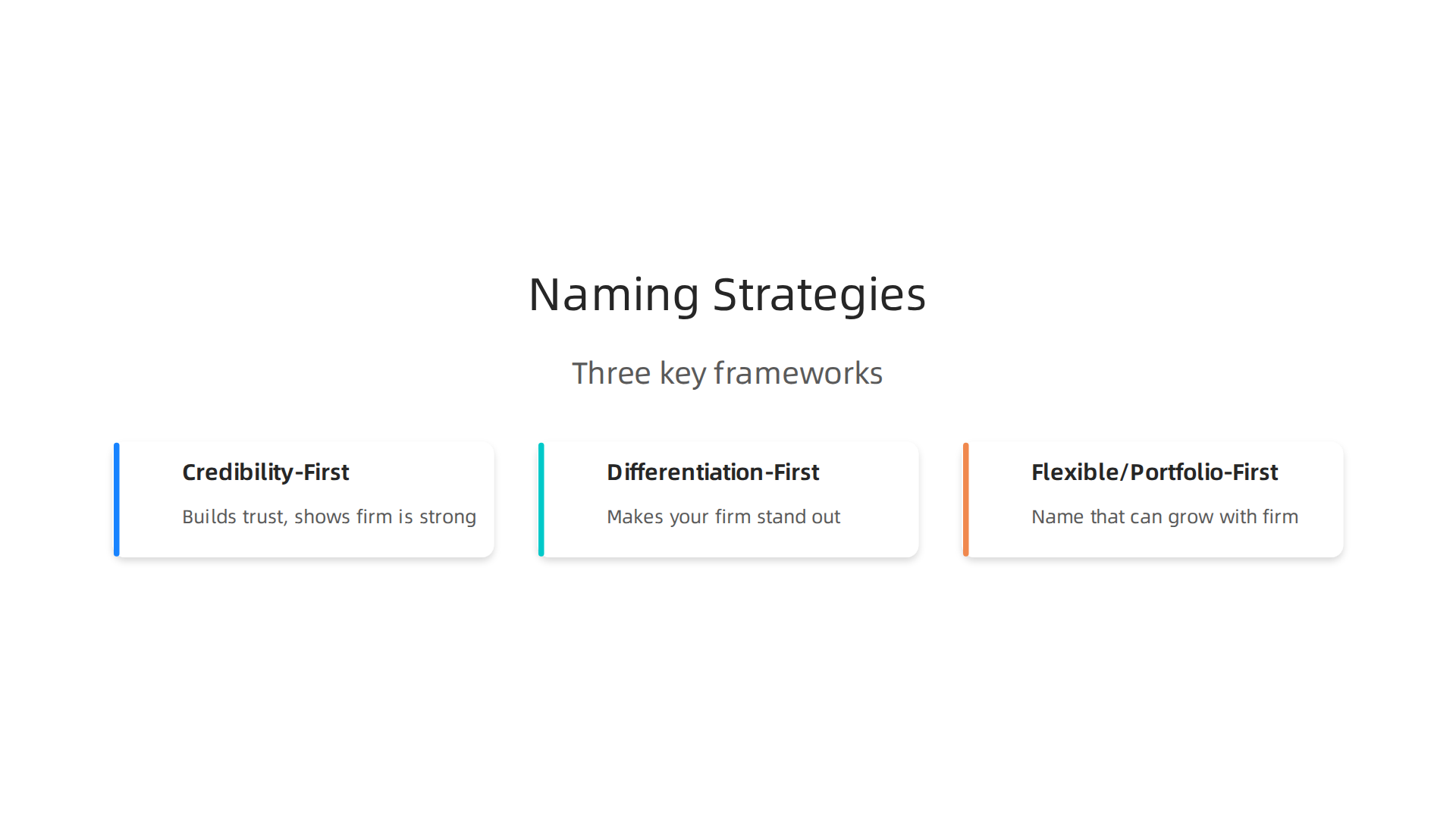
Framework 1: Credibility-First
This approach is all about building trust and showing that your firm is strong and reliable.
- What it means: You choose a name that sounds established, experienced, and very serious about business. It often suggests a long history of success.
- How it works: Names might use the founders’ last names, like "Kohlberg Kravis Roberts" (KKR), to show a personal legacy. Or they might use words that feel old and wise, like "Evercore" or "Blackstone." This helps new partners and companies feel safe investing with you.
- Why it’s good: A name like this tells people you’re in it for the long run and have a proven track record. It signals that you manage some of the best private equity funds and can be trusted with big money. It gives a sense of stability, which is very important in the world of private equity. One expert guide for choosing a firm name suggests focusing on a name that is easy to say, spell, and appropriate for your target clients, which builds trust right away Choose the Right Name for Your Consulting Firm Fast.

Framework 2: Differentiation-First
This strategy focuses on making your firm stand out from the crowd.
- What it means: Your name tells people what makes you special. Maybe you focus on a specific industry, like tech or healthcare, or you have a unique way of investing.
- How it works: This could involve using evocative names that hint at your unique values or a niche focus. For example, "Quantum Ventures" might suggest a focus on cutting-edge technology, or "Green Impact Capital" could show a commitment to eco-friendly investments. This approach makes your private equity meaning very clear to a specific group of people.
- Why it’s good: In crowded markets, a name that sets you apart can attract the right kind of attention and lead to specific private equity jobs or deals. It helps you become known as the expert in a particular field, like new AI companies. Many financial services companies in 2026 are using smart naming strategies to highlight their unique value proposition Naming a Financial Services Company in 2026.
Framework 3: Flexible/Portfolio-First
This approach is about choosing a name that can grow with your firm.
- What it means: You pick a name that isn’t too specific. It should work well even if your firm invests in different kinds of businesses or expands to new places.
- How it works: Think of names that are broader or more abstract, like "Ascend Partners" or "Catalyst Group." These names don’t tie you down to one industry, one city, or one type of investment. They offer room for many different types of private equity funds under the same brand.
- Why it’s good: This framework is perfect for firms that plan to start many different funds, invest in various sectors, or expand globally. It keeps your options open and lets your brand stay fresh and relevant no matter how your business changes. It helps your private equity firm name ideas last a long time, supporting future growth without needing a rebrand.
The best framework for your private equity firm depends on your firm’s unique goals, your target investors, and the kind of companies you want to help grow.

It’s a big decision that shapes how people see your business for many years.
Want to stay on top of the latest trends in tech and investment, including how AI is shaping the future?
The AI Newsletter Worth Reading offers clear daily updates.
Choosing the right strategy for your private equity firm name ideas is a great first step. Once you know what kind of message you want to send, it’s time to get creative and start generating those names. This often involves more than just thinking of words; it’s about using smart methods and even modern tools to find the perfect fit.
3. Creative Name-Generation Techniques and Tools for Private Equity Firms
Finding the ideal name for your firm can feel like a big puzzle. Luckily, there are proven ways to create a list of strong private equity firm name ideas. These methods help you think broadly and then narrow down your choices.
Structured Brainstorming Methods
Instead of just shouting out names, structured brainstorming helps you explore different types of names.
- Linguistic Constraints: This means playing with words in specific ways. You might focus on names that use alliteration (like "Catalyst Capital") or words that rhyme. Short names are often easier to remember and say, which is important for any firm. Some strategies suggest using timeless, positive-sounding words to create strong brand names [Successful Strategies for Consulting Company Names]. You can also combine meaningful words or parts of words to make new, unique names [7 Naming Frameworks Used by Top Branding Agencies].
- Archetype Mapping: Think about what kind of feeling or image your firm represents. Is it strong and stable? Innovative and forward-thinking? Names can be built around these "archetypes." For instance, a name might hint at growth, wisdom, or a pioneering spirit. For example, names that use metaphors can help tell your firm’s story in a memorable way [Naming Your RIA Firm: What You Need to Know Before …].
- Semantic Clusters: This method involves gathering groups of words that are related to your firm’s values, mission, or the industries you invest in. If your private equity meaning is all about technology, you might list words like "innovate," "future," "frontier," or "spectrum." Then, you can mix and match these words to create unique combinations.
Using AI-Assisted Generation Responsibly
In 2026, artificial intelligence (AI) tools are becoming very helpful for many business tasks, including naming.
- Prompts and Constraints: You can use AI to brainstorm private equity firm name ideas by giving it specific instructions. For example, you might tell it: "Generate 20 strong, trustworthy names for a private equity firm that invests in healthcare tech" or "Create modern, evocative names that suggest growth and impact." The more detailed your prompts, the better the AI’s suggestions will be. You can even guide the AI to focus on names that highlight unique benefits or positioning [Naming a Financial Services Company in 2026].
- Human Curation: While AI can give you many ideas very quickly, it’s still up to you to pick the best ones. Think of AI as a helper that gives you a starting point. You’ll need to sort through the suggestions, refine them, and choose the names that truly fit your vision and target audience. For instance, AI could generate hundreds of names, but you need human judgment to see if they align with your long-term goals. If you’re using AI in your own startup, understanding how to evaluate these tools is key to success [How to Evaluate AI Platforms for Your Startup in 2026].
Balancing Originality with Discoverability
Once you have a list of potential private equity firm name ideas, you need to make sure they’re not just creative but also practical.
- SEO (Search Engine Optimization): In today’s digital world, how people find you online matters. A name that is too obscure might be hard to search for. Think about what words potential clients might type into a search engine if they were looking for a firm like yours.
- Verbal Clarity and Pronunciation: A good name should be easy for people to say, spell, and remember. If your name is hard to pronounce or confusing, it can make it difficult for people to refer you or find you. A comprehensive guide on naming suggests considering semantic value and phonetic structure, asking if it’s easy to say and remember [a naming handbook]. After brainstorming, it’s a good idea to set the names aside and then come back to them, testing how easily you remember and pronounce them [Naming your new CPA firm? These tips will help. | Blog].
- Availability: Before you get too attached to a name, always check if it’s available. This means looking if the name is already trademarked, if the domain name for your website is open, and if social media handles are free. Choosing a name that is legally ownable and has digital compatibility is a very important final step for any financial firm [How to Name Your Financial Planning or Wealth Management Firm].
By using these creative techniques and carefully checking each name, you can find a name that not only sounds great but also sets your private equity firm up for long-term success.
When you have some good private equity firm name ideas, the next very important step is to make sure they are legally safe to use.

This means checking trademarks, domain names, and any special rules for investment firms. Doing these checks early can save you a lot of trouble and money down the road.
Legal, trademark, and domain checks: minimize risk early
Choosing a name that sounds great is one thing. Choosing one that you can actually own and use without problems is another. Here’s how to do those important checks.
Trademark Screening: A Step-by-Step Guide
A trademark protects your firm’s name, logo, or slogan. It stops other businesses from using something too similar, which could confuse people.
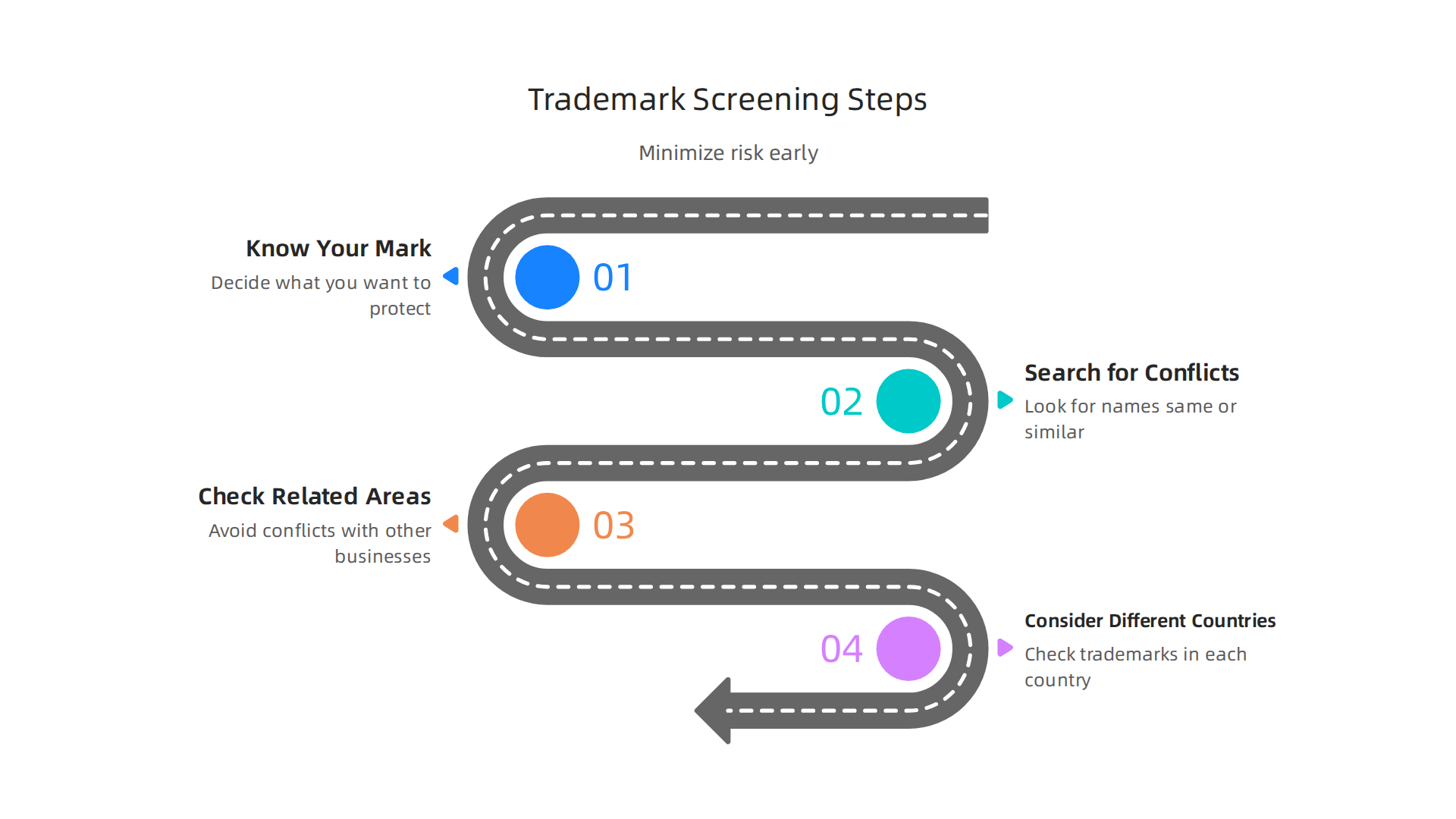
- Know Your Mark: First, you need to decide what you want to protect. Is it just the words of your firm’s name (a wordmark)? Or is it also a special design or logo (a stylized mark)? Knowing this helps you search better, as some advice suggests defining your mark clearly before you start searching [How to Conduct a USPTO Trademark Search in 2026].
- Search for Conflicts: You need to look for names that are the same as yours or very similar. This means checking exact words and phrases. It also means looking for names that sound alike or have a similar meaning, even if spelled differently [Trademark.io: Free Trademark Search]. Many online tools and databases can help, like those provided by the World Intellectual Property Organization (WIPO) [Trademark Database Portal] or national trademark offices [Trademarks guide].
- Check Related Areas: Trademarks are often grouped by the type of goods or services they cover. You must check not only for identical names but also for similar names used in related business areas. For example, if your private equity meaning is about tech investments, you’d check firms in that space to avoid confusion [Comprehensive clearance search for similar trademarks]. This helps avoid conflicts with other businesses, and it is a good idea to search for registered trademarks early to save time and money [Availability].
- Consider Different Countries: If your private equity firm will do business in many places, you’ll need to check trademarks in each of those countries. Some countries, like India, have specific steps for doing a trademark search [Trademark Search in India: Complete Guide (2026)]. The overall process often starts with a clearance search before you even apply [The Trademark Registration Process].
Domain Strategies for Your Firm
Your website address (domain name) is crucial for your online presence.
- Exact Match Domains: Try to get a domain name that is exactly your firm’s name, like "YourFirmName.com". This makes it easy for people to find you.
- Short and Simple: Shorter domain names are easier to remember and type.
- Defensive Registrations: Sometimes, firms buy similar domain names (like YourFirmName.co or common misspellings) to stop others from using them and to protect their brand.
- International Domains: If your private equity funds invest across borders, think about buying domain names for those regions (like YourFirmName.eu). Staying current with general tech and startup news can also help inform these decisions. If you’re keen on understanding the latest in technology and how it affects business, you might find The AI Newsletter Worth Reading valuable.
- Availability of Tech Domains 2026: In 2026, it’s also smart to be aware of newer domain endings that might be relevant to your firm’s focus, especially if you deal with tech investments. You can learn more about these trends in Tech Domains 2026 What Founders and Investors Need to Know.
Regulatory and Disclosure Considerations
Investment firms, like those managing private equity funds, have special rules they must follow.
- Industry-Specific Rules: Before picking a name, check with regulatory bodies in the places you operate. Some names might be seen as misleading or too general by regulators. For example, a name might imply a level of success or specific type of investment that isn’t true yet, which could be a problem.
- Disclosure: Your firm’s name might need to be clearly linked to its legal structure or specific services. This is especially true for firms dealing with significant capital or offering private equity jobs. Making sure your name is compliant from the start avoids legal headaches later on.
By carefully going through these legal, trademark, and domain checks, you can secure a strong and safe identity for your private equity firm. This groundwork is key for building trust and ensuring long-term success in the financial world.
After making sure your private equity firm name ideas are safe and legal, the next important step is to see what people think of them.

You want a name that really connects with potential investors (LPs), the company founders you might work with, and your own team. This step helps ensure your chosen name will open doors, not close them.
Low-Cost Ways to Test Your Name Ideas
You don’t need to spend a lot of money to get good feedback on your private equity firm name ideas. Here are some simple ways to test them:
- Quick Surveys: Create short online surveys using tools like SurveyMonkey or Google Forms. Ask people to rate your name ideas based on how much they like them, if they seem trustworthy, or if they fit with what a private equity firm does. You can ask people to share points for their favorite names to see which ones are most preferred [Brand Name Testing Market Research]. Some experts suggest testing 3 to 5 name options with a good number of people, perhaps 200 or more, to get useful insights [Focus Groups]. Remember to ask the same questions about each name so you can compare them fairly [How To Come Up With A Brand Name].
- Naming Sheets: Make a simple sheet with each name idea. For each name, ask people questions like:
- What kind of feelings does this name give you?
- What do you think this firm invests in?
- Is it easy to say and remember?
This helps you understand the immediate impression each name makes. It’s smart to define your goals for the naming research first, including who you want to ask [Brand Naming Research: How to Choose the Best …].
- Preference Tests: These tests help you learn which names people like best. You can ask people to simply pick their top 1 or 2 names from a list. Or, you can ask them to give points to each name, with more points for names they like more. This is called a fixed-sum allocation question, and it shows the strength of their preference [Brand Name Testing Market Research]. You want names that are unique and clearly show what your firm does [7 Key Questions to Ask When Testing Brand Names].
Talking to Key People: Qualitative Validation
While surveys are good for numbers, talking to people face-to-face gives you deeper insights. This is called qualitative validation.
- Interviews with LPs: Sit down with potential limited partners (LPs). Ask them directly what they think of your private equity firm name ideas. Does the name sound professional? Does it make them feel confident about investing their money? Their opinions are very important because they are your future clients.
- Conversations with Founders: If your firm focuses on specific private equity jobs, like helping startups, talk to founders of those companies. Ask if the names make your firm sound like a good partner. Does the name suggest you understand their business?
- Feedback from Future Partners and Your Team: Don’t forget to talk to your own team and any future partners. They need to feel good about the name too, as they will represent it every day. A name should ideally be easy to remember for everyone [Brand Name Testing: Your Complete Strategy Guide].
You can conduct these discussions in small groups or one-on-one. Some research shows that talking to 6-10 people for 60-90 minutes can give you lots of valuable details [Focus Groups].
How to Make Your Final Decision
After all the testing, you’ll have a lot of information. Now it’s time to choose the best name.
- Scoring Rubric: Create a simple scoring sheet to compare all your best private equity funds name ideas. Give points for different important things. For example:
- Legality (1-5 points): Is it cleared for trademarks and available as a domain name?
- Memorability (1-5 points): Is it easy to remember and say?
- Differentiation (1-5 points): Does it stand out from other firms?
- Fit (1-5 points): Does it match your private equity meaning and what your firm does?
- Feedback (1-5 points): How did it score in your surveys and interviews?
Add up the scores for each name. The name with the highest score is likely your best choice. This way, you balance all the important parts of a great name and pick one that everyone feels good about. Staying informed about the broader financial and tech world can help guide these choices, especially concerning areas like Private Equity Landscape 2026: Top Firms, Trends, and Where the Smart Money Flows.
Now that you have a good idea of how to test your private equity firm name ideas, let’s look at some examples and helpful templates. This part will give you a clear playbook to follow, from thinking up names to making sure they are legally ready. A strong name can really help your firm stand out and attract the right investors.
Examples of Private Equity Firm Names
Different firms choose different styles for their names. Here are some common types with their good and bad points:
- Founder-Led Names: These names use the last name of the founder or a key partner.
- Examples: "Blackstone," "Carlyle Group."
- Pros: Can build trust if the founder is well-known. Feels traditional and serious.
- Cons: Less common now, as firms shift away from just using a founder’s name to show more about the company itself [How Investment Managers Should Think About Naming]. If the founder leaves, the name might feel less relevant.
- Sector-Led Names: These names hint at the types of industries or areas the firm invests in.
- Examples: "Tech Growth Capital," "Healthcare Partners."
- Pros: Very clear about the firm’s focus. Attracts founders and investors looking for experts in a specific area, especially in certain private equity jobs.
- Cons: Might limit the firm if it wants to invest in new sectors later. Can sound less unique if many firms use similar descriptive words.
- Evocative or Abstract Names: These names don’t directly describe the firm but aim to create a feeling or image. Some names that don’t mean anything specific can make people curious [Meaningless brand names can spark consumer curiosity and …].
- Examples: "Evergreen Capital," "Summit Ventures."
- Pros: Can be very memorable and unique. Allows the firm to grow into any investment area without changing its name. Names that refer to places, like mountains or rivers, are popular for evoking a sense of lasting quality without describing what the company does [303 Holding Company Name Ideas for 2026].
- Cons: Might not immediately tell people what the firm does, requiring more marketing to explain the private equity meaning.
- Acronym-Based Names: Using initials or a short combination of letters.
- Examples: "KKR" (Kohlberg Kravis Roberts), "TPG" (Texas Pacific Group).
- Pros: Short, easy to say, and professional. Often used by well-known, established firms.
- Cons: Can be hard to remember at first if they don’t spell out anything. Might sound generic without a story behind the letters.
A strong brand name can have a real impact on a company’s success and even how much funding it gets [The Power of a Brand Name: Why It Matters], so choosing wisely is key.
Reusable Name Templates for Quick Ideas
If you’re still looking for private equity firm name ideas, here are some simple patterns you can use:
- [Adjective] + [Nature/Place Noun] + [Suffix]: This is a popular way to make a name sound strong and lasting.
- Fill-in-the-blank: "Blue Ridge Capital," "Silver Oak Ventures," "Highland Peak Partners."
- Why it works: Combines a color or descriptive word with a natural feature (like a river or mountain) and a financial term. Using terms like "Partners," "Capital," or "Investors" is a common way to complete a firm name [How to name your private equity firm in 2 minutes].
- [Founder/Family Name] + [Group/Capital]: A classic choice, though less common for new firms today.
- Fill-in-the-blank: "Stevenson Group," "Chen Capital."
- [Industry Focus] + [Strategic Term]: Great for showing your niche.
- Fill-in-the-blank: "Growth Equity Advisors," "Digital Frontier Funds."
- [Abstract Word] + [Financial Term]: A name that suggests a feeling or idea.
- Fill-in-the-blank: "Ascent Partners," "Veritas Capital" (Veritas means truth in Latin).
Your Naming Playbook: From Brainstorm to Legal Clearance
Picking the perfect name for your private equity firm is a step-by-step journey. Here’s a timeline to guide you:

- Week 1: Brainstorming & Initial Ideas.
- Gather your team and throw out all sorts of private equity firm name ideas. Don’t hold back.
- Think about your firm’s private equity meaning, what kind of investments you’ll make, and what feelings you want to create.
- Aim for many ideas, good and bad, at this stage.
- Week 2: Shortlisting & Quick Checks.
- Pick your favorite 10-15 names.
- Do a quick check to see if domain names (like .com) are available.
- Perform basic searches online to see if any similar businesses already exist.
- Weeks 3-4: Feedback and Testing.
- Use surveys and interviews as discussed before. Talk to potential LPs, founders, and your team.
- Ask them which names they prefer and why. Get a feel for what impressions each name makes.
- Keep focusing on names that are easy to remember and say, as easily pronounced names are preferred by investors [Study Finds Startups With Unique Names Get More Early-Stage Funding].
- Weeks 5-6: Deep Legal Review.
- Once you have a top 3-5 names, it’s time for detailed legal checks. This is super important to avoid problems later.
- You need to check if your chosen names are free for trademark registration. In 2026, this still starts with looking for conflicts before you file [How to Conduct a USPTO Trademark Search in 2026].
- Use online trademark databases or hire a lawyer to do a full "clearance search" to make sure your name isn’t too close to one already in use for similar goods or services [Comprehensive clearance search for similar trademarks]. You want to protect your name and brand.
- Week 7: Final Decision & Registration.
- Use your scoring rubric to compare the top names based on all the feedback and legal checks.
- Choose the best private equity funds name that scores highest across all your important points.
- Work with a lawyer to officially register your business name and trademark. The whole trademark process has about six main steps, starting with the clearance search [The Trademark Registration Process].
By following these steps, you can pick a name that truly reflects your firm’s goals and helps you succeed in the competitive world of private equity.
Want to stay on top of all the latest in the world of AI and technology, which often influences investment trends?
The AI Newsletter Worth Reading
Summary
This guide explains how to choose a powerful, practical name for your private equity firm and why the right name affects fundraising, deal flow, and credibility. It covers the tradeoffs between descriptive and evocative names, three naming frameworks (credibility-first, differentiation-first, and flexible/portfolio-first), and practical generation techniques including structured brainstorming, archetype mapping, and responsible AI use. The article also walks through essential checks—trademark screening, domain strategy, and regulatory considerations—and shows low-cost ways to test names with LPs, founders, and your team. You get concrete examples and reusable name templates, a scoring rubric for final selection, and a week-by-week timeline from brainstorming to legal registration so you can pick a name that is memorable, legally safe, and aligned with your fund strategy.