
Global Work AI Playbook for Founders and Investors

Why ‘Global Work AI’ Matters Right Now
Working together today can feel a bit like a puzzle with pieces scattered all over the world. Many companies have teams spread out in different cities or even countries. This means people might use different tools, work at different times, and sometimes miss out on what others are doing. This can make workflows messy and slow things down. But here’s the good news: something called global work AI is changing all of that. It’s like having a clever helper that connects everyone, no matter where they are.

In 2026, businesses are seeing just how powerful artificial intelligence can be. A lot of companies are already using AI in some way. For example, 88% of organizations now use AI in at least one part of their business operations this year, showing just how common it is becoming 47 AI Adoption Statistics That Define Enterprise Technology in 2026.
Global spending on AI systems is even expected to go over $300 billion in 2026, with 72% of companies having already put at least one AI solution into action 67 AI Adoption Statistics for 2026 — Enterprise & SMB Data. This shows a big shift towards using top AI tools to make work better.
This push means there are huge chances for innovative startups to create new global work AI solutions. These clever AI tools can help teams talk better, share files easily, and work on projects together smoothly. They can even predict problems before they happen.
In this article, we will give you clear ways to spot great startup ideas in the world of global work AI. We’ll also look at what kinds of signals investors are really interested in when they decide where to put their money. And just as important, we’ll talk about common mistakes to avoid when bringing new AI ideas to life. You’ll learn how to successfully use AI to grow your business, whether you’re a founder or an investor, by understanding how to use AI for startup success.
To stay on top of the fast-moving world of AI and its impact on startups, don’t miss out.
The AI Newsletter Worth Reading
State of the Market: AI and Global Workflows in 2026
Building on how AI helps businesses, let’s look at the current state of the market for global work AI in 2026. Right now, three main things are happening: how teams work across different places, how AI takes over tasks, and the new skills people need. These changes are shaping which innovative startups and clever AI tools get noticed by investors and founders alike.
Teams around the world are working together more than ever. This means companies need ways to keep everyone connected and productive, no matter where they are. Global work AI makes this possible by helping with things like sharing documents, talking across time zones, and keeping projects on track. Actually, worker access to AI went up by 50% in 2025, and many companies expect to use even more AI projects soon, planning to double their current number in the next six months The State of AI in the Enterprise – 2026 AI report.
Still, it’s not all smooth sailing. Even though many companies are using AI, only about one-third have moved past just trying it out to fully using AI everywhere in their business AI Adoption Statistics Q1 2026: All Figures – Vention.
This shows that there’s still a huge chance for the right kind of global work AI solutions to make a real difference.
As AI takes on more tasks, the skills needed by workers are changing. People are learning to work side-by-side with AI, focusing on problem-solving and creative thinking that machines can’t do.

This shift means that top AI tools that are easy for people to learn and use will be very important.
For investors and founders, this market means clear opportunities. Investors want to see that startups using global work AI can really solve big problems and bring in money. They are looking for businesses that show how their clever AI can lead to clear profits, not just cool ideas. For example, a 2026 survey found that while many companies are investing at least $1 million in AI each year, only 29% are seeing big returns from it Key findings from our 2026 AI adoption survey. This means startups need to prove their value.
Founders should focus on creating solutions that help businesses scale their AI efforts beyond simple tests. They should aim to build innovative startup companies that offer dependable and powerful AI tools. Understanding these market trends is key for anyone looking to succeed in this fast-moving space. To learn more about what investors are looking for, you might want to read about news venture capital 2026 market trends founder actionable steps or explore various AI companies in 2026.
How AI Is Transforming Global Workflows: Patterns and Architectures
We’ve talked about the big chances for global work AI in today’s market. Now, let’s look at how these clever AI tools actually change how work gets done across different countries and time zones. This involves understanding how AI is built and the ways it helps clear up common problems.
First, let’s look at how AI systems are set up for working across borders. There are a few main ways:
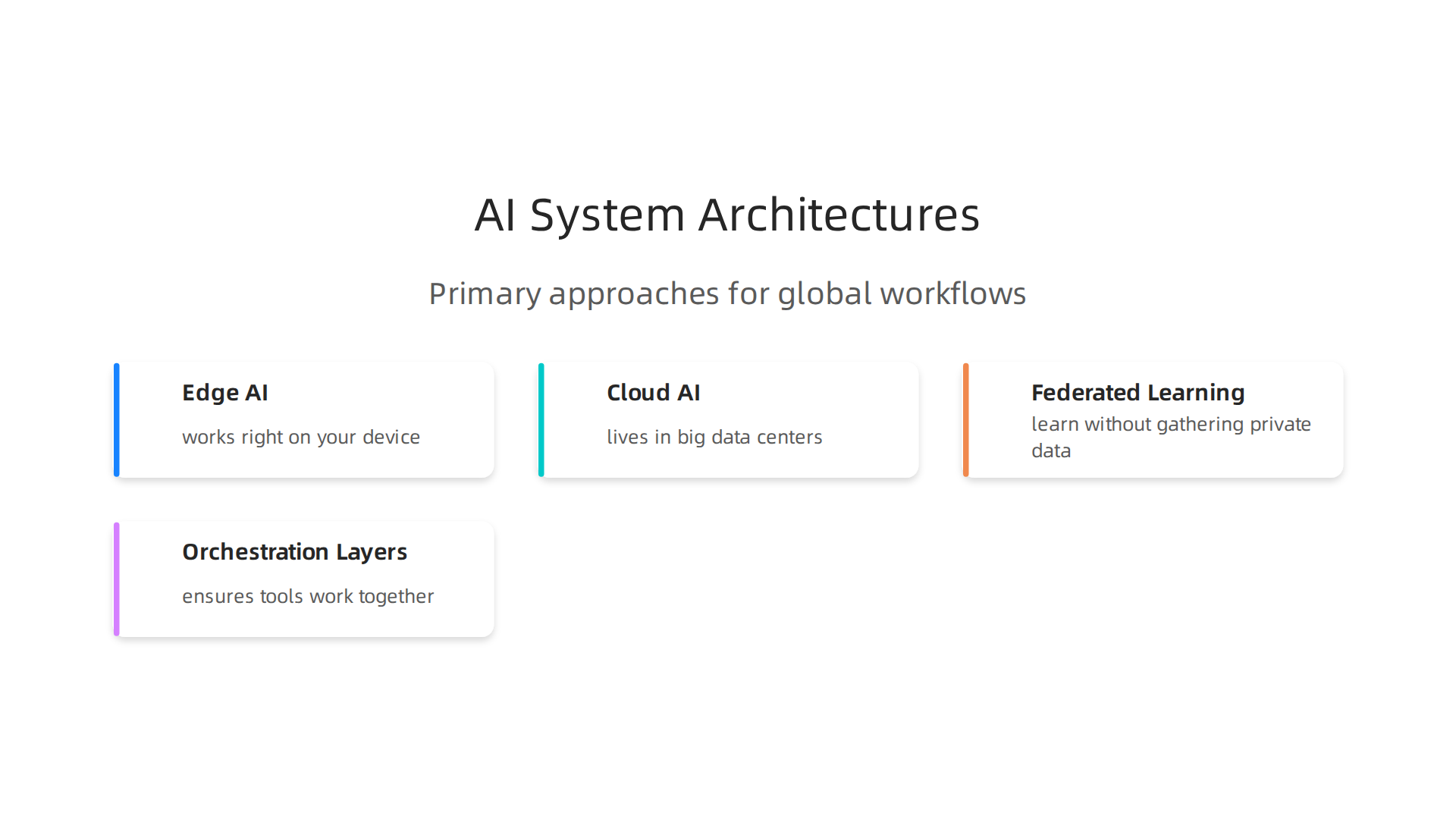
- Edge AI vs. Cloud AI: When we talk about where the "brain" of the AI lives, it often comes down to two places. "Edge AI" means the AI works right on your device or a local server, close to where the data is created. This makes things fast. "Cloud AI" means the AI lives in big data centers far away. Both are key for global work AI, depending on what a business needs.
- Federated Learning: This is a smart way for AI to learn from many different sources without gathering all the private data in one central spot. Imagine many offices around the world using AI. Instead of sending all their secret data to one place, the AI models learn from each office’s data locally. Only the "lessons" learned are shared to make the main AI better. This helps keep data private, which is very important because many countries have strict rules about data handling, as outlined in a 2026 guide on Cross-Border AI Data Compliance.
- Orchestration Layers: For all these different AI parts and tools to work together, we need "orchestration layers." Think of this as a conductor for an orchestra. These layers make sure that various AI tools and steps in a workflow happen in the right order and talk to each other correctly. They connect different systems, ensuring everything runs smoothly. If you want to dive deeper into how these platforms work, you can explore a 2026 AI Workflow Orchestration Platforms: 2026 Comparison.
Knowing how to pick the right ones can make a big difference for your business. For more on the options, you might want to check out AI Platforms 2026 Compared for Startups and Enterprises.
These architectures help create typical workflow patterns where global work AI really shines and reduces common problems:
- Multilingual Communication: AI makes it much easier for teams to talk to each other across language barriers. AI can instantly translate messages, documents, and even live conversations. This helps international teams understand each other better, reducing confusion and speeding up work.
- Task Routing: AI can smartly send tasks to the right person or team, no matter where they are in the world. For example, if a customer asks a question, a clever AI can figure out which expert in which time zone should answer it. This ensures work gets to the right person quickly and efficiently.
- Knowledge Synthesis: Another powerful use for AI is bringing together information from many different places. If a company has data spread across different systems, languages, and departments globally, AI can quickly gather and summarize this information. This "knowledge synthesis" helps everyone get a clear picture and make better decisions faster.
As you can see, the way AI is built and used can greatly improve how global teams operate. Staying on top of these changes is key for any innovative startup looking to succeed.
Get clear daily AI updates from The Deep View Newsletter.
The AI Newsletter Worth Reading
Practical Tools & Platforms: What Startups Use to Build ‘Global Work AI’
Now that we understand how AI is set up and changes global workflows, let’s look at the actual tools and platforms that innovative startups use to build powerful global work ai solutions. Picking the right ones is super important for success in 2026.
Here are the main types of clever AI tools transforming how businesses operate across the world:
- Data Platforms: These are the backbone for any AI. They help gather, store, and prepare all the information AI needs to learn from. For global work, these platforms must be able to handle data from many different places safely. They also need to get data ready so AI can use it, which is crucial for building reliable AI systems. If you want to dive deeper into how to set up your data, consider learning how to Build Your Modern Data Pipeline for Startup Success.
- Multilingual AI Models: These are the tools that power instant translation and understanding across languages. They let teams talk and work together no matter where they are from. Think of them as the smart brains that make global communication smooth and easy.
- AI Orchestration Platforms: We talked about orchestration layers before. These are the tools that bring all the different AI parts and steps in a workflow together. They make sure everything runs in the right order and that all the AI tools can "talk" to each other. In 2026, many different AI orchestration tools are available, ranging from enterprise systems to no-code builders for smaller businesses, as detailed in a Top Workflow Orchestration Tools: The Complete 2026 Buyer’s Guide. You can also find a helpful video comparing 7 Best AI Orchestration Tools in 2026 for a visual guide.
- Observability Tools: This is a new, very important type of tool for 2026. Think of it like a "debugger for AI thoughts." These tools help you see exactly how an AI system is working, or why it might not be working as expected. They let you track every step an AI takes, which is key for finding and fixing problems quickly. Being able to watch and understand your AI is what makes it truly ready for real-world use, separating a good idea from a great product, according to an AI Workflow Orchestration Platforms: 2026 Comparison.
When choosing these top ai tools, founders must think about some important tradeoffs:
- Latency: How fast does the AI respond? For teams spread across the globe, slow responses can hurt work speed.
- Compliance: Does the platform follow all the data rules and laws in different countries? This is a big deal for keeping data safe and avoiding legal trouble.
- Vendor Lock-in: Can you easily switch to a different tool later if you need to, or will you be stuck with one company? Being flexible is usually a good thing for a growing startup.
- Customization Capability: Can you change the tool to fit your specific business needs? Every startup is different, so being able to mold the AI to your exact work is often a big plus.
Evaluating these aspects helps founders make smart choices for their global work ai strategy. To learn more about selecting the right systems, you might find our guide on How to Evaluate AI Platforms for Your Startup in 2026 very useful.
Now that we’ve looked at the important tools for building clever AI systems, let’s think about where new startups can find their big chance. It’s all about finding a real need and proving that your global work ai solution can fill it.

This is called Product-Market Fit, and it’s super important for an innovative startup in 2026.
Finding Underserved Problems in Global Teams
Even with all the new top AI tools, there are still many tricky problems for teams working across different countries. These are the sweet spots where startups can make a real difference:
- Deeper Cultural Understanding: Basic translation is good, but truly understanding different ways of speaking and working across cultures is harder. AI that helps teams grasp not just words, but also meanings and customs, can be a huge help.
- Seamless Project Handoffs: When a project moves from a team in one time zone to another, things can get lost. AI could make these handoffs smoother, ensuring everyone knows exactly what’s next, no matter where they are.
- Unified Knowledge Across Regions: Imagine a company with offices all over the world. Each office might have its own way of doing things or storing information.
Global work AIcan help pull all that knowledge together, making it easy for anyone to find what they need, regardless of location. - Complex Compliance and Rules: Different countries have different rules for data and work. An AI solution that helps businesses automatically follow these rules, or warns them when they might not be, can save a lot of headaches.
These are the kinds of specific problems where early traction is possible. Startups that focus on these niche areas, rather than trying to solve everything at once, often find success.
How to Prove Your Product-Market Fit Quickly
For a startup to get funding and grow, it needs to show that people really want its product. In 2026, investors are looking for clear proof, not just big ideas or general AI models. They want to see real customer conversion and efficient use of capital, as detailed in reports on AI Startup Funding: What Investors Look for in 2026. The market is focusing on specialized AI and AI-native services rather than generic tools, according to a H1 2026 AI startup funding report.
Here’s how to show that your global work ai has strong product-market fit:
- Pilot Customers are Key: Get real businesses to try your solution early on. They become your "pilot customers." Their feedback is gold. If they find your product helpful and are willing to pay for it, that’s a strong signal that you’re on the right track. This helps show investors that your AI can turn advanced technology into a lasting business, which is a major focus for them when Pitching Your AI Start-up: What Venture Capitalists Are Looking for in AI Business Models in 2026.
- Smart Data Partnerships: Working with other companies that have data you can use (with proper privacy steps, of course) can help you test and improve your AI faster. This shows your solution works with real-world information.
- Measurable Results (KPIs): You need to show numbers that prove your solution works. For example, if your AI helps with communication, show how it reduces meeting times or speeds up project steps. If it handles compliance, show how it prevents costly mistakes. These "Key Performance Indicators" (KPIs) tell a clear story of your value.
By focusing on real problems and proving your solution with actual results, an innovative startup can quickly show its worth. This clear evidence helps get the attention of investors who are looking for serious AI ventures in 2026. For founders and investors tracking the latest in AI and venture capital, staying informed is critical.
Get clear daily AI updates from The AI Newsletter Worth Reading.
Understanding these signals helps founders know they’re building something truly valuable and gives investors confidence that they’re backing a winner. If you’re looking for more ways to find these types of opportunities, consider checking out resources on how to Discover startup project opportunities using AI and data analytics.
Now that we’ve talked about finding the best chances for global work AI startups, let’s look at what investors really want to see. It’s not enough to have a good idea or even a working product. In 2026, investors are very careful about where they put their money, especially in the busy AI market. They look for specific "signals" that show an innovative startup is likely to succeed for a long time.
What Investors Look For in ‘Global Work AI’ Startups
Investors want to make sure their money is safe and will grow. They use a checklist of important things when looking at global work AI companies.
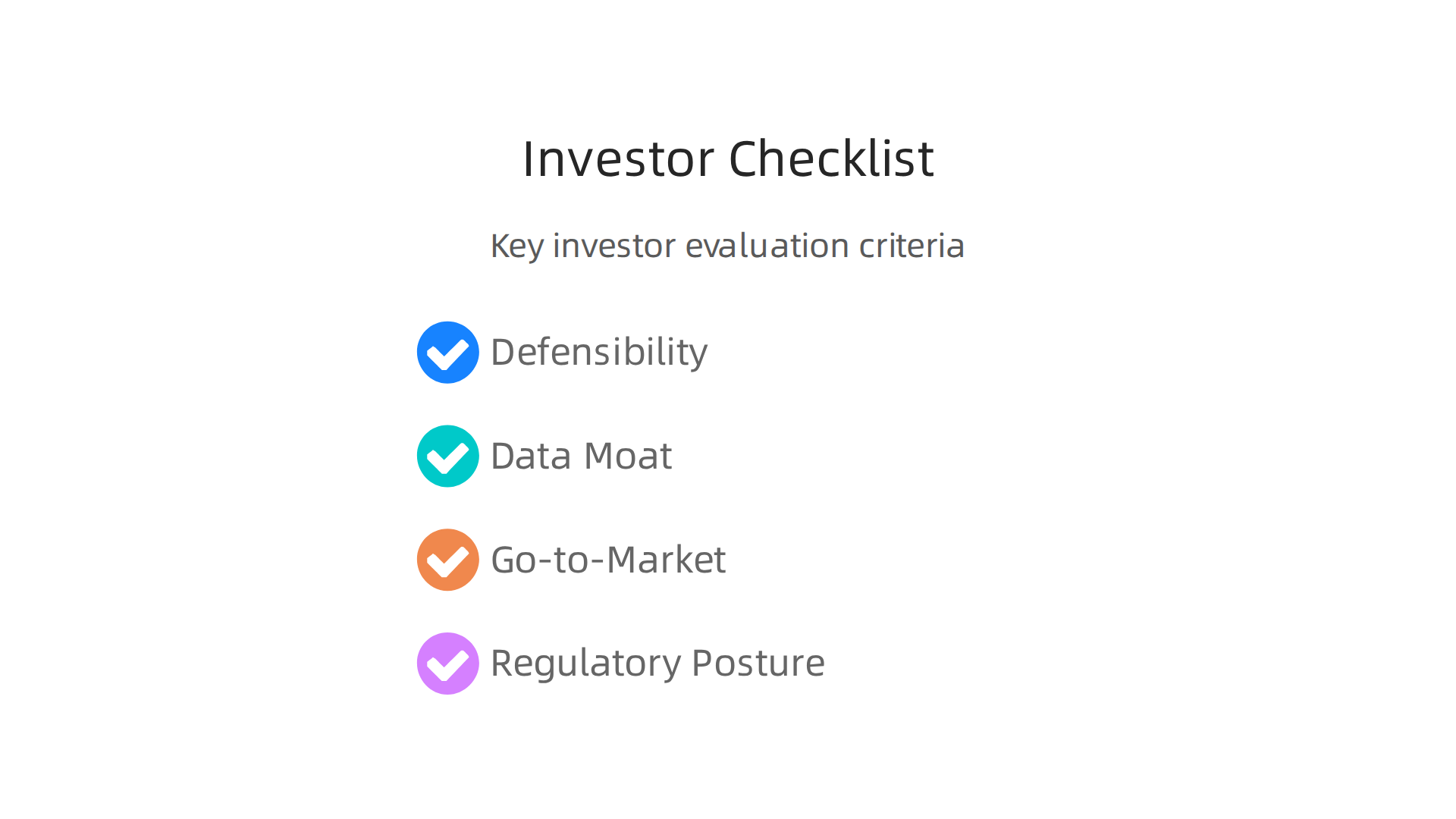
With so many businesses adopting AI in at least one area by 2026, reaching 88% of organizations, investors want to see real value, not just hype 47 AI Adoption Statistics That Define Enterprise Technology in 2026. Here are the main things they check:
- Defensibility: This means how hard it is for other companies to copy your idea or take your customers. For
clever AIstartups, defensibility often comes from special technology, unique data, or strong customer relationships that are hard to break. It’s about building something that stands out from the crowd. - Data Moat: A "data moat" is like a protective ditch around a castle, but for information. It means your AI gets better over time because it collects and uses a lot of special data that no one else has. For
global work AI, this could be unique data about how different teams communicate across borders or how certain tasks are handled in various cultures. This makes yourtop AI toolssmarter and harder to beat. - Go-to-Market Mechanics: Investors want to see a clear plan for how your
innovative startupwill find customers and sell your product. How will you reach businesses all over the world? Will you use online ads, sales teams, or partners? A solid plan here shows you know how to grow your business effectively. - Regulatory Posture: Because AI is new and fast-changing, there are often rules and laws about how it can be used, especially with data from different countries. Investors want to know that your
global work AIunderstands these rules and is set up to follow them safely. This avoids big problems down the road.
How Traction Metrics Differ for AI Startups
"Traction metrics" are the numbers that show your startup is gaining momentum. What investors look for in these numbers can change depending on what kind of global work AI startup you have.
- Platform AI Startups: These are companies that build a general AI system that many different businesses can use. For example, a platform that helps with language understanding for any industry. For these, investors might look at how many developers are building on your platform, how many different types of customers you have, and how often they use your core tools.
- Vertical AI Startups: These startups focus on solving very specific problems for one industry or type of business. For instance, an AI that only helps hospitals manage patient data across different countries. For these, investors want to see deep engagement from users in that specific area, clear proof that you’re solving their unique problem, and a strong ability to make money from that niche. They care more about the impact within that one area rather than wide adoption. For more insights on the types of funding available, consider learning about apex funding.
It’s important for founders to know these differences so they can show the right numbers to potential investors. If you’re looking for more details on how to attract funding, exploring resources like how to find investors for a startup in 2026 can be very helpful. Knowing what signals matter most helps an innovative startup get the attention and money it needs to grow.
A big part of a startup’s "Regulatory Posture" is how well it handles rules about data and AI, especially when working across different countries. For any global work AI startup, understanding these rules is not just a good idea, it’s a must-do.

In 2026, governments around the world are making new laws about AI very quickly. This means an innovative startup needs to be ready for many changes.
Key Rules for Global AI Workflows
When your AI tools work in many countries, you need to think about a few main things:
- Data Residency: This rule states where your customer’s data must be stored. Some countries require that data from their citizens stays within their borders. For instance, the European Union has strong rules about where data can be kept and how it can move, with the EU AI Act setting tough standards that began being fully enforced in August 2026, including big fines for not following them AI Trends in Cross-Border Compliance 2026.

Similarly, countries in the Asia Pacific region, like Singapore, also have frameworks that guide data handling and storage APAC Data Residency: A 2026 Playbook for Cross-Border AI. In 2026, even the US Department of Commerce proposed new rules for how AI data can be shared across borders US Department of Commerce Proposes New Rules for Cross-Border …. This means global work AI solutions must be flexible enough to store data in different places.
- Privacy Regimes: Beyond where data is stored, there are rules about how you collect, use, and protect people’s private information. The EU’s General Data Protection Regulation (GDPR) is a well-known example. Other regions like China also have specific rules about cross-border data flow, updating their guidelines to make it easier to transfer some data, but still with strict requirements AI-Supporting Provisions on Cross-Border Data Flow …. An
innovative startupneeds to know these different privacy laws for every country they work in. - Model Governance: This is about making sure your
clever AImodels are built and used in a fair, safe, and clear way. It means documenting how your AI learns, what data it uses, and how you check if it’s working correctly. This is important for trust and showing that yourtop AI toolsare not doing anything harmful. Many countries, including those in Southeast Asia, are releasing updated guidance on AI governance, especially for generative AI systems AI Regulatory Updates 2026: What’s Changing Across SEA.
Ethical Risks in Global AI
Even with all the rules, ethical questions can pop up.
- Bias: An AI system trained on data from one country might not work fairly or accurately for people in another. For example, language AI might have trouble with local slang or different cultural ways of speaking.
- Transparency: Sometimes, it’s hard to understand why an AI made a certain decision. This can be a problem if the AI is used for important tasks, like hiring or deciding who gets a loan, especially when working with people from many backgrounds.
- Human Oversight: Even the best AI needs humans to keep an eye on it. This helps catch mistakes and make sure the AI is used in a way that respects everyone, no matter where they are.
Founders need to think about these deep challenges. If you want to learn more about these kinds of issues, you can check out why it’s important to understand Why Is AI Bad Unpacking Critical Risks For Founders And Investors. By planning for these risks from the start, a global work AI startup can build stronger, more trusted products.
To stay on top of the fast-changing world of AI and its rules, a good way is to get regular updates.
Get clear daily AI updates from The AI Newsletter Worth Reading.
Moving from a small test to a worldwide launch of your AI tools needs careful planning. For any global work AI startup, it’s not enough to just build a great product. You also need a clear plan to grow it safely and smoothly across different countries.
Operational Playbook for Scaling Global AI
Scaling an innovative startup with clever AI means having a solid playbook. This plan helps your top AI tools go from a few users to many, without big problems.
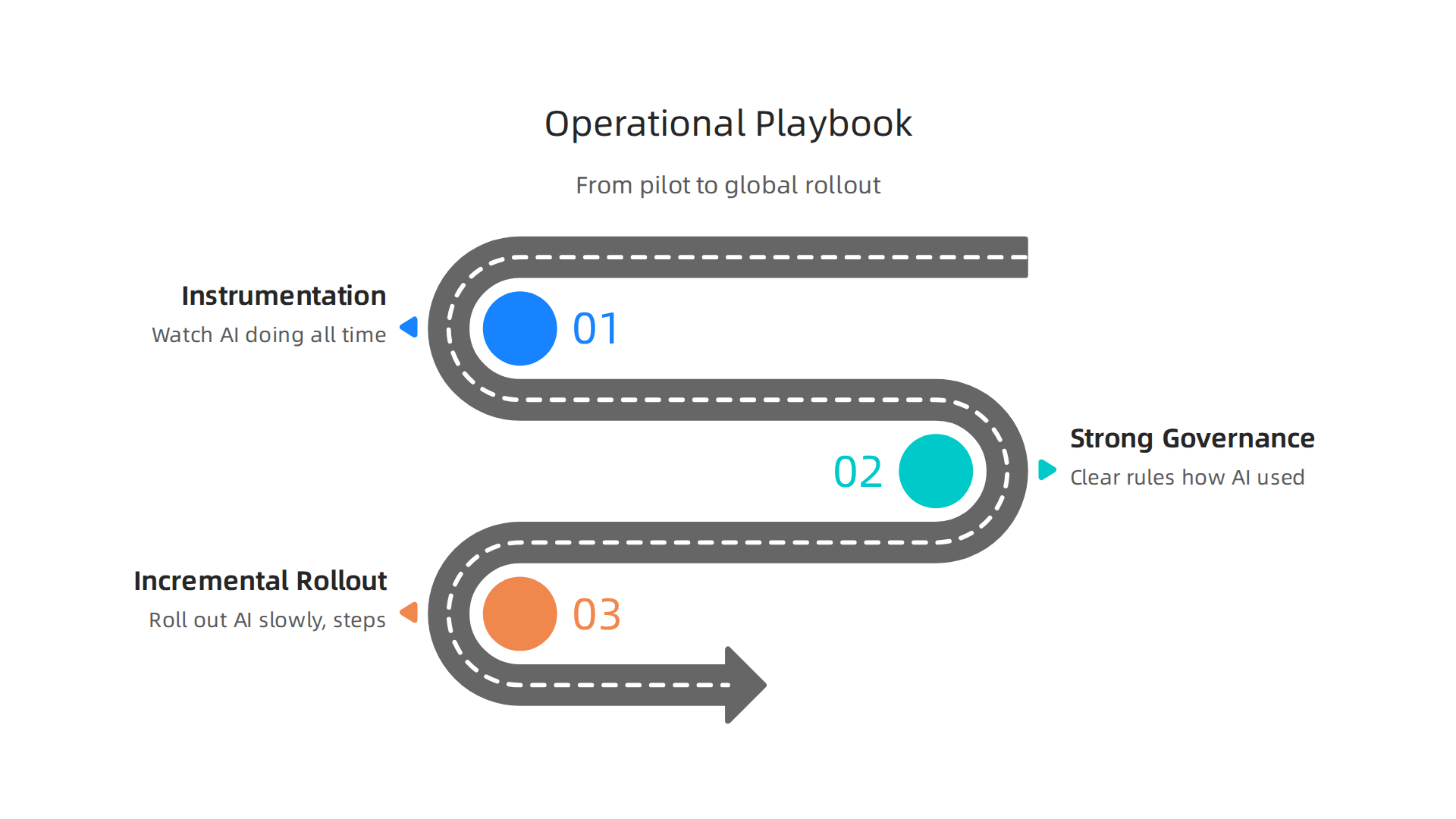
- Instrumentation and Monitoring: First, you need tools to watch how your AI is doing all the time. This is called "observability." It helps you see if the AI is working correctly, if it’s being fair, and if it’s following all the rules. For example, in 2026, experts say that having a "debugger for AI thoughts" is super important. It helps you understand why your AI made a certain choice AI Workflow Orchestration Platforms: 2026 Comparison. This way, if something goes wrong, you can quickly find out why and fix it.
- Strong Governance: Next, you need clear rules for how your AI is built and used. This includes making sure the data used to train your AI is good, checking for bias, and knowing how to make changes. This is especially true for
global work AI, where different countries have different rules about data and privacy. Think of it like a roadmap for your AI to follow. - Incremental Rollout: You don’t just flip a switch and go global all at once. Instead, you roll out your AI slowly, in steps. Start in one new region, learn what works and what doesn’t, and then expand to another. This way, you can fix small problems before they become big ones. This is like testing your product in small areas before launching it everywhere, as many big companies are learning in 2026 2026: The year of scale or fail in enterprise AI – CIO.
Avoiding Common Scaling Mistakes
Many startups find that what worked for a small test doesn’t work when they try to grow big. This is a common challenge.
- Not Planning for Complexity: A big mistake is thinking that scaling up is just doing more of the same. Actually, it adds new layers of problems, like dealing with lots of different data, more users, and varying laws in different places.
- Ignoring Local Needs: When you go global, what’s normal in one country might not be in another. Your AI needs to be flexible enough to handle different languages, cultures, and rules. Not thinking about this can lead to your AI not being helpful or even causing problems.
- Lack of Clear Ownership: When an AI system grows, it needs clear leaders who are responsible for it. If no one is truly in charge, things can get messy. Companies that scale well treat AI like any other big system, with clear owners and ways to make sure it runs correctly How to Scale AI From a Single Use Case to the Entire ….
By being careful and following these steps, an innovative startup can make sure its global work AI solutions succeed around the world. It’s about building a strong base and growing smart. To learn more about how different systems work together, you might want to understand more about AI platforms 2026 compared for startups and enterprises.
Summary
This article explains why "global work AI" is a priority for startups and investors in 2026, summarizing market adoption, spending trends, and where real opportunities lie. It outlines the technical patterns—edge vs cloud, federated learning, and orchestration layers—that enable cross-border workflows, plus practical tools such as data platforms, multilingual models, orchestration, and observability. You’ll learn which specific team problems are still underserved (cultural context, handoffs, unified knowledge, compliance) and how to prove product-market fit fast with pilots, data partnerships, and clear KPIs. The piece also describes the investor checklist—defensibility, data moats, go-to-market mechanics, and regulatory posture—and shows how traction metrics differ for platform versus vertical AI startups. Finally, it covers the compliance and ethical risks of cross-border AI, plus a stepwise operational playbook for safe, incremental scaling and common mistakes to avoid. After reading, founders and investors will have a practical roadmap to evaluate, build, and scale global work AI solutions that can win customers and funding.