
Python Data Science Handbook Roadmap for Founders and Investors

The world of startups and investing moves incredibly fast in 2026. To make really smart choices and help businesses grow, everyone involved needs to truly understand data. It is not enough to just look at numbers; you need to know how to use them well. This is where advanced skills in Python and data science become extremely important.
Productive data teams today go beyond basic coding. They use Python to gather, clean, and understand large amounts of information. They master advanced practices that help them build useful models and find hidden patterns. A key skill is knowing what is data modeling, which means turning raw numbers into clear, actionable insights. These are the skills a top data specialist brings to the table, helping teams make better decisions.
Founders, investors, and corporate leaders all benefit from a clear, practical guide to these skills.

They need to understand the possibilities of data, what questions to ask their data teams, and how to use data findings to push their companies forward or make winning investments. Just like someone with an online master’s in data science or a masters in data analytics brings a high level of expertise, this kind of unified reference helps everyone speak the same data language.
This is exactly why a resource like the Python Data Science Handbook matters so much. It gives practical answers and shows you how to use Python’s essential tools for working with data. This article will build on that foundation, acting as your roadmap. We will explore actionable project ideas, guide you on what tools to use, and teach you how to check if your data work is truly helping your startup or investment strategy. To learn more about how to put these data skills into broader business plans, check out our guide on mastering AI and data business strategy for 2026 growth.
Stay ahead of the curve with daily insights into AI and technology.
The AI Newsletter Worth Reading
Why founders and investors should care about a Python data science handbook
Having a strong grasp of data science, as taught in a good Python Data Science Handbook, isn’t just for tech experts. It’s truly important for founders and investors too. Understanding data skills helps them make much better choices for their businesses and investments.
For founders, knowing these data science basics means you can make your products better, faster. You can use data to quickly see if a new product feature is working or if customers are happy. This leads to faster improvements and helps your company grow more smoothly. When you learn to use Python tools for data, you can build smart models that save money or bring in more money. For example, predicting which customers might leave your service, also known as customer churn, can bring huge returns. One company saw a 1500% return on investment by using data to reduce churn through early detection and targeted help Predictive Retention: 1500% ROI Case Study. Learning about data processing, from gathering to cleaning, is key to these kinds of successes. To dive deeper into managing raw data effectively, consider learning about mastering data ingestion for startup smart decisions and growth.
Investors also get a big boost from this knowledge. When you are looking at a startup to invest in, you want to know if their team can actually use data well.

A python data science handbook helps you understand the right questions to ask about a startup’s data approach. Investors can use special guides or "rubrics" to check how good a startup’s data team is. These rubrics help you see if their projects are sound and if their data specialists truly know what they are doing. Experts say that the best "take-home" tests for data professionals in 2026 are often graded using clear rubrics that candidates see upfront, which makes the evaluation fair and open Engineering Take-Home Assignments in 2026: 90 Minutes, Open …. This kind of standard way of checking skills reduces risk for investors and helps them make faster decisions.
In simple terms, a common understanding of data science, built on resources like a good python data science handbook, acts like a shared language. It helps founders and investors speak clearly about data, understand what is possible, and work together to achieve big business goals.
To become a truly great data scientist, or even just to speak the same "data language" as one, you need to know some key Python topics very well. These are the building blocks that let a data specialist work effectively and help businesses make smart choices. A good Python Data Science Handbook will usually cover these important areas.
Here are the core Python skills every data scientist should learn:
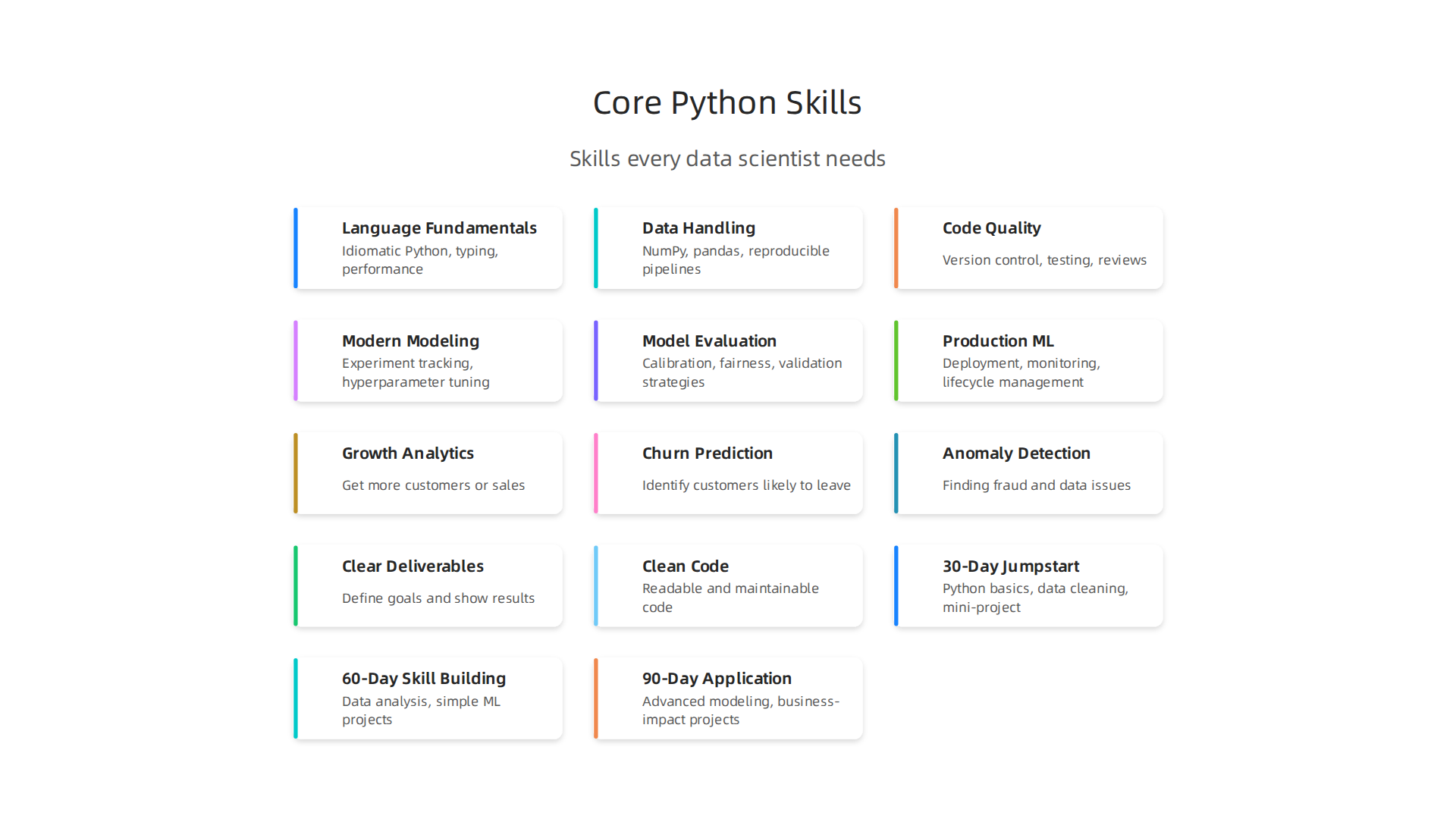
Language fundamentals that matter at scale: idiomatic Python, typing, performance basics
First, it’s about knowing Python itself inside and out. This means writing "idiomatic Python," which is code that looks and feels natural to other Python users. It’s clean, easy to read, and follows common patterns. Learning about "typing" helps prevent mistakes by letting you clearly say what kind of information your code expects. For example, telling Python a variable should always hold a number. Also, knowing performance basics means you can write code that runs quickly, especially when dealing with lots of data. This foundation is so important that many data science courses, like the Python for Data Science syllabus at one university, focus on these core concepts right from the start. If you’re looking into an online master’s in data science or a masters in data analytics, expect to spend a lot of time on these basics.
Data handling and analysis: NumPy, pandas, and best practices for reproducible pipelines
Once you know Python, you need to learn how to work with data. This is where special tools like NumPy and pandas come in. NumPy is great for doing math with large sets of numbers, like in huge tables. Pandas helps you manage and clean data that’s organized in tables, much like a spreadsheet. It’s a must-have for any data specialist. Learning "what is data modeling" is also key here, as you’ll organize data to answer specific questions. More importantly, mastering "reproducible pipelines" means setting up your data steps so they can be run again and again, giving the same results every time. This is super important for trusting your data analysis and for sharing your work with others. Being able to visualize and analyze data for real-world problems is a core skill taught in data science programs today Development and effectiveness verification of AI education. To handle data well from start to finish, understanding mastering data processing for startup growth and smart decisions is a valuable step.
Code quality, testing, and collaboration: version control, unit testing, and code review habits
Finally, a skilled data scientist doesn’t just write code. They write good code that works well with others. This means using "version control" tools like Git, which help track changes to code and let many people work on the same project without issues. "Unit testing" involves writing small tests to make sure each part of your code does exactly what it’s supposed to do. "Code review habits" mean letting other team members look at your code to find problems and suggest improvements. These practices make sure the data products are strong and reliable. Working in software development teams and gaining these industry skills is a key learning goal in modern information systems courses in 2026 Information Systems.
By mastering these areas, a data scientist can truly help a company grow and make smart decisions. To stay updated on the latest trends and tools impacting data science and the startup world, consider getting daily insights into AI and broader technology.
Get clear daily AI updates from The Deep View Newsletter. The AI Newsletter Worth Reading
After learning to write clean code and work well with others, a data scientist moves on to how to build and use smart computer models. These advanced skills involve making sure models learn correctly, checking if they are fair, and putting them into real-world use.
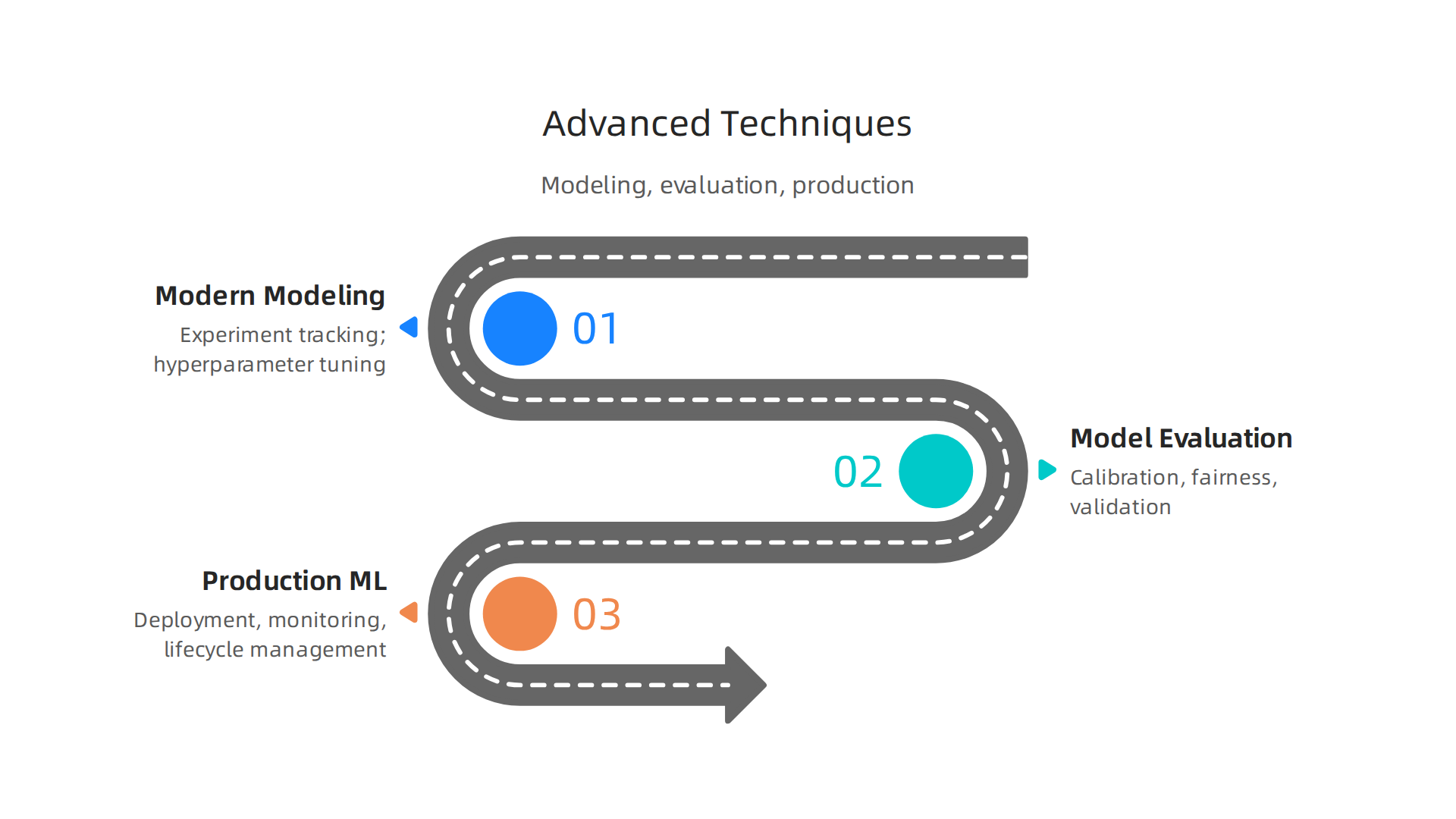

It’s about moving from just understanding data to actively using it to predict and improve things. A good Python Data Science Handbook will often dive deep into these complex topics.
Modern modeling workflows: experiment tracking, hyperparameter optimization, and uncertainty estimation
Building powerful data models is a bit like doing science experiments. You try different ideas and see what works best. In data science, this means "experiment tracking." You keep a careful record of every model you build, what data it used, and how well it performed. This helps you learn from your attempts.
Then there’s "hyperparameter optimization." Think of a model as a complex machine with many knobs and dials. These are hyperparameters. Turning them just right makes the machine work its best. Data scientists use smart methods to find the best settings, rather than just guessing. Many special AI tools help with this, like Weights & Biases, which are top choices for data scientists in 2026 when tracking experiments and tuning models Top 10 AI Tools for Data Scientists 2026.
Finally, "uncertainty estimation" means understanding how sure your model is about its predictions. For example, if a model predicts a customer will buy something, how confident is that prediction? Knowing this helps a data specialist make better decisions, especially when those decisions are very important.
Model evaluation beyond accuracy: calibration, fairness checks, and robust validation strategies
When you have a model, you need to know if it’s truly good. Most people first think of "accuracy," meaning how often the model is right. But in advanced data science, that’s not enough.
"Calibration" is about how well a model’s predicted probabilities match real-world results. If a model says there’s an 80% chance of rain, does it actually rain 80% of the time when it makes that prediction?
"Fairness checks" are super important in 2026. They make sure the model works fairly for all groups of people and doesn’t show bias. For example, a loan approval model shouldn’t unfairly deny loans based on someone’s background. This is a critical part of ethical AI.
"Robust validation strategies" mean testing your model in many different ways, not just one. You want to make sure it works well even when the data changes a little or in unexpected ways. This helps ensure the model is reliable in the real world.
Production-ready ML: deployment patterns, monitoring, and model lifecycle management
The final step is getting a model from your computer to where it can actually help people or a business. This is called "production-ready ML." It means making sure the model can run smoothly and reliably all the time.
"Deployment patterns" are the different ways you can put a model into action. This might mean having it run on a cloud server or built into an app. Learning how to choose AI platforms for 2026 business success is a key skill here.
Once a model is live, "monitoring" becomes vital. You need to watch it constantly to make sure it’s still working correctly and giving good predictions. Sometimes models can "drift," meaning their performance slowly gets worse over time because the real-world data changes. Tools like MLflow are essential for managing and monitoring models in operation Data Science Guide: Machine Learning & Analytics.
"Model lifecycle management" covers everything from building the model, putting it into use, watching it, and updating it when needed. It’s a continuous process to make sure the model stays valuable. To make all this work, building a strong data flow, or build your modern data pipeline for startup success, is a fundamental part of the job. For anyone pursuing an online master’s in data science or a masters in data analytics, these advanced skills are the mark of a truly capable data specialist.
Knowing all these advanced data science skills is great, but showing them off in action is what truly matters.

This is where practical projects and case studies come in. They let you prove you can use what you’ve learned to solve real problems.
Project Ideas to Show Real Value
When you’re building projects, think about what businesses truly care about. They want to see how your skills as a data specialist can help them make more money or save costs. Some project ideas that really stand out in 2026 are:
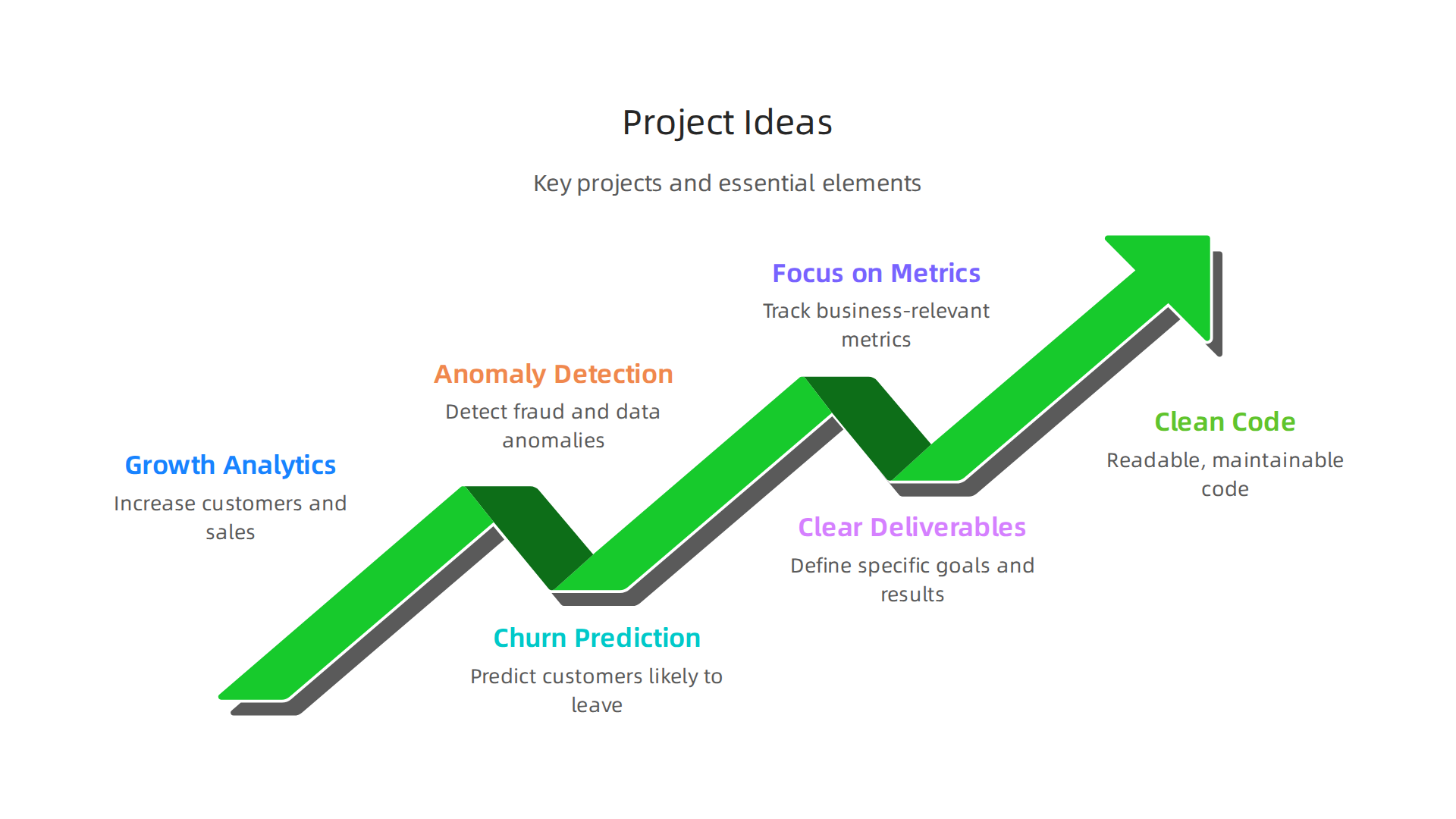
- Growth Analytics: Helping a business understand how to get more customers or make more sales.
- Churn Prediction: Figuring out which customers might leave and why. This can save companies a lot of money. For example, one case study showed that predicting customer churn helped a bank gain a huge return on investment by keeping their customers happy Predictive Retention: 1500% ROI Case Study.
- Anomaly Detection: Finding strange things happening in data, like fraud or broken machines, before they cause big problems.
These types of projects show that you understand the business side of "what is data modeling" and how to use data science to make a real impact. If you want to explore more ideas, you can always discover startup project opportunities using AI and data analytics.
How to Build Projects for Job Success
It’s not enough to just build a project; you need to show it off in the best way, especially for portfolio reviews and technical interviews.
Here’s how:
- Clear Deliverables: Make sure your project has a clear goal and shows specific results. What did you set out to do, and what did you achieve?
- Focus on Metrics: Don’t just say your model is "good." Explain how good it is using numbers that relate to business goals. For example, if you did churn prediction, did you reduce customer loss by 10%? This shows end-to-end value, not just how accurate your math was. Recruiters in 2026 are looking for projects that highlight revenue impact and cost reduction 15 Real-World Data Science Projects Recruiters.
- Clean Code: Your code should be easy for others to read and understand. This shows you can work well in a team.
Many programs for an online master’s in data science or a masters in data analytics teach you how to structure these projects for maximum impact. If you’re looking for guidance on preparing for career steps, you might find tips on how to land a data analyst internship in 2026. A good Python data science handbook can also guide you through the technical steps.
Using Case Studies to Prove Your Worth
Case studies are like telling a story about a problem you solved using data science. They help you show potential employers or investors that you can take a real-world problem, apply your skills, and get a valuable outcome. When you share a case study, always highlight the business impact. Did you save money? Boost sales? Make a process faster? That’s what makes your skills truly shine.
To stay on top of the latest advancements in AI and how they apply to data science projects, there’s a valuable resource available.
Get clear daily AI updates from The AI Newsletter Worth Reading.
For busy founders and investors, learning data science can feel like a huge task. But you don’t need a full-time degree to understand how to use data for smart decisions. A realistic learning roadmap, broken into smaller steps, can help you gain high-impact skills quickly.
The key is to focus on what helps startups grow and investors make better choices.
A Realistic Learning Roadmap for Busy Founders and Investors
To truly become a savvy data specialist, think about your learning in time-boxed study plans. This way, you can see progress and apply what you learn right away.
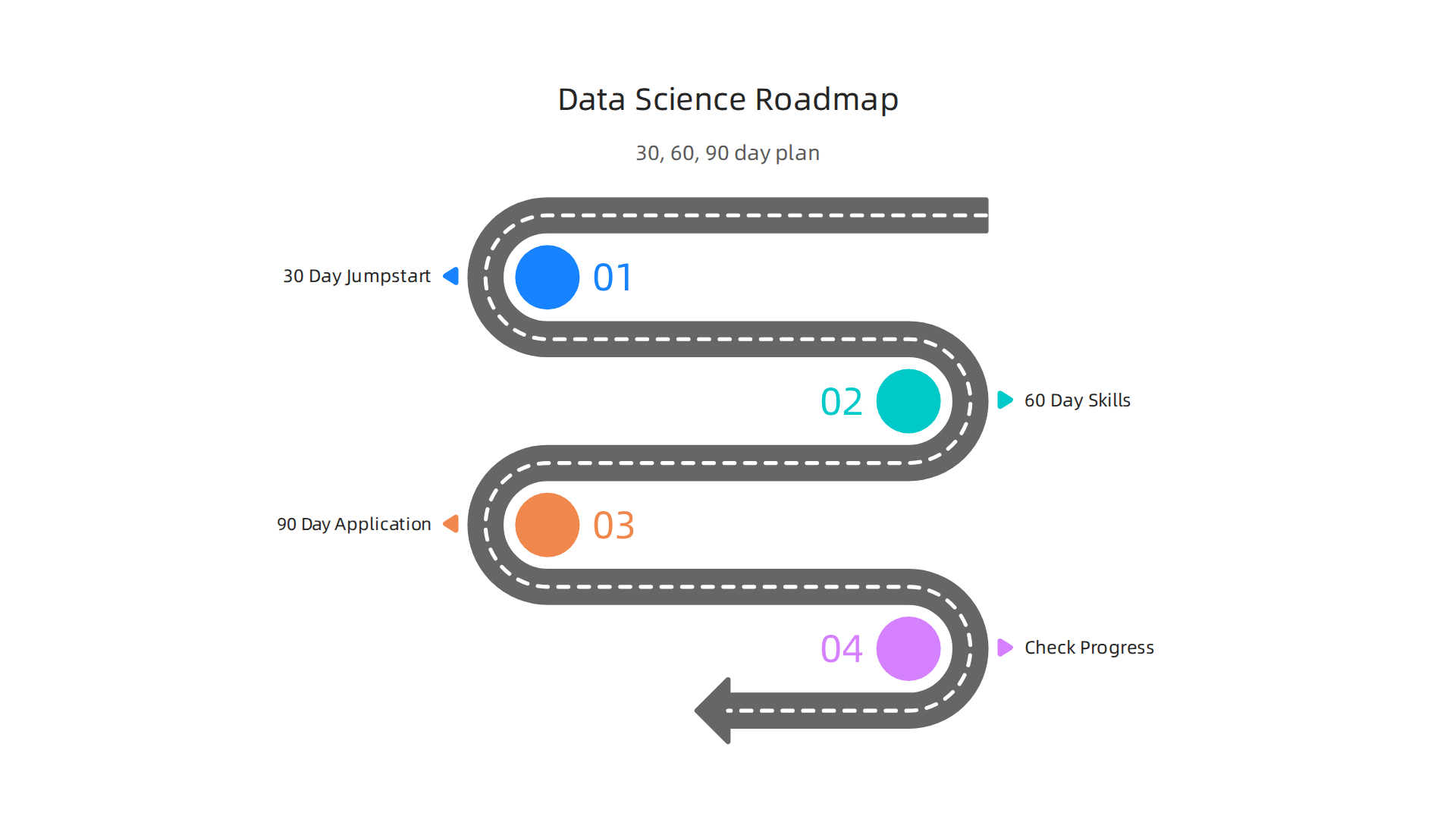
30-Day Data Science Jumpstart
In your first 30 days, focus on the basics. This involves understanding what data science is and getting comfortable with Python, a popular programming language for data work. You can start by looking at a PYTHON FOR DATA SCIENCE 30-HOUR SYLLABUS to get an idea of the topics.
Here’s what to focus on:
- Python Basics: Learn how to write simple code, handle different types of data, and use basic tools. Many free online tutorials can guide you. A great resource is the Python Data Science Handbook, which covers essential tools for working with data.
- Data Cleaning: Real-world data is messy. Learn how to fix errors and prepare data so it can be used.
- What is Data Modeling: Get a simple grasp of what data modeling means and why it’s important. It’s about organizing data in a way that helps you understand it better and make predictions.
- First Mini-Project: Try a very small project, like sorting a list of numbers or cleaning a small dataset. This hands-on practice builds confidence.
60-Day Skill Building
After your first month, you’re ready to dive deeper.
- Data Analysis: Learn how to find patterns and insights in data. This means using Python tools to explore your datasets.
- Simple Machine Learning: Start with easy machine learning models. Think about predicting simple trends, like which customers might buy a product again.
- More Projects: Work on small, clear projects that solve a real business problem. For example, try to predict simple sales trends.
- Consider Structured Learning: If you find yourself wanting more in-depth knowledge, exploring options for an online master’s in data science or a masters in data analytics could be a good next step. These programs offer structured learning that can turn you into a true data specialist.
90-Day Application and Impact
By now, you should be able to tackle bigger challenges.
- Advanced Data Modeling: Learn more complex ways to build models and understand how they work.
- Business Impact Projects: Focus on projects that show a clear benefit, like finding ways to save money or make processes faster. This is crucial for due diligence if you’re an investor. Building out a modern data pipeline for startup success can be a key project.
- Peer Code Review: Share your code with others to get feedback. This helps you write cleaner, more effective code.
- Case Studies: Build out simple case studies from your projects, showing the problem, your solution, and the results.
How to Check Your Progress
Throughout your learning journey, it’s important to know if you’re actually learning effectively.
- Small Projects: Every few weeks, complete a small project from start to finish. This is like a mini-test of your skills.
- Take-Home Challenges: Look for practice "take-home" challenges often used in job interviews. These are real-world problems you solve on your own time. Knowing how these challenges are graded can help you prepare for them, as they test your ability to explain your process and results clearly How Take-Home Data Challenges Are Graded.
- Feedback: Ask others who know data science to look at your work and give you honest feedback. This is a very helpful way to learn.
Staying updated with the latest in AI and data science is also crucial.
Get clear daily AI updates from The AI Newsletter Worth Reading.
Staying updated with the latest in AI and data science is also crucial. Knowing the right tools can make a big difference in how fast you learn and how much impact you can make as a data specialist. In 2026, the world of Python data science offers many powerful options.
Best tools, libraries, and environments for Python data science in 2026
When you want to work with data using Python, you’ll find many helpful tools. These include libraries for handling data, building models, and setting up your projects.
Modern Libraries for Data Work
Python has core libraries that are a must-know. For crunching numbers and working with data tables, Best Python Tools and Frameworks for Data Science in 2026 highlights Pandas and NumPy as essential. Pandas helps you clean up messy data, fix errors, and organize information into rows and columns. NumPy is great for math with large sets of numbers. For building simple prediction models, scikit-learn is the go-to choice. It’s stable and widely used for many common machine learning tasks. Lately, new tools like Polars are gaining speed for even faster data processing, as noted in the Python Ecosystem Scorecard 2026: Top Tools Ranked. If you’re building more complex systems, tools like MLflow help manage your machine learning projects. To understand how to best handle and prepare your data, check out our guide on Mastering Data Processing for Startup Growth and Smart Decisions.
Working Spaces and Keeping Things Organized
How you set up your workspace also matters. Many data professionals use Jupyter Notebooks for trying out ideas and exploring data. These are like interactive lab books where you can write code and see the results right away. For bigger projects, you’ll often write longer code scripts. To make sure your data work always runs the same way, no matter who uses it or where, tools like Docker are important. They help package your code and its setup together. This helps in making sure everyone on a team, whether they are a new data specialist or someone who has completed a masters in data analytics, works with the same tools.
Choosing the Right Tools
Picking the best tools depends on your needs. For small teams or quick projects, local tools and Jupyter notebooks work well. For larger companies that handle a lot of data, cloud-based tools like Snowflake or Databricks offer more power and flexibility. These services can grow with your business and often have built-in features for things like what is data modeling on a big scale. When making choices, think about how much data you have, how fast you need answers, and any rules about keeping data safe. Finding the right mix of tools helps you make the most of your data efforts. You can find more helpful advice in our The Definitive Guide to Data Analysis Software for Business Growth.
Knowing which Python tools to use is just one part of being a great data specialist. Actually showing off those skills and being able to measure them is super important, too. This is true whether you’re looking for a job, building your team, or even if you’re an investor checking out a startup’s tech claims. A good python data science handbook can help guide you through these steps.
Measuring progress, preparing for interviews, and using the handbook during due diligence
When it comes to proving or checking data skills, there are clear ways to do it.
Checking Skills with Rubrics
For companies, having a clear way to score skills helps a lot. They use things called skill rubrics or checklists. These are like scorecards that list what a data specialist should know and be able to do. For example, a rubric might check if someone can clean data, build a simple prediction model, or explain what their findings mean. Using rubrics helps benchmark new candidates or current team members to make sure everyone is on the same page about what’s expected. These tools are also great for someone pursuing an online master’s in data science or a masters in data analytics to track their own learning. Reviewing these rubrics before doing a task can help you make sure you hit all the important points, as suggested by the University of Chicago Data Science Clinic.
Acing Technical Interviews and Take-Home Tasks
When you apply for a data science job in 2026, you’ll likely face technical interviews and take-home assignments. These are designed to see how you solve real problems. Companies want to know if you can handle messy data, build models, and explain your work clearly, much like a real product needs. A good take-home task might ask you to solve a business problem over a few hours or days, then present your findings, as discussed in guides about Data Scientist Interview Questions 2026. When you get one, it is wise to clarify what the company expects and how they will grade your work. They often look for clear problem-solving, good code, and how well you explain your choices. Sometimes, they even allow you to use AI tools, as long as you mention it, according to tips on Engineering Take-Home Assignments in 2026.
How Investors Check Tech Claims
Investors looking to fund a startup also care deeply about the team’s technical abilities. They can use similar practical assessments to check if a founding team really knows their stuff. For example, if a startup claims their AI can predict customer churn very well, investors might ask for proof or a detailed walkthrough of how their model works. They want to see real data and how the team used things like advanced AI predictive analytics to get those results. This is part of what’s called due diligence. By reviewing a team’s actual work and how they apply their python data science handbook knowledge, investors can feel more confident about putting their money into a business.
To stay on top of the rapidly changing world of AI and how it impacts businesses and investments, make sure you’re always getting the freshest news.
Get clear daily AI updates from The AI Newsletter Worth Reading.
Summary
This article explains why a practical Python data science handbook is essential for founders, investors and data teams in 2026, and it maps the skills and workflows that deliver measurable business value. It covers foundational Python topics, data handling with NumPy/pandas, reproducible pipelines, code quality habits, and advanced model practices like experiment tracking, hyperparameter tuning and uncertainty estimation. You’ll learn how to assess models beyond accuracy—using calibration, fairness checks and robust validation—and how to deploy, monitor and manage models in production. The guide also suggests high‑impact project ideas (growth analytics, churn prediction, anomaly detection), a realistic 30/60/90‑day roadmap for busy leaders, and how to prove or evaluate skills with rubrics and take‑home tasks. Practical tool recommendations and examples help you choose the right libraries and platforms for your team’s scale. After reading, you’ll be able to ask the right data questions, build or evaluate production‑ready data work, and design projects that demonstrate real business impact.