
Master Data Architect Career 2026 for Top Salaries and Growth

Why mastering the data architect career matters in 2026
In 2026, the world runs on data, and a data architect is like the master builder for all that information. They design how companies gather, store, and use their data so it makes sense. This job is super important because good data helps businesses make smart choices, grow quickly, and even get money from investors. In fact, experts predict a strong demand for data architects over the next few years. Plus, the pay is good too, with a median annual salary around $178,000 for a Data Architect in 2026 in the US.
For new companies and startups, a skilled data architect is a game-changer. They help set up strong data systems from the start, which is key for success and attracting investments. As more companies look to use AI for startup success, the need for people who can design these complex data setups grows even more. Data architects make sure that big data, cloud tools, and new AI programs all work together smoothly. They are vital for guiding important choices about how a company collects and uses its valuable information.
However, even with this high demand, moving up in a data architect career can be tricky. Many people face challenges like skills gaps, where new technologies pop up fast, and it is hard to keep up. For example, knowing things like cloud platforms, real-time data streaming, and hands-on data governance are key skills for data architects in 2026. It can also be tough to stand out in a busy job market or to ask for the salary you truly deserve.
This article is here to help you master the data architect path in 2026.

We will give you a clear roadmap, show you different learning paths including options like data science masters programs or even how to find free data analytics courses. We will also teach you how to build a strong portfolio and ace your job interviews. You will learn about the latest hiring trends and what to expect for your pay.
Want to stay informed about the latest in artificial intelligence and other tech trends? Get clear daily AI updates. Sign up for The AI Newsletter Worth Reading today.
What hiring managers and VCs expect from a data architect
After understanding why being a data architect is so important in 2026, let us look at what companies and investors truly expect from you. What hiring managers and venture capitalists (VCs) look for depends a lot on where a company is in its journey.
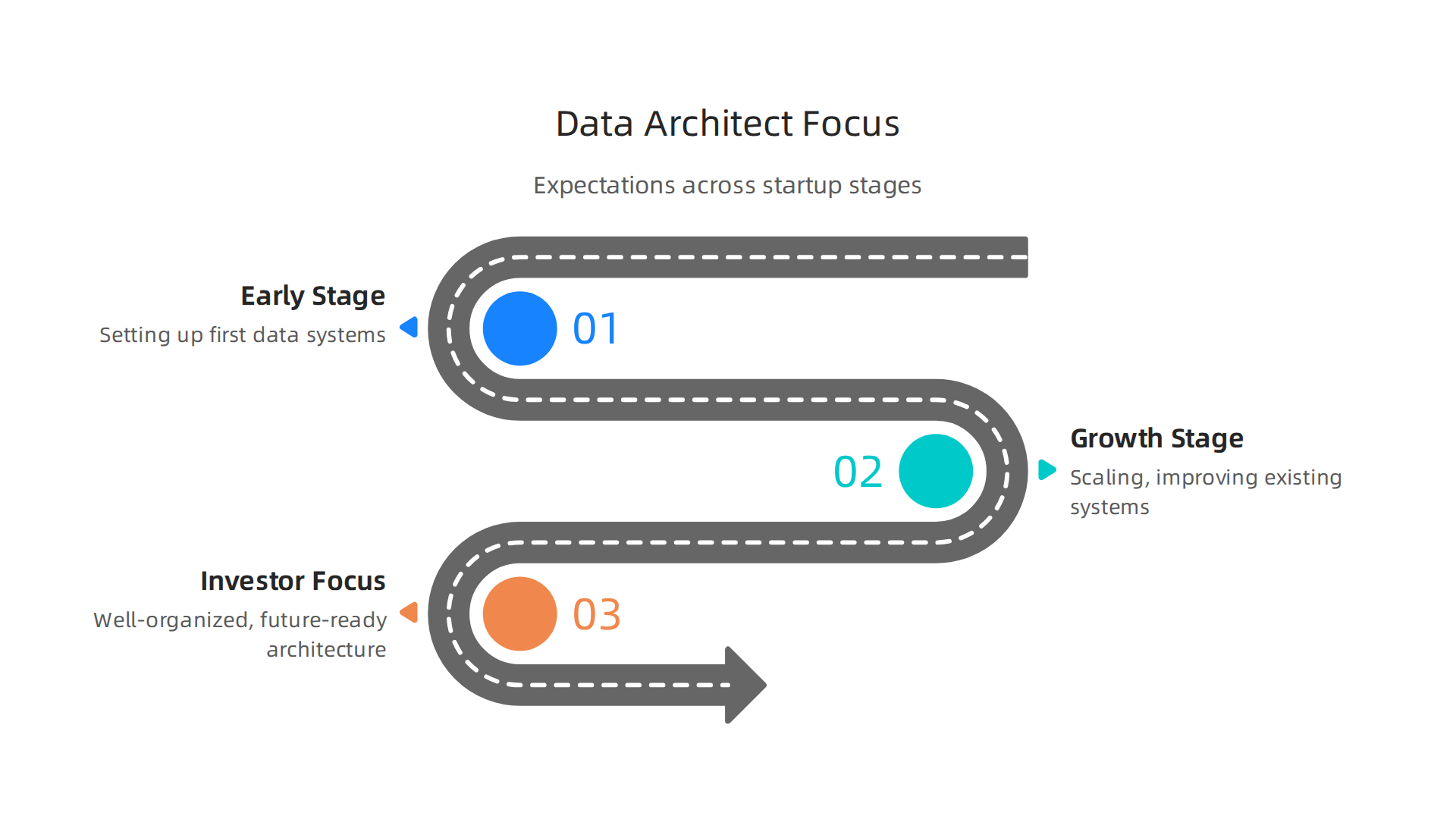
Early-Stage Startups: Building the Foundation
For new companies or startups just beginning, a data architect needs to be good at setting up the very first data systems. This means designing how data is collected and stored from scratch. They often have to make big choices, like deciding between a Data Warehouse Vs Data Lake. The goal here is to build something simple but strong that can grow later. Early-stage companies need a data architect who can get things running quickly and lay a good groundwork.
Growth-Stage Companies: Scaling and Improving
When a company starts to grow, its data needs become much bigger and more complex. Here, the data architect focuses on making existing systems better. They work on ensuring data can handle more users and more information. This often means improving data pipelines, making sure data is clean and safe, and setting up advanced Data Architect Trends 2026: Cloud, Governance, AI & Career principles. They also help the company use its data for new things, like building AI tools.
What Investors Look For
Venture capitalists and other investors, like those looking to buy companies, pay close attention to a startup’s data setup. They want to see that the data architecture is well-organized and ready for the future. A strong data architecture shows that a company can handle lots of information, grow without breaking, and use new technologies like AI wisely.

This makes the startup more attractive and valuable to investors. They want to know the company can deliver "end-to-end data value" and not just use isolated tools, as experts noted in 2026.
Differentiating Senior Data Architects
Senior data architects do more than just build systems. They are problem-solvers who connect data plans to business goals. They make choices that save money or help the company earn more. This means they are often seen as "value architects." To stand out, a senior data architect needs to show they can lead big projects and deliver clear results. They might have deep skills in areas like distributed systems design, knowledge of cloud platforms, and hands-on experience with data governance. It is about guiding the whole data strategy and showing how it helps the business grow, making them more valuable in the job market and potentially leading to higher salaries. In 2026, Senior Data Engineers Must Be Value Architects to stand out, emphasizing the strategic role. Even compensation for these specialized roles shows their worth, with specific roles like specialized cloud security architects or data engineers with Unity Catalog or data governance experience earning higher benchmarks in 2026, according to a 2026 Mid-Market Tech Salary Benchmarks report.
To become that valuable data architect we discussed, you need a strong mix of technical know-how and important people skills. These skills will help you move up in your career.
Key Technical Skills for a Data Architect
A data architect must be very good with the tools and methods used to handle data.
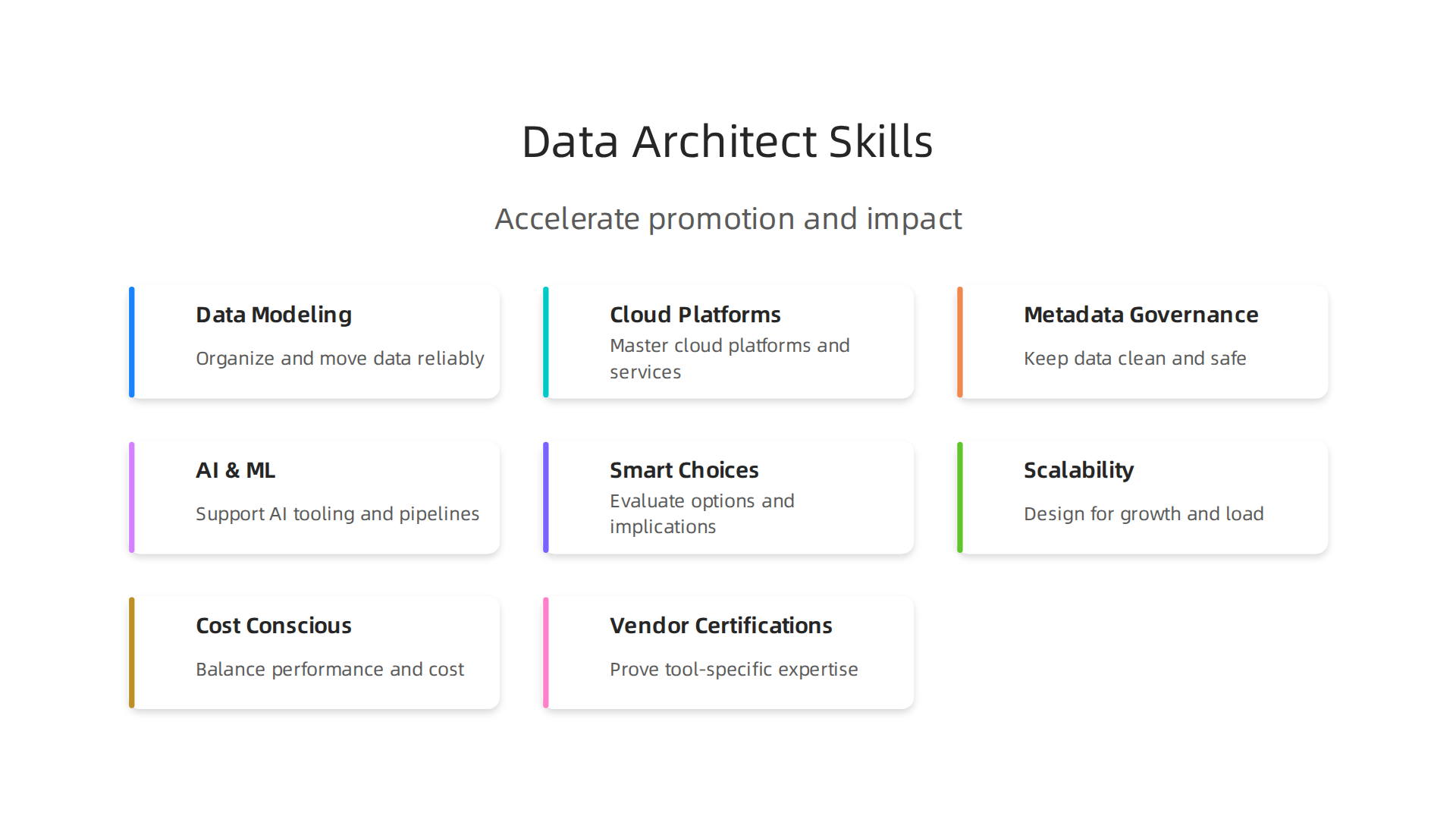
Think of it like building a house; you need to know about blueprints and different materials.
- Data Modeling and Pipelines: This means knowing how to organize data so it makes sense and how to move data from one place to another reliably. Companies in 2026 look for hands-on experience with data pipelines and tools like dbt, as noted by industry experts.
- Cloud Platforms: Most companies use cloud services like Snowflake or Google BigQuery to store and manage their data. A data architect needs to pick one and know it very well. Being familiar with multiple cloud services is also a big plus.
- Metadata and Data Governance: Metadata is simply "data about data," like labels that describe what a piece of information is. Data governance is about making sure data is clean, safe, and used properly. These are not just theories; companies want to see you actually doing this, especially with real-time data streaming technologies like Kafka. In fact, skills in these areas are key in the 2026 job market for a data architect, showing strong demand across various industries according to recent findings Data Architect Job Market Shifts in 2026: Key Skills Required.
- AI and Machine Learning: With AI growing fast, many data architects also need to know how to set up systems that support AI tools, like those used for making smart guesses or automated decisions. You might even need experience with "production GenAI" projects, meaning AI tools that are actually used by a company.
For those eager to dive deeper into the world of AI and its impact on technology, consider subscribing to The AI Newsletter Worth Reading to get clear daily AI updates.
Architectural Thinking: More Than Just Tools
It is not enough to just know the tools. A great data architect thinks about the bigger picture.
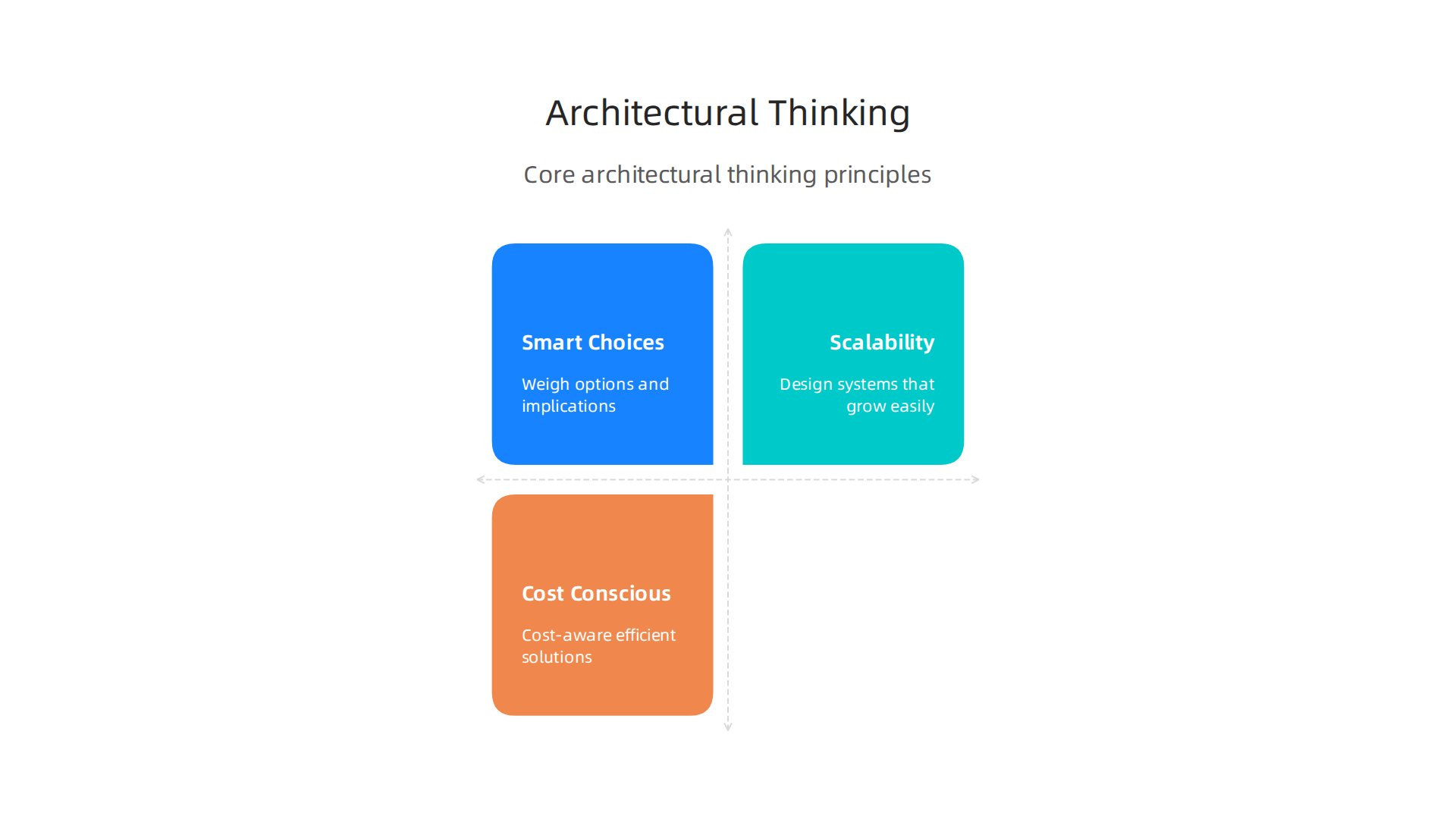
- Making Smart Choices: You have to weigh different options. For example, if you choose one way to store data, what does that mean for how fast you can get answers? What does it mean for cost?
- Scalability: This is about designing systems that can grow easily without breaking down. As a company gets more customers or more data, your design needs to handle it.
- Cost-Conscious Design: Especially for startups, money is tight. A data architect needs to design solutions that work well but do not cost too much. It is about getting the most value for the least amount of money. Core skills like distributed systems design and using open table formats are important here, as highlighted in the 2026 State of Modern Data Architecture: Benchmark Report.
Soft Skills and Working with People
Being a data architect also means working well with others.
- Talking to Everyone: You need to understand what the business needs and explain complex data ideas in simple ways to people who are not technical. This includes working with different departments to make sure everyone agrees on the data plan. Understanding business requirements is a top skill for data architects, reports from 2026 show Data Architect Salary (Updated for 2026).
- Thinking Like a Product Owner: This means focusing on what will help the company’s products and services. How can data make them better or help customers?
- Helping with Hiring: Sometimes, a senior data architect even helps choose new team members, looking for people who will fit well and add to the team’s skills.
Having a good mix of these technical and soft skills will help any data architect not just do their job well, but also get promoted and take on bigger, more important roles. Learning how to evaluate AI platforms for your startup in 2026 is also a valuable skill for understanding the broader tech landscape.
To truly become a top data architect, just having skills isn’t enough; you also need to show what you know. This is where education, special certificates, and helpful courses come in. They prove you have the right knowledge and can do the job well. In 2026, companies often look for these formal proofs.
Types of Learning Paths for a Data Architect
There are a few main ways to get the education needed to be a successful data architect:
- University Programs: Many people start with a university degree, often in computer science or a related field. Some even go for a data science masters degree to get a deeper understanding of data science and how to use data in smart ways. These programs offer a strong base in theory and big-picture thinking.
- Vendor Certifications: These are special tests from big tech companies that show you know how to use their tools. For example, a certificate from Amazon Web Services (AWS) or IBM can prove you are good with their cloud data services. Getting an IBM Data Architecture Professional Certificate can help you learn key skills like data modeling and database design. Many such certifications are available and are valued in the job market, as highlighted in lists of the best data architecture certifications. In fact, experts say that certifications align with real-world business needs and modern data architecture approaches for 2026, according to a report on the Best Data Certifications for 2026.
- Industry-Recognized Courses: There are many online courses from places like Coursera that offer deep dives into specific areas of data architecture. These might be part of a bigger "Professional Certificate" or standalone courses. They often teach practical skills like NoSQL, data warehousing, and working with data pipelines, as found in the Best Data Architecture Courses & Certificates [2026]. Such courses help bridge business strategy with technical tasks, not just knowing how to use tools, as explained in articles about the Best Data Architecture Courses and Training for 2026.
Choosing Your Learning Path
Picking the right learning path depends on where you are now and where you want to go.
- If you are new: Look for programs that teach the basics, like foundational data modeling or introductory free data analytics courses. These can give you a good start.
- If you want to grow: If you already have some experience, you might look for advanced topics. Maybe you want to learn more about how a data warehouse vs data lake works, or delve into machine learning systems. There are also specific training programs that focus on data architecture and management frameworks to show professional ability, as shown by one program’s Certification.
Learning: Going Deep and Wide
A good data architect needs to keep learning all the time. This means:
- Going Deep: Understand the core ideas, like why we organize data in certain ways (architecture theory). This deep understanding helps you make smart choices for any project.
- Going Wide: Also learn about new things coming out, like platform engineering, how to build systems for machine learning (ML infra), and the latest in Generative AI. For example, a program might teach you about data analytics with AI and Gen AI, which is very important in 2026. This balance helps you not only solve today’s problems but also prepare for tomorrow’s challenges.
Even with great education, showing off your skills in real projects is a must for any aspiring data architect. It’s how you prove you can turn ideas into working systems. In 2026, a strong portfolio and an active GitHub profile are just as important as your degrees or certificates.
Showing Your Skills Through Projects
When you build a portfolio, think about what a data architect actually does.

It’s not just about writing code; it’s about making big plans and smart choices for data systems. Your projects should clearly show this thinking.
- Architecture vs. Engineering: An engineer might build a bridge, but an architect designs the whole plan, picks the right materials, and makes sure it’s strong and safe. For data, this means showing how you designed the way data flows, where it’s stored, and how different parts of a system talk to each other. Don’t just show code; show the "why" behind your choices.
- Real-World Problems: Projects that solve real-world problems are the most valued. You could pretend to build a system for an online store or gather city data for analysis, as suggested by experts in a Data Engineer Portfolio Review Checklist (2026). This helps hiring managers see how you’d work in a real job.
- Quality Over Quantity: It’s better to have a few excellent projects than many average ones. Pick your best and most important work to show off, focusing on how you solved problems. One guide on How to Craft the Perfect Architecture Portfolio says to choose your best work and show it in depth.
What to Put in Your Portfolio
Your portfolio should be easy for anyone to understand, even if they aren’t tech experts. Some advice for building a data portfolio in 2026 says it should be simple to navigate and clear within five seconds, according to a video on I Found a BETTER Way to Build Data Portfolios in 2026.
- Systems Diagrams: Use pictures and flowcharts to explain how your data system works. This visual aid is key to showing your design skills.
- Trade-Off Analyses: Explain the different options you thought about for a system (like using a data warehouse versus a data lake) and why you chose one over the others. This shows you think critically.
- Performance Metrics: Show how well your solution worked. Did it make things faster? More reliable? Use numbers to prove its impact.
- Project as a Story: Treat each project like a small story. Start with the problem, explain your approach, share what you found, and give a business recommendation. This structure helps you tell a complete story about your skills, as explained in a guide on How to Build a Data Portfolio in 2026 That Actually Gets You Hired | AI-Ready Projects Guide.
GitHub and Design Documents
Your GitHub profile is also a powerful tool. It’s not just for code; it can host your design documents, too.
- Open-Source Contributions: If you help with open-source projects, it shows you can work with others and understand complex systems.
- Reproducible Demos: Make it easy for others to try out your project. Simple instructions or a quick video can show your work in action.
- Sample Design Docs: These are super important for a data architect. They show your ability to plan, document, and explain complex data system designs before a single line of code is written. For example, you might show how you would Build Your Modern Data Pipeline for Startup Success. This proves you can think through the whole system.
Staying on top of the latest in technology, especially with AI, is also crucial for data architects. If you want to keep up with the fast-paced world of technology and artificial intelligence, consider checking out daily updates.
Get clear daily AI updates from The AI Newsletter Worth Reading.
Once you have great projects and a strong GitHub profile, the next step is to make sure people know about your skills. This is where networking and building your personal brand come in handy. It’s not enough to be a good data architect; you also need to be seen as one, especially by people who might hire you or invest in your ideas.
Networking, Personal Brand, and How to Surface to Investors and Hiring Managers
Building your personal brand is about showing the world who you are and what makes you special. Think of it as telling your story clearly. In 2026, making your expertise easy to find and understand across different online places is key to good personal branding, as noted by experts in The Reality of Personal Branding in 2026.
Tactics for Visibility: Talks, Blog Case Studies, and Community Contributions
To get noticed, you need to be active where people in your field gather:
- Share Your Knowledge: Giving talks at industry events or online webinars is a great way to show off your smarts.

You can talk about a complex data problem you solved or share a new way of thinking about data architecture.
- Write Case Studies: Turn your best portfolio projects into blog posts or detailed case studies. Explain the problem, your solutions, and the good results. This helps others learn and shows you can explain big ideas simply. Publishing your work, especially on platforms like GitHub, is proof of your skills that a resume alone can’t match, according to a guide on Personal Branding for Data Analysts: Stand Out in 2026.
- Join Online Communities: Be active in online groups or forums where data professionals hang out. Answer questions, share your views, and help others. This builds your reputation as someone helpful and knowledgeable.
How to Use Investor and CTO Networks
Connecting with important people can open doors:
- LinkedIn is Your Friend: LinkedIn is a powerful tool for building your brand.

Make sure your profile clearly shows your unique skills and what problems you like to solve, as suggested for Tech Personal Branding: 2026 Tactics for Marketers. Connect with Chief Technology Officers (CTOs) and investors. They are always looking for talented data architects or new startup ideas.
- Attend Industry Events: Go to conferences and meetups, both in person and online. These are great places to meet investors, founders, and other tech leaders. Don’t just hand out cards; have real conversations about data challenges and how you can help. If you’re looking for funding for a startup, knowing how to connect with these individuals is crucial. For more guidance, you might find tips in a guide on how to find investors for a startup in 2026.
Leveraging Mentorship and Advisory Roles
Another way to show your strategic value is by guiding others.
- Be a Mentor: Help newer data professionals. Mentoring shows you can lead and teach, which are big parts of being a good data architect.
- Offer Advisory Help: If you have a lot of experience, you might offer advice to small startups or teams. This shows you can think at a high level and solve big-picture problems, making you a very attractive person for hiring managers and investors. You are proving your worth beyond just technical skills.
After you have worked hard to build great projects and make your GitHub profile shine, and people start to notice your personal brand, the next big step is the interview. This is where you show what you can do and talk about what you are worth. For a data architect, interviews often have special parts that look at how you design big systems and solve complex problems.
Interview strategies, system-design rounds, and compensation negotiation
Getting ready for interviews as a data architect means more than just knowing your tech facts. You need to show how you think about building large-scale data systems.
Preparing for Architecture Interviews
In architecture-style interviews, companies want to see how you would plan and build a data system from start to finish. This is called a system-design round. You might be asked to design a system for a new service or to make an existing one better.
- System Design Thinking: When you are given a problem, think about the big picture. How would data flow? What tools would you use? Would you choose a data warehouse vs data lake? Make sure to explain your choices simply.
- Trade-offs are Key: No design is perfect. You will need to make choices between different options. For example, a system might be very fast but cost a lot, or it might be cheaper but a bit slower. Showing that you understand these trade-offs and can explain why you pick one over the other is very important. This also means you can discuss how to evaluate AI platforms for your startup in 2026 based on these trade-offs.
- Evaluation Criteria: Interviewers look for clear thinking, good communication, and your ability to solve problems in a structured way. They want to see your full thought process, not just the final answer.
Avoiding Common Interview Mistakes
When you present your ideas, some common slip-ups can happen. Make sure to avoid them:
- Not Explaining "Why": Don’t just say what you would build. Always explain why you chose a certain path.
- Getting Lost in Details: It’s easy to get caught up in tiny details. Start with the big ideas first, then add important details.
- Not Asking Questions: Asking good questions shows you are engaged and curious. It also helps you get more information if you are not sure about something.
Negotiating Your Worth
Once you get an offer, it’s time to talk about pay. Knowing what a data architect typically earns in 2026 is a huge advantage.
- Research Salaries: The average salary for a data architect can vary a lot, but many positions offer strong pay. For instance, in 2026, the median total salary for a data architect in the US is around $203,250 per year according to one report, with many offers falling between $149,000 and $293,000 depending on location and experience level Data Architect Compensation Benchmarks & Market Rates for 2026. Other reports indicate a median annual salary of $178,000 or an average of $166,750 for those with moderate experience Data Architect Salary: Your 2026 Guide, while others note the average base salary around $135,636 Gender Breakdown For Data…. Some roles can reach up to $189,750 or more Data Architect Salary (Updated for 2026) | Robert Half.
- Understand Startup Offers: For offers from founders, startups, or VC-backed companies, pay attention to more than just the base salary. They might offer company stock or other benefits that can be worth a lot if the company does well.
- Be Confident: You have special skills as a data architect. Know your value and ask for what you deserve. Being polite but firm can help you get a better deal.
Staying informed about the latest trends in tech, especially AI, can also give you an edge in interviews and negotiations. It shows you are always learning and ready for what’s next. If you want to keep up with the fast-changing world of technology and AI, you can subscribe to The AI Newsletter Worth Reading for clear daily updates.
When you think about your career as a data architect, it’s not just about today’s job. It’s about where you can go next. The field of data architecture offers many exciting paths, and knowing them can help you plan your journey.
Career ladders, typical progression paths, and compensation benchmarks
As a data architect, your career can grow in many directions. People often start in related roles and move up.
Your Career Path as a Data Architect
Many data architects begin their careers as data engineers. These are the people who build and manage the systems that collect and store data. A strong background as a Data Engineer Job Market in 2026 is a great base for becoming a data architect.
From there, you might move to:
- Senior Data Architect: Here, you take on bigger projects and guide junior team members. You handle more complex system designs and make important choices about how data systems should work. The demand for experts in modern data architecture remains strong in 2026, especially for those with skills in distributed systems and cloud platforms 2026 State of Modern Data Architecture: Benchmark Report.
- Principal Data Architect: This role involves leading multiple large-scale projects and setting the overall data strategy for a company. You become a top expert, helping the business make smart choices with its data. Showing you can be a "Value Architect" is key in 2026 for senior roles Senior Data Engineers Must Be Value Architects in 2026.
- Head of Data or CTO: These are leadership roles where you oversee all data operations or even all technology for a company. This path requires not just technical skill but also strong business understanding.
To keep moving up, always be learning. Things like free data analytics courses or even a data science masters can help you get new skills and open more doors.
How Pay Changes
What a data architect earns can change a lot based on different things:
- Where You Live: Salaries can be very different from one country to another. For example, in the UK, the median salary for a data architect is around £85,000 per year in 2026 Data Architect Job Trends, Salaries & Skill Sets. This is different from the US numbers we saw before.
- Company Size: Big, well-known companies often pay more in base salary and benefits. Smaller companies or startups might offer a lower base pay but make up for it with company stock (equity). This stock can be worth a lot if the company does well.
- Cash vs. Stock: You might get an offer that is mostly cash, or one that has a smaller cash amount but more stock. Understanding the value of company stock is especially important with venture capital-backed companies.
As businesses put more focus on data management and analytics, the need for data architects keeps growing Data Architect Employment Outlook (April 2025).
Other Career Paths
Sometimes, a data architect might choose a different path than working full-time at one company:
- Advisory or Fractional Architect Roles: You can work as a consultant for many different companies. This means you help them with their data problems for a short time or on a part-time basis. This offers a lot of freedom and a chance to work on many kinds of projects.
- Investing or Strategy Roles: Some data architects use their deep knowledge to advise investment firms on which tech startups to fund. They can also work in strategy roles, helping companies figure out their long-term plans for using data and AI. Being able to discover startup project opportunities using AI and data analytics is a valuable skill here.
Staying updated on the latest in technology, especially AI, can give you a big advantage in all these paths. It shows you’re ready for new challenges and can lead to exciting opportunities. If you want to keep up with the fast-changing world of technology and AI, get clear daily updates.
The AI Newsletter Worth Reading
Summary
Data architects are central to how companies collect, store, and use information in 2026, and this article gives a practical roadmap to master that career. It explains what different employers and investors expect at each company stage, the technical and soft skills that matter—like cloud platforms, data modeling, governance, and product-minded communication—and how architectural thinking and cost-conscious design drive better business outcomes. The piece compares learning paths (degrees, vendor certifications, and online courses), shows how to build high-impact portfolio projects and GitHub demos, and offers tactics for personal branding and getting noticed by hiring managers and VCs. You’ll also find guidance for system-design interviews, avoiding common mistakes, and negotiating compensation with real-world salary ranges. Read it to leave with a clear plan for skills to learn, projects to build, and how to move up from data engineer to senior or principal architect roles.