Choose AI Platforms For 2026 Business Success

Why picking the right AI platform matters now
In 2026, artificial intelligence is no longer just a futuristic idea. It’s a huge part of how businesses work, grow, and even get started. Because of this, the world of AI platforms has exploded. There are so many new tools and services that it can feel overwhelming to keep up.
This growth is truly massive. The market for artificial intelligence software platforms is expected to hit over $106 billion in 2026 alone, growing quickly from last year Artificial Intelligence Software Platforms Global Market. This huge expansion means that for founders building new companies and investors looking for the next big thing, choosing the right AI solutions isn’t just a good idea, it’s key to success.

With so many options, how do you tell the difference between the top AI platforms? How do you pick the tools that will actually help your business grow, instead of just adding more costs? Whether you’re interested in big enterprise AI tools, nimble startup solutions, or specialized AI domains like generative AI, the choices can be tricky. You might wonder about the difference between something like an LLM vs generative AI and which one truly fits your needs.
This guide is here to help you navigate this busy landscape. We will give you a clear way to look at and compare the top AI platforms. We’ll cover what works best for large companies, small startups, and special industry uses. Our goal is to make it easier for you to find the best AI tools, so you can make smart choices that lead to real growth and good returns. To learn more about how to make these critical choices, check out our guide on how to evaluate AI platforms for your startup in 2026.
Want to stay on top of the latest AI trends and insights? Get clear daily AI updates: The AI Newsletter Worth Reading.
To make smart choices about AI, it helps to understand the different kinds of AI solutions available in 2026. The market for these tools is growing fast, with some reports showing the AI platform market reaching an estimated USD 72.18 billion in 2026. This big market has many different types of offerings, each with its own uses.
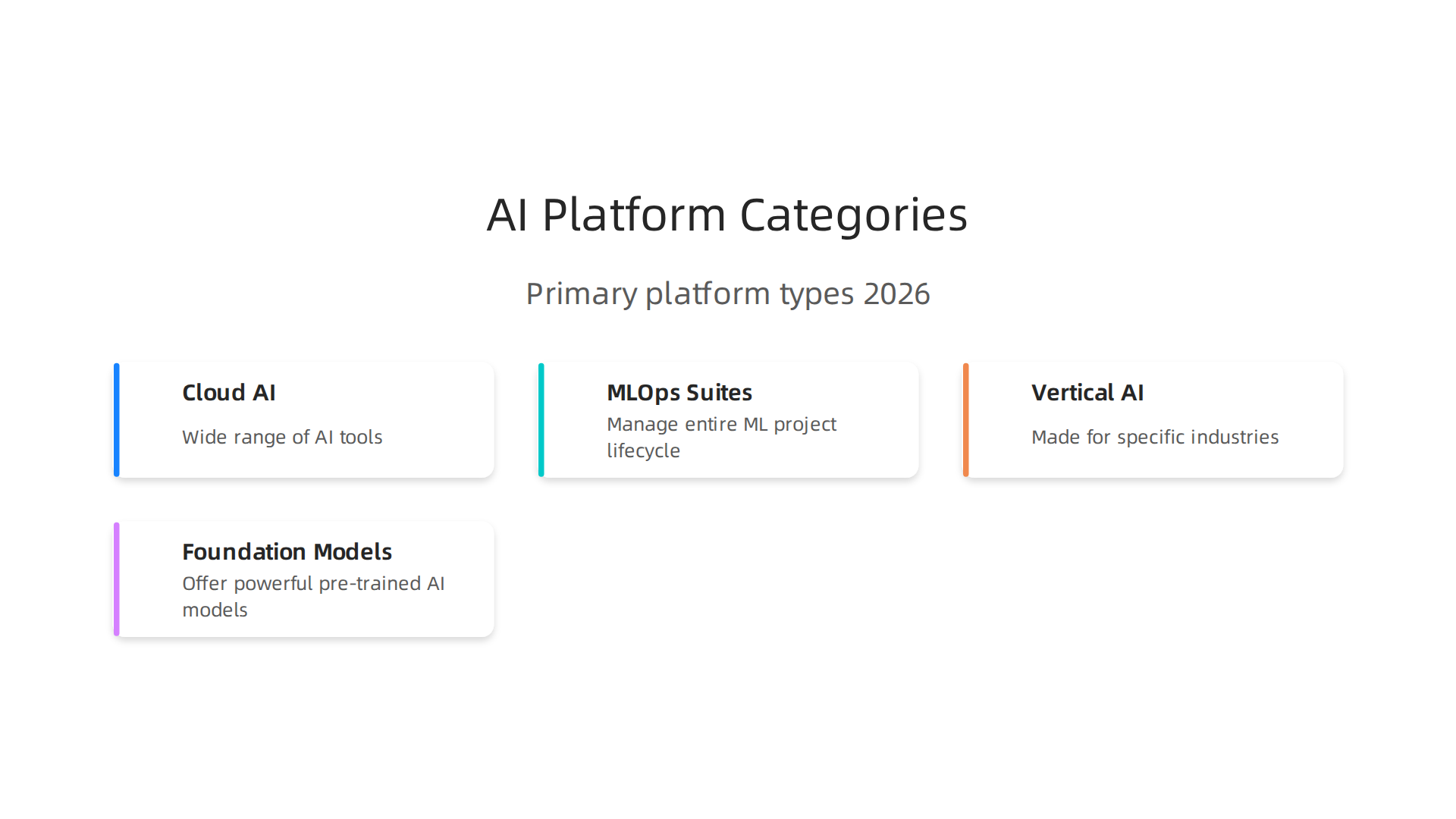
Here are the main categories of top AI platforms you’ll see today:
Cloud AI Platforms
These are big services offered by major tech companies like Google, Amazon (AWS), and Microsoft (Azure). They provide a wide range of AI tools, from ready-to-use services for things like image recognition or natural language processing to powerful computing resources for building your own AI models. They are often a one-stop shop for many AI needs.
MLOps Suites
MLOps stands for Machine Learning Operations. These are special tools that help manage the entire lifecycle of machine learning projects. Think of them as the operating system for AI solutions. They help with everything from preparing data and training AI models to deploying them and keeping them running smoothly. This ensures that AI projects are reliable and can be updated easily.
Specialized Vertical AI
Some AI platforms are made for very specific industries, or "verticals." For example, there are AI tools designed just for healthcare, finance, or manufacturing. These specialized AI solutions often come with built-in knowledge and data specific to those fields, making them very effective for particular tasks within those tech domains 2026.
Foundation Model Providers
This category includes companies that offer powerful pre-trained AI models, like large language models (LLMs) and generative AI. These models can understand and create text, images, or other data. They are the building blocks for many new AI applications. If you’re wondering about Agentic AI vs generative AI, you’ll find that many of these foundation model providers offer both, allowing businesses to create complex AI systems. These are truly among the top AI tools driving innovation today.
How the Market Changes
The world of AI platforms is always moving. Companies grow through partnerships, buying other businesses, and creating new technologies. For example, in the first quarter of 2026 alone, companies like IBM, ServiceNow, and OpenAI were very active in buying up other AI software companies AI Software M&A Activity: Q1 2026. IBM, for instance, completed its purchase of Confluent to boost its real-time data capabilities for enterprise AI. Also, Miro acquired Reforge to help teams with AI innovation.
You’ll also see a mix of open-source and proprietary solutions. Open-source tools are freely available and can be changed by anyone, which helps them grow quickly with community input. Proprietary tools are owned by a company and usually offer specific support and features. Both play a big role in shaping which AI solutions become the most viable. Understanding these shifts helps you choose the best AI platforms for your needs. For more deep insights into what makes a platform stand out, consider reading about AI platforms what founders investors need to know.
When looking for the best AI platforms, understanding their specific strengths helps you make smart choices. Let’s dig a bit deeper into what each type offers and the important trade-offs you’ll face.
Cloud AI Platforms: The All-in-One Shops
These big cloud services from companies like Amazon, Google, and Microsoft give you a huge box of AI tools. You can find ready-made AI services for things like telling images apart or understanding speech, which means you can get started very quickly. They also offer powerful computing for building your own special AI models. The good part is that they are easy to use and scale up as your needs grow.
However, using these can sometimes mean your project gets tied closely to one cloud provider, which is called "vendor lock-in." Also, the costs can add up quickly with their "pay-as-you-go" pricing, especially for big tasks. For example, enterprise use of top AI platforms like Google Vertex AI can cost a lot each month, depending on how much you use it Top AI Platforms Pricing 2026 for Enterprise Use. Understanding cloud AI costs means looking beyond just the basic fees Cloud AI Costs: Beyond Token Pricing Decisions.
MLOps Suites: Keeping AI Running Smoothly
MLOps tools are super important for making sure your AI solutions work well from start to finish. They help you get data ready, train your AI models, and then use them in the real world. Think of them as the glue that holds your AI projects together, making them reliable and easy to update.
The main choice here is between open-source tools that you host yourself or managed services (SaaS). Open-source options like MLflow or Kubeflow give you full control and cost less in terms of software licenses, but you need to pay for your own servers and have your team manage them. This can cost a few thousand dollars each month Kubeflow: Kubernetes-Native. Managed MLOps services often charge per user per month, making things simpler but sometimes less flexible.
Specialized Vertical AI: Focused Power
These AI platforms are made for very specific industries, like AI for doctors, banks, or factories. They come with special knowledge and data that fit those fields perfectly. This makes them very good at solving particular problems within those areas, giving you very effective AI solutions without needing a lot of custom setup. They are often seen as some of the best AI platforms for niche markets.
Foundation Model Providers: The Smart Building Blocks
This type of platform offers powerful, pre-trained AI models, often called large language models (LLMs) or generative AI. These models can create new text, images, or even code. They are like smart building blocks that businesses use to make many different AI applications. If you’re looking for generative AI solutions 2026 roadmap for founders and investors, you’ll find these models are key.
The Big Trade-offs: Flexibility vs. Speed, Managed vs. Self-Hosted
Choosing among these top AI platforms often means thinking about a few key things:
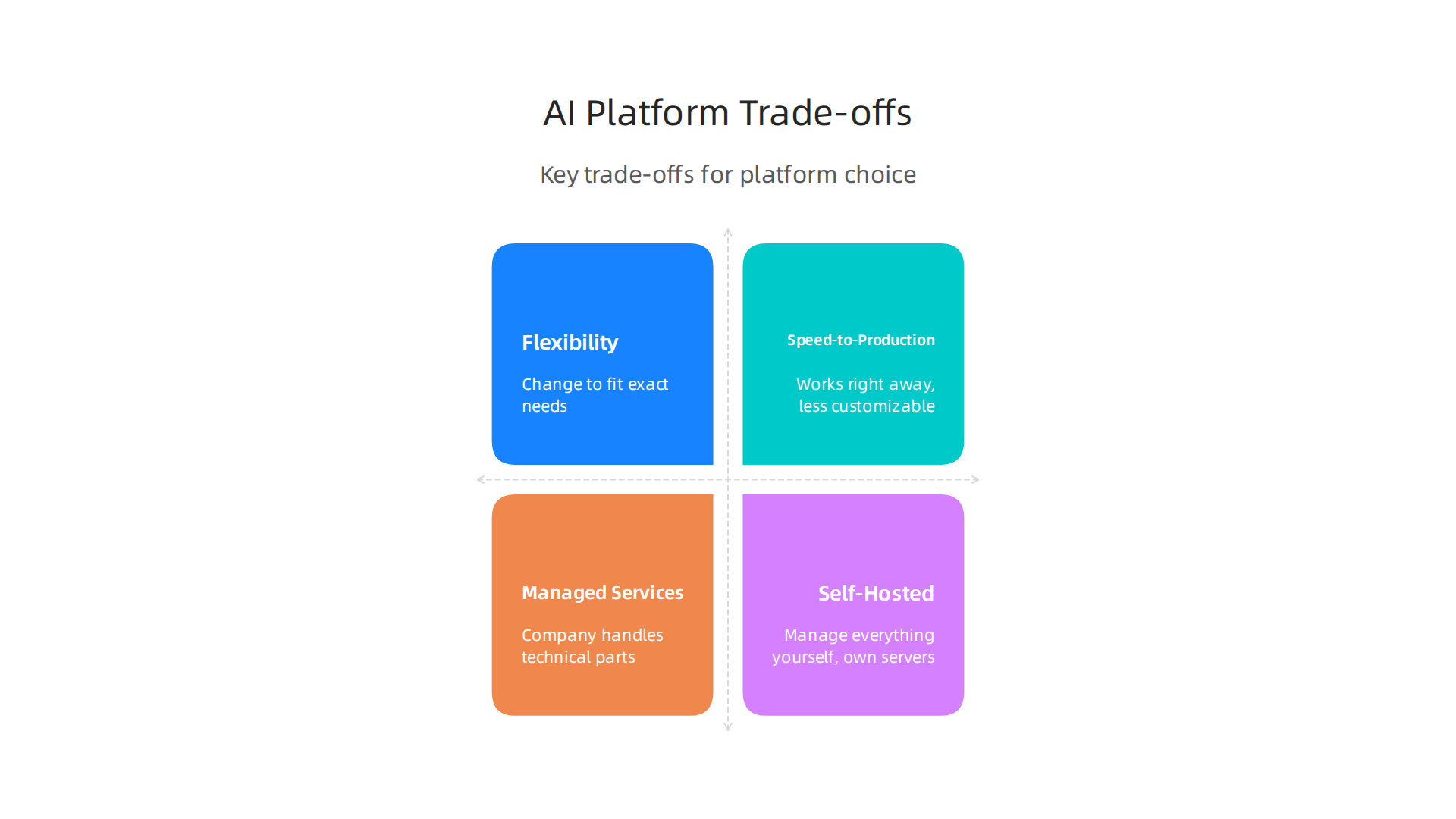
- Flexibility vs. Speed-to-Production: Do you need a system you can change a lot to fit your exact needs (flexibility)? Or do you need something that works right away, even if it’s less customizable (speed-to-production)? Cloud AI and foundation models often give you speed, while building your own MLOps setup offers more flexibility.
- Managed Services vs. Self-Hosted: Do you want a company to handle all the technical parts for you (managed services)? This is usually easier but might cost more and give you less control. Or do you want to manage everything yourself on your own servers (self-hosted)? This gives you maximum control but requires more technical skill and time from your team.
Many organizations use a mix of these AI solutions.

They might use a cloud AI platform for quick projects and a specialized MLOps suite for their most important, custom AI tools. To really get a handle on what’s best for your business, it’s wise to explore your options carefully.
For more insights into making smart AI decisions, get clear daily AI updates from The AI Newsletter Worth Reading. You can also learn how to evaluate AI platforms for your startup in 2026 to find the perfect fit.
Choosing the right AI platforms for your business is a big decision, and it goes beyond just knowing what each type does. To make a truly smart choice, you need a clear way to look at each option. This means using a special framework or checklist that covers all the important parts: technical things, business needs, and how you will manage the AI safely and fairly.
Here is a simple way to evaluate the top AI platforms:
A Clear Rubric for Your AI Solutions
When you’re trying to pick from many AI solutions, use these points to guide your choice:
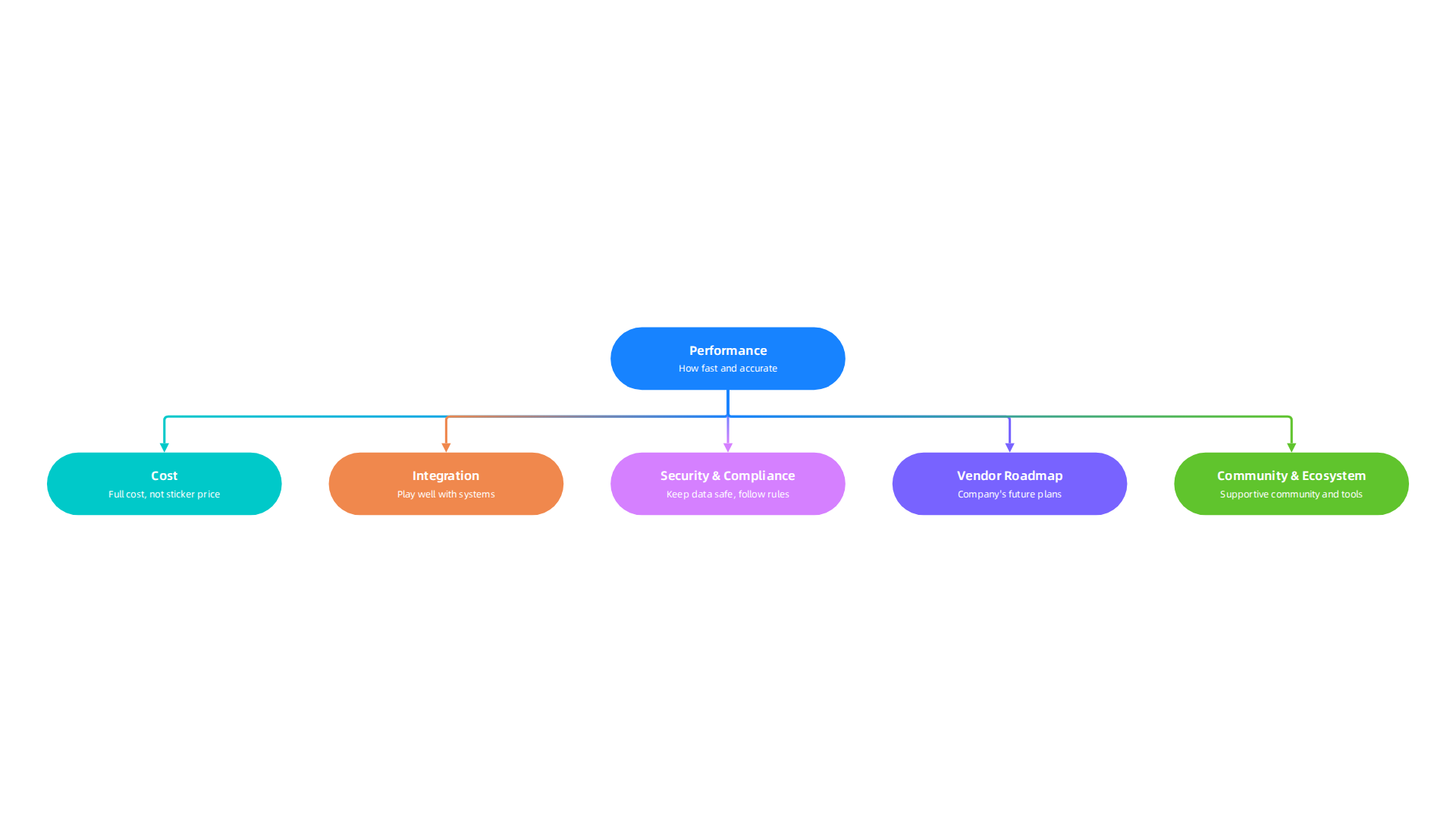
- Performance: How fast and accurate is the AI? Can it handle a lot of work at once? For example, if you are looking at large language models (LLMs) or generative AI, you need to know how quickly they can create content and how good that content is.
- Cost: Look at the full cost, not just the sticker price. This includes setting it up, keeping it running, and any hidden fees. Some AI platforms have different pricing models, like paying per use or a set fee, which can change your total spend The 6 AI Pricing Models, Ranked by Real 3-Year Cost (2026).
- Integration: Will the new AI platform play well with your current computer systems and software? It should be easy to connect it to what you already use, not cause headaches. You want AI tools that fit smoothly into your existing work.
- Security and Compliance: This is very important. How does the AI platform keep your data safe? Does it follow all the rules and laws about data privacy and AI use? This is part of what’s called AI governance, which ensures AI systems are ethical and legal The Complete Guide to AI Governance & Compliance in 2026.
- Vendor Roadmap: What are the company’s plans for the future of their AI platform? Will they keep making it better and adding new features? You want a partner who is growing with the times.
- Community and Ecosystem: Is there a helpful community around the platform? Are there many other tools or services that work with it? A strong ecosystem means you’ll have more support and options down the road.
Finding the Right Information
To check these points, you need good information. Here’s where to find it:
- For Performance and Integration: Ask for demos and try out the AI platforms yourself. Talk to other businesses that use them. Look for detailed technical documents. You can also compare different enterprise AI platforms to see how they stack up in performance and features Top Enterprise AI Platforms 2026: 8 Compared.
- For Cost: Ask for clear pricing breakdowns. Think about long-term costs, not just starting fees. Review reports that compare AI platform pricing benchmarks.
- For Security and Compliance: Ask the vendor about their security rules and how they protect your data. Check if they meet important industry standards. Look into how they handle AI governance to make sure everything is legal and ethical.
- For Vendor Roadmap and Community: Talk to the sales team about their future plans. Search online for user groups, forums, and partner lists. A good platform will often have clear plans for upcoming features and improvements.
By using this kind of checklist, you can move past the hype and really figure out which of the many top AI platforms will truly help your business grow in 2026 and beyond.

Understanding these deeper aspects will help you pick the best AI solutions for your specific needs.
The rubric we just talked about gives you a good start. But for big companies, picking the best AI tools means looking at even more specific things. When you work at a large scale, the needs are much bigger than for a small startup. The market for AI platforms is huge, expected to be around USD 72.18 billion in 2026, and it keeps growing fast AI Platform Market Size, Share & Industry Growth Report. This growth shows how important it is to pick the right AI solutions.
Here’s what really matters when choosing top AI platforms for a big business:
- Serious Security and Rules: For big companies, keeping data safe is super important. They need AI platforms that meet strict security rules and follow all the laws, like those about privacy. This means making sure the AI protects customer information and sensitive business secrets at all times.
- Service Guarantees (SLAs): Big businesses need to know their AI tools will always work when needed. A Service Level Agreement (SLA) is like a promise from the AI provider that their system will be up and running a certain percentage of the time. If it fails, there are clear steps to fix it. This is key for things like generative AI or LLMs that run critical tasks.
- Vendor’s Experience and Support: A big company needs to trust the AI provider. This means looking at how long the provider has been around, how good their support is, and if they have a clear plan for making their AI better in the future. They need a partner that is stable and reliable.
- How Well It Connects with Everything Else: Big companies have many different computer systems and software. The new AI platform must connect smoothly with all of them, not just a few. Good ecosystem integrations mean the AI can talk to your sales tools, customer service systems, and data storage without causing problems.
Top AI Platforms for Big Companies
Several big names stand out when we talk about enterprise AI platforms in 2026. These companies offer robust AI platforms 2026 compared for startups and enterprises because they understand the unique demands of large organizations.
- Microsoft Azure AI Foundry: This is often a top choice for companies that already use a lot of Microsoft products. It works very well with other Microsoft tools and offers strong security features.
- Google Cloud Vertex AI: If your business does a lot with data analysis and machine learning, Google Vertex AI might be a great fit. It’s known for its strong tools for building and managing AI models, especially for complex AI domains.
- AWS Bedrock: Amazon Web Services (AWS) Bedrock is good for companies that want many options for different AI models. It lets you choose from various LLMs and generative AI tools, giving you lots of flexibility.
- IBM watsonx: IBM’s platform focuses on helping businesses use AI responsibly and with strong governance. It’s built for enterprise-grade solutions, with a focus on trusted AI.
When choosing, it’s not about finding one "best" platform. It’s about finding the one that fits your company’s existing technology, how you handle data, and what your specific business goals are 8 Best Enterprise AI Platforms in 2026, Compared.
Staying on top of these fast-changing AI solutions helps you make smart decisions. To keep learning about how to get the most out of AI for your business, including how to build a strong mastering AI and data business strategy, it’s important to stay informed.
Want to stay informed about the latest in AI and how it affects business?
The AI Newsletter Worth Reading
While large businesses look for heavy-duty security and deep integrations, startups need something different. For a new company, speed and smart spending are key. Choosing the right top ai platforms is not just about what the platform can do today, but how it helps your business grow and impress future investors.
What Startups Look For in AI Platforms
For startups, the goals for using AI solutions are very clear:
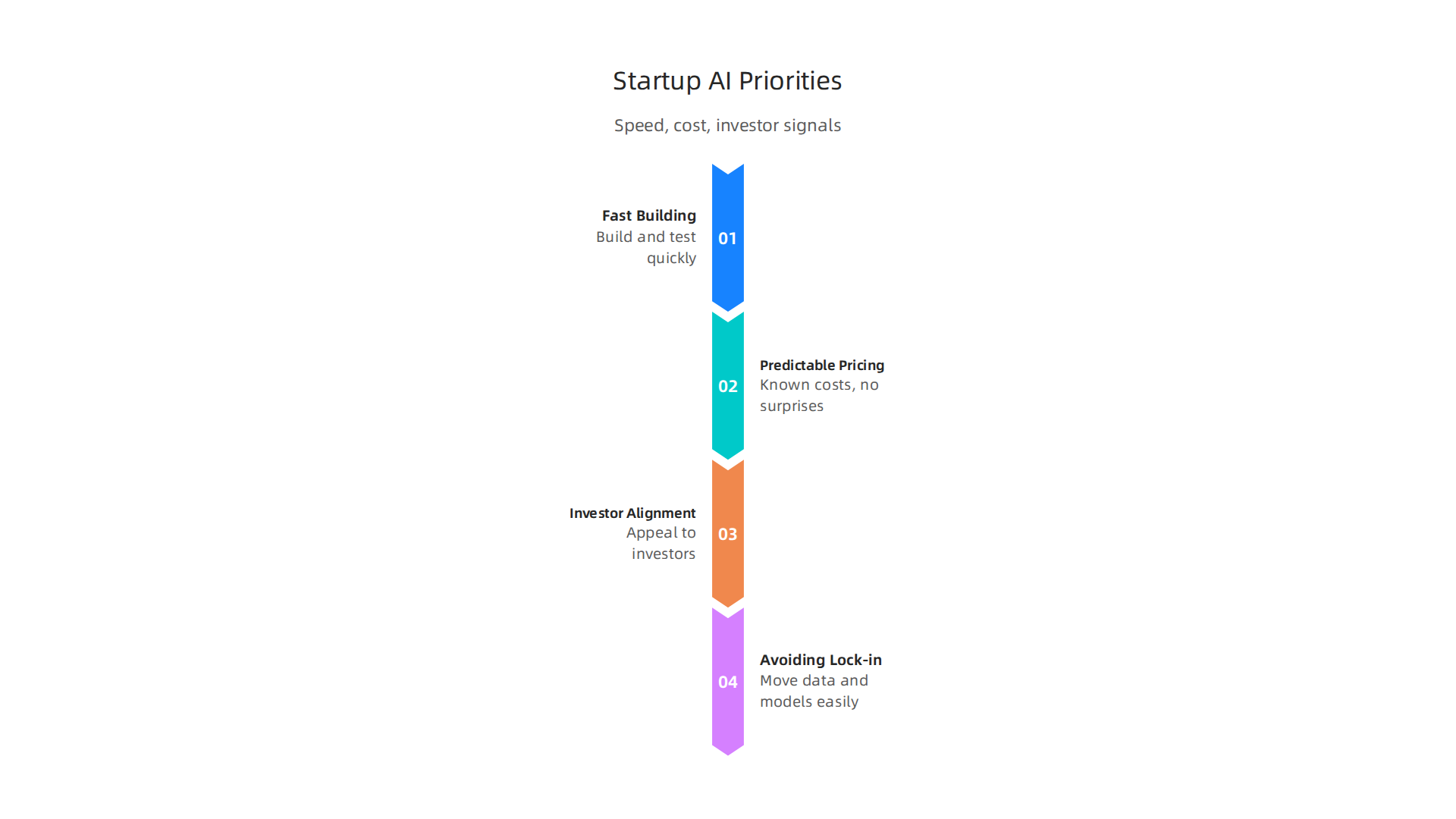
- Fast Building and Testing (Time-to-Prototype): Startups need to build new ideas and test them very quickly. They can’t spend months setting up complex systems. The best AI tools for them let them create a working version of their idea fast, often with ready-made tools or simple setups. This speed helps them learn what works and change things fast.
- Costs You Can Count On (Predictable Pricing): Startups often have smaller budgets. They need to know exactly how much an AI platform will cost, without any surprises. This means looking for pricing models that are easy to understand and don’t get too expensive as they use more of the service.
- Getting Investors Excited (Investor Alignment): When you’re a startup, every choice you make is seen by potential investors. Picking a modern, flexible AI platform shows you’re thinking smart about the future. Investors often look for companies that use AI platforms that allow for growth and don’t tie them down to one company too much, as this can be a red flag. What investors are looking for in AI companies changes, so staying current is vital AI winners and losers for 2026, according to AI investors.
- Not Getting Stuck (Avoiding Lock-in): A startup might start with one AI tool, but as they grow, they may need to switch or add other services. A good AI platform allows you to move your data or models easily, so you don’t get stuck with a provider that no longer fits your needs. This flexibility is important for long-term planning.
How Platform Choice Helps with Funding
The AI platform you choose can make a big difference in how investors see your company.

It affects your "fundraising story." When an investor looks at your startup, they do what’s called "due diligence." This is when they check everything about your business to make sure it’s a good investment.
They will look at your technology choices closely. For example, if you are building groundbreaking generative AI features, using a platform that supports easy development and scalability makes your pitch stronger. Investors want to see that your AI solutions are built on a solid and adaptable foundation. They are less interested in "yet another general-purpose chatbot" and more in underlying systems and tools that solve specific problems Investors spill what they aren’t looking for anymore in AI SaaS companies. A strong choice of AI platform can turn a simple idea into a powerful business plan that excites them.
Learning how to pick the right AI tools for your startup is a smart move that can really help you succeed. For more detailed guidance, check out our article on How to Evaluate AI Platforms for Your Startup in 2026.
Industry-specific AI platforms: healthcare, finance, retail, and manufacturing
While general AI tools are great for many startups, some businesses need something extra special. Think about industries like healthcare, finance, retail, and manufacturing. These fields have very specific rules, data, and problems. This is where industry-specific AI platforms shine, often doing a better job than platforms made for everyone.
Why do these specialized top ai platforms stand out?
- Deep Understanding: They are built with the unique needs of that industry in mind. For example, an AI platform for healthcare knows about patient privacy rules (like HIPAA in the US) and can understand medical terms. An AI for finance understands tricky market data and security needs.
- Ready-made Solutions: These platforms often come with tools and models already trained on industry-specific data. This means they can solve common problems faster. Imagine an AI already good at spotting fraud in banking or finding patterns in manufacturing quality control.
- Rules and Safety First: Industries like healthcare and finance have strict laws about how data is used and kept safe. Specialized ai solutions are made to follow these rules from the start. This can be a huge help, as general platforms might need a lot of extra work to meet these demands.
Many of the top enterprise AI platforms in 2026, like Microsoft Azure AI and Google Cloud Vertex AI, offer specialized features or services for different sectors, showing how important this focus is even for big players. For example, some are best for Microsoft-native organizations, while others excel in workloads that need a lot of machine learning and generative AI capabilities, as noted in reports comparing the Best Enterprise AI Platforms in 2026.
When you are looking for an AI platform for a specific industry, ask yourself these three questions:
- Does it fit my industry? Does the platform understand the unique language, challenges, and rules of your business? For example, in healthcare, can it manage patient records securely and understand medical images? In finance, can it deal with complex transactions and regulations?
- Can it handle my data? Industries have different kinds of data. Retail might have lots of sales figures and customer behaviors, while manufacturing deals with sensor data from machines. Make sure the platform is built to work with your specific data types and sizes.
- Is it compliant? This is super important. Does the platform help you follow all the necessary laws and rules for your industry? This includes data privacy, security, and ethical use of AI. Choosing the right AI platforms that are designed with compliance in mind can save you a lot of trouble later.
Choosing a platform that really knows your "ai domains" can give your startup a big advantage. It means less time spent making a general tool fit your special needs and more time building your business.
To stay on top of the rapidly changing world of AI and how it impacts startups and investments, make sure you get regular updates.
The AI Newsletter Worth Reading offers clear daily AI updates from The Deep View Newsletter.
Integration, TCO and vendor lock-in: realistic planning for teams
Once you pick the right AI platform for your business, the next big steps are bringing it into your company and understanding all the costs. It’s not just about the monthly fee. There are many hidden costs and things to think about when you integrate new ai solutions. Let’s look at how to plan for these important parts.
Bringing AI into Your Business: Integration Steps
Integrating a new AI platform means making it work smoothly with the systems you already use. This often involves:
- Connecting Your Data: Your AI needs data to learn and work. This means moving your company’s data to the AI platform or connecting the platform to your existing databases. This can take time and special skills.
- Building Custom Tools: Sometimes, even the best top ai platforms need to be tweaked to fit your exact needs. You might need to build custom features or change how the AI works with your other software.
- Training Your Team: Your employees will need to learn how to use the new AI tools. This requires training, which takes time and money.
Understanding Total Cost of Ownership (TCO)
TCO is the full cost of owning and using something over its lifetime, not just the upfront price. For AI platforms, TCO can include:
- Subscription or Usage Fees: This is the main cost, but it can be tricky. Many AI platforms in 2026, especially those offering large language models (LLMs) or generative AI, use "pay-as-you-go" models. This means your costs go up the more you use the AI. While flexible, this can lead to surprise bills if you’re not careful. For example, some enterprise AI platforms can cost anywhere from $25,000 to $500,000 per month depending on usage and features. Other services, like specialized MLOps platforms, can range from low thousands per month to six figures a year for enterprise deals, as noted in various pricing benchmarks for 2026.
- Data Transfer Costs: Moving large amounts of data to and from the AI platform can cost money, especially with cloud-based services.
- Customization and Development: If you need to hire developers to build custom features or integrate the AI, that adds to the cost.
- Maintenance and Support: Keeping the AI running smoothly, fixing problems, and getting help from the vendor all contribute to TCO.
- Compute Costs: For heavy AI workloads, especially those using complex models or handling lots of requests, the underlying computing power can be expensive. MLOps and data platform costs alone can be 10-15% of the total AI platform TCO, according to one 2026 benchmark report on AI & GenAI Platform Pricing.
Avoiding Vendor Lock-in
"Vendor lock-in" happens when it’s hard or costly to switch from one AI platform to another. This can happen if:
- Your Data is Stuck: The platform makes it difficult to get your data out in a usable format.
- Your Models are Tied Down: The AI models you train on one platform might not work easily on another.
- Unique Features: You become very reliant on a specific feature that only one platform offers.
To avoid this, look for top ai platforms that offer good data and model portability. This means you can easily move your data and trained AI models to a different service if needed. For example, some leading enterprise AI platforms score high on code and data portability, meaning they’re easier to switch from if your needs change later on in 2026.
Checklist for Realistic Planning
Here’s a simple checklist to help you estimate costs and risks:
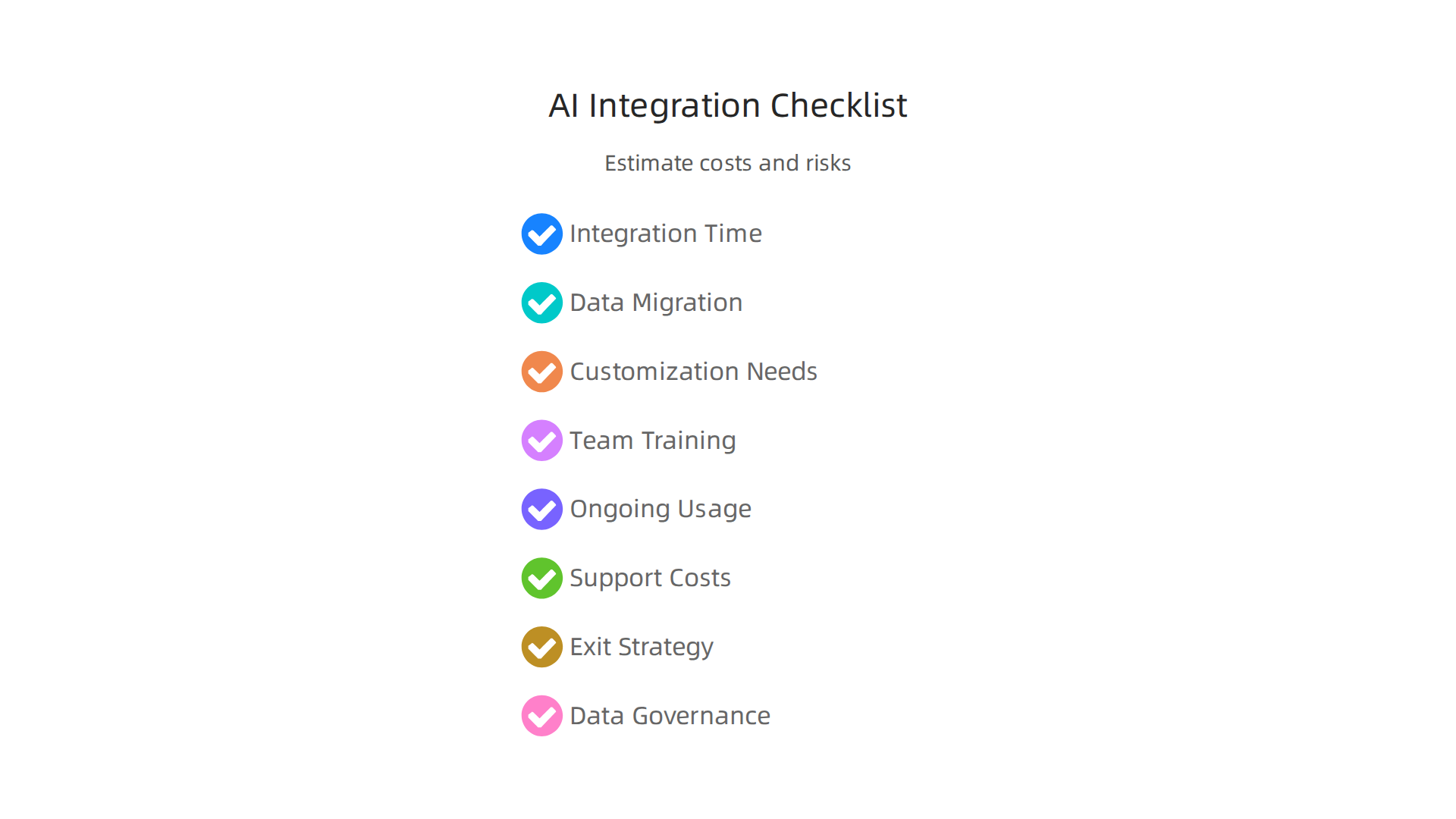
- Integration Time: How long will it take to connect the AI platform to your current systems?
- Data Migration: How much data do you need to move? Are there costs for moving it?
- Customization Needs: Do you need to build special features for the AI? What will that cost?
- Team Training: How many people need training? What’s the cost of their time and the training itself?
- Ongoing Usage: How much do you expect to use the AI? Try to estimate your monthly usage fees.
- Support Costs: What kind of support does the vendor offer, and at what price?
- Exit Strategy: How easy would it be to move your data and models to another platform if you needed to?
- Data Governance: Have you planned for how you will manage your data, including privacy and security, when using new AI solutions? Setting up good rules for AI governance is key, with frameworks often including clear policies for data handling and risk management.
Thinking about these points upfront can save your startup a lot of headaches and unexpected expenses down the road.
Summary
This article explains why choosing the right AI platform is a critical business decision in 2026, when the AI platform market is booming and options are abundant. It breaks down the main platform categories — cloud AI, MLOps suites, specialized vertical platforms, and foundation model providers — and highlights the key trade-offs between speed, flexibility, managed services, and self-hosting. You get a practical evaluation rubric covering performance, true cost, integration, security/compliance, vendor roadmap, and ecosystem strength, plus guidance tailored for large enterprises and startups. The piece also explains industry-specific needs for regulated sectors, outlines integration and TCO considerations, and gives a checklist to reduce surprises like hidden fees or vendor lock-in. Read it to learn how to compare platforms, plan realistic implementation costs, and choose AI solutions that align with your business goals and investor expectations.