Top Tier Capital Partners: Metrics, Signals, and Engagement for 2026

Why understanding ‘top tier capital partners’ matters for founders and investors
Starting or growing a business in 2026 can feel like trying to find a clear path in a crowded forest. There’s so much information, so many funding options, and it’s hard to know which ones are truly worth your time. For founders, getting the right money can make or break your dream. For investors, finding the best opportunities means staying ahead of the game. This is why understanding who the "top tier capital partners" are is so important.
Right now, the world of private investments is going through some changes. For example, global private equity exit activity was pretty slow in early 2026, with initial hopes for a comeback fading due to world events. In the first three months of 2026, global private equity exits added up to $294 billion, which shows a tougher market than some expected Q1’26 Pulse of Private Equity — U.S. and global investment trends. This means it’s more crucial than ever to connect with the right people who can offer more than just cash.
True top tier capital partners don’t just hand out money. They bring smart advice, helpful connections, and a deep understanding of what it takes to succeed. Knowing how to spot these partners helps founders find the best fit for their company. It also helps other investors keep an eye on what the most successful firms are doing. They might be looking at areas like AI, or specific types of startups, making it helpful to understand their strategies.
This article will help you understand what makes a "top tier capital partner." We’ll look at what makes them special, how they act, and the kinds of plans they use. We’ll also explore different types of firms, from venture funds like Ark Venture Fund Performance, Strategy, and Risks in 2026 to those with specific focuses like Hustle Fund, Ironhorse Funding LLC, and Odyssey Investment Partners. Our goal is to give founders the tools to find the right partners and help investors monitor the competitive landscape effectively. By the end, you’ll have a much clearer picture of the private equity landscape 2026 top firms trends and where the smart money flows.
To stay on top of all the fast-moving changes in the tech and funding world, especially in AI, consider getting insights delivered straight to your inbox.
The AI Newsletter Worth Reading
Defining ‘Top Tier Capital Partners’: metrics, signals, and red flags
Now that we know why finding the right partners is so important, let’s dig into how you can actually tell who the "top tier capital partners" are. It’s not just about how much money they have. It’s about how they help companies grow and whether they are a good fit for your vision. Both founders looking for money and other investors tracking the market need clear ways to spot these key players.
Objective Metrics to Look For
Top tier capital partners often stand out because of strong numbers and clear strategies. Here are some key metrics:
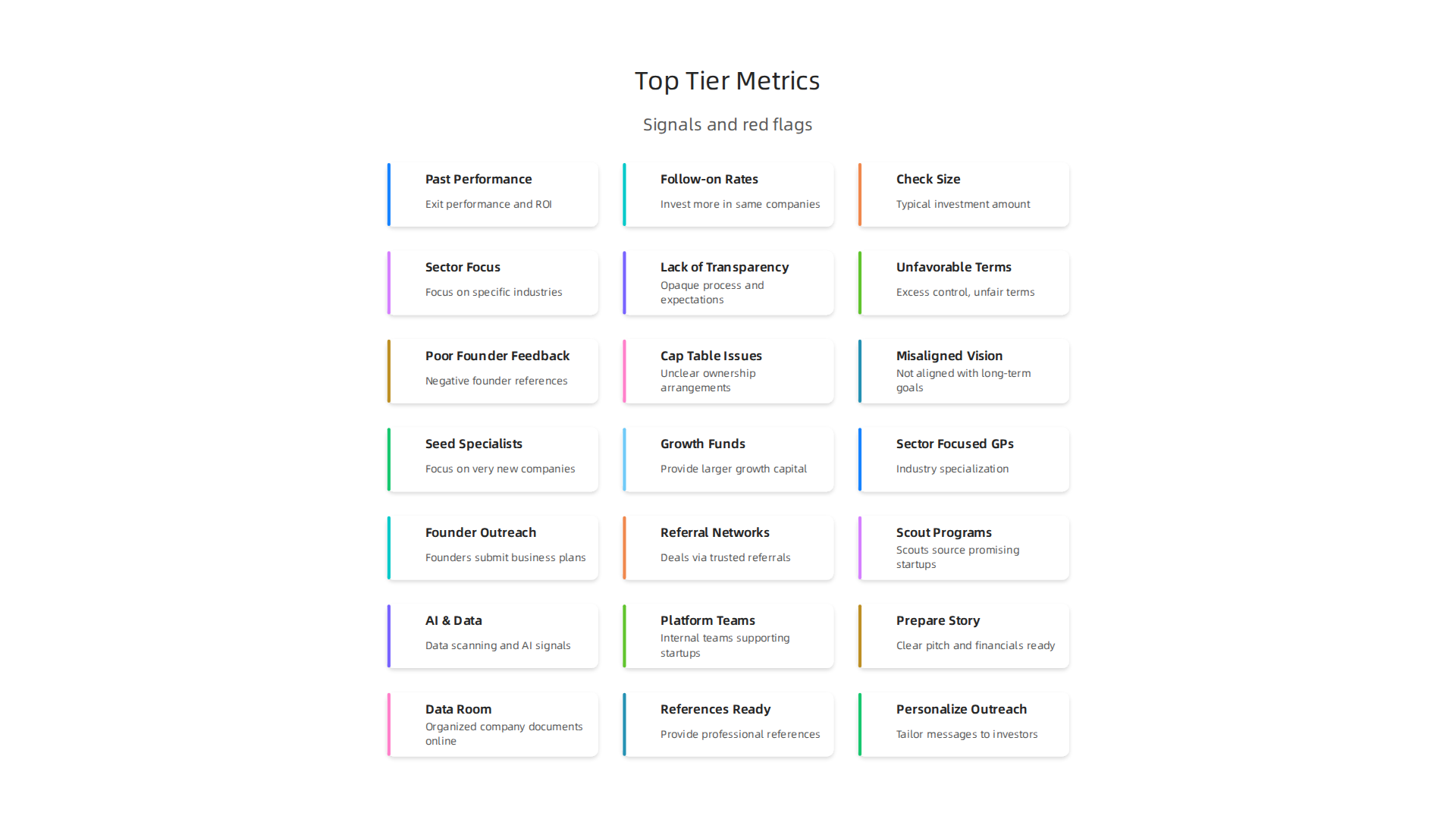
- Past Performance: How well have their previous investments done? Look at their "exit performance," which means how much money they made when they sold their shares in a company. Also, check their "return on investment" (ROI). Funds that consistently help companies succeed and provide good returns are often considered top tier. Reports like the 2026 VC Scorecard: Ranking Every Major Investor can offer insights into these numbers.
- Follow-on Rates: Do they invest more money in the same companies during later funding rounds? A high follow-on rate shows they truly believe in their portfolio companies and are ready to support them long-term.
- Check-Size Patterns: This tells you the typical amount of money they invest. Do they usually give small amounts to very new startups, or large amounts to more established ones? For instance, funds like Hustle Fund might be known for smaller, earlier-stage investments, while Odyssey Investment Partners might focus on larger private equity deals. Make sure their typical investment size matches what your company needs.
- Sector Concentration: Many top tier capital partners focus on specific industries, like AI, health tech, or clean energy. Firms like the Ark Venture Fund are known for their focus on disruptive innovation. If a partner specializes in your area, they will likely have better connections and advice for your business.
These numbers help give you a clear picture. Major rankings like America’s Top Venture Capital Firms of 2026 from TIME or the Forbes 2026 Midas List are built on these kinds of metrics.
Qualitative Signals That Show a Top Tier Partner
Beyond the numbers, how a capital partner acts and their reputation are hugely important.
- Strong Network and Reputation: Top tier partners have valuable connections. They can introduce you to future customers, key hires, or other investors. Their reputation for being helpful and fair attracts the best companies.
- Founder References: Talk to other founders who have worked with them. Did the partner provide useful advice? Were they supportive during tough times? Investors themselves often ask for founder references when doing due diligence, so it makes sense for founders to do the same when checking on a potential investor VC due diligence checklist 2026: 28-item founder prep.
- Active Support: Do they just give money, or do they roll up their sleeves and help? Top tier capital partners offer guidance on strategy, hiring, and even marketing. This kind of hands-on help can be even more valuable than the cash itself.
Red Flags to Watch Out For
Just as there are signals of top quality, there are also warning signs that an investor might not be the right fit, even if they seem high-profile.
- Lack of Transparency: If an investor is not clear about their process, expectations, or past performance, that’s a red flag. Transparency builds trust.
- Unfavorable Terms: Be wary of terms that seem too good to be true or that give the investor too much control over your company without fair balance. Things like complex share agreements or unclear ownership of ideas can become "deal-killers" What Do VCs Look For? The 4 Pillars Investor Framework.
- Poor Founder Feedback: If other founders have bad experiences or warn you about a specific firm, listen carefully. Always check references, and run your own due diligence on VCs after you receive an offer but before you sign.
- Messy Cap Table or IP Issues: VCs look for a clean "cap table" (a list of all company owners and their shares) and clear ownership of intellectual property (IP). If your company has these issues, it can be a red flag for investors, and similarly, if an investor tries to create these issues, it’s a red flag for you. Some firms even use AI to help flag these kinds of risks How VCs Use AI to Auto-Flag 15 Red Flags.
- Misaligned Vision: If an investor doesn’t truly understand or support your long-term vision, they might push you in directions that don’t fit your company. This can cause problems down the road.
By carefully looking at these metrics, signals, and red flags, founders can better choose partners who will truly help their businesses grow. Other investors can also use these points to understand what makes a fund successful. To understand more about different funding options, you might want to learn about how to find investors for a startup in 2026.
Now that we know how to spot the qualities of top tier capital partners, let’s look at some of the actual leaders in 2026. These firms are not all the same. They play different roles in helping companies grow, and knowing these differences helps founders find the best fit and helps other investors understand the market.
Who the leaders are in 2026: profiles of influential VC and PE firms
The world of investing has many kinds of top tier capital partners. Each type has its own way of working and focuses on different stages of a company’s life.
Understanding these roles is key to finding the right support for your startup or seeing where the big money is moving.
Different Roles Top Firms Play
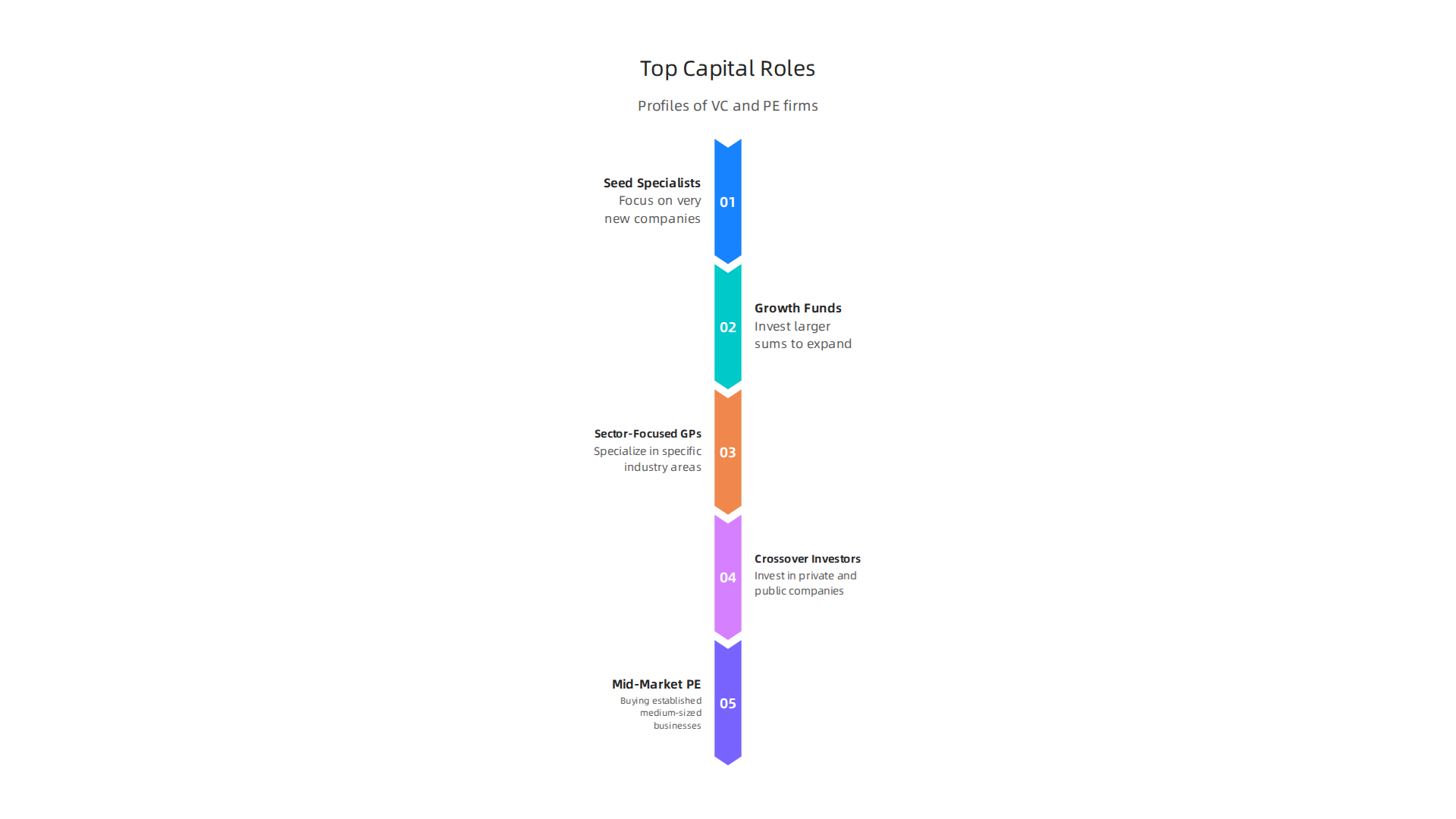
- Seed Specialists: These firms focus on very new companies, often just starting out. They give smaller amounts of money to help founders get their ideas off the ground. A good example might be a firm like Hustle Fund, which is known for looking at many early-stage ideas and making quick decisions. This kind of partner is great for startups that need their first big push.
- Growth Funds: As companies get bigger and show success, they need more money to expand quickly. Growth funds, like Odyssey Investment Partners, step in at this stage. They invest larger sums to help businesses scale up their operations, enter new markets, or build bigger teams. This often means they take a larger stake in the company. The private equity market saw significant activity in early 2026, even with some declines in exit value compared to previous years, showing how these funds keep adapting to market changes Q1’26 Pulse of Private Equity — U.S. and global investment trends.
- Sector-Focused General Partners (GPs): Some top tier capital partners specialize in specific areas, like health tech, clean energy, or artificial intelligence. They understand these industries deeply and can offer special advice and connections. For instance, the Ark Venture Fund often focuses on companies that are creating big changes in technology. This kind of partner is really valuable if your company is in their area of expertise.
- Crossover Investors: These are firms that invest in both private companies (like startups) and public companies (those whose shares are traded on stock markets). They can help a company grow from a private business to a public one, giving them a broad view of the market.
- Mid-Market Private Equity: Some private equity firms, like Ironhorse Funding LLC, focus on buying or investing in established, medium-sized businesses to help them become more efficient or grow even larger before selling them for a profit. Other firms, like Audax Private Equity, specialize in the lower middle market, helping smaller, but still established, companies grow.
How Firm Strategy Shapes Your Chances
The strategy and focus of a capital partner greatly affect a founder’s chances of getting funding. If you run a very early-stage startup, you wouldn’t typically approach a growth fund looking for a large investment. Instead, you’d seek out seed specialists or firms known to invest in venture capital firms for small businesses.
Also, a firm that specializes in your industry will likely understand your business better and bring more helpful connections. For other investors, knowing these specialties helps them find good co-investment opportunities or track market trends. It’s about matching your needs with their strengths. For more insights into the broader investment landscape, you might want to explore the Private Equity Landscape 2026: Top Firms, Trends, and Where the Smart Money Flows.
Get clear daily AI updates from The AI Newsletter Worth Reading.
Now, let’s look at how these influential firms actually find the companies they want to invest in. For top tier capital partners, finding great deals is a constant job. It’s how they stay ahead and bring the best chances to their own investors.

They use many ways to search for promising startups and businesses, mixing old and new methods.
How Top-Tier Partners Source Deals: Channels, Partnerships, and Signals
Finding the right investment means looking in many places. The best firms have clear plans to source deals, which means finding potential companies to put money into.
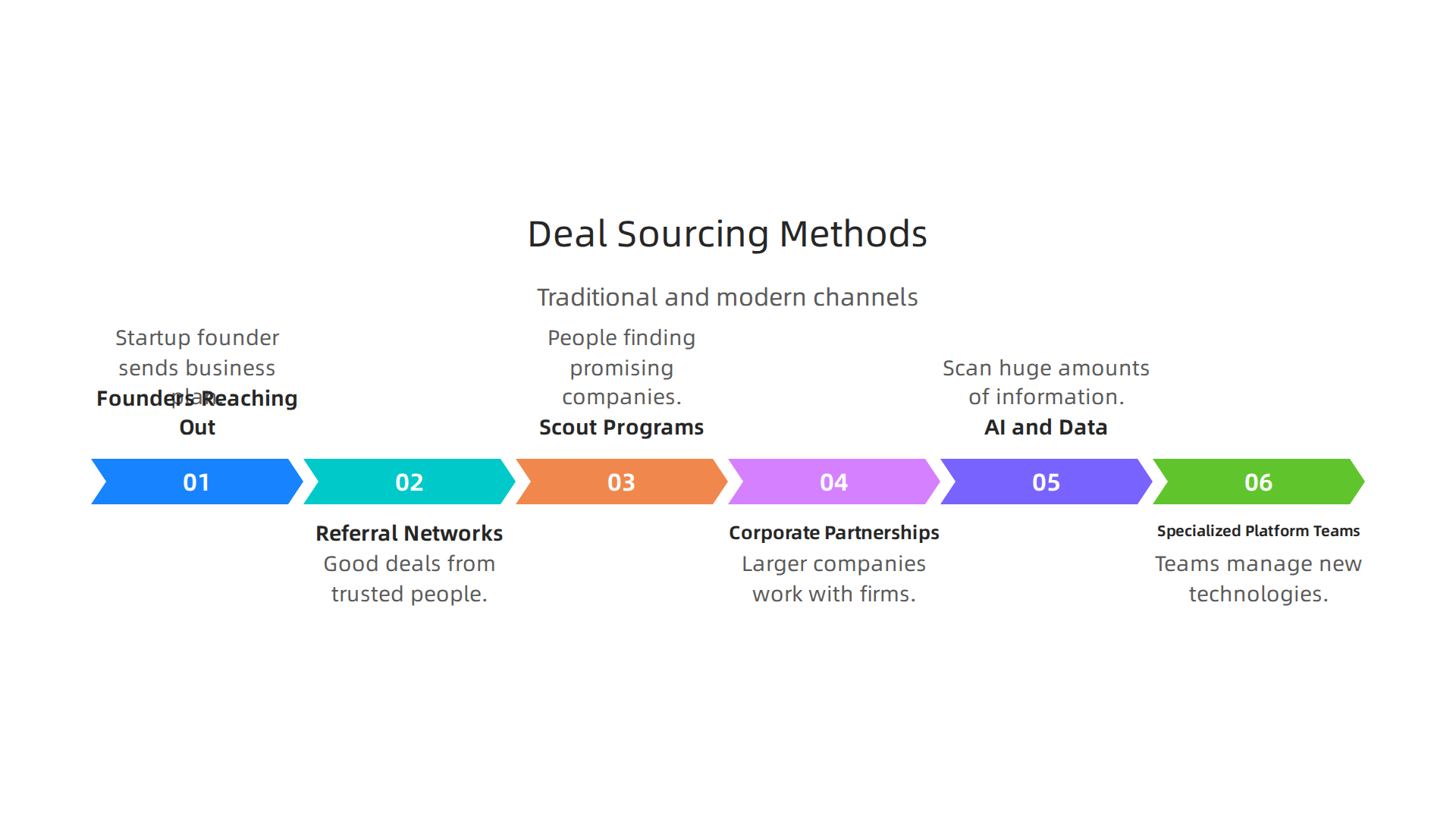
These plans include traditional ways and newer, tech-smart methods.
Old and New Ways to Find Deals
- Founders Reaching Out Directly: Sometimes, a startup founder will send their business plan straight to an investment firm. This is called "inbound" interest. Firms like Hustle Fund, known for looking at many early-stage ideas, still review these direct pitches carefully.
- Referral Networks: A lot of good deals come from people they trust. This means other investors, business advisors, or even founders who have worked with the firm before. A warm introduction from a trusted friend can open many doors.
- Scout Programs: Some firms use "scouts." These are people who are good at finding new, promising companies in certain areas. They might get paid a fee if a deal they find turns into an investment.
- Corporate Partnerships: Larger companies often work with these investment firms. They might share insights on new trends or even have spin-off companies that need funding. This creates a special path for deals.
The Role of Data, AI, and Smart Teams
In 2026, finding deals is much more advanced thanks to technology. Top tier capital partners now use smart tools and special teams to make their search better and faster.
- Using AI and Data: Many firms use artificial intelligence (AI) to scan huge amounts of information. Think of company databases, social media, news, and even things like patent filings. AI helps them find companies early, sometimes even before others know about them AI Deal Sourcing Tools for VC and PE in 2026. This helps firms identify promising ventures much faster than old ways allowed Transforming Workflows, Risk Models, and Founder Evaluation.
- Making Choices Easier: AI tools can look at millions of data points and then rank companies based on what the investment firm is looking for. This helps firms focus on the best deals that match their goals 10 AI tools transforming venture capital in 2026. This means they spend less time on bad fits and more time on good ones.
- Specialized Platform Teams: Many big investment firms have teams dedicated to using these new technologies. These "platform teams" build and manage the tools that help find and track potential investments. They make sure the firm’s deal flow is strong and high quality. Actually, a lot of venture capital firms now use AI for their deal sourcing research, with some reports saying over 80% use it in 2026 How VCs Use AI for Deal Flow Research in 2026.
By combining traditional networking with advanced data and AI, top tier capital partners can find more and better investment opportunities. This helps them stay competitive and ensures that innovative startups get the funding they need to grow. Understanding these tools and how they work can also help you grasp AI platforms what founders investors and product leaders must know.
After top tier capital partners find promising companies, the real work of deciding where to put their money begins. This next step is called "due diligence."

It means they carefully check everything about a company to make sure it’s a good investment. They look at both what you can see easily (qualitative things) and numbers (quantitative things).
What Top Funds Look For During Due Diligence
During due diligence, investors want to know if a company is truly special and can grow a lot. They follow a clear plan to check different parts of the business.
The People and the Idea
- The Team: This is often the most important part for many investors, especially in the early stages. They look at the founders and their team. Are they smart? Do they have the right skills? Are they truly passionate about their idea? Studies show that the team is key for getting initial funding Venture Capital Start-up Selection. Firms like Hustle Fund often say a strong team can make all the difference.
- The Idea and Its Place in the Market: Investors want to see if the company’s product or service is something many people need and will pay for. How big is the market for this idea? Is it growing? Do customers already like what the company offers? This shows "traction," which means the idea is catching on.
- What Makes It Special? Top tier capital partners also look for "defensibility." This means, what makes the company hard for others to copy? Is it a special technology? Does it have patents? Does it have a strong brand or a loyal group of users that other companies can’t easily steal?
The Numbers and the Future
- How Each Sale Makes Money: Investors look closely at "unit economics." This is about how much profit the company makes from selling just one item or serving one customer. If each sale is profitable, it’s a good sign the business can grow big and make more money later.
- Overall Money Health: They also check all the company’s financial records. This includes how much money it brings in, how fast it’s growing, and how much it spends. A clear financial picture is a must. Knowing these numbers helps them see the company’s real value and how it might grow. Lessons learned from big investment deals show how important a structured look at finances is Lessons learned from multimillion-dollar investment deals.
Building the Deal: Term Dynamics
Once top tier capital partners decide they want to invest, they set up the "terms" of the deal. This is like writing the rules for how their money will be used and what they get in return.
- How Much the Company is Worth vs. Who’s in Charge: A big part of the deal is deciding the company’s "valuation" or how much it’s worth. This affects how much ownership the investor gets for their money. Sometimes, investors might trade a higher valuation for more control or special rights, or vice versa. It’s a careful balance between how much the company is valued and how much say the investor gets in running it.
- Keeping Your Share: Many investors will ask for "pro rata allocation." This is a right that lets them put in more money in future funding rounds to keep their percentage of ownership in the company. For example, if Ironhorse Funding LLC invests in a startup, they’ll want the option to invest again later if the company gets bigger and raises more money.
- Investor Rights: Beyond just owning a part of the company, investors might ask for other rights. This could mean getting a seat on the company’s board, getting special reports about the company’s progress, or even having a say in big decisions. These rights help protect their investment. Understanding various investment paths, like those with an Ark Venture Fund performance strategy and risks in 2026, helps founders see the different types of support and control investors might seek.
By carefully checking these points, top tier capital partners make sure their money goes to companies that have the best chance to succeed. This thorough process helps them choose wisely and helps innovative startups get the support they need to become big players.
Do you want to stay updated on how AI is changing the investment world?
The AI Newsletter Worth Reading
After an investment is made, the job of top tier capital partners is far from over. Giving money is just the first step. The best firms, like Odyssey Investment Partners, truly help their companies grow even faster.

This extra help is what makes them different. It’s not just about money; it’s about active support that helps startups succeed.
Value-Added Services: More Than Just Money
Top tier capital partners often have special teams and services to help their portfolio companies. These are called "value-added services" because they add more than just cash.
- Platform Teams: Think of these as a helpful group of experts ready to lend a hand. These teams might include people who are good at hiring, marketing, legal advice, or even setting up technology systems. For example, a firm might have a platform team that helps a startup find its first sales leader or fix a tough legal issue. This kind of hands-on help is very common with groups like Hustle Fund, which is known for its practical approach.
- Talent Support: Finding the right people is hard, especially for fast-growing startups. Top tier capital partners know this. They help their companies hire key employees, from top executives to skilled engineers. This support can make a huge difference in building a strong team. If you are a founder looking for the right partners, knowing about firms like these can help you better understand what to expect from a Norwest Equity Partners profile insider guide.
- Go-to-Market Support: This means helping companies sell their products or services better and reach more customers. Investors might connect the startup with big businesses that could become customers or help them create a smart marketing plan. They guide companies on how to grow their customer base quickly and efficiently.
Helping Companies Get More Money and Bigger Success
This active support from top tier capital partners is super important. It doesn’t just help a company day-to-day; it also helps it get more money in the future and have a better "exit" when it’s time to sell or go public. This is a key part of how to find investors for a startup that will truly help you grow.
Studies show that companies that get milestone-based funding and good support from their investors have a better chance at successful exit outcomes, which means selling the company for a good price or going public The Impact of Post-Investment Venture Capitalists’ Behaviour on the ….
- More Follow-on Funding: When a company gets strong help and shows good growth, other investors are more likely to put money into it later. This is called "follow-on funding." It’s like proving to everyone that the company is on the right track. Reports from 2025 highlight the importance of follow-on rounds for startup success, noting how some companies struggle to raise additional capital after initial funding The Venture Capital Funnel: Regional Follow-On & Exit Analysis.
- Better Exit Outcomes: The ultimate goal for many startups and their investors is a successful "exit." This means the company either gets bought by a bigger company or goes public (an IPO). When top tier capital partners provide great support, they help the startup become stronger and more valuable, leading to a much better payday for everyone involved. Research in 2026 suggests that venture capital firms in the top 10% for influence have much higher exit rates for their portfolio companies compared to others How do Venture Capitalists become Influential?. Firms like Ironhorse Funding LLC understand that consistent support helps their investments mature into highly attractive acquisitions.
By offering this deep level of support, top tier capital partners do much more than just write a check. They become true partners, helping companies navigate tough times and reach their full potential. This strong relationship is key to building successful businesses in 2026 and beyond.
Great partners do more than just invest money; they help companies truly grow. Now, let’s look at how founders can connect with these top tier capital partners and how emerging investors can build their own strong connections.
Tactical playbook: how founders and emerging investors can engage top-tier partners
Getting noticed by top tier capital partners can seem like a big puzzle. But with a clear plan, both founders looking for money and newer investors wanting to work together can make good progress. It’s all about being ready and reaching out in smart ways.
For Founders: Getting Ready to Talk to Big Investors
If you’re a founder seeking money, you need to be very prepared. Top investors want to see that you understand your business inside and out.
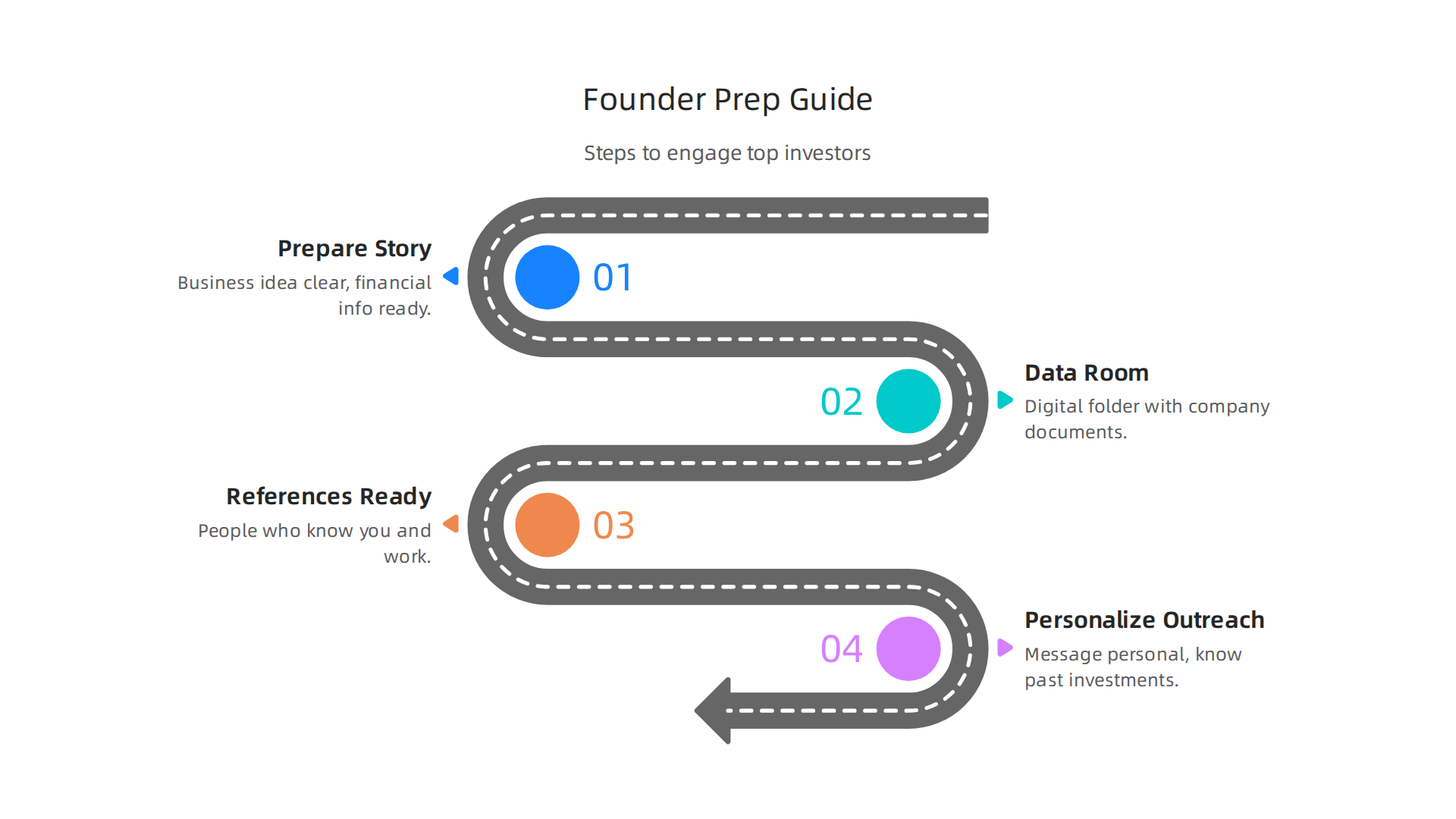
- Prepare Your Story and Numbers: Before you even send an email, make sure your business idea is super clear. What problem do you solve? How big can your company get? Also, have your financial information ready. This includes how much money you make, how fast you’re growing, and how you plan to use the new money. You need to "define the investment case in plain commercial terms" before you gather your papers, as experts shared in 2026 advice on preparing for venture due diligence How to Prepare for Venture Diligence Before a Round.
- Set Up Your Data Room: This is like a digital folder with all your important company documents. Think of it as your company’s official binder. It should include things like your business papers, financial reports, and any contracts. Many experts suggest setting this up months before you start raising money. Having a well-organized data room, perhaps on platforms like Carta, Box, or Intralinks, shows you are serious and ready, according to a 2026 founder’s guide to investor due diligence Investor Due Diligence: Founder’s Guide.
- Get Your References Ready: Investors will want to talk to people who know you and your work. These could be past bosses, co-workers, or employees. Make sure to choose people who will speak highly of you. A good idea is to talk to your references first to tell them what an investor might ask, a tip highlighted in a 2026 VC due diligence checklist VC due diligence checklist 2026: 28-item founder prep.
When you reach out to big firms like Odyssey Investment Partners or Hustle Fund, make your message personal. Show you know about their past investments. A good cold email template often starts by mentioning an investor’s past portfolio company or their area of interest, as suggested by tips for investor outreach emails in 2026 Investor Outreach Emails: Templates That Get Replies. Keep it short, state what your company does, and make a clear ask for a meeting.
For Emerging Investors: Building Trust and Relationships
If you’re a newer investor, you want to build a name for yourself and work with larger funds.
- Show What You Know: Go deep into certain areas. Maybe you become an expert in AI startups, like those explored by the Ark Venture Fund Performance, Strategy, and Risks in 2026. Sharing smart thoughts online or through talks can help.
- Start Small and Co-Invest: Find smaller deals where you can invest alongside bigger funds. This helps you learn and build relationships. Over time, you can show bigger partners, like Ironhorse Funding LLC, that you’re a reliable person to work with.
- Network Smartly: Attend industry events. Meet people. Be friendly and curious. Building a strong network is key to finding good deals and making connections with top tier capital partners.
By following these steps, both founders and emerging investors can get closer to working with the best partners in the business. Staying updated on market trends and knowing who is investing where is a constant effort in 2026.
Get clear daily AI updates from The AI Newsletter Worth Reading.
Summary
This article explains who ‘top tier capital partners’ are, why they matter to founders and other investors in 2026, and how to identify and engage them. It covers the objective metrics (past performance, follow-on rates, check-size, sector focus) and qualitative signals (network, founder references, active support) that distinguish leading firms from lookalikes, plus common red flags to avoid. You’ll find profiles of different investor roles—seed specialists, growth funds, sector-focused GPs, crossover and mid-market PE—and how each impacts fundraising strategy. The piece also digs into modern deal sourcing (including AI tools and scout programs), what top funds check in due diligence (team, traction, unit economics), and how terms and value-added services shape long-term outcomes. Finally, it offers a tactical playbook for founders to prepare outreach and for emerging investors to build credibility and co-invest opportunities, so readers leave able to spot better partners and improve their fundraising or investment approach.