
Liveview Technologies Raises $135M for Edge AI Mobile Security and Surveillance

Introduction
The world of computer vision AI is moving fast. Really fast. In 2026, a new class of startup is stepping up to meet the demand for smarter, more mobile security and surveillance. One name you need to know: Liveview Technologies. As liveview technologies news continues to heat up, this company is quietly building the kind of real‑world traction that investors and founders crave.
But cutting through the hype to find truly differentiated AI startups is a real challenge. Every week brings fresh headlines about generative ai platforms and so‑called superhuman ai breakthroughs. Which companies actually have solid tech, real customers, and strong growth? It’s hard to tell without a clear framework.
That’s where this analysis comes in. This spotlight gives you a data‑driven look at Liveview Technologies. We break down the company’s technology, funding history, market traction, and competitive position. According to the company’s own history, the business started in 2005 as a bootstrapped operation and has since grown into one of Utah’s fastest‑growing firms. The LVT Story shows how a simple idea for construction site monitoring evolved into a mobile security ecosystem trusted by law enforcement, retailers, and critical infrastructure providers.
For investors and founders who need to separate signal from noise, understanding how to evaluate AI platforms for your startup is essential.

That process starts with asking the right questions about technology, market fit, and revenue trajectory. This article answers those questions for Liveview Technologies.
Our goal is to deliver actionable intelligence you can use. Whether you’re evaluating an investment, searching for a technology partner, or tracking competitive trends, the insights here will help.
For daily AI news that cuts through the noise, subscribe to The AI Newsletter Worth Reading.

It delivers clear, curated updates right to your inbox, so you never miss the moves that matter.
Company Overview: What Is Liveview Technologies?
So who exactly is Liveview Technologies? Let’s look under the hood.
LiveView Technologies, often called LVT, is a mobile surveillance and AI video analytics company headquartered in Orem, Utah. It was founded in 2005 by Ryan Porter and Bob Brenner. The idea started small. Porter was working in construction financing and thought homeowners would love to watch their house being built remotely. That simple spark became a full‑fledged business. The company initially operated as HomeView Technologies before rebranding to LiveView Technologies to reflect its broader vision for mobile security. You can read the full origin story on the LVT is LiveView Technologies blog post.
From the start, the team bootstrapped the company. No outside money, just grit and a good product. Over time, they built a self‑contained mobile surveillance unit that runs on solar power, connects through cellular networks, and streams high‑definition video to a cloud platform. But the real differentiator is the AI. Each unit runs computer vision models directly on the edge, analyzing video in real time. When the system detects a potential threat — like a person in a restricted area after hours — it can trigger automated audio warnings or alerts to security personnel. No human needs to watch a dozen screens.
The product suite has expanded well beyond construction sites. Today, LVT units protect critical infrastructure, retail parking lots, oil and gas facilities, transportation hubs, and entire city blocks. Law enforcement agencies use them for crowd monitoring and crime deterrence. According to the company’s about page, LVT is trusted by DOTs, oil and gas companies, law enforcement, retailers, and property managers across the country.
Growth has been explosive. Between 2018 and 2022, annual recurring revenue grew at 120% year over year. Customer retention hit 160% — meaning customers were actually adding more units over time. In 2023 alone, employee headcount jumped from 377 to 548, a 45% increase. The company moved into a 110,000‑square‑foot manufacturing facility in Springville, Utah in 2024 to keep up with demand.
For investors and founders trying to separate real traction from hype, understanding what makes a company like LVT tick is crucial. Companies that blend hardware, solar power, cellular connectivity, and edge AI with a proven business model are rare. That combination is a textbook example of disruptive innovation in 2026. LVT isn’t just selling cameras. It’s selling a complete, rapidly deployable security ecosystem that adapts to any environment.
In short, Liveview Technologies has moved from a garage startup to a national force in mobile security. Their technology is solid. Their market is growing. And their liveview technologies news profile continues to rise as more industries look for smarter, faster ways to protect people and property.
Founding Story and Leadership Team
But how did this garage startup become a national force? It all starts with the founders. In 2005, Ryan Porter worked in construction financing and had a simple idea. He wanted to let homeowners watch their house being built remotely. He shared the thought with his colleague Bob Brenner. The two decided to build a camera unit themselves.

They set up the first prototype on a construction site in Deer Valley, Utah. For Ryan, it was an "aha" moment. He believed there was a real opportunity here.
The company bootstrapped from day one. No outside funding for many years. That early discipline forced the team to build a product that solved real problems. They kept improving the technology, adding solar power and cellular connectivity. The company rebranded from HomeView Technologies to LiveView Technologies to reflect the shift beyond home monitoring. You can read the full story on the LVT Story page.
As the product took off, the leadership team grew. In 2011, David Studdert joined as a consultant and later became Chief Business Development Officer. Around the same time, Steve Lindsey came on as Chief Technology Officer. These additions brought deep expertise in scaling a hardware-plus-software business. The founders’ vision combined with this leadership team shaped the company’s technical direction. They chose to run AI models directly on the edge, making each unit smart without needing a human watching screens. That decision later became a key selling point for industries that need fast, automated security.
The team’s track record gave investors confidence. The company proved its model by bootstrapping and growing organically. When LVT finally raised money, it was on its own terms. The $50 million Series B in 2022 was a direct result of that strong foundation. For founders looking to navigate their own funding journey, this how to find investors for a startup in 2026 guide offers practical steps.
As liveview technologies news continues to report, LVT’s leadership team remains committed to its mission. The founders are still deeply involved. And the company keeps adding talent to push its technology further. If you want to stay sharp on the AI breakthroughs that power companies like LVT, The AI Newsletter Worth Reading delivers clear daily updates straight to your inbox.
Core Technology and AI Capabilities
What makes LVT’s AI different from standard security cameras? The team chose to run everything on the device itself. Each mobile unit processes video on the edge using lightweight neural networks. That means no one has to watch a screen waiting for something to happen. The camera does the thinking instantly.
LVT builds its computer vision stack on open-source models and then tunes them for its own needs. According to a detailed Seattle government privacy assessment, the company relies on open source AI products and adjusts them based on real deployment conditions. The models focus on object detection, separating humans from vehicles with high accuracy.
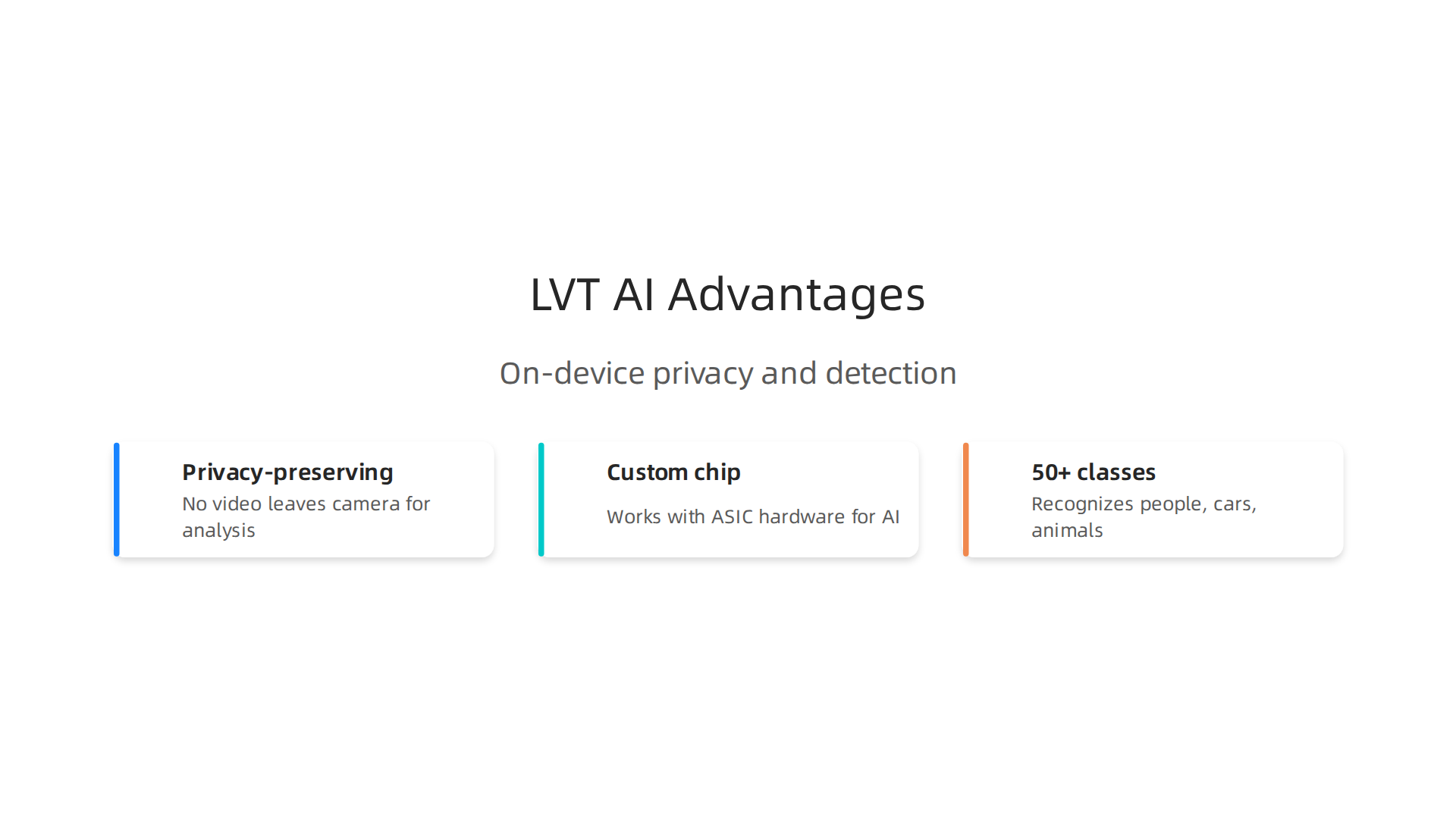
This approach creates several key advantages:
-
Privacy-preserving edge computing. No video leaves the camera for analysis. That removes the risk of footage being stored or shared without permission. The AI simply sends an alert when it detects a threat.
-
Custom chip compatibility. The system works with ASIC hardware designed specifically for running AI models. That makes each unit more power-efficient and faster than using general processors.
-
Support for 50+ object classes. The models recognize people, cars, trucks, animals, and more. This reduces false alarms from branches moving or weather changes.
Performance numbers back up the approach. A public comparison between Spot AI and LVT shows that LVTs AI achieves 95% detection accuracy when fine-tuned to each sites environment. The system also works in zero visibility weather like heavy fog or snow, as seen in a real LVT demonstration. That reliability matters for construction sites and remote industrial locations that need protection around the clock.
For founders and investors trying to understand which AI approaches matter most in 2026, a practical guide on how to evaluate AI platforms for your startup in 2026 cuts through the hype with clear criteria.
The technology keeps evolving. LVT also uses a Platform-as-a-Service cloud layer for remote management and analytics. The hybrid architecture means each camera stays smart on its own while the central system handles reporting and updates. This combination of local intelligence and cloud coordination is becoming standard across the best generative AI platforms in the physical security space. As liveview technologies news continues to track these developments, the core differentiator remains clear: put the AI where the action is, not in a distant data center.
That clear differentiator has convinced a growing list of prominent investors to back LVT’s growth.

Let’s break down the funding rounds and key investors driving this expansion.
The company has secured a total of $135M in funding, combining an $85M debt facility from KeyBanc and MUFG with strong equity rounds. This mix of financing shows that both venture capitalists and institutional lenders believe strongly in LVT’s model.
In 2022, the momentum really picked up. LVT raised $50 million in Series B funding, led by growth investment firm Sorenson Capital.

The Larry H. Miller Group joined the round, along with returning investors Lead Edge Capital and Pelion Venture Partners. Overall, LiveView Technologies has raised $70.79M over 5 rounds, showing consistent and growing investor confidence over several years.

The diversity of the investor syndicate is impressive. It combines corporate venture arms with traditional top-tier VCs. For founders looking to build a similarly strong cap table, understanding the strategies behind venture capital firms for small businesses can help you approach the right partners at the right time.
This strong financial backing is fueled by rapid growth. LVT’s recurring revenue has averaged over 100% growth annually for five years. That kind of number makes investors pay attention. The company’s post-money valuation hit Series A and $839.6M valuation levels after the Series B, putting it on a clear path toward unicorn status. It remains a privately held company that carefully selects partners aligned with its long-term vision of making communities safer.
For technology investors and startup founders, tracking hot sectors and well-capitalized companies like LVT provides a powerful edge. Keeping up with liveview technologies news and the broader AI investment landscape helps you spot the next wave before it crests. To make this habit easier, I recommend The AI Newsletter Worth Reading for clear, actionable daily updates that cut through all the noise.
Traction, Milestones, and Market Validation
The impressive investor lineup made sense once you look at the actual numbers LVT has put up. The company is not just a good story on paper. It has real customers, real revenue, and real recognition from independent third parties.
Enterprise customers that prove the model
LVT’s mobile security units are not sitting in a warehouse. They are deployed across some of the most recognizable organizations in the world. The list includes the Kansas City Chiefs, Marathon Oil, the City of Camden, and even Yellowstone National Park. These customers use LVT’s systems for everything from public safety to tracking weather and traffic patterns. That kind of range shows how versatile the platform really is.
Revenue tells a similar story. According to company data reported by GetLatka, LVT’s revenue reached $75.1 million in 2023. That is a huge jump for a company that started without any venture capital. And the growth has not slowed down since.
Awards and rankings that back up the hype
When independent business publications take notice, it adds a layer of trust that goes beyond self-reported numbers. LVT has earned that trust multiple times over.
In 2022, Inc. Magazine ranked LVT No. 33 on its Rocky Mountain region list of fastest-growing private companies after the company posted a 229% two-year revenue growth rate. That is not a small achievement. The region includes major tech hubs like Utah and Colorado, so the competition is stiff.
But LVT did not stop there. It went on to make the Inc. 5000 national list for three consecutive years, including a ranking of 3,840 in 2022 with three-year growth of 129.6%. The consistency matters. It shows the company is not a one-hit wonder.
Then in 2024, Deloitte placed LVT at No. 462 on its Technology Fast 500 list for North America, recognizing a 226% growth rate driven by strong demand for mobile security solutions. Being named alongside other fast-growing tech firms gives investors and customers confidence that LVT is in good company.
Industry recognition shapes market validation
For founders and investors, these third-party validations are gold. They signal that the market is paying attention. They also help when you are pitching to new partners or trying to win large enterprise contracts.
If you are building your own startup and want to understand how ecosystem recognition can fuel growth, check out this guide on disruptive innovation in 2026. It covers how companies like LVT carve out new categories and earn market trust.
Simply put, LVT has the customers, the revenue, and the awards to back up its aggressive growth story. That combination is exactly what smart investors look for before they write a check.
Competitive Landscape: How Liveview Stacks Up
A company’s growth story means little without understanding who else is playing in the same space. The mobile security and video analytics market has gotten crowded fast, especially in 2026. But LiveView Technologies has carved out a lane that most competitors struggle to match.
Who competes with LVT?
The field breaks into a few groups. There are established hardware giants like Axis and Hikvision that sell cameras and video management systems. There are cloud-native platforms like Verkada and Rhombus that offer unified security. And there are direct mobile surveillance tower competitors like Pro-Vigil, WCCTV, and 2M Technology.
According to CB Insights, the top competitors listed for LiveView Technologies include Pro-Vigil, Livestream, Phenix, and Cognosys. But the real fight happens in the mobile surveillance niche.
Where LVT wins on differentiation
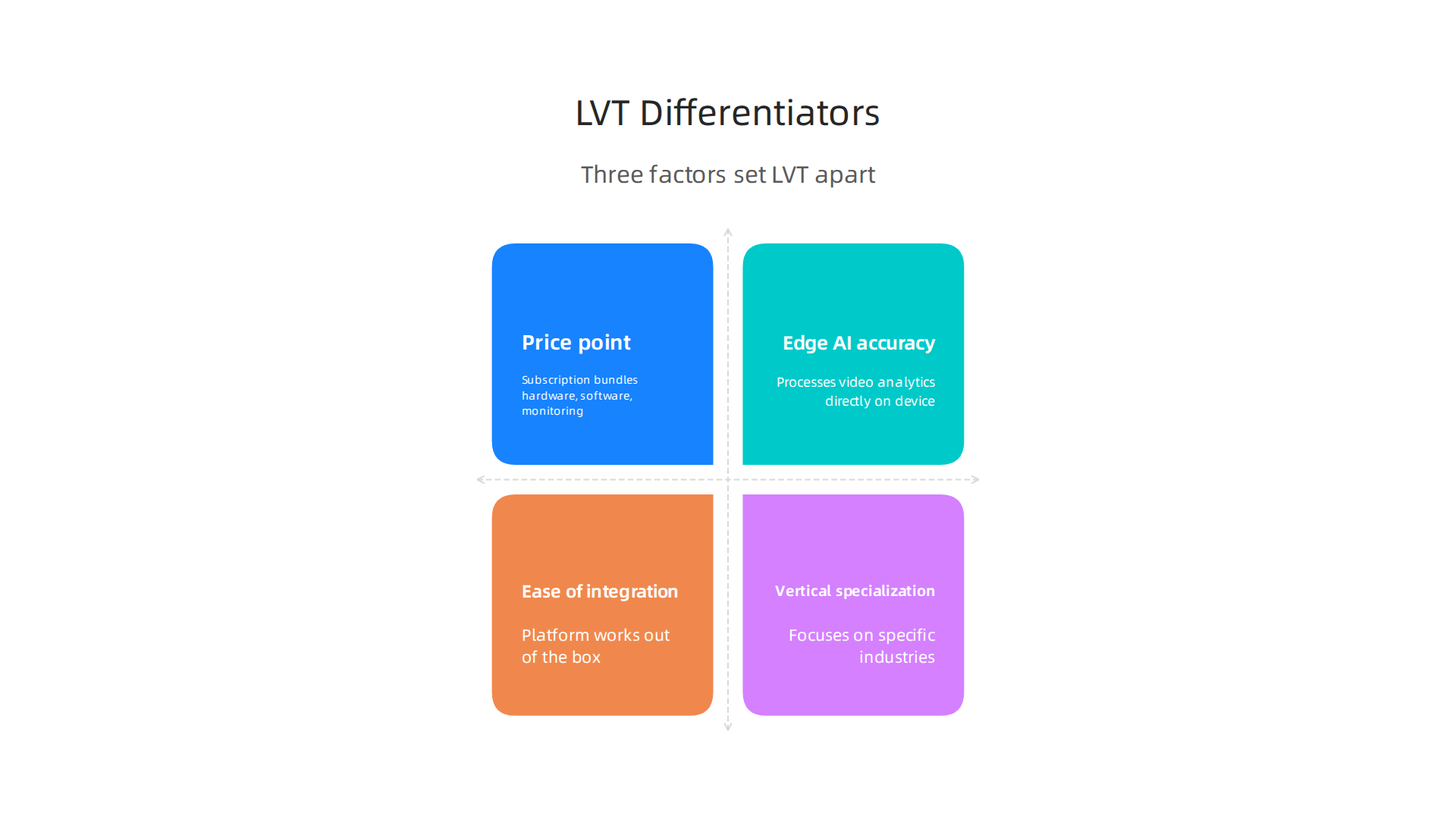
Three factors set LVT apart from the pack:
-
Price point. LVT offers a subscription-based model that bundles hardware, software, and monitoring. That removes big upfront costs for customers.
-
Accuracy on edge devices. LVT’s units process video analytics directly on the device using edge AI. That means faster alerts and less reliance on constant cloud connectivity. Many competitors still send all footage to the cloud for analysis.
-
Ease of integration. LVT’s platform works out of the box. You deploy the solar-powered tower, and the system starts capturing data. Competitors often require complex camera setups or third-party integrations.
-
Vertical specialization. LVT focuses on specific industries like construction, oil and gas, law enforcement, and retail. They tailor their hardware and software to each use case. Competitors like Voxel target workplace safety inside facilities, while WCCTV focuses on UK construction standards.
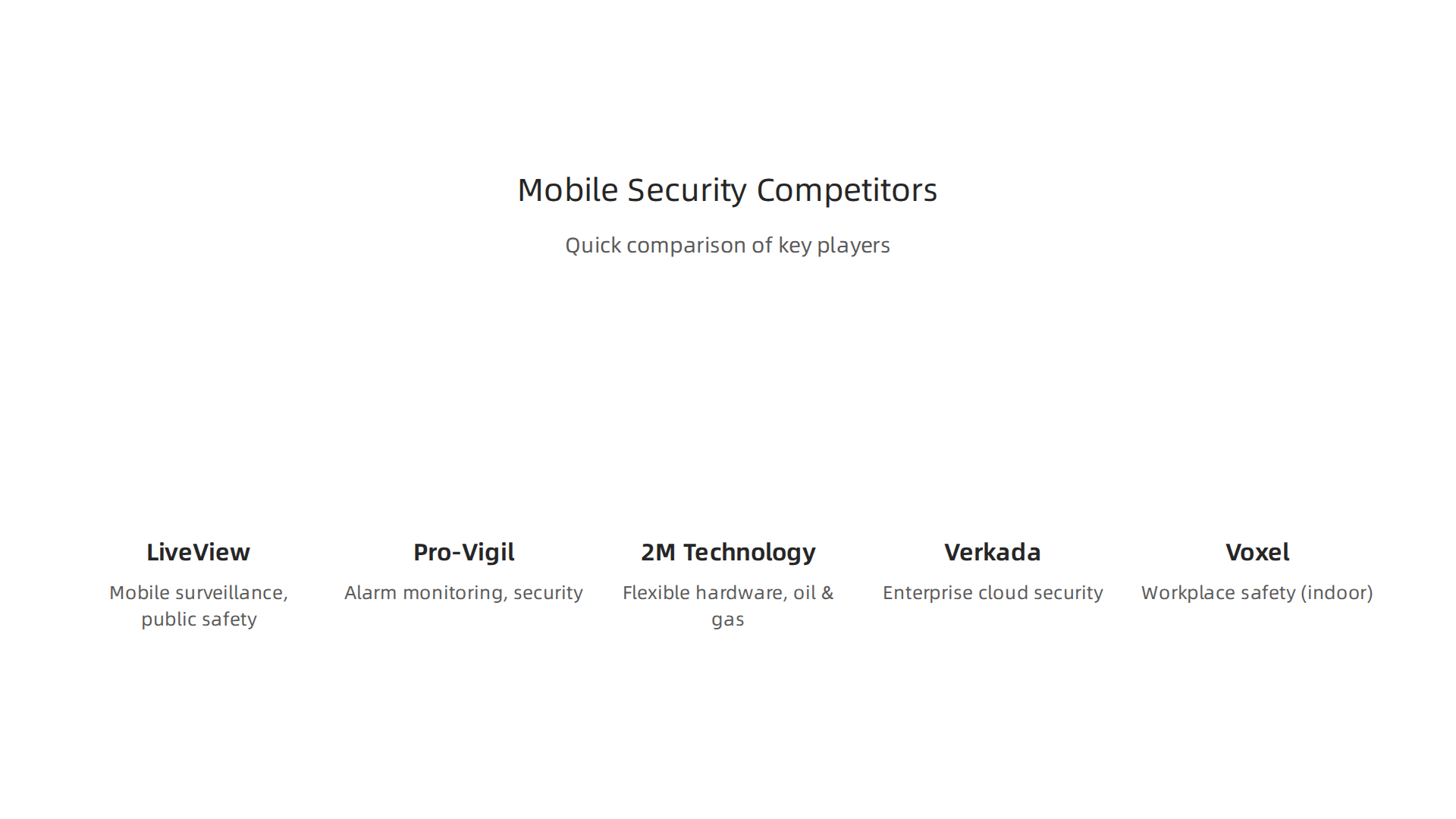
**Quick comparison of key players
**
| Company | Focus Area | Camera Platform | Contract Required | Best For |
|---|---|---|---|---|
| LiveView Technologies | Mobile surveillance, public safety | Proprietary | Subscription | Outdoor temporary sites, crime reduction |
| Pro-Vigil | Alarm monitoring, security | Proprietary | Yes | Live operator intervention |
| 2M Technology | Flexible hardware, oil & gas | Open (any IP brand) | No | Integrators needing camera freedom |
| Verkada | Enterprise cloud security | Proprietary | Yes | Indoor/outdoor unified security |
| Voxel | Workplace safety (indoor) | Uses existing cameras | No | Injury prevention in facilities |
The 2026 guide to LVT alternatives confirms that "2M Technology is the strongest LVT alternative for buyers who need camera brand freedom," while Stealth Monitoring leads in live operator services.
Where does LVT go from here?
With its recent expansion into full-site intelligence through the Live Unit Surround product, LVT is moving beyond just mobile trailers. It now offers 360-degree site visibility for construction sites and critical infrastructure. That puts it in direct competition with more established enterprise security platforms.
For investors and founders tracking this space, understanding how each competitor positions itself is key. If you want to stay ahead of market movements and make smarter decisions, check out the how to evaluate AI platforms for your startup in 2026 guide. It breaks down the criteria you should use when comparing technology companies like LVT against the field.
The bottom line
LVT holds a strong position in mobile security because it solves a real problem with a simple, proven system. Competitors exist, but none match the combination of solar-powered mobility, edge AI, and vertical focus that LVT has built over two decades. That is the kind of moat that keeps investors interested.
Stay informed on the fastest-moving trends in AI and startup technology. Subscribe to the The Deep View Newsletter for daily curated insights that help you spot opportunities before the crowd.
Future Outlook and Product Roadmap
LVT is not slowing down. The company has an aggressive roadmap for the rest of 2026 that goes well beyond its mobile security roots.
Expanding into full-site intelligence
The launch of Live Unit Surround marks a major shift for LVT. It moves the company from access control at the perimeter to complete site visibility. The product gives customers 360-degree coverage of construction sites, energy facilities, and critical infrastructure. According to coverage of this launch, the expansion extends LVT’s platform from entry-point monitoring to full property intelligence.
This push into broader site analytics means LVT is now competing with enterprise security platforms it did not face before. But the company has an edge: its units can handle zero-visibility weather conditions using edge-based AI computer vision, as demonstrated in LVT’s own platform showcase.
Generative AI integration on the roadmap
A key part of LVT’s future is weaving generative AI platforms into its video analysis pipeline. The company already relies on open-source computer vision models tuned for its specific deployments, as detailed in its privacy impact assessment. The next step is adding more advanced AI that can understand behaviors and context rather than just detecting motion.
This is where LVT connects to broader trends in the AI space. Founders and investors tracking where AI is headed should look at how LVT is positioning itself. The company is moving from simple object detection toward agentic systems that can recognize intent and trigger automated responses. That is a shift worth understanding, and the guide on agentic AI vs generative AI breaks down exactly what these technologies mean for startups and investors.
Hiring as a growth signal
LVT is staffing up fast. The company has been actively hiring senior machine learning engineers focused on perception and computer vision for autonomous systems. That tells you something: LVT is building internal AI capability rather than relying solely on third-party models. It is also expanding its sales team, which points to a push into new markets and verticals.
Risks on the horizon
No growth story comes without risk. For LVT, three challenges stand out in 2026.


First, regulatory scrutiny. As surveillance technology becomes more capable, cities and states are tightening rules around facial recognition, data retention, and public camera use. LVT’s focus on privacy-compliant edge processing helps, but regulation is an ongoing threat.
Second, competition is heating up. New entrants like Spot AI and established players like Verkada are all chasing the same customers. LVT’s vertical specialization in construction and oil and gas gives it a moat, but commoditization of hardware is a real risk.
Third, technology itself moves fast. Open-source computer vision models are getting better every quarter. What differentiates LVT today may be table stakes tomorrow. The company is betting that its edge processing, vertical expertise, and subscription model will keep it ahead.
If you are evaluating LVT as an investment or partnership opportunity, staying current with liveview technologies news is critical. The company is evolving rapidly, and the window to understand its trajectory is now.
Summary
This article offers a data-driven spotlight on LiveView Technologies (LVT), a Utah-based leader in mobile surveillance that pairs solar-powered hardware with edge AI to deliver real-time video analytics. It covers LVT’s origin as a bootstrapped startup, its leadership decisions to run models on-device, and the product evolution from construction monitoring to full-site intelligence. The piece details funding milestones, revenue growth, notable customers, and third-party recognitions that validate the business model. It explains the technical advantages of edge computing—privacy, lower bandwidth, and faster alerts—and benchmarks LVT against competitors in the mobile surveillance niche. The roadmap section previews Live Unit Surround and generative/agentic AI plans, while the risks section flags regulation, competition, and fast-moving open-source improvements. Readers will come away able to assess why LVT’s hybrid hardware‑software approach matters and what to watch when evaluating similar AI security platforms or investment opportunities.