
How to Find Investors for a Startup in 2026 Step by Step Guide

Introduction: The Fundraising Landscape in 2026
Raising money for your startup is still the hardest part of building a company.

If you are a founder in 2026, you already know that. The good news? The playbook has changed, and for those who understand the new rules, opportunities are real.
Here is the thing. Startup funding in 2026 looks nothing like it did just a few years ago. Venture capital is flowing again, but it is highly concentrated. According to a recent analysis of startup funding trends in 2026, global VC hit $97 billion in Q3 2025 alone, with nearly half of that going into AI companies. Most of that money went to just a handful of big deals. For the average founder, this creates both a challenge and a clear path forward.
You probably feel overwhelmed by all the advice out there. Pitch decks, warm intros, term sheets, cap tables. It is a lot. Many founders waste months chasing the wrong investors or asking for the wrong amount. That is exactly why we wrote this guide.
This article walks you through every stage of finding investors, from getting your startup ready to signing a term sheet. You will learn how to navigate the 2026 funding landscape, avoid costly mistakes, and connect with the right partners for your business.
Want to stay ahead of the trends that actually matter? Consider subscribing to The AI Newsletter Worth Reading for clear daily updates on technology and startup funding shifts.
But first, let us talk about what has really changed in how investors think this year.
Step 1: Understand Your Funding Needs and Investor Readiness
Before you send a single email to an investor, you need to get clear on one thing: where does your startup actually stand?

Many founders skip this step. They rush into pitching without knowing their stage or how much money they really need. That is a recipe for rejection.
Every investor type looks for a different level of proof. Pre-seed investors want to see a big idea and a founder with grit. Seed investors want early traction and a clear path to product-market fit. Series A investors want hard numbers: revenue, growth rate, and a repeatable sales engine. If you pitch a Series A investor with just an idea, you will not get funded. Period.
So start by asking yourself three questions.
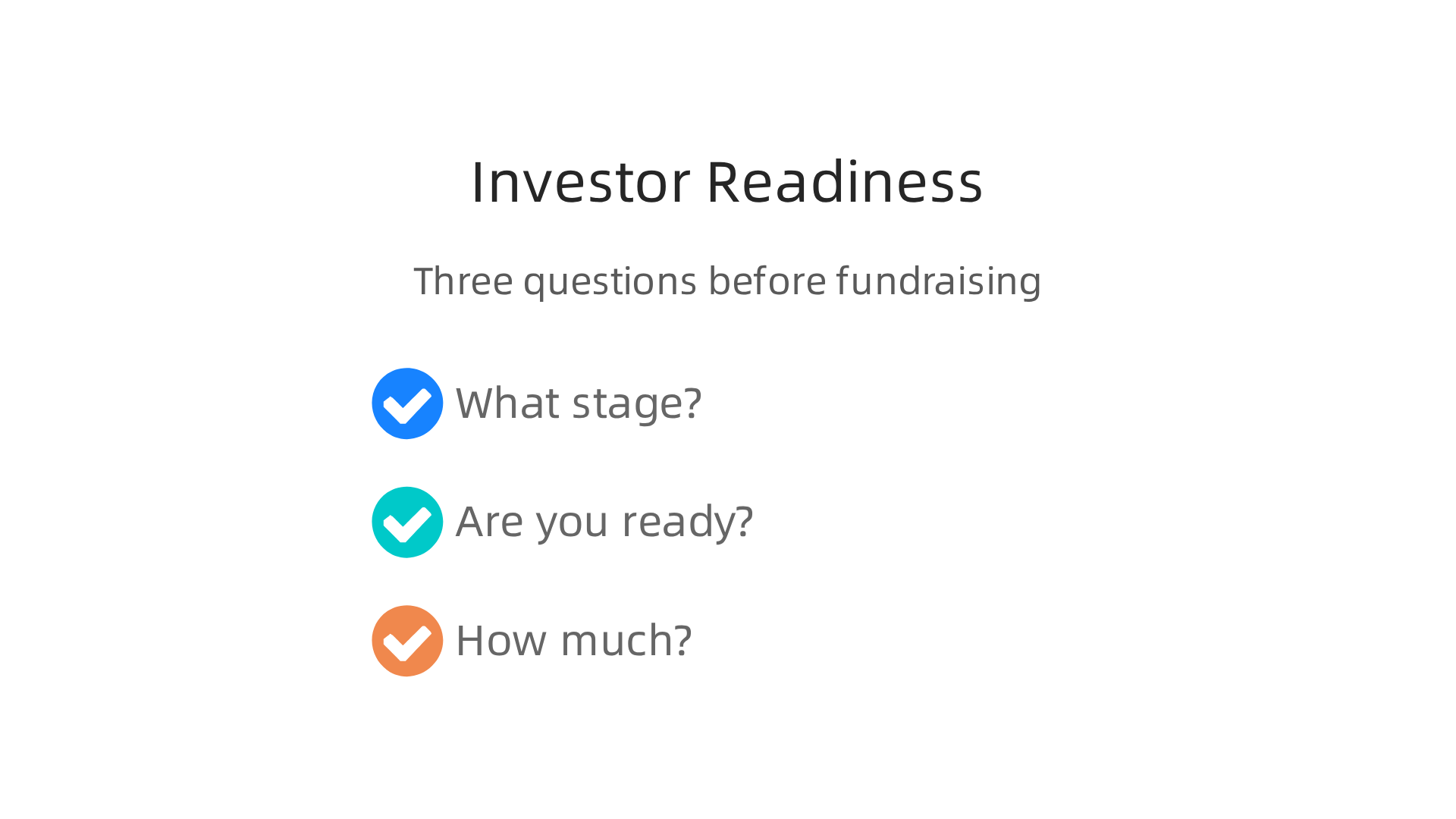
1. What stage are you in?
The startup world uses rough labels: pre-seed, seed, Series A, and beyond. But the lines blur in 2026. Seed funding is still active, with about $9 billion going into startups every quarter. However, the jump from Series A to Series B is where most startups die. According to a look at 2026 tech industry trends and funding stages, 60% of startups that raise pre-seed money never make it to Series A. That means your stage determines not just who you talk to, but how you talk about your business.
2. Are you ready?
Investors in 2026 care deeply about fundamentals. They want to see product-market fit, a strong team, and clean financials. Do a cold internal check. Do you have repeated sales from real customers? Is your team full of people who can execute? Are your books in order? If any of these are weak, fix them before you fundraise. There is no shortcut.
3. How much do you need?
Do not just throw out a number. Calculate exactly how much capital you need to reach your next major milestone. That milestone should be something that makes your startup more valuable: a certain revenue figure, a product launch, or a customer count. Then add a buffer. Investors want to see that you have thought this through. They also want to know how many months of runway that money buys. Twelve to eighteen months is standard.
Once you know your stage, readiness level, and exact ask, you can start identifying the right investor types. For example, if you run a small but growing business, you might look into venture capital firms for small businesses that specialize in your space.
Getting this foundation right will save you months of wasted effort. Next, you will learn how to build a list of investors who actually fit your startup.
Step 2: Build a Targeted Investor Strategy
Now that you know your stage and your ask, it is time to build a targeted investor strategy. Do not blast your pitch to every firm you find on Google. That is a fast way to get ignored. Instead, get surgical about who you contact and how you reach them.
Create a Tiered List
Start with three categories. Your first tier is lead investors. These are the firms most likely to say yes because they match your stage, sector, and location. Your second tier is follow-on investors. They prefer to join rounds led by someone else. Your third tier is aspirational targets. These are your dream investors. You might not get a meeting now, but you can plant a seed for later.
Aim for 50 to 100 names at first. Not 500. Quality beats quantity here.
Research Each Investor Deeply
For every investor on your list, run a background check. Does their portfolio include companies like yours? What stage do they actually invest in, not just what they say on their website? How large are the checks they write? What deals have they closed in the last 18 months? Recency matters.
As one expert explains in this step-by-step guide to investor outreach, you need to know stage focus, sector alignment, check size, geography, sector thesis, and recent deals for every single target. Do not skip this step.
To see who is dominating the market in 2026, take a look at this overview of the biggest investment companies of 2026. It shows you where the big players are putting their money.
Leverage Warm Introductions
Cold emails work, but warm introductions work much better. A warm introduction comes from someone the investor already trusts. That person could be a founder in their portfolio, a mutual advisor, or a contact you met at an event.
Start with your own network. Ask every friend, mentor, and coworker if they know anyone on your list. Then make it easy for them. Write a short blurb they can forward. Include what you do, your most impressive traction number, and why that specific investor is a good fit.
Warm introductions are the single most powerful tool in your outreach kit. Prioritize them above everything else.
As you refine your list and approach, staying on top of tech trends helps you sound sharp in conversations. Investors care about what is happening in AI and other fast-moving spaces. The Deep View Newsletter delivers clear daily AI updates that can keep you informed and ahead of the curve.
Step 3: Leverage Online Platforms to Find Investors
You have a targeted list and a plan for warm introductions. Now it is time to use online platforms to find investors who are actively writing checks.

The right tools make the search faster and smarter.
Use AngelList, Crunchbase, and PitchBook
These three platforms are the backbone of investor discovery in 2026. They show you who is investing, what stage they fund, and how much they put in.
AngelList is ideal for early-stage founders. You can build a company profile, connect with angel investors, and even apply to syndicates. Use filters to find investors by location, sector, and check size. Many investors on AngelList are open to cold messages if your profile is strong.
Crunchbase is a goldmine for deal tracking. Search for companies in your space and see who funded them. That tells you exactly which investors are active right now. You can also set alerts for new funding rounds in your industry.
PitchBook gives you deeper data for later-stage rounds. It is expensive but worth it if you are serious about research. You can see an investor’s full portfolio, past exits, and contact details.
According to a 2026 guide on the best platforms to access venture capital investors, the platform you choose depends on your startup stage and fundraising goal. Angel platforms and databases like these are essential for efficient targeting.
Optimize Your LinkedIn Profile for Investors
Investors will look you up on LinkedIn before responding to a message. Make sure your profile is ready.
Use a professional photo and a headline that states what you do and your traction. For example: "CEO at XYZ | Growing 15% MoM | Raising $500K Seed Round." Your summary should tell your story and include a clear ask. Share posts about your company milestones, customer wins, and market insights. This builds credibility and keeps you on investors’ radars.
Join Online Communities
Places like Y Combinator’s Startup School, Indie Hackers, and Twitter/X (now called X) are full of founders and investors having real conversations.
Post your progress, ask for feedback, and engage with other founders. Investors lurk in these spaces. A smart comment or a share of your journey can lead to a direct message and a conversation.
Another way to impress investors is to be informed about fast-moving tech trends. Sign up for The AI Newsletter Worth Reading to get clear daily AI updates. Knowing what is happening in AI makes you sound sharp in any investor meeting.
For a complete list of venture capital options, check out this guide on venture capital firms for small businesses to find the right funding path in 2026.
Step 4: Attend Events and Network Like a Pro
Online tools get you started, but real relationships often begin in person. Events give you the chance to connect with investors face to face, see their body language, and make a lasting impression. Here is how to do it right in 2026.
Choose the Right Conferences
Not every event is worth your time and money. Pick ones where your target investors actually show up. TechCrunch Disrupt is great for early-stage tech startups. SaaStr is ideal if you build software. Industry-specific events like health tech summits or fintech conferences attract investors who specialize in your space.
Local meetups and pitch nights are also goldmines. Many angel investors and micro-VCs attend these to find deals early. A 2026 update on Venture Capital in 2026 trends highlights how smaller, focused events are gaining popularity as investors look for more personal connections.
Prepare Your Elevator Pitch and Clear Ask
Before you walk into any room, know what you want. Your elevator pitch should be short, clear, and memorable. State who you are, what you do, and what you need.
For example: "I am the founder of XYZ. We help small businesses save 20 hours a week with AI automation. We are raising a $500K seed round and have six paying customers."
Always have a specific ask ready. It could be "Can I send you our one-page summary?" or "Would you be open to a 15-minute call next week?" A clear ask shows you are professional and prepared.
Follow Up Strategically
The real magic happens after the event. Follow up within 24 hours while your conversation is fresh. Send a short email or LinkedIn message. Thank them for their time and remind them of your ask.
Do not just say "nice to meet you." Add value. Share a relevant article, offer an introduction to someone they mentioned, or give a quick update on your traction. This keeps the relationship warm and shows you are serious.
For more tips on making your startup stand out, check out how clarity AI helps startup founders and investors cut through the noise and build better connections.
Networking is not about collecting business cards. It is about building trust one conversation at a time. Investors fund people they believe in. So go to events, be yourself, and follow up with purpose.
Step 5: Craft a Compelling Pitch Deck
You have built connections and lined up meetings. Now you need a pitch deck that turns interest into action. Your deck is the story of your startup on paper. It needs to grab attention fast.
Stick to a Proven Structure
Investors see hundreds of decks. They expect a clear flow. Follow this order for the best results:
- Problem: Describe a real pain point your target market faces. Make it relatable.
- Solution: Show your product or service and how it solves that problem simply.
- Market: Prove the market is big and growing. Use data from trusted sources.
- Traction: Highlight your wins so far. Revenue, users, or key partnerships all count.
- Team: Introduce the people behind the startup. Investors bet on founders as much as ideas.
- Financials: Include a simple forecast. Show you understand your unit economics.
- Ask: State exactly how much you are raising and what you will use it for.
A recent guide on investor outreach strategies for 2026 suggests keeping your deck to 10 to 15 slides. That is enough to tell your story without losing anyone.
Design for Clarity
Visuals matter more than you think. Use charts, screenshots, and simple graphics instead of long paragraphs. Each slide should have one main idea. Keep fonts large and colors clean.
Tailor your deck for each investor. If you know they care about your industry, lead with market data. If they love strong teams, put your founder bios earlier. Customization shows you did your homework.
For more on how AI tools can help you refine your pitch and track investor interest, learn how to evaluate AI platforms for your startup. Smart tools can streamline everything from design to follow-ups.
Back Everything with Data
Your claims need proof. Use real metrics, case studies, and customer testimonials. If you have early revenue, show the graph. If you have strong user growth, display the trend.
Investors trust cold numbers more than big promises. A deck filled with data stands out from the crowd.
Your pitch deck is a living document. Update it as you hit new milestones. And if you want to stay ahead of trends that shape how investors think, subscribe to The Deep View Newsletter for clear daily updates on AI and tech developments that matter for your fundraising journey.
Step 6: Nail the Investor Meeting
Your pitch deck opens the door. The investor meeting is where you walk through it. This is your chance to show you are more than a document.

You need to prove you are the person to lead this startup to success.
Preparation makes everything easier. Practice your pitch until it feels natural. Record yourself. Watch it back. Find the parts that drag and tighten them up. Then anticipate tough questions. Investors will ask about your competition, your numbers, and your risks. Have clear answers ready. If you have a working product, bring a demo. Seeing it in action is much more powerful than describing it.
Execution is about balance. Tell a compelling story about your startup. Use the problem and solution from your deck as your backbone. But also listen. Let the investor talk. Ask them what they look for in deals. Leave room for questions. The best meetings feel like conversations, not presentations.
Follow up fast. Within 24 hours, send a personalized recap. Thank them for their time. Remind them of the key points you discussed. Attach any materials they asked for. If the meeting went well, you might receive a term sheet soon after. You can learn more about what that looks like in this guide to navigating startup term sheets.
The meeting is your moment to shine. Be prepared. Be real. And stay responsive afterward.
For more context on the types of investors you might meet, check out this overview of venture capital firms for small businesses in 2026.
Step 7: Navigate Due Diligence and Term Sheet Negotiation
You aced the investor meeting. Now comes the part where things get real. Before any money moves, investors will put your startup under a microscope. This phase is called due diligence. And after that, you will face a term sheet full of legal language you need to understand. Learning how to find investors for startups is one thing. Knowing how to close the deal is another.
Prepare Your Data Room
Due diligence is a deep dive into your business. Investors will review your financial health, legal documents, and operations.
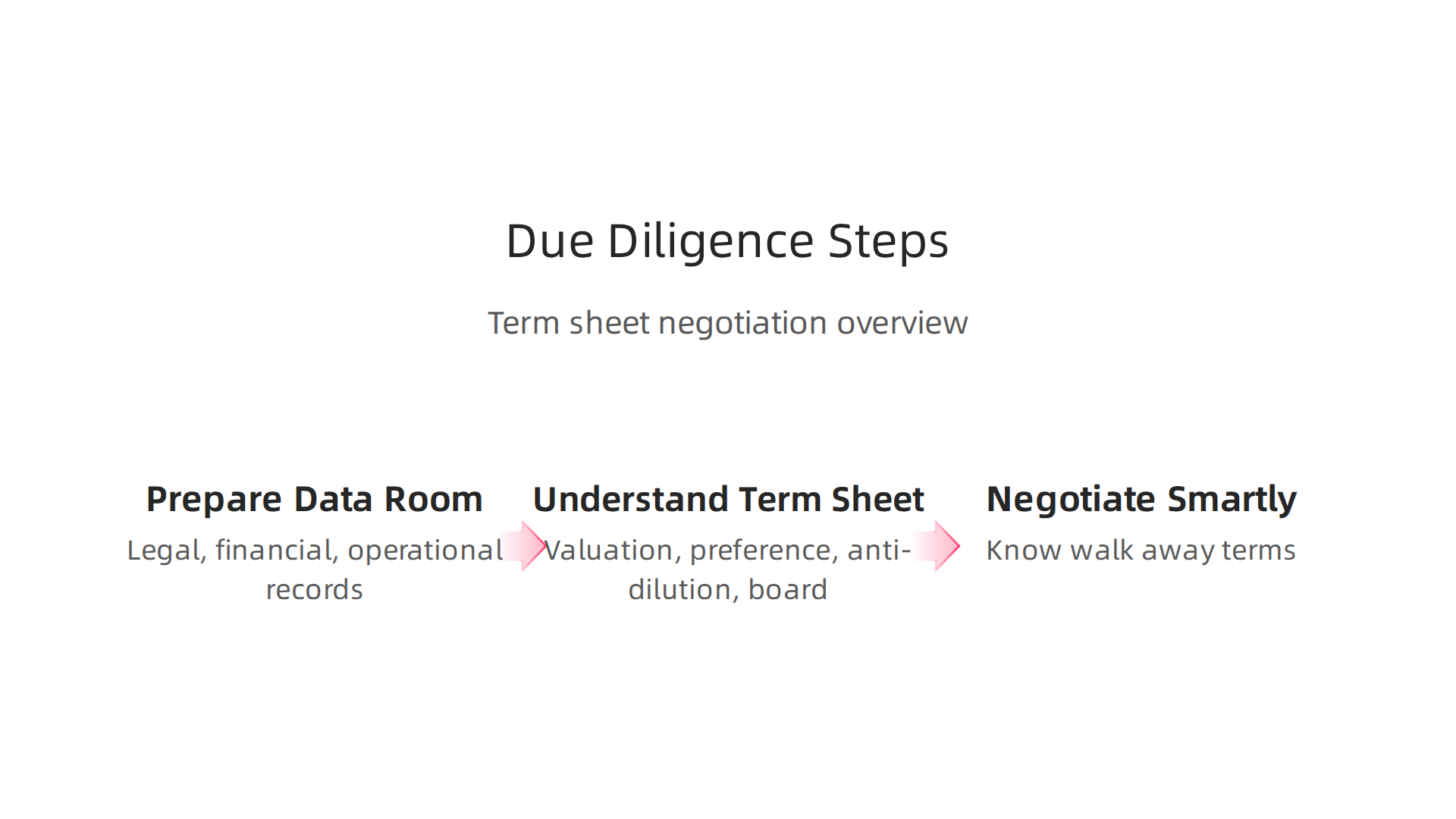
They want to confirm that what you told them is true.
You can make this easier by building a data room ahead of time. Gather your legal paperwork such as incorporation documents, intellectual property filings, and employee contracts. Pull together financial records like balance sheets, income statements, and cash flow projections. Also include operational materials such as customer agreements and supplier details.
A solid guide on startup term sheet navigation covers how investors check for red flags during this process. If something looks off, they may ask for clarification or want to renegotiate. So be upfront from the start.
Understand the Term Sheet
Once due diligence looks good, you will receive a term sheet. This is a non binding document that lays out the basic deal terms. Do not let the short length fool you. Every line matters.
Focus on the terms that shape your future. Valuation determines how much of your company you give up. Liquidation preference decides who gets paid first if you sell. Anti-dilution clauses protect investors if you raise money at a lower price later. Board seats control who makes big decisions.
The venture capital term sheets guide from Silicon Valley Bank explains the most critical terms you need to watch for and how to prioritize them.
Negotiate Smartly
You can negotiate a term sheet. In fact, you should. Know your walk away terms before you sit down. What is the lowest valuation you can accept? How much control are you willing to give up? Get a lawyer who knows startup funding to review every clause. They will catch traps you might miss.
Focus on the big ones: valuation, liquidation preference, board composition, and protective provisions. Do not get stuck on small stuff. And keep the no shop period to 30 or 45 days so you can still talk to other investors if needed.
For more context on verifying investor trustworthiness, this piece on using a verified data foundation for funding decisions can help you check who you are really dealing with.
Staying current on tech and AI trends also helps you make smarter funding moves. If you want clear daily updates on what is happening in artificial intelligence, consider subscribing to The AI Newsletter Worth Reading for quick, digestible insights that keep you ahead of the curve.
Summary
This article is a practical, step-by-step guide to finding investors in 2026, written for founders who need a clear fundraising roadmap. It explains how the funding landscape has shifted — capital is larger but more concentrated — and walks you through assessing your stage and readiness, calculating how much to raise, and building a targeted investor strategy. You’ll learn how to research and tier potential backers, leverage online platforms like AngelList and Crunchbase, and prioritize warm introductions and in-person networking. The guide also covers creating a tight, data-backed pitch deck, running strong investor meetings, and handling due diligence and term sheet negotiation. Throughout, it emphasizes concrete rules of thumb (50–100 investor targets, 12–18 months runway, 10–15 slide decks) and how AI tools and verified data can help you move faster and smarter. By the end, you’ll know who to contact, what materials to prepare, and how to close a funding round with confidence.