
When Was AI Invented Tracing the Birth of Artificial Intelligence from Turing to Transformers
When Was AI Invented? Unraveling the History and Future of Artificial Intelligence
You might think there’s a simple answer to the question when was AI invented. Maybe you picture a scientist flipping a switch in a lab. Or a computer suddenly saying hello. The truth is, the answer depends on how you define "invented."

Some people point to the 1950s, when British mathematician Alan Turing first asked, "Can machines think?" He created the Turing test to measure if a computer could fool a human in conversation. That was a huge spark. But it wasn’t the official birth.
Most experts agree that AI was truly born in the summer of 1956. That’s when a group of scientists gathered at Dartmouth College for a workshop. They wanted to build a machine that could imitate the human mind. The meeting was organized by John McCarthy, who actually came up with the term "artificial intelligence." This event is widely recognized as the birth of artificial intelligence at Dartmouth.
So the question when was AI invented has layers. It’s not just one date. It’s a story of ideas, people, and breakthroughs that built on each other.
In this article, we’ll walk through the full timeline. From early theories to the fast-paced world of fast AI today. We’ll even touch on how politics and innovation mix, including the role of Trump AI policies. And we’ll look at the history of computers that made it all possible.
Understanding this story helps you see where AI is headed. And if you want to stay ahead of the curve, you need clear, daily insights.
For daily AI updates that cut through the noise, consider subscribing to The AI Newsletter Worth Reading.
Let’s start at the very beginning.
Let’s start at the very beginning.
The Origins of AI: From Myth to Machine
Long before computers existed, people dreamed of artificial beings. Ancient Greek myths tell stories of Hephaestus, the blacksmith god, who built golden handmaidens that could speak and move. There was also Talos, a giant bronze statue that guarded the island of Crete. These were not real machines, of course. But they show that the idea of creating life from metal and gears is thousands of years old.
Fast forward to the 1940s and 1950s. The field of cybernetics began to take shape. Scientists like Norbert Wiener studied how animals and machines could control themselves using feedback loops. At the same time, researchers were building the first electronic computers. These machines could crunch numbers faster than any human, but could they think?
That question drove Alan Turing. In 1950, he published a famous paper called "Computing Machinery and Intelligence." Instead of asking "Can machines think?" directly, he designed a practical test. This became known as the Turing test. If a machine could hold a conversation and fool a human into thinking it was a person, then it would be considered intelligent. It was a clever way to skip the philosophical debate and focus on results.
Turing’s ideas planted the seeds for everything that came later. But the field needed a name and a formal start. That would happen in 1956 at the Dartmouth workshop.
To really understand what makes a machine "intelligent," you first need a clear grasp of what technology itself means. If you want that foundation, check out this practical framework for defining technology.
Before the Dartmouth meeting, several smaller conferences had already brought together thinkers from cybernetics, automata theory, and information processing. The 1951 Paris cybernetics conference and the Macy meetings were key gatherings. They helped set the stage for the big breakthrough. But none of them officially launched a new field. That honor belongs to the summer of 1956.
So when you ask when was AI invented, the answer starts with ancient myths and runs through Turing’s test and the rise of cybernetics. The official birth came later, but the dream was always there.
The Dartmouth Workshop: The Official Birth of AI
If you want a single date to answer the question of when was AI invented, most experts point to the summer of 1956. That is when the Dartmouth Summer Research Project on Artificial Intelligence took place. It was not just another conference. It was the moment a new field of science officially began.
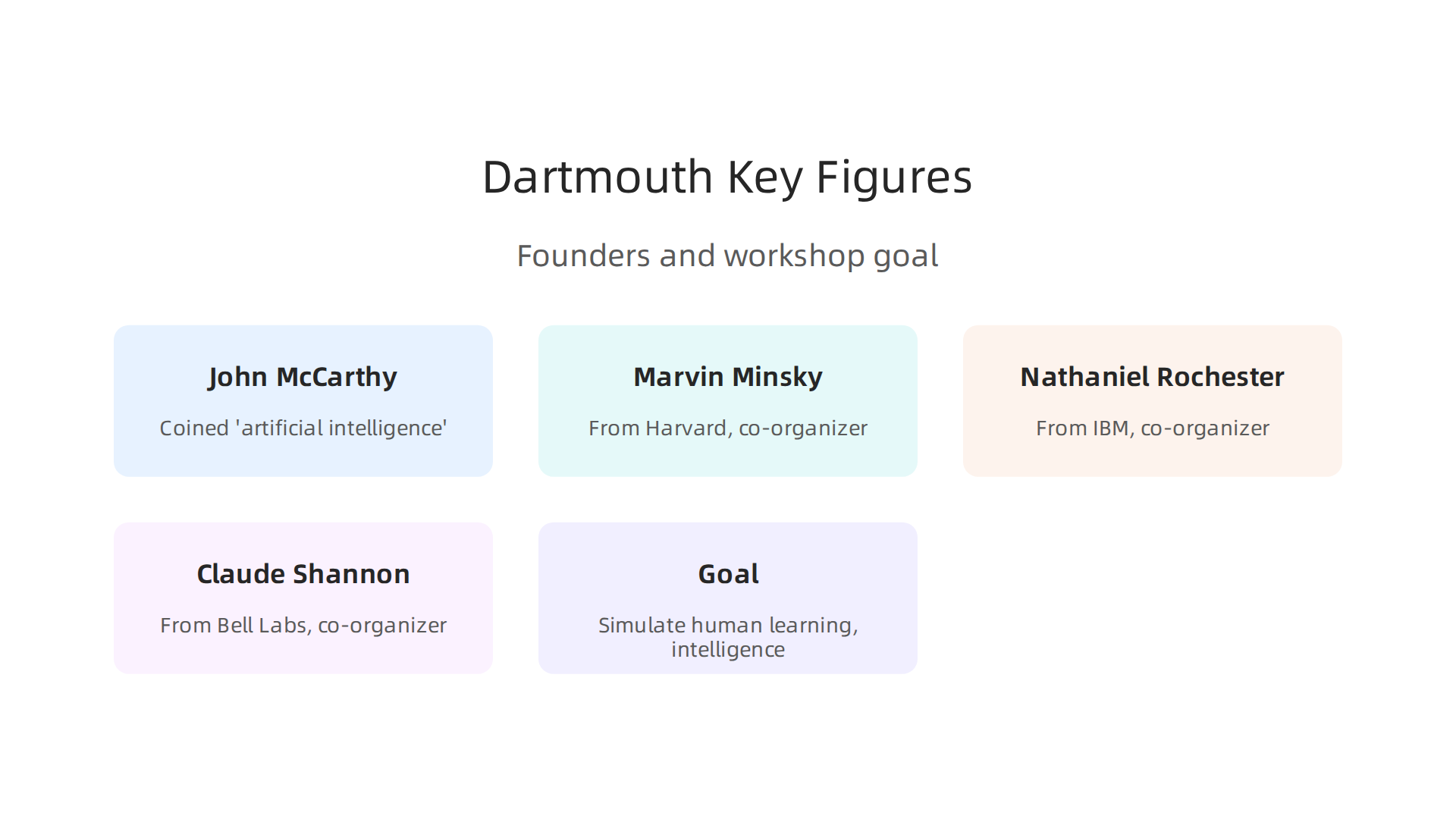
John McCarthy was the driving force behind the event. He was a young math professor at Dartmouth College. He felt that researchers were not taking the idea of thinking machines seriously enough. So he decided to gather the smartest people he could find and lock them in a room for two months.
McCarthy picked the name "artificial intelligence" for the new field. He used it in the formal proposal he sent to the Rockefeller Foundation asking for funding. Along with Marvin Minsky from Harvard, Nathaniel Rochester from IBM, and Claude Shannon from Bell Labs, he laid out the plan. Their goal was bold. They wanted to see if machines could be built to simulate every part of human learning and intelligence.
The proposal, written in 1955, stated: "We propose that a 2 month, 10 man study of artificial intelligence be carried out during the summer of 1956 at Dartmouth College in Hanover, New Hampshire." It went on to say that "every aspect of learning or any other feature of intelligence can in principle be so precisely described that a machine can be made to simulate it." That statement set the tone for everything that followed.
The workshop itself ran for about eight weeks starting in June 1956. About 10 to 20 researchers attended at any given time. They came from different backgrounds: computer science, math, psychology, and engineering. Together, they explored how machines could use language, form concepts, and solve problems that were normally reserved for humans.
The Dartmouth gathering did not produce a single breakthrough invention. In fact, many attendees left feeling like the problem was harder than they expected. But the workshop was a success in a different way. It brought together the right people at the right time. The discussions sparked new ideas that would shape the field for decades.
Attendee Arthur Samuel coined the term "machine learning" and built one of the first self-learning programs. Others began working on symbolic methods and early problem-solving systems. The seeds planted at Dartmouth grew into the various branches of AI we know today.
As the Dartmouth workshop Wikipedia page notes, the meeting has been called the "Constitutional Convention of AI." It set the stage for everything that followed.
So when you ask when was AI invented, the clearest answer remains the summer of 1956 at Dartmouth College in New Hampshire. That was the moment the field officially began.
From there, the history of computers and AI research took off in many directions. Today, AI touches almost every part of business and technology. If you are a founder or investor trying to make sense of it all, you might want to explore how to use AI for startup success.
And if you want to keep up with the rapidly changing AI landscape, consider subscribing to The AI Newsletter Worth Reading. It delivers clear daily AI updates straight to your inbox, so you never miss what matters.
The First AI Winter and the Rise of Expert Systems
The excitement of the Dartmouth workshop did not last forever. By the early 1970s, the field hit a major wall.

Researchers had made bold promises that they could not keep. They said human-level AI was just around the corner. But the early programs could only solve toy problems. They could not handle real-world complexity.
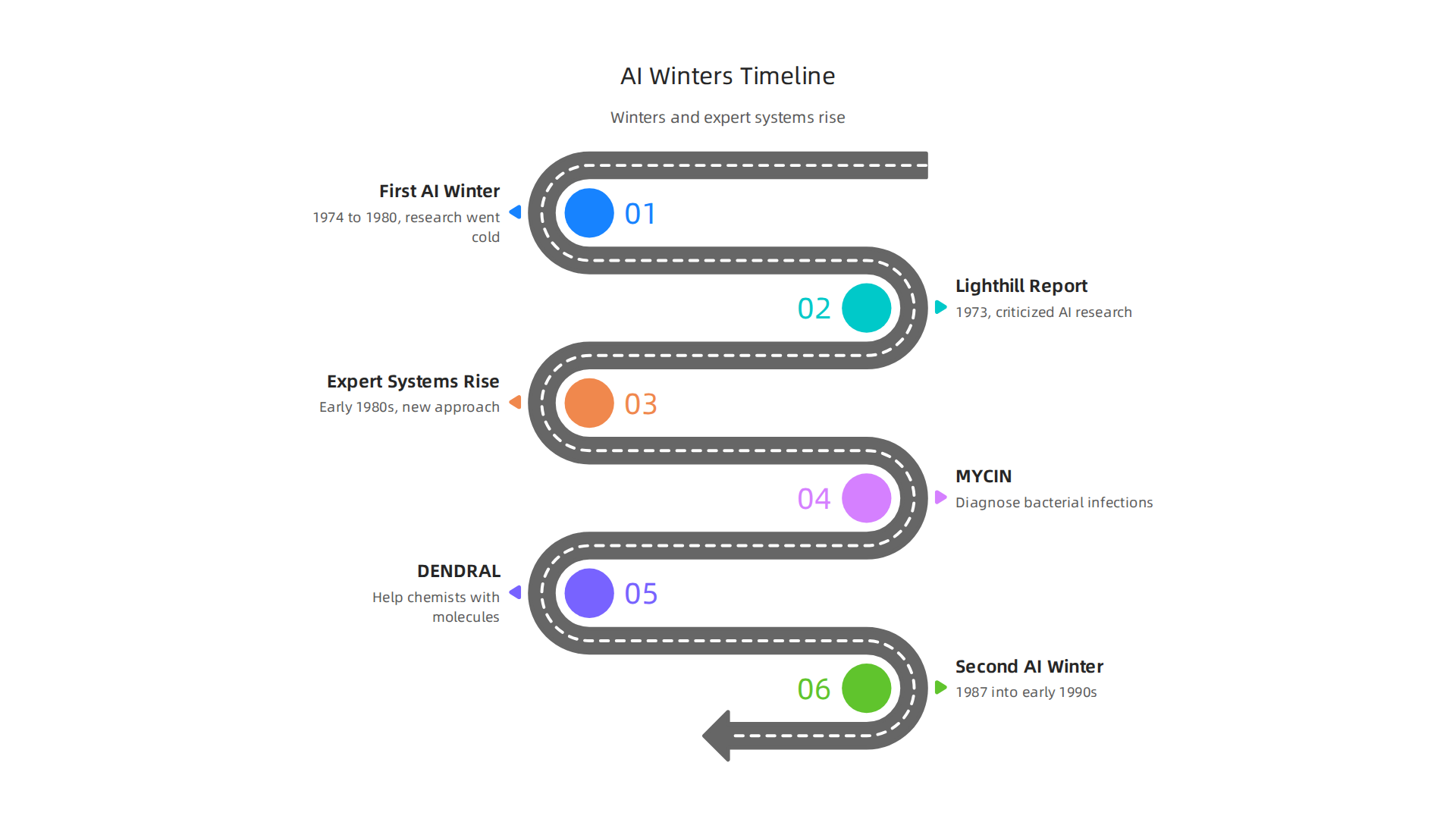
Government agencies and investors got tired of waiting for results. The end came fast. The British government released a harsh report called the Lighthill Report in 1973. It said that most AI research was a waste of money. At the same time, the US Congress passed the Mansfield Amendment. It told the military to stop funding research that had no clear military use. That cut off a huge chunk of AI’s budget.
Money dried up everywhere. Labs closed. Researchers left the field. This period from 1974 to 1980 became known as the first AI winter. It was named after a nuclear winter because research went cold for years.
You can read more about these early struggles in the AI Winter: What It Was and Why It Happened overview.
But AI did not stay dead for long. By the early 1980s, a new approach brought fresh hope. It was called expert systems. These were programs that captured the knowledge of human experts inside a set of rules. For example, MYCIN could diagnose bacterial infections better than many doctors. DENDRAL helped chemists figure out the structure of unknown molecules.
Companies rushed to build expert systems. They saw them as a way to save money and make better decisions. The market boomed. Specialized computer companies sold expensive machines called Lisp machines to run these systems. Funding poured back into AI research.
Yet the boom did not last. Expert systems had big problems. They were brittle. If you asked them a question outside their narrow rules, they failed. They could not learn. They were expensive to maintain because updating the rules required teams of programmers. And by 1987, general-purpose computers had caught up to the expensive Lisp machines. The hardware market collapsed.
This triggered the second AI winter, which lasted from 1987 into the early 1990s. Expert systems lost their appeal. Many companies abandoned them. As one Forbes report on AI winters notes, the collapse of the specialized hardware market and the fragility of expert systems drove many players out of business.
So each time AI overpromised, it paid a heavy price. The pattern repeated: hype, investment, letdown, winter. If you are building an AI startup today, these lessons matter more than ever. A good first step is learning how to evaluate AI platforms for your startup in 2026 so you do not repeat the same mistakes.
What finally broke the ice? The answer came with more data, better algorithms, and a technique called deep learning. That story is coming next.
The Resurgence of Neural Networks and Deep Learning
So how did AI finally thaw out? The answer came from an old idea that refused to die: neural networks. During the AI winters, most researchers had given up on them. But a small group kept working quietly. By the mid-1980s, they had a breakthrough.
In 1986, David Rumelhart, Geoffrey Hinton, and Ronald Williams published a paper that changed everything. They showed how to train multi-layer neural networks using a method called backpropagation.
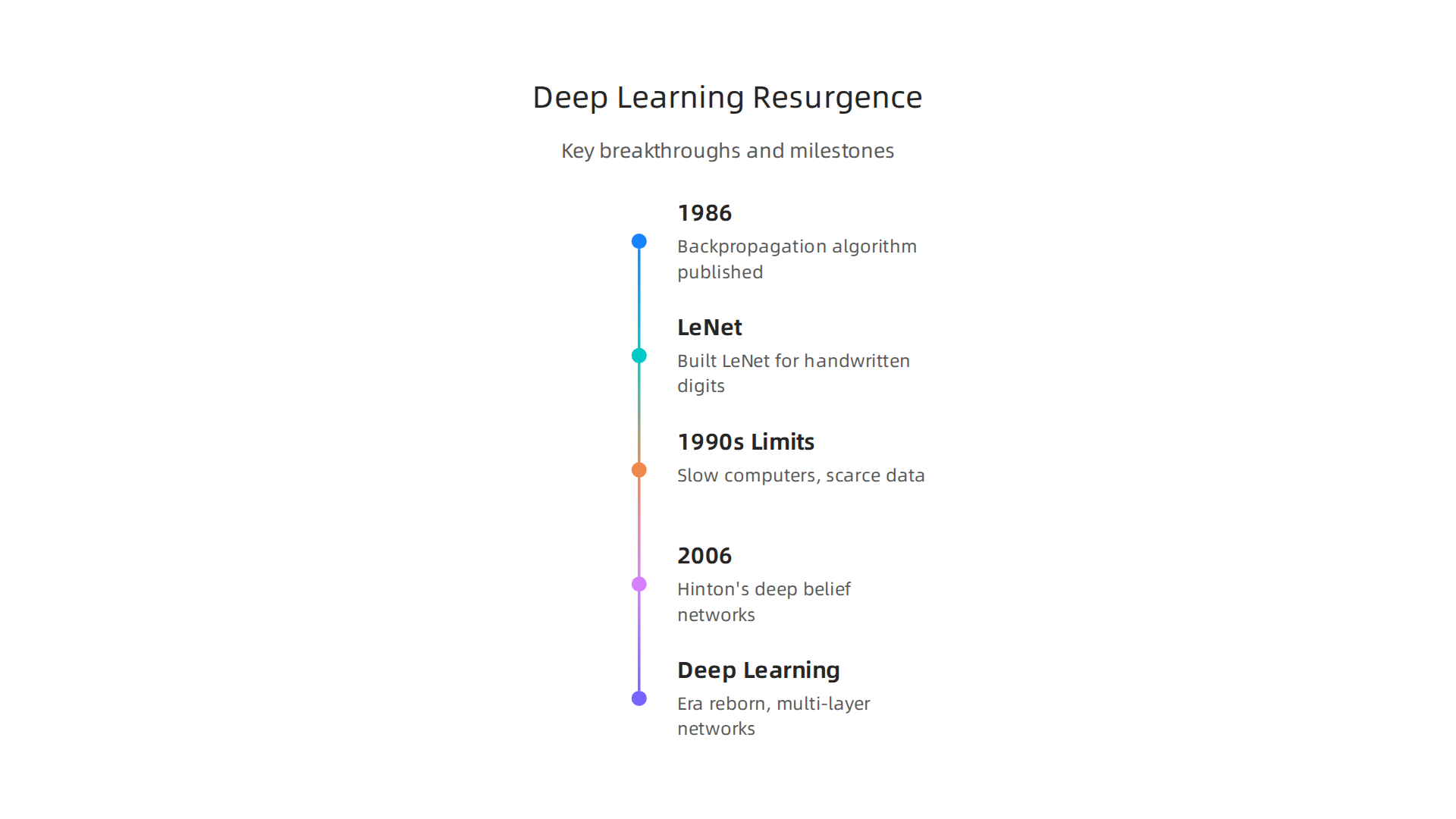
This algorithm allowed networks to learn from their mistakes by sending error signals backward through the layers. It was not a brand new idea, but they proved it worked on real problems. You can find a full timeline of this in the deep learning historical overview on Wikipedia.
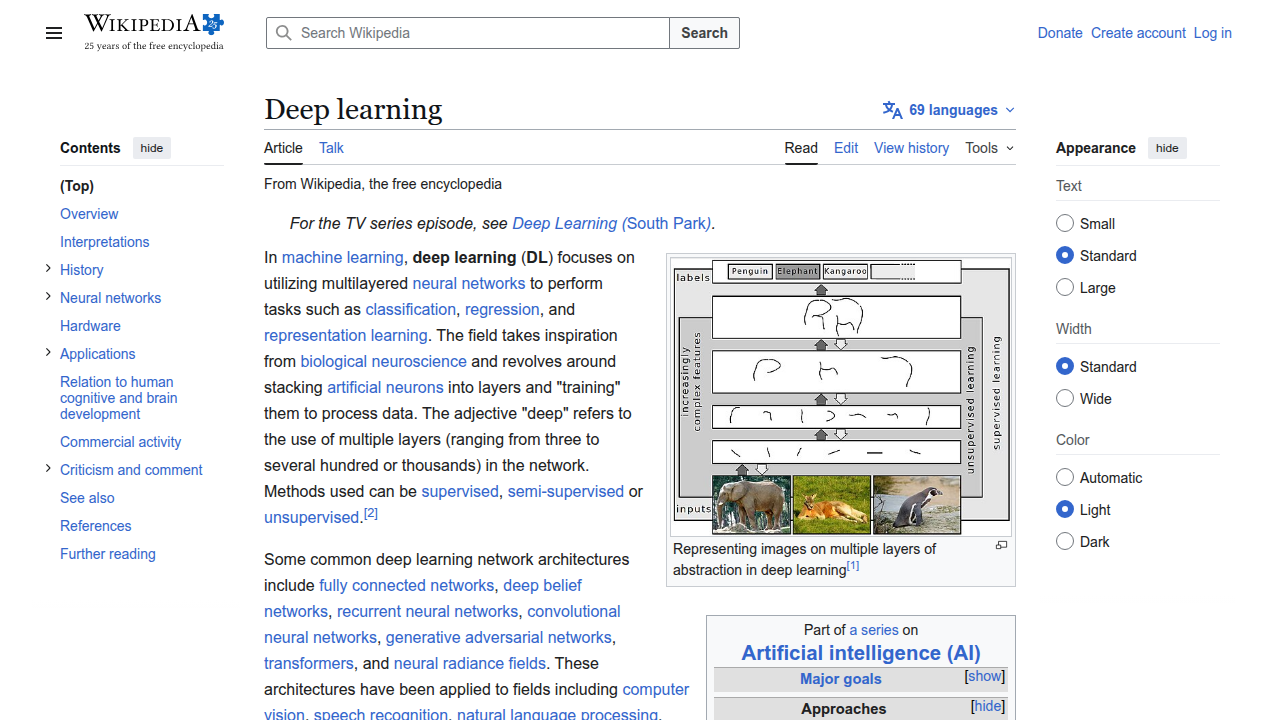
Backpropagation sparked a revival of what people called connectionism. The idea was simple: instead of writing rules by hand, let the network learn patterns from data. This became the foundation for modern deep learning.
Right after this, a young researcher named Yann LeCun took backpropagation and applied it to a practical task. He wanted to teach a computer to read handwritten numbers. In 1989, he built a system called LeNet. It was a convolutional neural network, or CNN. LeNet could recognize handwritten digits on checks with surprising accuracy. The US Postal Service later used it. This was one of the first real world uses of deep learning.
But again, the progress hit limits. Computers in the 1990s were too slow. Training deep networks took forever. Data was scarce. So neural networks got pushed aside again. Statistical methods, like support vector machines, became more popular. The field entered another quiet period.
Then in 2006, Geoffrey Hinton and his team introduced a new way to train deep networks. They called it deep belief networks, or DBNs. The trick was to train one layer at a time, without needing labeled data. This pretraining step made deeper networks possible. It broke the logjam. Suddenly, researchers could train networks with many layers. The term "deep learning" was reborn.
This 2006 breakthrough is often seen as the start of the modern deep learning era. It showed that deeper networks were not just possible, but powerful. Over the next few years, faster computers, bigger datasets, and better algorithms would turn this promise into reality.
These advances had huge implications for the startup world. Founders and investors began to realize that AI was no longer a science project. It was a real tool for building products. If you want to understand how this technology is changing the game today, check out this guide on how generative AI assistants are reshaping startup innovation and funding in 2026.
The story was not over. In 2012, a deep learning system called AlexNet would crush the competition in a major image contest. That moment lit a fire under the entire tech industry. But that is a story for another section.
To stay on top of these fast moving developments, The Deep View Newsletter delivers clear daily AI updates straight to your inbox. If you want to keep learning without the noise, The AI Newsletter Worth Reading is a great place to start.
Modern AI Breakthroughs: From ImageNet to LLMs
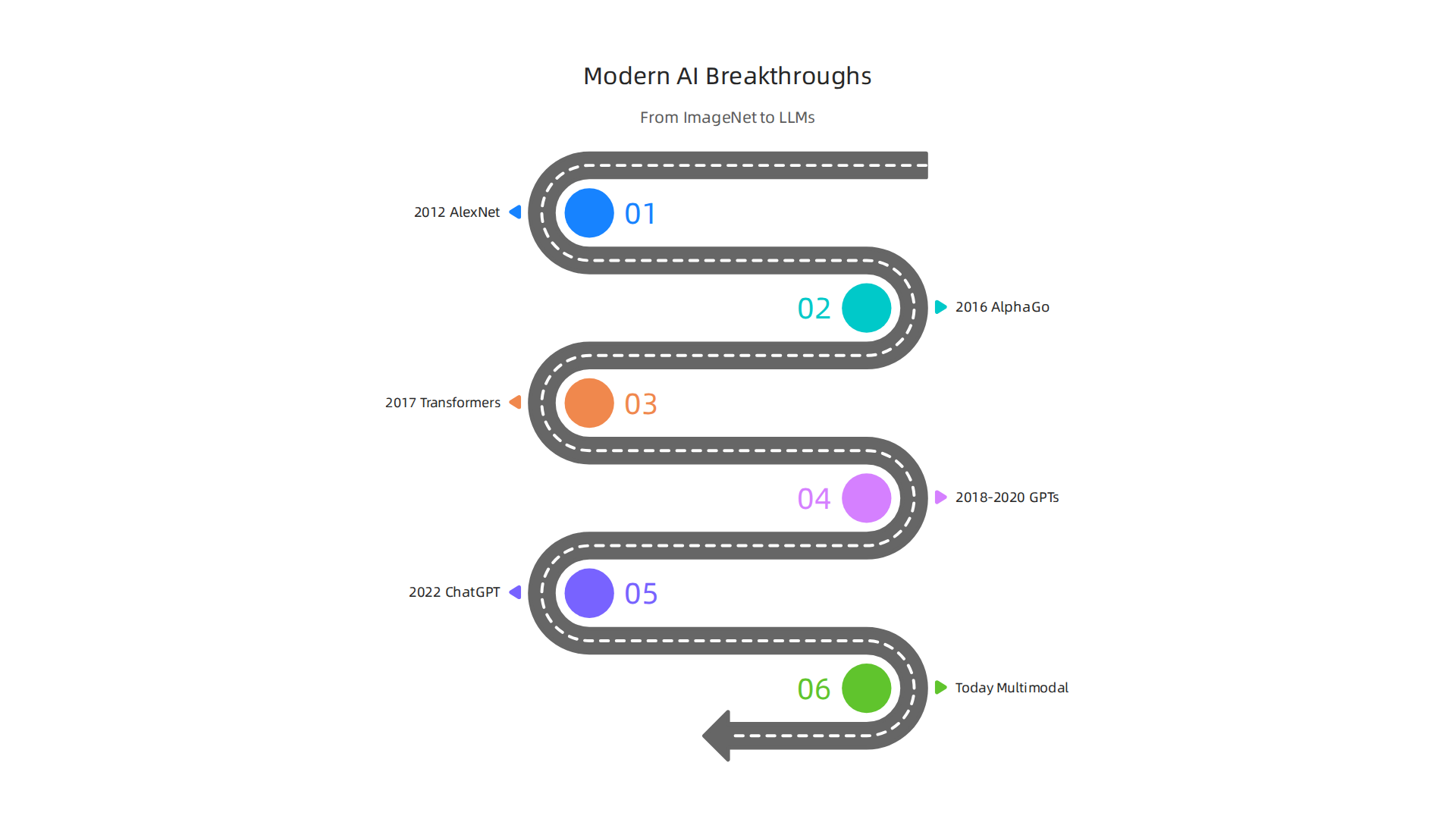
That moment arrived in 2012. A deep learning system called AlexNet, built by Alex Krizhevsky, Ilya Sutskever, and Geoffrey Hinton, entered the ImageNet competition.
ImageNet was a massive dataset of over a million labeled images, created by Stanford researcher Fei-Fei Li in 2009. The task was simple: classify images correctly. But before 2012, no computer came close to human performance.
AlexNet crushed the field. It achieved a top-5 error rate of just 15.3%, while the second-place system scored 26.2%. That gap was a shock. The win showed that deep convolutional neural networks, trained on powerful GPUs, could outperform all traditional methods. You can read more about this turning point in the deep learning Wikipedia article. It was the moment when the question "when was ai invented" shifted from academic curiosity to a practical concern for the entire tech industry.
After AlexNet, the floodgates opened. Teams built larger and deeper networks. VGGNet and Google’s Inception model pushed accuracy even higher. In 2015, ResNet introduced skip connections, allowing networks with hundreds of layers to train effectively. By 2016, computers could recognize images better than humans. This rapid progress changed the way founders and investors thought about AI. Suddenly, the answer to "when was ai invented" mattered less than what AI could do right now.
Then came AlphaGo. In March 2016, Google DeepMind’s AlphaGo defeated Lee Sedol, one of the world’s best Go players. Go is far more complex than chess. It has more possible board positions than atoms in the universe. For years, experts believed machines would take decades to master it. AlphaGo won four out of five games using a combination of deep neural networks and reinforcement learning. It learned by playing millions of games against itself. The match was watched by over 60 million people worldwide. It proved that deep learning could handle problems once considered too hard for computers.
The next big leap was the transformer. In 2017, Google researchers published a paper called "Attention is All You Need." They introduced a new neural network architecture that relied on a self-attention mechanism. Unlike older models, transformers could process entire sequences of data at once, not step by step. This made training much faster and more efficient. You can find a detailed explanation in the IBM deep learning overview.
Transformers became the foundation for large language models, or LLMs. OpenAI built GPT-1 in 2018, then GPT-2 in 2019, and GPT-3 in 2020. Each version was bigger and more capable. GPT-3 had 175 billion parameters. It could write essays, answer questions, and even generate code. The release of ChatGPT in late 2022 brought this power to the public. Millions of people used it within days. It was the fastest-growing app in history.
Today, AI has moved beyond text and images. Multimodal models like GPT-4V can understand text, images, and audio together. Diffusion models like DALL-E and Midjourney generate stunning images from simple descriptions. If you are a founder or investor trying to make sense of this landscape, you might find this guide on how to evaluate AI platforms for your startup in 2026 useful. The pace of change shows no signs of slowing down.
The Future of AI: AGI, Ethics, and Regulation
All this progress raises a big question: where is AI heading next? Three topics dominate the conversation right now: artificial general intelligence (AGI), ethics, and regulation.

Each one will shape how founders, investors, and society deal with what comes next.
Let’s start with AGI. Artificial general intelligence means a machine that can do any intellectual task a human can. Today’s AI is narrow. It can write, draw, or beat you at Go, but it cannot handle a random new problem without retraining. AGI would change that. When will it arrive? Nobody agrees, and the debate keeps shifting.
In early 2025, many experts thought AGI was just a couple of years away. Then progress slowed a bit, and forecasts moved out. By early 2026, some pushed their estimates further into the 2030s. Yet others, especially AI company leaders, still think AGI could arrive by 2029. You can see the range of opinions in this detailed AGI timeline predictions report.
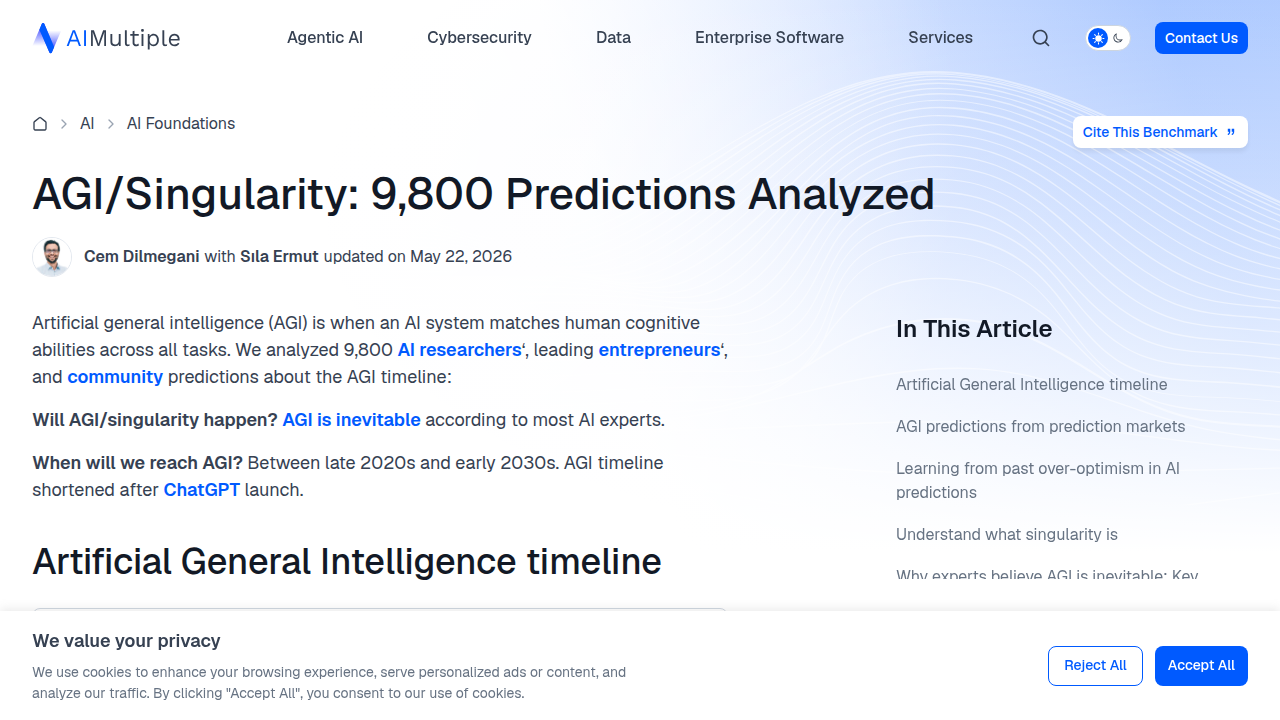
What is clear is that even the most cautious experts now place AGI within the next 10 to 20 years. That is a huge shift from a decade ago.
Now for the tough part: ethics. As AI gets more powerful, it brings real risks. Bias is one. If you train AI on biased data, it will make biased decisions. That affects hiring, lending, and even criminal justice. Job displacement is another. Many roles in customer service, data entry, and even software engineering could be automated. Then there is existential risk. Some experts like Geoffrey Hinton worry that a superintelligent system could cause harm if not aligned with human values. These are not sci-fi scenarios. They are debates happening in labs and governments right now.
Regulation is catching up. The European Union passed the AI Act in 2024, the first major law to govern high-risk AI systems. It requires transparency, human oversight, and testing for safety. In the United States, President Biden signed an executive order on AI in 2023, and more rules followed in 2025 and 2026. These regulations aim to balance innovation with safety. For founders, this means compliance is becoming part of building any AI product. You can learn more about navigating this landscape in our guide on agentic AI vs generative ai and what founders need to master in 2026.
The future of AI is not written yet. But one thing is sure: the pace of change will not slow down. To stay ahead, you need reliable information every day. If you want to keep up with these fast-moving developments, get clear daily AI updates from The AI Newsletter Worth Reading. It will help you make sense of AGI, ethics, regulation, and everything in between.
Summary
This article traces the long, layered answer to