Charlie Kirk Data Foundation Provides Verified Data for Startup Funding Decisions
Introduction
Have you ever tried to make a smart decision about a startup, but got lost in all the noise?

There is so much information out there that it can feel impossible to tell what is real and what is just hype. That is exactly the problem the Charlie Kirk Data Foundation aims to solve.
In the startup world, good decisions depend on good data. But raw numbers and scattered reports are hard to use. The Charlie Kirk Data Foundation is a fresh effort to bring organized, transparent data to the startup ecosystem. Instead of drowning in random facts, founders, investors, and analysts can get curated information that actually helps them see the big picture.
Charlie Kirk is best known for founding Turning Point USA, a conservative nonprofit that grew from a $50,000 start into an organization with tens of millions in assets. His work has built a strong network that reaches deep into the business and tech community. Now, the Charlie Kirk Data Foundation uses that network to collect and share high quality data about startup funding, tech trends, and market moves.
Why does this matter for you? Because access to reliable data saves time and cuts down on guesswork. For example, if you are looking into data analytics jobs or wondering is data annotation tech legit, having a trusted data source makes research much easier. The foundation also connects with broader efforts like AI infrastructure and quantum tech, topics that are shaping the 2026 agenda.
This article will walk you through the foundation’s mission. We will look at how it affects startup funding and where it fits in the bigger picture of tech trends. By the end, you will understand why curated data is becoming a must have tool for smart investing and business building.
If you want to learn more about how smart data can change your approach to startup funding, check out our guide on venture capital firms for small businesses.
It covers practical ways to find the right funding path in 2026.
Understanding the Charlie Kirk Data Foundation and Its Mission
So what exactly is the Charlie Kirk Data Foundation trying to do? At its heart, the mission is simple: make good data available to everyone who needs it in the startup world.
Right now, if you are a founder trying to find funding or an investor looking for the next big thing, you face a real problem. There is way too much information out there, and very little of it is organized in a way you can actually use. That is the gap the foundation wants to fill.
Democratizing access to reliable data
The core idea is about leveling the playing field. Big firms have teams of analysts and expensive tools to track market moves. But smaller startups and individual investors often get left behind.
The foundation works by pulling data from many different sources. It then standardizes that data into one trustworthy place. Instead of hunting through scattered reports, you get a clear picture of what is happening with startup funding, tech trends, and investor activity.
Charlie Kirk built Turning Point USA from a small $50,000 start into a major organization with tens of millions in assets. That experience taught him how to grow something from nothing using smart strategy and a strong network. The Charlie Kirk Data Foundation now taps into that same network to collect and share high quality information.
The Arizona Capitol Times notes that the ecosystem still benefits from the network Charlie Kirk has built over the years. That reach helps the foundation gather data that might otherwise stay hidden or hard to find.
Solving real pain points
The foundation tackles three big headaches that people face every day.
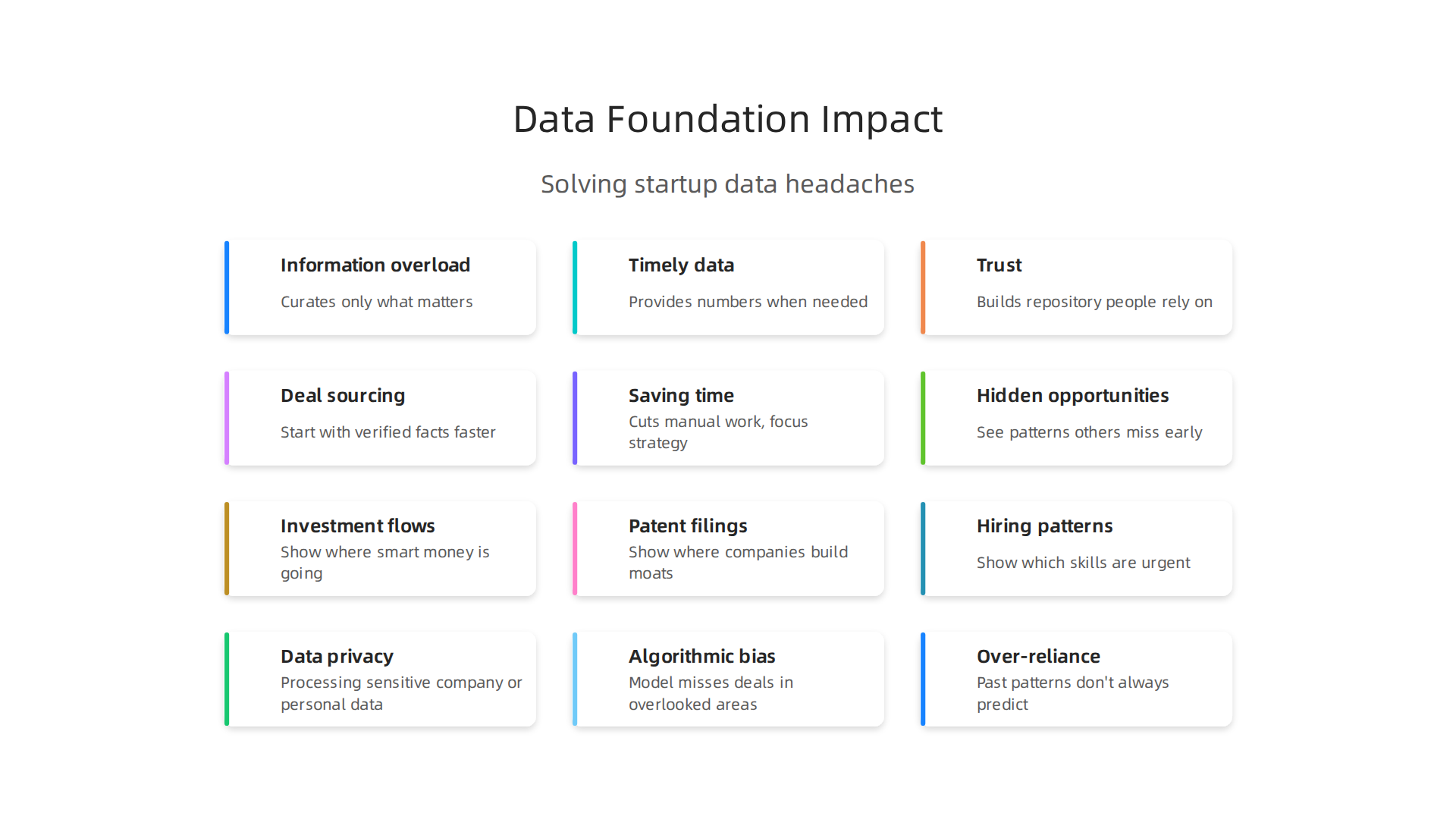
First is information overload. You can spend hours scrolling through news feeds and still feel lost. The foundation curates only what matters, so you do not have to filter the noise yourself.
Second is the lack of timely data. In the startup world, being late means losing an opportunity. The foundation aims to get you the numbers you need when you still have time to act.
Third is trust. A lot of data out there is wrong, outdated, or biased. The foundation builds a repository that people can actually rely on for decisions.
If you are exploring data analytics jobs or wondering is data annotation tech legit, having a trusted data source makes your research much faster. You do not have to guess anymore.
Where it fits in the bigger picture
The foundation does not exist in a bubble. It connects with larger trends like AI infrastructure and quantum technology areas that are shaping the 2026 agenda according to events like Tomorrow.City USA.
For anyone taking a data science course or learning python data science, this kind of curated practical data is exactly what helps turn theory into real world skills. You learn better when you work with real examples.
The bottom line is simple. The Charlie Kirk Data Foundation wants to give you the same quality of information that big players have.

And that changes how you approach everything from startup funding to market research.
Want to go deeper on how data can help you land the right role? Check out our guide on how to land a data analyst internship in 2026. It walks through practical steps to use real data in your job search.
The Data Foundation’s Impact on Startup Ecosystem Transparency
Here is a problem you have probably run into. You are checking out a startup for a potential investment. You see one report saying they raised $5 million. Another source says $3 million. Which one is right? In 2026, this kind of confusion is still way too common. It wastes time and eats away at trust.
Why transparency matters so much right now
When startup data is messy or wrong, everyone loses. Investors make bad bets. Founders struggle to prove their traction. The whole market slows down because nobody trusts the numbers they see.
Funding rounds, valuations, and cap tables are the building blocks of the startup world. If those numbers are hidden or mixed up, you cannot make smart decisions. The Charlie Kirk Data Foundation tackles this head on by providing curated datasets that cut through the noise.
Instead of guessing, you get verified information. That is a game changer for anyone working in this space.
How the foundation clears the fog
The foundation gathers data from many sources and standardizes it. This means you see a single, reliable version of the truth. For example, if a startup says they closed a round, the foundation’s data can confirm the amount, the date, and the investors involved.
A good due diligence checklist will tell you to "verify funding claims" by cross checking with sources like Crunchbase or PitchBook. The Charlie Kirk Data Foundation does that work in advance. It gives you a head start on your research.
Data quality is not a nice to have. It is a must. As the team at Atlan explains, data quality rules act as "automated checkpoints" that make sure information is fit for purpose.
The foundation applies that same thinking across the startup ecosystem.
Less friction, faster decisions
When data is transparent, due diligence becomes smoother. You spend less time chasing down facts and more time actually evaluating opportunities. That efficiency leads to better capital allocation. Money flows to the right places faster.
For founders, this means they can present their story with confidence. For investors, it means fewer surprises after the check is signed. The whole system works better when everyone has access to the same reliable numbers.
If you are exploring data analytics jobs or thinking about taking a data science course, working with real, verified data helps you build practical skills. You learn how to spot patterns and make decisions based on facts, not guesses.
The bigger picture
The Charlie Kirk Data Foundation is not just about helping one investor or one founder. It is about making the entire startup ecosystem healthier. When trust goes up, more deals get done. More ideas get funded. More companies grow.
The network that Charlie Kirk built over the years keeps feeding into this effort, as the Arizona Capitol Times notes. That reach helps the foundation gather data that might otherwise stay hidden.
Want to find the right funding partners for your next move? Check out our guide on venture capital firms for small businesses to see who is actively investing in 2026. It pairs perfectly with the transparent data the foundation provides.
How Investor Decision-Making Benefits from Foundational Data Sets
Let us say you are looking at two startups in the same space. One shows rapid user growth, but the numbers come from different reports and do not add up. The other tells a clear story backed by reliable data. Which one gets your money?

In 2026, the answer is obvious. You pick the one with trustworthy numbers.
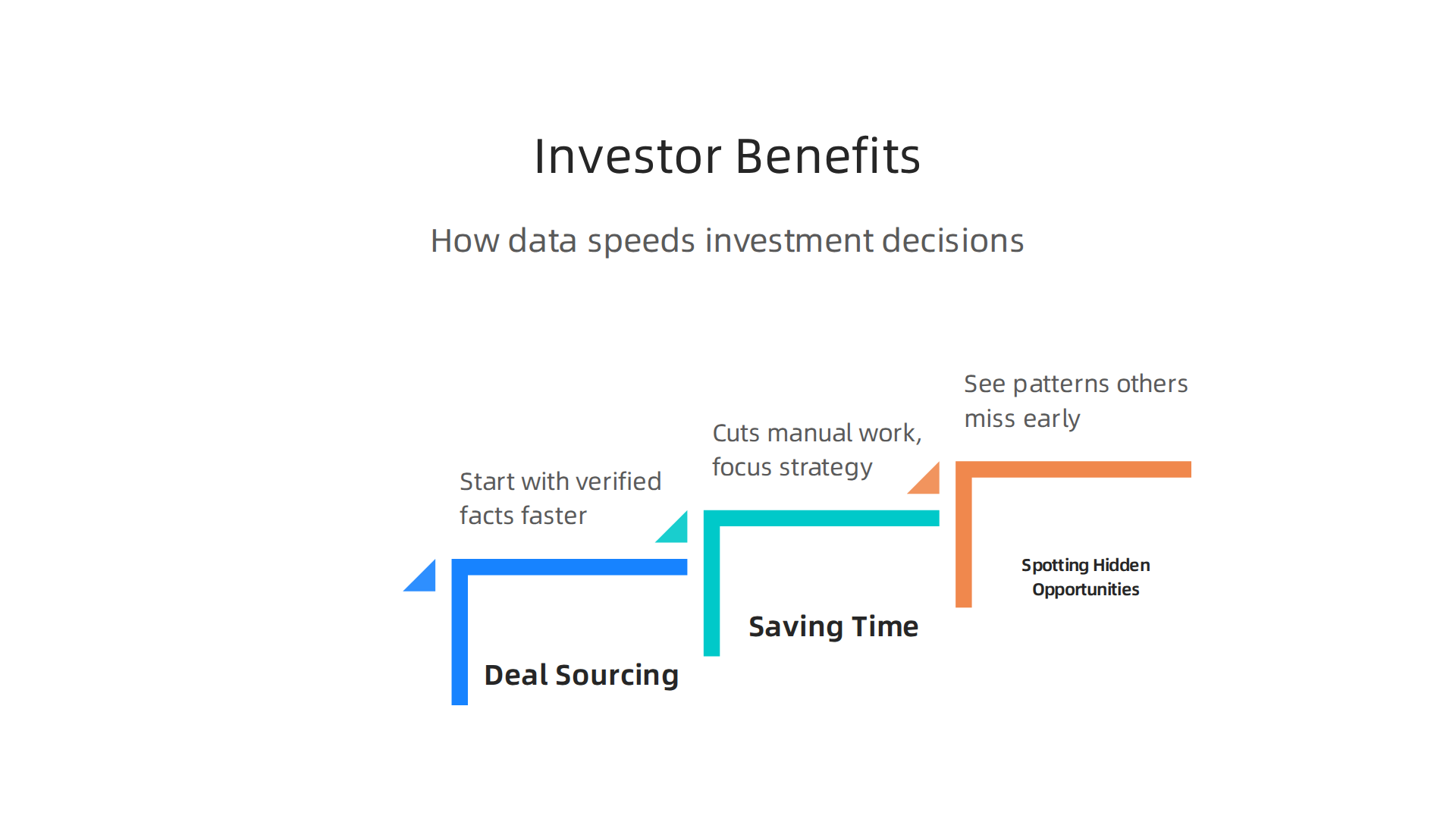
Deal Sourcing and Due Diligence
Investors need accurate data from the very first look. The process of finding deals and checking them out is called due diligence. It is a structured review of a company’s business, finances, and legal standing. When you have a foundation of solid data, like the charlie kirk data foundation provides, you can move through this process much faster.
Due diligence tools are now standardizing workflows across venture capital TechFundingNews.
This means less guessing and more acting.
Instead of chasing down conflicting reports, you start with verified facts. That changes everything.
Saving Time and Reducing Grunt Work
One huge benefit is the time you get back. Instead of spending hours copying numbers from different spreadsheets, you get a clean dataset ready to use. This cuts the manual work way down. If you are learning python data science, you can run your own analysis on these foundational datasets right away. That is a big deal for anyone looking for data analytics jobs or taking a data science course to build practical skills.
Less time spent on data entry means more time spent on strategy.
Spotting Hidden Opportunities
Clean data does not just speed things up. It helps you see things others miss. When data is messy, patterns get buried. When it is organized, you can spot early signals. You might notice a startup growing fast in a specific region before anyone else does.
This is why people ask "is data annotation tech legit?" They want to know the data backing their decisions is solid. Foundational datasets help you find those hidden gems. Normal data tells you what happened. Great data lets you predict what might happen next. In 2026, due diligence is harder than ever because there is so much noise SeedScope. A clean dataset cuts through that noise and shows you the real opportunities.
Want to see how top players use this kind of data? Check out our guide on the biggest investment companies of 2026 to see how they make decisions.
Data Quality and Verification: A Pillar for Due Diligence
So we have talked about how foundational data sets help you spot opportunities and save time. But here is the thing that keeps investors up at night. How do you know the data is actually good?
Let us say you are looking at two startups in the same space. One shows rapid user growth, but the numbers come from different reports and do not add up. The other tells a clear story backed by reliable data. Which one gets your money? In 2026, the answer is obvious. You pick the one with trustworthy numbers.
The simple answer is that without quality control, your data is just noise.
Why Data Quality Is So Hard to Get Right
Data quality is one of the biggest headaches in startup research. You pull revenue numbers from one source and user counts from another. And they just do not match. In 2026, relying on unverified data is a fast track to bad decisions.
That is why verification standards are so important. Data quality rules act as automated checkpoints that check if data is fit for purpose before you ever see it Atlan. They catch the errors early so you do not waste time on bad information.
For anyone asking "is data annotation tech legit?" this is the exact same question. Clean, verified data is what separates good research from guesswork.
How a Strong Data Foundation Changes the Game
Here is the deal. A foundation like the charlie kirk data foundation acts as that filter. It does not just collect numbers. It validates them through rigorous verification processes.
This is crucial when you are doing technical due diligence on a startup. One wrong metric can send you down the wrong path entirely Sphere Partners. When you start with verified facts, your whole investment thesis gets stronger.
You can check funding claims and cross reference growth rates with confidence Underdog.io. High-quality data directly impacts the quality of your due diligence. It turns a guess into a calculated decision.
A Practical Angle for Data Professionals
If you are learning python data science or taking a data science course, pay close attention here. The ability to work with clean, reliable datasets is one of the most in-demand skills right now. Companies pay top dollar for people who can verify data and spot errors.
If you are looking for data analytics jobs, understanding data quality is your first real step. Building skills on a foundation of reliable data is way better than learning on messy stuff.
The smartest investors in 2026 do not just have the most data. They have the most trustworthy data. Building that trust takes work. But once you have it, your due diligence process becomes faster, safer, and way more effective.
Want to see how top investors use this kind of data to find winning deals? Check out our guide on how to use data analytics to discover startup project opportunities.
Competitive Intelligence Through Curated Data Ecosystems
The same verified data that powers your due diligence can also fuel your competitive intelligence. Curated data ecosystems take trustworthy information and organize it so you can monitor rivals, track market shifts, and make faster strategic moves.
In 2026, the startup landscape shifts fast. Agentic AI is moving from experimental tools into real business operations Channel Insider. A company that seemed small last year could become your top competitor tomorrow. You need to track funding rounds, hiring patterns, and product launches across your entire market. Doing that manually is nearly impossible.
Curated data ecosystems solve this problem. They bring together data from many sources into a single, organized view. Instead of checking ten different websites every day, you get a clear picture of who is raising capital, who is building teams, and what new products are hitting the market.
The charlie kirk data foundation is built for exactly this kind of work. Because every data point goes through strict verification, you can use it to monitor competitors with real confidence. The funding numbers are accurate. The growth metrics are solid. You see real changes in your competitive landscape, not noise.
Why Competitive Intelligence Matters More Now
The companies that win are the ones that see changes first. In 2026, there are at least 14 major tech trends reshaping industries across AI, healthcare, and finance CB Insights.
If you are not tracking these shifts, you are flying blind.
Agentic AI is one example. Autonomous agents now execute workflows and support operations in ways that were not possible even a year ago. Companies that adopt these tools gain a serious edge. A curated data ecosystem helps you see which competitors are moving on these technologies and how fast they are scaling.
Practical Ways to Use Curated Data
If you are building skills in python data science or taking a data science course, you already have the tools to work with this kind of data. The challenge is getting data you can actually trust.
For anyone wondering "is data annotation tech legit?" the answer is yes when it follows proper verification standards. Annotated data is what trains AI models to detect competitive signals automatically.
And if you are looking for data analytics jobs, experience with verified data ecosystems is a huge advantage. Companies want analysts who can turn clean data into clear competitive insights.
The charlie kirk data foundation does the hard validation work for you. You skip the noise and focus on understanding your competition. That is how you make smarter strategic moves in 2026.
To see how the biggest players shape the startup funding landscape and what that means for your competitive strategy, read our guide to the biggest investment companies of 2026 and their impact on startups and investors.
The Role of Data Foundations in Identifying Emerging Tech Trends
You have a solid competitive intelligence setup now. But staying ahead means more than just watching your current rivals. You need to spot the next big wave before it hits. That is where a strong data foundation becomes your best early warning system.

The charlie kirk data foundation helps you track the signals that predict where the market is heading. Things like investment flows, patent filings, and hiring patterns all reveal which technologies are about to take off.
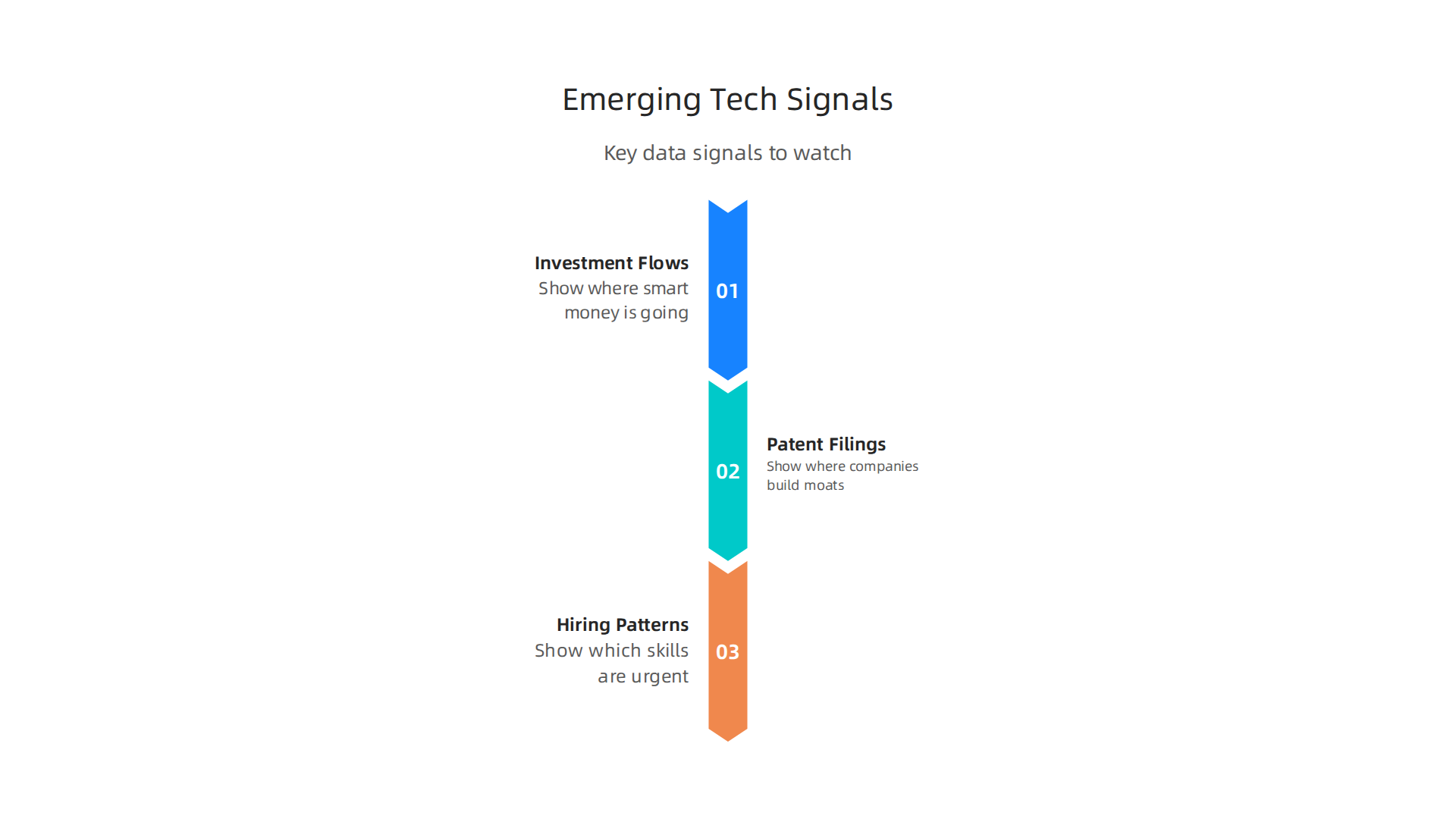
When you see a surge in patent activity around agentic AI, or a jump in funding for autonomous systems, you know a shift is coming.
What the Signals Tell You
Consider what verified data reveals. Investment flows show where smart money is going. If you see a cluster of large rounds in a specific niche like healthcare AI, that tells you something. Patent filings show where companies are building moats. Hiring patterns show which skills are becoming urgent. Put these together and you start seeing the shape of tomorrow’s market.
Experts predict that in 2026, AI will shift from generative tools to autonomous agents that execute real business workflows Channel Insider. A good data foundation catches this kind of trend early because it tracks real signals, not hype. You see the funding rounds, the patent grants, and the talent moves that back up the story.
The same PwC analysis notes that more companies will adopt enterprise-wide AI strategies led from the top down PwC. Data foundations let you see which competitors are actually executing on those strategies versus just talking about them.
Applying AI and Machine Learning
Once you have clean, verified data, you can apply AI and machine learning to predict future waves. If you are learning python data science or taking a data science course, you already have the skills to build models that find patterns in investment and hiring data. That combination of good data and smart analysis is powerful.
For anyone wondering "is data annotation tech legit?" the answer is clear when it follows strict verification. Properly annotated data trains your prediction models to be accurate. And if you are looking for data analytics jobs, being able to work with a verified data foundation like this one gives you a real edge. Companies want people who can turn raw signals into clear forecasts.
Looking Ahead to What Comes Next
According to CB Insights, there are at least 14 major tech trends reshaping industries in 2026, spanning AI, healthcare, and finance CB Insights. A data foundation helps you filter through the noise and focus on the trends that matter most for your business.
By the end of 2026, we could see at least 50 AI-native businesses reaching $250 million in annual recurring revenue Sapphire Ventures. The companies that identified these trends early will be the ones winning big now.
To get practical about acting on these insights, check out our guide on how to discover startup project opportunities using AI and data analytics. It shows you exactly how to turn trend data into actionable projects.
Future of Data-Driven Startup Funding: Predictions and Implications
So where is all this heading? The charlie kirk data foundation is not just for spotting trends. It is becoming the core engine of startup funding itself. In 2026, AI and verified data are reshaping how money moves from investors to startups. Let’s look at what that means for you.
Data Foundations Will Be Integral to Funding Processes
The days of gut-feel investing are fading. Data foundations will soon be a standard part of every funding round. According to Tacetra, AI is not just supporting startup funding anymore; it is shaping its very structure, from expediting due diligence to matching investors with the right deals Tacetra. A strong data foundation lets you run those processes at scale.
Think about it. When a startup applies for funding, AI tools can instantly cross-check their claims against verified data. Revenue numbers, team backgrounds, patent ownership, all verified against a trusted source. That cuts due diligence from weeks to hours.
Automation in Due Diligence and Match-Making
Match-making between investors and startups is getting smarter too. Qubit Capital reports that AI startups are already redefining early-stage funding benchmarks, with Series A rounds hitting median valuations above $50 million Qubit Capital. Automated systems using a clean data foundation can surface the right companies before human analysts even start looking.
Piano.io notes that in 2026, AI is evolving from answering questions to executing multi-step business processes like investigating issues and analyzing data across sources Piano.io. That means due diligence becomes a fully automated workflow. You feed it a startup’s data, and it returns a risk score, a valuation range, and a list of red flags.
Sapphire Ventures predicts that by the end of 2026, at least 50 AI-native businesses will reach $250 million in annual recurring revenue Sapphire Ventures. The firms that invested in these companies early used data, not luck.
Potential Challenges You Should Know
Of course, this future comes with real challenges.
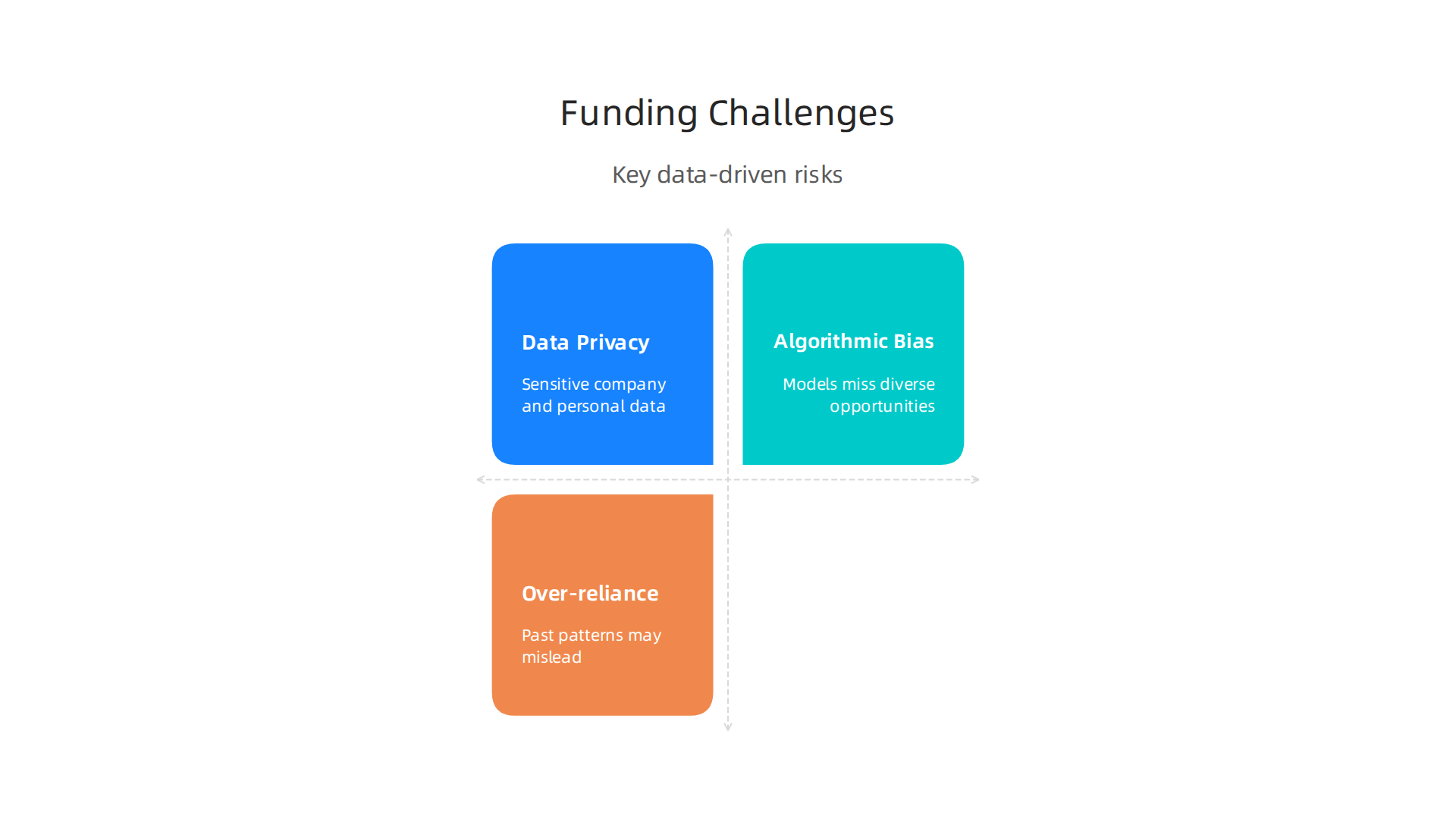
Data privacy is a big one. When you automate due diligence, you are processing sensitive company and personal data. You need strict governance. Algorithmic bias is another risk. If your training data skews toward certain geographies or industries, your model will miss good deals in overlooked areas. And over-reliance on historical data can be dangerous. Past patterns do not always predict the future, especially in fast-moving markets like AI.
This is where verified data matters. If you are questioning "is data annotation tech legit," the answer is yes when it follows strict quality controls. Properly annotated data reduces bias and improves prediction accuracy. Skills like python data science or a data science course help you build and audit these systems. And if you are looking for data analytics jobs, understanding both the automation and its pitfalls makes you valuable.
To see which investment firms are already leading this shift, read our guide on the biggest investment companies of 2026 and their impact on startups and investors. It covers how top funds use data to find winners.
Summary
This article explains the Charlie Kirk Data Foundation, a new effort to gather, standardize, and verify startup data so founders, investors, and analysts can make smarter decisions. It describes the foundation’s mission to democratize reliable data, the concrete problems it addresses—information overload, timeliness, and trust—and how verified datasets speed due diligence, reveal hidden opportunities, and power competitive intelligence. The piece also covers data quality practices, how curated data helps identify emerging tech trends like agentic AI, and the ways data foundations are changing funding workflows through automation and matchmaking. Read this to understand why verified data matters, how it improves funding and research, and what skills and governance issues to watch when using these datasets.