
Lead the Future: How to Learn AI for Founders, Investors, and Technologists

Introduction: Why ‘How to Learn AI’ Matters for Founders, Investors, and Technologists
In 2026, Artificial Intelligence is everywhere. It’s changing how we work, how businesses grow, and even how we live our daily lives. Because of this big change, knowing about AI is no longer just for tech experts. It’s a must-have skill for almost everyone, especially those looking to lead or invest in new ideas. Understanding how to learn AI is now a key step for anyone who wants to stay ahead.

Think about it:
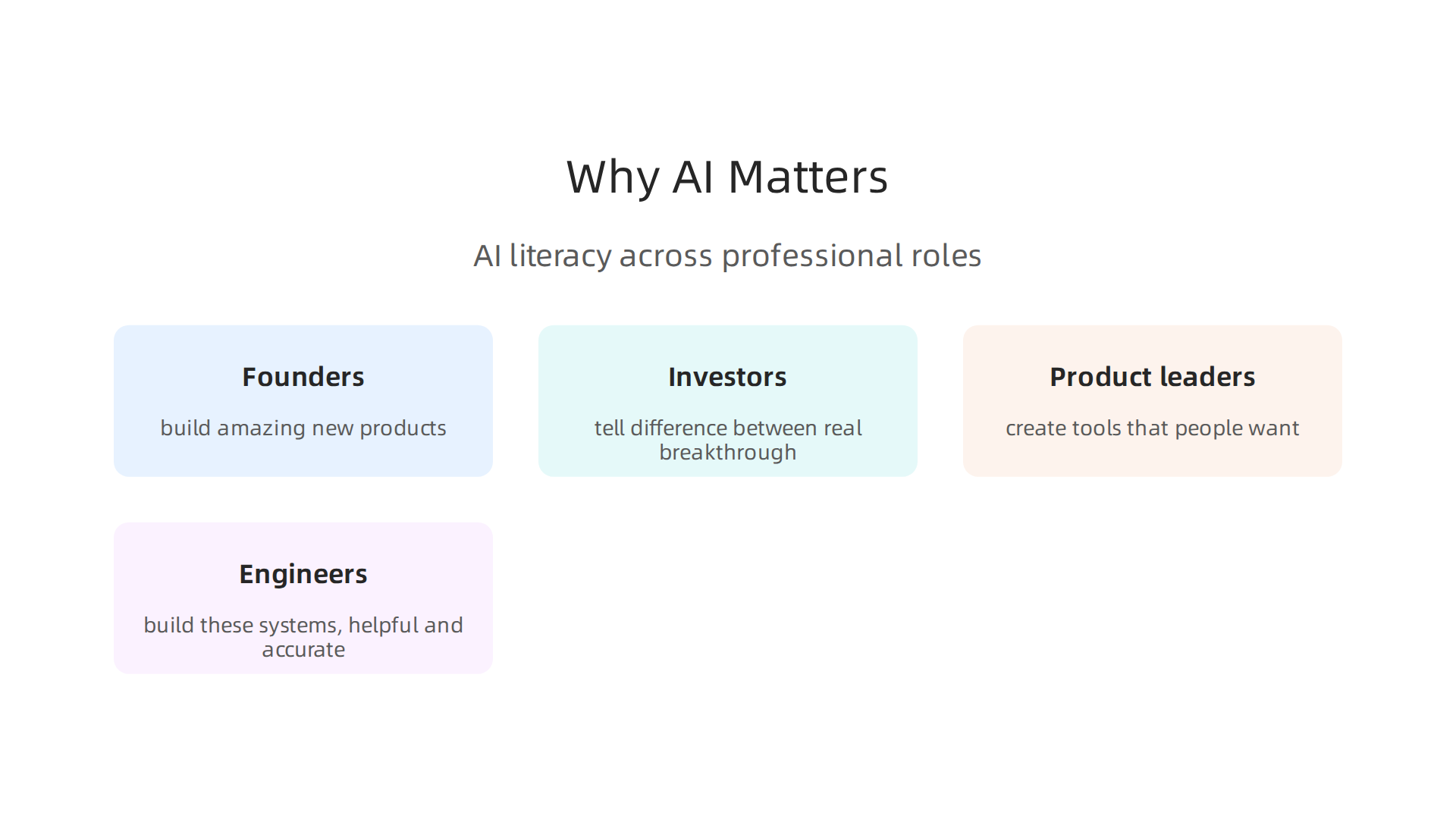
- Founders need to know how to use AI to build amazing new products that stand out. They also need to impress investors with their smart use of AI.
- Investors need to tell the difference between a real AI breakthrough and just a buzzword. They must understand the potential of an AI engine to make good choices about where to put their money.
- Product leaders must understand what AI can do to create tools that people truly want and need.
- Engineers are the ones who build these systems, making sure the AI response is helpful and accurate.
Simply put, if you’re involved in startups, technology, or investing, having a good grasp of AI helps you make smarter choices.
It’s about knowing what AI is, how it works, and how to use it responsibly to reach your goals. Being "AI literate" means you can understand AI systems, evaluate them, and use them well as tools, no matter your job or field, as noted in a framework for AI Literacy in PK-12 Education.
However, many people face big hurdles when trying to learn about AI. It can feel like there’s too much information out there, making it hard to know where to begin. People often feel overwhelmed by all the different terms and tools. Plus, it’s not always clear what the best learning path is, and finding real-world projects to practice on can be tough. These problems can stop many talented people from getting the AI knowledge they need. If you’re a founder or investor looking to master this field, learning how to use AI for startup success is critical.
To help cut through the noise and get clear updates, you might find it helpful to stay informed with a trusted source.
The AI Newsletter Worth Reading offers daily insights into AI and technology developments, keeping you up-to-date without the overload.

What is AI? Core Concepts and Terminology
Many people want to know how to learn AI, but before we dive into how to learn, it’s super important to understand what AI truly is. Think of Artificial Intelligence as making computers smart enough to think and learn like humans. It’s about building an AI engine that can understand things, make choices, and solve problems.
Learning about AI involves understanding its basic parts. These parts help us see what AI can and cannot do, and how it gives an AI response to our questions or tasks. Knowing these basics is like learning the alphabet before you can read a book. Actually, knowing AI’s foundations is considered a key step in understanding artificial intelligence, as highlighted in the Mississippi AI Learning Progression Framework.
Two Main Types of AI
When we talk about AI, we usually mean one of two big types:
- Narrow AI (or Weak AI): This is the kind of AI we see most often today in 2026. Narrow AI is very good at doing one specific task. For example, the AI that suggests movies you might like, the AI that helps your phone understand your voice, or the AI that can play chess really well. It can only do what it was made for. It doesn’t think or learn beyond its specific job.
- General AI (or Strong AI): This type of AI is still mostly a dream for the future. General AI would be able to do any intellectual task a human can do. It could learn, understand, and apply intelligence across many different problems, not just one. It would be truly smart, like a person.
Most of the exciting AI tools and developments you hear about today, even advanced ones, fall under Narrow AI. If you’re wondering about more advanced forms, you might want to read about Agentic AI vs Generative AI.
How AI Learns: Supervised vs. Unsupervised Learning
Computers need data to learn. It’s like how kids learn from examples. There are two main ways AI systems learn:
- Supervised Learning: Imagine teaching a child to tell the difference between a cat and a dog. You show them many pictures, and for each picture, you tell them, "This is a cat" or "This is a dog." The child learns by seeing many examples that are "labeled." In the same way, supervised AI learns from data that already has the right answers marked. This is how many AI systems learn to recognize things, like faces or spam emails.
- Unsupervised Learning: Now, imagine giving a child a pile of mixed toys and asking them to sort them into groups, but without telling them what the groups should be. They might sort them by color, size, or type. Unsupervised AI works similarly. It looks for patterns and groupings in data that doesn’t have labels. This is useful for finding hidden connections or trends, like grouping customers with similar buying habits.
Key Areas of AI
AI is a big field with many smaller parts. Here are some important ones:
- Machine Learning (ML): This is a core part of AI that lets computers learn from data without being told exactly what to do. Both supervised and unsupervised learning fall under Machine Learning. It’s about using math and computer science to find patterns and make predictions.
- Deep Learning (DL): This is a special kind of Machine Learning that uses very large networks of "neurons" (like brain cells) to learn complex patterns. These are called neural networks. Deep Learning is behind things like self-driving cars and advanced image recognition. It often needs a lot of data and powerful computers to work. It’s a foundational concept in understanding today’s cutting-edge systems, including the foundational models that power AI.
- Natural Language Processing (NLP): This is about teaching computers to understand, interpret, and make human language. When you talk to a smart speaker or use a translation app, that’s NLP at work.
- Computer Vision (CV): This area teaches computers to "see" and understand images and videos. It helps self-driving cars recognize other cars and pedestrians, or helps doctors find problems in X-rays.
Understanding these core concepts will give you a strong base for whatever part of AI you choose to explore next. It’s the first step in truly learning how to learn AI and using its power wisely.
Now that you know what AI is and its different parts, you might be wondering, "What skills do I need to actually build or work with AI?"

Learning how to learn AI means picking up some key skills. These skills help you understand how an AI works behind the scenes and how to make it do what you want. Think of them as the tools in your toolbox for building cool AI projects.
The Math You’ll Need
Don’t worry, you don’t need to be a math genius, but some basic math ideas are super helpful for AI.
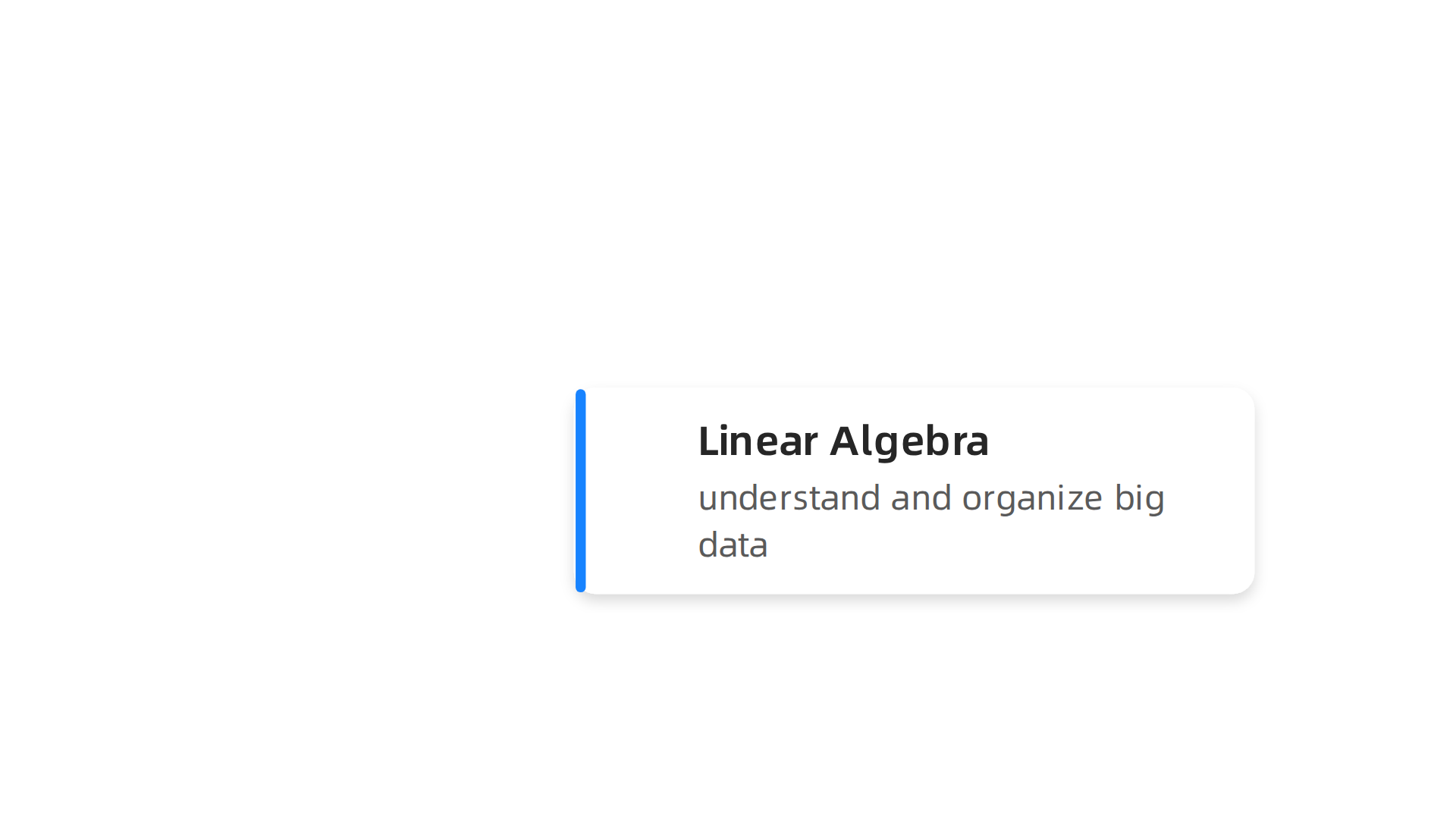
- Linear Algebra: This is like the math of shapes and spaces, but for numbers. It helps AI understand and organize big amounts of data in a neat way. For example, when an AI sees a picture, it turns that picture into a lot of numbers. Linear algebra helps it work with those numbers.
- Probability: This is about understanding chance. How likely is something to happen? AI uses probability to make guesses and predictions. When an AI gives you an AI response, it often uses probability to decide what the best answer is.
- Statistics: This is about collecting, looking at, and understanding data. It helps AI find patterns in information, like seeing trends in customer choices or understanding groups of things. Learning to evaluate AI outputs for things like accuracy and fairness often involves statistical thinking, as noted in the artificial intelligence guidance from Maryland Public Schools.
- Optimization: This is all about finding the "best" way to do something. When AI learns, it tries to get better and better at its job. Optimization is the math that helps it figure out how to improve itself, like finding the best path or the best settings.
You don’t need to be an expert in all these areas from day one. Instead, you’ll learn them as you go, focusing on what you need for the AI tasks you want to do.
Programming and Tools for AI
To make an AI actually do something, you need to speak its language.
- Python is King: Almost everyone who works with AI uses Python. It’s a programming language that’s quite easy to learn and read. It has many ready-made tools that make working with AI much simpler.
- Key Libraries: Python has special "libraries" or toolkits. Two very popular ones are TensorFlow and PyTorch. These are like big collections of pre-made instructions that help you build and train AI models without starting from scratch.
- Making Projects Work: When you’re learning, it’s good to make your projects so they can be easily shared and re-done by others. This means keeping your code organized and using tools that help manage different versions of your work. It’s like having a clean desk so you can always find your important papers.
- Data Skills: Since AI learns from data, knowing how to handle and prepare data is a big deal. This is called data engineering. Many courses, like a data engineering zoomcamp style bootcamp, teach you how to get data ready for AI. Also, if you’re thinking about a career in this field, knowing how to choose the right data analytics courses for career success can be very helpful.
Having these skills will put you on the fast track to truly understanding and building with AI. If you want to keep up with the latest in AI and tech, a great way is to subscribe to timely updates.
The AI Newsletter Worth Reading
After you understand the key skills for AI, the next step is to pick a good way to learn them. There are many paths you can take to learn how to work with AI, from long university degrees to quick online classes. Each one is good for different kinds of learners and goals.
University Degrees: Deep Learning for the Long Run
Thinking about a university degree, like a Bachelor’s or Master’s in computer science with a focus on AI, means you’re in for a long, deep study. These programs teach you a lot of theory and all the basic computer science ideas. They are best if you want to become a top researcher or work in very complex AI roles. They give you a strong background that helps you understand how an AI engine works from the ground up.
However, a university degree takes a lot of time, usually years, and can cost a lot of money. It also might not always teach the very latest tools as quickly as other options.
Online Courses and Specializations: Flexible Learning
For many people, online courses are a great way to learn AI. Websites like Coursera or edX offer many courses and "specializations" which are like a series of courses put together. These are often taught by top experts and can be free to try or cost a small monthly fee. For example, some highly recommended programs like the Deep Learning Specialization on Coursera can help you learn the basics without breaking the bank, as noted in the Best AI & Machine Learning Courses 2026 analysis.
The good thing about these is you can learn at your own speed, from anywhere. But there’s a catch: it takes a lot of self-control to finish them. Studies show that many people who start online courses don’t actually finish them, with completion rates sometimes as low as 3 to 6 percent, according to a look at AI Bootcamp vs. Online Course effectiveness. So, if you choose this path, be ready to push yourself.
Bootcamps: Fast Track to Job Skills
If you want to learn quickly and get job-ready skills, AI bootcamps might be for you. These are intense, short programs, usually lasting a few weeks to a few months. They focus on teaching you practical skills and how to build real AI projects. For instance, top AI bootcamps in 2026 boast high job placement rates and good starting salaries, making them a strong choice for those looking to switch careers fast, according to Top 10 AI and Machine Learning Bootcamps in 2026.
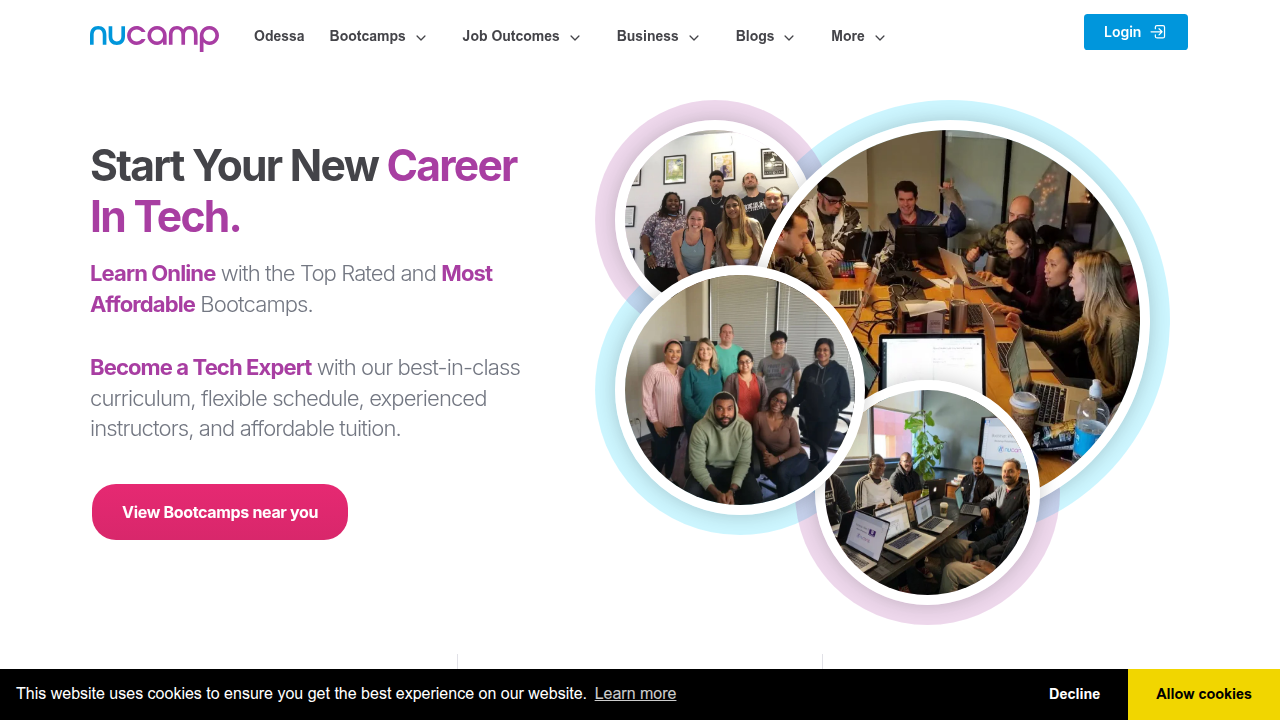
Bootcamps are usually more expensive than single online courses but less than a full university degree. They’re great if you learn best by doing and want to get into the job market quickly.
Choosing Your Path to Learn AI
To figure out the best way for you to learn AI, think about:
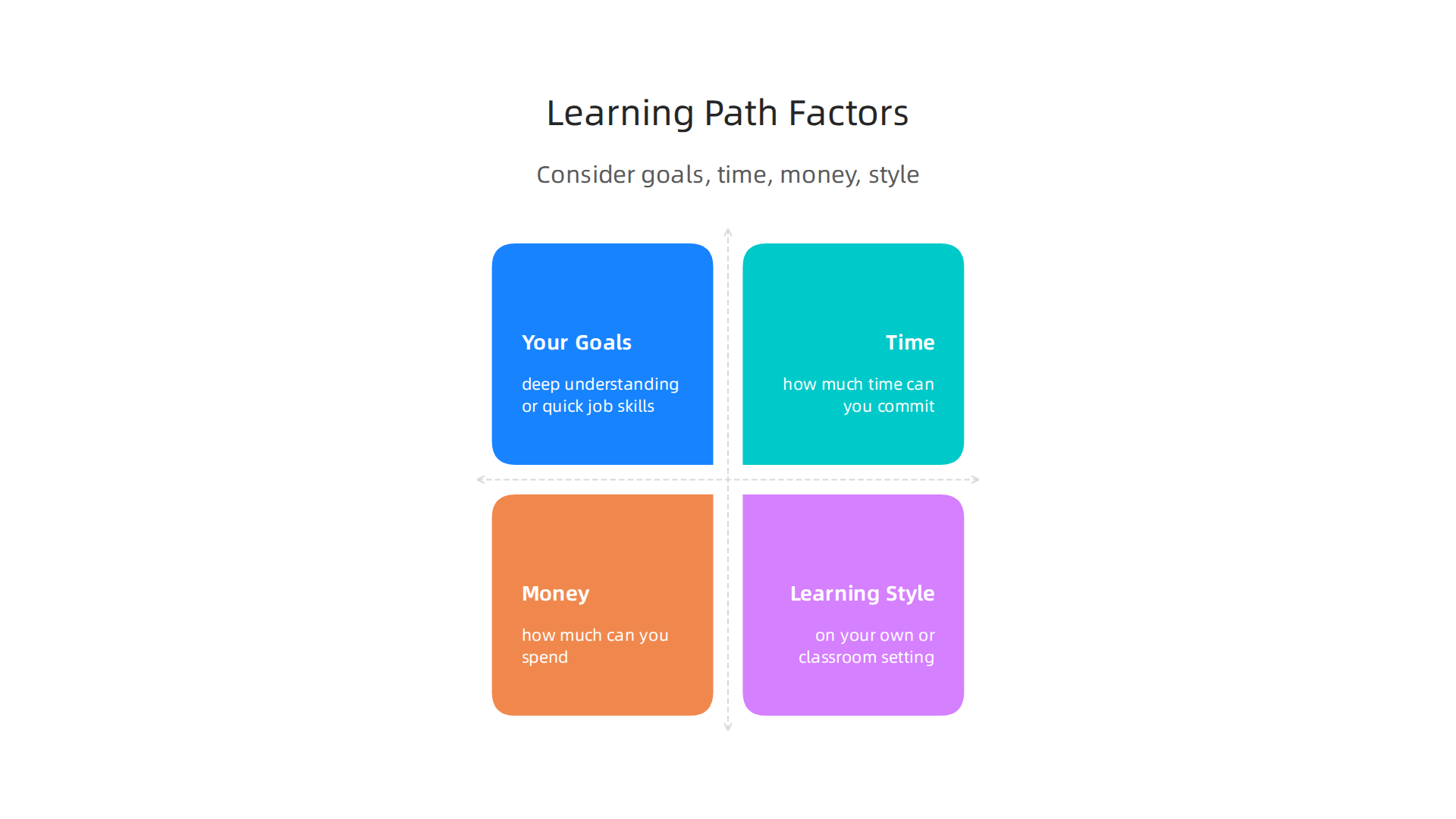
- Your Goals: Do you want a deep, academic understanding or quick job skills?
- Time: How much time can you commit each day or week?
- Money: How much can you spend on your education?
- Learning Style: Do you like learning on your own, or do you need a classroom setting with lots of support?
Many people find that a mix works best. You might start with a free online course to see if you like AI, then move to a more structured specialization or bootcamp.
When you’re ready to pick a learning path, it’s smart to look at how different AI platforms are compared to see what fits your needs. You can explore a detailed comparison of AI platforms for startups and enterprises to understand the tools you’ll be learning about.
No matter which path you choose, the key to success is to keep practicing and building things. That’s how you truly learn AI and get good at it.
No matter which path you choose, the key to success is to keep practicing and building things. That’s how you truly learn AI and get good at it. It’s like learning to ride a bike: you can read all the books, but you only truly learn by getting on and pedaling. When it comes to knowing how to learn AI, getting your hands dirty with real projects is the most important step.
Getting Started with AI Projects
Doing hands-on projects helps you understand how an AI engine really works. You’ll learn by doing, which is often faster than just reading. Here are some project ideas, from easy to more challenging:
Beginner Projects: Learning the Basics
If you’re just starting, pick projects that have clear steps and simple data. These projects help you get used to the tools and basic ideas.
- Spam Detector: Build a program that can tell if a text message or email is spam or not. This is a classic first project that teaches you about text data. You can find free datasets for this, like the SMS Spam Collection.
- House Price Predictor: Use data about houses to guess how much a new house might sell for. This helps you learn about numbers and making predictions. The Ames Housing Dataset is great for this, as suggested in 14 Machine Learning Projects for Beginners to Advanced (2026).
- Handwritten Digit Recognizer: Create a program that can read numbers written by hand. The EMNIST dataset works well here, as noted in 20+ Best AI Project Ideas for 2026.
Intermediate Projects: Growing Your Skills
Once you have the basics down, you can try projects that need a bit more thought and planning.
- Image Classifier: Build a system that can tell what is in a picture, like if it’s a cat or a dog. Large collections of images are available for this.
- Recommendation System: Make a program that suggests movies or products based on what someone likes. Think about how Netflix or Amazon does it.
- Simple Chatbot: Create a program that can have a basic conversation with you. This can help you understand how to make an AI response.
Advanced Projects: Real-World Challenges
These projects are for when you feel really comfortable with AI. They might involve bigger datasets, more complex models, or even making your own data.
- Custom Object Detection: Train an AI to find specific items in images or videos, like identifying different types of cars or animals.
- Natural Language Processing (NLP) for Summarization: Build an AI that can read a long article and give you a short summary.
- Reinforcement Learning Game Agent: Create an AI that learns to play a game by trying different actions and seeing what works best.
Tools and Datasets You’ll Need
To do these projects, you’ll need some common tools and places to find data.
Essential Tools and Coding Environments
- Python: This is the most popular language for AI. It’s easy to learn and has many helpful libraries.
- Jupyter Notebooks: These are like digital notebooks where you can write code, run it, and see the results all in one place. They’re great for trying out AI ideas.
- VS Code (Visual Studio Code): A popular code editor that helps you write and manage your code projects.
- NumPy and Pandas: These are Python libraries that help you work with numbers and data tables easily.
- Scikit-learn: A Python library with many ready-to-use AI models for your projects.
- Cloud Platforms: As you get more advanced, you might use services like Google Cloud or AWS. They offer powerful computers and special AI tools.
Finding the Right Datasets
You can’t do AI without data! Luckily, many free datasets are available.
- Kaggle: This website is a goldmine for datasets. It also hosts competitions where you can test your AI skills against others.
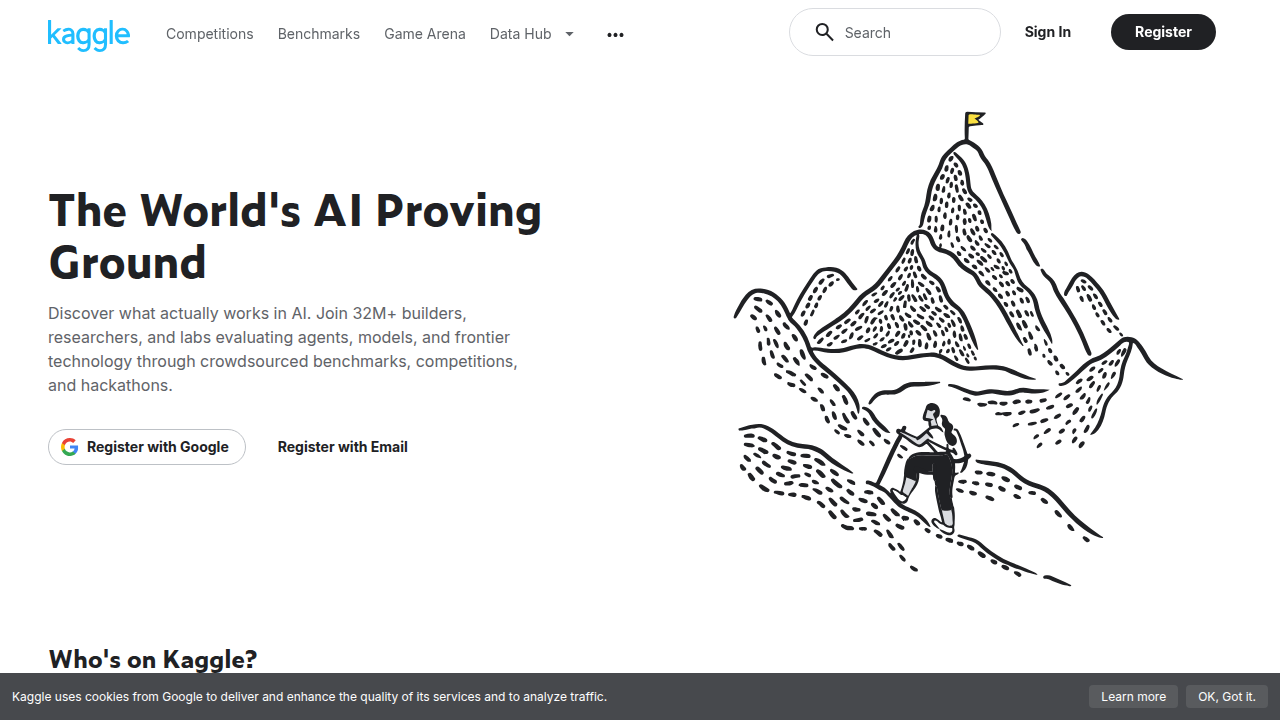
Many students find Kaggle a great place to start, according to 25 Best AI Project Ideas for Students with Source Code.
- UCI Machine Learning Repository: This is another well-known place that offers almost 500 public datasets.
- Google Dataset Search: Think of this as a Google search engine just for datasets. You can find datasets from all over the internet. In 2026, it indexes over 25 million datasets, making it a powerful tool for researchers and data scientists alike, as shared in 32 Best Free Datasets for Projects (2026).
- Hugging Face: This platform is especially good for datasets related to language and text.
Using these tools and finding good datasets are key steps in learning how to learn AI effectively. By consistently building projects, you will turn theory into real-world skills.
Want to stay informed about the latest AI advancements and industry trends?
The AI Newsletter Worth Reading
Deepening Expertise: Textbooks, Research Papers, and Specializations
After getting your hands dirty with AI projects, the next step in how to learn AI deeply is to dive into foundational knowledge. This means going beyond simply using tools to truly understanding the ideas behind them. Reading textbooks and research papers might sound daunting, but it’s where you build a strong mental framework for all things AI.
Reading Foundational Textbooks
Think of textbooks as your maps to the AI world. They offer a complete and well-organized view of the field. Instead of just learning how to make an AI response, you’ll learn why certain methods work. This kind of deep understanding is crucial for tackling new problems and developing cutting-edge solutions.
Here are some books often recommended for a solid AI education:
- "Artificial Intelligence: A Modern Approach" by Stuart Russell and Peter Norvig: This is widely considered a key textbook for the entire field of AI. It gives a broad overview and is used in many universities, as noted in various AI reading lists, including one from the School of Interactive Computing.
It helps you understand the history of AI and its big ideas, from when AI was invented to modern concepts.
- "Deep Learning" by Ian Goodfellow, Yoshua Bengio, and Aaron Courville: If you’re interested in the very powerful area of deep learning, this book is a must-read. It breaks down complex ideas into easier-to-understand parts. Many consider it one of the foundational texts for learning about AI and machine learning, according to discussions on foundational texts for learning about AI.
When reading textbooks, don’t feel like you have to memorize everything. Focus on understanding the core ideas, the math behind them (if you’re comfortable with it), and how different AI methods compare.
Extracting Practical Insights from Research Papers
Research papers are where you find the newest ideas and breakthroughs in AI. They can be harder to read than textbooks, but they are vital for staying at the forefront of AI knowledge.
Here’s how to approach them:
- Start with Survey Papers: If you’re new to a specific area, look for "survey papers" first. These papers summarize many different research works on a topic, giving you a good overview before you dive into single, detailed papers.
- Read Strategically: Don’t try to read every word at first. Start with the abstract (a short summary) and the introduction. This tells you what the paper is about and why it matters. Then, look at the conclusion to see what the researchers found. If it still interests you, then you can go back and read the main body of the paper, focusing on the methods and results.
- Look for the "Why": Try to understand not just what the new method is, but why the old methods weren’t good enough, and why this new method is better. This helps you grasp the problem-solving process that drives AI research.
Specializations
As you gain knowledge, you’ll naturally find areas within AI that interest you most. This is where specializations come in. Maybe you’re fascinated by how an AI engine can understand language, leading you to Natural Language Processing (NLP). Or perhaps you’re drawn to computer vision, where AI learns from images and videos.
Common specializations include:
- Natural Language Processing (NLP): Making computers understand and use human language.
- Computer Vision: Teaching computers to "see" and interpret images and videos.
- Reinforcement Learning: Creating AI that learns by trying things and getting rewards or penalties, much like humans learn through experience.
- Ethical AI: Looking at the fairness, safety, and societal impact of AI systems.
- Agentic AI: Focusing on AI systems that can plan and act to achieve goals, often working alongside or in contrast to generative AI. Understanding the difference between Agentic AI vs Generative AI can be a key part of choosing a path.
Choosing a specialization helps you focus your learning and become an expert in a particular corner of the vast AI world. This deeper dive into theory, alongside continued practical projects, is how you truly master how to learn AI.
After gaining a deep understanding of AI through textbooks and projects, the next step is to turn that knowledge into a rewarding career. Knowing how to learn AI is one thing, but knowing how to use those skills to find a job or start your own venture is just as important. In 2026, the AI world is full of exciting paths.
Common AI Career Roles and Required Skills
Many different jobs use AI skills. Here are some of the most common ones:
- Machine Learning Engineer: These folks build and put AI models into action. They make sure the AI works well in real programs. You’ll need strong coding skills, especially in Python, and a good grasp of how to build reliable data pipelines.
- AI Research Scientist: If you love discovering new things, this role might be for you. Research scientists create new AI methods and push the boundaries of what AI can do. This often requires a deeper understanding of math and theory.
- Applied AI Engineer: These engineers take the new ideas from research and make them useful for specific problems. They bridge the gap between pure science and real-world products.
- Product-Led Roles: Many jobs now focus on managing AI products. These roles need someone who understands AI but also knows what customers need and how to build a good product. They think about the big picture, like how an ai engine can solve a business problem.
For any of these roles, strong problem-solving skills, being able to learn new things quickly, and good teamwork are key.
Building Your Project Portfolio
To show what you can do, you need a strong portfolio. Think of it as your personal showcase of AI projects. This is how you catch the eye of companies, investors, or future teammates.
- Show Your Best Work: Don’t just list everything. Pick 3 to 6 of your strongest projects. For each project, explain clearly:
- What problem you tried to solve.
- What your role was.
- What you actually did.
- What results you got.
Sharing projects that show real depth is better than a long list of unfinished ones, according to advice for developer portfolios in 2026.
- Where to Find Data: You can’t build AI without data. Luckily, there are many free places to find datasets for your projects. Websites like Kaggle, UCI Machine Learning Repository, and Google Dataset Search are great starting points for finding data, as noted by experts on AI project ideas for students. You can also find many other public datasets for machine learning on sites like Dataquest, which lists 32 Best Free Datasets for Projects (2026).
- Format Matters: In 2026, most portfolios are online. A simple website that highlights your projects, your skills, and how to reach you works best. Make sure it’s easy to look at, even on a phone. Websites like GitHub are also important for showing your code. One guide offers tips for creating a Standout GitHub Portfolio in 2026. Remember, your portfolio is a professional tool that shows off your skills and what you’ve achieved, helping you create a job portfolio that stands out.
Networking and Community Involvement
Learning AI isn’t just about reading books and coding alone. It’s also about connecting with people.

- Meet Other AI Enthusiasts: Go to online meetups, workshops, or conferences. Talk to people, share ideas, and learn from their experiences.
- Join Online Communities: Many online groups focus on AI. Joining these can help you stay up-to-date and even find new job openings.
- Contribute to Open Source: Help out on open-source AI projects. This is a great way to learn, get real-world experience, and show off your skills. It also helps you stay at the forefront AI discussions.
Staying connected and active in the AI community is a powerful way to grow your career and discover new possibilities.
Many people find keeping up with the fast-changing world of AI to be a challenge.
Are you looking for a way to stay informed about the latest AI news and trends? Get clear daily AI updates from The Deep View Newsletter.
Summary
This article explains how to learn AI in 2026 for founders, investors, product leaders, and engineers who need practical AI literacy. It starts by defining AI, the difference between narrow and general AI, and how systems learn (supervised vs unsupervised). The guide then covers the essential skills—basic linear algebra, probability, statistics, Python, and key libraries like TensorFlow and PyTorch—plus data engineering and tools you’ll use daily. You’ll find concrete learning paths (degrees, online courses, bootcamps), plus a clear ladder of hands-on projects from beginner to advanced to build real experience. The article also shows how to deepen knowledge with textbooks and research papers, pick a specialization, and turn projects into a portfolio and career opportunities. Practical resources and places to find datasets and development environments are listed so you can start building immediately. Overall, it gives a step-by-step roadmap to move from AI curiosity to usable skills that drive product, investment, and startup decisions.