
How to Identify Trustworthy Tech News for Founders and Investors

Why curated, trustworthy tech news matters for founders and investors
In today’s fast-moving world of technology, founders and investors have a big challenge. They need to keep up with all the new ideas, companies, and money flowing around. But there’s so much news out there. It’s like trying to drink from a firehose! Many news sources report on everything, making it hard to find what really matters. This can lead to missing important signs about where money is going or which new technologies are truly taking off.
For example, 2026 has already seen record amounts of money poured into startups, especially those working with AI and machine learning. Global startup investment hit a new high of $510 billion in the first half of 2026 alone, with AI leading the charge Crunchbase Data: Global Startup Investment Hit Record $510B In H1 2026 As AI Boom Accelerates Funding And Exits. Investors are looking closely at how companies plan to make money and grow, not just cool ideas What Investors Want in 2026: From Seed to Series C. With all this activity, if you can’t find clear, true news, you might make a bad choice or miss a great chance.
That’s why having trustworthy sources for your tech news is so important. You need to cut through the noise and get to the core facts.

Imagine if you could easily understand new tech trends without getting lost in endless articles. This helps founders find the right people to fund their ideas and helps investors spot the next big thing in future tech.
This guide will give you a simple plan to check your news sources, set up easy ways to get updates, and make sure any big announcements are true. We want to help you make better choices for your business or investments. For those who want to stay especially sharp on AI, consider subscribing to The AI Newsletter Worth Reading for clear, daily updates. Getting reliable information, like what you might find from a respected agency like Reuters, helps you focus on real opportunities and avoid distractions from the tech sideline. Knowing what’s real and what’s just talk can make all the difference.
What counts as a ‘trusted’ tech news source for funding news
Knowing what’s real and what’s just talk can make all the difference for your investments and business ideas. But how do you pick a news source you can truly trust, especially when it comes to fast-moving tech trends? It’s important to look for a few key things.
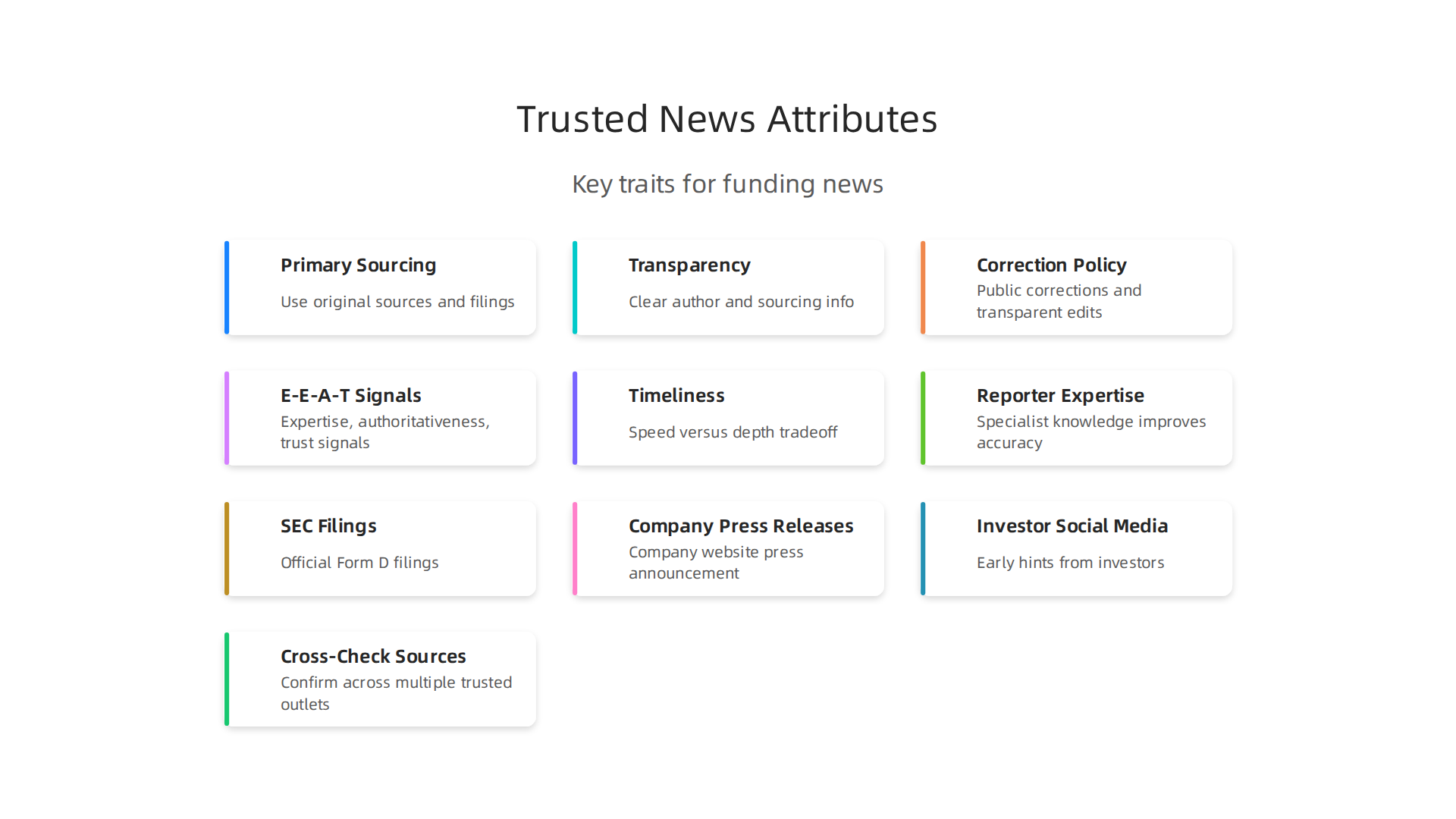
First, a trusted source uses primary sourcing. This means they go to the original place for information. They talk to the people who made the news, like the founders of a startup or the investors who put money into a project. They don’t just repeat what someone else said. For example, when reporting on funding rounds, they might get numbers directly from the companies or investment firms involved, not just from a secondary blog post. Reliable data is key for founders to understand the market, as shown in reports like the Startup Report: Venture Funds Deals and Trends (March 2026).
Next, look for transparency. A good news source is open about who wrote the article and where they got their facts. They don’t hide information. They also have a clear correction policy. This means if they make a mistake, they own up to it and fix it clearly. You want to know they care about being right.
Finally, consider E-E-A-T signals. This stands for Expertise, Experience, Authoritativeness, and Trustworthiness. Does the news outlet or reporter know a lot about the subject? Have they been doing this for a long time? Are they known as a leader in reporting on tech news? For example, major news agencies like Reuters tech reporting are often seen as trustworthy because they have a long history of careful reporting and a wide network of experienced journalists. This helps cut through the noise from the tech sideline.
Speed vs. Depth: Finding Your Balance
When choosing tech news sources, you’ll find a trade-off between speed and depth.
- Speedy Sources (Wire Services): Agencies like Reuters are known for being very fast. They break news quickly, sending out short, factual reports as soon as things happen. This is great if you need to know about a big event or funding announcement right away. However, these reports might not have all the deep details or background information. They focus on giving you the main facts fast.
- Deep Sources (Specialist Outlets): Other places, like some tech blogs or industry-specific journals, take more time. They offer deeper dives into topics, explaining the "why" and "how" behind new tech trends or big funding deals. They might also explore the future tech possibilities. While they aren’t always the first to report breaking news, they give you a much richer understanding, which is really important for making smart long-term decisions.
Both types of sources are useful. You might use a fast source for daily updates, then turn to a deeper one to really understand what’s happening with new AI companies in 2026 or specific investment strategies. Getting a good mix helps you stay informed without getting overwhelmed.
When looking at news sources for tech, it’s helpful to see how wire services stack up against specialist tech outlets. Both play a big role in keeping us informed, but they do it in different ways. Knowing these differences can help you pick the right source for your needs,
whether you’re tracking fast funding announcements or digging into the latest tech trends.
Let’s look at a few key points:
Timeliness
- Wire Services (like Reuters tech reports): These are all about speed. They get news out almost instantly. Think of them as the first responders of information. They aim to deliver the facts as quickly as possible. This is great for breaking news, like a sudden stock market shift or a big company merger. Many news outlets, including those analyzing AP & Reuters news reports, rely on them for initial reports.
- Specialist Tech Outlets: These sources often take a bit more time. Their goal isn’t just to be first, but to be thorough. They spend time researching, interviewing, and putting the news into a bigger picture. They are less focused on the very moment an event happens and more on explaining its deeper meaning or future tech impact.
Primary Documents and Sourcing
- Wire Services: They work hard to get information from primary sources, like official company statements or direct quotes. Because they are so fast, their initial reports might be brief, but they usually stick to verified facts. Often, they follow a "three-source rule" before reporting major news to ensure credibility, especially for crucial details like those surrounding news credibility.
- Specialist Tech Outlets: These sources also aim for primary sourcing. But since they have more time, they can often dig deeper. They might get copies of internal documents, analyze patent filings, or conduct longer interviews to give you a more complete picture. They focus on real-time verification methods to ensure high accuracy.
Reporter Expertise
- Wire Services: Their reporters are skilled at gathering facts quickly and accurately across many topics. They are often generalists who can cover a wide range of news, including tech, but might not always have ultra-specific, niche knowledge of every single micro-trend.
- Specialist Tech Outlets: Reporters here often have deep expertise in specific areas of technology. They might have years of experience covering AI, blockchain, or specific startup sectors. This deep understanding helps them provide insightful analysis and spot emerging tech trends that others might miss. Working with a skilled tech reporter can transform your startup funding strategy.
Correction History
- Both Types: Any trusted news source should have a clear correction policy. Mistakes can happen, even to the best. What matters is that they own up to errors and fix them quickly and openly. A good history of corrections shows a commitment to accuracy. You can learn more about checking news reliability with a data-driven guide.
When to Prioritize Speed vs. Verification
Choosing between speed and deeper verification depends on what you need.
- Prioritize Speed When: You need to know about major events right as they happen. This could be a big tech company’s earnings report, a new product launch, or a key speech at an event like Utah Tech Week. For these, a quick alert from a wire service is often enough to get the essential facts.
- Wait for Verification When: You’re making important decisions or trying to understand complex issues. For example, if you’re an investor considering a new startup, you’ll want more than just a quick headline. You’ll need the deep dives, expert opinions, and comprehensive analysis that specialist outlets provide. This helps you cut through the noise and avoid acting on incomplete information, especially when dealing with the many voices on the tech sideline. Waiting for detailed analysis helps you cut through the noise.
By using both kinds of sources wisely, you can stay updated on current events while also gaining a deeper understanding of the tech world.
Want to stay on top of daily AI updates and broader technology developments?
The AI Newsletter Worth Reading gets clear daily AI updates from The Deep View Newsletter.
After learning how different news sources help us stay informed, let’s talk about setting up easy ways to keep track of funding news. It’s about getting the right information without too much fuss. Having a good system helps you quickly see important funding announcements and changes in the tech world.
Setting Up Your News Feeds
You can use simple tools to build your own system for tracking startup funding.
- Email Alerts: Tools like Google Alerts are free and very helpful. You can set up alerts for phrases like "Series A funding" or for specific company names or investors. Then, Google sends you emails when new stories come out about these terms. This is a simple way to track VC investments. Many experts also suggest using Google Alerts to track specific venture capitalists (VCs) you are interested in, making sure you see when their names appear in funding news for new startups.
- RSS Feeds: For websites that offer them, RSS feeds can put all new articles into one reader. This lets you quickly scan headlines from many sources in one place. It is a good way to keep up with news from specialist tech outlets and wire services, like specific reports on
reuters technews. - Newsletters: Curated newsletters can cut down on noise by having experts pick out the most important stories. Many tech news sites offer these, often focusing on specific tech trends like AI or blockchain.
- Specialized Databases: Platforms like Crunchbase are very useful. They offer detailed data on startup funding and let you set up alerts for new funding rounds that match what you’re looking for, helping you find recently funded startups. Other services provide real-time funding data through APIs for those who need to integrate this information into their own systems.
Prioritizing Important Signals
Not all news is equally important. When you’re tracking funding, some signals matter more than others:
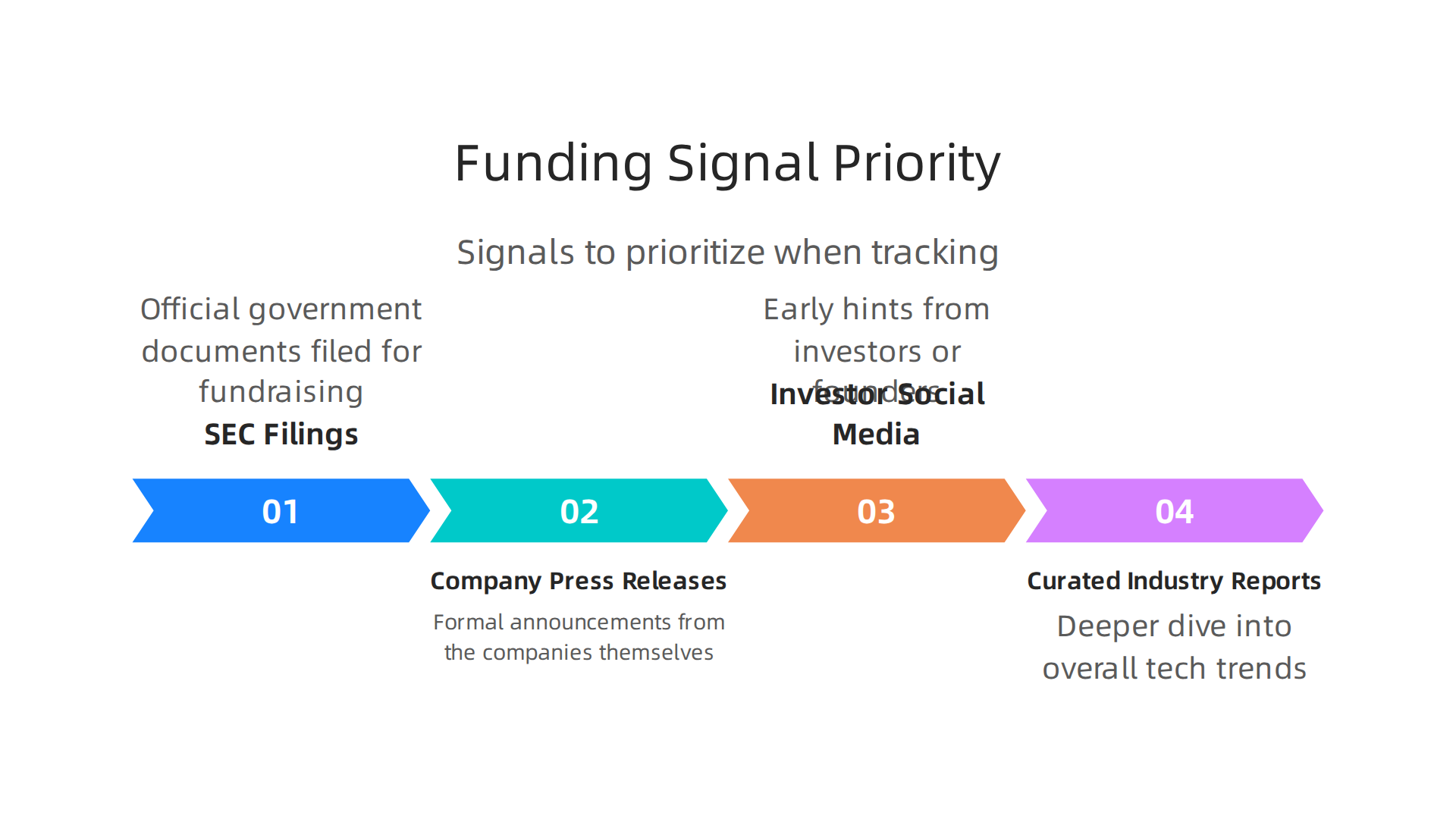
- SEC Filings (Form D): These are official documents filed with the government when a company raises money. They are a primary source of information and often come out days before general press releases. You can even find tools that scrape SEC Form D filings to get this data directly. This helps you get early insight into new funding for future tech.
- Company Press Releases: These are formal announcements from the companies themselves. They usually provide official details about funding rounds.
- Investor Tweets and Social Media: Sometimes, investors or founders share news on platforms like X (formerly Twitter) even before official announcements. While fast, remember that these are not always fully verified, so take them as early hints.
- Curated Industry Reports: For a deeper dive into overall tech trends and market analysis, quarterly reports from investment firms or research groups offer valuable insights into the broader tech sideline.
By bringing these different tools and sources together, you create a powerful system. This helps you reduce the constant stream of news to just the important signals. This way, whether it’s a big announcement from Utah Tech Week or a quiet SEC filing, you’ll be well-informed and ready to act. Learning to manage these feeds is an important part of knowing how to build your modern data pipeline for startup success.
You’ve set up your news feeds and know which signals are often important. But how do you know if the funding news you see is truly real and correct? Verifying funding announcements is a crucial step before you take any action. It’s like double-checking your work.
Step-by-Step Verification Checklist
When you see a funding announcement, especially in the busy world of reuters tech news, follow these simple steps to check if it’s true:
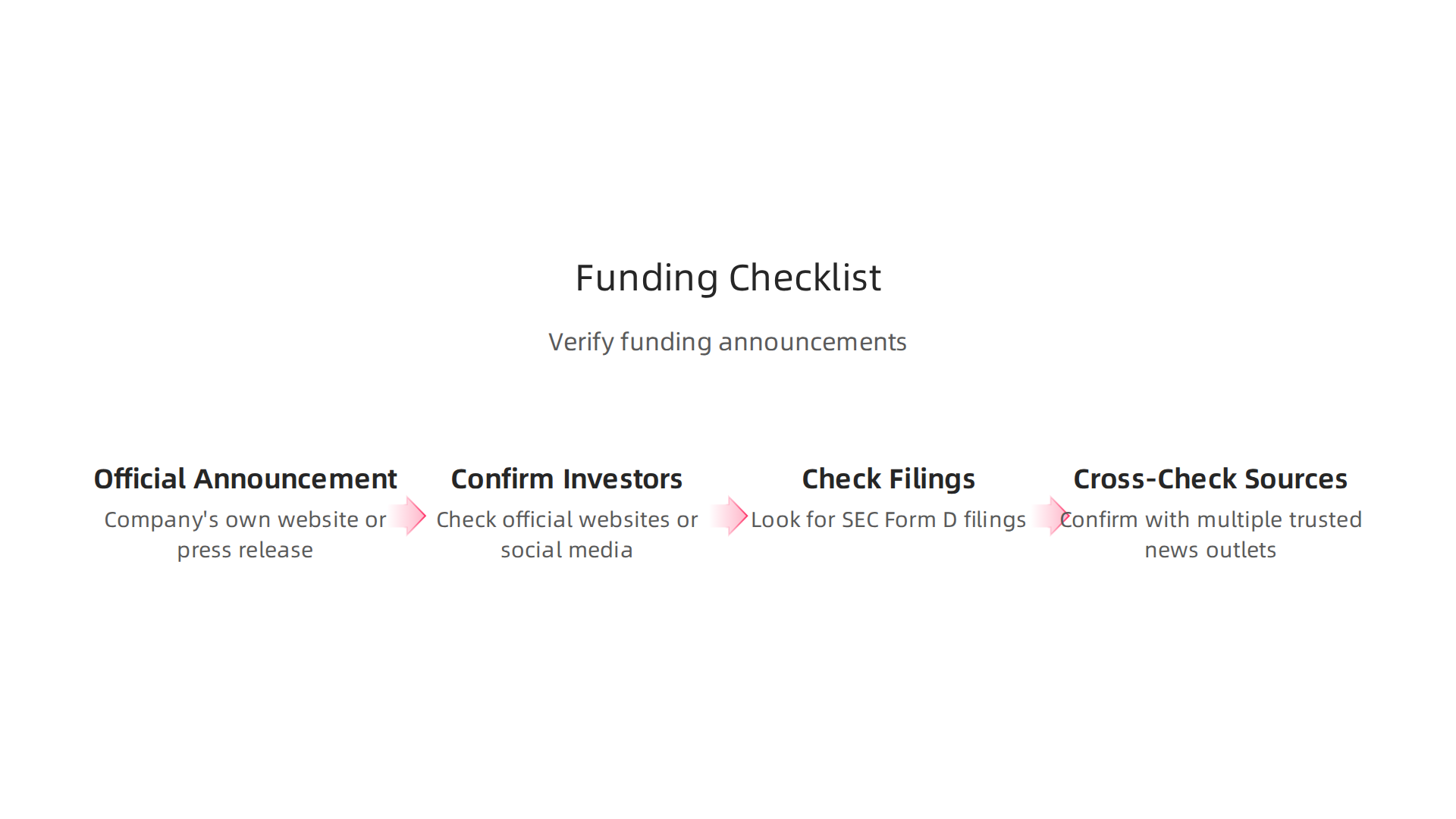
- Look for the Company’s Official Announcement: The first place to check is the startup’s own website or official press release section. If they got funding, they usually put out a formal statement with all the details.
- Confirm with the Investors: Did the news mention specific investors or venture capital firms? Check their official websites or social media pages (like LinkedIn or X, formerly Twitter). They will often share the news if it’s real.
- Check Official Filings: For US companies, keep an eye out for SEC Form D filings. These are legal documents filed with the government when a company raises money. These filings are a very strong sign that funding is real.
- Cross-Check with Multiple News Sources: Don’t trust just one news story. If the funding is big, many trusted news outlets should report it. Experts suggest using a "three-source rule" to confirm major news. This means seeing the same report from at least three different, reliable news places before you believe it completely, especially for important
tech trendsNews Credibility: 3-Source Rule for 2026 Explained. Good places to check include major wire services like Reuters. Getting news from many places helps you see a clearer picture and makes sure the information isn’t biased AP & Reuters: Analyzing 2026 News Reports.
Common Red Flags and Confirmatory Signals
Knowing what to look for can help you quickly tell real news from fake.
Red Flags (Things to Watch Out For):
- Only One Source: If only one small or unknown website is reporting the news, be careful. Always question the source of information How to Verify News Credibility in 2026: A Data-Driven Guide.
- Vague Details: The story doesn’t say who the investors are, how much money was raised, or when it happened.
- Emotional Language: The article tries to make you feel very excited or scared instead of just giving facts Media Literacy Guide: Evaluating the News – SVC Library.
- Old News, Re-shared: Sometimes, old funding news is shared again as if it’s new. Always check the date of the story.
Confirmatory Signals (Good Signs It’s Real):
- Multiple Trusted Reports: Many well-known news sites confirm the same story.
- Official Statements: The company itself, or the investors, have put out clear statements.
- Specific Numbers and Names: The report has exact figures for the money raised and names the investors involved. This is key for understanding the
tech sidelineof financing. - Quotes from Key People: The article includes direct quotes from the CEO of the startup or a partner at the investment firm.
By carefully checking these points, you can be much more sure that the funding news you’re tracking is true. This helps you make smarter choices about future tech investments and stay ahead in the fast-changing startup world.
To get even more reliable insights and stay updated on important tech trends, consider subscribing to a trusted source.
The Deep View Newsletter provides clear daily AI updates. The AI Newsletter Worth Reading
Manually checking every piece of funding news can be a lot of work. But good news! Today, smart computer programs can help you keep track of what’s happening. This is called automating competitive intelligence. It means using technology to quickly find and understand important information about other companies and what’s new in the market.
How Computers Help Spot Opportunities
Imagine having a super-fast helper that reads thousands of news articles, social media posts, and company websites for you every day. That’s what signal aggregation and sentiment analysis do.

- Gathering Signals: These tools collect information from many places, like big news sites such as
reuters techand smaller blogs. They act like a central inbox for all the news. Instead of checking many different sites, all updates land in one place, which helps you track startup funding news efficiently How to Identify Disruptive Tech Startups via Funding News. Some tools, like Google Alerts or Meltwater, can even send you updates about new funding announcements in real-time 5 Tools That Track VC Investments. Other paid tools like Crunchbase Pro or Origami also help find startups that are raising money Find Startups Raising Funding: Best Tools & Signals 2026 – Origami. - Understanding Feelings (Sentiment Analysis): This is where Natural Language Processing (NLP) comes in. NLP is like teaching a computer to read and understand human language. Sentiment analysis then helps the computer figure out if the news about a company or its funding is good, bad, or neutral. For example, if many news stories about a new
tech trenduse very positive words, it might mean that trend is gaining a lot of interest. This helps you understand the overall vibe or "sentiment" around a specifictech sideline. Many new AI tools can do this, even helping to analyze news and create competitive intelligence reports News Scraping Sentiment Analysis Competitive Intelligence Report.
By putting all this information together, you can quickly see which companies are getting a lot of buzz or who is raising money. This helps you spot new opportunities or even early risks in the fast-paced world of future tech. For instance, you could track all the exciting developments coming out of events like Utah Tech Week. To truly harness this power, understanding how to use AI platforms is key, as they are at the heart of many of these automated systems. You can learn more about how to compare different options in our guide on AI platforms 2026 compared for startups and enterprises.
What to Watch Out For
While automation is helpful, it’s not perfect. There are a few things to keep in mind:
- Bias in AI Models: The computers learn from the data they are fed. If that data has any unfair leanings, the AI might also pick them up. This can lead to biased results, meaning the computer might not see things clearly.
- Too Much Trust in Press: Sometimes, news stories might not tell the whole picture, or they might be more about getting attention than just facts. Relying too much on what’s said in the press, even if it’s aggregated, can still lead you astray.
- False Alarms: With so much information coming in, you might get many alerts that seem important but aren’t really. These "false positives" can make it harder to find the truly important signals. Learning how to use AI for startup success means also knowing its limits.
Automating competitive intelligence makes tracking startup funding news much faster, but it’s still important to understand how these tools work and what their weaknesses are. This way, you can use them smartly to make better decisions.
Automating how you find news helps you get quick alerts. But to be really sure about a new tech trend or a company’s funding, you need more than just news stories. You need solid facts and numbers. This is where data providers, datasets, and surveys come in handy. They help you check if what you hear in the news is truly happening in the market.
Different Kinds of Data to Check Trends
Think of it like being a detective. News articles give you clues, but these other data sources give you the hard proof.
- Funding Round Datasets: These are big lists of information about which companies have received money, how much, and from whom. Websites like Crunchbase and PitchBook collect this kind of data. They show you details like the size of a funding round, the stage of the startup (like seed or Series A), and who the investors are.
For example, reports show that global startup investment hit a record $510 billion in the first half of 2026, largely due to an AI boom [Crunchbase Data: Global Startup Investment Hit Record $510B In H1 2026 As AI Boom Accelerates Funding And Exits]. You can even find APIs that give you real-time funding round data directly [Funding API | Real-time funding round data]. These datasets are great for seeing if a company mentioned in a reuters tech article actually raised the money it claimed.
- Investor Activity Datasets: These show you what investors are doing. Which venture capital firms are active? What types of
tech sidelinecompanies are they putting their money into? For instance, you can find data that tracks specific venture capital activity and deals [Startup Report: Venture Funds Deals and Trends (March …)]. This helps you understand where the big money is going and who is making the investments. Learning about these top venture capital databases can be very useful [Top Venture Capital Databases & Data Sources (2026 …)]. - Periodic Surveys and Reports: These are like big check-ups on the whole startup world, usually done every three months or once a year. Groups like PitchBook and NVCA put out reports like their Venture Monitor, which summarizes how much money was invested in startups and in which areas, such as AI and machine learning [Q1-2026-PitchBook-NVCA-Venture-Monitor.pdf]. JPMorgan also puts out reports on the innovation economy, showing how capital investment is returning to high levels [INNOVATION ECONOMY Startup Insights H1 2026]. These reports are super helpful because they give you a wide view of what’s happening and can confirm if a trend you’ve noticed, perhaps during an event like
Utah Tech Week, is truly widespread. They help you see the bigger picture beyond just one news story.
Putting News and Data Together
Using both news signals and hard data makes your understanding much stronger. Imagine you read a news story about a new invention in future tech. That’s your first signal. But then you look at a funding round dataset and see that many companies working on similar things are getting large investments. This confirms the news signal.
You can use automated tools to quickly spot potential tech trends or important company news. Then, you use these trusted datasets and reports to dig deeper and confirm if those signals are real and important. This way, you don’t just react to every headline; you make smart choices based on facts.
By combining the quick alerts from news (like reuters tech reports) with the solid proof from data, you get a much clearer picture of the fast-moving startup world. This helps you validate what’s truly happening and make better decisions.
To keep up with the fast-moving world of AI and other tech developments, make sure you’re getting the best information.
The AI Newsletter Worth Reading
Curation best practices: reducing noise and surfacing actionable signals
To make truly smart choices from all the news and data, you need good rules for sorting through it. This is called curation. It helps you cut down on extra "noise" and find the truly useful information.
How to Filter Information and Find What Matters
Think of curation in two main ways: what you do with the tech tools, and what your team does.
Setting Up Smart Filters
First, set up your tech tools to look for specific things. You want to filter out information that is not important.
- Use alerts for key things: Set up tools like Google Alerts to watch for the names of important companies, their leaders, and specific products. This also means looking for changes on their websites, especially on pages that show pricing or new features. Tools can help you automate this checking, only telling you when big changes happen, not every little tweak How to Automate Competitive Intelligence: 2026 Playbook.
- Focus on real changes: Don’t get caught up in every rumor. If you hear a news story, even from a source like
reuters tech, check if it’s backed up by hard data. Are companies actually getting more funding? Aretech trendsreally picking up, or is it just talk? - Let AI help sort: Artificial intelligence (AI) tools can help you score how important a piece of news is. They can also tell you if the general feeling about a
future techidea or atech sidelinecompany is positive or negative. This helps you quickly see what’s truly worth your time and what’s just background noise.
Teamwork Makes the Information Trustworthy
It’s not just about tools; your team also needs clear ways to work together. This is about making sure the information you use is reliable.

- Clear roles: Who gathers the news? Who checks the data? Who decides what’s important enough to share? Having clear jobs helps everyone know what to do.
- Regular reviews: Set a time each week or month to look at all the gathered information. This helps you catch
tech trendsearly, perhaps even after an event likeUtah Tech Week, and make sure nothing important is missed. - Maintain E-E-A-T: This stands for Experience, Expertise, Authoritativeness, and Trustworthiness. In 2026, it’s very important that the information you rely on shows real experience, comes from experts, is seen as a trustworthy source, and is truly reliable. This means making sure that the people or sources giving you information really know what they’re talking about and have proof to back it up Google E-E-A-T Guidelines: an Overview (2026 Playbook). When you share information internally, make sure to show where it came from and why it’s trustworthy. Even when using AI tools, a human touch is needed to make sure the facts are correct and the insights are sound.
- Human oversight: AI can help a lot, but a person should always be the final checker. This means adding your own thoughts and making sure everything makes sense. For more on how to leverage AI effectively, check out our guide on how to use AI for startup success.
Summary
This article explains why founders and investors need curated, trustworthy tech news to make better funding and strategic decisions in a fast-moving market. It covers how to choose reliable sources—looking for primary sourcing, transparency, correction policies, and E‑E‑A‑T signals—and explains the trade-offs between fast wire services and deeper specialist reporting. The guide walks through practical setups for alerts, RSS, newsletters and databases, gives a clear verification checklist (company statements, investor confirmations, SEC filings, and cross-checking), and points out common red flags to watch for. It also shows how automation and AI can aggregate signals and run sentiment analysis, while warning about bias and false positives. Finally, it recommends combining news with datasets and periodic reports to confirm trends, and outlines curation best practices and team roles so you can surface actionable signals without drowning in noise.