
Lightchain AI merges blockchain and AI for verifiable on chain computing

Introduction
Have you ever shared your data with an AI tool and wondered where it actually goes? You are not alone. Most AI systems today run on central servers owned by big companies. That means your private information, your personal AI chats, even your business data sits on someone else’s machine. And if that machine gets hacked, you are the one who pays the price.

Now imagine a different kind of AI. One that runs on a secure, public network where no single company controls the data. That is the idea behind Lightchain AI. It brings together two powerful technologies: blockchain and artificial intelligence. Instead of keeping AI inside a black box, Lightchain AI puts it on a decentralized ledger. Every decision the AI makes is recorded and checked. No secrets. No hidden tampering.
The Lightchain AI platform uses what it calls an Artificial Intelligence Virtual Machine (AIVM) to process tasks faster and more safely than traditional systems. As one overview explains, this tech is designed to improve both transaction speed and data handling in a privacy-focused way. You can read the full LightChain AI Overview from OutrightCRM to see how it works.
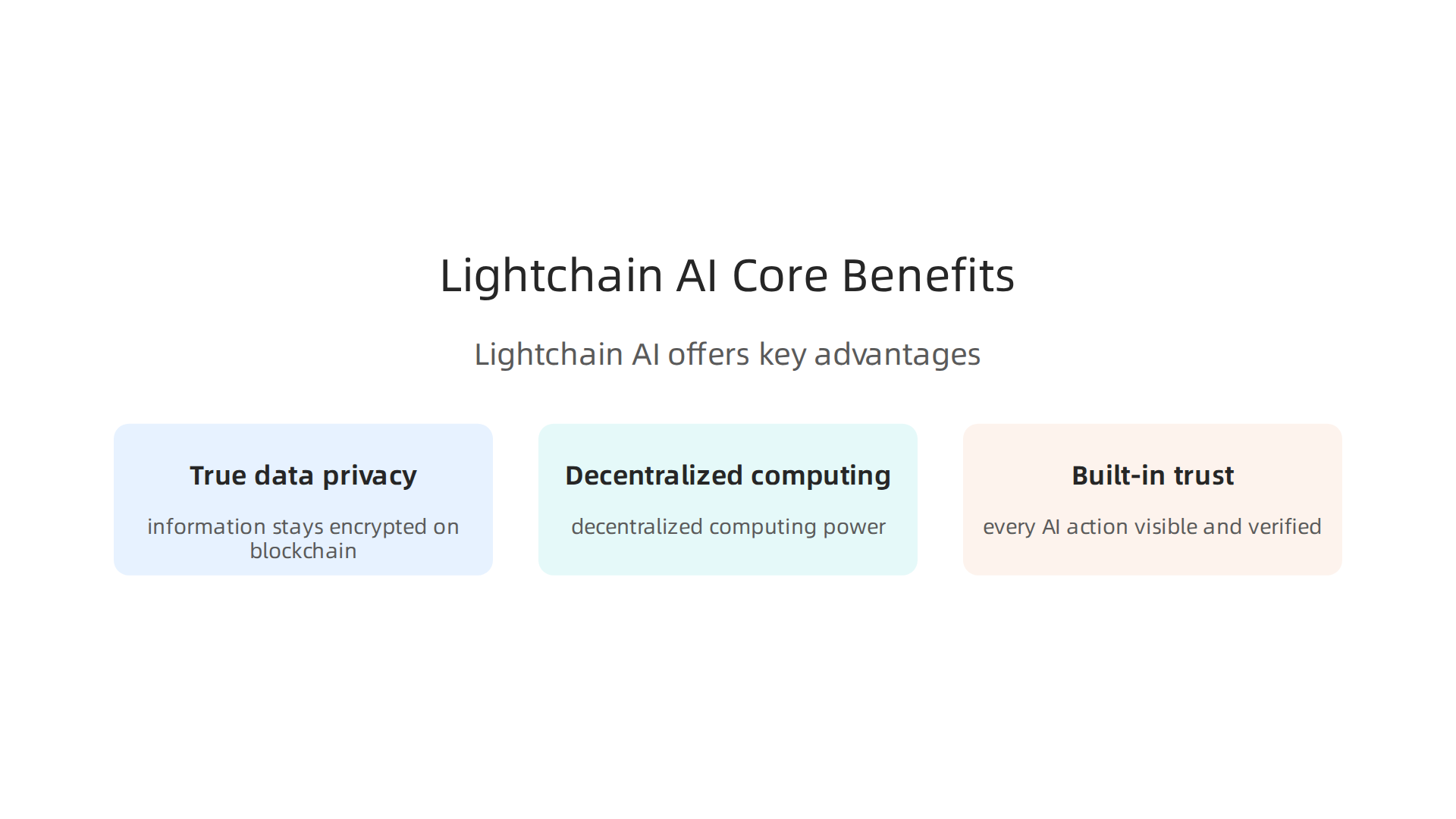
What makes Lightchain AI different from tools like Spark AI or Wave AI? Those are powerful in their own right, but they still rely on central servers. Lightchain AI flips the model. It gives you:
- True data privacy – your information stays encrypted on the blockchain
- Decentralized computing power – no single server can bottleneck or fail
- Built-in trust – every AI action is visible and verified by the network
For startups and investors trying to navigate this fast-moving space, staying informed is key. If you want daily insights on AI developments like Lightchain AI, you can check out The AI Newsletter Worth Reading from The Deep View Newsletter.

It cuts through the noise and delivers clear updates straight to your inbox.
And if you are comparing different AI platforms for your next project, this guide on the best AI platforms for business in 2026 can help you make a smarter choice.
Lightchain AI is still early in its journey. But it represents a shift toward AI that is open, private, and owned by no one. In the sections ahead, we will break down exactly how the technology works, what risks to watch for, and whether it could be a good fit for your startup or portfolio.
What Is Lightchain AI?
If the introduction got you curious, let us go a level deeper. What exactly is Lightchain AI under the hood?
At its core, Lightchain AI is a decentralized protocol. Think of it as a foundation layer that connects blockchain security with artificial intelligence compute power. Unlike tools like Spark AI or Wave AI, which run on company-owned servers, Lightchain AI lives on a public network where no single entity pulls the strings.
The platform calls itself the first Layer-One blockchain where AI logic actually runs directly on the chain. As one industry analysis explains, this approach makes Lightchain AI the first Layer-One where AI logic lives and breathes on-chain. That is a big deal because it means every AI calculation happens in a transparent, verifiable environment. No hidden steps. No black box decisions.
Here is how it works in simple terms:
- Blockchain layer handles security, consensus, and record keeping
- AI layer processes computations using the Artificial Intelligence Virtual Machine (AIVM)
- Governance layer lets the community vote on changes and upgrades
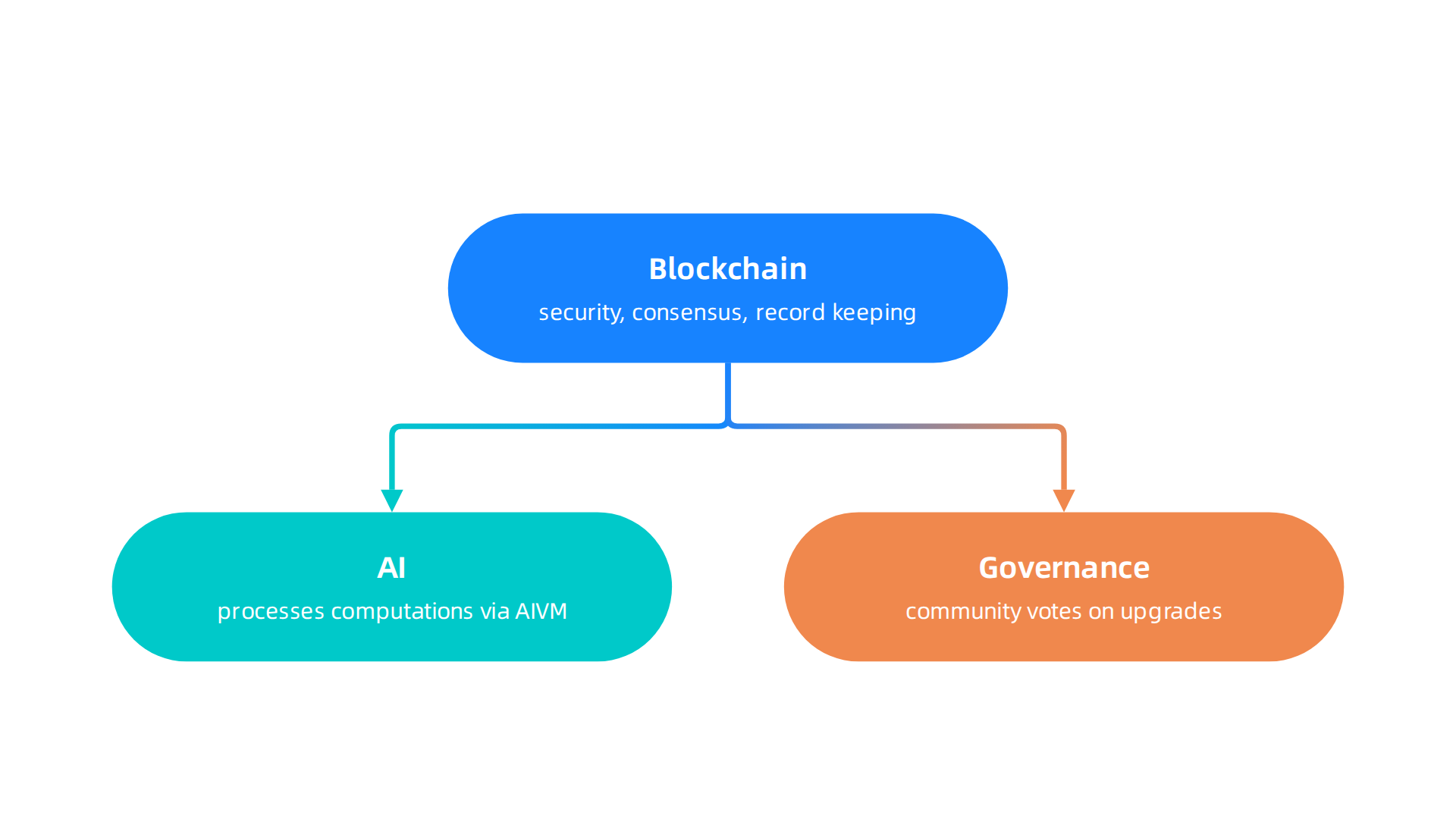
This three-part structure is what makes Lightchain AI different from a regular AI cloud service. Your data does not sit on Amazon or Google servers. It stays encrypted on a distributed ledger. And because the ledger is public, anyone can verify that the AI did what it claimed to do.
The goal is simple: democratize access to AI resources. Right now, building and running AI models costs a fortune. Only big tech companies and well-funded startups can afford the compute power.

Lightchain AI wants to change that by letting anyone contribute computing power to the network and get rewarded for it. That opens the door for smaller teams to build personal AI tools without needing millions of dollars in hardware.
For startup founders evaluating new infrastructure, understanding how to evaluate different tech stacks matters. You can check out this practical guide on how to evaluate AI platforms for your startup in 2026 to see how Lightchain AI compares to traditional options.

The transparency piece is just as important. Every AI action on the Lightchain AI network is recorded and time-stamped. If a model makes a bad prediction or behaves unexpectedly, developers can trace exactly what happened. That kind of accountability is rare in the current AI world, where most systems are closed off and unverifiable.
So Lightchain AI is not just another AI tool. It is an infrastructure play. A new way of building and running AI that prioritizes openness, fairness, and user control. In the next section, we will look at how the technology actually performs in real-world scenarios and whether it lives up to the hype.
Key Technological Innovations Behind Lightchain AI
Lightchain AI’s technology packs some serious upgrades over traditional AI infrastructure. Let us break down the two biggest innovations that set it apart.
High-Throughput AI Inference and Training. The Artificial Intelligence Virtual Machine (AIVM) is built to run complex AI computations directly on the blockchain. Unlike most platforms where AI logic runs on remote servers and only results are recorded, Lightchain AI executes inference and training workflows on-chain. This means every calculation is transparent and verifiable. The AIVM handles massive parallel workloads without slowing down, making it practical for real‑world AI applications. As described on the official Lightchain Protocol AI overview, the execution layer is designed for intelligent automation, inference, and decentralized applications from day one.

Novel Consensus for Trustless Coordination. Coordinating AI tasks across a distributed network without a central authority is tricky. Lightchain AI solves this with a consensus mechanism that lets validators agree on which computations happened and whether they were correct. No single entity decides. Instead, the protocol rewards honest work and penalizes bad behavior automatically. This creates a trustless environment where developers can run AI models without worrying about hidden manipulation. An early Lightchain AI decentralized approach overview highlights how blockchain‑powered coordination opens up AI to anyone, not just big cloud providers.
For founders comparing different AI infrastructure options, our guide on AI platforms for startups and enterprises compared offers a broader look at what is available in 2026.
To stay on top of AI breakthroughs like Lightchain AI, The AI Newsletter Worth Reading delivers clear daily updates straight to your inbox.
Architecture and Design
The way Lightchain AI organizes its internal systems is what makes all those innovations work in practice. Instead of one tangled mess, the platform uses a modular layer structure. Think of it like a well-organized kitchen where prep, cooking, and cleanup each have their own dedicated space.
Separate layers for separate jobs. Lightchain AI splits data storage, computation, and validation into distinct modules. Data lives in its own layer where it stays safe and accessible. Computation happens in a separate zone optimized for speed. And validation runs independently to check that everything is correct without slowing down the other parts. This separation means each layer can scale on its own. If the network needs more compute power, that layer expands without touching the storage or validation systems. It is a smart approach that many new platforms are adopting, and Lightchain AI is positioning itself as a go-to option for developers who want clean, modular infrastructure. The Fintech Weekly coverage of Lightchain AI entering its Builder Era explains how this architecture attracts developers tired of clunky alternatives.
Smart contracts run the show. Once the layers are in place, smart contracts take over the job of orchestrating AI model execution. They decide which node handles which task, route data between layers, and make sure the whole process runs smoothly across the distributed network. No single server calls the shots. Instead, the contracts follow transparent rules that anyone can verify. This keeps the system fair and open while still being fast enough for real-world AI workloads.
If you are comparing different AI infrastructure options for your own projects, our practical guide on AI platform evaluation for startups breaks down what to look for in 2026.
Consensus Mechanisms for AI
Now that we have seen how Lightchain AI organizes its layers and uses smart contracts, let us look at how the network agrees on what is true. This is where consensus mechanisms come in.
Most blockchains waste energy on pointless math problems. Lightchain AI does something different. It uses a system called Proof-of-Computation (PoC). Instead of solving useless puzzles, nodes earn rewards by doing real AI work. When a node runs a model and returns correct results, it gets tokens. This turns the consensus process into something productive.
But how do we know the results are accurate? Lightchain AI uses verifiable computation. Every result comes with a cryptographic proof. Other nodes can check that proof quickly. If someone tries to cheat, the network catches it instantly. This removes the need for a central authority to approve everything.
Other platforms like Spark AI and Wave AI take different approaches to consensus. But Lightchain AI is built specifically for AI workloads. Its PoC mechanism directly rewards the work developers actually need. According to the Lightchain Protocol AI overview, this verifiable computation model keeps results trustworthy without slowing things down.
If you are evaluating AI blockchain platforms and want to understand how different consensus models stack up, read our full comparison of AI platforms 2026 compared for startups and enterprises.
Keeping up with all these AI blockchain innovations can be overwhelming. For daily insights, get clear daily AI updates from The Deep View Newsletter. Subscribe to The AI Newsletter Worth Reading.
Real-World Applications and Use Cases
All this talk about consensus and smart contracts is interesting. But what does it actually do for you? Let us look at two real places where Lightchain AI makes a difference.
Healthcare data analysis and secure medical research
Hospitals and labs deal with sensitive patient data. They cannot just throw it onto a public blockchain for anyone to see. But they still need to run AI models on that data to find patterns, predict diseases, and speed up drug discovery.

Lightchain AI solves this with something called federated learning. The data stays in the hospital. The AI model travels to the data. Nodes train on the data locally and send back only the model updates. No one sees the raw patient records. The verifiable computation we talked about earlier makes sure the results are correct. So researchers get accurate models without breaking privacy rules.
This is a huge deal for medical research. Imagine running a study across ten hospitals without ever moving patient files. You get better results because you have more data, but you keep everyone safe.
Financial modeling and fraud detection with transparent audit trails
Banks and fintech companies also have big needs. They want to spot fraud in real time. They want to model risk. But they also need regulators to trust their results.
Lightchain AI lets you run financial models on a network where every computation leaves a proof. If an auditor asks why a trade was flagged as suspicious, you can point to the exact model run and the verifiable proof. No one can argue with the math. This cuts down on manual audits and keeps the system honest.
The network also handles huge datasets without slowing down. That matters when you are processing millions of transactions per second.
Other platforms like Spark AI and Wave AI try similar things. But Lightchain AI is built from the ground up for these workloads. According to the Lightchain AI Price Prediction 2026-2030 guide, the platform’s design directly supports secure, verifiable AI work at scale.
If you are comparing options, check out our full guide on how to evaluate AI platforms for your startup in 2026. It will help you decide which model fits your business.
The Lightchain AI Ecosystem: Key Players and Projects
You know how a city grows? First a few buildings go up. Then more people come. Roads get built. Before long, you have a whole neighborhood. That is what is happening with the Lightchain AI ecosystem right now.
A growing list of startups, developers, and enterprise partners are building on the protocol. The Lightchain Protocol AI ecosystem page shows how the platform connects AI, blockchain, and community governance for builders and users. This is not just one company. It is a whole network of people creating tools, apps, and services.
One big reason for the growth is the grant program. The Lightchain AI Grant Program offers up to $150,000 in total funding. Teams get $5,000 per milestone, plus technical support from the core team. This pulls in developers who want to build custom block explorers, DEXs, and other AI powered tools. It is a smart way to attract talent fast.
Major blockchain infrastructure providers are also integrating with the protocol. For example, BitMart has officially agreed to list the LCAI token. That gives the project more visibility and liquidity.

Analysts are paying attention too. According to one report, analysts expect Lightchain AI to surpass Cardano with a $3 price target by 2026. That kind of projection draws even more interest from investors and builders.
Other platforms like Spark AI and Wave AI have their own ecosystems. But the combination of a dedicated AI Virtual Machine and the Proof of Intelligence consensus gives Lightchain AI a unique edge. The infrastructure is purpose built for verifiable AI work at scale, which is exactly what enterprises and developers need.
If you are tracking which platforms are gaining real traction, check out our guide on top digital transformation companies 2026. It will help you spot the leaders worth watching.
The ecosystem is still early. But the pieces are falling into place. More teams, more integrations, and more real world use cases every quarter. If you want to keep up with the biggest shifts in AI and blockchain, stay informed with The AI Newsletter Worth Reading and get clear daily updates straight to your inbox.
Challenges and Considerations
Every new technology has growing pains. Lightchain AI is no different. Two big hurdles stand out as the platform tries to scale.
Scalability is a real test. AI workloads need massive computing power. Training a single large model can take weeks and cost millions. Running those tasks on a decentralized network is harder than on a centralized cloud. Lightchain AI’s Proof of Intelligence consensus helps, but handling thousands of AI jobs at once without slowing down is tough. Even established platforms like Spark AI and Wave AI face their own scalability limits. If you are thinking about building on or investing in any new AI blockchain, you need to understand the infrastructure limits. Our guide on how to evaluate AI platforms for your startup in 2026 can help you ask the right questions.
Regulatory uncertainty is another blocker. Decentralized AI platforms operate in a gray area. Governments are still figuring out how to regulate AI models, data privacy, and crypto tokens all at once. Lightchain AI’s mainnet launch has already seen delays, and a lack of trading liquidity makes its future uncertain, according to a detailed Coinspeaker report on the delays and lack of trading liquidity. Some critics have even raised scam allegations surrounding Lightchain AI, which adds to the trust challenge. Rules could change overnight and slow down adoption.
These challenges do not mean the project will fail. But they are real risks that founders and investors need to watch closely. The smartest teams plan for them early.
How to Evaluate Lightchain AI Investment Opportunities
So you have heard the buzz around Lightchain AI and you are wondering whether to get involved. That is smart. Every investment needs a clear head and a good checklist.

Let me walk you through two things to look at before you put any money in.
Start with the team and the roadmap.
The people behind a project matter more than the hype. Who is building Lightchain AI? What experience do they have with blockchain and AI? A strong technical team with a clear plan is a good sign. Check the official Roadmap for Lightchain Protocol AI to see what milestones have been hit and what is coming next. If deadlines keep slipping, that is a red flag. You also want to see third-party audits. Lightchain AI has public audit coverage from providers like Cyberscope and CertiK, which adds some transparency.
Then dig into tokenomics, governance, and community.
Tokenomics is how the token works. How many tokens exist? How are they distributed? Does the system have inflation or deflation built in? For Lightchain AI, you can look at the Lightchain AI Price Prediction 2026-2030 analysis to understand how supply and demand might play out.
Governance matters too. Who gets to make decisions about upgrades and changes? A decentralized project should give token holders a real voice, not just a vote that never counts. And community support is a big clue. Active forums, real discussions, and a growing user base are good signs. Empty chat rooms with bots are not.
One simple way to stay ahead of fast-moving developments is to get daily, curated news instead of trying to track everything yourself. The AI Newsletter Worth Reading delivers clear daily AI updates straight to your inbox, so you never miss important shifts in projects like this.
Once you have reviewed the team, the roadmap, the tokenomics, and the community, you will have a much clearer picture of the real opportunity. For a deeper look at how to weigh different AI blockchain platforms, check out our guide on how to evaluate AI platforms for your startup in 2026.
Future Outlook and Predictions
Looking ahead, the picture for Lightchain AI and similar projects becomes even more interesting. Analysts believe decentralized AI could capture a big piece of the overall AI market by 2030. The reason is simple. People want AI that is transparent, fair, and not run by a single company.
Right now, most AI runs on servers owned by big tech firms. That creates real problems with trust, privacy, and censorship. Decentralized AI fixes that by spreading computing power across many nodes. No single entity controls the rules. This model is especially important for industries like healthcare and finance where data privacy is non-negotiable.
Projects like Spark AI, Personal AI, and Wave AI are all building in this space, each with a slightly different angle. But a key factor that will determine long-term winners is interoperability. For Lightchain AI to succeed over the next decade, it needs to talk to other blockchains and AI systems. Think of it like the early internet. The first networks were closed. The ones that won were the ones that connected with others. The same will happen with AI blockchains. Projects that build bridges between different chains and AI models will have a big advantage over those that stay isolated.
Some long-term price outlooks suggest significant potential if adoption grows. The Lightchain AI Crypto Price Prediction for 2025, 2030, and 2035 from Binance explores what sustained utility and market adoption could mean for the token. But price is only one piece of the puzzle. What matters more is whether the project delivers on its roadmap and attracts real users.
To understand how AI is reshaping entire industries and what that means for funding, check out our overview of AI companies in 2026 for founders and investors.
Summary
Lightchain AI is a decentralized Layer‑One protocol that runs AI logic directly on a public blockchain using an Artificial Intelligence Virtual Machine (AIVM) and a Proof‑of‑Computation consensus model. The article explains how its layered architecture separates storage, computation, and validation, and how smart contracts and verifiable computation create transparent, auditable AI workflows. It reviews technical innovations that aim to deliver high‑throughput inference and training on‑chain, then maps concrete use cases in healthcare and finance where privacy and auditability matter. The piece also covers the growing ecosystem—grants, developer activity, and token listings—while warning about real risks like scalability limits and regulatory uncertainty. For founders and investors it provides an investment checklist focused on team, roadmap, tokenomics, governance, and community health. Finally, the article looks ahead to interoperability and adoption challenges that will determine long‑term winners in decentralized AI. After reading, you’ll understand how Lightchain AI differs from centralized AI platforms and how to evaluate whether it fits your technical or investment strategy.