
How Generative AI Assistants Are Reshaping Startup Innovation and Funding in 2026

Introduction
Have you felt the pressure to keep up with how fast artificial intelligence is changing? You are not alone. In just three years, the number of businesses using AI has nearly doubled, growing from 34% in 2023 to 67% in 2026. The biggest reason for this jump is the rise of generative AI tools that work like helpful assistants.
Generative AI adoption alone has more than doubled year over year. In fact, over 75% of organizations now report using AI in at least one business function. Companies that invest in these tools see strong returns. The latest data shows a 3.7x ROI for every dollar spent on generative AI and related technology.
So what does this mean for you as a startup founder or investor? Generative AI assistants are becoming pivotal tools that can help you move faster, think bigger, and make smarter decisions.

These tools do more than just write text or create images. They help you spot patterns in data, brainstorm new product ideas, and speed up everyday tasks that used to eat up hours of your day.
The pace of innovation keeps accelerating, and the startups that wait on the sidelines risk falling behind. That is why understanding how to use these assistants matters so much. This article explores how generative AI assistants can boost your creativity, simplify your operations, and uncover opportunities you might miss otherwise. We share evidence-based insights and actionable advice you can use right away.
If you want to stay ahead of the curve, consider learning more about building an innovation center that supports long term growth. It is one way to make sure your team has the structure and culture needed to experiment with new technology.
The world of AI changes fast. But you do not need to track every update alone. Stay informed with clear, daily AI insights from a trusted source. It helps you cut through the noise and focus on what actually matters for your startup or investment strategy.
What Are Generative AI Assistants? Defining a New Innovation Paradigm
So, what exactly are generative AI assistants? The easiest way to think about them is to compare them to the older type of artificial intelligence you might already know.
Traditional AI is great at analyzing data. It can sort spreadsheets, predict customer churn, or flag suspicious transactions. But it doesn’t create anything new. It just finds patterns in the numbers it already has.
Generative AI assistants are different. They create. Instead of just reading information, they can write a blog post, design a logo, draft an email, or even suggest a new product feature. They learn from huge amounts of text, images, code, and video, and then use that learning to generate entirely original content.
This is a big shift. Think of it this way: traditional AI is like a really smart librarian who can find the exact book you need. A generative AI assistant is more like a writer who can turn your idea into a full story.
The data backs this up. In 2026, over 75% of organizations now use AI in at least one business function, and generative AI adoption alone jumped from 33% to 71% in just a couple of years. Companies also report a strong 3.7x return on every dollar spent on generative AI technologies. That kind of growth tells you these tools aren’t just a passing trend.
Generative AI assistants come in a few common forms:
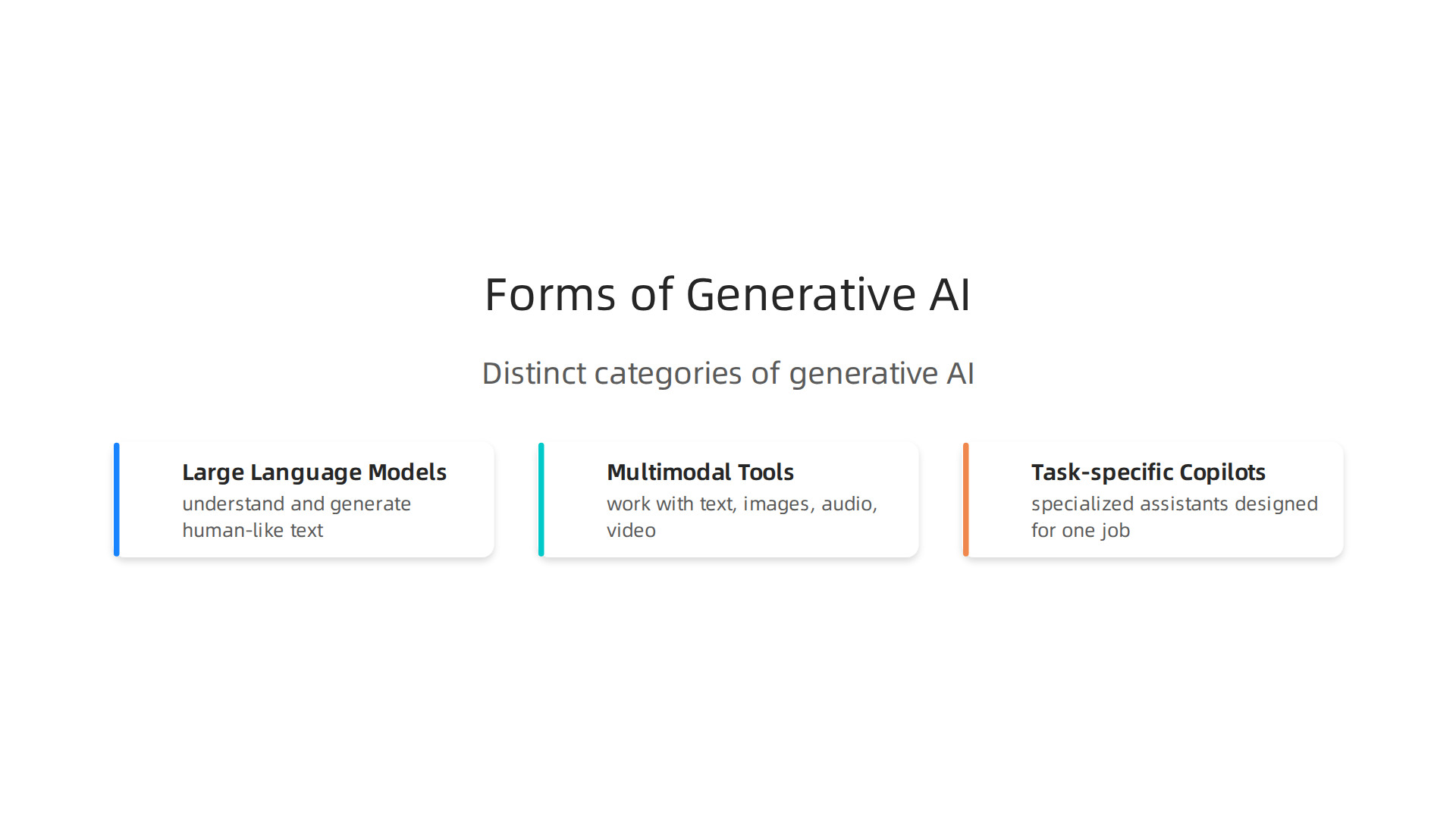
- Large Language Models (LLMs): Tools like ChatGPT and Claude that understand and generate human-like text. They are great for writing, brainstorming, and answering questions.
- Multimodal Tools: These can work with text, images, audio, and video all at once. Think of assistants that can look at a hand-drawn sketch and turn it into a functional website layout.
- Task-specific Copilots: These are specialized assistants designed for one job, like helping you write code, create marketing copy, or analyze financial data. Many founders now use them for daily tasks.
For startup founders and investors, understanding these tools is the first real step toward using them strategically. If you know what a generative AI assistant can actually do, you can spot where it fits into your workflow, your product, or your portfolio. This isn’t about replacing human creativity. It is about amplifying it.
The landscape shifts every month. New tools appear, and old ones get smarter. That is exactly why staying current matters so much. If you want to keep your finger on the pulse of AI developments, consider getting clear daily AI updates from a trusted source. It helps you cut through the noise and focus on the tools that actually move the needle for your startup or investment strategy.
Idea Generation and Rapid Prototyping
Now that you know what generative AI assistants are, let’s look at one of their most powerful uses: turning a vague thought into a real prototype.
In the past, coming up with product ideas took weeks of brainstorming and market research. Today, generative AI assistants can generate hundreds of viable product concepts in minutes.

Tools like ChatGPT and Gemini can write marketing copy, design product descriptions, and even generate the first version of your code. This lets you test an idea before you spend any serious money.
The speed here matters a lot. Startups that use these generative AI tools report faster time-to-market and lower development costs. Instead of hiring multiple software development companies for startups to build a minimum viable product, you can often build a working prototype yourself using AI. This changes the game for ai startup funding too, because early-stage investors love seeing a prototype instead of just a pitch deck.
For example, real-world use cases show companies using generative AI to create digital artwork and develop new marketing content quickly ABI Research. These aren’t theoretical benefits. They are happening right now.
If you want to stay on top of the latest generative ai assistants and how they can improve your workflow, The Deep View Newsletter delivers practical daily updates straight to your inbox. You can also discover startup project opportunities using AI and data analytics to see how others are already doing it.
Market Research and Competitive Analysis
The same generative ai assistants that help you build prototypes can also help you understand your market. Instead of spending days reading competitor websites and customer reviews by hand, you can feed that data into a generative AI tool. It scans hundreds of pages in minutes and pulls out the patterns you need.
These tools are great at spotting gaps in the market. For example, you might ask an assistant to analyze five competitor pricing pages. It can tell you what features they all miss and where customers complain most. That is a direct opportunity for your startup. Real-world organizations already use generative AI to synthesize market intelligence and identify emerging trends quickly Google Cloud.
For investors, this is powerful too. An AI-generated competitive landscape can speed up ai startup funding due diligence. You get a clear picture of who is winning, who is struggling, and where the real demand sits.
To learn more about how AI can dig deeper into data for smarter decisions, read our guide on DeepSearch AI.
If you want daily updates on how generative AI is reshaping market research, The Deep View Newsletter delivers practical insights to your inbox.
Content Creation and Personalization
Creating content takes time. For a small startup team, writing blog posts, social updates, and emails can eat up hours you do not have.
That is where generative ai assistants shine. They help you produce a wide range of content in minutes, from blog drafts to personalized email campaigns.
These generative ai tools can adapt their tone, style, and format for different audience segments. You can ask for a professional version for investors and a friendly version for customers. Businesses already use generative AI to create new marketing content and even write scripts ABI Research. The key is personalization at scale. Instead of writing one message to everyone, you can tailor each email or social post to specific groups. This lets you engage customers without needing a large marketing team.
For founders chasing ai startup funding, consistent and targeted content helps build credibility with investors. It shows you understand your audience and can communicate your vision clearly.
As you grow, you will want to make sure your AI generated content stays original and high quality. Tools that check for authenticity can help. Learn more in our comparison of Originality AI vs Genspark AI.
Want daily insights on how AI is changing marketing and content creation? Get clear daily AI updates from The Deep View Newsletter.
How Investors Are Evaluating Generative AI Assistants
You have been using generative AI assistants to create content and personalize messages. Smart move. But here is the thing: investors are watching closely too. They want to know if these tools actually solve real problems and make money. In 2026, venture capital funding for AI startups has hit record levels. The first quarter alone broke all previous records, driven by huge investments in AI compute and frontier labs Crunchbase News. But not every generative AI startup gets funded. Investors have become picky about where they put their money.
So what are they looking for? First, scalability. Can a generative AI assistant grow with a company without slowing down or breaking? Second, a proprietary data moat. If your startup has unique data that competitors cannot easily copy, that is a huge advantage. Third, clear ROI. Investors want proof that customers save time, cut costs, or earn more using your tool. These are the same criteria that top VCs use when evaluating deals Waveup.
There is another factor many founders miss. Investors now look at how a startup itself uses generative AI tools inside the company. If you build an AI assistant for others but still do everything manually in your own operations, that raises red flags. Smart VCs check your internal workflows. They want to see that you eat your own dog food. Using generative AI tools to speed up your development, marketing, and customer support shows you truly understand the product and its value.
For example, Y Combinator has funded over 140 AI assistant startups in 2026 Y Combinator. Many of them rely on AI to write their own pitch decks, generate market insights, and automate support. That kind of efficiency makes them more fundable.
If you are chasing that ai startup funding, you need to understand what investors are looking for. Learn more about the biggest investment companies of 2026 and their impact on startups to see where the money is flowing right now.
And if you want to stay ahead of these trends, get clear daily AI updates from The Deep View Newsletter. It helps you track exactly what investors are watching.
Implementing Generative AI Assistants in Your Organization
So you are ready to bring generative AI assistants into your organization. That is exciting. But here is the thing: rushing in without a plan can waste time and money. The key is to start smart and build from there.
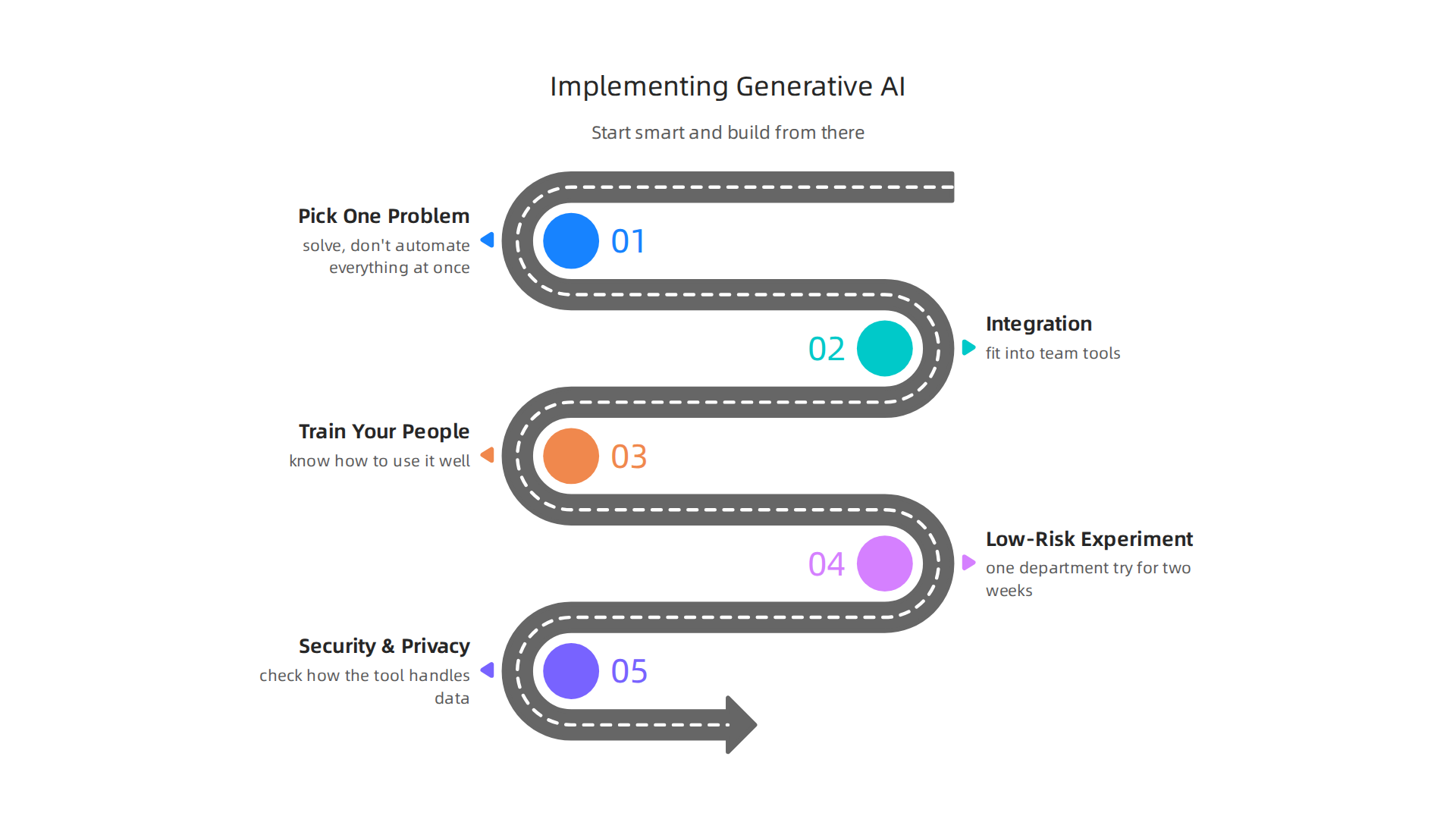
First, pick one clear problem to solve. Do not try to automate everything at once. Experts say you should align your AI initiative with a measurable business KPI from day one Techment. For example, maybe you want your support team to answer customer questions faster. Or you want your marketing team to draft social posts in half the time. Choose one use case and make it work well before adding more.
Next, think about integration. Your generative AI assistants need to fit into the tools your team already uses. If your sales team lives in a CRM, the AI should work inside that CRM. If your developers use Slack, the AI should join those conversations. When the tool fits naturally, adoption goes way up. Many startups use generative AI tools for drafting emails, summarizing meetings, or writing code GloriumTech.
Now, train your people. Even the best AI tool will sit unused if your team does not know how to use it well. Show them a few examples. Let them test it on real low-stakes tasks. Celebrate small wins. Training is not a one-time event. Keep showing new features as they appear.
Here is a practical rule: start with a low-risk experiment. Let one department try the AI assistant for two weeks. Measure the results. Did it save time? Did it improve quality? Use what you learn before rolling it out company-wide. This approach reduces risk and builds confidence.
Security and data privacy are critical. Some generative AI assistants send your company data to third-party servers. That is a big risk. Before you commit, check how the tool handles your data. Does it keep your information private? Can you delete it when you want? For startups handling sensitive customer data, this is a must-check. If you are unsure, consult with software development companies for startups that specialize in secure AI integration.
The bottom line? Generative AI assistants can transform your startup, but only if you implement them the right way. Start small, integrate well, and keep security front and center.
If you want to stay ahead of the fast changes in AI, get clear daily updates from The Deep View Newsletter. It helps you track what works and what does not.
Overcoming Challenges with Generative AI Assistants
So you have started using generative AI assistants. Things are moving faster. But here is the thing every founder needs to know. These tools come with real risks.
The biggest ones are hallucination, bias, and the temptation to depend on AI for critical decisions. Generative AI tools can sound very confident while being completely wrong. That is called hallucination. They can also repeat biases found in their training data. And if your team starts trusting the AI without checking, mistakes can slip through quickly. Businesses need to align their AI use with clear goals and stay aware of these common pitfalls Techment.
How do you fix this? You keep a human in the loop.
Always validate what the AI produces.

Use generative AI assistants for drafts, summaries, and ideas. But never let them make final calls on sensitive matters without a person checking the work. This is directly tied to strong enterprise risk management practices GloriumTech.
Here is a reality check for 2026. Investors are watching how you handle these challenges. When you pitch for ai startup funding, you will get asked hard questions. How do you prevent hallucination? What safeguards do you have against biased outputs? How do you validate the AI’s recommendations? VCs want to back startups that are transparent about their limitations and proactive about fixing them.
One practical step is using tools that help you verify AI-generated content. Understanding how different validation tools work can help your team stay accurate. Check out this comparison of Originality AI vs Genspark AI to see how startups are building trust in their AI workflows. The startups that win are the ones that move fast and check their work carefully.
If you want to stay ahead of these rapid changes, get clear daily updates from The Deep View Newsletter. It helps you track what works and what doesn’t when building with generative AI assistants.
Future Trends: Generative AI Assistants Shaping Innovation in 2026 and Beyond
Now that you know how to handle the risks, let’s look ahead. The future of generative AI assistants is exciting and full of opportunity. In 2026, these tools are becoming more specialized, more powerful, and more regulated. Here are the key trends your startup should watch.
Specialized AI assistants for specific industries. Generic chatbots are fading away. The new wave includes generative AI assistants built just for healthcare, finance, legal, and education. A healthcare assistant, for example, can help doctors review patient records and suggest treatment options. A finance assistant can analyze market data and flag risks. This specialization is driving rapid growth in the AI market, which is expected to reach over $900 billion by 2033 Coherent Market Insights. Startups that build tailored tools for a single industry often attract strong investor interest and ai startup funding.
Multimodal AI assistants become standard. Text only was just the beginning. In 2026, the best generative AI tools combine text, images, voice, and even video in one conversation. You can upload a photo, ask the AI to describe it, and get a spoken answer. This makes interactions feel much more natural. Organizations that prioritize transparency and accuracy will be best positioned to use these multimodal tools responsibly Forrester. If your startup needs to build a product that processes multiple data types, now is the time to experiment.
Ethical AI and regulation tighten. The days of wild west AI are ending. Regulations like the EU AI Act are moving into full enforcement, with general-purpose AI model provider obligations starting in 2025 and full compliance by August 2026 Dataforest. This means your generative AI assistants must have clear guardrails, bias checks, and explainable outputs. Founders who build ethical AI from day one will have a huge advantage when pitching to investors who care about risk management.
These trends are moving fast. The best way to stay ahead is to keep learning. For daily updates on what is shaping AI innovation, subscribe to The Deep View Newsletter. It gives you the clear insights you need to make smart decisions with generative AI assistants.
Want to see how other startups are using these trends? Check out how innovation centers are adopting AI to create new products and services.
Summary
This article explains how generative AI assistants—like large language models, multimodal tools, and task-specific copilots—are reshaping startups and investment decisions in 2026. It defines the technology, shows concrete uses for idea generation, rapid prototyping, market research, and scalable content personalization, and highlights the strong ROI and adoption trends driving the shift. The piece also covers what investors evaluate in AI startups (scalability, proprietary data, and demonstrable ROI) and gives a practical implementation roadmap: start with one clear use case, integrate into existing workflows, train teams, and run low-risk pilots. It warns about real challenges—hallucinations, bias, and data privacy—and recommends human oversight plus verification tools. Finally, it looks ahead to specialization, multimodal assistants, and tighter regulation, and points founders toward resources like innovation centers and daily AI updates to stay current.