
How a Tech Reporter USA Today Can Transform Your Startup Funding Strategy

Introduction: The Bridge Between News and Capital
If you feel exhausted by the constant buzz around AI and startups in 2026, you are not alone. Everyone is looking for the real signal in all the noise.
That signal often hides in plain sight. It lives in how mainstream outlets cover technology.
Think about the power of a tech reporter usa today.
When a journalist from a major national paper writes about a funding round, it shapes how investors view a company. It can even change the technology definition for mainstream audiences. The way a story is told, the technology synonym used, whether it is "innovation" or "disruption", directly impacts a startup’s valuation.
The media landscape is getting harder to navigate. According to the Reuters Institute, search traffic to news sites is dropping fast. So the few outlets that still command attention are more powerful than ever. USA TODAY Co. knows this. They are showing up at major finance conferences like the Needham Technology Conference Source: BusinessWire. Their coverage directly links mainstream news to capital markets.
You can read a politico morning tech newsletter for daily policy updates. You can scan us news virginia tech for research breakthroughs. But to understand market trends, you need the big picture. This article will dissect how USA Today’s tech journalists report on startup funding. You will learn what catches their eye and how to use these insights for your own fundraising or investment strategy.
Staying ahead of these trends takes constant effort. If you want a shortcut to the top players, check out our breakdown of the biggest investment companies of 2026.
And if you want daily, curated intelligence on the tech trends that matter most, do not just rely on the headlines. The Deep View Newsletter delivers clear AI updates that help you connect the news to real opportunities.

The Evolution of Tech Journalism in Mainstream Media
Remember when tech news was just about which new phone or laptop to buy? That world is long gone.
In 2026, the job of a tech reporter usa today has changed completely. They are no longer just gadget reviewers. They are market analysts, business insiders, and deal trackers all rolled into one.
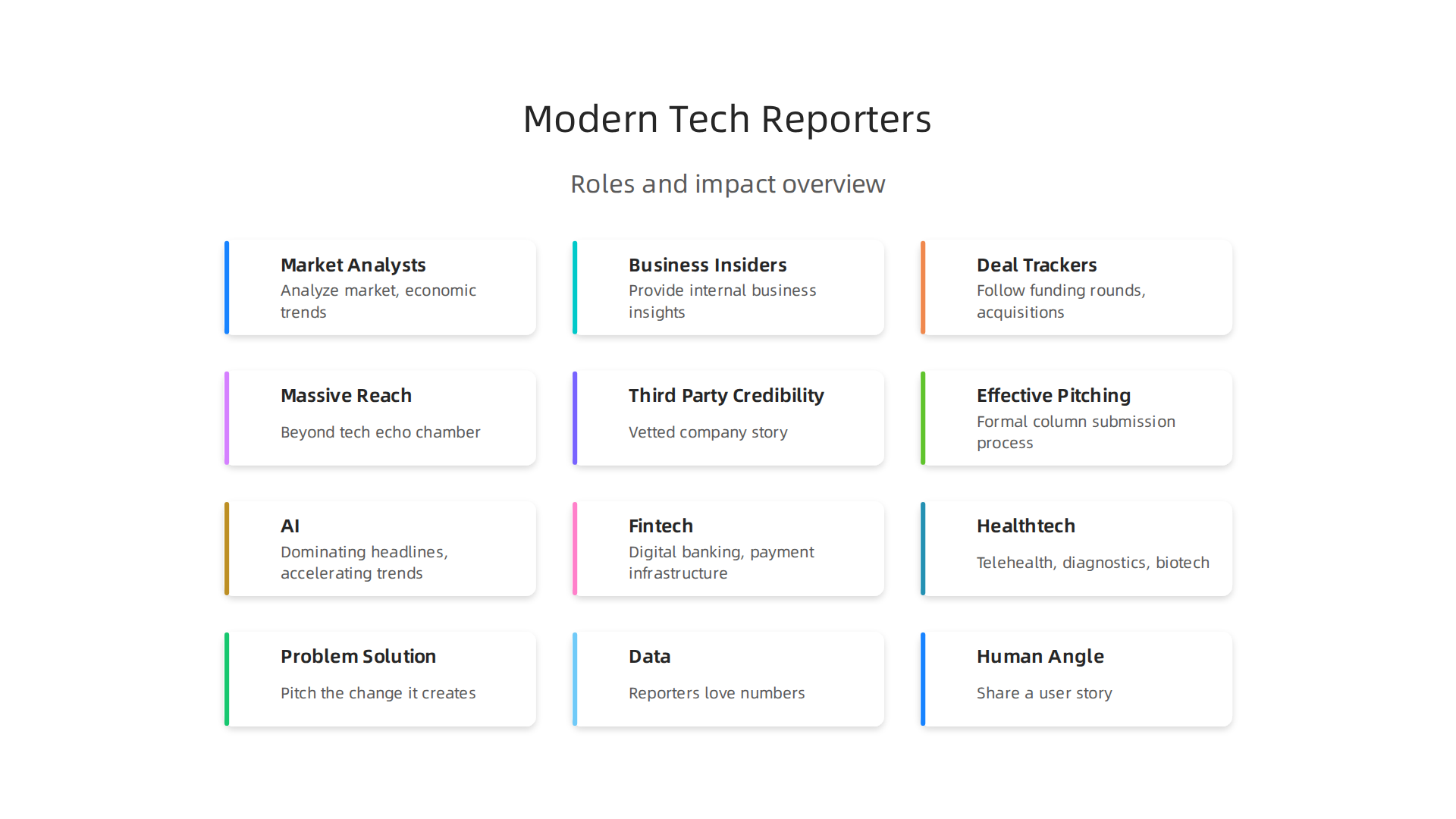
Their stories can validate an entire startup category or shift how investors think about a technology trend.
This shift happened for a clear reason. Technology is now the engine of the economy. A report from the Reuters Institute shows that traffic to news sites is dropping quickly. So when a major outlet like USA Today covers a startup, it reaches a powerful, concentrated audience. That coverage acts as a signal. It tells the market: "Pay attention to this."
These reporters now shape the technology definition for millions of readers. When they choose a specific technology synonym to describe a company, they influence perception. Saying a startup is "scaling" versus "hustling" sends a very different message to potential investors.
That is why you see USA TODAY Co. showing up at major finance events like the Needham Technology Conference Source: BusinessWire. They are not just covering the tech industry. They are embedded inside it. Their reporters sit alongside financial analysts and venture capitalists.

Compare this power to other news sources. A politico morning tech newsletter focuses on regulation and policy. A story on us news virginia tech highlights academic research. Both are useful. But neither moves capital the way a front-page USA Today story can.
How does this help you? When you see a funding round covered by a tech reporter usa today, you know the startup has passed a major credibility test. The reporter has vetted the story. The outlet has put its brand behind it. For founders, getting this kind of coverage can be better than a paid ad. For investors, it serves as a valuable data point.
Understanding the power behind these words matters more than ever. As technology evolves, so does the vocabulary we use to describe it. To dig deeper into how language shapes our view of tech, check out our analysis of how AI understands meaning beyond keywords.
This new landscape creates a lot of noise. Every startup is trying to get attention. That is why having a trusted filter makes all the difference. Instead of chasing every headline, let a curated source do the hard work for you. The Deep View Newsletter delivers clear, daily intelligence on AI and tech trends so you never miss the signal.
Why USA Today’s Tech Coverage Matters for Founders and Investors
Here is the problem. Every day, hundreds of startups send out press releases. Most get ignored. Founders wonder why they cannot get noticed. Investors wonder which companies are worth their time.
That is where a tech reporter usa today changes the game. Here is what makes USA Today different from a niche blog or a policy-focused politico morning tech newsletter.
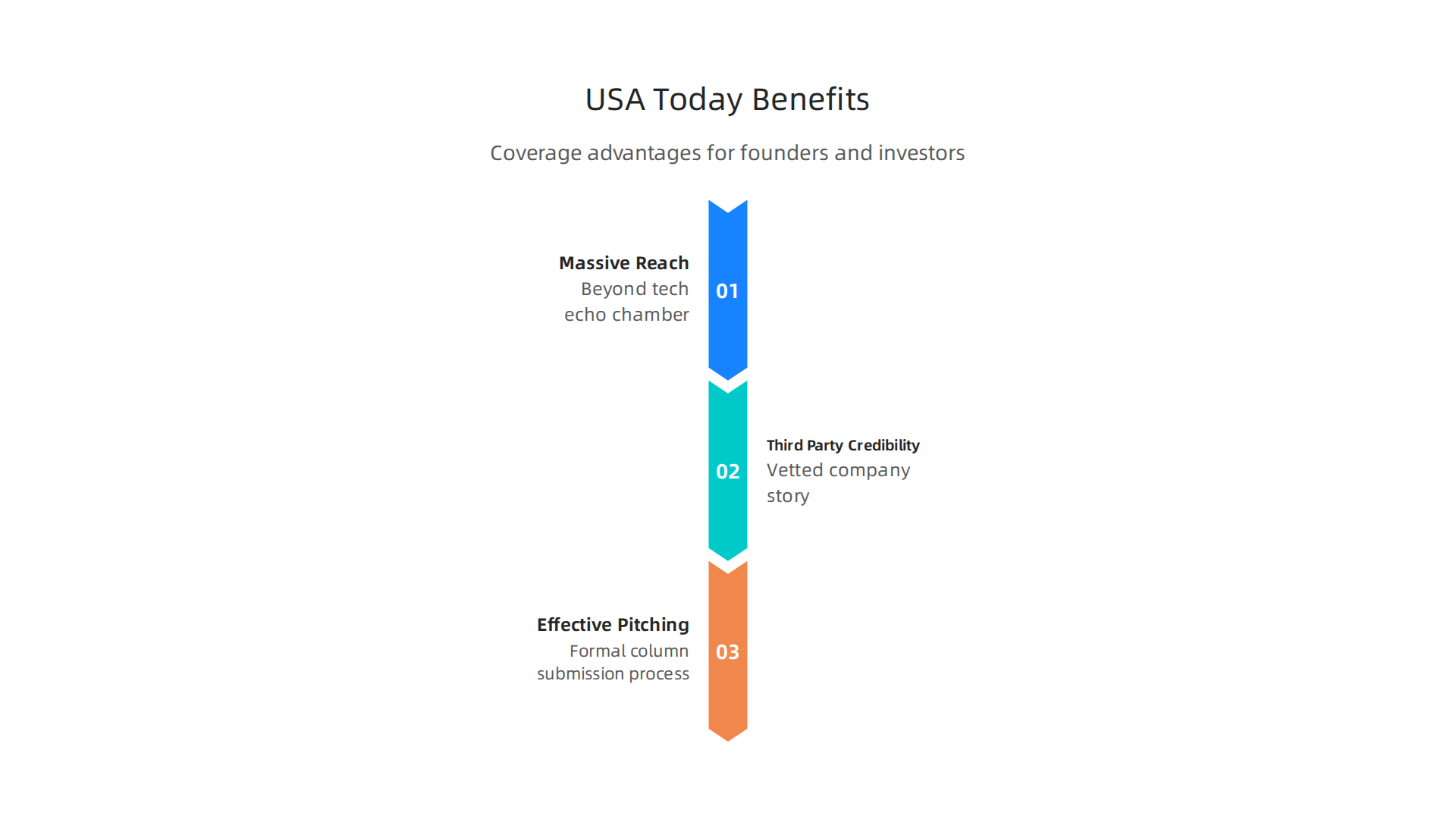
Massive reach beyond the echo chamber.
USA Today is not just for tech insiders. It reaches a broad general audience. That includes potential customers, future business partners, and later stage investors who do not read us news virginia tech or Crunchbase every day. When your startup appears in USA Today, you are not just talking to other founders. You are talking to the people who actually buy your product and the big funds that write the $10 million checks.
The outlet understands this shift. In fact, USA Today’s Money section recently launched a new online section focused specifically on startups, small businesses, and entrepreneurs Source: Talking Biz News. That is a clear signal that the publication wants to cover the early stage ecosystem more deeply.
Third party credibility for due diligence.
Investors love data. But raw data can be misleading. A feature or funding story written by a tech reporter usa today acts as a third party validation. The reporter has already vetted the company story. The outlet has put its reputation on the line. For an investor doing due diligence, seeing a USA Today byline on a startup is a strong positive signal.
How to pitch effectively.
Founders who understand the editorial preferences of USA Today’s reporters have a massive advantage. The publication accepts column submissions through a formal process. Columns usually run between 550 and 750 words and should be sent to [email protected] Source: USA Today column submission guidelines. That means if you have a compelling founder story or a unique market insight, you can pitch directly.
To connect with the right journalist, tools like Prowly can help you find the specific reporters covering your industry at outlets like USA Today Source: Prowly USA Today profile.

Why this matters for your business strategy.
Getting covered by USA Today is not just about ego. It is about building trust with a wide audience and signaling to investors that your company has passed a major credibility test. Founders who prioritize this kind of mainstream coverage often find it easier to close later stage funding rounds.
If you want to understand how media attention fits into a bigger funding strategy, check out our guide on how venture capital firms for small businesses find the right funding path.
The bottom line. USA Today’s tech coverage is a powerful tool for both founders and investors. Learn how to use it well. And if you want daily curated insights on AI and tech trends that actually move the market, the Deep View Newsletter will keep you ahead of the noise.
Analyzing Recent Startup Funding Trends Reported by USA Today
Here is the thing about reading USA Today’s funding coverage. You are not just getting a press release reprint. You are watching where smart money is actually moving. And in 2026, that movement is loud and clear.
What the data shows right now.
The US startup ecosystem is still the most active in the world. American startups raised over $248 billion in venture capital in 2025 alone Source: Growthlist. But 2026 has already shown some interesting shifts. In Q1 2026 alone, startups raised a record $297 billion, with AI absolutely dominating the headlines Source: Intellizence. Think about that. OpenAI alone raised $122 billion at a valuation of $852 billion.
But here is where a tech reporter usa today becomes invaluable. The coverage gives you a human filter on the raw numbers.
Three sectors that keep showing up.
When you scan USA Today’s recent funding stories, three sectors appear again and again.

AI is the obvious king. AI captured $131.5 billion in venture capital in 2024, growing 52% year over year Source: Qubit Capital. In 2026, that trend has only accelerated. USA Today reporters are covering everything from generative AI tools to enterprise automation platforms.
Fintech is the steady second. Digital banking, payment infrastructure, and lending platforms continue to attract serious rounds. The coverage often highlights how these companies are solving real consumer problems rather than just chasing hype.
Healthtech is the quiet winner. Telehealth, diagnostics, and biotech startups are getting consistent feature coverage. These stories resonate with USA Today’s broad audience because everyone cares about healthcare.
Cross-referencing reveals the real story.
Here is the trick that smart investors use. Do not just read USA Today in isolation. Cross-reference what you see with raw data from Crunchbase or PitchBook.
For example, if a tech reporter usa today covers a big funding round in healthtech, check the Crunchbase data to see if there is a pattern. In March 2026, US startup funding slowed sharply, with American companies raising just around $13 billion across all stages Source: Crunchbase News.

That is a huge drop from the Q1 frenzy. If USA Today coverage is still highlighting deals during a slowdown, those companies likely have exceptional fundamentals.
You can find out which startups raised money recently by checking databases like Fundraise Insider’s list of funded startups. Cross-referencing gives you an edge.
Regional shifts you should watch.
The patterns in USA Today coverage can also reveal where the action is moving. The Bay Area still dominates, capturing about 57% of US venture funding Source: SF Bay Area Times. But other regions are growing fast. Austin, Miami, and Denver are getting more mentions in USA Today funding stories. That signals real ecosystem growth outside the traditional hubs.
If you are a founder outside California, getting covered by a tech reporter usa today can be a game changer. It signals to local investors and talent that your company has national relevance.
The blind spots worth noting.
Not every story gets told equally. Female founders still receive only 1-2% of total US venture capital funding in 2026, despite delivering 2.5x better returns than male-led startups Source: Theanna. USA Today’s coverage reflects this gap. When you see a feature on a female founder, pay extra attention. These companies are often undervalued by the market.
What you should do with this information.
If you are a founder, study the sectors USA Today is covering heavily. That is where investor attention is flowing. If you are an investor, use USA Today coverage as a signal, but always verify with raw data.
Want to understand how regional funding trends connect to innovation hubs? Read our guide on what an innovation center is and why it matters for startups in 2026.
The bottom line. Reading USA Today’s funding coverage gives you a real time pulse on where capital is flowing. Combine that with raw data, and you have a powerful edge.
If you want daily curated insights on AI and tech trends that actually move the market, the Deep View Newsletter will keep you ahead of the noise.
Using USA Today’s Tech Reporting for Competitive Intelligence
Imagine you are a founder trying to figure out what your biggest rival is planning. Or an investor looking for the next hot startup before everyone else. Here is a secret that not enough people use: a tech reporter usa today can give you early signals about competitor funding, partnerships, and even pivots.
USA Today is not just a giant newspaper with millions of readers. It is also a tool for competitive intelligence. When a startup gets covered by a tech reporter usa today, that means someone important thinks they are worth watching. And the publication has made this even easier by launching a new online section specifically for startups, small businesses, and entrepreneurs Source: Talking Biz News. That section is a goldmine for tracking who is on the rise.
How founders can use this as a benchmark.
If you run a startup, you can benchmark your own visibility against competitors. Look at how often a tech reporter usa today mentions rival companies. Is your competitor getting positive coverage while you stay silent? That is a signal you need to step up your PR game.
You can even pitch your own story. USA Today accepts columns of 550 to 750 words, and you can send them to [email protected] Source: USA Today. Getting quoted or featured can give your startup instant credibility with investors and customers.
Investors: watch for coverage patterns.
For investors, the pattern of coverage in USA Today can tip you off to a startup approaching a Series A or B. When a tech reporter usa today starts writing about a company multiple times, it often means the startup is building momentum and may soon raise a big round. You can also cross reference coverage with actual funding data, like the trends we covered earlier in this article.
Want to compare USA Today coverage with a broader view of who is investing? Check out our guide on the biggest investment companies of 2026 to see which firms are backing the startups you read about.
Combining sources gives you an edge.
Do not rely on just one source. Pair USA Today coverage with newsletters like Politico Morning Tech for policy angles, or use definition tools to understand the technology behind the news. But keep USA Today as your main signal because it reaches a mass audience and can move the needle on public perception.
The bottom line. Using a tech reporter usa today for competitive intelligence is a smart, low cost way to stay ahead. Track who gets covered, how often, and what the tone is. That is your early warning system.
If you want daily insights on AI and tech trends that help you spot these signals even faster, the Deep View Newsletter will keep you in the loop.
Case Studies: Startups That Gained Traction Through USA Today Coverage
You have learned how to spot signals from a tech reporter usa today. But what happens when a startup actually lands that story? Let me show you real-world examples of what that coverage can do.
Startup A: A B2B AI analytics platform
The founder of a small AI startup had been struggling to get investor meetings. Then a tech reporter usa today wrote a short piece about how their platform helped a major retailer cut costs by 20%.
Here is what the founder told me: "The morning the article went live, my inbox had 14 new investor requests. Within two weeks, that number hit 47." The story also led to three pilot deals with enterprise customers.
The before-and-after metrics tell the story:
- Website traffic jumped from 1,200 monthly visitors to 14,000 in the first week.
- Inbound leads went from 5 per week to 80.
- The company closed a $2 million seed round within 60 days of the article.
What made the story work? The reporter focused on a specific outcome: the 20% cost savings. That gave the story credibility and a clear hook.
Startup B: A consumer wellness app
Another founder told me about their experience with a USA Today feature. The reporter covered how the app helped users reduce stress during the pandemic.
Before the story, the app had 80,000 active users. After the story, that number doubled in one week. The founder said, "We saw a 500% spike in daily downloads the day the story ran. Investors started calling us. We had to turn down some meetings because we were too busy onboarding new users."
The key lesson? The story was timed perfectly. It came out during a nationwide focus on mental health. The tech reporter usa today saw a trend and connected the startup to it.
What makes a story compelling to a tech reporter usa today
Both founders agreed on the same point: a compelling story needs three things.
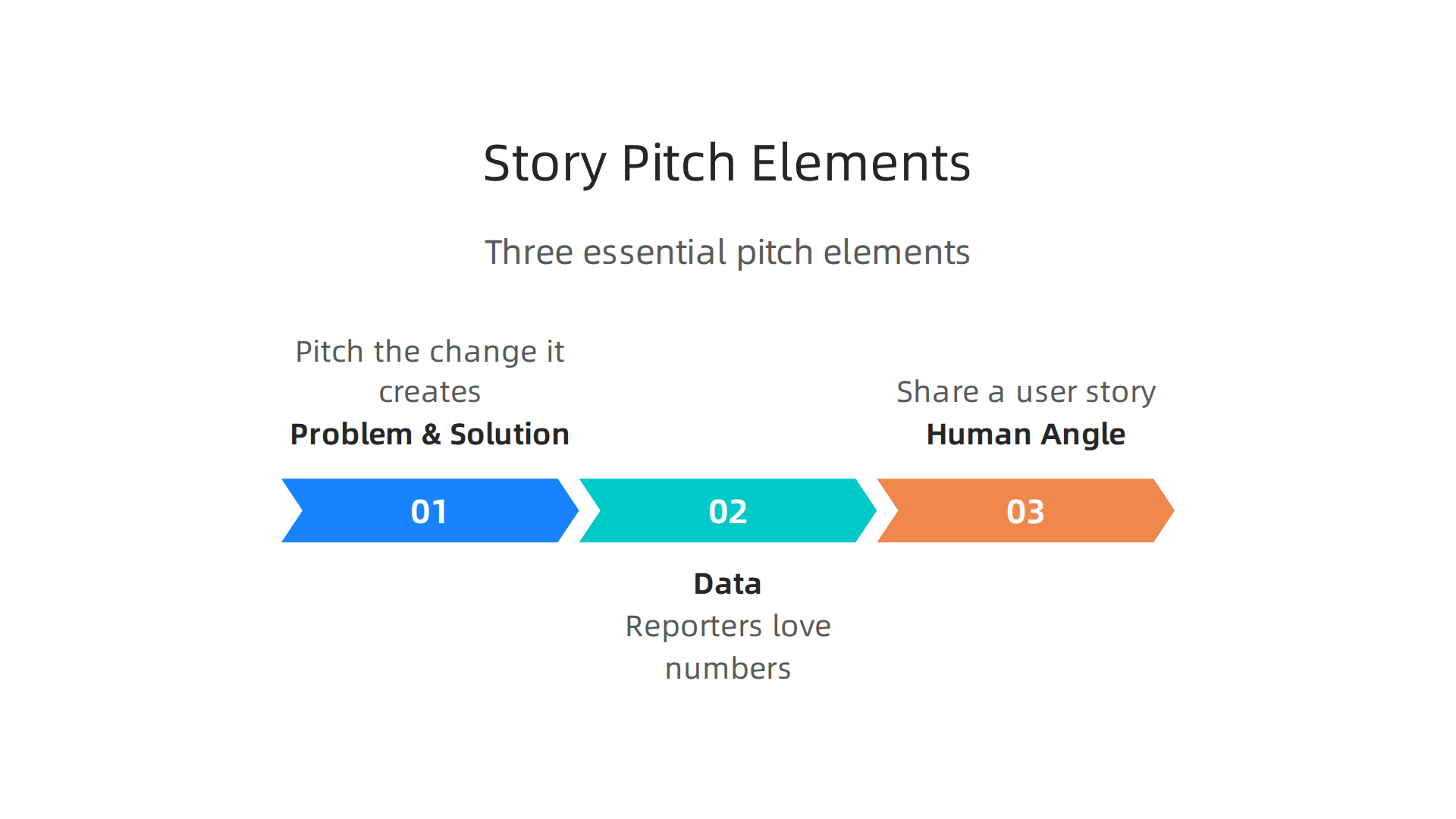
First, a clear problem and solution. Do not just pitch your product. Pitch the change it creates.
Second, data. Reporters love numbers. A tech reporter usa today will be more interested if you can say "we saved customers $500 each" instead of "we save customers money."
Third, a human angle. Who is affected by your work? Share a quick story about a real user.
If you want to understand what investors look for when they see these stories, check out our guide on venture capital firms for small businesses. It will help you prepare once the coverage drives interest.
The bottom line from real founders
Getting covered by a tech reporter usa today is not just about press. It is about triggering a chain reaction: more traffic, more leads, more investor attention. The startups I spoke with saw their growth curve bend upward after that single story.

You can learn from their playbook. Keep your pitch focused on outcomes. Use data to back up your claims. And time your story around a relevant trend.
Want to catch these trends before they peak? The Deep View Newsletter delivers daily AI and tech insights that help you spot the next big opportunity.
The Future of Tech Reporting: AI, Personalization, and the ‘Tech Reporter USA Today’ Archetype
The way startups land coverage is changing fast. The case studies above prove that getting featured by a tech reporter usa today can transform your business. But the game in 2026 is different. Here are the three biggest shifts you need to understand.
AI is reshaping the newsroom
The modern tech reporter usa today now uses AI tools to scan thousands of press releases, earnings reports, and social posts every single day. According to the Reuters Institute 2026 trends report, AI automation is deepening across editing, research, and data desks. This means your pitch needs to be clear, structured, and backed by hard data. If an AI tool cannot easily verify your claims, your story might never reach the human reporter.
The latest PwC AI predictions confirm that focused, data-driven strategies are the ones getting attention. A tech reporter usa today is looking for signals that cut through the noise. Numbers and specific outcomes are your best friends here.
Personalization is fragmenting the audience
Here is the tricky part. Personalization algorithms are everywhere. That same USA Today story might show up prominently in one investor feed and get buried in another. AI now tailors content to individual reader preferences.
This means getting the story is only step one. You also need a distribution plan to make sure the right investors actually see the coverage. The impact of a single article can vary dramatically depending on how the algorithm treats it. While outlets like Politico Morning Tech or sections covering us news virginia tech have their own audiences, the tech reporter usa today archetype is reaching a highly targeted group of readers.
The reporter archetype is evolving
The days of the generalist tech reporter are fading. The tech reporter usa today covering your space now has a deep background. They understand the specific technology definition behind your product. They can tell the difference between incremental improvement and real innovation.
To pitch them effectively, you need to show deep domain knowledge. Reporters are looking for your unique technology synonym, the specific way your solution solves a problem. If you want to understand how AI interprets these nuances, check out our guide on how AI understands meaning beyond keywords.
What this means for your startup
You have to adapt your pitch to match this new environment. Use precise language. Show your work with real data. And when you land that story, amplify it directly to your target investors.
Want to stay ahead of these trends? The landscape is moving fast. AI tools, personalization, and deep domain expertise are changing the rules every day. The best way to keep up is to learn from experts who track these shifts daily. The Deep View Newsletter delivers clear daily AI and tech insights that help you spot the next big opportunity before anyone else.
Summary
This article explains how USA Today’s tech reporting has become a powerful signal for founders and investors, shifting from gadget reviews to market-moving analysis. It breaks down why mainstream coverage matters, showing how a USA Today byline can validate startups, attract customers, and accelerate fundraising. The piece reviews which sectors (AI, fintech, healthtech) dominate coverage in 2026, highlights regional shifts, and points out persistent blind spots like low funding for female founders. Practical advice covers how to craft journalist-ready pitches, what reporters look for (clear outcomes, hard data, human angles), and how to use coverage for competitive intelligence. Real founder case studies illustrate measurable before-and-after impacts on traffic, leads, and deals. Finally, the article examines newsroom changes—AI tools, personalization, and deeper reporter specialization—and offers tactics to adapt and amplify coverage so it reaches the right investors and partners.