Advance Funding for Startups 2026 Fast Options True Costs and Alternatives

Introduction: Why advance funding matters for startups in 2026
Starting a new business is exciting, but it often comes with a big challenge: getting enough money to grow.

Many startups face times when they need cash quickly to keep things going. Maybe they need to pay their team, buy supplies, or launch a new marketing plan. Waiting for big investment deals or traditional bank loans can take a long time, sometimes months. This creates a gap where a business might struggle even if it has a great idea.
This is where advance funding comes in. In 2026, these funding choices are becoming a key way for startups to get the money they need, fast. It’s a type of financing that helps fill those short-term cash gaps without the long waits or strict rules of older funding methods. The world of money for businesses is changing quickly, with new tools and ideas making it easier to get scalable capital in different ways. In fact, many reports show that non-bank funders are now leading the way for smaller deals, making advance funding more popular than ever 2026 Small Business Funding Trends Report.
So, who benefits most from advance funding?
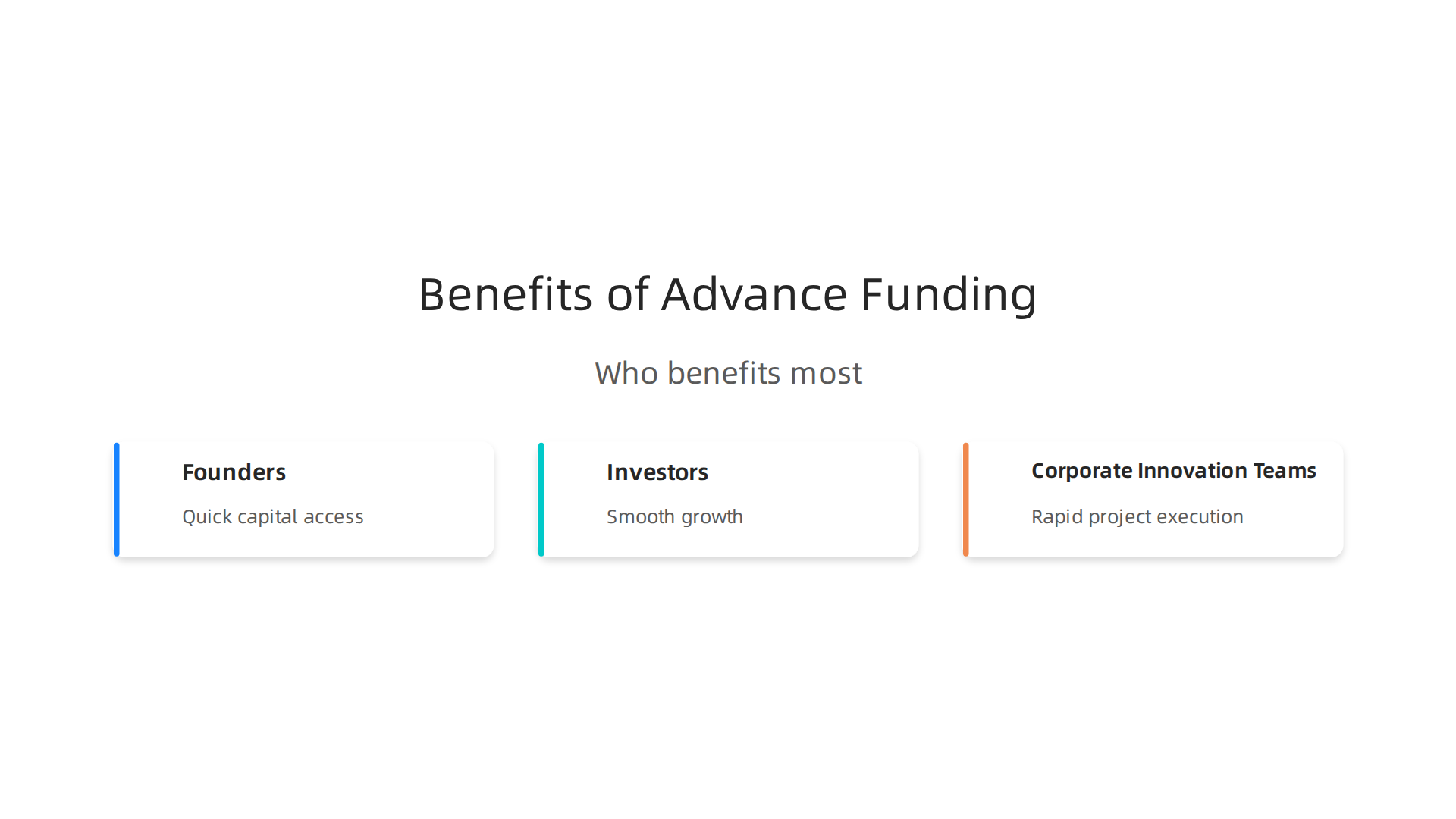
- Founders: They get quick access to cash to run their business without having to give away a part of their company. This means they keep more control.
- Investors: They see their startups grow more smoothly, avoiding slowdowns that happen when money runs out. This protects their earlier investments.
- Corporate Innovation Teams: Even big companies exploring new ideas need fast cash for projects. Advance funding helps them test and build quickly.
One big reason for this shift is new technology, especially AI. AI-powered systems can check a business’s health much faster than old ways. This means money can be approved and sent out in record time. Experts like Ilya Fridman, CEO of Byzfunder, say that speed and AI are changing how small businesses get money, often helping those that traditional banks can’t Ilya Fridman: Speed and AI Reshape Small Business Funding. This makes advance funding a crucial part of the US Tech Ecosystem 2026: Funding Trends, Key Players, and Future Growth.
When you compare advance funding to other ways of getting money, there are clear differences. With equity funding, you sell a part of your company. With traditional debt, like a bank loan, you borrow money and pay it back with interest, but getting approved can be slow and hard for a new business. Advance funding usually involves different terms, often based on future sales or revenue. It provides reliant capital solutions that are much faster and can be more flexible, letting founders hold onto their company while still getting the cash they need to push forward.
To stay on top of the latest advancements in technology and funding, especially in AI, make sure to read The AI Newsletter Worth Reading.
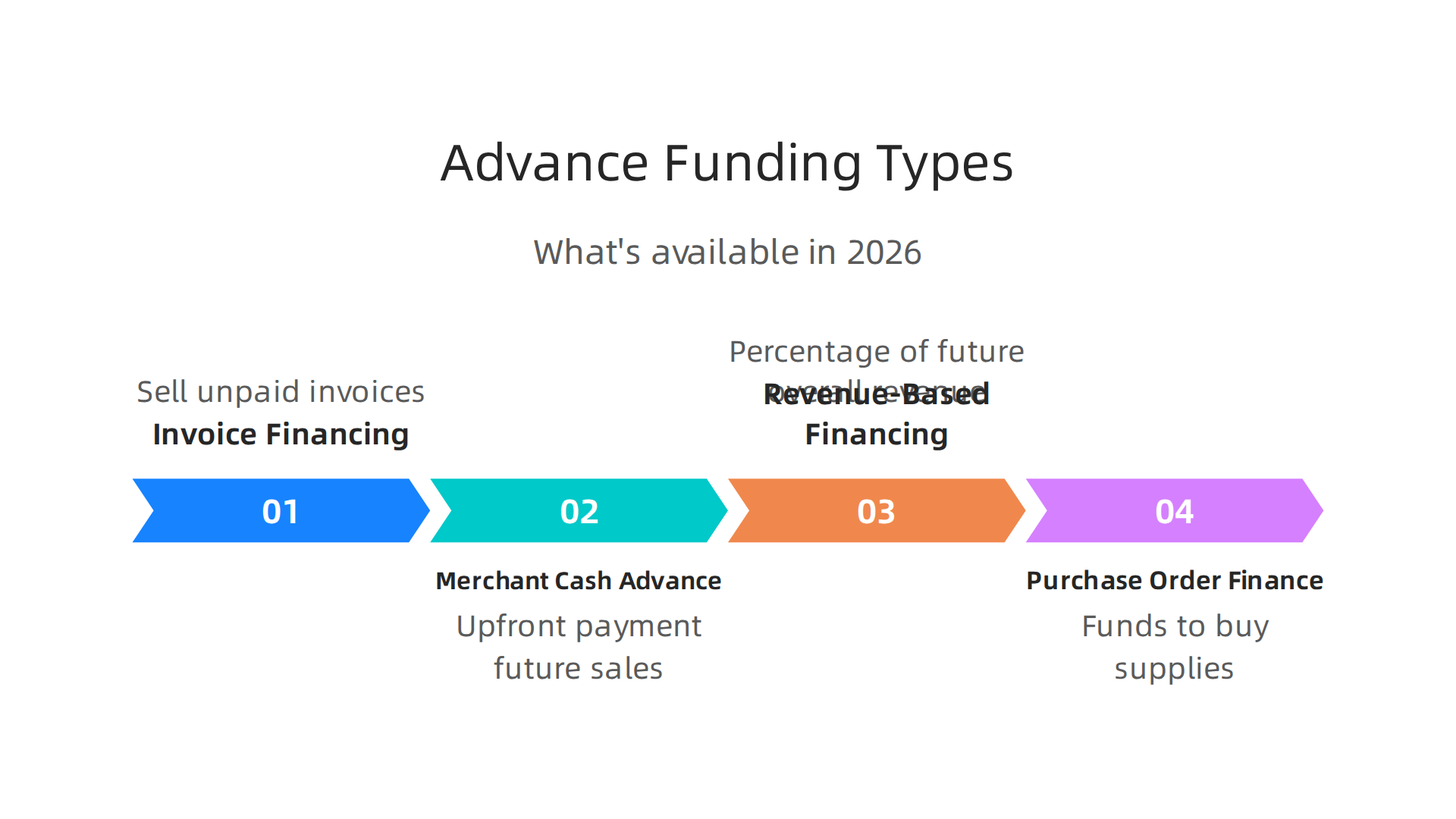
The world of advance funding offers many choices, each fitting different business needs.

These funding choices help startups get money quickly without the long waits of traditional loans. Let’s look at the main types of advance funding available in 2026.
Invoice Financing and Receivables Factoring
Imagine your business has finished a job for a customer, but they haven’t paid you yet. You have an invoice, but you need cash now. This is where invoice financing or receivables factoring comes in.
- What it is: With this type of advance funding, you sell your unpaid invoices to another company. That company, called a "factor," gives you most of the money right away. When your customer finally pays, the factor collects the full amount and then sends you the rest, minus their fee. It’s like getting an early payment for work you’ve already done.
- Who it’s for: This is great for businesses that sell to other businesses (B2B) and often have to wait 30, 60, or 90 days for payments. It helps these businesses keep their cash flow steady.
- Approval time: Usually, it takes about 3 to 7 days for approval, making it a quick solution for many B2B businesses.
Merchant Cash Advance (MCA)
A merchant cash advance is a popular choice, especially for businesses that take payments by credit or debit card.
- What it is: Instead of a regular loan, an MCA is an upfront payment based on your future sales. You get a lump sum of money right away. Then, you pay it back with a small part of your daily or weekly credit card sales. This means you pay more back when sales are good and less when they are slow. Some also call this "credit card factoring" because it’s based on your expected credit card sales Merchant Cash Advance.
- Who it’s for: This is best for businesses like retail stores, restaurants, or online shops that have a lot of daily credit card transactions.
- How to qualify: Most MCA providers look for businesses that have been open for at least 6 to 12 months and make a certain amount in credit card sales each month, often around $5,000 to $10,000 Is a merchant cash advance right for my ecommerce …. Some might need a minimum of $20,000 in monthly card sales and at least 6 months of trading history to qualify Capify Explained? Business Loans, Interest Rates & Reviews.
- Speed: MCAs are known for being fast. Approval can happen in just 24 to 48 hours, providing a lump sum right away MerchantSwitch – Save 20-30% on Card Processing | Compare Top UK Providers 2025.
Revenue-Based Financing (RBF)
Revenue-based financing is similar to an MCA but can be more flexible.
- What it is: With RBF, a lender gives you money today in exchange for a percentage of your future overall revenue, not just credit card sales. This payment usually continues until the advance plus a fee is fully paid back. It’s a way to get funding based on your expected income.
- Who it’s for: This is good for businesses with predictable sales or subscriptions, like software companies or online services, that might not rely heavily on credit card payments.
Purchase Order Finance
This type of advance funding helps businesses that sell physical goods but need money to buy supplies for a confirmed customer order.
- What it is: If you get a big order from a customer but don’t have the cash to buy the materials or make the product, purchase order finance can help. A lender pays your suppliers directly. Once you deliver the goods and get paid by your customer, you pay back the lender.
- Who it’s for: This is a good fit for wholesale, distribution, or manufacturing businesses that deal with large customer orders.
Who Provides These Funding Choices?
In 2026, many different groups offer these types of advance funding.
- Fintech Platforms: These are technology-focused companies that use smart tools, like AI, to check business health and approve funds very quickly. They are leading the way in the market, making up almost half of it, and are known for fast approvals and easy access to cash Merchant Cash Advance Market Forecast – 2033.
- Specialty Lenders: These companies focus only on specific kinds of business funding. They understand the unique needs of different industries and can be very flexible.
- Banks: While traditional banks are slower, some now offer short-term funding choices or facilities that are similar to advance funding, especially for their existing business customers.
Choosing the right type of advance funding depends on your business’s sales patterns, how quickly you need money, and what you’re using the money for. These modern funding solutions give startups more options to grow without selling off parts of their company or waiting a long time for approval. Knowing these funding choices can help founders make smart decisions for their business.
Choosing the right kind of advance funding is a big step. Now, let’s look at how these funding choices actually work, from applying for the money to paying it back. This will help you understand the full process.
How Advance Funding Works: Mechanics, Repayment & Underwriting
Getting advance funding is often simpler and faster than traditional loans. Here’s a look at the typical steps and rules involved.
Applying and Getting Approved: A Quick Process
To get advance funding, businesses usually start with a simple online application. They’ll share some important papers, like bank statements and records of past sales. For a merchant cash advance (MCA), for example, lenders will look closely at your credit card sales history. For invoice financing, they’ll check your unpaid invoices and how reliably your customers pay.
Many lenders today, especially those using financial technology (Fintech), use smart tools like AI to review this information quickly. This allows them to make fast decisions. They want to see consistent income and healthy business activity. This fast review helps them see if your business is a good fit for advance funding.
Underwriting: How Lenders Make Their Decisions
Instead of just checking a personal credit score, lenders for advance funding focus on the health of your business itself. They look for steady sales and cash flow. For MCAs, they pay attention to how much you make from credit and debit card transactions each month. Many lenders want to see at least $15,000 in monthly bank deposits and that your business has been running for at least 6 months Merchant Cash Advance (MCA) Terms: 3–18 Months & ….
For invoice financing, they look at the quality of your invoices and your customers’ payment habits. This data-driven approach helps them quickly decide how much scalable capital they can offer you and what terms make sense. The goal is to provide reliant capital solutions based on your proven business performance. This often leads to approvals in as little as 24 to 48 hours. If you’re looking for more general funding insights, you can read about Apex funding how startups and investors secure capital in 2026.
Getting Your Money
Once approved, the funds are usually sent to your business bank account very quickly. For MCAs, you get a lump sum upfront. For invoice financing, you receive a large portion (often 70-90%) of the invoice value right away, providing immediate cash flow Invoice Advance vs Merchant Cash ….
Repaying Your Advance: Different Methods
How you pay back advance funding depends on the type you choose:
- Merchant Cash Advance (MCA) Repayment: With an MCA, repayment is flexible and tied to your daily or weekly sales. When your business makes sales, a small, agreed-upon percentage is automatically taken from those credit card transactions until the advance and fees are paid back Merchant Cash Advance: Guide to Fast, Revenue-Based …. Another common way to repay is through Automated Clearing House (ACH) debits, where a fixed amount is taken from your business bank account daily or weekly Working Capital & MCA Glossary: A–Z Terminology. This means you pay more when your sales are strong and less when they are slow, which can be helpful for businesses with changing income.
- Invoice Financing Repayment: In this case, the company that bought your invoices collects the full payment directly from your customer. Once they receive the money, they send you the remaining balance, minus their fees.
Important Contract Terms to Watch
When getting advance funding, founders should always understand the contract terms. Pay close attention to the "factor rate" or the total amount you are expected to repay, including fees. This rate tells you the actual cost of the funding. Knowing these details helps you make smart funding choices that support your business growth.
Staying informed about market trends and financial strategies can give you a big edge in business. Get clear daily AI updates and more by subscribing to The AI Newsletter Worth Reading.
Now that you know how advance funding generally works, it’s time to dive into what lenders look for in your business. Understanding these points can help you prepare and increase your chances of getting the money you need.
Eligibility, underwriting criteria, and documentation checklist
Getting advance funding requires meeting specific business health checks. Lenders want to make sure your business can pay back the money.
What Makes Your Business Eligible?
When you ask for advance funding, lenders will check a few key things about your business.
- Time in Business: Most lenders prefer businesses that have been operating for at least 6 months, sometimes up to a year What is the minimum trading history or debtor ledger for …. This shows stability.
- Revenue and Sales: For a merchant cash advance (MCA), lenders typically look for consistent monthly sales, often at least $5,000 to $10,000 from credit card transactions Is a merchant cash advance right for my ecommerce …. For invoice financing, they might look for a minimum monthly value of outstanding invoices, like $50,000 to $100,000 What is the minimum trading history or debtor ledger for ….
- Bank Deposits: They also check your bank statements for regular deposits, generally wanting to see at least $15,000 in monthly bank deposits.
Red Flags: What Lenders Don’t Like
Lenders also look for things that signal trouble. These are "red flags" that might make them say no:
- Many Overdrafts or NSF Fees: If your bank account often has non-sufficient fund (NSF) fees or overdrafts, it shows your cash flow might be rocky. More than 3 NSF items in 90 days or frequent negative balances are big red flags MCA Underwriting: Complete Guide to Process & Risk Scoring.
- Declining Sales: If your sales or bank balance has been going down over time, lenders might worry about your business’s future ability to pay them back. A declining average daily balance can signal elevated risk MCA Funder Underwriting Trends in 2026: What Brokers Need to ….
- Too Many Other Advances: If you already have many other
advance fundingloans that you’re currently paying back, some lenders might see this as a risk. These are called "open positions" Matching The Deal To The…. - Poor Customer Payments (for Invoice Financing): If your customers are slow to pay their invoices, or if you sell mainly to consumers rather than other businesses, it can be a problem for invoice financing Invoice Factoring Guide 2026: Rates, Recourse & Steps. Lenders want to see good payment habits from your clients.
Your Documentation Checklist
To make the application process smooth, prepare these documents:
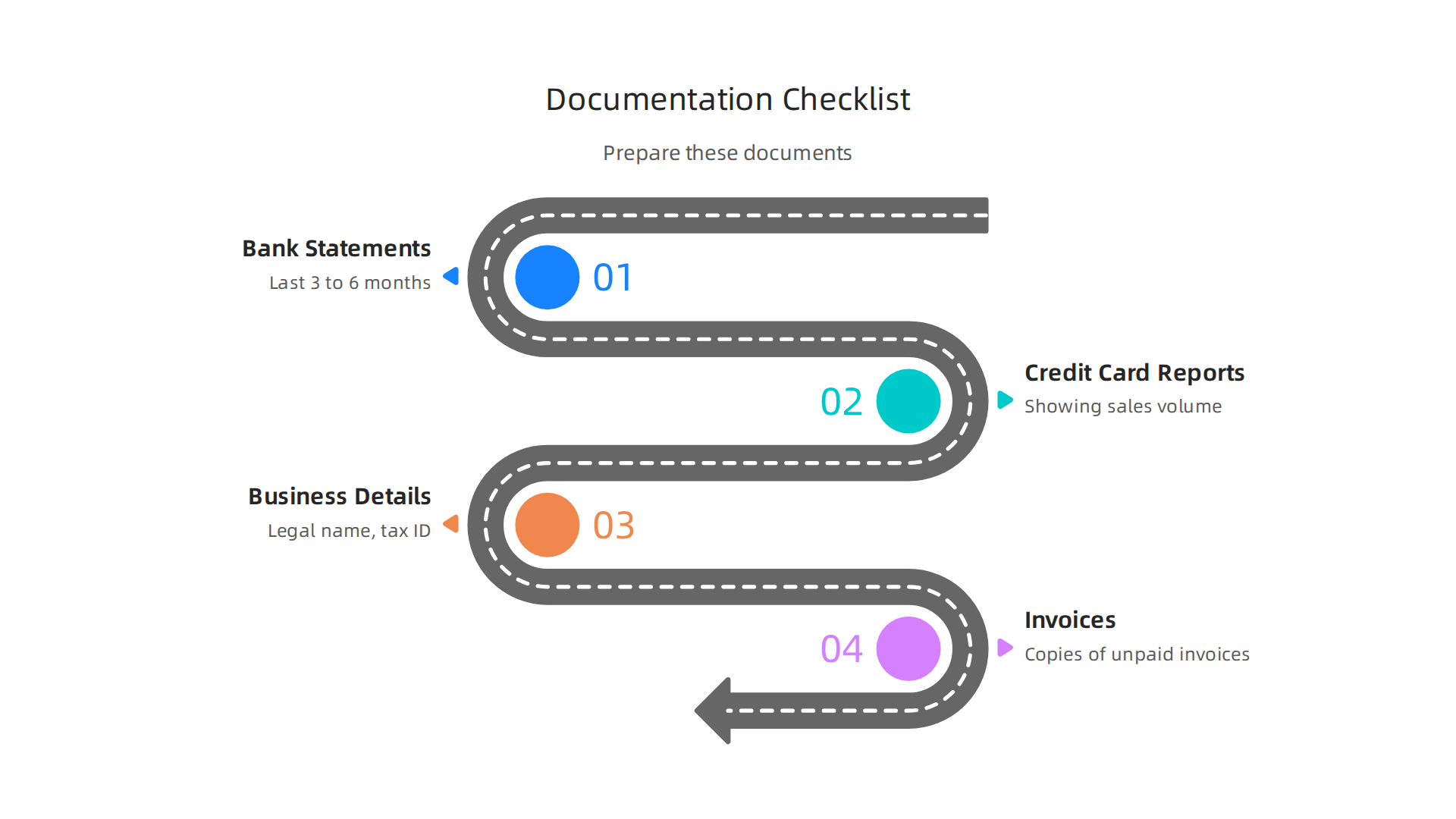

- Bank Statements: Usually the last 3 to 6 months of your business bank statements Merchant Cash Advance Requirements Explained.
- Credit Card Processing Reports: If you take credit cards, reports showing your sales volume are important.
- Business Details: Your business’s legal name, tax ID (EIN), a voided check from your business bank account, and records that show you own the business.
- Invoices (for Invoice Financing): Copies of your unpaid invoices and details about the customers who owe you money.
What Investors and Partners Should Check
If you are an investor or corporate partner looking at a business that uses advance funding, you’ll want to do your own checks. This is called "due diligence."
- Verify Consistent Cash Flow: Look closely at the business’s bank statements and sales reports. Do they match what the business owner says?
- Understand Funding Costs: Make sure the business isn’t stuck with
funding choicesthat are too expensive and could hurt its long-term health. Knowing about non-dilutive funding, like advance funding, is key for founders and investors looking for Greenbox Capital non-dilutive funding explained. - Look for Hidden Debts: Check if the business has other loans or advances that could make it harder to pay you back. This includes looking for any "blatant material misrepresentation on the application" which is a fraud red flag FRAUD RED FLAGS AND.
By knowing these details, founders can make smart choices about their scalable capital and show lenders they are a good fit. For investors and partners, checking these things helps ensure they are working with strong businesses.
Once you know if your business might be a good fit for advance funding, the next important step is to understand how much it will actually cost. Don’t be fooled by simple numbers; the true cost can be tricky to figure out. Knowing how to compare different funding choices is key to making smart decisions for your business.
How Advance Funding Costs Are Figured Out
Lenders use different ways to charge for advance funding. Here are the most common ones:
Factor Rate
This is a common way to price a Merchant Cash Advance (MCA). Instead of an interest rate, lenders use a "factor rate." It’s a small number, like 1.2 or 1.3. You multiply the amount you get by this factor rate to see how much you have to pay back in total. For example, if you get $10,000 with a factor rate of 1.3, you will owe $13,000. This means the cost is $3,000.
Factor rates typically range from 1.15 to 1.55 in 2026, though some can be higher or lower depending on your business’s risk Factor Rate Calculator (2026) — MCA APR Conversion & Merchant …. You can easily find the total payback amount by multiplying your advance by the factor rate, and then find the percentage cost by dividing the cost of the advance by the amount you borrowed What Is a Factor Rate and How Do You Calculate It?.
Percentage of Receivables (Merchant Cash Advance)
For MCAs, you often repay a part of your daily or weekly sales. This means when your sales are good, you pay back more. When sales are slow, you pay back less. This happens automatically, often through daily deductions from your credit card sales or through your bank account via Automated Clearing House (ACH) debits Merchant Cash Advance: Guide to Fast, Revenue-Based …. Most modern advances use ACH debits because it works with any card processor Working Capital & MCA Glossary: A–Z Terminology.
Invoice Financing Fees
With invoice financing, you sell your unpaid invoices to a lender at a discount. You get most of the money right away (like 70% to 90% of the invoice value), and then you get the rest (minus fees) when your customer pays the invoice Merchant Cash Advance (MCA) Loans.
The Real Cost: Why Annual Percentage Rate (APR) Matters
Factor rates and fixed fees can look simple, but they don’t tell you the whole story about the true cost over a year. This is where Annual Percentage Rate (APR) comes in. APR helps you compare funding choices fairly, no matter how they are set up. It turns the cost into a yearly percentage.
How to Figure Out the True APR
Calculating the APR for advance funding can be a bit tricky because it’s not a regular loan. But here’s a common way to get a good idea of the true cost:
- Find the Total Payback: Multiply the amount you received by the factor rate.
- Calculate the Fee: Subtract the original amount you received from the total payback.
- Find the Cost as a Percentage: Divide the fee (from step 2) by the original amount you received.
- Annualize It: Divide 365 days by the number of days you expect to repay the advance. Then multiply this number by the percentage cost (from step 3). Finally, multiply by 100 to get the APR.
Here’s a simpler formula to approximate APR:
APR = [(Factor Rate - 1) ÷ Payback Period in Years] × 100 Merchant Cash Advance Calculator – Loan – SuperCalc.
For example, if you get $50,000 and pay back $65,000 (a 1.3 factor rate) over 5 months (about 152 days), the fee is $15,000. That’s a 30% simple cost. But when you make it yearly, it’s roughly 72% APR Merchant Cash Advance Real APR: How to Calculate the True Cost in 2026.
This APR conversion is super important because it helps you see that a small factor rate can mean a very high annual cost, especially if the repayment period is short.
What Drives the Cost of Advance Funding?
The cost of your advance funding can change based on a few things:
- Your Business’s Risk: Lenders look at how stable your business is. If you’re newer or have less consistent sales, they might see you as riskier. This can lead to a higher factor rate.
- How Fast You Pay It Back: The quicker you repay the advance, the higher the effective APR can be. This is because you’re paying that fee over a shorter time.
- The Lender’s Assessment: Different lenders might see your business differently. What one lender thinks is risky, another might find acceptable.
Market Benchmarks and Warning Signs
In 2026, typical factor rates for Merchant Cash Advances usually fall between 1.1x and 1.5x. When you convert these to an effective annual cost, it can range from around 40% to over 300%, depending on how quickly you repay Merchant Cash Advance — Rates & True Cost (2026).
It’s important to watch out for very high factor rates or unclear terms. These could be signs of predatory pricing. Always ask for clear details about fees, repayment schedules, and the effective APR. Some states are also putting new rules in place to make advance funding more transparent, requiring lenders to give clear disclosures about the costs Merchant Cash Advance Regulation by State (2026 Guide).
By understanding these costs and how to calculate the true APR, you can make more informed decisions about your scalable capital and choose the best advance funding options for your business. For more insights on securing scalable capital and strategic growth, you can check out resources like Apex Funding: How Startups and Investors Secure Capital in 2026.
Staying informed about market trends and financial strategies is always a good idea for any business owner or investor.
Get clear daily AI updates from The AI Newsletter Worth Reading.
Understanding the true cost of advance funding is a smart first step, but it’s also wise to look at other ways to get money for your business. Advance funding is fast and flexible, but it’s not the only option. Comparing different funding choices helps you pick what’s best for your business at each stage. Let’s explore some common alternatives and see how they stack up.
Alternatives and Hybrid Capital Strategies (Venture Debt, Credit Lines, SAFEs, Bridge Loans)
When you need scalable capital, there are many paths to take beyond advance funding. Each has its own rules and benefits.
Common Alternatives to Advance Funding
Here are some popular ways businesses get money:
- Venture Debt: This is a type of loan often given to startups that also have money from investors (equity funding). It lets businesses grow without giving up more ownership. Venture debt usually comes with less strict repayment terms than a quick
advance fundingoption. It’s often used when a company expects a big funding round soon or wants to extend its cash without diluting owners. For example, it might include warrants, which are like options for lenders to buy stock later. - Credit Lines: Think of this as a flexible loan that you can use, pay back, and use again, up to a certain limit. It’s great for managing day-to-day cash flow ups and downs. Unlike
advance fundingwhich is a lump sum, a credit line offers ongoing access to funds. - SAFEs (Simple Agreement for Future Equity): These are mostly for very early-stage startups. A SAFE isn’t a loan or traditional equity right away. It’s an agreement that gives an investor the right to buy stock in a future funding round, usually at a discount. It’s a way to get money without setting a company value too early, which is different from debt-based
advance funding. To learn more about different investor types, you might want to read about choosing between an Angel Investor vs Venture Capitalist. - Bridge Loans: These are short-term loans designed to "bridge" the gap until a company can get a larger, more stable funding. For example, a business might take a bridge loan to last a few months until it closes a big investment round.
When a Hybrid Approach Makes Sense
Sometimes, using just one type of funding isn’t enough. A "hybrid" approach means using a mix of funding choices. You might use advance funding for a quick, urgent need, like buying extra inventory for a busy season. Then, you might use venture debt or a credit line for longer-term growth projects. This mix helps you get the right kind of scalable capital for different needs. For example, advance funding is quick, but its higher effective APR means it’s usually best for very short-term, high-impact needs, not for long-term growth.
Many businesses in the global MCA market, which is valued at $20.99 billion in 2026, still rely on merchant cash advances for their fast funding needs, often alongside other financial products to build robust reliant capital solutions for diverse financial requirements Merchant Cash Advance for Startups and Small Businesses.
Key Implications for Businesses
Choosing how you get money can have big effects:
- Cap Table: This is a list of who owns what in your company. If you take equity investments (like with SAFEs), new owners come on board, and your share might get smaller. Debt, like
advance fundingor venture debt, usually doesn’t change your cap table directly, but some venture debt can include options for lenders to buy equity. - Covenant Risk: Loans often come with rules called "covenants." These are promises you make to the lender, like keeping a certain amount of cash in the bank or not taking on more debt. If you break these rules, the lender can demand their money back early.
Advance fundingusually has fewer covenants than traditional bank loans or venture debt. - Future Fundraising: The types of
funding choicesyou make now can affect how easy it is to raise money later. If you have too much expensive debt, it might scare away future investors. Showing a smart mix ofscalable capitalcan make your business look more appealing. Exploring the Private Equity Landscape 2026 can help you understand what big investors look for.
By carefully considering these alternatives and how they impact your business, you can make informed decisions about your scalable capital strategy.
By carefully considering alternatives and how they impact your business, you can make informed decisions about your scalable capital strategy. Now, let’s look at a clear plan for choosing the right advance funding option and making sure the terms work for you.
Decision Framework: Choosing the Right Advance Funding Option and Negotiating Terms
Picking the best advance funding for your business needs a step-by-step approach. It’s not just about getting money fast; it’s about getting the right money.
Your Step-by-Step Funding Framework
Here’s how to think about your funding choices:
- Know Your Funding Need: First, be very clear about why you need
advance funding. Is it for a quick, one-time inventory purchase for a seasonal rush? Or is it to cover a temporary gap in cash flow? How much money do you need, and for how long? Knowing these answers will help you find the right fit. - Look at Your Options: There are many types of
advance funding. Some lenders look for businesses with at least $10,000 in monthly revenue and a few months of bank statements to show stable cash flow patterns. They also check your average daily bank balance and how many non-sufficient fund (NSF) events you’ve had. A low number of NSF events and a healthy average daily balance are good signs for lenders, as a high number of NSF items in a short time can signal higher risk in 2026. Lenders usually want to see a minimum of 3 to 6 months of business bank statements to understand your cash flow patterns and ability to collect money regularly. To understand what lenders look for, you can review common Merchant Cash Advance Requirements Explained. - Check Your Cash Flow: Before saying yes to any
advance funding, you must see how the repayments will affect your daily cash.Advance fundingoften means daily or weekly payments. You need to be sure your business can handle these payments without running into trouble. You can use tools to help you build your modern data pipeline for startup success and track your cash flow. - Do Your Homework on Lenders: Always check out the lenders. Read reviews and make sure they are clear about all fees. Watch out for any red flags, like lenders asking for upfront fees before giving you money or pressuring you to pay with gift cards or cryptocurrency. These are often signs of business funding scams that you should avoid in 2026.
- Talk About the Terms: Don’t be afraid to negotiate. This is especially true for
advance funding.
Important Points for Negotiation
When talking with lenders, keep these things in mind:
- Recourse vs. Non-Recourse: "Recourse" means if your business can’t pay back the money, the lender can go after your personal assets. "Non-recourse" means they can only go after the business assets. Non-recourse is generally safer for you.
- Caps: Sometimes,
advance fundingcan have a cap, which is a maximum amount you’ll pay back, no matter how long it takes. This can protect you from paying too much. - Factor Rates: This is how the cost of
advance fundingis often shown. It’s a decimal number that, when multiplied by the amount you borrow, gives you the total you pay back. Make sure you understand this rate fully, as it’s different from a traditional interest rate. - ACH Controls: Many
advance fundingoptions use Automated Clearing House (ACH) payments. This means the lender takes money directly from your bank account. Understand when and how often these payments will happen. Trends in 2026 show that lenders are carefully watching things like multiple non-sufficient fund events close together or a business’s declining average daily balance. These can be big red flags for them. Checking an MCA underwriting checklist can help you understand what lenders look at.
How Investors Look at Advance Funding
If you are a founder, know that investors will look closely at your funding choices. Using advance funding isn’t always a bad thing. If it’s used for smart, short-term needs and the business can easily pay it back, it might show good financial management. However, if it seems like a business is constantly relying on expensive advance funding because it can’t get other scalable capital, investors might see this as a warning sign. They want to see that your business has a clear plan for using reliant capital solutions and can handle repayment without stressing its finances.
Staying informed about overall market trends, including new technologies like AI that shape financial tools, can also give you an edge.
If you’re interested in keeping up with the latest in technology and artificial intelligence, consider checking out The AI Newsletter Worth Reading for clear daily updates.
Summary
This article explains advance funding for startups in 2026, showing why fast, non-dilutive capital is often the right choice for short-term cash needs. It reviews the main options—invoice financing, merchant cash advances (MCAs), revenue-based financing, and purchase order finance—who they suit, and how fintech and AI speed approvals. The guide walks through the typical application and underwriting process, repayment mechanics (daily ACHs, percentage-of-sales, invoice collection), and the contract terms founders must watch. It also explains how lenders set prices using factor rates, how to convert those rates into a comparable APR, and what drives cost differences. You’ll get a clear eligibility and documentation checklist, common red flags lenders avoid, and practical alternatives like venture debt, credit lines, SAFEs, and bridge loans. Finally, the article gives a decision framework to match funding choices to needs and negotiation points to protect cash flow and ownership.