
AI for Good Attract Startup Investors with Ethical AI

Why ‘AI for Good’ Matters Now: Risk, Opportunity, and the Investor Lens
In 2026, artificial intelligence, or AI, is changing our world at a super-fast speed. It offers amazing chances to fix big problems, from helping people in need to making businesses better. This big idea is what we call "AI for Good."

It means using smart computer programs to make the world a better place.
But here’s the thing: as AI grows, it also brings some serious worries. We must think about what is fair and safe. These important questions about right and wrong in AI can really impact how well new companies do and whether investors choose to put their money into them. Countries and groups around the world are even creating rules and guides for how to use AI responsibly, like the OECD Due Diligence Guidance for Responsible AI.
This guide is made for people who start new companies and for smart investors. It is like a clear map to help you find your way. We will show you how to build AI projects that truly help society. We will also help you make sure these projects are fair and safe, so they can grow big and strong. Being an AI driven leader means understanding both the good and the challenges of the future of AI. For a deeper dive into making a positive impact, explore Tech for social good in 2026 ethical AI principles and real-world impact.
We want to give you a clear plan that uses real facts and examples. This plan will help you look at, build, and grow your own "AI for Good" ideas. It is all about making smart choices that help both your business and the world around us. To stay on top of all the latest AI trends and news, consider subscribing to The AI Newsletter Worth Reading.
Why AI for Good Matters to Investors: Risk Mitigation and Market Differentiation
When companies use AI, they must think about more than just making money. Smart choices about AI also protect their business and make it more appealing to investors.

Actually, if a company makes mistakes with AI, it can lead to big problems that hurt its name and scare away money.
Avoiding Big Risks with Responsible AI
Bad AI choices can cause many troubles for a startup and its backers. Imagine an AI system that is unfair or makes harmful mistakes. This can lead to big fines and legal problems, which directly hurt a company’s money. It can also make customers lose trust and stop using their products. This loss of trust can damage a company’s reputation, sometimes for good. Investors are looking very closely at how companies use AI. A study in 2026 found that many venture capitalists felt their companies were not fully checking for AI risks before investing Responsible AI: The VC Perspective.
This is why "AI due diligence" is so important. It is a careful check that investors do to make sure an AI startup is using technology safely and fairly. This kind of check looks at how a company builds, uses, and controls its AI systems to avoid ethical problems Ethical Due Diligence for Investors. By focusing on responsible AI from the start, companies can lower these big risks. Learning about these dangers helps founders understand why is AI bad when not handled with care.
Standing Out and Building Value
But there is a good side too! Companies that truly focus on "AI for Good" can stand out in a big crowd. When a startup builds AI products that are fair, safe, and truly help people, they build a strong name for themselves. This strong reputation helps them attract more customers, find better talent, and earn the trust of the public.
Being an "AI driven leader" means more than just having cool technology. It means showing that your company cares about making a positive impact. This approach creates long-term value that investors love. Companies known for ethical AI are often seen as more stable and future-proof. They are better placed to succeed in the future of AI because people will want to support their good work. This focus on doing good becomes a powerful way to grow and beat others in the market.
Key Ethical Risks in AI-driven Startups (Bias, Safety, Privacy)
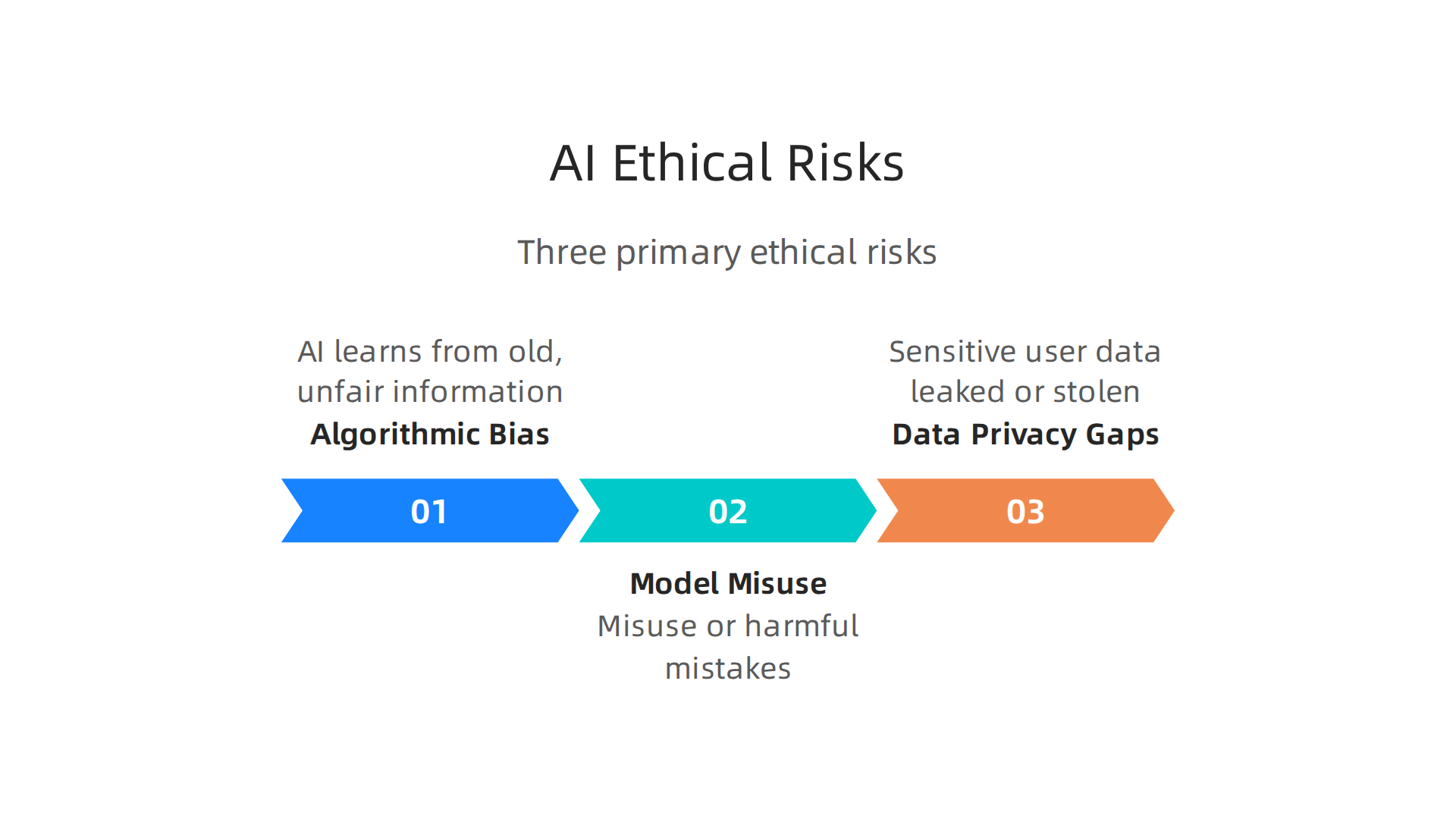
To truly be an "AI driven leader" and build something great with "AI for Good," founders must understand the hidden dangers that come with powerful technology. Ignoring these risks is like building a house on sand. Let’s look at three big problems that can pop up: unfair AI, unsafe AI, and issues with keeping data private.
Algorithmic Bias: When AI is Unfair
Imagine an AI system that is supposed to help everyone, but it only works well for some people. This happens because of "algorithmic bias." It means the AI learns from old, unfair information and then makes unfair choices. For example, if an AI is trained mostly on pictures of light-skinned faces, it might not recognize "black AI" users as well. This can lead to wrong decisions in important areas like hiring, loans, or even healthcare. Studies from 2026 show that these kinds of biases are a big concern in AI today Ethical Issues and Bias in Artificial Intelligence: A Systematic Review. It’s crucial for startups to check their AI models carefully to make sure they are fair to everyone.
Model Misuse and Safety: When AI Does Harm
Another big risk is when an AI model can be misused or causes harm by accident. Sometimes, an AI built for good can be used for bad purposes. Other times, the AI just makes mistakes that can hurt people or systems. This could be an AI in a car making a bad decision, or a system giving out wrong medical advice. A detailed look at the dangers of AI points out things like privacy problems and unfairness as top worries Emerging threats in AI: a detailed review of misuses and risks across modern AI technologies. Making sure AI is safe means checking it over and over again for possible harms and stopping them before they happen.
Data Privacy and Security Gaps: Protecting Personal Information
AI systems need a lot of data to learn. But this data often includes personal information. Keeping this data private and safe is a huge challenge. If a startup’s AI system isn’t built with strong privacy controls, sensitive user data could be leaked or stolen. This can ruin trust and lead to big legal problems. Actually, AI can both create privacy threats and help improve privacy, depending on how it’s used Both ends of artificial intelligence impacting privacy: a review …. So, startups must build their AI with privacy in mind from the very start.
Spotting Risks Early
How can founders and investors find these risks early? It starts with asking tough questions during the design of any AI product. Think about these things:
- What data are we using? Where did it come from? Is it fair and unbiased?
- Who might our AI harm by accident? How can we test for that?
- How will we protect user data? Is our system secure enough?
One helpful tool is a "Model Card." This is like a report card for your AI model. It describes what the AI does, how it was trained, and any known limitations or ethical issues What Is a Model Card? Sections, Templates & Best Practices. Using tools like Model Cards and thinking carefully about these questions helps build a safer, more trustworthy future of AI. It helps make sure that the AI platforms: what founders, investors, and product leaders must know are responsible.
Measuring Social Impact: Metrics, Data Sources, and Investor Signals
After learning how to find risks in AI, the next step for any "AI driven leader" is to show the good their AI is doing. This is where "AI for Good" comes in. It’s not enough to just say your AI is helpful. You need to prove it with clear numbers and facts, especially for investors. They want to see real impact.
What Are Impact Metrics?
Think of impact metrics as a report card for your AI’s good deeds. There are two main kinds:
- Output Measures: These show what your AI actually does. For example, if your AI helps people find jobs, an output measure might be "number of job matches made." It’s about the direct action the AI takes.
- Outcome Measures: These are more important. They show the real change or benefit that happens because of your AI. For the job-finding AI, an outcome measure would be "number of people who actually got hired" or "how much faster people found jobs." Outcomes show the true social impact. Investors like to see these deeper changes because they show your AI is truly making a difference in the "future of AI" for the better.
For a startup to show it’s making an "AI for good" impact, it must track these outcomes. For example, a healthcare AI might track how many lives were improved, not just how many diagnoses it made.
Finding Data and Showing It to Investors
To measure impact, you need good information, or data. This data can come from many places:
- User feedback: Asking people how your AI helped them.
- Surveys: Getting answers from a larger group.
- Partnership data: If your AI works with other groups, they might have numbers to share.
- Public records: Sometimes, big changes can be seen in public information.
During investor checks, called "due diligence," investors will ask for this proof. They want to know your social claims are real, not just guesses. They look at how you collect data and how you measure impact. This helps them decide if your startup truly leads with "AI for Good." Many firms are now looking at ethical due diligence as a key part of their investment process Ethical Due Diligence for Investors.
Special tools and ways of checking, like an AI impact assessment tool, can help startups gather and show this important information clearly. These tools make sure your AI’s positive effects are not just guesses but are backed by strong data. Showing these clear metrics helps investors see that your startup is not only making money but also building a better world, which is a big signal for them. It also helps them understand your AI startup due diligence documents and metrics in detail.
Knowing what data to collect and how to present it helps you stand out. It proves you’re a responsible "AI driven leader" aiming for true positive change. If you’re looking for more details on how to use AI for better business choices, you can explore guides on how to use AI for startup success.
Regulation, Standards, and Compliance: What Startups Should Know in 2026
When we talk about the good that AI can do, it’s also very important to talk about the rules that help keep AI safe and fair. Just like measuring the social impact of your AI, following rules and standards is a big part of being an "AI driven leader" today. In 2026, the world is paying more attention than ever to how AI is made and used. This helps make sure that the "future of AI" benefits everyone and avoids problems like unfairness.
Governments and other groups are working to create clear rules for AI. These rules are sometimes called regulations. They help companies know what they must do to keep their AI systems ethical and reliable. For example, there are new guidelines that help companies develop AI systems responsibly, covering how they affect people and groups Guidelines for developing AI systems. These rules also cover issues like privacy, making sure your AI does not misuse personal information Addressing Bias, Privacy, Security, and Patient Autonomy in Artificial.
Beyond these strict rules, there are also many voluntary standards. These are like best practices that companies choose to follow. They show that a company is serious about using "AI for good." For example, some frameworks provide guidance for the ethical use of AI and big data Ethical AI Framework. There’s also guidance from groups like the OECD on how to make sure AI is used responsibly OECD Due Diligence Guidance for Responsible AI (EN).
These rules and standards help make sure that AI does not show bias, which means treating certain groups of people unfairly. Addressing bias, sometimes called "black ai" issues when it affects specific communities, is a key focus of many new regulations. If you want to learn more about the tough problems AI can create, you can read about Why is AI Bad: Unpacking Critical Risks for Founders and Investors.
Your Early Compliance Checklist
For any startup, thinking about these rules early is very important. It can save you a lot of time and money later on. Here’s a simple checklist to help you start:
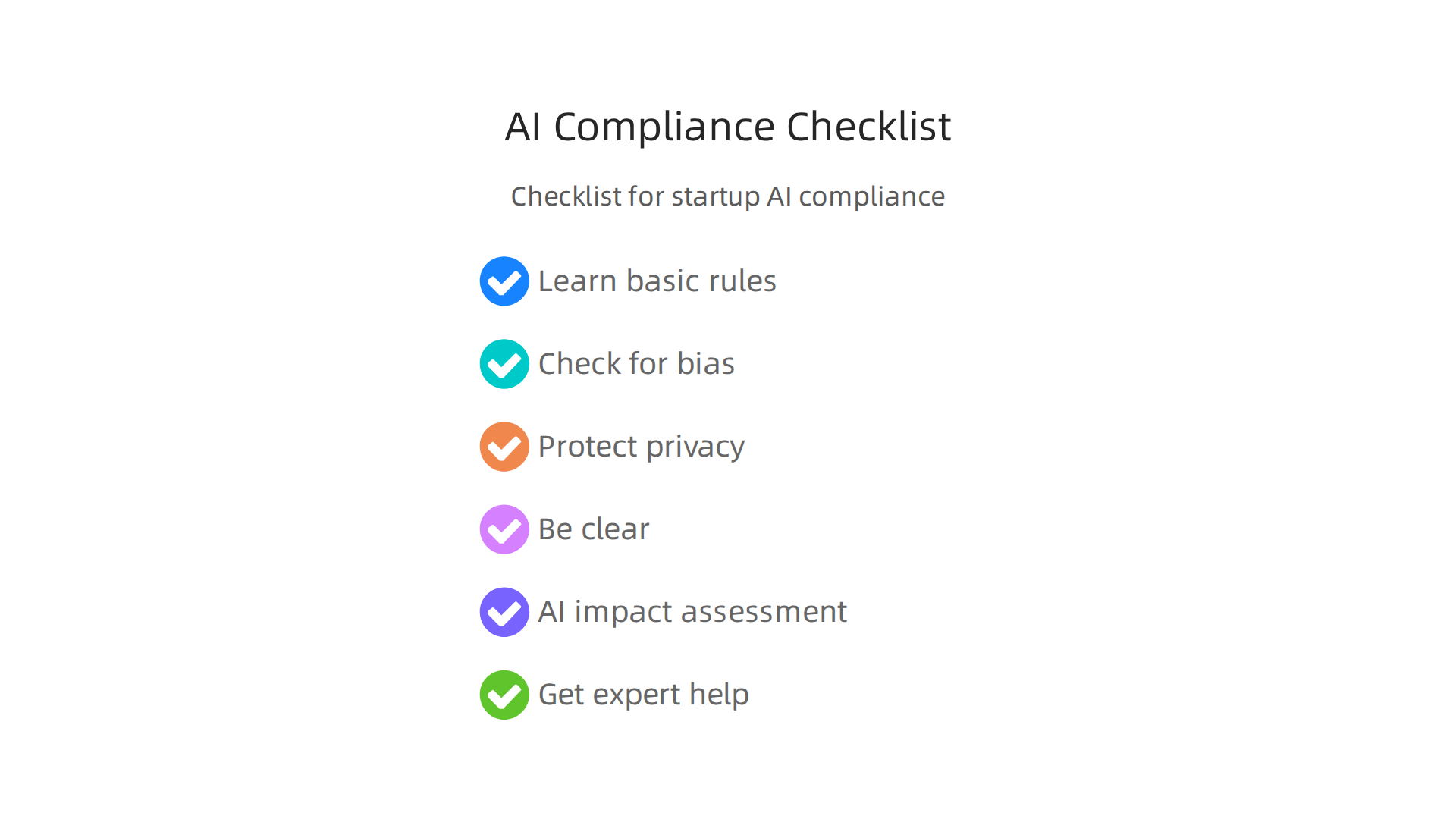
- Learn the basic rules: Know which AI laws apply to your product in the places you want to sell it.
- Check for bias: Regularly look at your AI to make sure it is fair to everyone. Tools exist that help evaluate AI systems for ethics Responsible AI measures dataset for ethics evaluation of AI systems.
- Protect privacy: Always keep user data safe and use it only in ways that are allowed.
- Be clear: Explain how your AI works and what data it uses, especially if it makes important decisions.
- Do an AI impact assessment: This is a study to see how your AI might affect people, society, and the environment. There are even tools and frameworks to help with this AI Impact Assessment Guidelines and AI Governance Frameworks.
- Get expert help: If you are unsure, ask a legal expert or a consultant who knows about AI rules.
By planning for compliance now, your startup can avoid problems, gain trust from users, and show investors that you are building AI responsibly. This is all part of making sure your "AI for good" efforts truly benefit the world. For more on using technology to create positive change, explore Tech for Social Good in 2026: Ethical AI Principles and Real-World Impact.
Building safe and fair AI is not just about following rules. It’s also about building responsibility into everything you do, from your products to your team. In 2026, being an AI driven leader means making ethics a core part of your company. This helps ensure your "ai for good" efforts truly work.
Building Ethical Product, Teams, and Governance: Operationalizing Responsibility
Making sure your AI systems are fair and helpful requires clear ways of working. These are often called governance mechanisms. They help you put ethical ideas into daily practice.
-
Impact Review Boards: Imagine a small group of people in your company who check new AI tools before they go out. This group acts like an "impact review board." They look at how your AI might affect users and society. They help make sure the AI is fair and does not cause harm. This helps prevent problems that could arise later.
-
Model Cards: One simple but powerful tool is a "model card." Think of it like an information label for your AI. It tells you what the AI model does, how it was trained, what kind of data it used, and any known limitations or risks What Is a Model Card?. This is important for being open about your AI. Companies should keep these model cards for all AI systems they create or use AI Governance: Model Card for Secure & Compliant AI Adoption. It helps everyone understand what the AI is designed for and if it has any potential for unfairness. Using model cards is a key part of ethical AI development throughout its whole life Ethical Considerations in the AI Lifecycle for Design. You can find many guides on how to make one, detailing things like the model’s name, owner, and purpose Model Card for AI Governance: Content, Template, and ….
-
Data Governance: How you handle data is also very important. Good data governance means you have clear rules for collecting, storing, and using data. This makes sure data is safe and used correctly with your AI. Documenting your data and AI processes is essential for responsible AI use in 2026 AI Data Governance in 2026: Documentation Standards ….
-
Escalation Paths: Sometimes, people might find problems with an AI. You need clear ways for them to report these concerns and for the company to fix them quickly. These are called escalation paths. They ensure that ethical issues are not ignored.
Building Ethical Teams
Ethics needs to be part of your team, not just a rulebook.
- Hiring for ethics: When you hire people, look for those who care about making technology safe and fair. You can also offer training to help your team understand ethical AI principles.
- Diverse teams: When teams are made up of people from different backgrounds, they are better at spotting potential biases in AI. They can ask questions that others might miss, which helps avoid issues related to "black ai" concerns.

- Embed ethics early: Ethics should be part of the product development process from the very start, not just an afterthought. This means talking about ethical choices when you first brainstorm ideas for a new AI product. Learning how to use AI for startup success also means using it responsibly.
By putting these ideas into action, your startup can build trust, create truly beneficial AI, and lead the way toward a better future of AI.
Want to stay informed about the latest in AI and technology? Get clear daily AI updates.
The AI Newsletter Worth Reading
Making sure AI is fair and helpful starts with good plans and good teams. But it also needs strong leaders who know how to guide everyone. In 2026, leading an AI company means having special skills and setting up your company in smart ways.
Skills for AI Driven Leaders
Leaders in the AI world need a mix of skills. It is not just about understanding the tech. It is also about working with people and thinking about the big picture. Here are some key skills:
- Understanding AI and its Impact: Leaders must know how AI works and how it affects people and society. This helps them make good choices about how to use AI. They need to have "AI literacy" to ask the right questions and manage risks.
- Ethical Judgment: Good leaders can spot possible problems and make sure their AI is fair. They need to be able to make tough choices that support ai for good. Responsible AI is a must-have leadership skill now, not just a nice-to-have, given today’s rules and how people see your company AI Leadership Skills for 2026.
- Adaptability and Change Management: The world of AI changes fast. Leaders must be ready to change course and help their teams deal with new ways of working.
- Communication: Being able to explain complex AI ideas clearly is very important. Leaders need to talk to different groups, from engineers to customers, about their AI plans and goals AI for Leaders: What Smart Managers Need to Know in 2026.
- Strategic Thinking: Leaders should see how AI fits into the company’s bigger goals. This means turning AI ideas into real business outcomes The Top AI Leadership Skills in 2026: Salary Premiums ….
Important Roles for Responsible AI
As companies use more AI, new jobs are popping up to help keep things ethical and safe.
- Head of AI Ethics: This person makes sure that all AI projects follow ethical rules. They create plans for how the company uses AI and check that everything is fair. They help avoid issues that could lead to "black ai" problems. This role mixes technical know-how with thinking big and solving problems AI Ethics Officer Job Description (2026) – Rework.
- Product Ethicist: These experts work with product teams from the start. They help design AI products that are fair and do not cause harm. They look for ethical risks in new AI features before they are even built AI Ethics and Governance Jobs: The 2026 Landscape for a Growing Field.
- Data Stewards: These people manage how data is collected, stored, and used. They make sure data is safe and used ethically. This is key for responsible AI.
- AI Governance Lead: This role is about setting up and watching over the rules and processes for AI. They ensure that all AI systems follow company policies and outside regulations.
What Investors Look For
If you are an investor, how do you know if a startup is building AI responsibly for the future of AI? You should look for:
- Clear Policies: Do founders have clear written rules about how they use AI? This shows they are serious about responsibility VC AI Governance Due Diligence: 18-Item Che… · AI Policy Desk.
- Ethical Leadership: Do the leaders show they care about ethics? Are they talking about it and making it a priority?
- Diverse Teams: As mentioned before, diverse teams are better at spotting bias. This is a good sign for investors.
- Transparency: Does the company use tools like model cards to be open about how their AI works? This helps build trust.
- Processes for Problems: Does the startup have a way for people to report AI problems and for the company to fix them?
Evaluating these points can help investors choose wisely among different AI companies in 2026. It helps ensure their money goes to companies that are not just growing fast but also growing responsibly.
Building AI responsibly is not just a good idea, it is how companies will grow and succeed in 2026. This means more than just talking about ethics. It means showing real actions and results. Founders and investors alike need to see how "AI for good" ideas turn into real-world benefits, avoiding issues that could lead to "black ai." Let us look at how some startups are making this happen and what lessons we can learn.
Case Studies and Practical Playbooks: Startups Doing AI for Good (Lessons for Founders & Investors)
Smart startups are building AI that helps people and the world. They are also making sure investors feel good about putting money into their companies. Here is how they do it.
1. Focus on Clear Goals with Real Impact
A good "AI for good" startup starts with a clear idea of how its AI will help. For example, imagine a startup using AI to help farmers grow more food with less water.
- Decisions: This startup would choose to use data from farms and weather patterns to suggest the best times for watering. They would make sure their AI models are fair to all farmers, big or small, and that the data used does not lead to unfair results.
- Measurement: They would track how much water is saved and how much more food is grown. They might even measure how happy farmers are with the AI’s advice. These are clear metrics to show the positive impact.
- Investor Engagement: To talk to investors, this startup would show reports with these savings and growth numbers. They would explain their strict rules for using data and how they make sure their AI is always fair and helpful. Investors want to see companies that not only promise responsible AI but also have ways to check and prove it AI Startup Due Diligence Documents and Metrics.
2. Make Ethics a Core Part of Design
Leading companies understand that being ethical must be part of their products from the very start. It is not an add-on. They design their AI with fairness and safety in mind.
- Decisions: A startup building AI for healthcare might focus on making sure its tool works equally well for people of all backgrounds. They would decide to test their AI on many different groups of people to catch any biases early. The OECD Due Diligence Guidance for Responsible AI provides examples of how to include risks of harm in their plans and talk with others to find issues.
- Measurement: This means tracking things like how accurate the AI is for different age groups or ethnicities. It also involves having clear ways for users to give feedback if they find a problem.
- Investor Engagement: Investors doing their homework will look at how a company handles ethics from the ground up Ethical Due Diligence for Investors. They look for clear guidelines on data use and how teams work together to solve ethical challenges. Some investors even use special toolkits to check a startup’s AI practices and assess risks effectively, as few VCs truly assess AI risks in depth, according to one report Responsible AI: The VC Perspective – Reframe Venture.
3. Build Transparency and Trust
Startups doing "AI for good" are open about how their AI works. They do not hide things or make people guess.
- Decisions: They might use "model cards" to explain what their AI does, what data it was trained on, and when it should not be used. They also make sure their terms of service are easy to understand.
- Measurement: This could involve getting good scores in third-party audits for fairness or having public reports on their AI’s performance. Also, they track how quickly they fix any problems found.
- Investor Engagement: Being open helps build trust with investors. Startups that share their ethical guidelines and how they manage potential issues show they are serious about long-term success. Investors want to know that a startup has strong internal controls and rules about AI use, which makes the product more credible and helps keep customers happy. It is crucial for them to integrate governance, risk, and compliance into their core checks when looking at a startup.
For founders, these examples show that leading with purpose and proving it with data is key. For investors, looking for these clear actions, strong leadership, and ethical checks helps ensure money goes to companies building a better future of AI.
Actionable Takeaways for Founders and Investors
- For Founders:
- Start with a clear social or environmental problem your AI can solve.
- Integrate ethical checks into every step of your AI development.
- Be open and clear about how your AI works and its limitations.
- Measure your positive impact with real data and share these results.
- For Investors:
- Ask for detailed AI policies and ethical frameworks during due diligence.
- Look for diverse teams and dedicated roles for AI ethics.
- Check for transparency tools like model cards and clear complaint processes.
- Prioritize startups that show proven metrics of their "AI for good" impact.
- Consider how why is AI bad unpacking critical risks for founders and investors could affect a startup and how they plan to avoid these pitfalls.
By focusing on these points, both founders and investors can work together to create a world where AI truly benefits everyone.
Summary
This article explains why