US Tech Ecosystem 2026: Funding Trends, Key Players, and Future Growth

Why the US tech ecosystem still matters in 2026 — and what to watch
Even in 2026, the US tech world stands out as a powerful engine for new ideas and growth across the globe. It’s a place where big changes often begin, thanks to lots of money, smart people, and a spirit of trying new things.

When we talk about "us tech," we mean more than just one city or one type of business. We’re looking at a huge network of creative technology, busy innovation hubs, and a constant flow of money that keeps everything moving.
This ecosystem is still super important for many reasons. For example, in the first half of 2026 alone, US startups raised a massive $381.9 billion. Experts think the full year could reach $763.9 billion, which is a huge jump from 2025 United States. This shows just how much money is still flowing into new ideas here. Even more, investments in artificial intelligence (AI) related projects are expected to hit almost $600 billion in the US this year AI Investments and Potential Government Stakes in Private …. This focus on AI is a big part of what makes creative technology in the US so special right now.
For founders who are starting new companies, for investors looking for the next big thing, and for leaders making plans for their businesses, understanding this fast-changing world is key. It’s about knowing where the money is going, what new ideas are catching on, and which places are becoming major tech centers. You can learn more about how different places become tech hot spots in our guide on what is an innovation center.
Throughout this article, we will give you clear signals and helpful tips. These insights will help you make smart choices in the world of mass tech, whether you’re building something new, investing your capital, or guiding your company’s future. Staying informed about the latest trends in venture capital can also help you make good choices, as highlighted in our coverage of News Venture Capital 2026 Market Trends Founder Actionable Steps.
The tech world moves fast. So, keeping up with the latest in AI and other creative technology is not just helpful, it’s a must.
Get clear daily AI updates from The AI Newsletter Worth Reading.
The fast-paced world of creative technology we just discussed doesn’t happen by magic. It needs a strong financial base, and in 2026, the US tech scene is shaped by some big money trends. We’re talking about how much money investors are putting in, where it’s going, and what big economic signs are telling us.
Overall Investment and Where the Money Goes
In the first half of 2026, money kept flowing into US startups. Venture capital (VC) investment in the US stayed strong, with about $144.9 billion put into 3,644 deals during the second quarter alone United States: Q2’26 Venture Pulse Report. This shows that investors are still keen on new ideas, especially in cutting-edge areas.

Actually, some reports say US startups raised over $400 billion in the first six months of 2026, which is a big number PitchBook-NVCA Venture Monitor.
But it’s not just about the total amount of money. How that money is split up is changing. For example, in the first half of 2026, while the total number of deals went down by 34%, the average size of each deal went up by almost four times compared to the first half of 2025 Private equity: US Deals 2026 midyear outlook. What does this mean? It means investors are putting bigger checks into fewer, more promising companies. They are making "higher-conviction bets," focusing on businesses they truly believe will succeed. This shift impacts many areas of us tech, from early-stage startups to larger mass tech companies. You can dive deeper into how different funding partners work by checking our private equity directory.
Big Economic Signs Affecting Funding
Beyond the venture capital world, larger economic trends also play a huge role. Things like interest rates and how easy it is for companies to "exit" (like being bought by a bigger company or going public with an IPO) really matter for funding.
When interest rates go up, borrowing money becomes more expensive for everyone, including investors and startups. This can make investors more careful about where they put their money, slowing down the flow of new investments. Also, "exit markets" are important because they are how investors get their money back and make a profit. If there are fewer exits, or if exits bring in less money, investors might be less willing to make new bets. In fact, exits hit a two-year low in the first quarter of 2026, even though overall funding was high State of Venture Q1’26. This creates a more cautious feeling among some investors. Understanding these private equity trends is key for anyone in the market.
These big economic signals mean that even with lots of money in the US tech market, founders need to be smart about how they seek capital. They need to show strong growth and clear paths to success to attract those larger, more focused investments. Finding the right investors takes careful planning, and you can learn more by exploring our guide on how to find investors for a startup in 2026.
Continuing from our look at the broader money trends in US tech, let’s zoom in on where the capital is actually going. In 2026, venture capital (VC) money is being invested in different stages of company growth and in specific, hot industries. This funding landscape shows us what investors are really excited about and where they see big future growth.
Funding Landscape by Stage and Sector: Where Capital is Moving
The way money flows to startups changes a lot depending on how old the company is. For very new companies, called "pre-seed" or "seed" stage, investors are being more careful. These early rounds are sometimes split into smaller payments based on reaching certain goals, which means startups have to show quick progress How to choose the right startup accelerator in 2026. As companies grow, they move to Series A, B, and C rounds. Investors at these later stages, like multi-stage venture capital firms, look for steady customer growth and good income numbers to decide if they will invest What Do VCs Look For? The 4 Pillars Investor Framework.
Actually, late-stage funding has seen a big boost, especially for very large deals. These "mega-rounds" are driving much of the overall investment, showing that investors are putting huge amounts into companies they believe will become very big The Global Startup Ecosystem Report 2026 – Startup Genome. It’s a clear signal that the focus is on a few highly promising businesses.
Hot Spots for Investment in 2026
When we look at specific industries, some areas are getting much more attention and money than others in US tech:
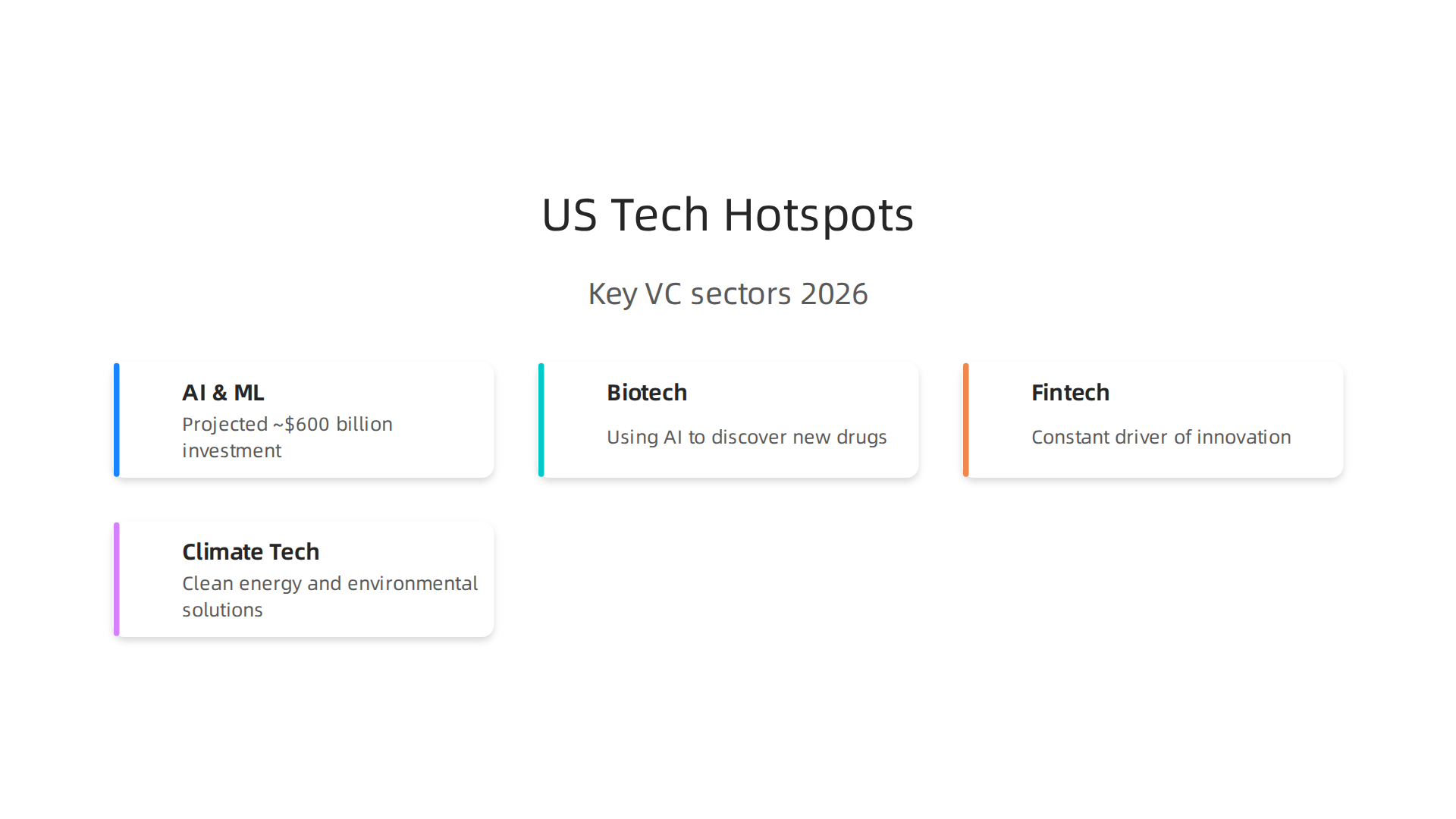
- Artificial Intelligence (AI) and Machine Learning (ML): This is by far the biggest area for investment. AI is projected to get close to $600 billion in the United States alone in 2026 AI Investments and Potential Government Stakes in Private. A huge chunk of this goes into AI infrastructure companies, which build the tools and systems that make AI work, and companies creating new, advanced AI models Startup Funding Report 2026: Trends, Stages, and Runway. This includes everything from complex algorithms to the hardware needed to run them. If you’re keen to understand more about these cutting-edge tools, exploring guides on choose AI platforms for 2026 business success can be really helpful.
- Biotech: The world of biotechnology is also attracting a lot of funds, especially for companies using AI to discover new drugs. Investors are seeing the potential for AI to speed up research and development in this area Cure’s AI Drug Discovery Funding Tracker 2026.
- Fintech: Financial technology continues to be a strong area. While specific large-scale data for 2026 isn’t broken out as intensely as AI, fintech remains a constant driver of innovation in the mass tech sector, especially with new ways to handle money and payments.
- Climate Tech: Money is pouring into companies that aim to solve environmental problems. This includes everything from clean energy solutions to better ways to manage resources. New funds are being set up just to invest in this vital area The Latest Climate Tech Deals and Funds #34. This focus shows a clear push towards sustainable creative technology solutions.
Other areas like defense technology are also seeing growth as investors look for companies with strong advantages Global Private Market Trends in 2026. Overall, the US tech funding scene in 2026 is very selective, favoring companies that can show real impact in these high-growth sectors. Staying informed about these rapidly changing sectors is crucial for founders and investors alike.
For those tracking the pulse of these dynamic markets, staying updated with daily insights can make a big difference.
The AI Newsletter Worth Reading provides clear daily AI updates from The Deep View Newsletter. The AI Newsletter Worth Reading
Now, let’s think about where this money and innovation are happening in the United States. In the fast-moving world of US tech, location really matters. Certain cities and regions have grown into powerful hubs where capital, smart people, and big successes come together.

Regional Hubs and Ecosystem Maps: How Place Matters
The US is home to many important tech centers. In 2026, the San Francisco Bay Area, often called Silicon Valley, still leads the pack as the top startup city in the world Best Cities for Startups and Entrepreneurs in the World 2026. This area continues to draw huge amounts of funding, especially with the boom in Artificial Intelligence, which guides much of the success in US tech ecosystems 2026 GLOBAL STARTUP ECOSYSTEM RANKINGS. For founders and investors interested in this region, understanding the latest in Silicon Valley startups is key.
Right behind the Bay Area is New York City, which is also a major global hub. NYC stands out for its strong financial technology (fintech) sector, as well as media and business software companies. If you’re focusing on this vibrant East Coast scene, learning about NYC tech startups can give you an edge. Other big cities like Boston and Los Angeles also keep their spots among the top places for startups.
Beyond these well-known centers, other cities are quickly becoming important secondary markets. Austin, Texas, for example, was named the world’s sixth-best startup ecosystem in a recent report, showing its growth as a leading emerging star in North America Austin named world’s 6th-best startup ecosystem ….
These regional ecosystems are different in important ways:
- Sector Specialization: Some hubs focus on specific industries. For instance, while Silicon Valley is known for deep tech and AI, New York is strong in mass tech like fintech and creative technology. Different regions attract different types of creative technology companies.
- Cost Structure: The cost of living and doing business can change a lot from one city to another. Places like the Bay Area and New York have higher costs for office space and hiring skilled workers. This can make cities like Austin or those in the Midwest more attractive for startups looking for lower operational expenses, yet still offering good talent pools. Understanding what makes a hi-tech city thrive often involves balancing these factors. Also, the quality of universities nearby can greatly impact the available talent, and how computer science ranking shapes startup hiring and investment is a big part of that.
These differences mean that choosing the right location for a startup isn’t just about where the most money is, but also about finding the best fit for a company’s specific needs, sector, and budget.
Finding the right place for a startup is just one part of the puzzle. Once you know where you want to build, the next step is to understand who can help you grow. In the busy world of US tech, different types of investors and helpers play a big role in a startup’s journey. These key players include Venture Capitalists (VCs), accelerators, and corporate investors, each with their own focus and what they look for.
Key players: VCs, accelerators, and corporate investors
These groups provide the money, advice, and connections that can turn a new idea into a big business. Knowing who they are and what they care about in 2026 is super important for anyone in the US tech scene.
Venture Capitalists (VCs)
Venture Capitalists are probably the most well-known type of investor for startups. They put money into companies that they believe will grow very fast and bring them a big return. VCs invest at different stages of a startup’s life, from very early on (Pre-Seed) to later growth rounds (Series A, B, C, and beyond). For example, a Pre-Seed round might be around $500,000, while a Series A could be $3 million, as shown by typical funding stages in 2026 Startup Funding Stages: Pre-Seed to Series E (2026) – DealRoom.
In 2026, VCs are looking closely at certain kinds of US tech. High-growth areas like deep tech, climate tech, and Artificial Intelligence (AI) are getting the most money Startup Fundraising 2026: A Founder’s Guide. AI infrastructure, which includes tools for training AI models and handling data, is especially popular and still gets a lot of investor interest Startup Funding 2026: Stages, Valuations & What Works. North American startups receive a very large share of funding for AI-native companies, especially in later stages The Global Startup Ecosystem Report 2026. Understanding what VCs look for can help founders prepare.
Accelerators
Accelerators are programs that help early-stage startups grow quickly. They offer mentorship, resources, and sometimes a small amount of money in exchange for a small piece of the company. These programs usually run for a few months and end with a "Demo Day" where startups present to many investors. Accelerators are great for companies that have a product and some early customers but need help scaling up. In 2026, many programs are recognized as America’s Best Incubators and Accelerators of 2026 because of their success in helping companies get more funding and grow.
Corporate Venture Arms (CVCs)
Corporate Venture Capital (CVC) arms are investment teams run by large companies. Unlike traditional VCs who invest purely for financial returns, CVCs often invest for strategic reasons. This means they want to support startups that might help their main business, offer new technology, or open up new markets. For example, a big car company might invest in a self-driving car startup.
In 2026, CVCs are heavily focused on areas like AI, robotics, and climate technology. They are looking for ways to improve their own operations and get a good return on their money 4 trends to look out for in corporate venture capital. This often means they write fewer, but larger, checks to startups that align with their company’s future goals Corporate Venture Capital: 5 Strategic Goals & 2026 Trends.
Syndicates and Other Investors
While VCs, accelerators, and CVCs are major players, other groups also help fund US tech companies. Syndicates, for example, are groups of individual investors who come together to invest in a single startup, often led by an experienced angel investor. This allows more people to participate in deals that might otherwise be too big or complex for one person. The overall trend for fundraising in 2026 shows that capital is chasing real innovations, especially in AI, climate tech, and defense technologies Funding Trends for 2026: What Founders Need to Know.
Understanding these different types of investors and what they’re looking for is a critical step for any founder trying to get money for their startup. For more detailed insights into the venture capital world, explore news venture capital 2026 market trends founder actionable steps.
Want to stay informed about the fastest-moving trends in AI that impact startup funding and investment?
The AI Newsletter Worth Reading
After getting money from investors, a big question for startups and their backers is how that money eventually comes back to them. This is called the "exit environment." It’s about the different ways investors can sell their stake in a company and make a profit. In the world of US tech, understanding these paths is key for both founders and investors. The main ways this happens are through Initial Public Offerings (IPOs), Mergers and Acquisitions (M&A), and the secondary market.
IPOs: Going Public
An Initial Public Offering (IPO) is when a private company first sells its shares to the public on a stock exchange. It’s often seen as a big success for a startup. However, in 2026, the overall number of exits, including IPOs, has been lower than in past years. For example, exits dropped to a two-year low in the first quarter of 2026 State of Venture Q1’26 – CB Insights Research. This means it has been harder for some US tech companies to go public, making this path less common right now. Still, for some large, successful companies, it remains a goal.
Mergers and Acquisitions (M&A)
Mergers and Acquisitions (M&A) are much more common. This is when a bigger company buys a smaller one, or two companies decide to join together. It’s a key way for investors to get their money back and for founders to see their company grow under a larger umbrella. Many private equity firms are active in this space, looking for companies to buy and help grow. In the first half of 2026, the number of such deals went down, but the average size of each deal grew a lot compared to 2025 Private equity: US Deals 2026 midyear outlook. This means that while fewer deals are happening, the ones that do happen are often bigger, with more money involved for established us tech companies. For more details on this, you can look at the private equity trends 2026 smart moves for founders and investors.
The Secondary Market
The secondary market is another way investors can sell their shares. Instead of waiting for an IPO or an M&A deal, existing investors can sell their shares to other private investors. This can happen when an early investor wants to cash out, or when employees with shares want to sell them before the company goes public. This market helps give some flexibility, letting investors get money out of their investments even if a full "exit" hasn’t happened yet for the company. Understanding the private equity landscape 2026 top firms trends and where the smart money flows can give you more insights into these market activities.
What This Means for Founders and Investors
For founders in the us tech world, these trends mean that while getting acquired (M&A) is a very likely path, going public is harder right now. Investors, especially those in mass tech and creative technology, need to plan for how they will get their money back. They might need to be patient or look at selling shares in the secondary market. Knowing these options helps everyone involved make better plans for the future of their companies, whether in trade tech or ccs global tech.
Beyond how money comes in and out, the daily workings of a US tech company are shaped by who they hire and the rules they must follow. These factors are very important for how much a startup can grow.
Talent, hiring dynamics, and regulatory factors impacting growth
Finding the right people is key for any company, especially in fast-moving sectors like us tech. In 2026, the job market for tech has seen some big changes. After losing jobs last year, tech employment is expected to grow by about 185,500 positions this year Need to Know Briefing | March 23, 2026. This means there are more opportunities, but also more competition for skilled workers.
Many companies are still figuring out the best way to work: remote, in the office, or a mix of both. This choice affects how companies like those in mass tech or creative technology find their teams. Visa and immigration rules also play a big part. Major changes to US immigration in 2025 and 2026 are changing how employers hire people from other countries The Policy Trends Behind the 2026 U.S. Immigration …. For instance, there are new rules for H-1B visas, which can make it harder for some tech companies to bring in international talent. Understanding these changes is vital for planning global workforces, as detailed in this global work AI playbook for founders and investors.
Next, rules from the government are a growing concern for many us tech businesses. These regulatory trends cover things like privacy and how artificial intelligence (AI) is used.

In 2026, AI data privacy rules are no longer just ideas; they are real legal risks that can lead to action AI Data Privacy Obligations: What Businesses Need To Know. States across the US are adding new privacy laws and rules for AI governance. The years 2024 to 2026 have seen a big jump in AI regulations, with many states making their own laws Privacy as the Foundation of Responsible AI Governance. Companies in trade tech and ccs global tech, for example, must keep up with these rules to avoid problems. Choosing the right tools and strategies to handle these new rules is important for business success. For more help, you can learn how to choose AI platforms for 2026 business success. These rules add a layer of complexity for any startup looking to scale up.
To make smart choices in the US tech world of 2026, founders and investors need to look closely at all the signals around them. This means having a clear plan for finding good deals, hiring the best people, and knowing when to ask for money.
Tactical takeaways: how founders and investors should use these signals
It is important to turn all the information we talked about into actions. For founders, this means knowing where the money is going and what investors want. For investors, it means finding the most promising US tech companies.
**Actionable Signal Checklist for Deals and Hires
**
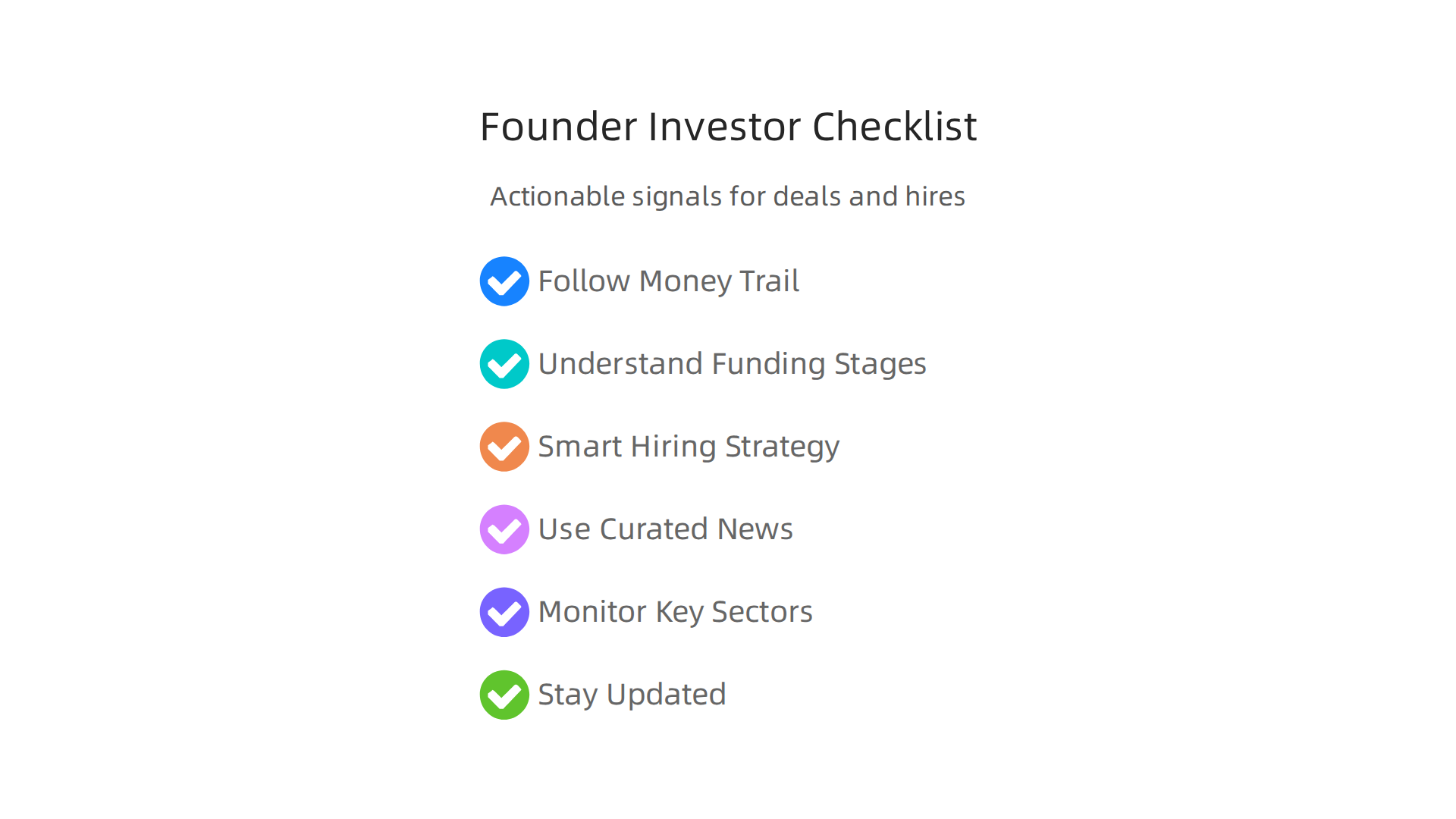
- Follow the Money Trail: In 2026, a lot of investment is flowing into special areas like deep tech, climate tech, and artificial intelligence (AI) Startup Fundraising 2026: A Founder’s Guide. Companies in mass tech and creative technology that use AI are often seen as very valuable. If your startup is in one of these hot areas, you might have an easier time getting funding.
- Understand Funding Stages: Knowing the typical amounts and company values for each funding stage, from pre-seed to Series E, can help you time your fundraising efforts well Startup Funding Stages: Pre-Seed to Series E (2026). For example, early-stage funding has started to grow again, while late-stage funding has jumped a lot, especially for big AI companies. You can also explore how to find investors for a startup in 2026.
- Smart Hiring Strategy: The job market for us tech is growing, but good talent is still hard to find. Look at new ways of working, like remote teams, and be ready for changes in immigration rules. For example, using specialized AI platforms can help creative technology companies find the right people and stay competitive.
Practical Sources and Monitoring Tactics
With so much happening, it’s easy to feel lost in all the news. Founders and investors need good ways to keep up without getting overwhelmed.
- Use Curated News: Instead of trying to read everything, focus on trusted sources that give you clear, useful summaries. This helps you keep an eye on venture capital activity and market trends without drowning in too much information. You can find more focused insights through curated tech news for founders and investors.
- Monitor Key Sectors: Pay special attention to reports that talk about investment in areas like climate tech, trade tech, and ccs global tech. These reports can show you where new funds are appearing and what kind of companies are getting funded.
- Stay Updated on AI: AI is a huge part of the US tech scene in 2026. Keep track of new AI platforms and how they are used. This helps you understand what is new and what risks might be there, especially with data privacy rules. If you want clear daily AI updates, consider subscribing to The AI Newsletter Worth Reading.
By using these tactics, founders and investors in us tech can make better choices and increase their chances of success in the changing landscape of 2026.
Summary
In 2026 the US tech ecosystem remains a dominant engine for innovation because of large capital flows, deep talent pools, and concentrated innovation hubs. This article explains how funding patterns have shifted toward fewer but much larger deals, why AI is drawing the biggest share of investment (with US AI investments approaching hundreds of billions), and which sectors—like biotech, climate tech and fintech—are attracting attention. It breaks down where money goes across funding stages, how regional hubs like Silicon Valley and Austin differ, and which investor types (VCs, CVCs, accelerators) to target. The piece also covers the current exit environment—fewer exits but larger deal sizes—plus hiring dynamics and rising AI/privacy regulation that founders must navigate. Finally, it gives practical signals and a tactical checklist so founders and investors can prioritize deals, plan hires, and monitor the right news and tools to act faster and smarter in 2026.