
How to Choose and Implement Enterprise Tech Solutions and Hardware in 2026
Why enterprise tech solutions and hardware matter right now
In 2026, businesses everywhere are seeing big changes thanks to new technology. It’s not just about having the latest software or the fastest tech computers. It’s about making sure all these different tech solutions work together perfectly. This helps companies reach their goals and get real business results.
Think about it this way: your business needs smart tools that don’t just sit there. They need to connect, share information, and help you get things done. This often means carefully choosing both software and hardware so they fit like puzzle pieces. The big challenge is to make sure these pieces work well together to deliver what you need, without getting stuck with one company’s products forever. We want to avoid what we call "vendor lock-in," where switching to another system becomes too hard or costly.
The amount of money spent on IT around the world is huge. Experts expect global IT spending to reach almost $5 trillion by 2026, with many businesses putting money into software, services, and hardware. Data centers, which are important for storing and managing information, are growing especially fast because of the demand for AI tools, as noted in the 2026 Global Hardware and Consumer Tech Industry Outlook. This shows just how much businesses rely on strong enterprise tech solutions.
For founders, investors, and leaders in company IT, understanding this world of tech solutions is super important.

They need clear ways to decide where to put their money, what to buy, and how to put new systems in place. Knowing what makes a good tech investment now can mean big success later. Staying informed about these trends, especially in areas like AI and digital changes, is key.
If you are a founder or investor looking for smart insights, check out The AI Newsletter Worth Reading to get clear daily AI updates from The Deep View Newsletter. It’s one way to keep up with the fast pace of innovation.
Why enterprises adopt integrated tech solutions and hardware
Businesses today want their different tech solutions and hardware to work together like a well-oiled machine. It’s not enough to have individual smart tools. Companies want these tools to connect smoothly to get the best results. They choose integrated tech solutions and hardware for important reasons like better performance, stronger reliability, and lower overall costs over time.
When software and hardware are designed to work together, everything runs faster. Imagine having really fast tech computers that are also using software made just for them. This tight connection means the systems perform better and don’t slow down. This also makes the whole setup more reliable. Fewer glitches mean less time wasted and more work getting done. Plus, when one company provides both the software and the hardware, it’s easier to know who is responsible if something goes wrong. This is called vendor accountability. It helps businesses avoid headaches and get problems fixed quickly. Businesses also look at the Total Cost of Ownership (TCO), which means all the costs of owning and using the tech, not just the sticker price. Integrated systems can often lower this TCO because they are simpler to manage and maintain.
But getting these integrated tech solutions isn’t always easy. Companies face some common problems.
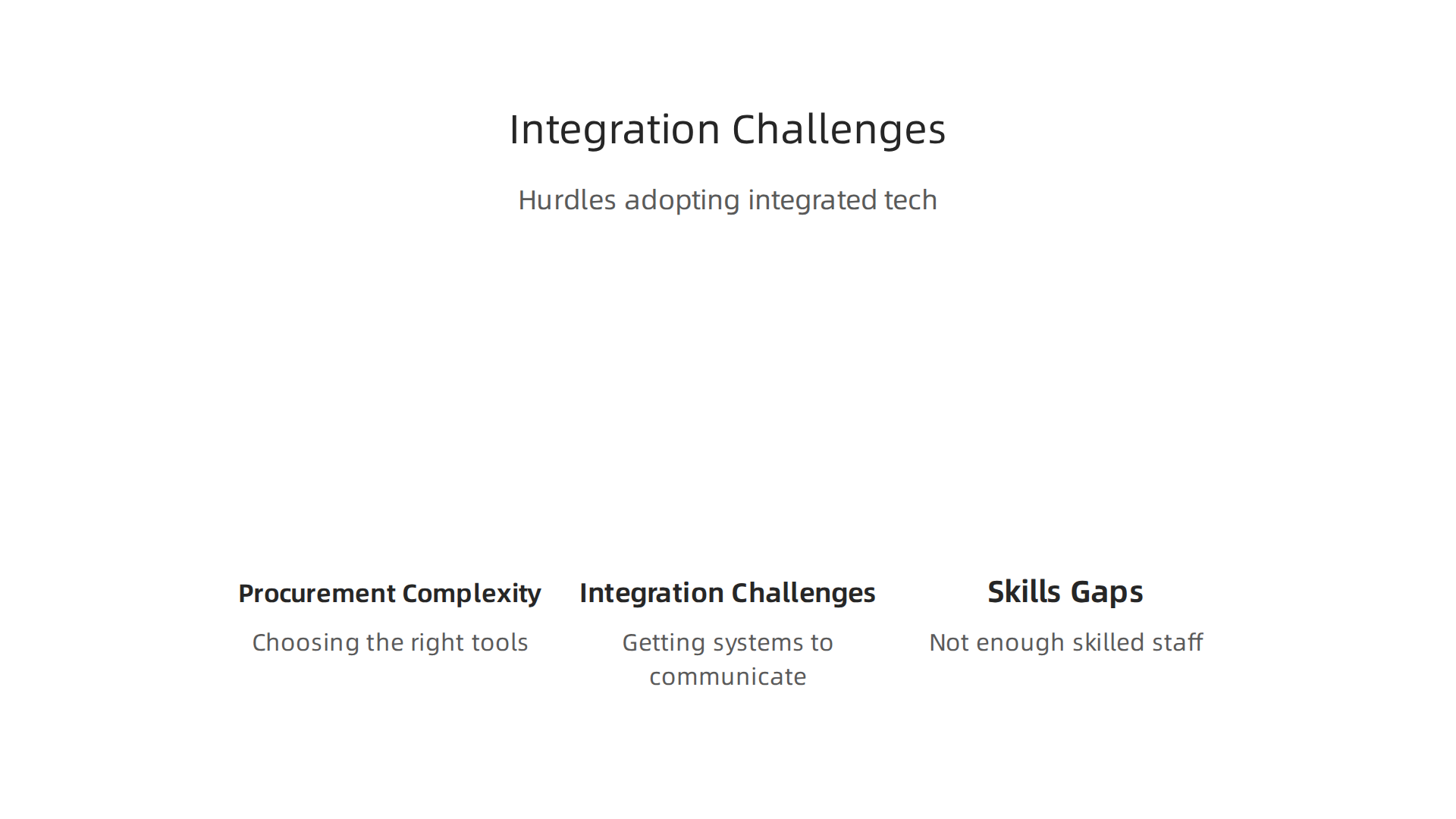

One big challenge is procurement complexity. There are so many kinds of tech solutions out there, like specialized esr tech for different needs, that choosing the right ones can feel like a puzzle. Knowing how to pick the best tools that will fit perfectly together is a big job. To help with this, it’s wise to learn how to choose and evaluate new systems. For example, understanding how to pick the best AI tools is very important for many companies today. You can learn more about this by reading our guide on how to evaluate AI platforms for your startup in 2026.
Another tough spot is integration challenges. Even when you buy all the right pieces, making them all talk to each other can be hard. It’s like having parts from different toy sets that you want to put together. Sometimes they just don’t fit well. This means it takes longer for businesses to actually use the new tech and see its benefits. This delay is what we call slowing down "time-to-value." Many businesses find these integration tasks difficult, and a report in 2026 showed that some companies get a big return on investment from good integration tools, helping them to avoid these delays Enterprise Integration Statistics & Trends – 2026 Market Report.
Lastly, there’s the problem of skills gaps. Sometimes, companies don’t have enough people who know how to set up, manage, and fix these complex integrated systems. This means they might have great new tech, but not enough experts to make it work at its best. These challenges can make it harder for businesses to fully enjoy the advantages that integrated tech solutions and hardware promise.
Key enterprise tech solution categories: software, platforms, and hardware
While bringing together different tech solutions can be tricky, understanding the main types of these tools helps businesses make better choices. These solutions generally fall into three big groups: software, platforms, and hardware.
Each group serves different needs and suits different kinds of work.
First, let’s talk about software. This includes Software as a Service (SaaS) and other enterprise software. SaaS means you use software over the internet, like a website, without installing it on your own computers. Think of tools for customer support, team communication, or managing projects. Enterprise software is usually bigger and made for large companies, helping with things like finances, planning, or human resources. These software programs are used by many different people in a company, from business managers to operations teams. They handle common business tasks, like running virtual machines or websites, and delivering online content, as noted in the IDC Refreshes Enterprise Workload Taxonomy for 2026. If you’re looking for the right software, it’s wise to explore how different options stack up. You can learn more by checking out a comparison of AI Platforms 2026 Compared for Startups and Enterprises.
Next are platforms, which can be on-premise or hybrid. "On-premise" means the platform and all its data live on your company’s own servers, giving you full control. "Hybrid" means you use a mix of your own servers and cloud services. These platforms are often used by IT departments or data experts who need to manage important information and applications. They’re good for serious work like data analysis or running large data warehouses, especially if the data is sensitive or needs to stay private. For figuring out where your company’s important AI tasks should run, whether on your own servers or in the cloud, a guide on The Strategic Guide to Cloud, On-Prem, and Edge AI Architecture can be very helpful.
Finally, we have hardware. This category includes edge devices and purpose-built hardware. Edge devices are small computers or sensors that collect and process data right where it’s created, like in a factory or a smart city camera. They don’t have to send all data back to a main data center, which makes things faster. Purpose-built hardware, on the other hand, is made for very specific tasks, often for advanced computing like artificial intelligence (AI). For example, special AI accelerators help run AI programs much faster and more efficiently. The market for Edge AI Hardware is growing fast in 2026, showing how important these devices are becoming.
These hardware solutions are essential for different workloads:
- Data centers: These are big rooms full of computers that handle traditional business applications, running many virtual machines and web services.
- Edge/Operational Technology (OT): Here, businesses deploy computing power directly where the work happens, for things like industrial automation or real-time analytics. This helps protect private information and ensures systems keep working.
- AI inference: This is where AI models use data to make predictions or decisions. This needs powerful hardware with plenty of memory for both the main computer and the special AI chips, as discussed in guides about How Much RAM for AI Workloads. These high-performance hardware solutions are key for handling the complex needs of modern AI.
After learning about the different types of hardware and their uses, the big question is: How do you choose the right hardware for your business?

Picking the best hardware stack means looking at many things to make sure it fits your company’s goals and helps you succeed.
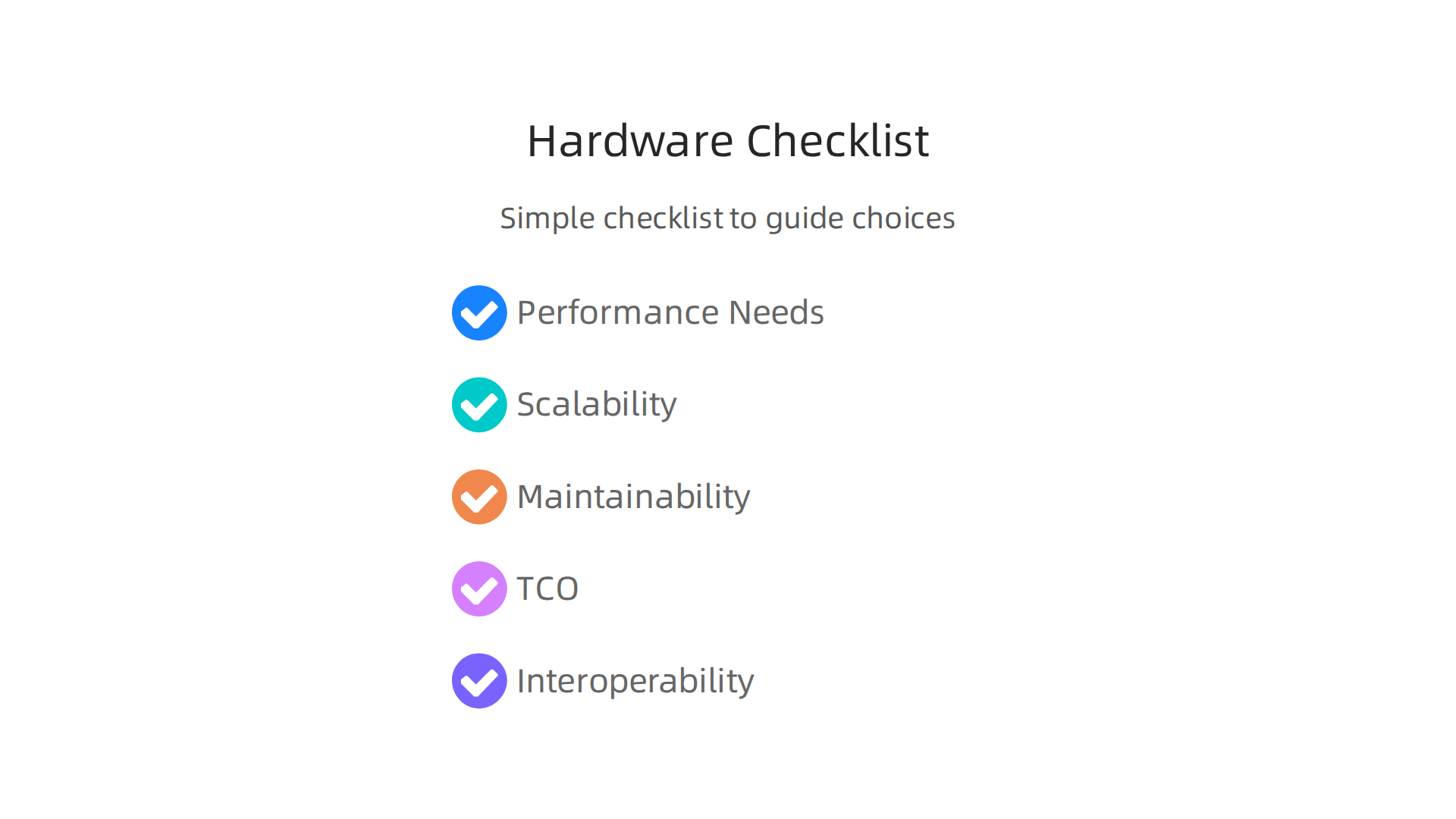
Here’s a simple checklist to guide your hardware choices:
Performance Needs
First, think about what your hardware needs to do. Will it run regular business programs, handle huge amounts of data, or power complex artificial intelligence (AI) tasks? For example, AI tasks, especially those using large language models, need very powerful machines with a lot of memory, both for the main computer and for special AI chips. You might need servers with hundreds of gigabytes of RAM or more, as discussed in guides about What Hardware Is Needed for AI?. For high-performance computing, such as running big calculations or complex simulations, you’ll need even more powerful tech solutions like modern HPC servers. These often feature fast tech computers with multi-tiered memory systems and specialized accelerators, as seen in What Modern HPC Servers Actually Look Like in 2026.
Scalability
Can your hardware grow with your business? You don’t want to buy new hardware every year. Look for systems that can be easily upgraded or expanded. This means adding more memory, faster processors, or more storage without replacing everything. Think about future needs for your tech solutions, not just today’s needs.
Maintainability
How easy is it to keep the hardware running smoothly? Consider how much work it will take to maintain the system, including updates, repairs, and daily checks. Simpler systems can save time and money in the long run. Good support from the hardware maker is also important.
Total Cost of Ownership (TCO)
The initial price tag is just one part of the cost. You also need to think about power usage, cooling, maintenance, software licenses, and the staff needed to manage it. These hidden costs can add up fast. Always look at the full cost over several years to get a real picture, which is an important step when you Evaluate RFP Responses and Score Vendors Objectively.
Interoperability with Existing Systems
Will the new hardware work well with your current software and other tech solutions? You want everything to connect smoothly, like different parts of a team working together. If new hardware doesn’t "talk" to your old systems, it can cause big problems and extra work.
Aligning Hardware Choices with Business Outcomes
Choosing hardware isn’t just about technical specs; it’s about what your business needs to achieve.
- Latency: How fast do things need to happen? If you’re dealing with real-time data, like for self-driving cars or urgent financial trading, you need hardware that can process information with very low latency. Edge devices, which process data close to where it’s collected, are often chosen for these needs.
- Throughput: How much work can your hardware do at once? If your business handles a huge number of customer requests or processes vast data sets, you need high-throughput hardware that can manage many tasks at the same time.
- Security: How important is protecting your data? Some businesses need their data to stay entirely on their own property for security reasons. Other businesses can use cloud-based solutions but must still ensure strong security measures. Hardware choices can greatly affect how secure your data is.
- Total Cost: As mentioned, balance the cost with the benefits. Sometimes, spending a bit more on better hardware upfront can save a lot of money and headaches later.
By carefully considering these points, businesses can choose tech solutions that not only meet their current needs but also help them grow and succeed in the future. Understanding how to Choose AI Platforms for 2026 Business Success can further inform these hardware decisions, as the platform often dictates the underlying hardware requirements.
Once you have a good idea of the hardware and tech solutions your business needs, the next big steps are putting them into action and picking the right partners. This means not just buying new items, but also making smart plans for how to use them and how to work with the companies that sell them.
Implementation Strategies and Vendor Evaluation
Bringing new tech solutions into your business should be a thoughtful process. You want to make sure they work well and help your team. This often starts with trying things out on a small scale before going big.
Trying Out New Tech: Pilots and Phased Rollouts
It’s a good idea to test new hardware or software before everyone in your company starts using it. This is where pilot programs come in handy. A pilot program means you try the new tech with a small group of people or in a limited way. This helps you see if it truly works for your business.
To make a pilot program successful, you need to know what "success" looks like beforehand. For example, if you are testing new fast tech computers, success might mean they make tasks 10% faster for the test group. Setting clear goals for your pilot helps you know if the new tech is a good fit. It’s important to define clear success metrics to avoid wasting time and money, as noted in a guide about The Workplace Indoor Mapping & Wayfinding RFP Playbook. After a pilot, you can turn what you learn into a plan for rolling out the tech to more people, according to advice on turning pilot results into scalable rollout plans.
After a successful pilot, you can do a phased rollout. This means you slowly introduce the new tech solutions to more and more people. Instead of changing everything at once, you add it in steps. This way, if any problems pop up, you can fix them easily before they affect everyone.
Choosing Your Tech Partners: RFPs and Vendor Agreements
When you need new tech solutions, you might ask different companies to tell you about their products and services. This often starts with a Request for Information (RFI) or a Request for Proposal (RFP). An RFI helps you learn about what’s out there, while an RFP asks for a detailed plan and price from vendors for your specific needs. Experts suggest a staged approach, starting with an RFI and moving to an RFP for finalists, which is outlined in the RFI/RFP Design and Execution process.
When you look at different vendors, don’t just pick the cheapest option. You should score them on many important things, not just price.

Think about how reliable they are, how well their tech works, and how good their customer support is. Using a scorecard can help you compare vendors fairly. This idea is supported by advice on Mastering the Vendor Selection Process, which recommends weighted scorecards.
A very important part of any agreement with a tech vendor is the Service Level Agreement (SLA). This is like a promise from the vendor about how well their service will work. For example, an SLA might say that their system will be available 99.99% of the time, or that they will fix problems within a certain number of hours. If they don’t meet these promises, there might be penalties. A comprehensive SLA is critical for businesses in 2026, as highlighted in SLA Requirements documents. These agreements ensure that you get the performance you paid for and that your business keeps running smoothly.
Sometimes, before you commit fully, a vendor might offer a proof-of-concept (PoC) agreement. This is similar to a pilot but often even more focused on proving a specific part of the tech works as expected. For businesses using advanced tech, like AI, it is also smart to consider Managing AI Vendor Risk to make sure your data is safe and the tech acts as it should.
By planning how you will put new tech into place and carefully choosing your vendors, you help ensure that your investment in new tech solutions will pay off and help your business grow.
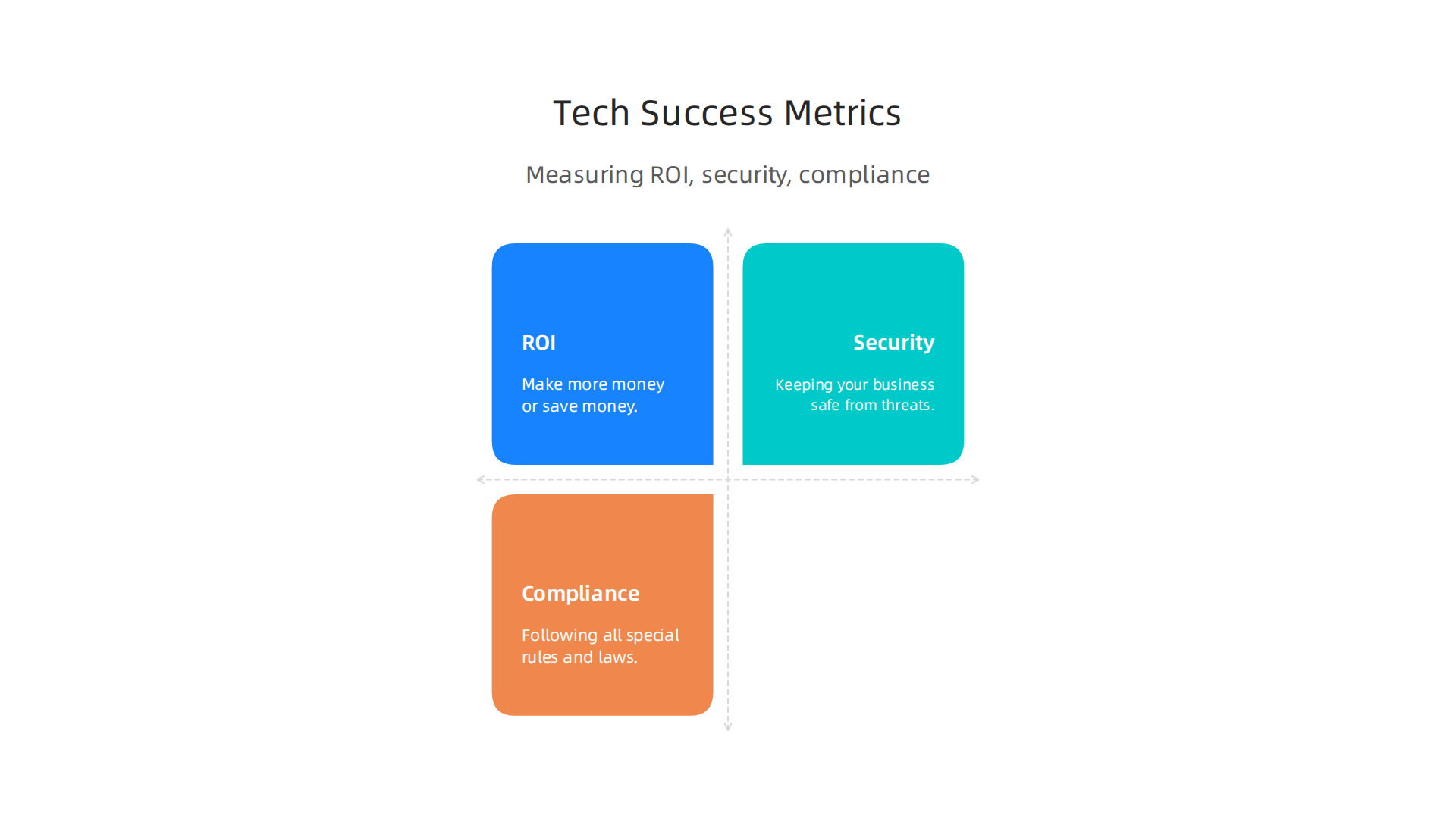
Bringing new tech solutions into your business is a big step. Once you pick your partners and set things up, you need to know if your choices are truly helping. This means looking at how much money you get back from your investment, making sure your systems are safe, and following all the rules.
Measuring ROI, security, and compliance for enterprise tech
It’s super important to measure how well your new tech works. This helps you understand if the money you spent was worth it.
Getting Your Money’s Worth: Return on Investment (ROI)
ROI stands for Return on Investment. It’s a way to see if your new tech helps your business make more money or save money. When you figure out the ROI for your tech solutions, you need to think about all the costs involved. It’s not just the price tag of the new items, like a fleet of fast tech computers. You also need to add in:
- How much the hardware loses value over time: This is like a car losing value after you buy it.
- Support costs: What you pay to keep the tech working, like IT help or updates.
- Running costs: Things like electricity, special software, or training your team.
Forrester research from 2026 showed that some companies got a huge 351% ROI over three years from their tech investments, often by using automation and saving money on following rules and cloud services, according to a study by Sentra. Another study found that for every dollar put into cybersecurity, businesses got about $3.50 back by avoiding losses, as noted in a guide on Cybersecurity Budget 2026. These numbers show that smart tech choices can really pay off. When looking at the full picture, remember to also think about other good things, like how much faster your team works or if customers are happier.
Keeping Your Business Safe: Security
When you use new tech, keeping your business safe from online threats is a must. This is called security. For big businesses, this means having strong rules and systems in place to protect all your important information and tools. Here are some key checkpoints:
- Protecting your data: Making sure sensitive information is locked up tight, so only the right people can see it.
- Stopping bad guys: Having systems that stop hackers or viruses from getting into your computers.
- Checking for weak spots: Regularly looking for any places where your security might not be strong enough.
Measuring how well your security works is called Return on Security Investment (ROSI). It helps you see the money you save by avoiding problems like data breaches or system downtime. In 2026, many businesses are using new ways to track how well their cybersecurity investments are doing, often by looking at how fast they can fix problems and how much they automate security tasks, as outlined in a data-driven framework for measuring cybersecurity ROI.
Following the Rules: Compliance
Compliance means following all the special rules and laws that apply to your business. This is extra important for businesses in certain fields, like healthcare or banking, where there are strict rules about protecting customer information.
- Understanding the rules: Knowing all the different laws and rules your business must follow, both locally and globally.
- Setting up systems: Making sure your tech solutions are set up in a way that helps you follow these rules. For example, if you collect customer data, you need to store it safely according to privacy laws.
- Regular checks: Doing regular checks to make sure you are still following all the rules.
In 2026, many businesses are finding that automated tools can help a lot with compliance, saving them a lot of money. Some companies have saved over $640,000 in a year by automating their compliance efforts, as shown in an analysis of SaaS compliance automation ROI. It makes sense to choose tech that helps you meet these important rules without too much extra work.
By carefully measuring ROI, making sure your tech is secure, and staying on top of compliance, your business can grow strong and stay safe in the busy world of 2026.
If you want to keep up with the latest in AI and tech, we recommend checking out The AI Newsletter Worth Reading for daily updates.
By carefully measuring ROI, making sure your tech is secure, and staying on top of compliance, your business can grow strong and stay safe in the busy world of 2026. But what about what’s coming next? It’s wise to look ahead and plan for the new waves of tech that are changing how businesses work.
Trends and future-proofing: AI, edge computing, and custom hardware
The world of technology is always moving fast. To stay ahead, businesses need to know about the newest trends and pick tech solutions that can grow and change with them. In 2026, some big trends are making waves, especially in AI and how it works with hardware.
What’s Hot Right Now in Tech
Many exciting changes are happening in technology. Here are a few key ones:
- AI inference at the edge: This means making AI work closer to where data is actually created, like on a smart camera or a factory machine, instead of sending everything to a big cloud server. This makes things much faster and uses less power. The market for Edge AI hardware is expected to grow a lot between 2026 and 2031. This shift helps businesses get answers from their data quicker. You can think of it like having a small, smart brain right where the action is.
- Specialized accelerators: For AI to work its best, we need special computer parts. These are called accelerators. While regular computer chips (CPUs) and graphics chips (GPUs) are used, more and more companies are using custom-made chips called ASICs. These ASICs are built just for AI tasks and are becoming super important. In fact, custom ASICs are growing much faster than GPUs for AI tasks, signaling a big change in AI Chip Hardware Acceleration Trends for 2026. This is especially true for AI working at the edge, where custom chips help with efficiency and speed, as highlighted in the 2026 Edge AI Technology Report. These special chips are key for making fast tech computers even faster for AI tasks.
- Composable infrastructure: This is a fancy way of saying businesses are building their computer systems with parts that can be easily swapped in and out. It’s like building with LEGOs, where you can change pieces to fit new needs. This makes it easier to add new tech without overhauling everything.
Overall, enterprise spending on AI systems is set to go past $300 billion in 2026, with most businesses already using AI in some way, according to 67 AI Adoption Statistics for 2026. And more enterprise apps will use AI agents by the end of 2026, showing how much AI is being woven into daily business operations, as detailed in the 2026 Global Software Industry Outlook.
Making Your Tech Last: Future-proofing
When you pick new tech solutions, you want them to be useful for a long time. Here’s how to make sure your purchases stay relevant:
- Modular architectures: Choose tech that is built in pieces. This way, if one part becomes old or needs an update, you can just replace that one part instead of having to buy a whole new system. This can save money and hassle in the long run.
- Upgrade paths: Look for tech that has clear ways to be upgraded. Can you add more power? Can you update the software easily? Making sure your tech can grow with your business is super important. This is true for things like upgrading internal systems or even improving a cell tech system to handle more users.
- Vendor ecosystems: Pick companies that offer good support and have a plan for the future. A strong "ecosystem" means they work well with other tech and offer many options. This helps you avoid being stuck with old tech or not being able to find help when you need it. When choosing new AI platforms for 2026 compared for startups and enterprises, this becomes even more important.
By keeping these trends and future-proofing tips in mind, businesses can make smart choices that will help them succeed not just today, but for many years to come.
Summary
This article explains why enterprise tech solutions and hardware are critical for businesses in 2026 and outlines how to choose, implement and measure them effectively. It covers the main solution categories—software (SaaS and enterprise apps), platforms (on‑premise and hybrid) and hardware (data center, edge devices, AI accelerators)—and shows how integration, vendor accountability and total cost of ownership affect real business outcomes. You’ll get a practical hardware checklist covering performance, scalability, maintainability, interoperability and security, plus guidance on pilots, RFPs, SLAs and vendor scorecards to reduce risk. The piece also explains how to measure ROI and Return on Security Investment, comply with regulations, and plan for trends like edge AI and custom chips so your investments stay useful over time. After reading, founders, IT leaders and investors will know how to evaluate options, run pilots, score vendors objectively and build a future‑proof tech stack that aligns to business goals.