
ARK Venture Fund Performance Strategy and Risks in 2026

Introduction: Why the ARK Venture Fund Matters in 2026
Have you ever wished you could invest in a hot startup before it goes public? For most people, that door stays locked.

Only big venture capital firms and wealthy accredited investors usually get in. But in 2026, a growing number of investors are finding a new way in through the ARK Venture Fund.
Launched in September 2022, this fund is different from traditional venture capital. Instead of locking your money away for ten years, it is an evergreen fund that lets investors enter and exit more freely. And it doesn’t just stick to private companies. The ARK Venture Fund can hold shares of companies at any stage, from early startups to giant public firms. That mix gives everyday investors a rare chance to own pieces of disruptive businesses in artificial intelligence, genomics, and fintech.
Why does this fund matter right now? In 2026, the ARK Venture Fund has become a bellwether for thematic venture investing. Its performance and strategy offer clues about where the next wave of innovation is heading. Whether you are a founder looking for funding sources, an investor tracking market trends, or just someone curious about the future, understanding this fund is critical. It also sits in a landscape that includes other players like the hustle fund, ironhorse funding llc, and capital group american funds. But the ARK Venture Fund stands out because it is run by Cathie Wood’s team and focuses on high-growth, disruptive technologies.
To get a bigger picture of how venture capital is changing, check out our guide on the biggest investment companies of 2026 and their impact on startups and investors.
Staying on top of fast-moving tech trends is tough. That is why we also recommend subscribing to The Deep View Newsletter, a daily newsletter that delivers clear, curated AI updates to your inbox. It helps you stay informed without the noise.
Background and History of the ARK Venture Fund
Cathie Wood and her team at ARK Invest saw a big gap in the market. Regular investors could easily buy shares of public companies like Tesla or Apple. But getting into promising private startups before they went public? That was nearly impossible for most people. So in September 2022, ARK launched the ARK Venture Fund (ticker: ARKVX) to change that.
The fund launched on September 23, 2022, with a clear mission. It aimed to give individual investors a rare chance to participate in private growth-stage rounds. As noted on the official ARK funds page, the fund seeks to "democratize venture capital" by offering access to all investors, not just the wealthy few.
Here is what made the fund different from day one.
Instead of a traditional VC structure that locks your money up for a decade, the ARK Venture Fund is an "evergreen" fund. That means investors can enter and exit more freely. It is registered as a non-diversified closed-end interval fund with the SEC, so it follows a unique set of rules.
The fund typically holds between 25 and 50 positions at any time. And it has a special advantage. Unlike most venture funds that only buy private companies, this fund can hold shares of companies at any stage. It moves from early startups to massive public firms without skipping a beat.
Early investments focused on the same high-growth areas ARK is known for: artificial intelligence, genomics, and fintech. The minimum investment was set at $500, which made it far more affordable than traditional venture capital.
Over time, the fund grew its assets under management and built a track record. It sits alongside ARK’s popular ETFs but focuses specifically on pre-IPO opportunities. For anyone tracking the startup ecosystem, this fund became a useful window into where smart money is flowing.
If you want to understand how the broader funding landscape works in 2026, check out our guide on venture capital firms for small businesses.
And if you want to stay informed about fast-moving tech trends without the noise, The Deep View Newsletter delivers clear daily AI updates straight to your inbox.
The Vision Behind ARK Invest’s Venture Arm
So what is the big idea here? Cathie Wood has always believed that the biggest returns come from companies that are changing the world. Her entire investment philosophy is built on open-ended research and high-conviction bets. That means she and her team spend time studying massive trends like artificial intelligence, genomics, and fintech. Then they put money behind the companies leading those changes.
The ARK Venture Fund takes that same approach and brings it to private markets. The main goal is to capture returns from disruptive companies before they ever go public.

Think about it this way. If you could have invested in a startup years before its IPO, your returns could have been much larger. That is the type of opportunity this fund aims to unlock for everyday investors.
According to ARK’s official page, the fund seeks to "democratize venture capital" by offering access to all investors. It does this differently than a typical VC firm. The fund holds shares of companies at every stage, from early startups to giant public firms. As noted on the ARK portfolio page, it "can hold shares of companies throughout their private and public market lifecycles, from early stage to mega cap." That flexibility is a core part of the vision.
Here is another thing that stands out. Unlike traditional venture capital, which can feel like a black box, this fund operates with transparency. ARK publishes its holdings and research regularly. You can actually see what they are buying and why. For anyone used to the secretive world of private equity, that is a breath of fresh air.
The fund sits alongside ARK’s bigger ETFs but is separate from them. It gives you a direct window into where some of the smartest money in tech is flowing. If you want to understand how other major players compare, check out our breakdown of the biggest investment companies of 2026 and their impact on startups and investors.
And if you want to stay ahead of the fast-moving trends that funds like this are betting on, The Deep View Newsletter delivers clear daily AI updates straight to your inbox.
Key Milestones and Growth Trajectory
So how has the ARK Venture Fund performed since its big launch on September 23, 2022? Its journey so far is marked by strong growth and greater access for everyday investors.
AUM Growth
The fund has attracted substantial assets under management (AUM). While other players like the hustle fund or ironhorse funding llc may target different niches, ARK’s transparent approach has clearly resonated with a large audience.
Lowering the Barrier to Entry
One huge milestone was the minimum investment. It dropped to just $500. This change, highlighted by Titan, made the fund an "evergreen fund." It threw open the doors for non-accredited investors to join. This directly challenges big players like capital group american funds by offering something truly different.
Building a Strong Portfolio
The fund typically holds 25 to 50 positions. Major portfolio additions have included names like SpaceX, Epic Games, and leading AI startups. The fund holds these companies through their public and private lifecycles, as noted on the official strategy page.
This path shows a clear hunger for private market access. If you want to see how other major players compare, check out our breakdown of the biggest investment companies of 2026 and their impact on startups.
And to stay ahead of these fast-moving trends, The Deep View Newsletter delivers clear daily AI updates straight to your inbox.
Investment Strategy and Thesis
Now let’s get into what actually makes the ark venture fund tick. This is not your typical venture capital play. ARK Invest has built a focused, long-term strategy that looks very different from what you might find with a firm like the hustle fund or even ironhorse funding llc.
The fund concentrates on just five disruptive innovation platforms: Artificial Intelligence, Genomics, Fintech, Autonomous Technology, and Blockchain.
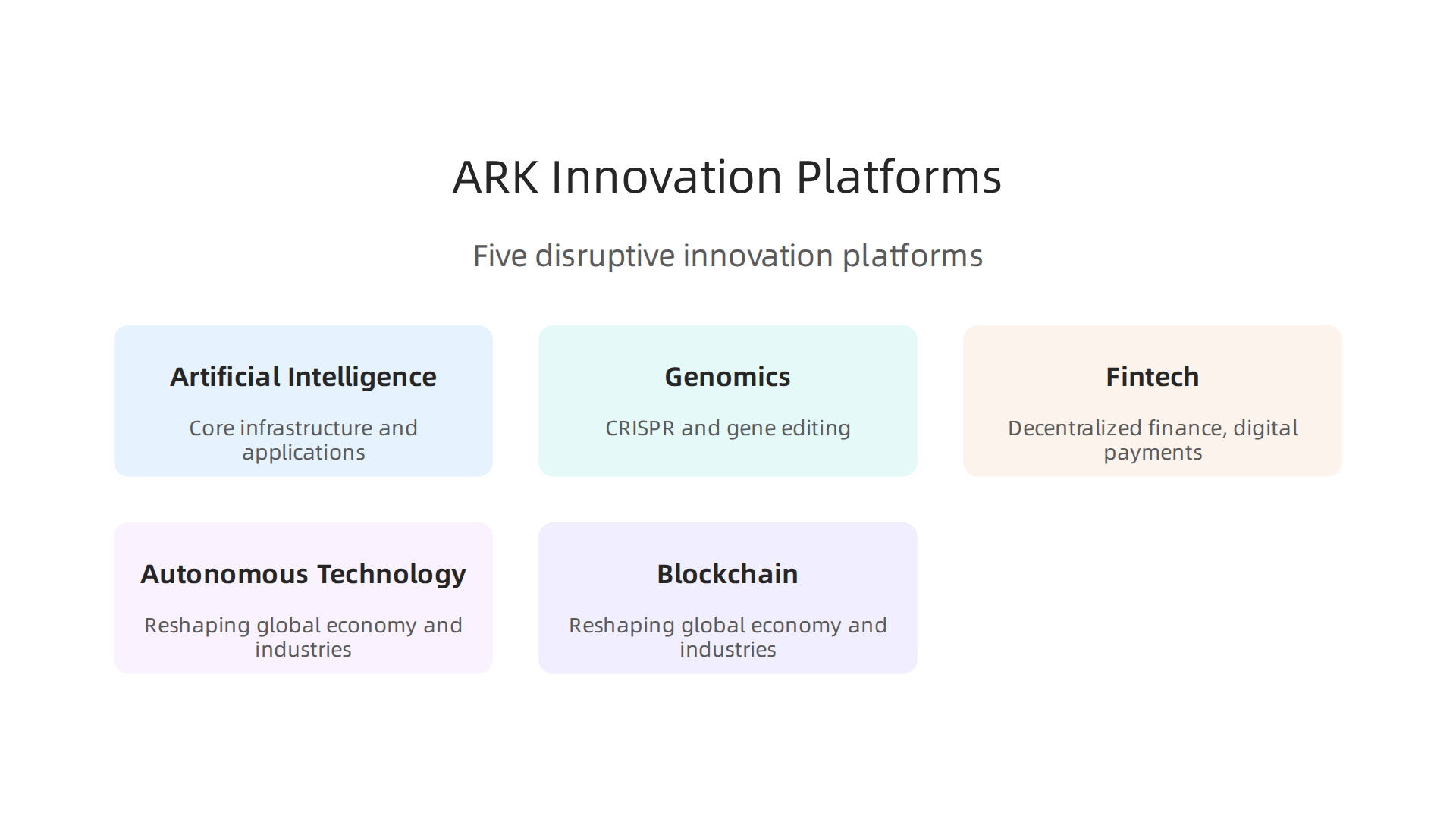
That is it. Instead of spreading bets across dozens of random industries, ARK goes deep on these areas. They believe these five platforms will reshape the global economy, as their Big Ideas 2026 report outlines in detail.
Here is the key difference. Most venture funds take small, scattered stakes in tons of startups. The ARK Venture Fund does the opposite. It typically builds larger positions in a smaller number of companies compared to other venture funds. The fund typically holds 25 to 50 positions, as highlighted on their official strategy page. This concentrated approach means each pick really matters.
And the time horizon? Think long game. The strategy runs on a 5 to 7 year cycle. They are looking for companies with exponential growth potential, not quick wins. This is the same patient approach that lets them hold names like SpaceX through their public and private lifecycles, as detailed in their SpaceX IPO guide.
This focused, patient strategy is a direct challenge to traditional players like capital group american funds. It is designed for investors who believe the next decade belongs to disruptors.
Want to see how this compares to other major funding players? Check out our breakdown of the biggest investment companies of 2026 and their impact on startups.
And to stay ahead of these fast-moving trends, The Deep View Newsletter delivers clear daily AI updates straight to your inbox.
Focus on Disruptive Innovation Sectors
So where does the ark venture fund actually put its money to work? The answer is simple. It bets big on a handful of game changing fields.
You already know the five platforms. But the weights shift depending on where ARK sees the most potential. Here is how the sectors stack up in 2026.
Artificial Intelligence remains the largest allocation. AI touches everything right now. The fund holds major positions in companies building the core infrastructure and applications. According to their Quarter 1 2026 Update, AI continues to drive a huge portion of the fund’s performance.
Genomics comes in second. Breakthroughs in CRISPR and gene editing are turning science fiction into real treatments. ARK believes this sector will explode as costs drop and approvals increase.
Fintech takes the third spot. Decentralized finance and digital payments are reshaping how money moves. The fund looks for companies that can bypass traditional banks and systems.
But here is the part that sets this apart from outfits like the hustle fund or ironhorse funding llc. ARK does not just guess which sectors to pick. They use something called an "innovation curve" analysis. This means they study how fast each technology is being adopted. If a sector is climbing the curve fast, ARK adds weight. If it slows down, they cut back.
This data driven approach helps them stay ahead of major trends. To see how this compares to other major players, check out our guide on the biggest investment companies of 2026 and their impact on startups.
Want to spot these innovation trends before the rest of the market? The Deep View Newsletter delivers clear daily AI updates straight to your inbox.
How ARK Venture Fund Differs from Traditional Venture Funds
You might think all venture capital works the same way. But the ark venture fund breaks the mold in three big ways.
First, transparency. Most VC firms keep their holdings and research private. Not ARK. They share their investment thesis and holdings openly. You can see exactly what they own and why. Their Q1 2026 update gives you a clear window into their strategy.
Second, liquidity. Traditional funds lock your money up for 10 years or more. ARK offers quarterly redemptions. That means you can pull your cash out every three months if you need it. This is a huge difference from outfits like hustle fund or ironhorse funding llc, which often tie up capital for years.
Third, accessibility. You don’t need to be a millionaire to get in. The fund has lower minimums and you can buy it through regular brokerage platforms. That opens up venture investing to everyday people, not just institutions or ultra rich folks. Check out our guide on venture capital firms for small businesses to see how this compares.
In short, ARK makes venture capital more open and flexible. Want to stay ahead of these innovation trends? The Deep View Newsletter delivers clear daily AI updates straight to your inbox.
Portfolio Highlights and Case Studies
So what does the ark venture fund actually own? The answer might surprise you. This fund holds stakes in some of the most talked about private companies in the world.
As of early 2026, the fund’s biggest positions include SpaceX at over 17% of assets and OpenAI at more than 11%. Those two alone make up nearly a third of the entire portfolio. Rounding out the top five are Replit, Figure AI, and Kalshi. These holdings span artificial intelligence, space tech, fintech, and developer tools. You can see the full breakdown in the official fund holdings CSV.
Here is the thing about this fund. The top 10 holdings often represent over 60% of total assets. That is a very concentrated bet. It means when those companies do well, the fund does very well. But it also means more risk if a few big names stumble.
Case Study: SpaceX
Let us look at the fund’s largest holding. SpaceX is the most valuable private company in the world. ARK got in early through private placements and secondary market purchases. In the Q4 2025 update, ARK reported that SpaceX was a top contributor to performance thanks to valuation increases during recent fundraising rounds. As SpaceX keeps launching rockets and expanding Starlink, that position continues to grow in value.
The fund also holds Anthropic, Databricks, and Zipline. Each represents a different sector. Anthropic competes in the AI race. Databricks leads in data analytics. Zipline delivers medical supplies by drone. This mix gives you exposure to multiple high growth industries at once.
For context on how this compares with other investment options, check out our article on the biggest investment companies of 2026 and their impact on startups and investors.
This kind of concentrated, innovation focused portfolio is exciting but requires patience. Want to track these trends daily without the noise? The Deep View Newsletter delivers clear daily AI updates straight to your inbox.
Performance and Track Record
So we have seen what the ark venture fund owns. The big question is, how has it actually done since launch?
Since the fund started on September 23, 2022, it has delivered a cumulative return of over 60%, according to the official ARK Venture Fund performance page. That works out to an annualized return of roughly 15% to 16%. For comparison, the S&P 500 returned about 50% in that same timeframe. The fund has consistently outperformed the S&P 500 and the MSCI World Index for the since inception period.
But you need to understand the ride.
The ARK Innovation ETF (ARKK) actually had a similar overall return during that period. The real difference is volatility. Because this fund is concentrated in just a handful of private companies like SpaceX and OpenAI, its value jumps around far more than a typical stock fund. In 2022 and early 2023, when growth stocks crashed, the venture fund took a big hit. It has since recovered and pushed higher, but the ride was bumpy.
This is the trade off. You get access to private, high growth companies that public markets simply cannot offer. But you also pay for that access. The fund’s expense ratio is 2.90%, according to the Titan strategy overview. That is steep compared to a standard index fund. You are paying for the chance to own a piece of the next SpaceX before it goes public.
ARK aims to beat public market thematic indices over a full market cycle. They are not trying to match the S&P 500 quarter by quarter. They are betting that disruptive innovation will create massive winners over 5 to 10 years. If you believe in that thesis and can stomach the swings, the performance so far supports the idea.
This kind of concentrated, high fee structure is not for everyone. If you prefer a lower cost approach, a traditional firm like Capital Group (American Funds) offers diversified mutual funds with expense ratios well under 1%. But they will not get you into SpaceX. To learn more about other ways to invest in private companies with different risk levels, check out our guide on venture capital firms for small businesses.
How to Invest in the ARK Venture Fund
Ready to get in on the action? Before you jump, you need to understand who can invest and how.

First, the fund is only open to accredited investors. That is a legal term. It generally means you have a net worth over $1 million (excluding your home) or an annual income over $200,000 for the last two years. This rule exists because private investments are riskier than public stocks.
If you qualify, the good news is the minimum is pretty low for a venture fund. You can start with just $1,000. After that, additional investments are $500 each. That makes it far more accessible than a typical venture capital partnership.
You can buy shares directly through ARK’s website. The fund trades under the ticker ARKVX on certain platforms. Some online brokerages also offer it, but not all. If you use a platform like Titan or a self-directed brokerage, double check if ARKVX is available before you try.
Here is a big one people miss. The fund is structured as a Delaware statutory trust. That means it issues Schedule K-1 tax forms each year, not the standard 1099 you get for most funds. K-1s can delay your tax filing and are more complex to report. Make sure your tax preparer is comfortable with them.
If the K-1 hassle turns you off, or you do not meet the accredited investor threshold, a traditional firm like Capital Group (American Funds) offers diversified mutual funds with much simpler tax treatment. They just will not get you into SpaceX.
For a deeper look at other ways to back private companies, check out our guide on venture capital firms for small businesses.
Before you invest a single dollar, understand the rules. And if you want to stay sharp on where venture money is flowing in 2026, subscribe to The Deep View Newsletter.

It delivers clear daily updates on AI and tech funding straight to your inbox.
Key People and Leadership
So who is actually running the show? That is a fair question before you hand over your money.
The big name here is Cathie Wood. She is the founder, CEO, and CIO of ARK Invest. She is also the main force behind the ARK Venture Fund. Wood built her reputation on betting big on disruptive innovation. Her flagship fund, the ARK Innovation ETF, averaged a 39% annual return from 2014 to 2021. That is more than three times the S&P 500 during that same period, according to Wikipedia. She brings that same aggressive, high conviction approach to the venture fund.
But it is not a one woman show. The fund has a dedicated venture team. This team includes partners with deep backgrounds in sectors like artificial intelligence, genomics, and autonomous technology. These are the people who dig into private companies before the fund invests. They look for the same kind of disruptive potential Wood is known for.
A big part of ARK’s culture is transparency. The portfolio managers regularly share their research. They host public webcasts where they explain their thinking. They talk about what they are buying, what they are watching, and why. If you want to understand how the fund thinks, these webcasts are a goldmine.
The team structure here is different from a traditional firm like Capital Group or American Funds. Those firms have larger, more diffuse teams. ARK is leaner. The decision making is more centralized around Wood and a small group of sector specialists. That can mean faster decisions. It also means the fund lives and dies by their conviction.
This leadership team is what makes the fund tick. Their research and vision guide every dollar.
For more context on how other big investment firms operate and compare, read our article on the biggest investment companies of 2026 and their impact on startups and investors.
If you want to follow along with what this team is watching and betting on, you need a steady stream of smart analysis. Subscribe to The Deep View Newsletter for clear daily updates on the tech trends and funding moves that matter in 2026.
Risks and Considerations
Before you get excited about the potential of the ARK Venture Fund, you need to understand the real risks.

This is not a savings account or a low-risk index fund. It is a high risk, high reward bet. Let’s break down the biggest dangers.
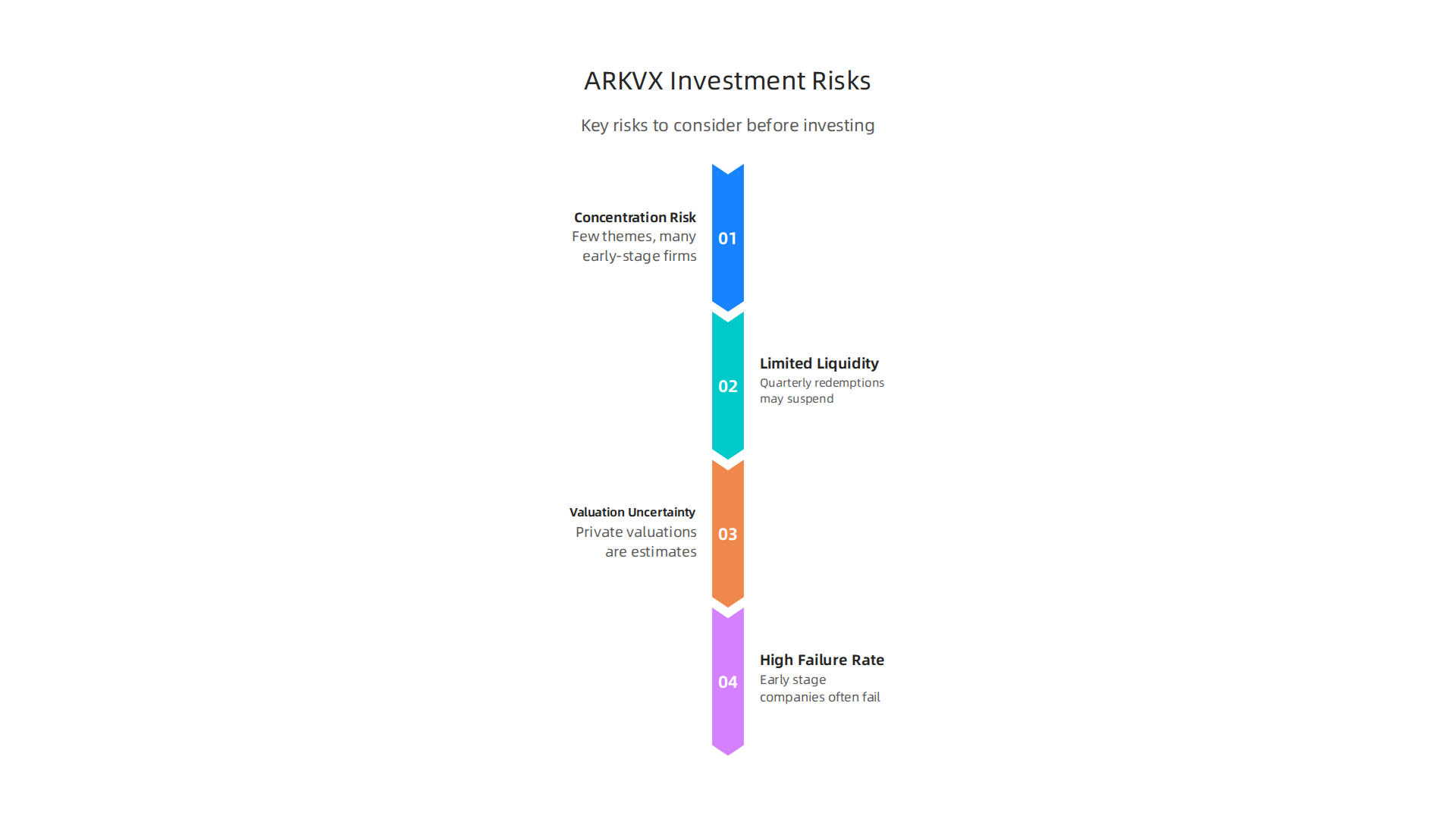
First, there is concentration risk. The fund puts a large portion of its money into a small number of themes: artificial intelligence, genomics, autonomous tech, and a handful of early stage private companies. If those themes fall out of favor, the whole fund can drop hard. The fund invests in high-risk, early stage private companies with uncertain valuations and a high failure rate, according to Titan. Compare that to a more diversified option like a Capital Group American Funds portfolio, which spreads bets across many sectors.
Second, liquidity is limited. You cannot sell your shares whenever you want. The fund only offers quarterly redemptions, and those can be suspended during stressful market periods. The fund’s own Q1 2026 update calls the investment "illiquid and subject to substantial risks" (see ARK Venture Fund Q1 2026 Update). That means your money can be locked up for a long time.
Third, valuation uncertainty is a real issue. Private companies do not trade on a public exchange, so their value is an estimate. These estimates can change quickly. The SEC filing for the fund lists health care sector risk and other factors that affect valuations (see SEC filing). You may think a company is worth $10 million one quarter, and the next quarter it might be worth half that.
If these risks sound scary, that is because they are. The ARK Venture Fund is not for everyone. It is for investors who can handle big swings and a long time horizon. If you prefer a path with more control and less volatility, read our guide on venture capital firms for small businesses to see other options.
Staying informed about these risks is key. Subscribe to The Deep View Newsletter for daily updates on the tech and funding trends that shape these investments in 2026.
Summary
The article explains the ARK Venture Fund (ARKVX), an evergreen venture vehicle launched by Cathie Wood’s ARK Invest that gives individual, accredited investors access to private and late-stage companies across AI, genomics, fintech, autonomous tech, and blockchain. It covers the fund’s background, vision, and how its concentrated, long-horizon thesis differs from traditional venture capital through greater transparency, quarterly liquidity, and lower minimums than typical VC partnerships. You’ll read about portfolio highlights like SpaceX and OpenAI, the fund’s performance and 2.90% expense ratio, and the practical steps and tax consequences of investing (including Schedule K-1s). The article also walks through key risks—concentration, valuation uncertainty, and limited redemptions—and profiles leadership and milestones that shaped the fund’s growth. After reading, you’ll understand who the fund is for, how it fits into the broader 2026 funding landscape, and the checklist to decide whether to pursue ARKVX as part of a risk-tolerant, innovation-focused portfolio.