
How to Land a Data Analyst Internship in 2026

Introduction
The demand for people who can work with data keeps growing. In 2026, companies across every industry need professionals who can turn numbers into real answers. According to the Bureau of Labor Statistics, jobs for data analysts are expected to grow by 23 percent through 2032. That is much faster than most other careers. And the data analytics market itself is now worth over 130 billion dollars globally.
For anyone trying to break into this field, a data analyst internship is the smartest first step.

It gives you real experience, a foot in the door, and proof that you can do the work. Interns in 2026 earn between $22 and $35 per hour in high growth sectors like fintech and healthtech.
But here is the truth. Many people feel stuck before they even start. There is so much to learn. You wonder what skills actually matter. You see job postings asking for SQL, Python, data studio, and a dozen other tools. It feels like everyone else is already tech savvy while you are still figuring out the basics.
That is totally normal. The competition is real, but it is not impossible.
This guide gives you a clear path forward. We will walk through what is changing in the data job market in 2026, what employers actually look for in an intern, and how you can build the right skills step by step. Whether you are still asking what is data science even means or you already know a bit about AI apps, this roadmap is built for you.
The goal is simple. Help you go from overwhelmed to hired. Let us start with the fundamentals that actually move the needle. And if you want to see how data skills connect to the bigger startup world, check out this breakdown of how AI and data analytics create new project opportunities across industries.
What Does a Data Analyst Internship Actually Look Like in 2026?
You might picture a data analyst intern as someone who just fetches coffee and updates spreadsheets all day. That image is outdated. In 2026, a data analyst internship is hands-on from day one. Employers expect you to contribute real work that impacts decisions. And the best part? You get paid well for it. According to Prospel, the average hourly pay for data analyst interns in fintech and healthtech ranges from $22 to $35 per hour. That is serious money for a learning role.
So what does your actual day look like? Here are the core responsibilities you will handle:
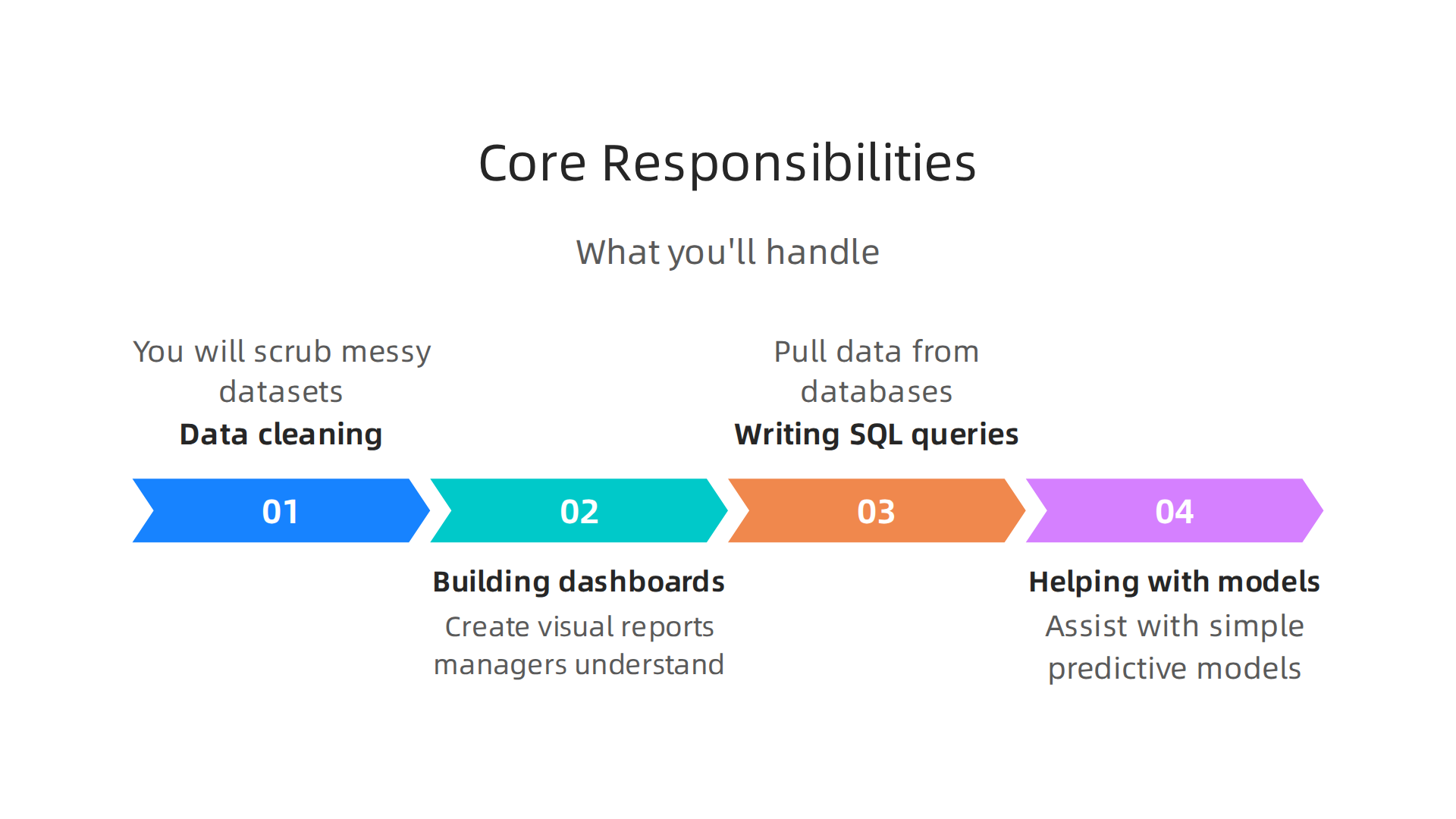
- Data cleaning. This takes up the most time. You will scrub messy datasets, fix missing values, and standardize formats. It is not glamorous, but it is the foundation of every analysis.
- Building dashboards. You will use tools like Tableau, Power BI, or even data studio to create visual reports that managers can understand at a glance. These dashboards often track key metrics like sales, user growth, or churn rates.
- Writing SQL queries. You will pull data from databases to answer specific business questions. Things like "Which products sold best last quarter?" or "Where are our users dropping off in the signup flow?"
- Helping with basic models. Interns are increasingly asked to assist with simple predictive models or A/B test analysis. You do not need to build a full machine learning pipeline, but you should understand the basics of what is a data science workflow.
Remote vs. Hybrid: How Team Structure Affects You
The way teams work has changed. In 2026, many data teams operate in hybrid or fully remote setups. If you join a remote team, you will need to be more tech savvy with tools like Slack, Zoom, and shared cloud notebooks. Hybrid roles usually mean two or three days in the office. That can help you learn faster because you can tap a coworker on the shoulder. Either format works. The key is showing you can communicate clearly and manage your own time.
Different Company Types, Different Experiences
The type of company you intern at changes the experience a lot.
- Startups. You wear many hats. One day you are cleaning data, the next you are helping the marketing team set up a new report. You get exposure to everything, but you may not have a structured mentor. This is great if you want to see how data drives real decisions. If you are curious how these skills connect to broader business opportunities, check out this breakdown of discovering startup project opportunities using AI and data analytics.
- Mid-market companies. You will have a more defined role. Your manager gives you clear tasks and there are established processes. You get deeper experience with one or two tools. This is a safe bet if you want a steady learning curve.
- Big tech. The name looks great on a resume. You might work on a single product team and use advanced tools. But you may have less freedom. The competition for return offers is tough.
No matter which path you choose, the core work of a data analyst internship is the same. You learn to turn messy information into clear answers. That skill is valuable everywhere.
Core Skills You Need Before Applying
You now know what a data analyst internship looks like in practice. But before you start sending out applications, you need to make sure you have the right skills. Employers in 2026 expect a mix of technical know-how, analytical thinking, and soft skills. Do not worry. You do not need a PhD. You just need to be solid in the basics.
According to Coursera, the most in-demand skills include SQL, statistical programming, and data management.
Let’s break it all down.
Technical Must-Haves
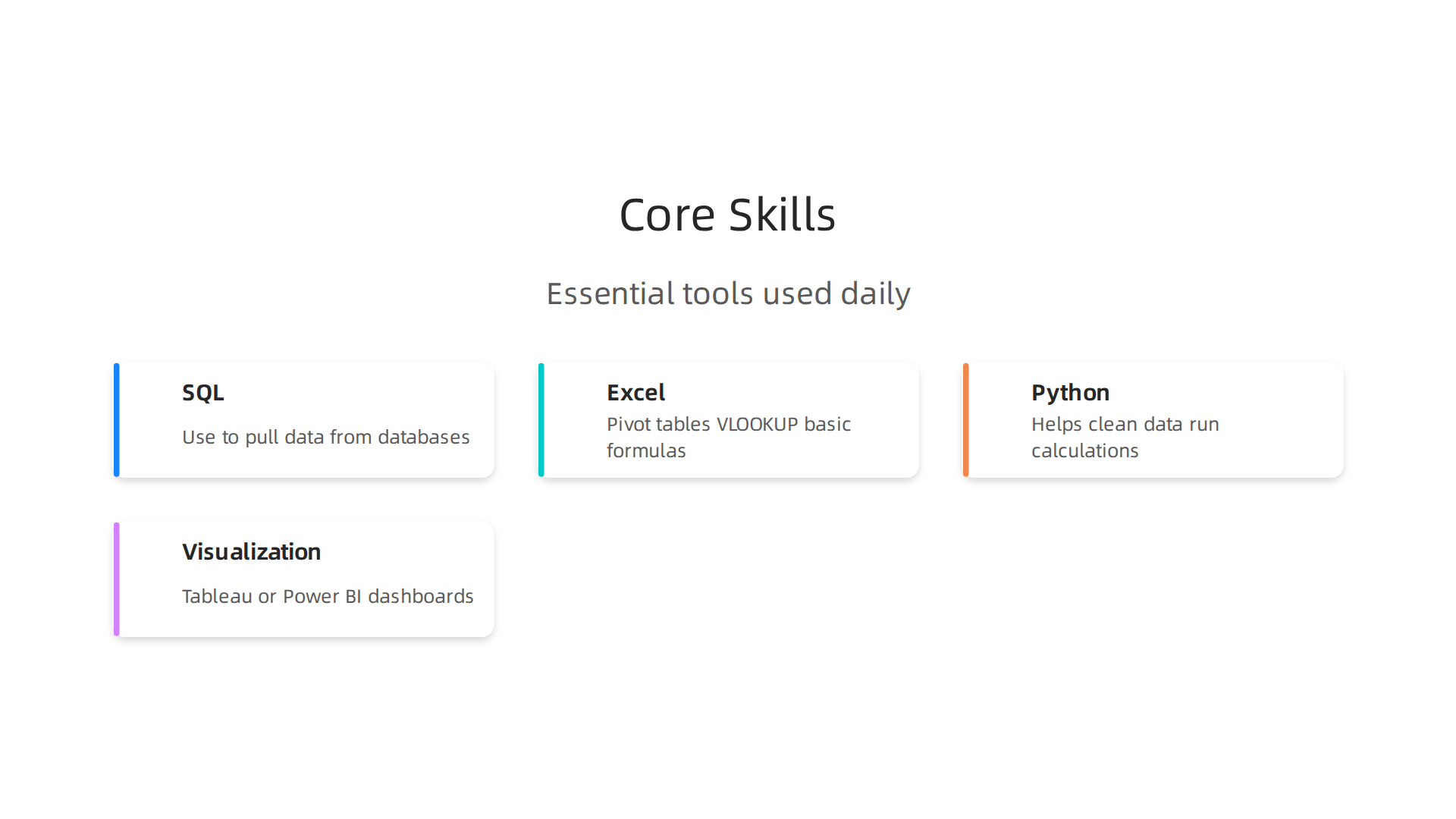
These are the tools you will use every single day.
If you do not know them yet, start learning now.
- SQL. This is the most important skill. You use SQL to pull data from databases and answer business questions. Every company expects you to write queries fluently.
- Excel. Yes, it is still relevant. Pivot tables, VLOOKUP, and basic formulas are non-negotiable. Many teams still use Excel for quick analysis.
- Python (pandas and numpy). Python helps you clean data, run calculations, and build simple models. It is becoming a standard requirement for entry-level roles. The University of Dallas blog notes that programming proficiency matters more than ever.
- A visualization tool. Tableau or Power BI are the two big ones. You need to create dashboards that tell a clear story. Some teams also use data studio (Google’s free tool) for quick reports. If you want to see how these skills apply in real startup environments, check out this guide on discovering startup project opportunities using AI and data analytics.
Analytical Thinking
Tools are useless if you cannot think with them. Employers want to see that you can frame a problem, test an idea, and find the root cause of an issue.

- Problem framing. Start with a clear question. "Why did sales drop last month?" or "Which marketing channel brings the best customers?" You need to break big questions into smaller, testable pieces.
- Hypothesis testing. You do not need a stats degree. But you should understand basic A/B testing and confidence intervals. It helps you avoid false conclusions.
- Root cause analysis. When something goes wrong, dig deeper. Do not stop at the surface number. Ask "why" three or four times until you find the real driver.
The data analytics job market is growing fast. According to Skillify Solutions, the field expects 23% growth. That means companies are hungry for people who can think critically with data.
Soft Skills That Set You Apart
Technical skills get you in the door. Soft skills get you the return offer. Do not ignore them.
- Communication of insights. You will present your findings to managers who do not speak "data." You need to translate numbers into plain English. A complicated chart means nothing if nobody understands it.
- Stakeholder management. You will work with marketing, sales, product, and finance teams. Each group has different needs. Learn to listen, ask clarifying questions, and deliver what they actually need.
- Time management. As an intern, you will juggle multiple requests. Some tasks are urgent. Some are important. You need to prioritize without dropping the ball.
The NetCom Learning guide lists version control and business intelligence as essential too. But do not get overwhelmed. Start with the core skills above. Once you feel confident in SQL, Excel, Python, and a visualization tool, you are ready to start applying. The rest you will learn on the job.
How to Build a Portfolio That Stands Out to Hiring Managers
You now have the core skills. SQL, Excel, Python, and a visualization tool. But how do you prove that to a hiring manager? You cannot just say "I know Python." You need to show it.

That is where a strong portfolio comes in.
For a data analyst internship, your portfolio is your resume’s best friend. It turns your skills into proof. According to Coursera, employers in 2026 look for practical experience with real data. A portfolio is the easiest way to show that. Here is how to build one that gets noticed.
Pick Projects That Show End-to-End Work
Do not just throw one chart on a page. Hiring managers want to see you can handle the full analysis process from start to finish. That includes:
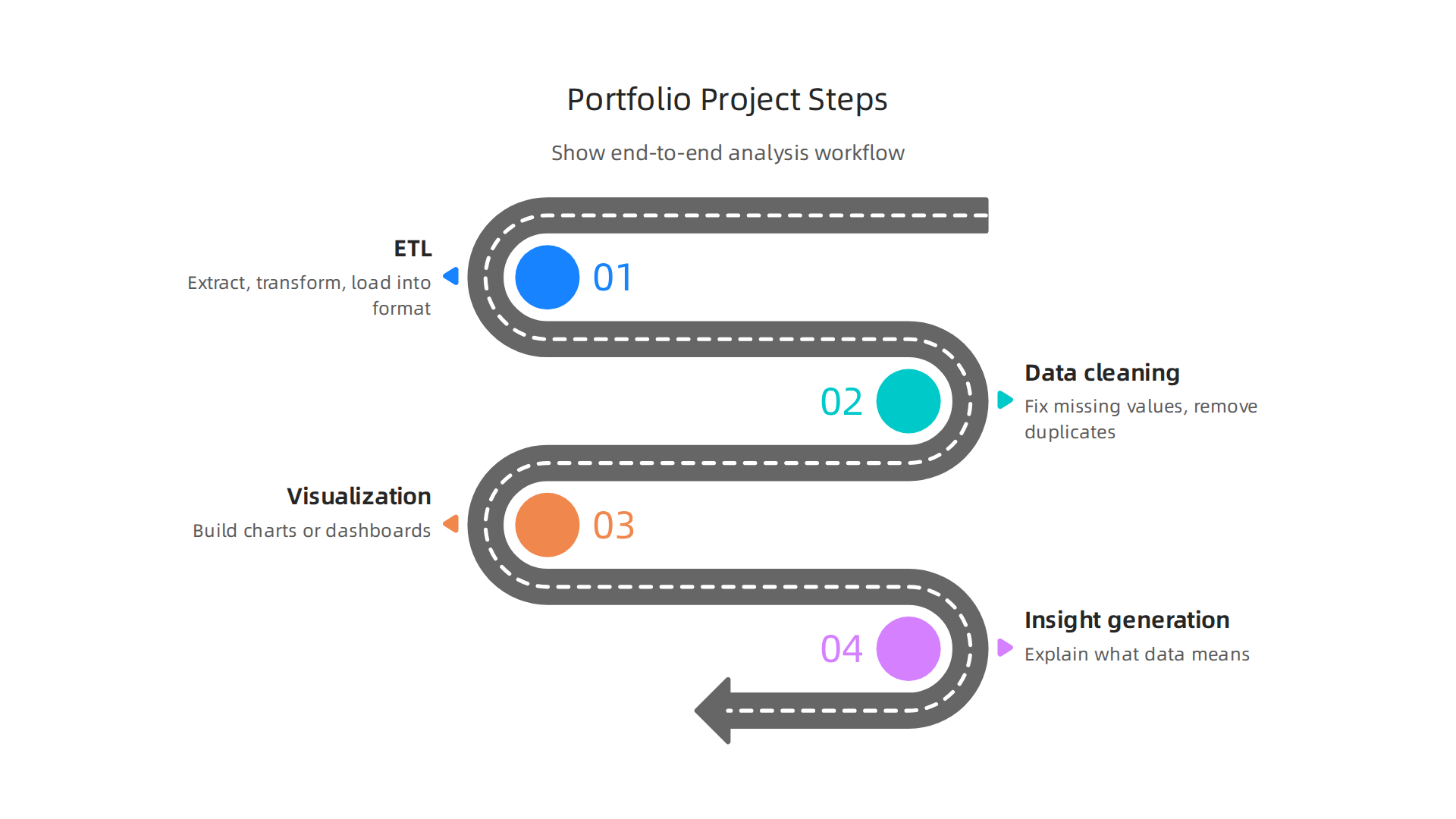
- ETL. Extract data from a source, transform it (clean it), and load it into a usable format.
- Data cleaning. Fix missing values, remove duplicates, and correct errors. This is boring but essential.
- Visualization. Build charts or dashboards that make the data easy to understand.
- Insight generation. Explain what the data means and what someone should do about it.
A project that covers all four steps proves you understand the real workflow of a data analyst internship. For example, grab a dataset on customer churn. Clean the data in Python (pandas). Build a dashboard in Tableau or data studio that shows which customer groups leave most often. Then write a short summary that says "Customers who use the free trial for more than 30 days are 40% more likely to cancel."
Use Public Datasets to Solve Real Problems
You do not need a company to give you data. There are tons of public datasets you can use for free. Kaggle has thousands of datasets with built-in challenges. Government websites offer data on everything from housing prices to air quality. The Skillify Solutions blog notes that data analyst roles are growing 23% because companies need people who can make sense of messy real-world data. Using public data shows you can find and work with the same kind of messy data companies deal with every day.
If you are not sure where to start, check out this guide on discovering startup project opportunities using AI and data analytics. It can help you think of project ideas that connect data to business value.
Always Include a Write-Up of Your Thought Process
A portfolio is not just a collection of charts. You need to explain what you did and why. For each project, write a short report that covers:
- The business question. What problem were you trying to solve?
- Your approach. How did you clean the data? Why did you pick that chart type?
- The result. What did you find? How can someone use that information?
- The impact. Even a small project can have a big impact. Maybe your analysis could save a company $10,000 a year. Say that.
This write-up is where you show your analytical thinking and communication skills. As the University of Dallas blog points out, employers value critical thinking and clear communication just as much as technical skills. A good write-up proves you have both.
Keep It Simple and Easy to View
You can host your portfolio on a free site like GitHub Pages, Tableau Public, or even a simple Google Site. Do not make the hiring manager click through ten pages. Put your best 2 to 3 projects front and center. Make sure the write-ups are easy to read and the visuals load fast.
A strong portfolio does not need to be complicated. It just needs to tell a clear story. Build a few projects that show real analysis, use public data, and explain your thinking. That is how you stand out for any data analyst internship in 2026.
Where to Find Data Analyst Internship Listings and How to Network
You have built a strong portfolio. Now you need to find the right data analyst internship openings and get your name in front of the right people. The good news? The demand is huge. The U.S. Bureau of Labor Statistics projects 23% job growth for data analysts through 2032, and Skillify Solutions confirms that 2026 is a great year to jump in. But you still need a smart search and networking plan.
Start With the Big Job Boards
You already know LinkedIn, Indeed, and Glassdoor. These sites have thousands of data analyst internship listings.
Set up job alerts with keywords like "data analyst intern" and "data analytics intern." Check them daily.
But do not stop there. Niche job boards can help you find less competitive opportunities. ProSple lists over 600 open data analyst internships across the U.S. with pay ranging from $22 to $35 per hour.

Sites like Intern-List and DataAnalyst.com also focus on analytical roles. Use these to widen your search.
Tap Into University Career Centers and Alumni Networks
Your university career center is a goldmine. Many companies post internships exclusively through school portals. They also host career fairs where you can meet recruiters face to face. Make an appointment with your career advisor. Ask for help reviewing your resume and practicing interviews.
Alumni networks are even more powerful. Reach out to alumni who work at companies you are interested in. Send a short message like this: "Hi [Name], I saw you work at [Company] as a data analyst. I am applying for their internship and would love to hear about your experience." Most people are happy to help. This kind of connection is how you skip the pile of online applications.
Attend Data Science Meetups and Virtual Events
The most tech savvy candidates use every channel to network. In 2026, there are tons of virtual and in-person data science meetups. Websites like Meetup.com and Eventbrite list events near you. You can also join online communities on LinkedIn and Slack.
At these events, do not just listen. Ask questions. Introduce yourself to speakers. Follow up with a connection request on LinkedIn afterward. The goal is to build relationships before you need a job. When you eventually apply, your name will already be familiar.
Use Cold Outreach the Right Way
Cold outreach works when you make it personal. Do not send a generic message to 100 people. Research each person first. Look at their career path. Mention something specific: "I saw you worked on a project using Python for customer segmentation. I built a similar project for my portfolio."
Connect with data analysts and recruiters at your target companies. Ask for a 10-minute chat. Keep it respectful of their time. If they say no, that is fine. Move on. The Careery guide recommends applying through job boards and networking at the same time. That is the winning combo.
Keep an Eye on Startup and Investment News
Many data analyst internship opportunities come from fast-growing startups and companies backed by venture capital. These companies hire interns to help them make sense of their data. Following news about the biggest investment companies and their portfolio startups can give you a list of target companies to approach. Check out our article on the biggest investment companies of 2026 and their impact on startups and investors to see which funded startups might be hiring interns.
Use AI Apps to Streamline Your Search
Being tech savvy in 2026 means using ai apps to make your job search faster. Tools like Jobright (available on GitHub) curate internship listings from across the web. You can also use AI to tailor your resume and cover letter for each application. But remember: always personalize your message. AI can help you find the openings, but human connection gets you the interview.
Find the listings. Network like crazy. Apply smart. That is how you land your data analyst internship in 2026.
The Application Process: Resume, Cover Letter, and Technical Screen
You found the listings. You built a network. Now it is time to make your application impossible to ignore. Every data analyst internship gets dozens of submissions. Yours needs to stand out in just a few seconds. Here is exactly how to craft a resume and cover letter that get noticed, plus what to expect in the technical screen.
Tailor Your Resume with Keywords and Numbers
Most companies use applicant tracking systems (ATS) to scan resumes before a human ever sees them. That means you need to match the keywords from the job description. For a data analyst internship, common keywords are SQL, Python, Tableau, Excel, data cleaning, and data visualization. Sprinkle these naturally through your skills section and experience bullet points.
But keywords alone are not enough. You also need quantifiable achievements. Instead of saying "I worked on a project," say "I cleaned and analyzed 10,000 customer records using Python, which identified a 15% drop in repeat purchases." Numbers grab attention and prove you can drive results.
Check out data analyst intern resume examples from Enhancv to see how top candidates format their experience.
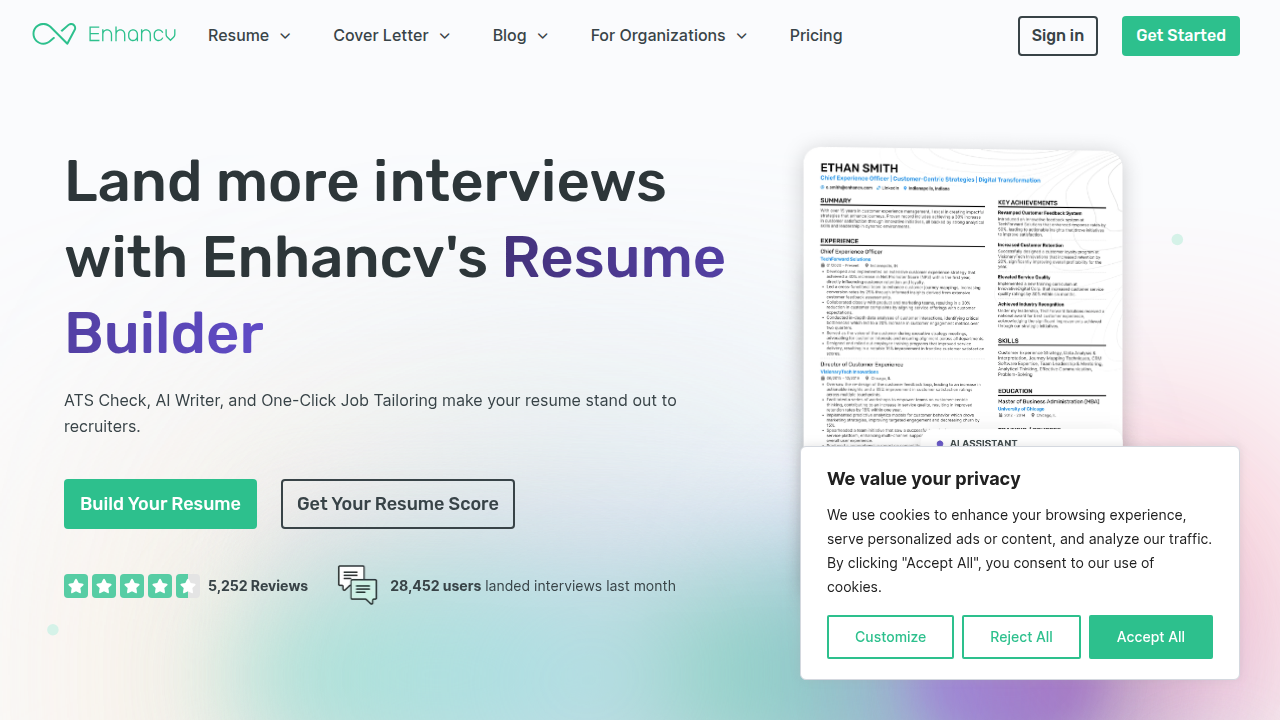
The Indeed guide also recommends highlighting measurable outcomes. For a ready-to-use template that passes ATS scans, look at the recruiter-approved example on ResumeWorded. And if you have no work experience yet, this YouTube walkthrough shows exactly how to build a strong resume from scratch.
Being tech savvy in 2026 means using AI apps to streamline your resume tailoring. Tools like Jobright or even ChatGPT can help you rewrite bullet points for each application. But always read the final version yourself. AI can help you save time, but your voice and honesty still matter.
Write a Cover Letter That Shows Your Motivation
Keep your cover letter short and personal. Three paragraphs is perfect.
First paragraph: State the role and why you are genuinely excited about it. Second paragraph: Connect your skills or portfolio projects directly to the company’s needs. Third paragraph: Briefly mention what you hope to contribute and end with a polite call to action.
If you have worked on projects that use data to solve real problems, talk about them here. For example, if you used AI and data analytics to uncover startup opportunities or optimize a business process, explain how that experience makes you a great fit. You can learn more about framing those projects in our article on discovering startup project opportunities using AI and data analytics.
Avoid generic phrases like "I am a hard worker." Instead, be specific. Say something like "I built a dashboard in Tableau that helped a local nonprofit track donation trends, and I would love to bring that same analytical mindset to your team."
Prepare for the Technical Screen
Now for the part that makes most applicants nervous. The technical screen for a data analyst internship usually comes in one of three formats:
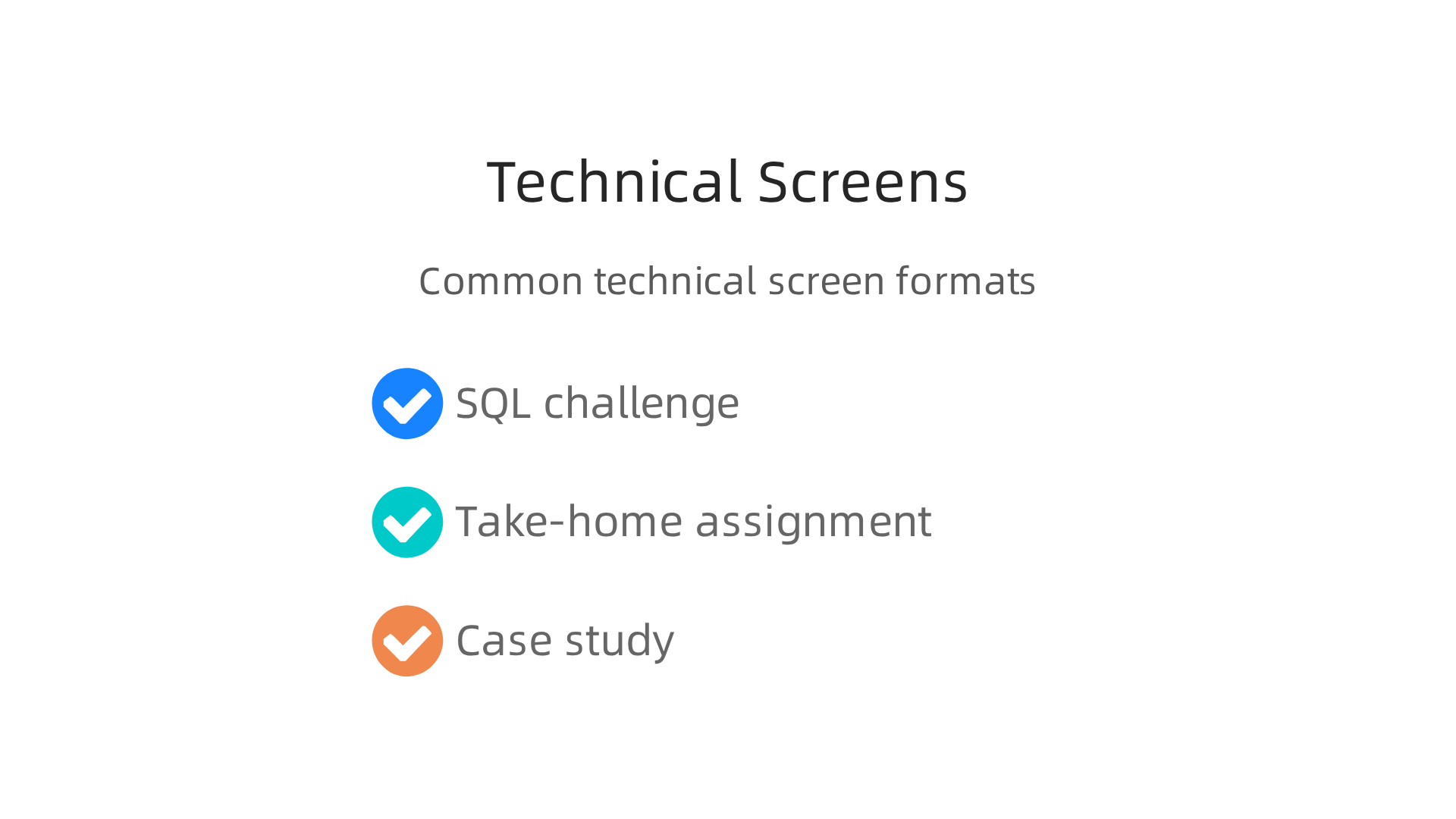
| Format | What You Do | How to Prepare |
|---|---|---|
| SQL challenge | Solve queries on a platform like HackerRank or LeetCode | Practice SQL daily for at least two weeks before applying. Focus on JOINs, aggregations, and subqueries. |
| Take-home assignment | Get a dataset and a business question. Analyze it and present your findings. | Treat it like a real project. Clean the data first. Use Python or Excel. Show your work and explain your decisions. |
| Case study | Walk through a problem verbally with the interviewer. | Think out loud. Explain your assumptions. Focus on your process, not just the answer. |
For general data analyst resume examples and templates that can guide your application, visit Interview Pal and BeamJobs. Use them to see how experienced candidates structure their experience.
During the technical screen, being tech savvy helps. Practice using AI apps to simulate interview questions or get feedback on your analysis. Tools like LeetCode’s AI coach or ChatGPT can help you refine your answers. But remember: the interviewer wants to see your thinking, not a perfect script.
With a resume that highlights your impact, a cover letter that tells your story, and solid technical prep, you will walk into every application ready to impress.
Your First 30 Days as a Data Analyst Intern
Welcome to the team. The first month of your data analyst internship sets the tone for everything that follows. It can feel overwhelming at first. You might not know where the databases live or who handles which dashboard. That is totally normal. Here is how to make your first 30 days productive and memorable.
Get Up to Speed with Tools, Data, and Culture
Your first week is about learning, not proving. Start by understanding what tools your team actually uses day to day. Is it SQL and Tableau? Or Python and Google Data Studio? Every company has its own stack. Ask for access to the data warehouse, the internal documentation, and any past reports. Read them like a student before a test.
Also learn the culture. Who makes decisions? How do people communicate? Do they prefer Slack messages or scheduled meetings? Being tech savvy in 2026 also means knowing how to use the team’s communication tools effectively. Set up your workspace, join the right channels, and introduce yourself to everyone. A simple "I’m excited to learn from you" goes a long way.
Ask Good Questions and Build Relationships
Here is a secret that many interns miss. Asking questions shows you care. Full-time analysts respect curiosity more than silence. When you get stuck on a SQL query or a data source that does not make sense, ask. Write down the answer so you do not ask twice. That shows respect for their time.
Build relationships with at least two or three experienced analysts. Ask them about their own early days. What challenges did they face? What do they wish they had known? These conversations will teach you more about the real work of data than any online course. They also make you someone people want to help.
Deliver Early Wins with Small Projects
By the end of your second week, look for a small task you can own. Maybe it is automating a weekly Excel report. Maybe it is cleaning a messy dataset that nobody has touched in months. Pick something small, do it well, and share the results.
These early wins demonstrate reliability. They also give you something concrete to put on your resume later. If you are unsure what project to start with, ask your manager directly. Say something like "I want to add value quickly. Is there a small dataset or recurring task I could take off your plate?"
For a deeper look at how to use data to solve real business problems, check out our article on discovering startup project opportunities using AI and data analytics. The same principles apply inside a company.
Your first 30 days are a chance to learn, connect, and prove you can deliver. Approach each day with curiosity and a willingness to help. That is how you turn a short internship into a long-term career.
From Internship to Full-Time: Mapping Long-Term Career Paths
You have made it through the first 30 days. You built relationships and delivered early wins. Now comes the big question. Can you turn this data analyst internship into a full-time job? And what happens after that?
Let us look at the numbers and the paths you can take.
Your Chances of Landing a Full-Time Offer
The goal of most internships is a full-time return offer. The average conversion rate across all industries is about 63.1%, according to a report from the National Association of Colleges and Employers (NACE). At top tech companies, that number can be even higher. Industry data from Levels.fyi shows that conversion rates at some firms exceed 70%.
What helps you land that offer? Performance matters most. But being someone people enjoy working with matters just as much. Managers want to hire interns who ask good questions, take feedback well, and show genuine curiosity about the business.
The Traditional Promotion Path
If you get the offer, your career usually follows a clear ladder.
- Junior Data Analyst: Your first one to two years. You focus on writing SQL, cleaning data, and building basic reports.
- Data Analyst: You own larger projects. You work directly with stakeholders and suggest improvements based on your findings.
- Senior Data Analyst: You guide strategy. You might mentor junior team members. You handle complex data problems.
- Data Scientist or Analytics Manager: This is a fork in the road. Do you want to build predictive models? That leads to data science. Do you want to lead a team and shape the data roadmap? That leads to management.
This path usually takes five to seven years. But it depends on your learning speed and the company you join.
Alternative Career Paths Worth Exploring
Maybe the standard analyst path is not for you. That is fine. Many people use their first data role as a launchpad into something different.
- Data Engineering: You build the pipelines that make analysis possible. This is a great fit if you love coding and infrastructure.
- Product Analytics: You work directly with product managers to understand user behavior. This path is perfect if you enjoy A/B testing and feature analysis.
- Machine Learning: You create models that predict outcomes. This requires strong math skills and knowledge of AI apps.
Understanding the bigger business picture can also open doors. For example, if you know how funding and investment cycles work, you can provide more valuable insights to your team. Read our guide on the biggest investment companies of 2026 and their impact on startups and investors to see how data drives those decisions.
Also, staying current with tools helps you stand out. AI apps are changing the way analysts work. A comparison like Originality AI vs Genspark AI shows which tools startups trust in 2026.
Your internship is the beginning. The skills you build now can take you into data science, leadership, engineering, or product. The choice is yours. Keep learning and stay open to new paths.
Summary
This guide explains how to break into data analysis with an internship in 2026, why those roles are high-value, and what employers actually expect from interns. It covers the modern internship day — from data cleaning and SQL queries to dashboard building and basic modeling — and compares experiences at startups, mid-market firms, and big tech. The article lists technical must-haves (SQL, Excel, Python, visualization tools), the soft skills that set you apart, and a step-by-step approach to building a portfolio that proves end-to-end work. You’ll also get practical advice on where to find openings, how to network effectively, and how to craft resumes, cover letters, and prepare for common technical screens. Finally, it walks through how to make the most of your first 30 days and the realistic paths from intern to full-time roles in analytics, data engineering, product, or machine learning. Read it to leave feeling ready to apply, interview, and convert an internship into a career opportunity.