
Godfather of AI: Who Shaped Modern AI and Why It Matters in 2026

The term "godfather of AI" gets thrown around a lot. But why does this one label matter so much? Actually, it shapes how many of us think about where artificial intelligence came from and who really made it powerful. Today in 2026, with all the buzz around AI, especially things like multimodal AI, it’s easy to get lost in the details. People wonder what jobs will AI replace and who has the smartest AI. This makes it hard for startup founders, investors, and even those who make big rules to understand the real story. They often struggle to connect old ideas to today’s fast-moving startup world and investment choices. There are many myths out there, and too much information can be confusing.
For example, some might point to John McCarthy (computer scientist) as the "father of AI" because he coined the term "artificial intelligence" in the 1950s and started the first AI workshop. Others talk about Alan Turing’s early work on machine thinking, which helps us understand when was AI invented. Then there’s Geoffrey Hinton, known as the ‘Godfather of AI’ for his big steps in neural networks and deep learning. These different names and stories can make it hard to see the full picture of how AI grew.
This article will help you sort through it all. We will look at how the main ideas, or elements of AI, came to be. We will compare the key people and explain why these special labels like "godfather of AI" or "father of AI" are important.

Most importantly, we’ll share what all this history means for new companies (startups), people who invest money in them (venture capitalists), and those who write the rules (policymakers) in 2026. Understanding these foundations is key to making smart decisions today.
To stay on top of daily changes in the AI world, make sure to get The AI Newsletter Worth Reading.
Defining the Term: What ‘Godfather of AI’ Actually Refers To
When we talk about the "godfather of AI," it’s easy to think of just one person. But actually, this special label points to big breakthroughs and key people who truly shaped what AI is today. It’s not always about one inventor. Instead, it’s about big ideas, new ways of solving problems, and even helping others learn and grow in the field.
Let’s break down the kinds of contributions that earn someone a title like "godfather of AI":
- New Ideas (Theory): Some people are called "father of AI" for coming up with the very first big ideas. For example, John McCarthy is widely known as the father of AI because he gave the field its name, "artificial intelligence," in the 1950s. He also helped start the famous Dartmouth workshop in 1956, which was a huge step for AI research. This kind of work lays down the basic rules and goals for everyone else.
- Smart Ways to Solve Problems (Algorithms): Others get the "godfather of AI" title for creating new tools or methods that made AI much stronger. Geoffrey Hinton is widely recognized as the ‘Godfather of AI’ for his important work on neural networks and deep learning. His ideas helped machines learn in powerful new ways, making things like multimodal AI possible today. His breakthroughs made AI much more practical.
- Building Places to Learn (Institutions and Mentorship): Sometimes, a person is honored not just for their own work, but for guiding many other smart people. Geoffrey Hinton also mentored many future AI leaders, helping to build entire teams and programs that moved AI forward, eventually leading to his Nobel Prize for his work in artificial intelligence. It truly shows that no single person invented AI, but many worked together.
Why These Labels Matter for Today
Knowing these different types of contributions and why these labels are given is very important for many people in 2026.
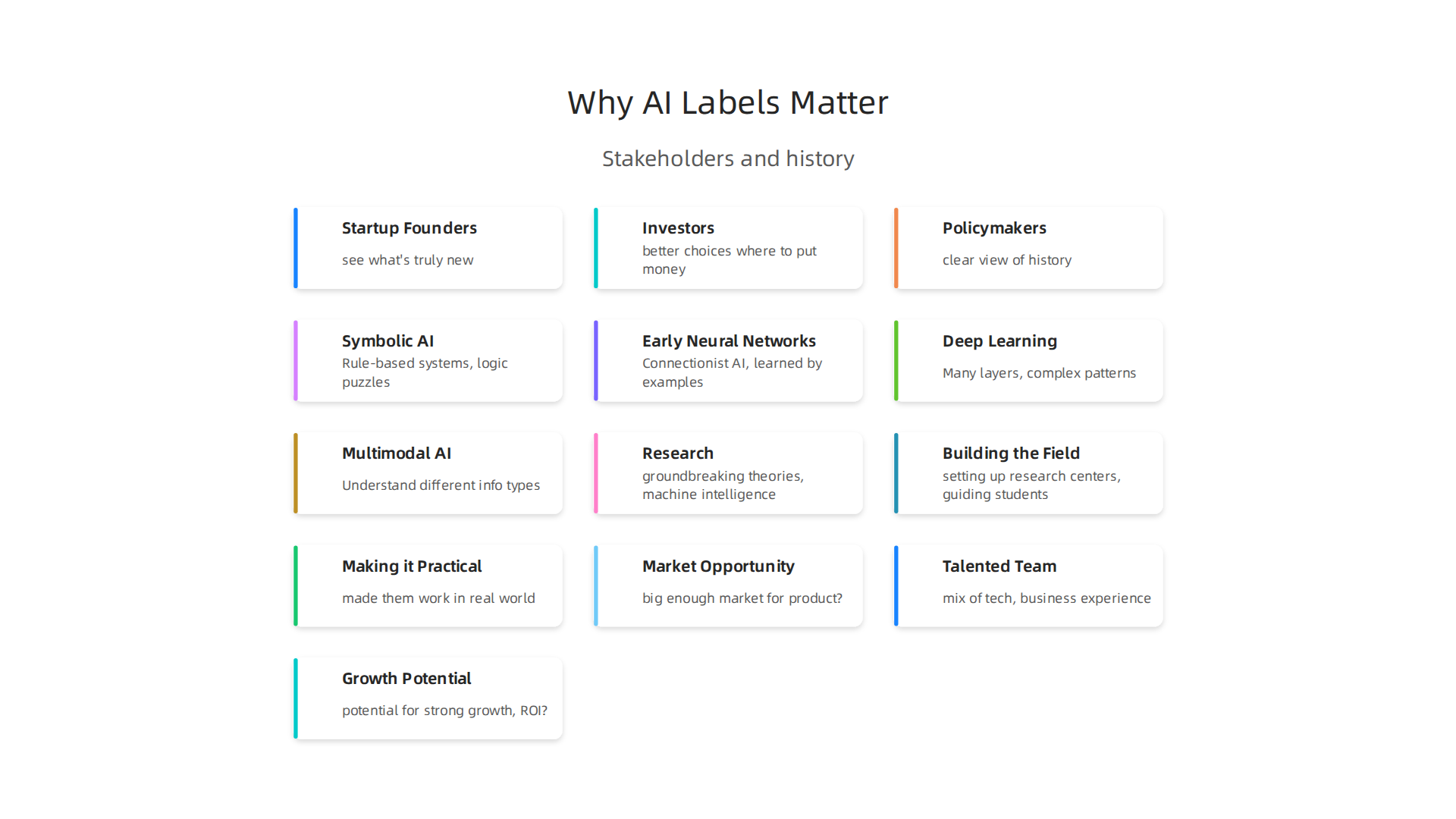
- For Startup Founders: If you are starting a new company, understanding the roots of AI helps you see what’s truly new and what builds on old ideas. It helps you figure out how to best use AI for startup success and avoid repeating past mistakes. This knowledge can also help answer questions like what jobs will AI replace and how to make the smartest AI for your business.
- For Investors (Venture Capitalists): People who invest money need to know if a new AI idea is truly groundbreaking or just a small change. By understanding the foundational elements of AI and who the real pioneers were, investors can make better choices about where to put their money. This helps them find the top AI companies in 2026 that will truly make a difference.
- For Policymakers: Those who make rules about AI need a clear view of its history and how it works. This helps them create smart rules for how AI is used, especially as powerful tools like multimodal AI become more common.
Understanding these labels helps everyone cut through the noise and get a clearer picture of AI’s path. If you’re a founder or investor looking for clear insights, understanding the core ideas is key to seeing the future of tech domains in 2026.
Key Historical Milestones: From Symbolic AI to Deep Learning (A Visual Timeline)
To really understand the future of AI and the groundbreaking work of those called the "godfather of AI," it helps to look back at how we got here. AI hasn’t always been about huge models and smart conversations. It grew through different stages, each bringing new ways to make machines think.
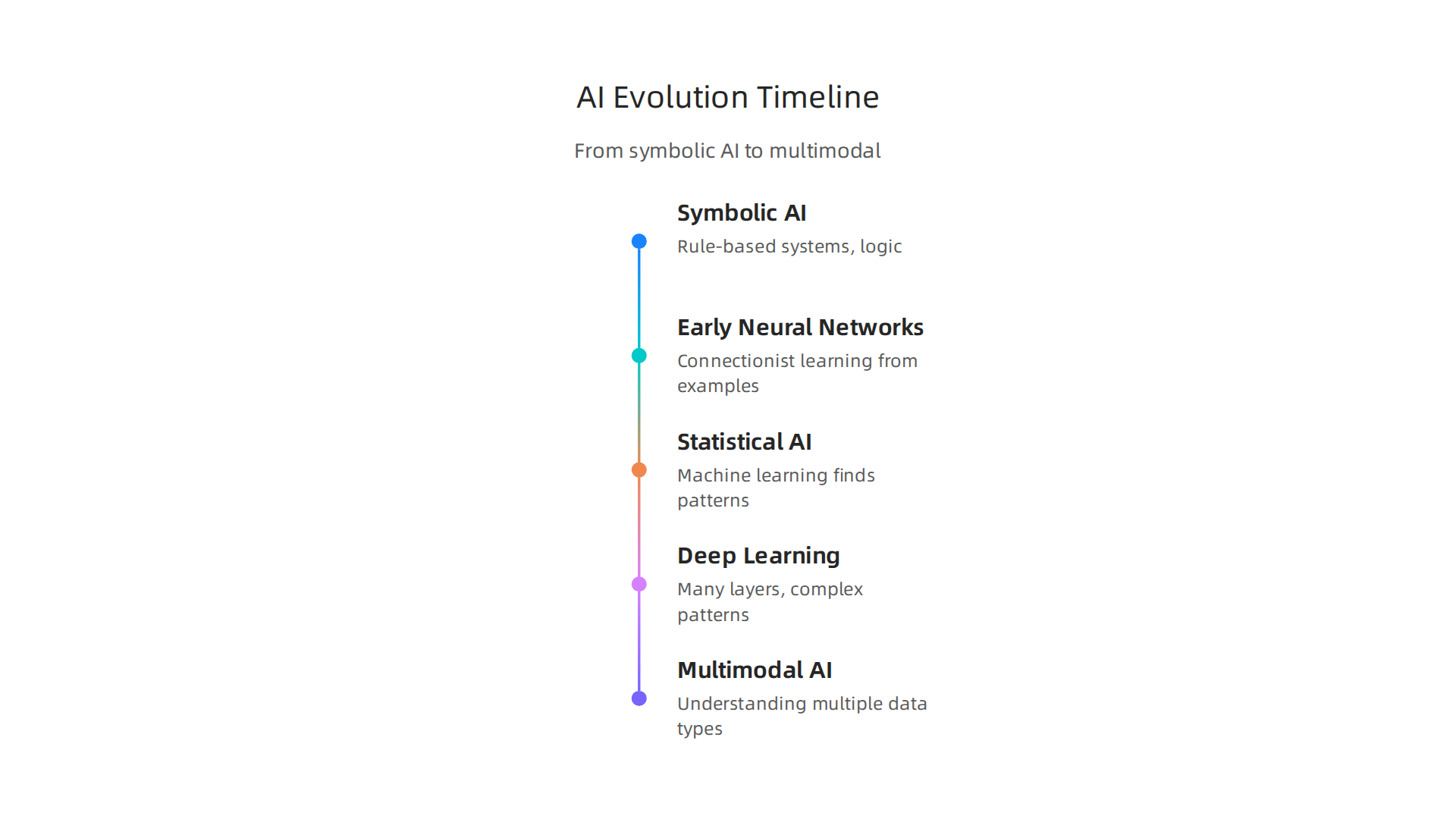
This journey has seen big shifts in ideas that changed what AI could do for businesses and people.
The Early Days: Symbolic AI (1950s-1980s)
In the beginning, AI was mostly about "symbolic AI." Think of it like a computer following a very detailed recipe. Scientists tried to teach computers by giving them clear rules and facts, like "A bird has wings" or "If it’s raining, take an umbrella." The idea was that if a computer had enough rules, it could reason like a human. This approach was good for solving logic puzzles or playing chess.
For startups back then, this meant building expert systems that could help with specific, rule-based tasks. But these systems were hard to scale and couldn’t handle new information easily.
Learning from Connections: Early Neural Networks (1980s-Early 2000s)
Next came the idea of "connectionist" AI, inspired by how our brains work. Instead of rigid rules, these systems used "neural networks" that learned by seeing many examples. They could find patterns in data without being told every single rule. For a while, these ideas didn’t get as much attention because they needed a lot of computing power that wasn’t available yet.
The Rise of Statistical AI and Machine Learning (Early 2000s-2010s)
As computers got faster and we had more data, "statistical AI" or "machine learning" took center stage. This is where AI truly started to become practical. Machines learned to make predictions or decisions by finding statistical patterns in huge amounts of data. Think of it like Netflix recommending movies or your email sorting spam.
This era opened up many opportunities for companies. Suddenly, AI could help businesses understand their customers better, predict sales, or manage risks. The elements of AI were becoming useful for real-world problems, showing how different technologies can combine for innovation.
The Deep Learning Revolution and Multimodal AI (2010s-Present)
The biggest leap happened with "deep learning." This is a special type of neural network with many layers, allowing it to learn very complex patterns. People like Geoffrey Hinton, often called a "godfather of AI," made huge breakthroughs here. Deep learning made things like recognizing faces, understanding speech, and even creating new images and text possible.
Today, we’re seeing advanced deep learning lead to multimodal AI. This means AI can understand and work with different types of information at the same time, like seeing a picture, hearing a sound, and reading text all at once. This kind of smartest AI is transforming industries.
The commercial impact of deep learning has been massive. In 2026, many organizations use AI in their business functions, with global AI spending projected to reach $420 billion this year alone Full Report: The State of AI Adoption 2026 | Revrise.ai. Another report highlights that 78% of organizations now use AI in at least one business function, a big jump from past years AI Adoption Statistics in 2026. This rapid adoption brings new questions about what jobs will AI replace and how to manage the changes.
As AI gets more powerful, public policy and societal attention have also grown. Governments and companies are looking closely at how AI is used, focusing on ethical practices and safety. Knowing this history helps us appreciate the journey of AI and prepare for what’s next.
For those eager to stay on top of these fast-moving changes, consider subscribing.
The AI Newsletter Worth Reading
Profiles and Comparisons: Figures Often Called the ‘Godfather’ — Contributions and Legacy
While we often hear of a single "godfather of AI," the truth is more complex. Many brilliant minds have made huge impacts, leading different groups to give this special title to various individuals. It really depends on which part of AI’s story you’re looking at.
Early Visionaries: McCarthy and Turing
One of the most important names is John McCarthy. He was a computer scientist who helped start the whole field of artificial intelligence. In fact, he’s credited with coining the term "artificial intelligence" in 1955. His work focused on symbolic AI, teaching computers to reason with rules and logic. He was a key figure at the famous Dartmouth workshop in 1956, which many see as the official birth of AI research.
Before McCarthy, there was Alan Turing. He was a British mathematician who laid down many ideas for how computers could think, long before modern machines even existed. His ideas are so important that some call him the "father of computer science and AI." His work helps us understand the very first elements of AI and how they came to be.
Modern-Day Architects: Geoffrey Hinton and Others
In more recent times, as we discussed, Geoffrey Hinton is widely known as a "godfather of AI" for his breakthroughs in neural networks and deep learning. His work truly changed how machines learn and made things like smart assistants and advanced image recognition possible. He didn’t just do research; he also taught and guided many other top AI leaders, which is a big part of his legacy. Other important figures in modern deep learning who are sometimes grouped as "godfathers" include Yann LeCun and Yoshua Bengio.
Why the Title Changes
The reason different people get called the "godfather of AI" comes down to their main type of influence:
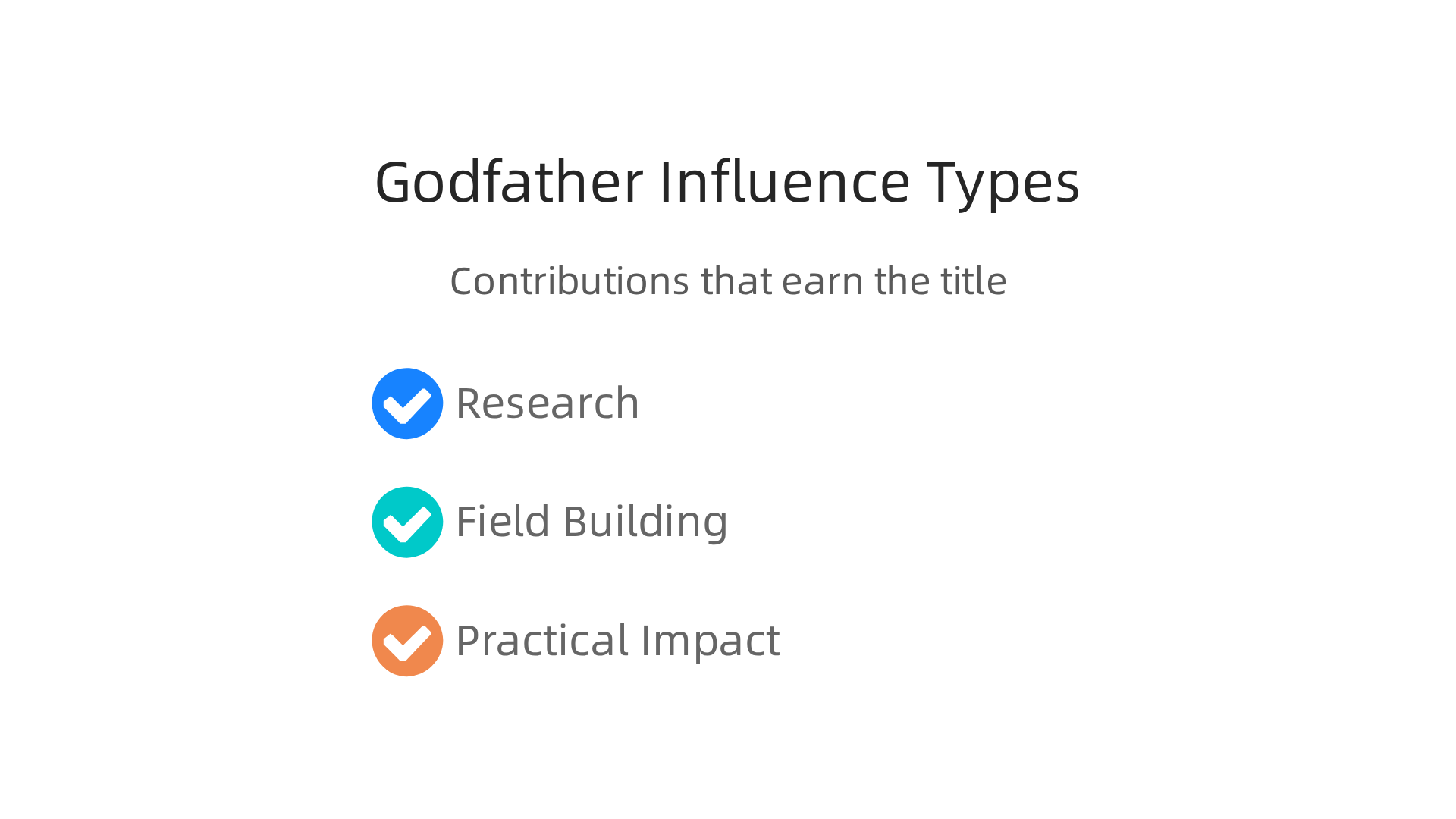
- Research and New Ideas: Some are honored for coming up with groundbreaking theories, like Turing’s thoughts on machine intelligence or McCarthy’s work in symbolic AI.
- Building the Field: Others are recognized for setting up research centers, guiding students, or building the foundations that allowed AI to grow.
- Making it Practical: And then there are those who took complex ideas and made them work in the real world, turning theories into the smart AI we use today. This often matters more to people in business or those looking at AI companies in 2026.
To figure out who deserves the most credit, you can think about a few things:
- How new were their ideas? Did they come up with something truly original?
- How many other people did they influence? Did they teach students who went on to do great things?
- How much did their work change the way we use computers or solve problems? Did it lead to the smartest AI systems that help us every day?
By looking at these different parts of their contributions, we can better understand the rich history of AI and appreciate all the pioneers who helped shape it.
The brilliant ideas from figures sometimes called the "godfather of AI" didn’t stay locked in textbooks. They became the building blocks for new companies and smart products we use today. It’s a journey from complex theories to everyday tools. This process involves turning deep scientific research into things people can buy and use.
From Labs to Startups: How AI Ideas Get Commercialized
So, how do these groundbreaking ideas move from a university lab or a research paper to a company making money? There are a few main ways:
- University Spinouts: Sometimes, researchers start their own companies right out of the university to turn their ideas into products. These are called spinouts. They aim to take their new findings and make them useful in the real world, as noted in reports on Understanding UK Artificial Intelligence R&D commercialisation.
- Licensing: Another common way is for a university or research group to let an existing company use their new technology. This is like renting out the intellectual property (IP) so the company can build products around it.
- Open-Source and Research Transfer: Many core elements of AI are shared freely through open-source software. This lets many people build upon a shared base. Also, researchers often move from academic roles to industry, bringing their knowledge and helping companies create new things. This helps spread new ideas and makes them available for commercial uses.
Challenges for Founders and a Path to Success
Turning a complex academic idea into a successful product isn’t easy. Founders face many hurdles. One big challenge is going from a research study to a product that customers actually want.
This is part of what’s called "deep tech commercialization." It means building not just an advanced technology, but also a working business around it. According to one expert, you need to build teams with business and tech minds combined and validate your ideas with the market very early.
Founders need to think about:
- Protecting Ideas: First, they must protect their intellectual property, which means making sure their unique inventions are legally safeguarded.
- Building a Team: A great idea needs a great team. This team often needs both tech experts who understand the "smartest AI" and business people who know how to sell and grow a company.
- Finding the Right Market: It’s important to figure out who will use the product and why. Testing the idea with real potential customers early on helps a lot.
- Funding: Getting money to grow is crucial. This is where founders often look for how to find investors for a startup in 2026 who believe in their vision.
What Investors Look for in AI Startups
Investors always look for strong potential. When they evaluate a startup based on foundational AI work, they want to see:
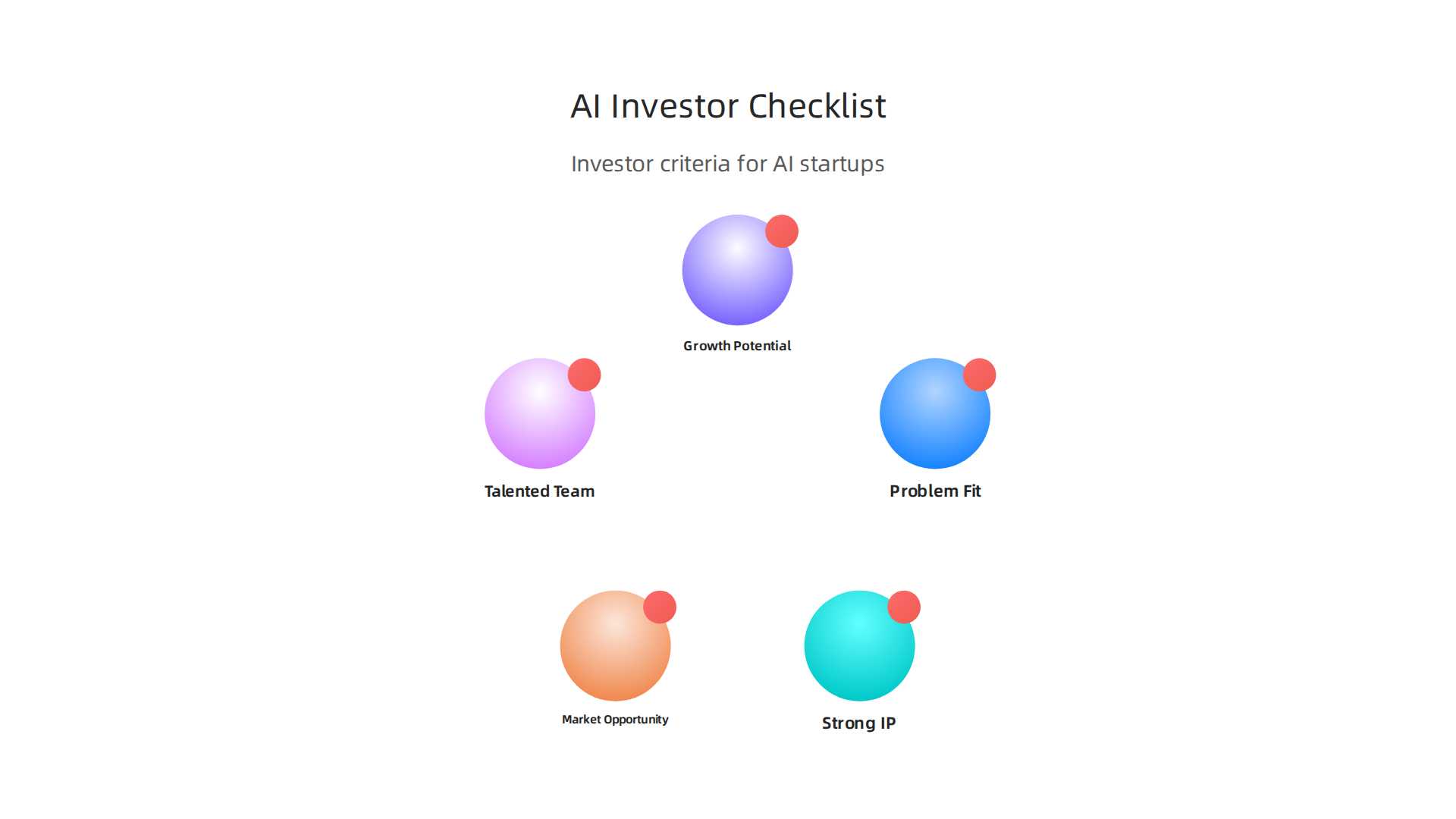
- Clear Problem, Clear Solution: Does the AI technology solve a real and important problem? Is the solution much better than what’s out there now?
- Strong Intellectual Property: Is the core technology protected? This makes the company unique and harder for others to copy. You can learn more about pathways for IP Commercialization Pathways from university-owned intellectual property.
- Market Opportunity: Is there a big enough market for the product? Will this new AI affect things like what jobs will AI replace or create new industries?
- Talented Team: Investors bet on people. They want to see a team with the right mix of technical skill and business experience. This helps them trust the team can turn a complex idea into a successful venture. A lot goes into moving a project from academic research to commercial success, and there are many steps involved in commercialising your research.
- Growth Potential: How big can this company get? Does it have the potential for strong growth and a good return on investment? This is about more than just the current product; it’s about the future possibilities of the AI technology. For founders trying to achieve success, understanding how to use AI for startup success is key.
The journey from a theoretical concept to a market-ready product powered by the smartest AI takes hard work, smart planning, and the right support. It bridges the gap between scientific breakthroughs and everyday innovation.
Get clear daily AI updates from The AI Newsletter Worth Reading.
As the smartest AI tools move from labs into everyday products, they also bring big changes to society. These changes touch on jobs, how we think about right and wrong, and how governments make rules. In 2026, we see AI deeply changing the way people work. Many wonder about job changes and which jobs might be affected. Different jobs and industries feel these shifts in various ways. For example, reports show that a large number of companies now use AI in at least one part of their business. Around 78% of organizations are using AI in some function today, marking a big jump from past years, according to AI Adoption Statistics in 2026. This means many roles are already working with AI tools, reshaping labor markets across the globe.
Beyond jobs, there are important talks about AI ethics. This means thinking about fairness and who is responsible when AI makes mistakes.

Early thinkers, sometimes called the "godfather of AI," helped us understand the basic elements of AI and its potential. Their ideas guide how we think about these issues today. For example, if an AI system has built-in bias, it can make unfair choices. This is a big challenge. Companies and governments are working on ways to make sure AI is used in a good and fair way. There’s a growing focus on tech for social good in 2026 which aims to embed ethical principles into AI development.
Because AI is so powerful, governments and organizations are creating rules for it. These rules help guide how AI is made and used. This is called AI governance. For founders and investors, knowing these rules is key. They need to make sure their AI products follow the law and meet ethical standards. In 2026, we see a big move towards making AI safer and more open. New types of AI, like multimodal AI, which can understand and create things using different kinds of information such as pictures and sounds, need special thought when it comes to rules. Experts say 2026 is the year AI moves "from experimentation to enterprise adoption," making these rules even more important, according to AI Trends and Outlook for 2026.
Finally, there’s the question of inequality. Will AI make the rich richer and leave others behind? Or will it help everyone equally? This depends a lot on how we choose to build and share AI. Making sure everyone can learn about and use these new tools is important. This way, the benefits of the smartest AI can reach more people, and we can avoid making existing differences worse.
When thinking about the big ideas the "godfather of AI" brought forth, investors and founders today need to look closely at where AI products truly come from. In 2026, it’s not enough to just say your product uses the smartest AI. You need to show its roots and how it’s built on solid ground. This helps make sure AI benefits everyone and avoids bad outcomes.
Investor Checklist: Checking the AI’s Family Tree
For investors, figuring out if an AI startup truly has deep roots means checking a few things. You want to see if their claims about smart AI are real.
- Academic Ties: Does the team have strong connections to universities or research labs? Many successful AI products start as research projects. For example, some businesses grow directly out of university work, called spinouts, aiming to turn research into products, as seen in reports about AI R&D commercialisation.
- Intellectual Property (IP): Look for patents or special research papers. These show unique ideas that the company owns. Asking about the journey from lab to market can be very helpful.
- Data and Models: How does their AI learn? What data does it use? Investors should ask about the origin of training data and if the company has the right to use it all. They also need to know if the AI relies heavily on other companies’ models, like those from big tech firms. A good checklist for investors will dive into things like data architecture and model details.
- Due Diligence: In 2026, smart investors use special checklists to evaluate AI companies. These checklists ask about how data is kept safe, how models are built, and if they follow rules. For instance, an AI Due Diligence Checklist for PE Firms covers crucial questions before investing.
Another helpful guide for checking AI is the Startup Due Diligence: Checklists, Tools & AI Guide, which also discusses model provenance.
Founder’s Guide: Showing Your AI’s Strong Background
Founders need to be ready to show how their product is built on strong, smart AI principles.
- Tell Your Story: Explain the science or research behind your AI. If your team worked with researchers who were influenced by early AI pioneers, that’s a powerful story.
- Highlight Your Team: Showcase team members with deep knowledge or ties to academic research. Their background shows your product has a solid foundation.
- Be Clear About Data: Explain where your training data comes from and how you make sure it’s fair and safe to use. This also covers how you handle data privacy and security.
- Protect Your Ideas: Talk about your strategy for intellectual property. Are you seeking patents? How do you protect your unique way of doing things? Learning about paths to commercialization for institutional IP can be useful for founders starting from academic work.
- Show, Don’t Just Tell: Be ready to show how your AI works, not just talk about it. This helps investors see the real technical grounding of your product. If you’re looking for more tips on how to build and present your AI for success, read our guide on how to use AI for startup success.
Deal Talk: What to Think About When Investing in Deep Tech
When investors back teams with strong academic ties or groundbreaking research, there are special things to consider for the deal itself.
- Who Owns What?: Often, the original research might belong to a university. You need to be very clear about who owns the intellectual property and how the company can use it. This can affect how the deal is set up, whether through a Research2Business Commercialisation handbook or another agreement.
- Valuation: Companies built on deep science might be valued differently. Their value comes from their unique ideas, not just their current sales.
- Long-Term Vision: These types of AI companies often need more time and money to grow. Investors should be ready for a longer journey from research to a big, successful business. Knowing how to spin your scientific research out of a university and into a startup can help founders navigate this path.
Understanding the deep roots of AI companies helps both investors make smart choices and founders show their true value. It’s about building trust in the future of AI.
Keep up with the latest in artificial intelligence and technology developments. The AI Newsletter Worth Reading offers clear daily updates.
When we talk about how smart AI products are made, it’s easy to get lost in popular stories. People often give too much credit to one person or a small group. This creates myths that don’t tell the full story of how AI really grew. It’s important to separate these big claims from the real, long history of AI.
The Myth of a Single Creator
Many times, a new technology is linked to just one person. For example, some people call John McCarthy the "father of AI" because he first used the term "Artificial Intelligence" in 1955 and helped start the famous Dartmouth Conference in 1956 Who Is the Father of AI? John McCarthy Explained. Other times, a scientist like Geoffrey Hinton is called the "godfather of AI" for his important work on how AI learns, especially with neural networks Why neural net pioneer Geoffrey Hinton is sounding the ….
But the truth is, no single person invented AI. It’s like a big puzzle where many smart people added their pieces over many years Who Invented AI? (And Why the Answer Isn’t One Person). The history of artificial intelligence goes back much further, with key thinkers like Alan Turing making big strides long before the term "AI" even existed history of artificial intelligence (AI). Understanding this long journey helps us see the many different elements of AI that came together. If you want to dive deeper, you can explore when was AI invented.
How Myths Can Confuse Everyone
When we only focus on one "godfather of AI" or a single bright idea, it can mess things up:
- Bad Investment Signals: Investors might look for companies that claim to have the "smartest AI" from one genius. But real AI breakthroughs usually come from many years of hard work by many teams. This can make investors miss good opportunities in AI companies in 2026 that are built on shared knowledge.
- Wrong Rules and Laws: If people think AI is just one person’s invention, they might make rules that don’t fit how AI really works. This can make it harder to create fair public policy around important topics like ethical AI principles.
- Missing the Big Picture: Over-focusing on one hero takes away from the teamwork needed for advanced AI, like multimodal AI, which combines different ways of understanding things.
A Simple Way to Check Claims
To avoid these myths, here’s a simple framework you can use:
- Ask "Who else?": If someone names one inventor, ask about others who worked on similar ideas around the same time. AI’s growth is a story of many people.
- Look for the "First Brick": Think about the foundational ideas, not just the finished product. Many great inventions are built step by step, with each step being important.
- Check for "Building Blocks": Does the AI really come from a completely new idea, or does it combine existing ideas in a clever way? Most AI builds on earlier work, often adding new parts to make it better. Our guide on elements of AI can help you understand these building blocks better.
By looking past the hype and focusing on the true origins of AI, both investors and the public can make smarter choices about this powerful technology.

It helps us see the full, rich story of AI, not just a simplified version. For clearer insights and to cut through the noise, consider resources like Clarity AI.
Summary
This article unpacks why the label "godfather of AI" matters today and how it shapes our view of AI’s origins, power, and commercial path. It traces the field’s evolution from symbolic AI through neural networks and deep learning to today’s multimodal systems, and it profiles influential figures like Turing, McCarthy and Hinton to show how different contributions earned heroic titles. The piece explains why those histories matter for founders, investors and policymakers in 2026 — from fundraising and due diligence to regulation and ethical governance — and offers practical guidance for commercialising research, protecting IP, and demonstrating model provenance. It also warns against myths that over-simplify AI’s development and gives clear checks investors and founders can use to separate hype from substance. After reading, you will better evaluate AI claims, build stronger startup narratives, and ask the right questions about data, models and governance.