
HubSpot AI for Startups in 2026 How to Use AI to Win Funding and Scale Faster

Introduction: Why HubSpot AI Matters for Startups in 2026
If you’re a startup founder or investor in 2026, you already know the pressure is on. Back in 2024, about half of marketers used AI in their daily work. Today, that number has jumped to over 78%, according to HubSpot’s own research. Nearly every company worth watching is weaving AI into its operations. For early-stage startups, this shift is both a threat and an opportunity.
Here’s the thing: you don’t need a massive budget or a team of data scientists to compete anymore. AI-powered business solutions like HubSpot AI are leveling the playing field.

HubSpot, the popular CRM platform, has rolled out a set of smart tools in 2026 that help small teams act like big ones.

Features like predictive lead scoring let you focus on the prospects most likely to buy. The content assistant helps you draft emails, blog posts, and social updates in minutes. And the conversational AI can handle customer questions around the clock.
These aren’t just nice-to-haves. Startups that use AI effectively see real results. According to the AI in Startup GTM Strategy Report, founders with dedicated AI teams are more likely to reach $5 million to $20 million in annual recurring revenue. Those without AI integration often stall below $1 million. That’s a massive gap, and it shows why investors now look closely at how a startup adopts technology.
In this article, we’ll take an honest, evidence-based look at what HubSpot AI actually delivers for startups. No hype, no fluff. You’ll learn which features matter most, how they compare to other options, and whether the investment makes sense for your stage of growth.
If you want to stay ahead of the curve in AI and startup strategy, it helps to have a reliable source of daily insights. That’s why we recommend The AI Newsletter Worth Reading. It delivers clear, actionable AI updates straight to your inbox, helping you make smarter decisions faster.
Ready to dig in? Let’s start with what HubSpot AI can actually do for your startup in 2026.
HubSpot AI: An Overview of the Platform’s AI Capabilities
HubSpot AI in 2026 is not a single tool. It’s a full set of AI features built right into the CRM.
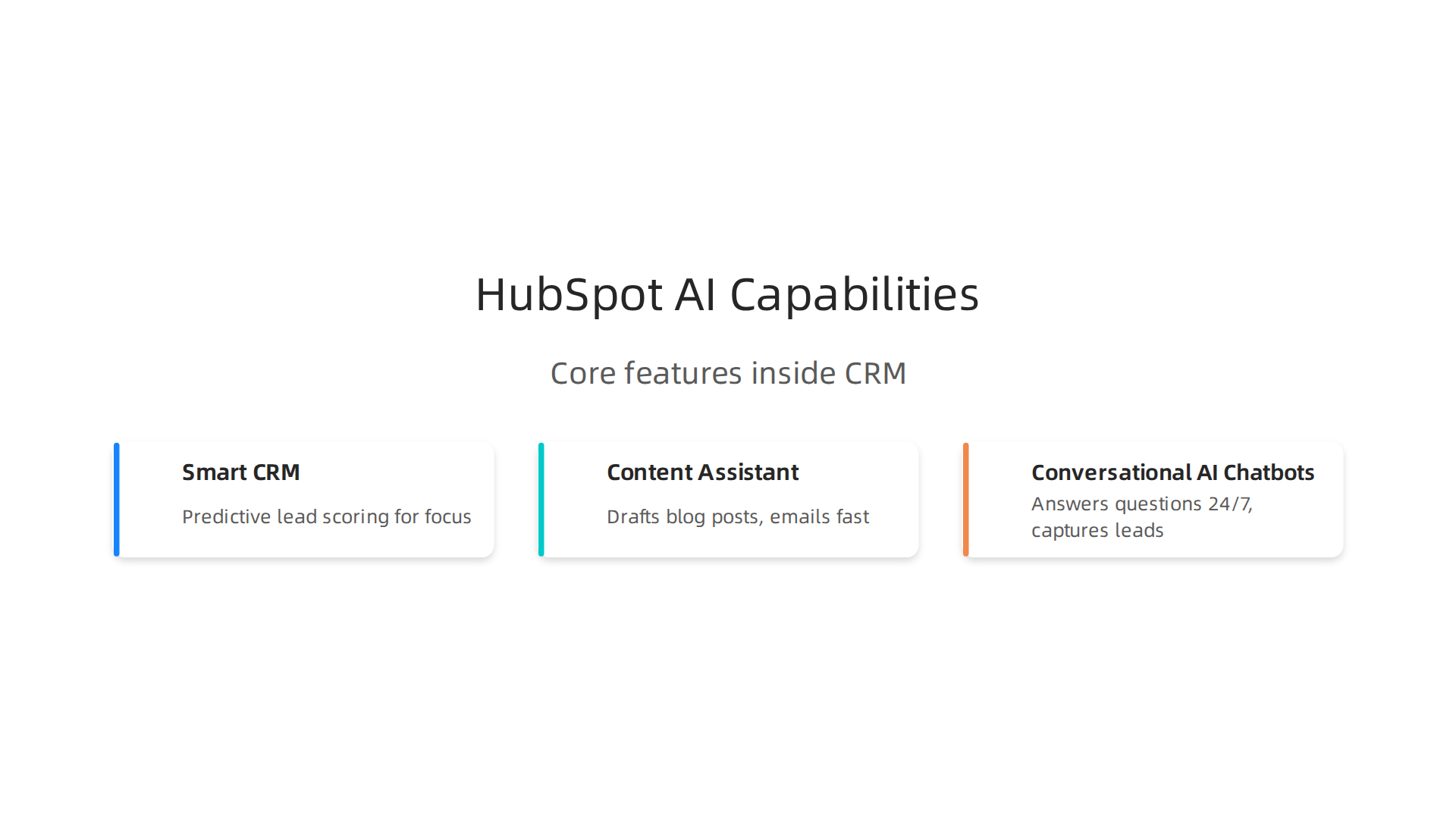
Here’s what your startup can actually use.
Smart CRM with Predictive Lead Scoring
The Smart CRM studies how leads behave on your site. It looks at which emails they open and what pages they visit. Then it scores each lead based on how likely they are to buy. Your small sales team can stop chasing cold leads and focus on the hot ones that matter.
Content Assistant
Need a blog post, an email, or a social post fast? The Content Assistant writes first drafts in minutes. You give it a few prompts about topic, tone, and length, and it produces usable content ready for editing.
Conversational AI Chatbots
HubSpot’s AI chatbot answers visitor questions 24/7 by scanning your website and knowledge base. It captures leads and books meetings without needing a human on standby.
These features work across Marketing, Sales, and Service Hubs, so data flows between teams automatically. And here’s the best part: you don’t need an expensive plan. HubSpot makes AI tools available on lower-tier plans, giving startups access without an enterprise budget.
For a closer look at other options, check our guide to the best AI platforms for business in 2026. And explore HubSpot’s AI sales and marketing tools for startups to see the full list of features.
Smart CRM & Predictive Lead Scoring
One of the most powerful HubSpot AI features for startups is predictive lead scoring. Instead of guessing which leads to chase, the machine learning model ranks each prospect based on real conversion likelihood. This saves your sales team hours of wasted effort.
The AI studies past behavior like email opens, site visits, and content downloads. It also measures how well each lead fits your ideal customer profile. Then it assigns a score. Your reps can immediately see who is ready to buy and who needs more time.
For startups, that means you focus your limited energy on the people most likely to say yes. And because HubSpot connects with your email and calendar, those scores update in real time as new data comes in.
To see how this works in practice, read this detailed guide on HubSpot Lead Scoring 2026: How to Drive Predictable Growth. For more ways to put AI to work, check out how to unlock startup growth with AI-powered sales and marketing tools.
Want to stay up to date on the latest AI tools and trends? Get clear daily AI updates with The AI Newsletter Worth Reading from The Deep View.
Content Assistant & AI-Powered Marketing
Creating content from scratch takes forever. HubSpot AI solves this with its Content Assistant tool. It uses natural language generation to write blog posts, email copy, social media captions, and more in just seconds.
For startup founders and operators, that means you can produce investor-oriented materials fast. Think pitch deck talking points, market summaries, or early drafts of customer case studies. The AI handles the first pass, so you focus on polishing the message.
You can also set custom tone and brand guidelines. This keeps every piece of content consistent with your voice, whether you are writing for a VC firm or a blog audience. It is one of the most practical HubSpot AI features for startups that need to move quickly according to this overview of HubSpot AI features in 2026.
For more ways to put artificial intelligence to work across your business, read this practical guide on how to use AI for startup success.
How AI-Powered CRM Impacts Startup Funding Readiness
Beyond content creation, HubSpot AI also plays a big role in getting your startup ready for funding.

Investors in 2026 want to see data-driven decision making and efficient operations. An AI-powered CRM shows both.
HubSpot AI helps you organize investor relationships from the very first conversation. You can track every email, call, and meeting with potential backers. The system logs engagement automatically. No more scrambling to remember who you talked to last week or what they cared about.
The predictive lead scoring feature is a game changer for fundraising. It analyzes behavior and assigns scores based on how likely a lead is to convert. As explained in this article about top HubSpot AI tools in 2026, the tool helps sales teams focus on the leads that matter most. For founders, that means zeroing in on investors who are actually interested and ready to move forward.
Predictive analytics also help you forecast cash flow needs. The AI can surface signals about the best timing for your next funding round. It flags risks before they become problems. That kind of intelligence is exactly what investors want to see when they evaluate your startup.
For more on raising capital efficiently, check out this practical guide on how to find investors for a startup. And if you want to stay ahead of every AI trend that impacts fundraising, subscribe to The Deep View Newsletter for clear daily updates straight to your inbox.
Data-Driven Pitch Decks & Investor Materials
Now let’s talk about pitch decks. You know investors love data. HubSpot AI can turn your CRM data into powerful charts and summaries. That makes your pitch deck stronger and more convincing.
You can create tailored reports for each investor. HubSpot AI analyzes what each investor cares about. Then it pulls the right stats from your CRM. That personal touch can really grab their attention. As noted by the Constellation Research article on HubSpot’s strategy, the platform uses AI to deliver "work, not software," meaning it actively helps you build these materials.
Also, automated follow-up sequences ensure no investor slips through the cracks. After a meeting, the AI sends a personalized recap and next steps. This keeps you top of mind without extra effort.
For a broader look at using AI in your startup, check out this guide on how to use AI for startup success. It covers tools that can save you time and help you grow.
Investor Relationship Management & Communication
Keeping your investors in the loop is a big job. You have to log every call, track their interest, and send updates. It is easy for things to slip through the cracks. HubSpot AI makes it much easier.
The CRM logs all your investor interactions automatically.
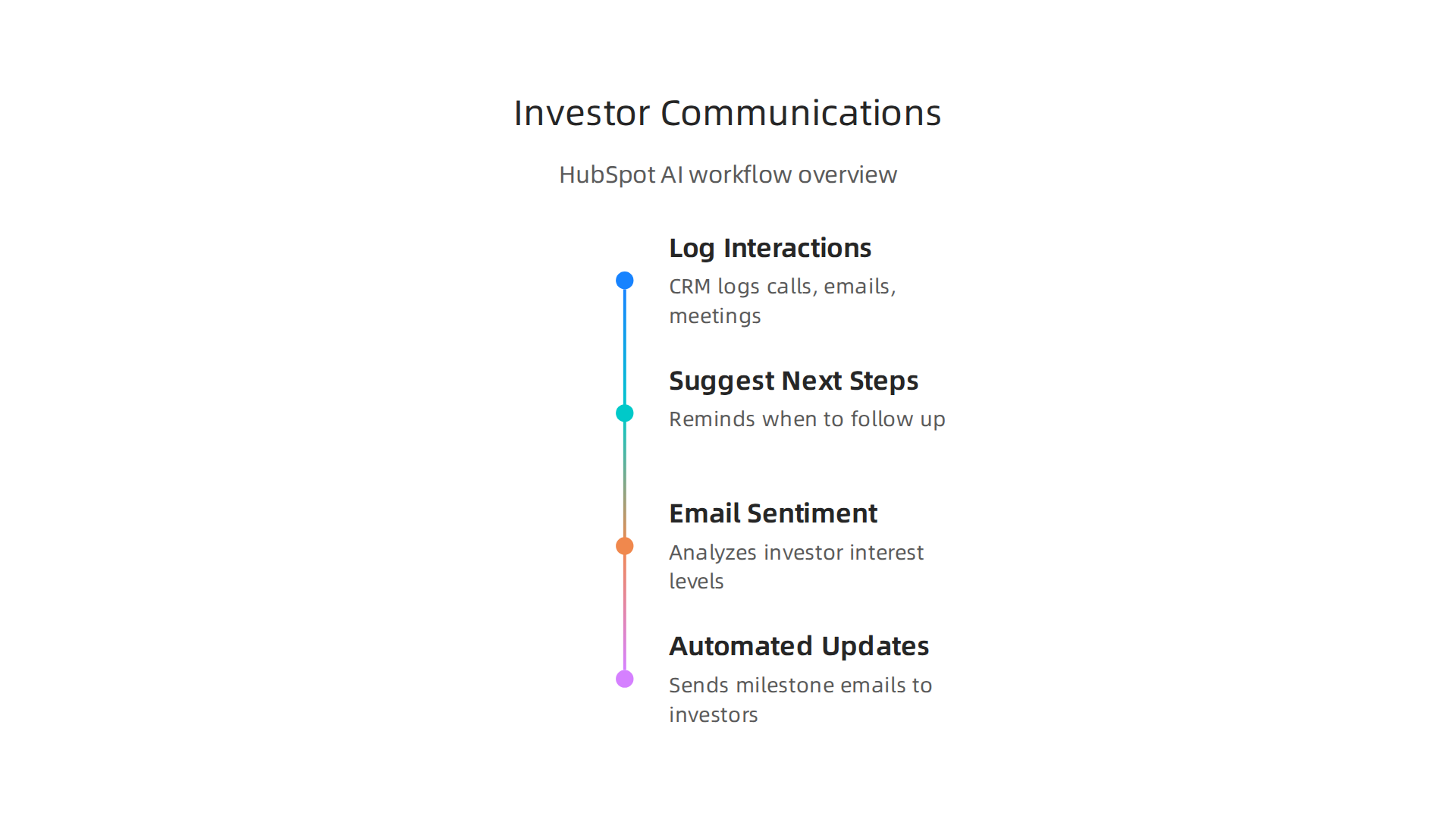
It suggests what to do next and reminds you when to follow up. You stay on top of every conversation.
Email sentiment analysis is a smart feature. HubSpot AI reads your investors’ email replies to see if they are excited or losing interest. That way, you know who to focus on.
You can also set up automated milestone updates. When your startup reaches a new goal, the AI creates an email and sends it to your investor list. No manual work needed.
These tools are part of a larger set of HubSpot AI sales and marketing tools designed for growing companies. To see how AI can boost your whole operation, read about AI-powered sales and marketing tools.
For daily insights on AI tools like this, check out The AI Newsletter Worth Reading.
Using HubSpot AI for Market Intelligence and Competitive Analysis
HubSpot AI does more than handle investor updates. It also helps you watch your competition and spot new market trends without spending hours online.

The platform pulls together industry news, social media mentions, and competitor actions into one view.
For example, you can set up alerts for when a rival releases a new product or gets funding. HubSpot AI scans thousands of sources and highlights the ones that matter most to your startup. This gives you early signals so you can adjust your go-to-market strategy before the market shifts.
Another smart use is analyzing customer feedback. HubSpot AI reads support tickets, reviews, and survey replies to find patterns. You might discover a request that keeps coming up, which points to a product gap you can fill. This is one of the ways the HubSpot AI features in 2026 help startups move faster than manual research ever could.
Customer comments also reveal unmet needs. When you hear the same pain point from multiple buyers, that is your signal to build something new. HubSpot AI surfaces those insights automatically.
For a deeper look at tools that can power your entire business, check out this guide to the best AI platforms for business in 2026.
Trend Detection with AI
HubSpot AI does not just tell you what happened yesterday. It helps you spot what is coming next.
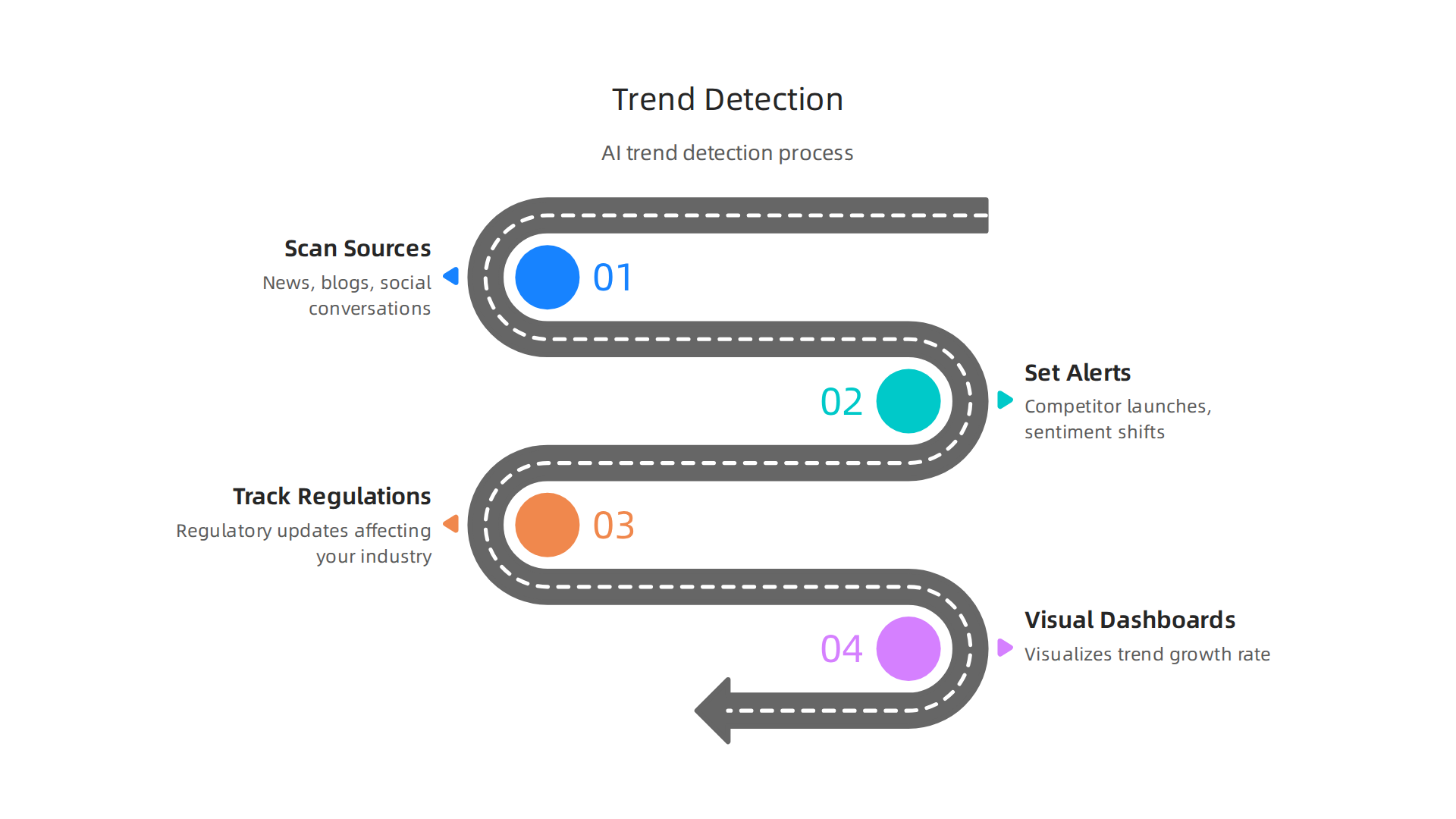
The platform uses natural language processing to scan thousands of news articles, blog posts, and social conversations for the topics and keywords that matter to your startup. Instead of guessing which trends are real, you get data.
You can set up alerts for specific signals. Maybe you want to know when a competitor launches a new product or when investor sentiment shifts in your space. HubSpot AI watches for those changes and sends you a notification. It also tracks regulatory updates that could affect your industry.
Visual dashboards show you how fast a trend is growing. If a topic is gaining momentum, you will see it clearly. This helps you decide which strategic initiatives to prioritize first. For a broader look at where innovation is heading, check out this overview of disruptive innovation trends in 2026.
HubSpot AI also flags risks before they become obvious in your reports. By predicting next actions and flagging risks early, the platform gives you a real advantage.
If you want to stay ahead of AI and tech trends without the noise, get clear daily updates from The AI Newsletter Worth Reading.
Automated Competitor Tracking
Keeping an eye on your competitors is draining. You have to check pricing pages, read press releases, and watch for hiring changes. HubSpot AI does this for you automatically.
The platform scans the web for competitor updates and collects them in one place. It watches for pricing shifts, new product announcements, and changes in hiring patterns. You get a weekly digest that summarizes competitor moves and potential threats. That way, you spend less time watching and more time building.
HubSpot AI can also benchmark your startup’s online growth against industry peers. You see how your website traffic, lead generation, and engagement stack up. This helps you spot gaps and find opportunities. If you are looking to improve your own marketing and sales systems, check out these AI-powered sales and marketing tools for startups.
HubSpot’s AI tools are built to reduce manual work for startup teams. You can see the full list of capabilities in the HubSpot AI sales and marketing tools overview.
Real-World Startup Case Studies: HubSpot AI in Action
Let’s move from theory to real results. In 2026, startups of all sizes are using HubSpot AI to speed up growth and win funding. According to the AI in Startup GTM Strategy Report, 65% of founders have increased their AI investments since 2024. Those with dedicated AI teams hit $5M to $20M in annual recurring revenue. That’s a big gap compared to startups without AI.
Take a seed-stage SaaS company. They turned on HubSpot’s predictive lead scoring. This AI tool ranks leads by how likely they are to buy. Within three months, their lead conversion jumped by 40%. Sales reps stopped chasing cold leads and focused on hot ones instead.
Or consider a growth-stage startup that needed to raise a Series A. Their team used HubSpot’s AI content assistant to write personalized investor emails. What used to take two weeks now took just three days. They cut investor outreach time by 50% and closed their round faster.
These examples show that HubSpot AI is not just a nice to have. It directly affects your bottom line and your ability to raise money. If you want to dive deeper into AI strategies, check out this guide to using AI for startup success.
And to stay ahead of the curve, consider subscribing to The AI Newsletter Worth Reading. It delivers clear daily AI updates straight to your inbox.
But let’s zoom in on one specific story that shows exactly how HubSpot AI works in practice.
A B2B startup had a strong product but struggled to turn free trial users into paying customers. They had hundreds of signups every month but no clear way to spot the serious buyers.
They activated HubSpot’s predictive lead scoring. The AI model analyzed past customer behavior and ranked new trial users by how likely they were to convert. Within three months, the startup converted 20% more leads from their free trials.
The founders now focused only on the 30% of prospects with the highest scores. That simple shift saved them hundreds of hours every quarter. You can read more about this feature in the official documentation on determining likelihood to close.
The best part? When they pitched investors for their seed round, they brought hard data. Conversion rates, lead behavior trends, and clear growth numbers backed their story. That data helped them close a $2M seed round.
For more ideas on AI tools that drive startup growth, check out this guide on evaluating AI platforms for your startup.
Growth-Stage Scaling: AI-Driven Sales Efficiency
When a startup hits Series A, buyers move slower. You have got to scale revenue without doubling headcount.
One Series A startup solved this with hubspot ai. They embedded it into their sales pipeline. Using HubSpot Lead Scoring 2026 features, they cut the sales cycle by 25%. That alone saved months of runway.
Here is how the system worked:
Predictive lead scoring flagged high intent buyers instantly. HubSpot’s Content Assistant then wrote over 50 personalized emails per week. No new hires were needed.
The secret weapon was AI-generated market reports. Those reports helped convince three lead investors to back a $10M round.
To build a similar engine for your startup, check out how to unlock startup growth with AI-powered sales tools. And stay current with AI breakthroughs by subscribing to The AI Newsletter Worth Reading.
Evaluating HubSpot AI: ROI, Pricing, and Integration Considerations for Startups
Before you jump into HubSpot AI, you need to know what it costs and whether it fits your stack.

Here is the breakdown.
HubSpot AI features are available on plans starting at around $800 per month for Marketing Hub Starter. The more powerful tools like predictive lead scoring and conversation intelligence live on Professional and Enterprise tiers. For a clear look at which features actually deliver value, check out this overview of HubSpot AI features in 2026 that are actually useful.
But the sticker price is just the start. You also need to budget for training your team, migrating your existing data, and potentially adding on tools like Data Hub for clean customer records. According to the 2026 state of marketing AI tools, every dollar spent on marketing automation now returns $5.44 on average. That kind of return helps justify the upfront investment for founders running ai-powered business solutions.
Integration is just as important as pricing. HubSpot AI works best when it connects with the tools you already use like Slack, Stripe, and Gmail. Without clean data flowing between systems, even the best AI will give you bad predictions. For a deeper look at choosing the right platform, read this guide on how to evaluate AI platforms for your startup in 2026.
Cost vs. Value Analysis for Early-Stage Founders
As an early-stage founder, every dollar matters. So how do you know if HubSpot AI is worth the cost?
HubSpot AI has three main pricing tiers. The Starter plan gives you basic lead scoring and email automation.
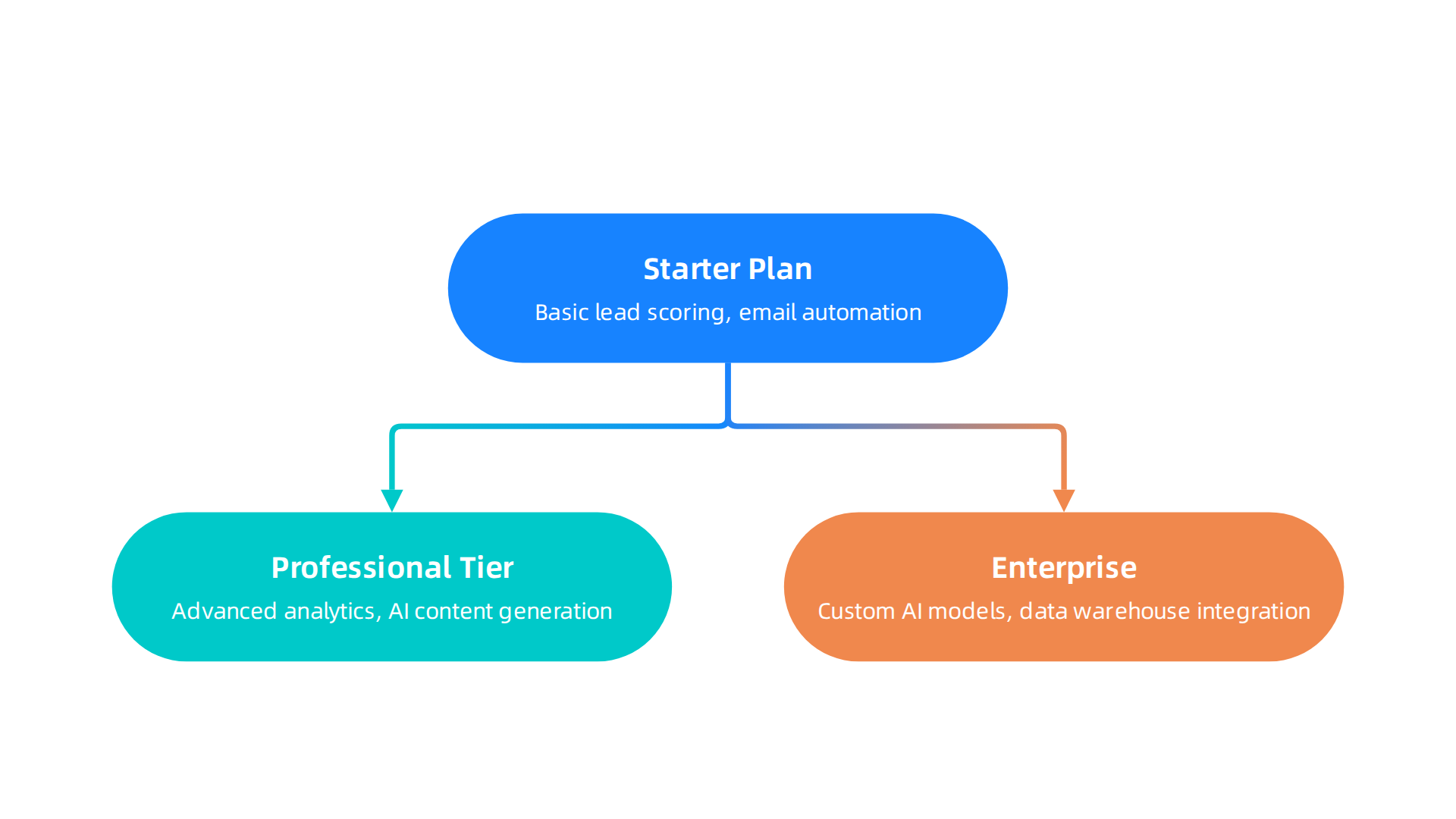
It is a low-risk way to test the waters for your small team.
The Professional tier is where this tool really shines. You get advanced predictive analytics and AI content generation. For most growing startups, this tier offers the best balance of cost and power.
Enterprise includes custom AI models and data warehouse integration. But for pre-revenue companies, it is usually overkill. For a clear comparison of each plan, check out the official overview of HubSpot’s AI Sales and Marketing Tools.
Here is how to decide. Calculate the hours your team will save per week. Add the extra conversions you expect from better lead scoring. Compare that total value against the monthly subscription cost. If the tool saves your team 20 hours a month and helps close a few extra deals, it pays for itself fast.
For more help running the numbers and choosing the right plan, read our full guide to evaluating AI platforms.
And to stay updated on the latest AI tools that save you time and money, subscribe to The AI Newsletter Worth Reading. It delivers clear daily AI updates straight to your inbox every morning.
Integration with the Startup Tech Stack
Your startup likely uses a mix of tools for sales, marketing, and support. HubSpot AI connects with hundreds of apps through its marketplace. Popular integrations include Slack, Shopify, Stripe, and Google Workspace.
The real value comes when you connect tools that feed data back into your CRM. More data means smarter AI predictions. For example, linking your e-commerce platform lets HubSpot analyze purchase history and improve lead scoring. You can explore the full range of Breeze AI tools built right into the CRM.
This deep integration makes HubSpot a central hub. As one breakdown explains, HubSpot uses AI to make marketing smarter by connecting data across marketing, sales, and service workflows.
For startups with custom analytics, the Enterprise plan offers API access to link proprietary tools directly. This lets you build a tech stack that grows with your business.
To see how other startups build complete AI-powered workflows, check our guide on AI-powered sales and marketing tools for startups.
Summary
This article offers a practical, evidence-based guide to how HubSpot AI can power startups in 2026, showing which features matter, how they work, and when the investment makes sense. It breaks down core tools—predictive lead scoring, the Content Assistant, and conversational chatbots—and explains how those features speed sales, automate marketing, and keep investors engaged. You’ll learn how AI-driven CRM data improves fundraising readiness, surfaces market trends, and cuts wasted sales time, plus real-world examples of conversion and fundraising gains. The piece also covers costs, integration considerations, and how to calculate ROI for different HubSpot tiers so founders can decide if and when to adopt. By the end, readers will know which HubSpot AI features to prioritize, how to connect them to their tech stack, and how to present AI-driven results to investors.