
Define Technology with This Practical Framework for Startup Founders and Investors

Introduction: The Technology Definition Problem
You hear the word "technology" every day. It shows up in pitch decks, boardroom talks, and news headlines. But what does it really mean? For a term we use so often, its meaning has become surprisingly fuzzy. Most people toss around the word to describe gadgets, software, or any new tool. But that loose usage creates real problems for founders and investors.

Here is the thing. When you cannot clearly define technology, your strategy gets muddy. You might invest in the wrong tools, chase trends that do not matter, or waste time on vague product roadmaps. A fuzzy definition leads to misaligned teams and wasted resources. And in a fast moving startup world, that is a risk you cannot afford.
The word itself goes way back. The ancient Greeks coined a version of "technology" over 2,500 years ago. Back then, it meant something different than it does today. The root techne referred to craft, skill, or applied knowledge. The Greeks even considered medicine and music as forms of technology. So the idea of what counts as tech has always shifted with time.
In this article, we break through the confusion. We offer a clear, multi-dimensional definition rooted in history, philosophical thinking, and modern practice. You will learn how to define technology in a way that sharpens your decisions. Whether you are a startup founder building a product or an investor evaluating a deal, this framework will help you cut through the noise.
Want to stay ahead of the curve? The AI Newsletter Worth Reading delivers clear daily updates on how AI and other technologies are reshaping the world. It is a simple way to keep your pulse on the tech landscape.
And if you are ready for a deeper dive, check out our guide on the real definition of technology that founders and investors actually need.
The Evolving Definition of Technology: From Ancient Tools to Digital Systems
To truly define technology, you have to look at how the word itself has changed over the centuries. The journey from ancient Greece to the modern day reveals a lot about how we think about tools, knowledge, and progress.
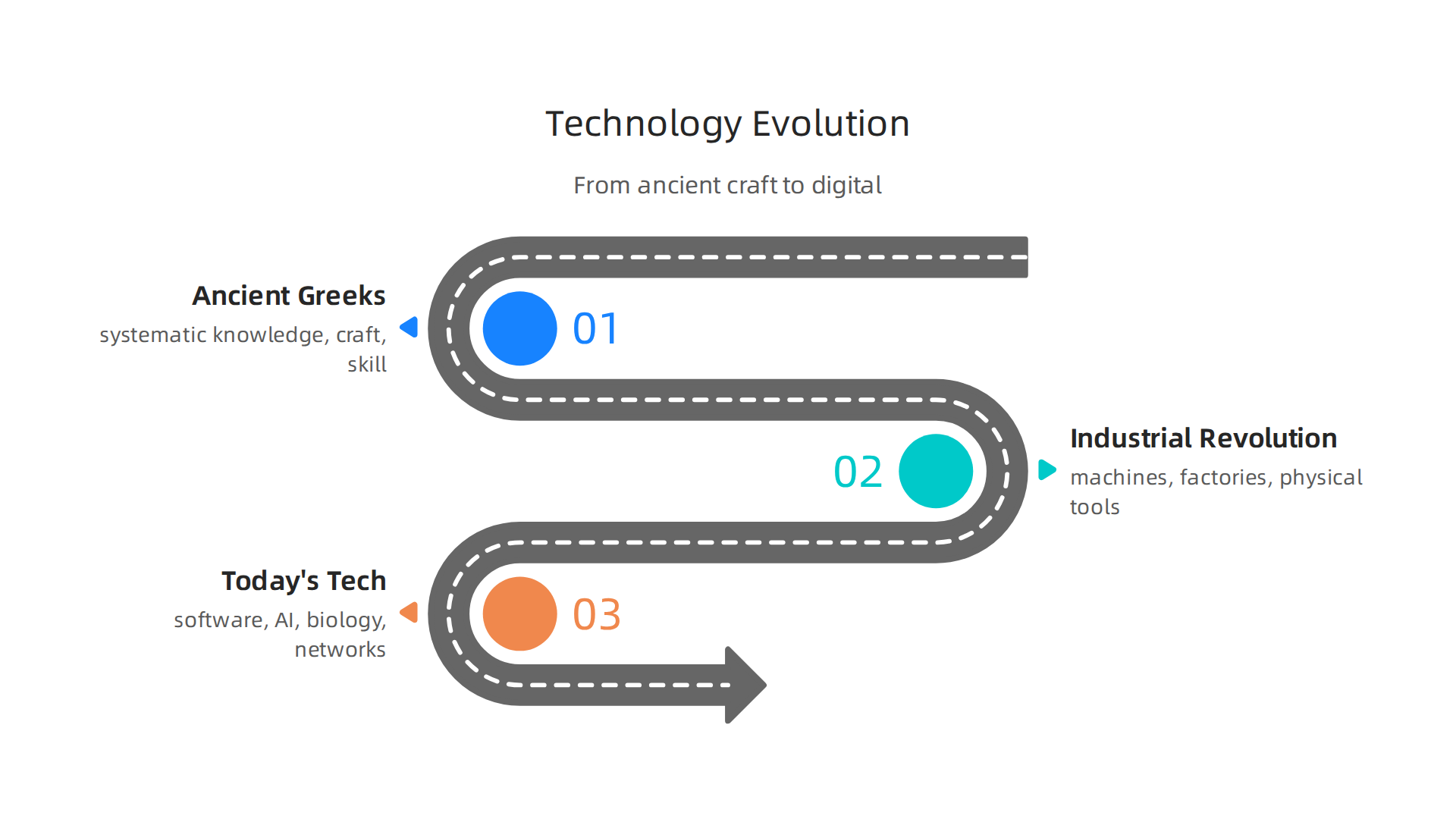
The ancient Greeks gave us the term technology from two roots: techne (meaning craft or skill) and logos (meaning study or discourse). Back then, technology was not about machines at all. It meant the systematic knowledge of how to make or do something. That is why the Greeks considered medicine and even music to be forms of technology. Both required deep skill and applied knowledge. They also built incredible devices like the Antikythera mechanism, an analog computer that predicted the stars. You can read an Ancient Greek Computing overview to see how far ahead their engineering was.

Then came the Industrial Revolution in the 1700s and 1800s. That is when the meaning of technology took a sharp turn. Machines, factories, and industrial processes became the new face of progress. People started to think of technology as the steam engine, the power loom, and the assembly line. It was about physical tools that made production faster and cheaper. The word still carried the idea of applied knowledge, but now the focus was on hardware you could touch.
Today, the definition has exploded again. Technology now covers far more than factory machines. It includes digital software, artificial intelligence, biological engineering, and massive information networks. Computer science and information technology sit at the heart of modern innovation. But we also have biotech, nanotechnology, and the open innovation network where companies collaborate on shared breakthroughs. Finding the optimum tech for your startup means understanding this wide and ever expanding landscape. The boundaries keep moving.
This evolution matters because it shows that what counts as technology is not fixed. It shifts with what humans value and need at each point in history. For startup founders and investors, that flexibility is a powerful lens. It helps you spot where the next shift might happen and invest your energy wisely.
If you are building a startup around modern digital tools, learning how to evaluate AI platforms for your startup in 2026 can sharpen your strategy and keep you ahead.
Core Components of Technology: Tools, Knowledge, and Processes
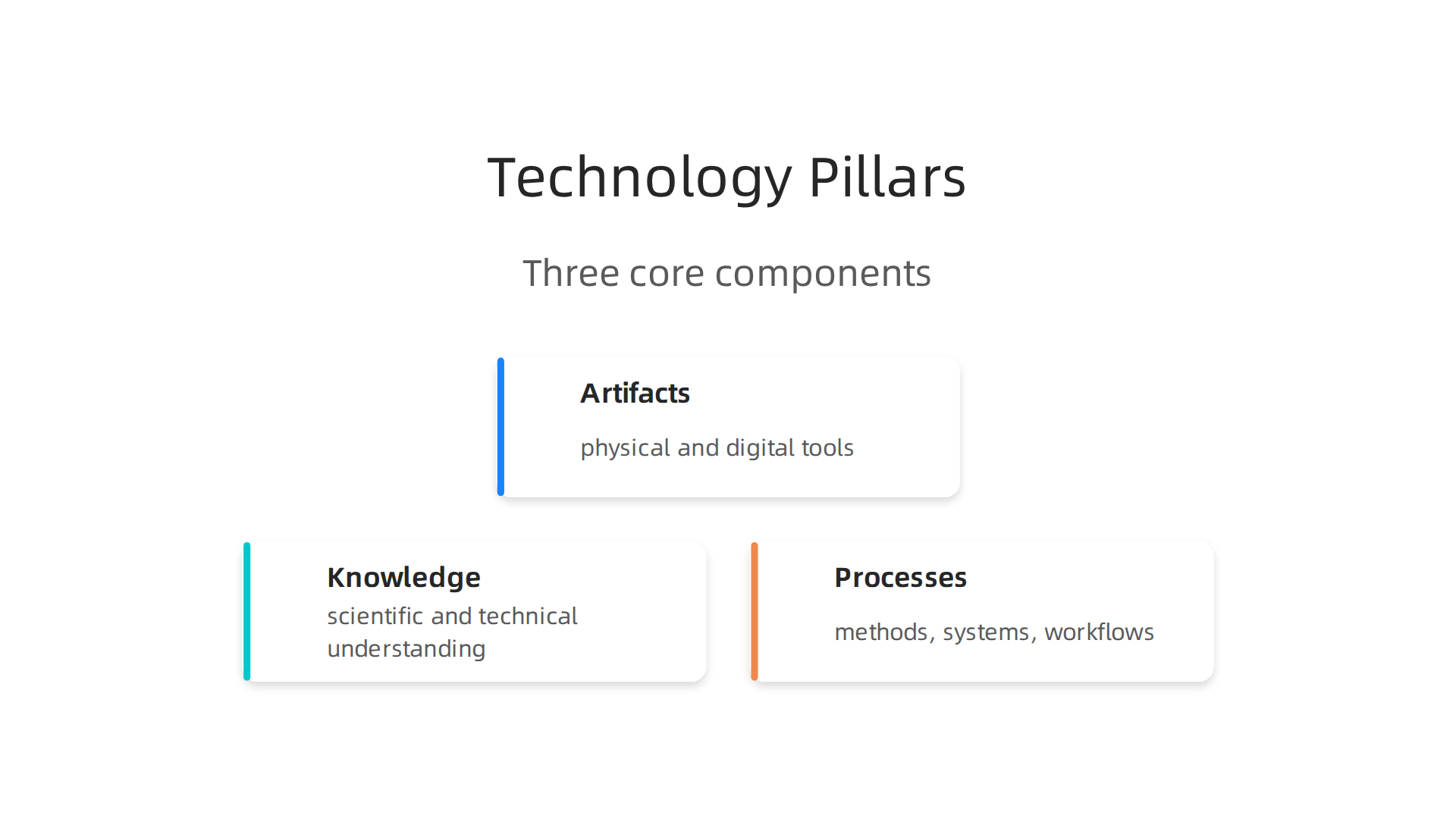
Now that you have a broader view of what technology means, it is time to break it down into its core parts. Technology is not just the flashy gadgets you see in ads. It rests on three pillars: tools, knowledge, and processes.
Understanding these will help you define technology in a way that matters for your business.
The first pillar is artifacts. These are the physical and digital tools we use. Think of your laptop, a cloud software platform, or even a simple hammer. But artifacts also include digital systems like databases and AI models. They are the concrete things you can touch or interact with. Startups often focus heavily on this pillar, looking for the optimum tech to build their product. However, the artifact alone is not enough.
The second pillar is knowledge. This is the scientific and technical understanding that makes the tools possible. You can have the best computer in the world, but without knowing how to program it or understand its algorithms, it is just a paperweight. Knowledge includes everything from coding skills to engineering principles. The field of computer science and information technology is built on this pillar. A Science and technology studies overview from Wikipedia explains that technology includes not just artifacts but also techniques and systems, which rely on deep knowledge.
The third pillar is processes. These are the methods, systems, and workflows that turn knowledge and artifacts into real results. A process might be the way your team runs a software development sprint, a quality testing procedure, or a data pipeline. Processes also cover how organizations collaborate and innovate. This is where the open innovation network comes in. Many successful startups use open processes to share ideas and accelerate growth. If you want to implement strong processes around AI, a practical guide on how to use AI for startup success can help you build efficient workflows.
These three components interact constantly. Knowledge leads to better processes. Processes improve artifacts. And artifacts generate new knowledge. That cycle drives innovation. When you define technology for your startup, do not just think about the latest gadget. Think about the full system of tools, what you know, and how you work.
If you want to stay sharp on how technology keeps evolving, getting clear daily updates on AI and emerging tech can make a real difference. The The AI Newsletter Worth Reading delivers insights that help founders and investors spot the next big shift.
Why a Clear Technology Definition Matters for Startup Founders and Investors
You now know the three core parts of technology: tools, knowledge, and processes. But here is the thing. Having that understanding is useless if you do not actually use it to clearly define technology for yourself and your stakeholders. In 2026, the startup world is drowning in hype. Saying you are a "tech company" or that you use "AI" means almost nothing.
Tech-washing is a real problem. Many founders slap a "powered by AI" label on their product just to attract funding. But investors are getting wise to this. According to a report by Wipfli, AI hype is costing startups funding because it pulls dollars and attention away from solid businesses that do not fit the AI narrative.
When you cannot clearly define your technology, you risk sounding like just another hype train. A precise definition helps you stand out as genuine.
A consistent framework helps investors assess risk. Technology maturity varies wildly. Some innovations are still at the early "technology trigger" phase, while others are on the "plateau of productivity." The Gartner hype cycle describes these phases, and only about one-fifth of breakthrough technologies actually follow that pattern. When an investor asks how mature your tech is, you need to answer honestly. A clear definition of what your technology is (and is not) allows you to map it to a realistic stage. That builds trust and sets proper expectations.
Founders communicate better with a clear definition. When you can define technology in terms of your specific artifacts, knowledge, and processes, you tell a more convincing story.

Instead of saying "we use AI," you explain what problem your tool solves, what knowledge drives it, and how your process delivers results. This clarity helps when pitching to investors, hiring top talent, or explaining your product to customers.
Remember that lack of product-market fit is the number one reason startups fail, according to research from Wilbur Labs on why startups fail in 2026. Misunderstanding or misrepresenting your technology only makes that gap wider. If you want to avoid those mistakes, start by getting your definition right.
If you want to dive deeper into evaluating specific tech for your startup, check out this guide on how to evaluate AI platforms for your startup in 2026. It helps you separate signal from noise.
Technology in the 2026 Landscape: AI, Quantum, and Convergence
Now that you understand why a clear definition of technology matters, let’s look at what technology actually looks like in 2026. The old way of separating "digital," "physical," and "biological" doesn’t work anymore. These worlds are fusing together in ways that force us to redefine what technology even is.
Convergence is the new normal. Today’s most powerful innovations blend multiple domains. For example, physical AI brings intelligence into robots, drones, and medical devices.

According to Gartner’s list of top strategic technology trends for 2026, this is one of the big bets shaping enterprise roadmaps. A robot that can see, think, and act is no longer just hardware or software. It is both. This mixing of computer science and information technology with biology and mechanics means you cannot label your startup with just one category anymore.
AI is reshaping the definition of technology itself. In the past, technology was a tool you controlled. Today, AI creates tools that learn, adapt, and make decisions on their own. These are "intelligent tools." They act more like partners than hammers. That shift changes how you define technology for your business. Your product is not just a piece of software. It is a system that uses data and models to deliver outcomes. When you define technology this way, you move away from hype and toward real value.
Quantum computing is expanding the boundaries. Though still early, quantum systems promise to solve problems that today’s computers cannot touch. They will affect drug discovery, cryptography, and logistics. Right now, quantum is at the "technology trigger" phase on the hype cycle. Few usable products exist. But founders and investors who understand where it fits in the bigger picture will be ready when it matures.
How does this affect you? If you are a founder, you must define technology in terms of convergence. Do you use physical AI? Are you building on an open innovation network to collaborate with others? Are you chasing the optimum tech stack or the right problem-solution fit? Investors now expect you to explain how your technology combines disciplines, not just which label you wear.
The landscape is moving fast. To stay ahead, you need a reliable way to filter the noise. That is why getting a clear daily dose of AI and tech trends can help you spot opportunities before others do. You might want to check out The Deep View Newsletter for clear daily AI updates that cut through the hype and keep you informed.
If you are still struggling to map your own technology to the current trends, a good next step is to read more about how AI agents are changing the game in agentic AI vs generative AI. That article breaks down two major AI approaches and helps you decide where your startup fits.
How to Stay Informed Without Information Overload
You now have a solid picture of where technology is heading in 2026. But here is the real challenge: how do you keep up with all these changes without drowning in noise? Every day brings new product launches, research papers, and hot takes. If you try to read everything, you will burn out fast.
The trick is to build a smart information system. One that feeds you the right things and filters out the rest. Here is how to do it.
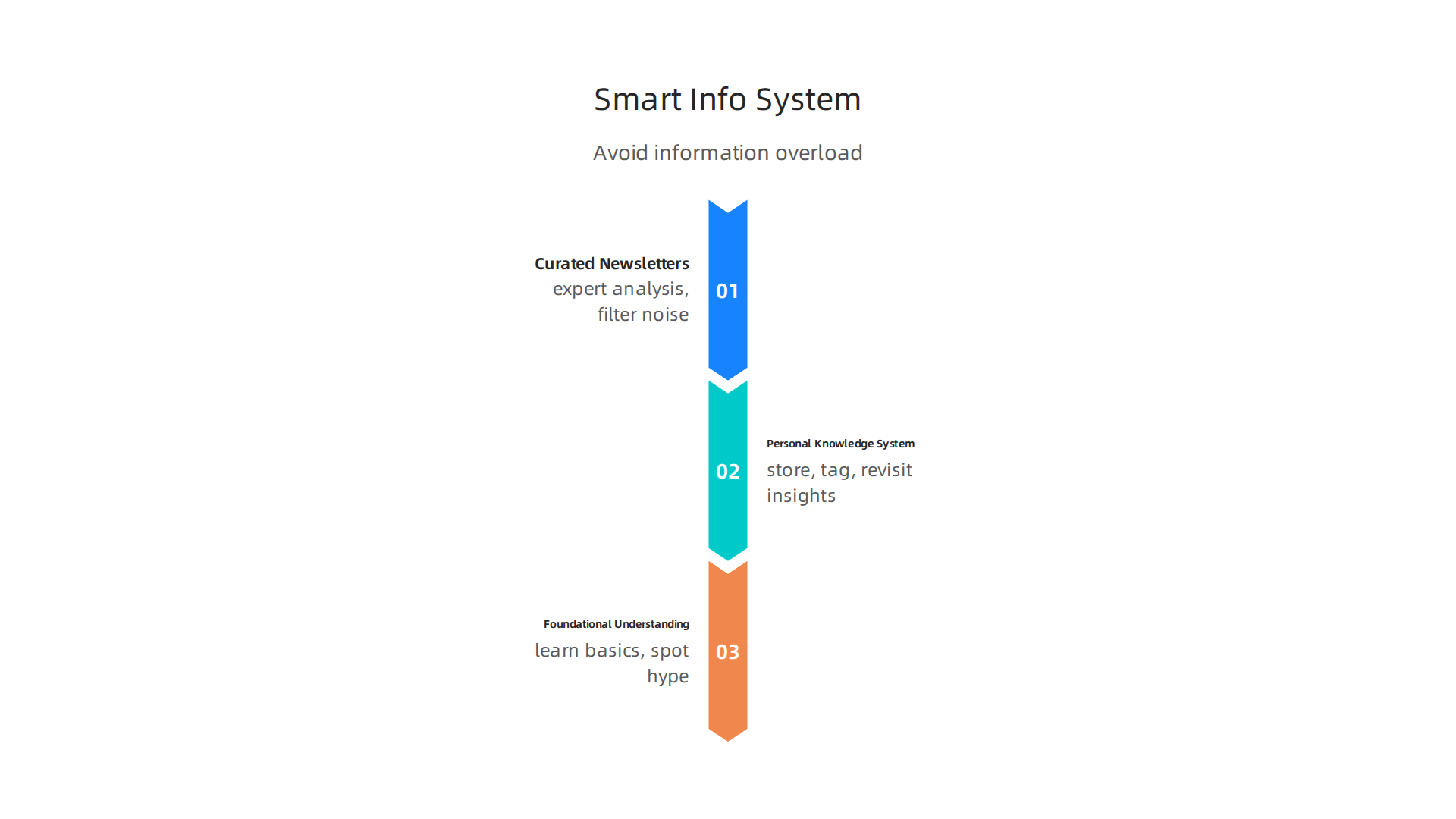
Rely on curated newsletters and expert analysis. Instead of chasing links across a dozen sites each morning, let someone else do the sorting. A handful of well-chosen newsletters from people who actually understand computer science and information technology will give you the signal without the noise. You get the important trends, explained simply, delivered to your inbox. That alone cuts your reading time by hours each week.
Build a personal knowledge system. Even when you read great content, you will forget most of it unless you have a place to store it. Set up an RSS feed reader or use a simple note-taking app. Save the articles that matter, tag them by topic, and revisit them later. Over time, this becomes your own private library of insights. You stop relying on memory and start building real understanding.
Focus on foundational understanding first. The most dangerous trap in tech is chasing every buzzword that pops up. Before you jump on the latest trend, take time to learn the basics. Why does the technology work? What problem does it actually solve? When you have a strong foundation, you can spot hype versus real value. You will not be fooled by slick marketing or the promise of an "optimum tech" shortcut. You will know which tools matter and which ones do not. This whole article started with the need to define technology clearly. That same mindset applies to how you consume information.
Joining an open innovation network can also help. When you learn from peers who are testing new tools in real time, you get honest feedback instead of polished press releases.
If you want a practical system for sorting through new AI offerings, check out this guide on how to evaluate AI platforms for your startup. It walks you through a repeatable method to test tools without wasting time.
Continuous learning is a habit that separates the best from the rest. As the Columbia Business School guide to breaking into venture capital points out, staying up to date with industry trends and subscribing to relevant reading resources is essential for making smart decisions.
The goal is not to know everything. It is to know the right things. Build your system, stick with it, and let the noise fade away.
A Practical Framework to Define Any Technology
Now that you have a system for staying informed, you need one more tool. How do you actually define a technology when you first hear about it? Too many people jump on a buzzword without understanding what it really is. They hear "blockchain" or "AI" and assume it is magic. That is how bad decisions get made.
A better way is to use a simple checklist. Every time you encounter a new technology, ask these four questions.
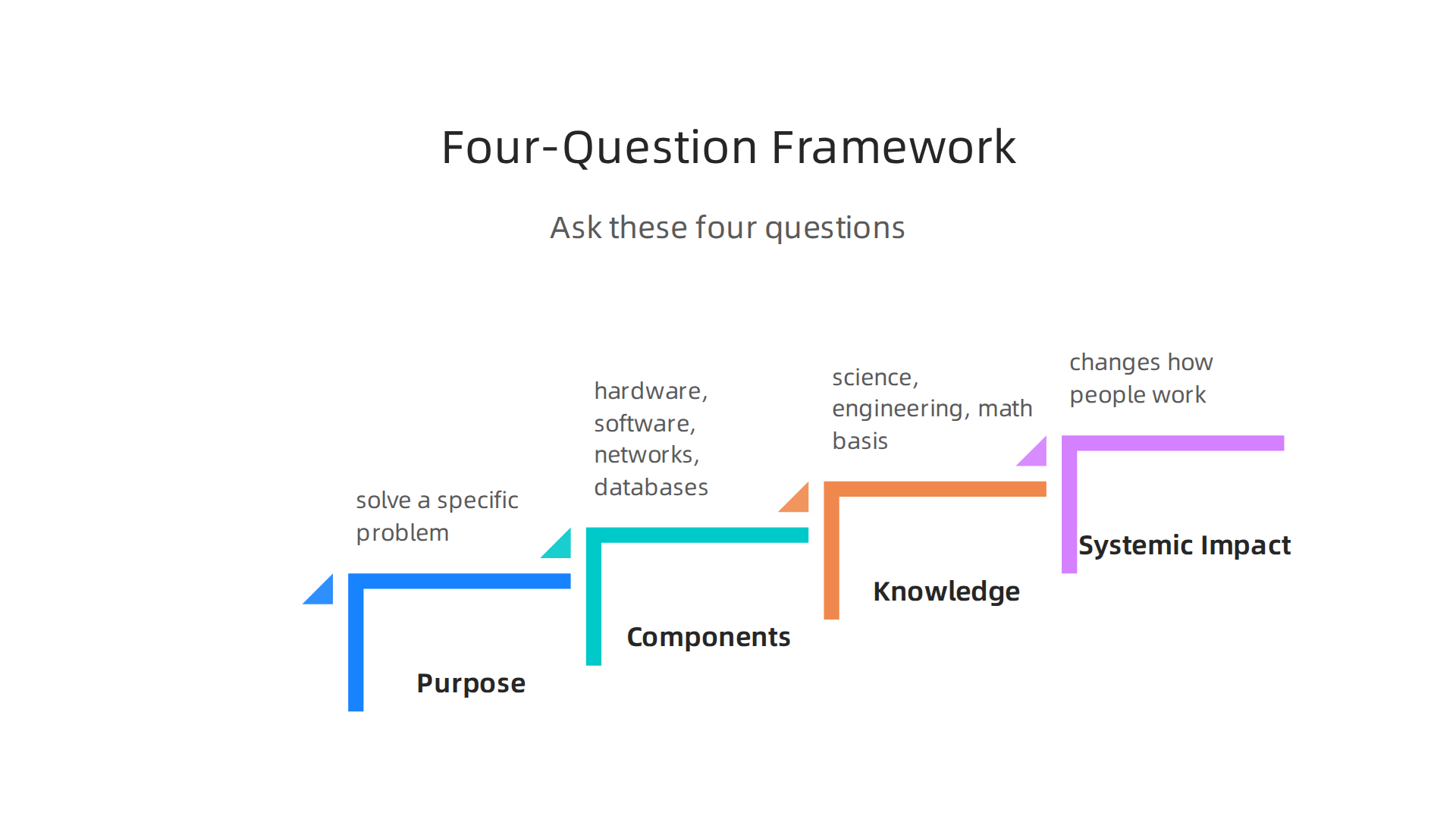
1. What is its purpose? Every technology exists to solve a specific problem. Maybe it helps you communicate faster, automate a task, or store data more reliably. If you cannot clearly describe the problem it solves, you are dealing with hype, not substance.
2. What are its components? Every technology is built from something. Hardware, software, networks, databases. The key hardware components of computational devices include processors, memory, and storage. Software includes operating systems and applications. When you can list the building blocks, the technology becomes less mysterious.
3. What knowledge does it rely on? Technology does not appear out of nowhere. It rests on science, engineering, and math. The Science and Technology area of the Notre Dame core curriculum explains that understanding the fundamental concepts and laws behind a field helps you evaluate claims critically. For AI, that means knowing a bit about machine learning, statistics, and neural networks.
4. What is its systemic impact? Technology never exists in a vacuum. It changes how people work, how businesses operate, and even how society functions. The field of science and technology studies shows that technology and society are deeply intertwined. When you consider the ripple effects, you can spot unintended consequences early.
Let us apply this to artificial intelligence. Purpose: automate decision making and content generation. Components: algorithms, training data, and computing power. Knowledge base: machine learning and data science. Systemic impact: it transforms jobs, raises ethical questions, and creates new startup categories. Suddenly, AI is no longer a buzzword. It is a tool you can evaluate.
Founders and investors who use this framework cut through the noise fast. They stop chasing fads and start asking smart questions.

If you want to dive deeper into one specific type of AI, check out this breakdown of agentic AI vs generative AI. It applies the same thinking to two hot categories.
And to keep sharpening your understanding, you need a steady stream of clear, hype-free updates. That is where The AI Newsletter Worth Reading comes in. It delivers daily AI insights without the fluff. Use it alongside this framework, and you will always know what a technology really is.
Summary
This article clears up the fuzzy ways people use the word