
How to Evaluate AI Platforms for Your Startup in 2026

Introduction: Navigating the AI Platform Explosion
The number of AI platforms hitting the market has exploded over the past two years. From massive cloud providers to specialized newcomers like Vast AI and Genie AI, there are now hundreds of tools promising to change how you work, build, and invest. For founders and investors, this rapid growth brings real opportunity but also a serious problem: how do you pick the right platform when there are so many options?

The global AI software platform market is now worth over $30 billion and keeps growing fast. According to the latest data on the global AI software platform market size, the sector could reach nearly $100 billion by 2035. That kind of growth means new platforms launch almost every week. Without reliable curation, it is easy to get lost in the noise.
That is why this article is here. We have put together a structured overview of the leading AI platforms, current investment trends, clear evaluation criteria, and the most important risks to watch for in 2026. Our goal is to help you cut through the hype and make smarter decisions about which AI platforms deserve your attention.
Staying on top of computer science news and platform updates is essential, but you do not have to do it alone. If you are a founder looking for an edge or an investor tracking the next big thing, start with our practical guide on how to use AI for startup success to see how these tools apply in real situations. And for daily updates that cut through the noise, subscribe to The AI Newsletter Worth Reading from The Deep View.

It delivers clear, timely AI insights straight to your inbox every day.
The Current Landscape of AI Platforms in 2026
The AI platform space has settled into three clear tiers, each serving a different need.
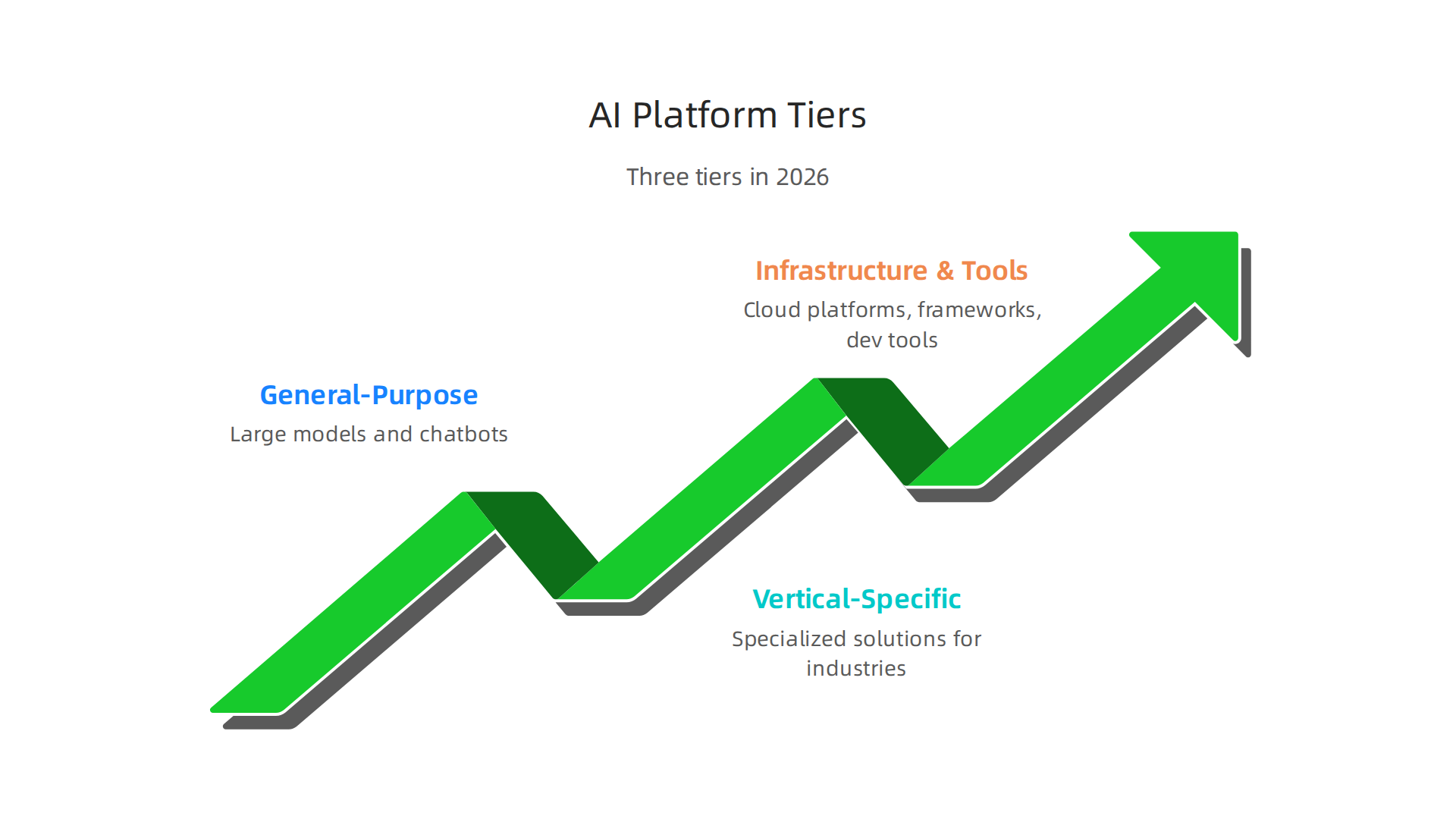
First, you have the general-purpose platforms. These are the large language models and chatbot powerhouses like ChatGPT, which now holds nearly 79% of the global AI chatbot market according to recent data on AI Chatbot Market Share Worldwide.
These tools handle everything from writing emails to coding and research. Second, there are vertical-specific platforms. Think of Vast AI for cloud compute or Genie AI for creative content. These are built for one job and do it extremely well. Third, you have infrastructure and developer tools. This includes cloud platforms from AWS, Microsoft Azure, and Google Cloud, plus open-source frameworks that let you build your own models.
What matters most in 2026 is that enterprise adoption has moved past the testing phase. Companies are no longer running small pilots. They are deploying full-scale AI solutions into their core operations. Recent research on the AI market size and trends shows that this transition from experimental use to core business infrastructure is happening fast. That means founders and investors need to look for platforms that are reliable, scalable, and ready for production use.
Open-source models are shaking up the old rules too. Big players like Meta and Mistral have released powerful models anyone can download and customize. This lets startups run AI on their own servers instead of paying per API call. Hybrid deployment, where you use both cloud and on-premise systems, is becoming the new standard. According to the latest artificial intelligence market report from MarketsandMarkets, the hybrid deployment model is projected to grow at the highest rate of 39.7 percent between 2026 and 2033. That is a huge shift away from the old cloud-only approach.
For founders building on AI platforms, this landscape means more choice but also more complexity. You need to understand the differences between these tiers and pick the right mix for your use case. The best AI platforms in 2026 are the ones that offer flexibility, strong security, and easy integration with your existing tools. If you want to dive deeper into how these platform categories compare, check out our guide on agentic AI vs generative AI and where each fits in your stack.
How AI Platforms Are Reshaping Startup Operations
So how does this actually change things for a startup that is trying to grow fast? The answer is pretty simple. AI platforms are now doing the heavy lifting across nearly every department.
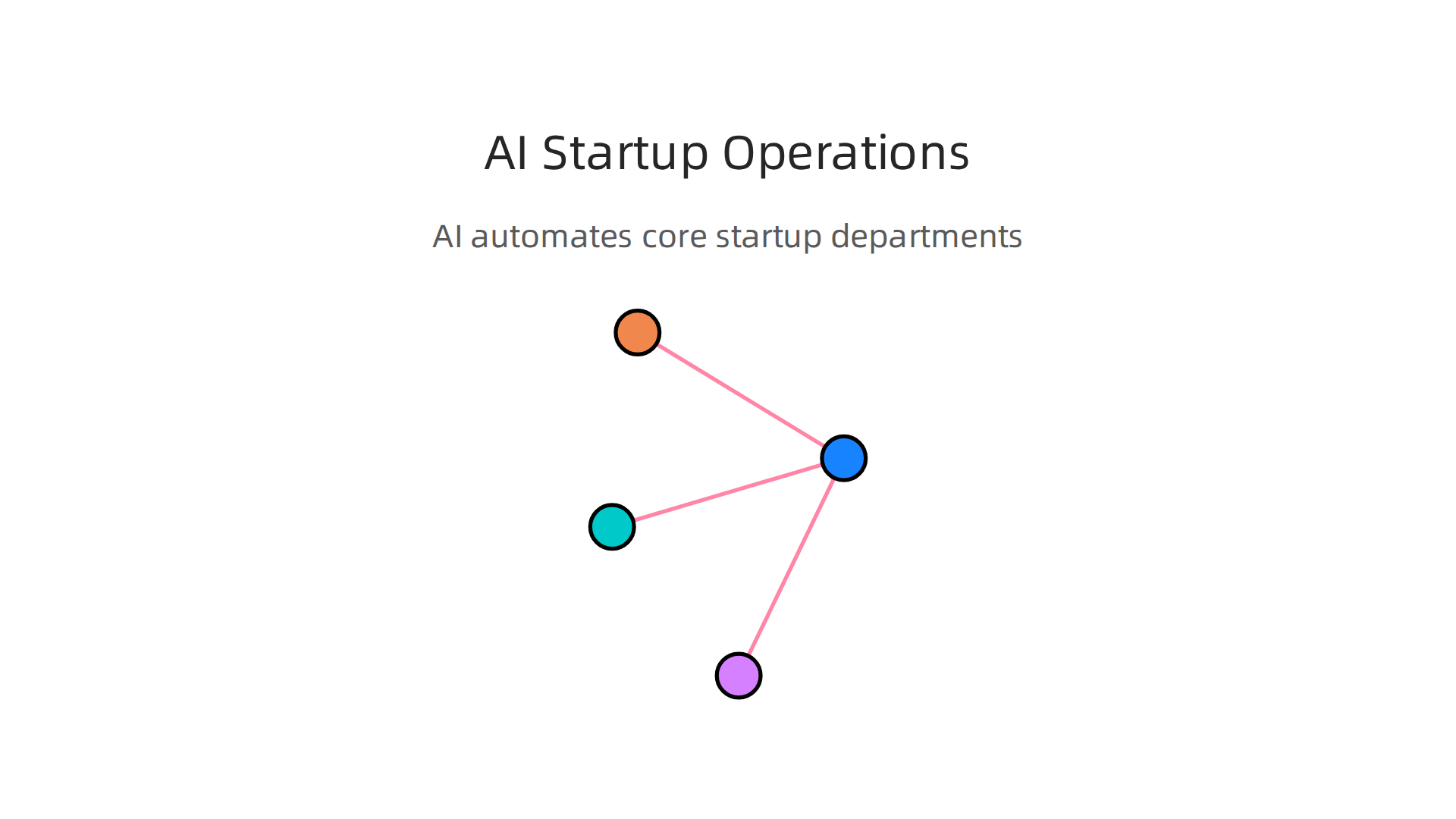
Sales teams use AI to score leads and draft outreach emails automatically. Customer support runs on AI chatbots that handle the majority of common questions. Marketing teams get AI generated content drafts and campaign recommendations. Engineering teams use AI copilots to write code faster and catch bugs earlier.
What this means for lean startup teams is huge. You do not need to hire a huge support staff to handle thousands of customers anymore. A single customer success leader can manage support for over 1 million customers using the right AI platform. That is exactly what one company showed in recent AI in business case studies for 2026, where a hybrid model of AI and human support reduced costs by 30 percent while keeping response accuracy above 95 percent. The automation of repetitive tasks across sales, support, marketing, and engineering is the clearest win for startups using these platforms.
There is another layer that is even more powerful. Integrated AI copilots and agent-based workflows are dramatically cutting down the time it takes to ship new features. Founders used to wait weeks or months to launch an update. Now, many startups release new features in days. Microsoft documented AI-powered customer transformation stories where developers working in new code repositories saw a 25 percent increase in speed. That kind of velocity changes the competitive landscape completely. If your competitor can ship three features while you ship one, you lose.
The measurable return on investment is becoming impossible to ignore. Real startups are reporting real numbers. One analysis of successful AI startup case studies showed that companies deploying AI platforms across operations saw significant cost savings and revenue growth. A restaurant operating system called Atlas used AI to improve efficiency and surface customer insights, which directly drove sales. Another startup called Autonom8 used AI agent platforms to build autonomous workflows and reported productivity gains of more than 3x.
For founders and investors trying to make sense of all this, the message is clear. AI platforms are not just about saving money on labor. They are about doing more with less, moving faster than competitors, and creating new revenue streams that were not possible before.

If you want to dive deeper into practical strategies for your own startup, check out this guide on using AI for startup success. And to stay ahead of the rapid changes happening in AI, get clear daily AI updates from The Deep View Newsletter. It is a simple way to keep your finger on the pulse of what matters most for founders and investors in 2026.
Investment Trends and Funding Opportunities in AI Platforms
The money flowing into AI platforms right now is staggering. In Q1 2026 alone, global venture funding hit roughly $300 billion across about 6,000 startups. AI captured the clear majority. According to data on AI capturing 80% of global venture funding, AI-related companies raised around $242 billion in the first quarter. That is about 80 percent of all global venture funding, up from 53 percent just one year earlier.
To put this in perspective, four of the five largest venture rounds ever recorded closed in Q1 2026. Frontier labs like OpenAI, Anthropic, xAI, and Waymo collectively raised $188 billion, which is roughly 65 percent of all global venture investment that quarter. For founders building AI platforms, the message is clear. Investors are writing bigger checks than ever, but they are also getting more selective.

What Investors Actually Want in 2026
The days of funding any startup with "AI" in its pitch deck are over. Investors are prioritizing AI platforms that show clear revenue traction, own proprietary data, or have built a defensible moat. A practical guide to AI for venture capital in 2026 highlights the tools and strategies top firms use to evaluate deals. The best funds look for platforms solving real, measurable problems in specific industries. Applied AI and domain-specific solutions are where the smart money is heading.
Corporate venture arms are playing a bigger role too. In 2024, corporate investors contributed about 25 percent of all AI funding globally, according to analysis of top AI investors and VC firms for startups in 2026. That share has only grown since. Unlike traditional VCs, corporate investors often bring strategic partnerships, distribution channels, and customer access. For a startup building AI platforms, that kind of alignment can be worth more than the check itself.
Government grants are another rising source of funding for strategic AI initiatives. Nations competing for AI leadership are creating dedicated funds and incentive programs. A report on AI and deep tech investments in India shows how governments are actively shaping the funding landscape for AI platforms in 2026 and beyond.
Where the Opportunities Are Right Now
The smartest founders and investors are not chasing every trend. They focus on areas where AI platforms can deliver outsized value. Robotics, defence tech, cybersecurity, and select fintech are all seeing strong momentum because they sit at the intersection of automation, sovereignty, and infrastructure needs.
The vast AI landscape includes everything from frontier models to niche vertical tools. One emerging space is Genie AI style platforms that help non-technical teams build AI workflows without writing code. Keeping up with computer science news and venture capital trends can help founders spot the next wave before it peaks.
For founders looking to raise capital, the key is to show real numbers. Investors want customer adoption, unit economics, and a clear path to profitability. If you want practical strategies, check out this guide on how to use AI for startup success. And if you are exploring investor types, this overview of venture capital firms for small businesses can help you identify the right partners for your stage and sector.
The funding landscape in 2026 rewards clarity and execution. Money is available, but it goes to founders who understand what investors actually value and can prove their platform solves a real problem at scale.
Evaluating AI Platforms: Key Metrics and Due Diligence
So you have spotted a promising AI platform. Maybe it promises to automate your customer support or predict your inventory needs. The pitch sounds great. But how do you know if it actually works?
The answer is a consistent evaluation framework. Without one, you are just guessing. And guessing with investor money or your own savings is a bad idea.
The Core Metrics That Matter
Every AI platform should be judged on the same five things. Think of these as your checklist before you commit.
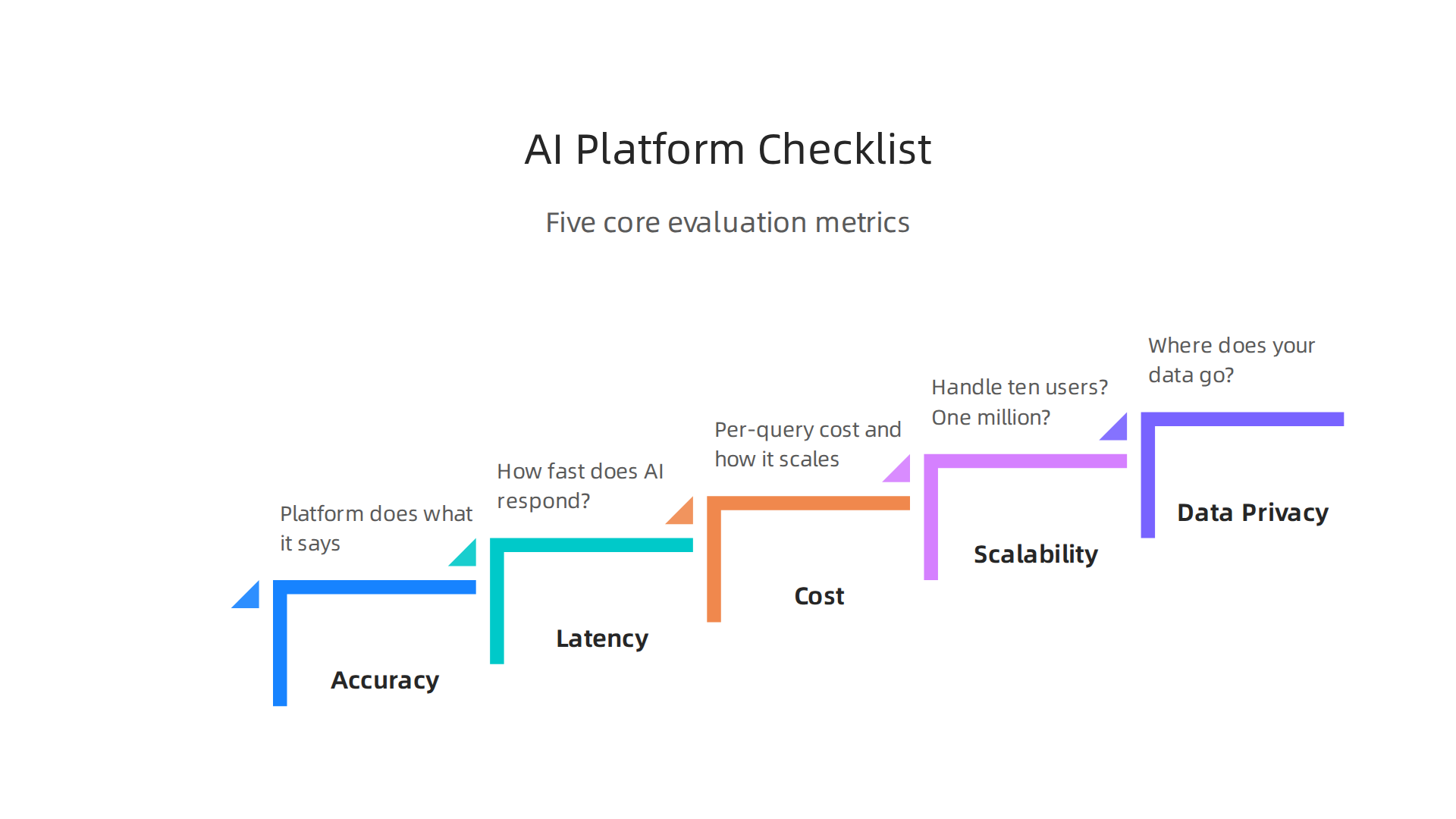
Accuracy is the most obvious one. Does the platform do what it says? Look for numbers, not promises. Real case studies show that top platforms achieve response accuracy between 95 percent and 99.8 percent within weeks of going live, as seen in examples of AI in business case studies. If the vendor cannot show you those numbers, ask why.
Latency is about speed. How fast does the AI respond? In customer service, every second counts. A platform that takes too long to answer loses users. Ask for latency benchmarks under real load, not just in a demo environment.
Cost matters more than most people think. AI platforms can get expensive fast. You need to know the per-query cost and how it scales. Some platforms charge per API call. Others have flat monthly fees. Run your expected usage through their pricing model before signing anything.
Scalability is the difference between a proof of concept and a production system. Can the platform handle ten users? Ten thousand? One million? The top enterprise AI platforms are built to scale across departments and regions, as covered in research on enterprise AI use cases. If the vendor cannot guarantee performance at your target volume, keep looking.
Data privacy is non-negotiable in 2026. Where does your data go? Is it used to train the model? Can you delete it? These are not small questions. Make sure the platform meets your industry’s compliance requirements before you share any sensitive information.
Going Deeper with Due Diligence
Metrics get you part of the way. Due diligence gets you the rest. You need to check three things beyond the numbers.

First, vendor stability. Is this company going to exist in two years? Look at their funding, team, and customer base. A platform from a shaky vendor is a risk you do not need.
Second, model transparency. Can the vendor explain how the AI makes decisions? Black box models are dangerous in regulated industries. You need to understand the logic behind the outputs.
Third, compliance. Regulations around AI change fast. Make sure the platform tracks the latest rules in your region and industry. A platform that was compliant last year might not be today.
Using Benchmarks to Cut Through Marketing
Every AI platform claims to be the best. That is why standardized benchmarks are so valuable. Look for evaluations on common tasks like question answering, text summarization, or image recognition. Independent benchmarks tell you the truth that marketing materials hide.
Real-world results from platforms like Google Cloud’s generative AI tools show how benchmarks translate into actual business value, from reduced customer support tickets to faster product releases. Always ask for customer-specific case studies, not just generic benchmark scores.
If you want to understand how different AI approaches compare, check out this guide on agentic AI vs generative AI for founders and investors. It breaks down when each type makes sense.
And if you are building a data infrastructure to support your AI platform, this article on building a modern data pipeline for startup success will help you avoid common mistakes.
The best decision you can make is an informed one. Take the time to evaluate properly. Your future self, and your investors, will thank you.
For daily updates on the latest AI tools and trends, consider subscribing to The AI Newsletter Worth Reading. It delivers clear, actionable insights straight to your inbox.
Vertical AI Solutions: From Healthcare to Fintech
General-purpose AI tools are impressive. They can write emails, summarize documents, and answer general questions. But they often struggle in industries with strict rules, complex workflows, and high stakes. That is where vertical AI platforms shine. These are AI platforms built from the ground up for one specific industry. They know the language, the regulations, and the daily pain points of that field. And they are outperforming general-purpose tools where it matters most.
Why Vertical AI Wins
Think about healthcare. A general-purpose chatbot cannot help a doctor document a patient visit in a way that satisfies insurance codes and privacy laws. But a vertical AI platform like Ambience Healthcare can. It integrates directly with hospital systems and understands medical terminology. According to the Bessemer Venture Partners analysis on the State of Health AI 2026, 2026 is a turning point for AI adoption in healthcare, especially for prior authorization and clinical documentation. These platforms reduce paperwork and let clinicians focus on patients.
In fintech, the story is similar. Finance teams deal with contracts, compliance checks, and fraud detection. General AI tools miss the nuance of financial regulations. Vertical AI platforms like HighRadius are built for these exact tasks. They handle accounts receivable, payment matching, and even audit support. The result is fewer errors and faster processes.
The Edge: Data and Compliance
What makes vertical AI platforms so effective? Two things. First, they train on domain-specific data. A healthcare AI learns from millions of medical records and clinical notes. A fintech AI learns from transaction histories and regulatory filings. This deep training gives them accuracy that general models cannot match.
Second, compliance is built into the product. A vertical AI platform for healthcare already knows HIPAA rules. A platform for fintech already understands SEC requirements. You do not have to bolt on compliance later. The Houlihan Lokey report on AI in Vertical Software explains that vertical-specific alignment reduces compliance risk and adoption friction in regulated industries.
Premium Valuations and Investor Interest
Startups that build vertical AI platforms are attracting serious money. According to The Vertical Report 2026 from Euclid Ventures, vertical startups captured 53 percent of deal volume and 30 percent of all venture capital in 2025. Healthcare and financial services led the way with nearly 1,100 deals combined. And the biggest rounds are going to companies like Abridge, Ambience Healthcare, and Clio.
Why are investors so excited? Because these companies have high barriers to entry. Once a vertical AI platform is embedded in a hospital or a law firm, switching costs are huge. The data, the workflow integration, and the compliance alignment make it hard to replace. That means long-term recurring revenue and strong defensibility.
What This Means for You
If you are a founder, building a vertical AI platform could be your ticket to a premium valuation. Pick a regulated industry you know well. Focus on a specific pain point. Train your model on real industry data. And make compliance a feature, not an afterthought.
If you are an investor, look for AI platforms that go deep, not wide. The ones that own a niche will likely own the market.
To learn more about choosing the right approach for your startup, read this guide on how to use AI for startup success. It covers practical steps for founders and investors alike.
Risks and Challenges in Adopting New AI Platforms
Jumping into a new AI platform can feel exciting. You see the promises: faster workflows, smarter decisions, less busywork. But here is the truth: adopting AI platforms without careful planning can lead to real headaches. In 2026, as more companies rush to implement AI, the risks are becoming clearer.
Common Pitfalls to Watch For
Let’s start with vendor lock-in. Once you build your entire workflow around one AI platform, switching later is a nightmare.
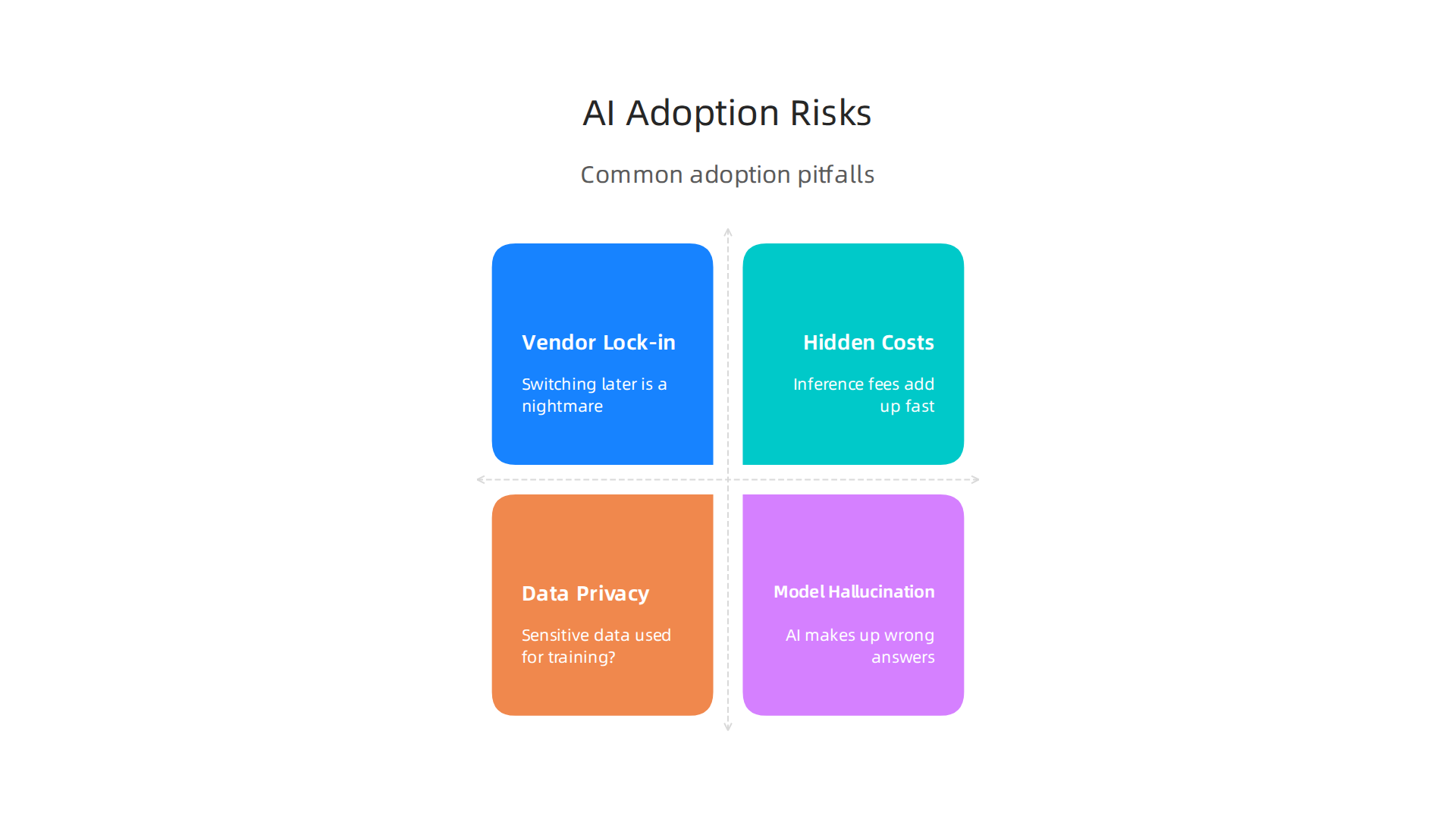
The platform holds your data, your custom integrations, and your team’s training. If the vendor raises prices or changes features, you are stuck. Always ask: how easy is it to leave?
Hidden costs are another trap. Inference fees — the cost each time the AI processes a request — can add up fast. A platform that looks cheap on paper may cost you five times more after a few months of real use. Read the pricing fine print carefully.
Data privacy is a huge concern. When you feed sensitive customer data into an AI platform, where does that data go? Does it get used for training models? Can it leak? The Gallagher survey on the 2026 AI adoption and risk survey found that privacy violations and data breaches are among the top perceived risks for businesses. Never assume your data is safe. Ask about data retention, encryption, and compliance certifications upfront.
And then there is model hallucination. AI platforms sometimes make up answers that sound convincing but are completely wrong. In healthcare, a hallucinated diagnosis could harm a patient. In finance, it could violate regulations. Always keep a human in the loop to verify critical outputs.
Regulatory Uncertainty Adds More Risk
The rules around AI are still evolving. Governments are working on laws for AI safety, copyright, and accountability, but things are far from settled. If you build a product that depends on an AI platform, a new regulation could force you to change everything. The International AI Safety Report highlights that AI agents pose heightened risks because they act autonomously, making it harder for humans to catch errors.
For startups and investors, this uncertainty means compliance is not optional. You need a plan for regulatory shifts. Build flexibility into your tech stack so you can adapt without rebuilding from scratch.
Do Your Due Diligence
Before committing to any AI platform, run a proper risk assessment. Ask these questions:
- What happens if the platform goes offline for a day?
- Can our team operate without it?
- Do we have a backup vendor or fallback process?
- Is the platform truly transparent about its data handling?
Platform dependence without a contingency plan is a mistake. The stronger your ties to one AI provider, the weaker your position if things go wrong.
To learn more about building a robust data strategy that reduces dependence on any single tool, check out this guide on how to build your modern data pipeline for startup success.
Stay Informed
The world of AI platforms changes fast. New risks emerge every month. New regulations pop up. New best practices get written. You cannot afford to fall behind.
If you want clear, daily updates on AI developments and risks, subscribe to The Deep View Newsletter. It will help you make smarter decisions about which platforms to trust and how to adopt them safely.
Summary
This article maps the fast-growing landscape of AI platforms in 2026 and gives founders and investors a practical playbook for choosing the right tools. It explains the three tiers of platforms—general-purpose models, vertical-specific solutions, and infrastructure/developer stacks—and why enterprises are moving from pilots to production. You’ll read how AI is reshaping operations across sales, support, marketing, and engineering, producing measurable ROI and faster product velocity. The piece reviews the flood of venture capital into AI, what investors now value, and where funding opportunities still exist. It lays out a clear evaluation framework—accuracy, latency, cost, scalability, and data privacy—plus deeper due diligence on vendor stability, model transparency, and compliance. The article also highlights why vertical AI wins in regulated industries and details common adoption risks like lock-in, hidden inference costs, and regulatory uncertainty. After reading, you’ll have actionable checklists and resources to evaluate platforms, limit risk, and pick the right approach for your startup or investment thesis.