Angel Investor vs Venture Capitalist Choose the Best Funding for Your Startup

When you’re starting a business, getting money to grow it is super important. But talking about money can get confusing fast. Often, people use words like "investor," "angel investor," and "venture capitalist" as if they all mean the same thing. Actually, these are very different kinds of people and groups, and knowing the difference is key to getting the right kind of help for your company.
Understanding the real meaning behind these terms is not just about fancy words. It’s about knowing who to talk to when you need money, what kind of deals they offer, and how their help can change your company’s future. For founders, getting this wrong can mean wasting time or even missing out on the best funding chances.

For investors and people who plan business strategies, knowing these differences helps them make smarter choices about where to put their money or how to advise others.
So, what’s the big deal with an "investor vs venture capitalist"? An angel investor is usually a rich person who puts their own money into new businesses, often very early on. They might even be past business owners themselves. They invest because they believe in your idea and want to help it grow, sometimes offering advice too. In contrast, a venture capitalist, or VC, manages a big pool of money from other people or groups. They invest this money into companies that they think will grow very quickly and make a lot of profit. They often look for companies that are a bit further along than what an angel investor might fund, and they expect a big return on their investment What Are the Different Types of Early-Stage Investors? – SEC.gov.
Learning the clear differences between these types of funders will help you figure out how to find angel investor money or how to approach venture capitalists. It will also help you understand the terms you might see in their offers and how each type of funding can set your company on a unique path. Stay tuned as we break down these roles more so you can make the best choices for your startup. For even more help choosing your funding path, check out our guide on venture capitalists vs angel investors.
Ready to get smarter about funding and tech trends every day?
The AI Newsletter Worth Reading
An angel investor is a unique kind of financial helper for new companies. Unlike big groups, an angel investor is usually a rich person who puts their own money into businesses that are just starting out. Many times, these individuals are very experienced in business themselves, maybe even having run their own successful companies before. They might even be past entrepreneurs looking to help the next wave of innovators. They often invest in businesses still in their very early days, sometimes even before the business has made any money yet Early-Stage Investors.
What makes an angel investor special is that they use their personal wealth to invest, not money from a large fund or other people. This is a key difference when you compare an angel investor vs venture capitalist. Because they use their own funds, angel investors often have a more personal connection to the startups they support. They are known for providing capital in exchange for a piece of the company, called equity, or through something called convertible debt angel investor | Wex | US Law | LII / Legal Information Institute.
So, what drives an angel investor to help a new company?
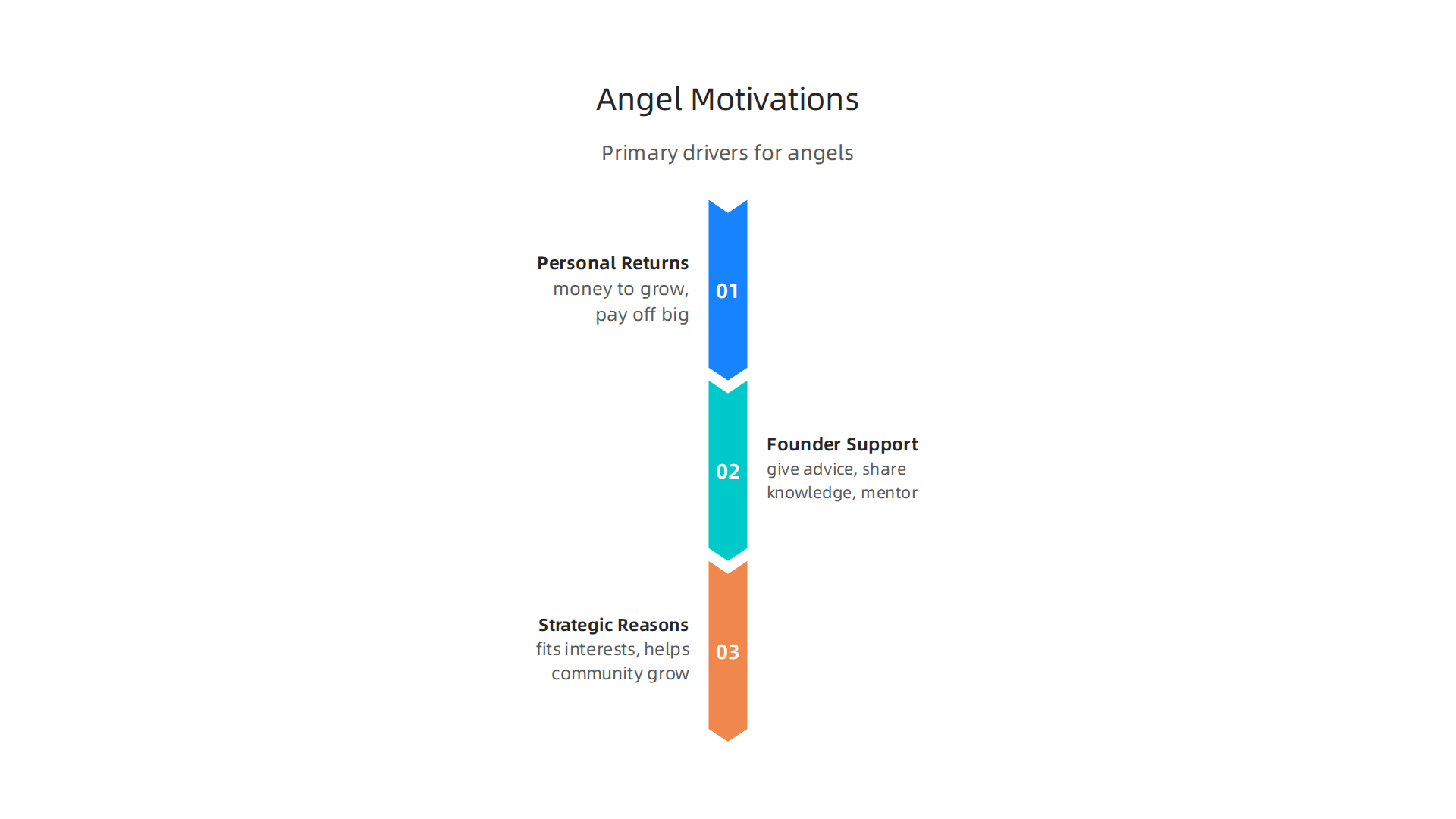
- Personal Returns: Just like any investor, they want their money to grow. They hope the startup will become very successful and that their investment will pay off big.
- Founder Support: Many angels love helping founders. They often give advice, share their knowledge, and connect the startup with important people they know. They enjoy being mentors.
- Strategic or Community Reasons: Sometimes, an angel investor invests in a business because it fits with their own interests or helps their local business community grow. For example, a tech entrepreneur might invest in new tech startups to foster innovation. They play a big role in helping new businesses get off the ground and contribute to the growth of new ideas Role of Angel Investors in Capital Formation.
When founders think about how to get angel investors, they often focus on these typical characteristics. Angels are seen as a good fit for very early funding rounds because they are more flexible and often provide valuable guidance alongside the money. Understanding these structures is important if you want to know how to find angel investor support. Learning about how to approach these individual investors can be a crucial step for your startup’s future. If you’re looking for more detailed advice, consider reading our guide on how to find investors for a startup in 2026.
While an angel investor uses their own money and often acts alone, a venture capitalist (VC) is a different kind of financial helper. Instead of just one person, a venture capitalist is usually part of a firm or company. This firm manages a big pot of money called a fund. This fund gets its money from many different people and groups, known as Limited Partners or LPs What Are the Different Types of Early-Stage Investors? – SEC.gov.
When we talk about an investor vs venture capitalist, a key difference is how they get their money and how they invest it. VCs have a duty to these LPs to make their money grow. This means they often follow strict rules about what kinds of companies they can invest in and how much risk they can take. They also do a lot more checking and investigating, called due diligence, before they put money into a startup Angel Investors vs. Venture Capitalists: Key Differences. This helps them make smart choices for the fund and its investors.
VC Investment Patterns
Venture capitalists have clear ways of investing that set them apart:
- Stage Focus: Unlike many angel investors who jump in at the very start (pre-seed or seed stages), VCs often prefer companies that are a bit more grown up. These companies usually have a product, some customers, and show signs of fast growth. This is often called Series A, Series B, or later-stage funding.
- Portfolio Building: A VC firm usually invests in many different companies. This is their "portfolio." They know that not every company will be a huge success. By spreading their money across many bets, they hope a few big wins will make up for the others that don’t do as well. For example, a well-known firm like Founders Fund might have many tech companies in its portfolio.
- Governance Expectations: VCs often want more than just money from a startup. They usually take a bigger role in how the company is run. This might mean getting a seat on the company’s board of directors. They can help with big choices, offer advice, and use their connections to help the startup grow even faster. Because they are investing other people’s money, they tend to be very involved. In fact, venture capitalists can spend a lot of time on due diligence, with the average deal taking about 83 days to close How Do Venture Capitalists Make Decisions?.
Understanding these parts of how VCs work is important for founders looking for money. It helps them see what each type of investor brings to the table and what they expect in return. If you’re comparing a venture capitalist vs angel investor and trying to figure out the right path for your company, check out our guide on Venture Capitalists vs Angel Investors: How to Choose the Right Funding for Your Startup. Staying updated on news venture capital 2026 market trends founder actionable steps can also give you an edge.
Want to stay informed about the latest in AI and tech that impacts funding decisions?
The AI Newsletter Worth Reading
When you’re looking for money to grow your company, understanding the differences between an angel investor and a venture capitalist is very important. It’s like knowing if you need a quick helping hand or a long-term business partner. Let’s look at how they compare head-to-head in key areas.
Investment Stage and Check Size
Angel investors often come in at the very beginning of a startup’s journey. This is known as the pre-seed or seed stage. They help new companies get off the ground when they just have an idea or a very early product. Angels usually invest their own money, so the amounts are smaller. In 2026, angel investors typically write checks ranging from $25,000 to $250,000, though the median is around $75,000 Angel Investment Trends in 2026 | Market Data. An average angel round, which might include money from several angels, could be much larger, around $339,390 Angel Investing Statistics (2026).
Venture capitalists (VCs), on the other hand, usually invest when a company is a bit more established. They often join in Series A, B, or later funding rounds. At these stages, companies usually have a product that’s already selling and are looking to grow much faster. VCs invest much larger sums. For instance, the median size of an early-stage VC funding round in 2025 was $11.0 million, and a Series A round in Q1 2026 had a median of $19.6 million 2026 WilmerHale Venture Capital Report. This big difference in money shows that VCs are aiming for larger, faster-growing companies.
Ownership Expectations and Control
Angel investors are often more hands-off when it comes to how the company is run day-to-day. They might offer advice, but they don’t usually ask for a seat on the board of directors. Their ownership stake might be smaller and they are often more flexible with investment terms.
Venture capitalists, because they are investing other people’s money and larger sums, typically want more control and a say in big decisions.

They almost always ask for a seat on the company’s board. They also use what’s called a "term sheet." This document spells out all the rules for the investment. A key part of this is the "liquidation preference," which means VCs get their money back first if the company sells or closes down Understanding the venture capital term sheet. Understanding these parts of a term sheet is vital for founders. For a deeper dive, learn how to find investors for a startup in 2026.
Speed of Investment
The speed at which an investor vs venture capitalist makes a decision can also be very different. Angel investors can often decide and invest quickly because it’s their own money. The process can be personal and move fast.
VC firms, however, have a more formal and slower process. They have to do a lot of checking, known as "due diligence," to make sure the company is a good fit for their fund and its investors. This often means more meetings, more paperwork, and more time before a deal is closed. This careful approach helps them make smart choices, but it means founders need to be patient. For those interested in the VC world, learning about a Venture Capital Analyst Skills can give you insights into their detailed work.
The speed of investment is just one piece of the puzzle. How angel investors and venture capitalists actually decide to put money into a company is quite different. It comes down to their methods of checking things out, what they look for, and how long it all takes.
How Angels and VCs decide: Due diligence, evaluation criteria, and timelines
When an angel investor looks at a startup, their "due diligence" is often less formal. Since they’re using their own money, they might rely a lot on their gut feeling about the founder and the business idea. They might chat with the team, look at early plans, and make a decision based on personal trust and their own experience. This more relaxed approach helps them move quickly, as mentioned before. Angel investors typically commit personal capital and often make decisions based on relational judgment and trust Decision-Making in Early-Stage Startups: How Venture Capitalists and Angel Investors Evaluate Uncertainty. Some angels do very little formal checking at all Angel Investors vs Venture Capitalists: Key Differences.
Sometimes, several angel investors come together in a "syndicate" to invest in one company. This can make the process a bit more organized, as one "lead investor" might do most of the checks and share their findings with the others. These groups can offer more capital than a single angel, but they still value the direct connection with the founders.
Venture capitalists, on the other hand, have a much more structured way of making decisions. Their due diligence is very thorough because they are investing money from others, like big companies or wealthy families. This means they have a responsibility to be very careful. They need to dig deep into every part of a startup, including:
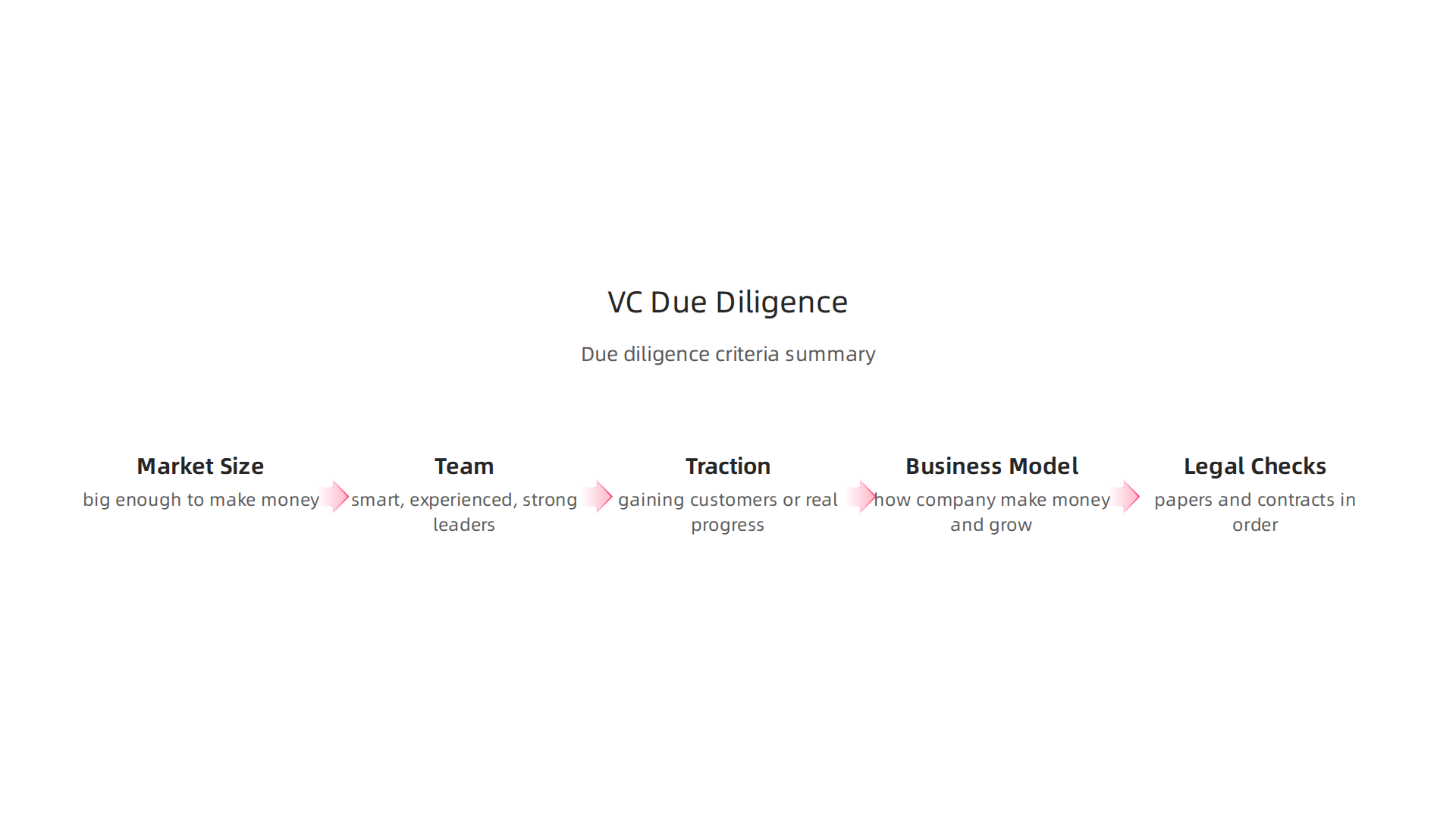
- Market Size: Is the idea big enough to make a lot of money?
- Team: Are the founders smart, experienced, and strong leaders?
- Traction: Is the company already gaining customers or showing real progress?
- Business Model: How will the company actually make money and grow?
- Legal Checks: Are all the company’s papers and contracts in order?
VCs often spend a lot of time on this process. For example, the average venture capital deal takes about 83 days to close, and firms might spend around 118 hours just on checking things out How Do Venture Capitalists Make Decisions?. They also make calls to at least 10 references during this time. This careful checking helps them control risks and make smart choices for their funds. To stay on top of all the market changes and insights, founders and investors might find it useful to get clear daily updates.
One important point about the difference between an investor vs venture capitalist is their focus. Angels might fall in love with an idea or a founder, but VCs are typically focused on making sure the company can grow very big and offer a great return to their fund. They are always looking for what they call "deal selection," which is finding the very best companies to invest in How do venture capitalists make decisions? ☆. This intense focus on selection guides their entire decision-making process. If you want to dive deeper into understanding the landscape, get clear daily AI updates from The Deep View Newsletter.
To help make sense of the fast-moving tech world, especially in areas like AI, keeping up with reliable news is key. Knowing how different investors think helps founders figure out how to get angel investors or how to get funding from a venture capital firm. For more insights on how to navigate the funding world, consider checking out articles on curated tech news for founders and investors.
When a startup gets money from an investor, they don’t just get a check. They also agree to a "term sheet." This is a paper that spells out all the important rules and deals of the investment. It covers things like who owns what, who gets a say in big decisions, and what happens if the company is sold. Understanding these term sheets is very important for founders, as they show the real differences when comparing an investor vs venture capitalist.

What’s in a Term Sheet?
Both angel investors and venture capitalists use term sheets, but what’s inside can be quite different. Angels might have simpler terms because they use their own money and often invest earlier. VCs, on the other hand, represent bigger funds and will have more detailed terms to protect their investors. A typical VC term sheet covers funding details, how the company will be run, and what happens if the company goes out of business or gets sold Understanding venture capital term sheets.
Here are some key things founders should look out for:
-
Liquidation Preferences
This term decides who gets paid first if the company is sold or closed down. Imagine your company sells for less than everyone hoped. A "liquidation preference" means investors get their money back before founders or other shareholders see any money.- Angel Investors: Often ask for a "1x non-participating" preference. This means they get their original investment back, and that’s it.
- Venture Capitalists: Might ask for more. Sometimes they want "2x participating" which means they get their money back two times over, and then still get a share of what’s left with other owners. This can greatly affect how much money founders get at the end. In recent times, especially in 2025, competition has made some investors offer more founder-friendly terms, leading to less common participating preferences in later funding rounds Venture Capital Term Sheet Guide 2026.
-
Board Seats
Having a seat on the company’s board of directors means an investor gets to vote on important decisions for the company.- Angel Investors: Might not always ask for a board seat, especially if they are making a smaller investment. If they do, it might be just one seat. They often offer mentorship instead of direct control Angel Investor vs Venture Capitalist: 2026 Guide.
- Venture Capitalists: Almost always want one or more board seats. They want to be deeply involved in how the company is run to make sure their investment grows. This can mean founders lose some control over big decisions.
-
Pro Rata Rights
This right lets investors put more money into the company in future funding rounds. It helps them keep the same percentage of ownership they started with. Without it, their share of the company would get smaller as new investors come in.- Angel Investors: May or may not ask for pro rata rights.
- Venture Capitalists: Usually see this as very important to protect their investment over time.
-
Protective Provisions
These are special rules that say the company cannot make big decisions without the investors agreeing first. For example, selling the company, taking on a lot of debt, or changing the business plan might need investor approval.- Angel Investors: Might have a few basic protective provisions.
- Venture Capitalists: Often have many more protective provisions. These give them a lot of power to stop actions they don’t like, which means founders have less freedom.
Founder Control and Long-Term Plans
All these terms directly affect how much control a founder keeps over their company. Angel investors often mean less loss of control and more flexible talks, especially in very early stages Angel Investors vs. Venture Capitalists: Key Differences. VCs, while bringing much larger amounts of money, typically demand more control. This difference in control can impact how founders make plans for the future of their company, especially when thinking about selling it later. Founders need to weigh the benefits of a larger investment against giving up some decision-making power. It’s a key part of choosing between different funding paths.
To help you understand the types of funding that might be right for your startup, it’s worth exploring the options. Learn more about how to choose the right funding by reading about venture capitalists vs angel investors. Knowing these details helps founders better prepare for investment talks, whether they aim to how to get angel investors or get funding from a venture capital firm.
Knowing the differences between an investor vs venture capitalist in their expectations is only half the battle. The next step is to know how to reach out to them. The way you approach angel investors is often different from how you approach venture capitalists. This includes how you talk to them, what you show them, and when you do it.
When to Prioritize Angels vs. VCs
Deciding whether to target angel investors or VCs depends mostly on your startup’s stage and how much money you need.
- Angel Investors: These are often your first stop. If you are just starting, at the "pre-seed" or "seed" stage, and need less money (usually under $1 million to $2 million), angels are a good fit. They are typically more willing to take a chance on an early idea with a small team. Many founders aim to how to get angel investors in these initial stages because angels can offer not just money, but also valuable advice and connections.
- Venture Capitalists: You usually look for VCs when your company has already shown some growth. This means you have customers, sales, or a working product. VCs usually invest larger amounts (millions to tens of millions of dollars) and are looking for companies that can grow very big, very fast. They come in for later rounds, like Series A, B, and beyond.
Tailoring Your Outreach and Materials
The materials you prepare and how you reach out must be different for each type of investor.
Pitch Decks
Your pitch deck is like your startup’s storybook. It needs to show your big idea and why it will succeed.

- For Angel Investors: Angels often want a shorter, more personal story. They like to hear about your passion and how you plan to solve a real problem. A good angel pitch deck usually has 10 to 15 slides. It should clearly introduce your team, explain the problem you’re solving, show your solution, and tell them how you’ll make money and why your team is the right one for this job How to Sell a Business Plan to Angel Investors (2026 Guide). Make sure your financial plans are clear and based on real data, showing how you’ll spend their money and what you expect to earn What Angel Investors Want in a Pitch Deck.
- For Venture Capitalists: VCs want data. Lots of it. Your pitch deck needs to be very detailed, showing your market size, customer growth, sales numbers, and strong financial predictions. They also want to see a clear path to how their investment will grow many times over. While a shorter teaser deck might work for initial contact, a full VC deck can be more in-depth. For VCs, you’ll also need a "data room" ready. This is like a digital folder with all your company’s important documents, like financial records, legal papers, and customer agreements. This helps them check everything before they invest.
Outreach
How you first talk to an investor matters a lot.
- For Angel Investors: Warm introductions are best. This means someone they know and trust introduces you. Angels are often part of networks, so finding a common connection can be a great way to how to find angel investor. When you email, keep it short, under 200 words, and clearly state what your company does and why that specific investor should care Pitch Decks, Investor Outreach, and Closing Your Round (2026).
- For Venture Capitalists: Again, warm introductions are key. VCs get many pitches, so a referral from someone they respect helps you stand out. You should research VC funds that invest in your industry and stage. Build a list of target firms and personalize your outreach. People like Cindy Bi venture capitalist or firms like Founders Fund often have specific areas they focus on. Showing you’ve done your homework is important.
Timing Your Fundraising
Fundraising takes time, often longer than founders think. You should start preparing 6 to 12 months before you truly need the money. This includes getting your pitch deck, financial model, and data room in order. The active part of fundraising, where you have meetings, should be planned for about 90 days The 2026 Fundraising Roadmap.
Founder Readiness and Red Flags
Being ready means having a clear story, solid numbers, and a strong team. For angels, enthusiasm and a good idea can go a long way. For VCs, proven traction and a detailed growth plan are critical.
When it comes to term sheets, always watch out for terms that give investors too much control or take away too much of your future earnings. If a deal feels unfair, or if an investor pressures you to make quick decisions without enough time to think, these are red flags. It’s important to get legal advice to understand every part of the agreement.
To stay sharp on industry shifts and make sure your fundraising strategy is always current, consider joining a community focused on timely information. For clear daily AI updates and broader technology developments, get the The AI Newsletter Worth Reading.
Summary
This article explains the practical differences between angel investors and venture capitalists so founders can pick the right funding path. It covers who angels and VCs are, how they get and deploy capital, typical check sizes and stages, and why their incentives and involvement differ. You will learn how term-sheet items like liquidation preferences, board seats, pro rata rights, and protective provisions affect founder control and exits. The guide shows how due diligence speed and depth vary (angels move faster; VCs take longer and are more formal) and what materials each expects—shorter, personal decks for angels versus data-heavy VC decks and a prepared data room. It also gives outreach and timing advice, red flags to watch, and practical next steps to prepare your pitch and negotiation strategy.