
What Makes a Hi Tech City Thrive Inside the Innovation Ecosystem

A ‘hi tech city’ is much more than just a place with lots of tall buildings and computer screens. It’s a special kind of city where new ideas come to life quickly, and technology truly shines. Think of it as a busy hub where smart people, new businesses, and lots of money come together to create the next big thing. In 2026, understanding these city-level ecosystems is super important for anyone in the startup world.

These cities matter because they shape how well new companies do. A strong ‘hi tech city’ ecosystem has a mix of bright minds, universities, funding sources, and a culture that celebrates trying new things. This environment helps startups grow faster and gives them a better chance to succeed. Experts agree that building strong local startup communities is key for innovation Startup Genome | Building world-class startup ecosystems.

For founders, being in the right ‘hi tech city’ can make all the difference. It gives them easy access to "deal flow," which means more chances to meet investors and get funding. They also find it easier to hire skilled people who understand the latest trends in the computer world. Plus, these cities offer clear "market signals," showing what customers want and what new technologies are taking off. For example, if you’re tracking Indian startup funding news, you’ll see certain cities consistently lead the way in investment.
Venture capitalists (VCs) and corporate innovation teams also find huge value in these vibrant cities. They can easily spot new companies and technologies that might be worth investing in or partnering with. It’s like having a live "tech week" happening all the time, making it simpler to keep up with fast changes. This means they can find top talent, discover future trends, and make smart moves to stay ahead of the game. If you want to dive deeper into how technology centers evolve, you might find our article on decoding world technology centers spotting future tech hubs very helpful.
Staying informed about these fast-moving tech hubs is vital.
Get clear daily AI updates from The AI Newsletter Worth Reading.
To truly understand why some places become hotbeds for new ideas and growth, we need to look at the main things that make a successful hi tech city. These "core components" work together like pieces of a puzzle, making the whole city ecosystem strong and lively.

In 2026, these four key parts are: talent, capital, customers, and infrastructure.
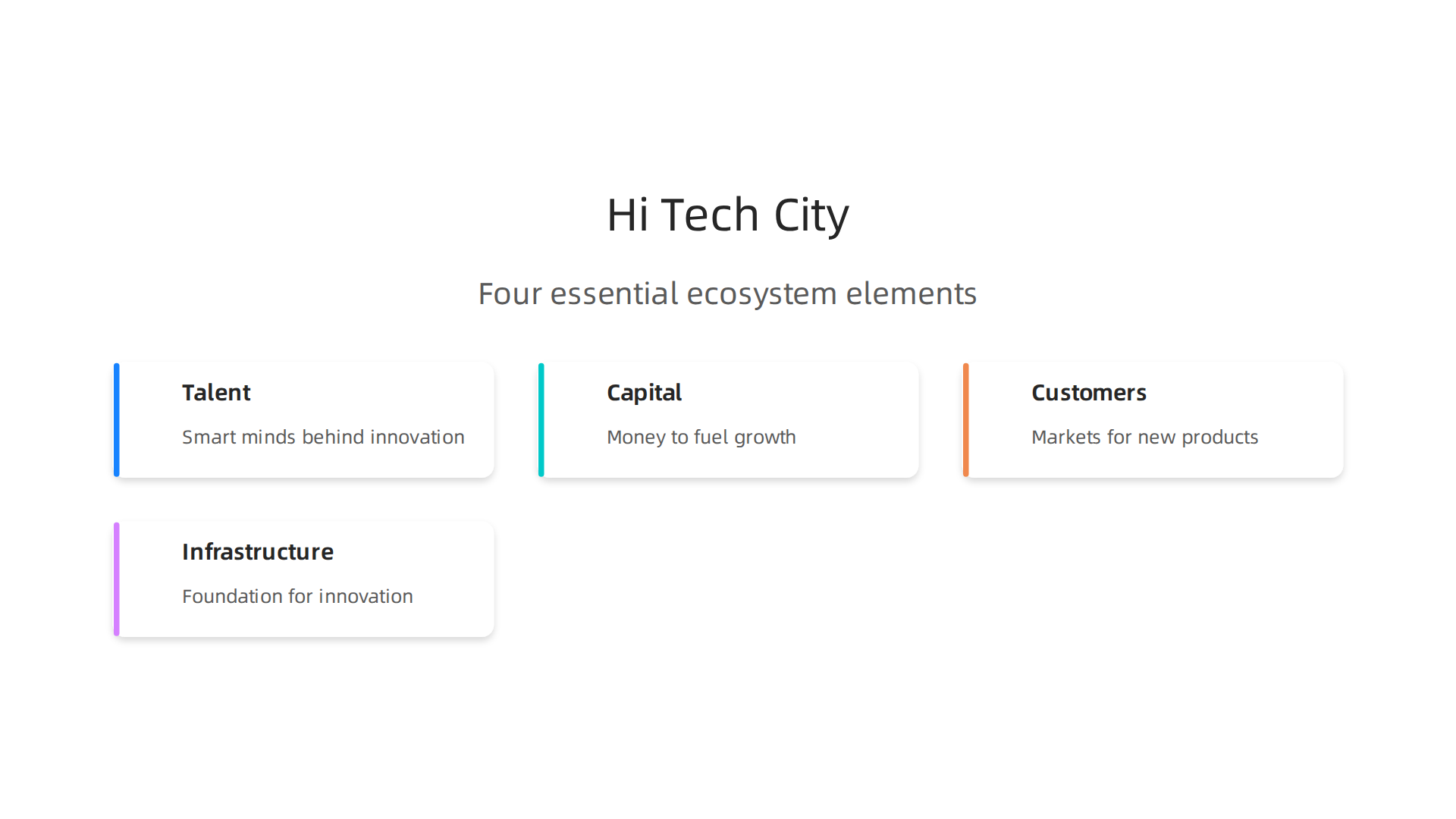
Talent: The Smart Minds Behind Innovation
Every great hi tech city needs lots of smart people. This means a good supply of skilled workers, like computer programmers, engineers, and designers. These are the folks who build the new technologies and create exciting startups. Universities play a huge role here by training new talent and by creating "spinout" companies from their research. For example, universities in Europe are a major source of new companies, with their spinout economy now worth nearly $400 billion in 2026 Europe’s $400B spinout economy.

A city with strong universities and a vibrant academic scene will attract and keep more bright minds in the computer world.
Capital: Money to Fuel Growth
New ideas need money to grow. This "capital" comes from many places. Venture capitalists (VCs) and angel investors are super important. They put money into promising startups, helping them hire people, build products, and reach more customers. Cities that are rich in capital sources see more startups taking off. For example, in 2026, New York City startups raised over $8.88 billion in the second quarter alone [NYC Startup Raise $8.88B in Q2 2026]. If you’re following Indian startup funding news, you’ll notice cities like Bengaluru and Delhi consistently attracting the most investment. Founders need to know how to find investors and understand venture capital trends to succeed.
Customers: Markets for New Products
Even with great talent and lots of money, a startup still needs customers. A strong hi tech city has businesses and people willing to try new products and services. These early customers help startups test their ideas and get better. Sometimes, big companies in these cities become "venture clients" who work closely with startups to solve problems. This helps startups gain experience and proves their value. Finding and winning these early customers, often through pilot programs, is key. However, running these pilot programs can be tricky, as many corporate startup pilots fail 90% of Corporate Startup Pilots Fail. Successful companies often simplify their procurement processes to better work with new, small tech companies The Procurement Wall: Where Good Pilots Go to Die.
Infrastructure: The Foundation for Innovation
Good infrastructure means having the right tools and spaces for innovation. This includes reliable high-speed internet, modern office buildings, co-working spaces where people can meet and share ideas, and good transportation. Think of it as the playground where tech companies can thrive. Without strong infrastructure, it’s hard to have a vibrant tech week feeling all year round.
Early-Warning Indicators: Spotting Trends Early
For founders and investors, knowing when a hi tech city is on the rise or fall is very helpful. Here are some things to watch:
- Funding Shifts: Look for changes in how much money is being invested. Are new investors coming in, or are old ones leaving? Is funding becoming more focused on certain types of technology, like AI? Reports tracking global venture capital trends in 2026 can give you a heads-up Global Startup Funding & VC Trends (2015–2026) – Kaggle.
- Talent Migration: Are skilled workers moving into the city, or are they leaving for other places? A city losing its best and brightest is a bad sign.
- New Company Starts: Is the number of new startups increasing or decreasing? Databases that list funded startups by city can show you this trend Funded Startups by City | FundedIQ.
- University Spinout Activity: Are universities creating more new companies? This often shows a healthy research and innovation environment.
- Cost of Living: If the cost of living becomes too high, it can drive away talent and make it harder for new companies to start.
By paying attention to these core components and early-warning signs, founders and investors can make smarter choices about where to build and fund the next big things in the world.
When founders and investors choose where to build or support new companies, they often look at the big picture. But sometimes, people forget how much local governments help shape a successful hi tech city. Actually, city policies, public money, and clear rules are super important for making places where new ideas can really grow. Local governments aren’t just about roads and trash collection; they are key players in creating innovation hubs.
How Local Government Helps Tech Cities Grow
Local governments have many tools to help tech companies thrive.

Think of these as special levers they can pull to make things happen.
- Giving Incentives: Cities can offer special deals to tech startups and big companies. This might include tax breaks, cheaper office space, or direct money grants. These incentives make it more attractive for companies to set up shop and create jobs in the area. For example, some cities actively work to enhance their innovation capacity to attract businesses and improve citizen well-being Enhancing Innovation Capacity in City Government.

- Buying from Startups (Procurement): Local governments buy lots of things, from new software to special services. When they choose to buy these things from local startups, it gives those new companies a big boost. This helps startups get their first customers and show that their products work. It’s like the government becoming an early client, which can be a huge help for a young business.
- Attracting Smart People (Talent Visas and Programs): A
hi tech cityneeds smart people. Local governments can work with national governments to make it easier for skilled workers and entrepreneurs from other countries to move to their city. They can also create special programs to train local people for tech jobs, making sure there’s always a good supply of talent for thecomputer world. - Funding Research and Development (R&D Grants): Cities can also give money for research and development. This means supporting universities or local labs that are working on new technologies. These grants help create the next big inventions and often lead to new startups. In 2026, many cities are focusing on building strong innovation ecosystems to drive economic growth Innovation Ecosystems.
The Role of Public Data and Clear Rules
Besides direct help, local governments also make a hi tech city more predictable and safer for investors by offering public data and setting clear rules.
- Public-Sector Data: Imagine if a city shared lots of useful information, like traffic patterns, energy use, or even details about local businesses. This "open data" can help startups create new apps and services that solve real city problems. It also helps investors understand the city better, making it an easier place to put their money. Many local governments are now creating plans for digital transformation to make services better and help businesses Digitalization: A Game Changer for Local Governments & Business.
- Standards and Regulations: Clear rules for how technology should work in a city are very important. If a city has good standards for things like smart streetlights or internet connections, it makes it easier for tech companies to build products that will definitely work there. This creates a stable environment where businesses can plan for the long term. Being clear and open about these things helps cities become attractive to new tech companies. Cities are always looking for new ways to make their public services better and embrace digital strategies City strategies, public services and strategic digital city. This often includes thinking about how to move from "smart" cities to "smarter" ones, which means using technology in a more thoughtful way From smart to smarter cities.
By pulling these policy levers and providing clear information and rules, local governments don’t just support innovation; they actively build the ground for it. This makes a huge difference in creating places where new ideas can take off, attracting both talent and money, and helping cities become true tech week powerhouses. For founders and investors looking to spot future tech hubs, understanding these government actions is just as important as looking at the startups themselves. If you want to dive deeper into how different cities around the globe are developing their tech capabilities, you might want to learn more about decoding world technology centers.
Stay informed on the latest trends in technology, including artificial intelligence, which continues to reshape how cities and businesses operate.
Get clear daily AI updates from The AI Newsletter Worth Reading.
Local governments are like gardeners, carefully tending to the soil where new ideas can grow. Now, let’s look at some real-life examples of hi tech city success stories. What did these top-performing cities do right? We’ll see some clear patterns that founders and investors can learn from in 2026.

The Power of Connecting Schools and Business
Many successful hi tech city examples show how important it is for universities and businesses to work together. This creates a powerful cycle:
- Smart People: Universities train the next generation of smart workers and thinkers for the
computer world. - New Ideas: Research done at schools often leads to new inventions and technologies that startups can use.
- Real-World Practice: Companies can work with students and professors on projects, giving them fresh ideas and finding future employees.
Think of cities like Boston or parts of California where top universities are right next to big tech companies. This close link helps new companies get started faster because they have easy access to smart people and new discoveries. For instance, cities are working to build strong innovation ecosystems to drive economic growth Innovation Ecosystems.
Anchor Corporations: Big Companies Leading the Way
Another key pattern is the presence of "anchor corporations." These are big, well-known tech companies that set up shop in a city. When a large company is there, it often brings many benefits:
- Attracting Talent: People want to move to that city for jobs at the big company.
- Spin-offs: Employees from the anchor company might leave to start their own businesses, creating new startups.
- Support for Small Businesses: The big company often needs smaller businesses to supply them with goods and services, helping those smaller companies grow.
New York City is a great example. Even though the Bay Area has traditionally led in venture capital, NYC has shown strong growth. In the first half of 2026, New York City startups raised $17.7 billion across 504 deals, getting close to its total for all of 2025 NYC Startup Raise $8.88B in Q2 2026. Its venture capital market saw $2.01 billion raised in May 2026 alone, a sign of its strength and appeal The AlleyWatch May 2026 New York Venture Capital Funding Report. This growth is partly due to a strong base of larger tech and finance companies that draw in talent and investment. If you’re looking into specific trends, checking out NYC tech startups in 2026 funding trends key verticals and investor strategies can give you more details.
Investor Syndicates: Working Together for Bigger Impact
For startups to thrive, they need money. In many successful hi tech city locations, groups of investors work together, known as investor syndicates.
- More Money: When many investors combine their money, they can fund bigger projects or more startups.
- Shared Knowledge: Investors can share ideas and insights, helping them pick the best companies to invest in.
- Less Risk: Spreading investments across many startups reduces risk for each individual investor.
Cities in India, like Bengaluru, Mumbai, and Delhi-NCR, are great examples of places where startup funding is flowing rapidly in 2026 India Startup Ecosystem: Funded Companies by City (2026). These cities often see a lot of activity from investor groups, boosting indian startup funding news. This teamwork among investors helps many young companies get the start they need. Understanding how venture capital works in 2026 can be crucial, and you can learn more by checking out news venture capital 2026 market trends founder actionable steps.
What Founders and Investors Can Learn
So, what can we take away from these examples?
- For Founders: Look for cities with strong universities and established companies. These places offer talent, resources, and a supportive environment. Also, try to connect with groups of investors rather than just one.
- For Investors: Consider cities that actively foster innovation through government support, strong university ties, and a growing number of large tech companies. Look for places where investor syndicates are common, as this can signal a healthy funding landscape.
By understanding these patterns, you can make smarter choices about where to build or invest in the next big thing, helping your chosen tech week spot truly shine.
For startups to truly take root and flourish, a city needs more than just big companies and good universities. It needs a rich network of investors ready to put their money into new ideas. This is where local venture capitalists (VCs), angel investor groups, startup accelerators, and corporate venture arms come in. They create a strong "deal flow," which is just a fancy way of saying a steady stream of good investment chances.
Local VCs and Angel Groups: Fueling Early Growth
Think of local VCs and angel investors as the first people to believe in a new idea. Angel investors are often wealthy individuals who invest their own money in very early-stage startups. VCs are firms that manage money from many investors, putting it into companies with high growth potential. These groups are super important for a hi tech city because they:
- Provide Seed Money: They give startups the first money they need to get going, often before banks or larger investors would consider them.
- Offer Guidance: Many angels and VCs don’t just give money; they also share their experience and connections, helping founders avoid common mistakes.
- Create Networks: They connect new companies with other investors, mentors, and potential customers.
A good sign of a lively hi tech city is when there’s plenty of investment activity, even in the early stages. For example, reports like the 2026 Venture Monitor show where venture capital money is flowing across the US.

Accelerators: Speeding Up Startup Success
Startup accelerators are like intensive boot camps for new businesses. They offer programs, usually lasting a few months, that give startups:
- Mentorship: Experienced business people guide founders.
- Resources: Access to office space, tools, and expert advice.
- Small Investments: They often provide a small amount of money in exchange for a small part of the company.
- Demo Days: A chance to present their ideas to a big group of investors at the end of the program.
These programs are vital for creating a buzz and helping many startups quickly get ready for bigger investments. They help a hi tech city grow its "deal flow" by making more startups "investor-ready."
Corporate Venture Arms: Big Business Investing in New Tech
Sometimes, large companies create their own investment groups called corporate venture arms. These are part of big businesses that look for smaller, innovative companies to invest in. Why do they do this?
- New Technology: They want to find and support new tech that might help their own business in the future.
- Partnerships: They might want to work with these startups or even buy them later on.
- Innovation: It helps them stay fresh and adapt to changes in the
computer world.
When big companies get involved in this way, it adds a lot of money and trust to the startup scene, showing that the hi tech city is a serious place for innovation.
Signals for Investors: How to Spot a Healthy Deal Flow
For investors, knowing how to measure a city’s deal flow is key. Here are some things they look for:
- Number of Deals: A high number of funding deals, not just a few big ones, shows many startups are getting money. For instance, in January 2026, many deals involved multiple venture firms working together Startup Report: Venture Funds Deals and Trends (Jan 2026).
- Diversity of Industries: A city that supports different types of tech, not just one, is usually stronger. This could be anything from software to biotech.
- Follow-on Funding: Startups that get money more than once (from seed to Series A, B, and so on) show they are growing and trusted by investors.
- Exit Opportunities: When companies get bought out or go public, it shows investors can get their money back and more, which encourages new investments.
- Talent Flow: A steady stream of smart people moving to the city for tech jobs means more potential founders and employees.
Cities like New York, for example, have seen huge jumps in venture capital in 2026, showing a strong appetite from investors The AlleyWatch March 2026 New York Venture Capital.
While some cities like the Bay Area have long been known for attracting a lot of venture capital, the trend of capital concentration continues to shape which cities thrive The Unequal Geographic Distribution of Venture Capital. Understanding these movements helps founders and investors make smart choices. If you want to dive deeper into the market trends for venture capital in 2026, you can explore more about News Venture Capital 2026 Market Trends: Founder Actionable Steps.
Staying informed about these fast-moving trends is vital. For clear daily updates on AI and broader tech, consider subscribing to The AI Newsletter Worth Reading. This can give you the edge you need to spot the next big tech week opportunity.
Talent Pipelines: Universities, Immigration, and Upskilling that Feed Hi Tech Cities
Just as important as where the money comes from is where the smart people come from. A truly great hi tech city needs a constant flow of talented individuals. These are the engineers, designers, thinkers, and doers who turn new ideas into real products and services. Without them, even the best ideas can’t grow. This talent comes from a few key places: universities, special training programs, and people moving in from other places.
How Universities Create Future Tech Stars
Universities are like big idea factories. They train young minds and often create new businesses right from their research labs. These businesses, called "spinouts," are very important for a hi tech city. For example, in 2026, many university spinouts across Europe alone were valued at nearly $400 billion, showing how much new tech comes from schools Europe’s $400B spinout economy: how universities are …. Cities often see more success when their universities are deeply involved in turning research into commercial products, especially when those universities are within city limits Methods And Results.
Founders and investors should keep an eye on universities in their area. They can:
- Look for new ideas: Research coming out of universities often sparks the next big thing in the
computer world. - Find new talent: Students and graduates are eager to join exciting startups. Knowing how computer science ranking shapes startup hiring and investment can help you find top talent.
- Work with professors: Sometimes, working with university experts can give a startup a real edge.
There are even new ideas, like "spinout studios," where universities partner with experienced business people to help turn research into companies more easily Universities Are Sitting on the Next Great Companies. …. This makes it easier for brilliant academic ideas to become real-world businesses.
Special Training and Upskilling: Growing Our Own Talent
Not everyone needs a four-year degree to work in tech. Vocational schools and special training programs are super important. They teach people practical skills like coding, data analysis, and technical support. These programs help people already living in a hi tech city learn new skills or get better at the ones they have. This process, called "upskilling," makes sure that the local workforce can keep up with fast changes in technology.

For founders, this means:
- More skilled workers: These programs create a ready pool of people with the right skills for your startup.
- Diverse talent: It opens doors to people from all backgrounds, making your team stronger.
- Local connections: Supporting local training programs builds stronger community ties.
Knowing how to choose the right data analytics courses can also help individuals improve their skills to meet the demands of a fast-moving tech market.
Immigration: Bringing in Global Brainpower
People moving from other countries also play a big part in filling the talent pipeline. They bring new skills, fresh ideas, and different ways of thinking that can help a hi tech city shine even brighter. Many successful startups have founders or key team members who came from other parts of the world. Countries and cities that welcome skilled immigrants often see their tech scenes grow faster.
For a city to be truly global, it needs to:
- Welcome new arrivals: Make it easy for skilled people to move, live, and work there.
- Value different cultures: Diverse teams are often more innovative and find better solutions.
- Connect newcomers: Help new residents find jobs and build networks quickly.
All these parts working together create a strong talent pipeline, making sure a hi tech city always has the smart, driven people it needs to keep inventing and growing. This strong talent base is a key sign of a healthy and lasting tech ecosystem.
After gathering a strong team, a hi tech city also needs big companies to help new startups grow. These big companies, sometimes called "anchor corporations," are super important. They can help startups in two main ways: by becoming their first big customers, and sometimes, by buying them. This helps startups get bigger and stronger.
How Big Companies Help Startups Grow
Big companies need new ideas and technology to stay ahead. Startups, with their fresh ideas, can provide just that. When a big company uses a startup’s product or service, it’s called a "pilot program." This is like a test run. If the pilot goes well, the big company might become a regular customer. This is a huge win for a startup because it shows that their product works and is valued.
Many large companies are now looking for innovative solutions from smaller tech businesses. For example, in 2026, many big companies are already using artificial intelligence (AI) in their buying departments, known as procurement, to make things better Procurement in 2026: From AI Experimentation to Selective Industrialisation in Private Sector Practice. This means there’s a good chance for startups that offer smart solutions to work with these large businesses.
Another way big companies help startups grow is by buying them. This is called a "Merger and Acquisition" (M&A). When a big company buys a startup, it gives the startup’s founders and investors a good return on their hard work and money. It also brings the startup’s innovative tech into a larger organization, helping it reach more people.
Steps for Startups to Work with Big Corporations
Working with big companies can be tricky, but it’s worth it. Here are some simple steps startups can take:
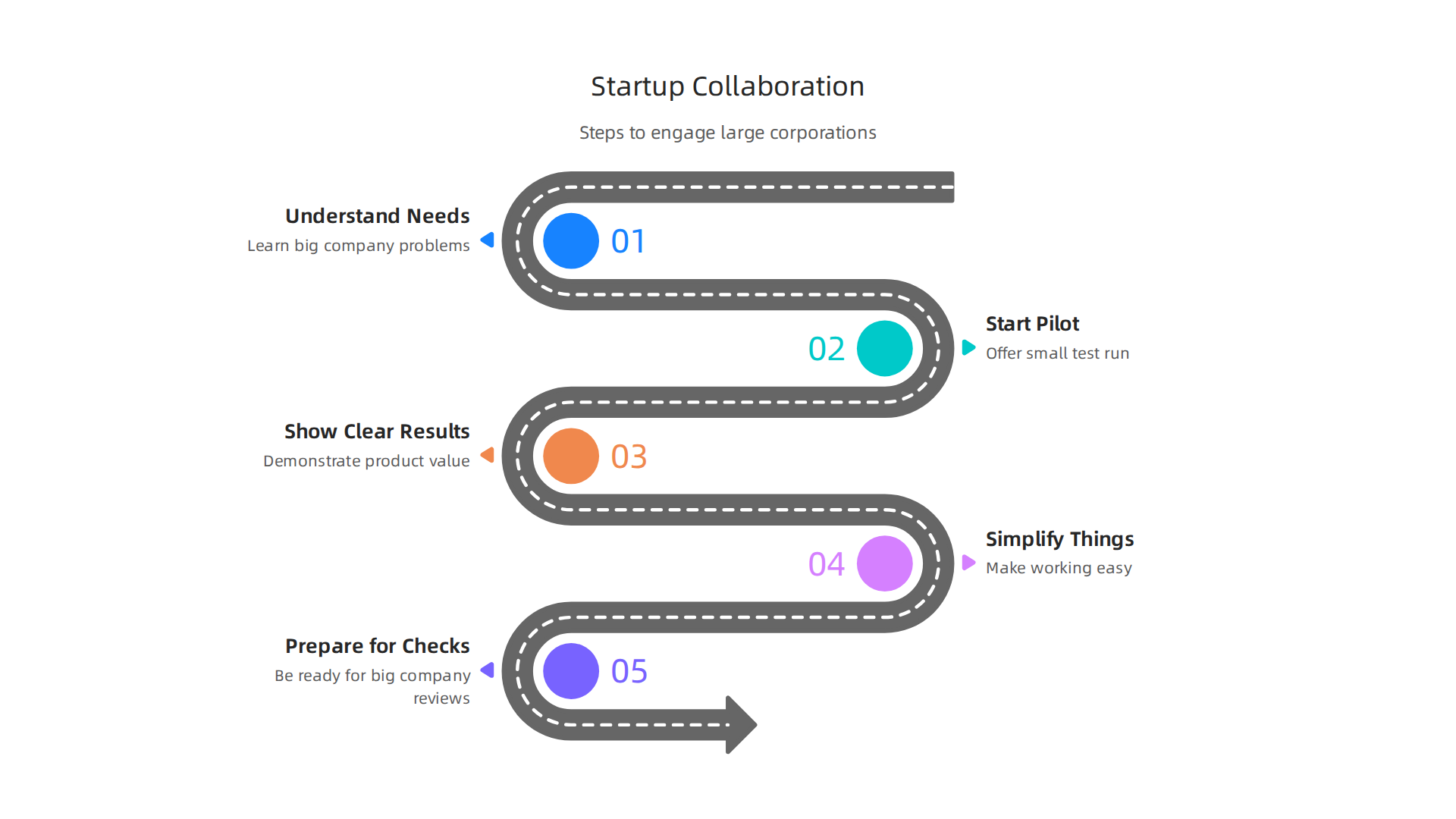
- Understand their needs: Don’t just show them your product. Learn what problems the big company is trying to solve. Then, show how your solution fits exactly what they need R&D Collabs Between Fortune 500 Companies and Startups.
- Start with a pilot: Offer to do a small test. Big companies are more likely to try something new on a small scale first. You can learn more about how to run a procurement pilot program to make this process smoother.
- Show clear results: During the pilot, make sure you can clearly show how your product helps the big company. Did it save money? Did it make things faster? This makes it easier for them to sign a bigger deal.
- Simplify things: Big companies have many rules. Try to make it easy for them to work with you. Some even suggest that smaller pilot programs should have faster approval times and easier terms The Procurement Wall: Where Good Pilots Go to Die.
- Prepare for their checks: Big companies will check many things about your startup, like your website, your security, and how quickly you respond. Being ready for these checks is key for SaaS founders in 2026 Procurement Checklist: A Framework for SaaS Founders in 2026.
By following these steps, startups in a hi tech city can successfully work with large corporations. This not only helps the startup but also keeps the whole computer world moving forward with new ideas and solutions. To stay updated on the latest trends in tech and artificial intelligence, consider checking out The AI Newsletter Worth Reading. This can help you better understand the fast-changing market and spot new opportunities.
Summary
A hi tech city is more than tall buildings and screens — it’s a city-level ecosystem where talent, capital, customers and infrastructure combine to accelerate startups. This article explains why these four components matter in 2026, how founders and investors benefit from strong local deal flow, and which early-warning signs reveal a city’s rise or decline. It covers the practical roles universities, accelerators, local VCs and corporate venture arms play, and shows how local governments can use incentives, procurement and public data to shape thriving innovation hubs. You’ll find clear steps for working with large corporations, tips to measure investor activity, and examples of cities that succeeded by linking universities and anchor companies. After reading, you’ll be able to assess a city’s startup potential, spot emerging tech hubs earlier, and choose where to build or fund the next big venture.