
Tech City Strategy Guide for Founders, Investors, and Corporates

Why ‘Tech City’ Thinking Matters for Founders, Investors and Corporates
Imagine a special city where many bright people, new ideas, and cool tech companies all live close together. We call this a "tech city." It’s not just any city with some tech firms. A true tech city is a place where different tech companies, their suppliers, and the people who help them grow all work side-by-side. This closeness helps new ideas spread quickly and makes it easier for everyone to succeed, much like what you see in London’s Tech City

Modeling clusters from the ground up or even in emerging eastern tech hubs like Jakarta The formation of emerging tech startup cluster in urban city.
What makes a tech city special is often its focus. Some tech cities are known for specific things, like software for games, health tech, or advanced AI. This focus creates "vertical clusters." When many companies in the same field are in one place, they help each other. They share workers, new ideas, and even customers. Experts say that having many skilled workers and lots of shared knowledge in one spot are big reasons why a tech cluster grows The Rise (and Fall) of Tech Clusters. This is why thinking about where your company or investment is located in 2026 is so important.
For founders, being in the right tech city means easier access to everything you need. You’ll find more people who know your industry, making it simpler to hire great talent. For investors, these cities are hotspots. Money tends to follow innovation. Places like Boston, Seattle, and Austin are often ranked high for venture capital, showing where the funding flows for many western tech companies Tech Clusters – Harvard Business School. And for big companies, looking at these clusters helps them spot new trends, find new partners, or even discover the next big thing to acquire.
Understanding these tech hubs helps everyone make smarter choices. It’s about knowing where the future of technology is being built and how to be a part of it. To learn more about what makes these places tick, you can explore what makes a hi-tech city thrive.
To stay on top of the latest in AI and tech, don’t miss out. Get clear daily AI updates from The AI Newsletter Worth Reading.
To really understand a tech city, we need to look at its different parts.
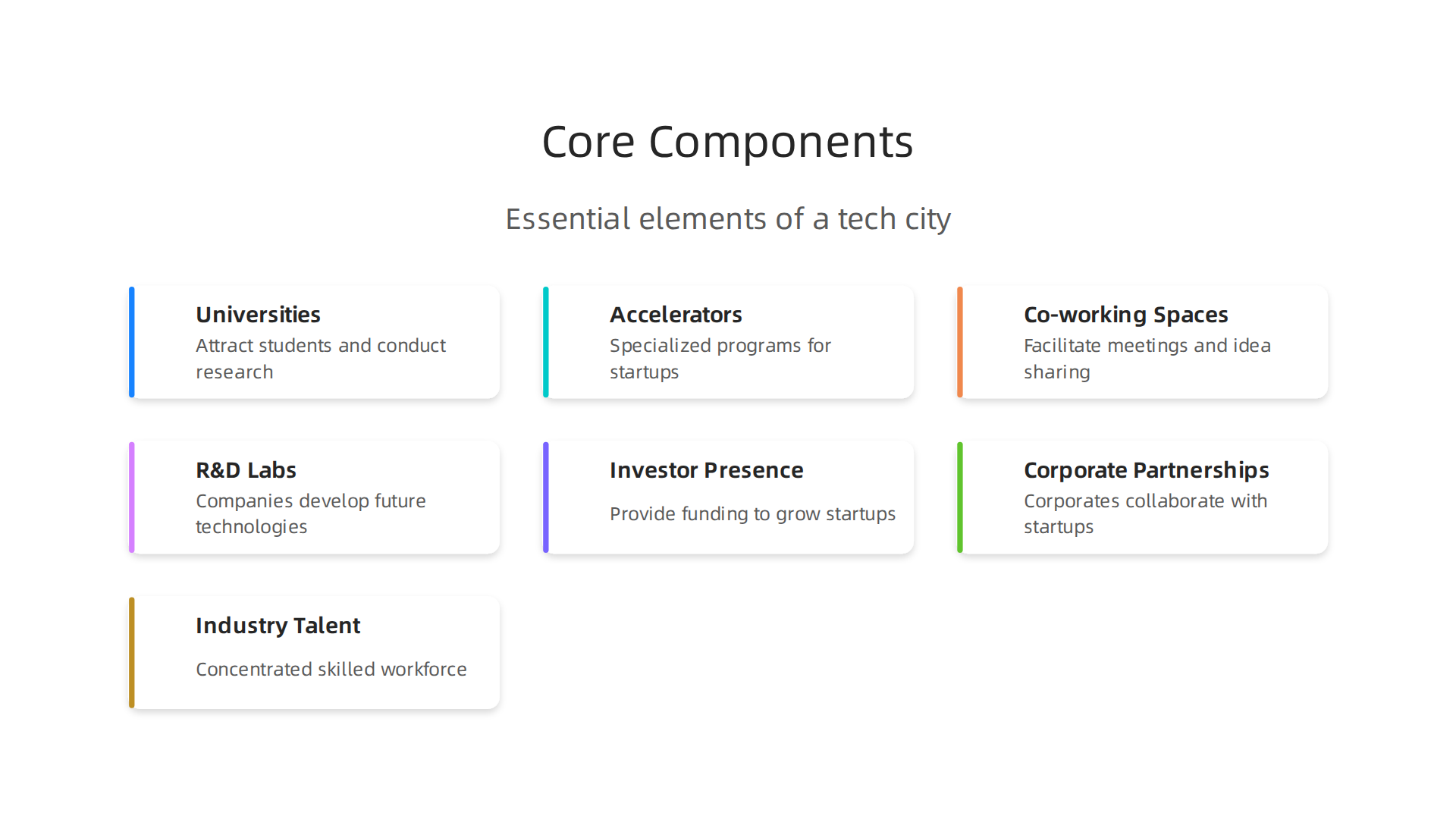
Think of it like a body; each part has a job and helps the whole system work. These parts are not just buildings, but also the people and money that flow through them. In 2026, knowing these core components helps us see why some tech cities shine brighter.
The Foundation: Places for Learning and Creating
Every strong tech city needs places where new ideas are born and grow.
- Universities: Top schools bring in smart students and run important research programs. These become the future workers and the source of breakthrough ideas. They create a constant stream of fresh talent and knowledge.
- Accelerators and Incubators: These are like special schools for startups. They give new companies advice, space, and sometimes even a little bit of money to help them get started. They are key to turning good ideas into real businesses.
- Co-working Spaces: These shared offices help people meet and share ideas. If you’re a founder, you might sit next to someone who can solve a problem you’re having. This helps ideas spread and grow faster.
- Research and Development (R&D) Labs: These labs are where big companies or specialized groups, like those using advanced software such as DP Technology, work on future tech. They push the boundaries of what’s possible, leading to new inventions and job opportunities. This kind of deep technical work is a hallmark of truly innovative tech hubs.
Money and Connections: Investors and Partnerships
No tech city can thrive without money to fuel its growth and strong connections between companies.
- Investor Presence: Venture capitalists (VCs) and other investors are crucial. They provide the funding that helps startups grow from small ideas into big companies. For example, in 2026, cities like San Francisco, New York, Boston, and Los Angeles consistently lead in venture capital funding across western tech hubs US Startup Hubs: Funded Companies by City (2026). Globally, San Francisco often tops the list for overall deal value, followed by major cities like New York and London Startup Funding Statistics by City | STARTUP RESEARCH. This strong investor base is a magnet for new companies. For insights into how investment landscapes are changing, it’s good to keep up with news venture capital 2026 market trends.
- Corporate Partnerships: Big companies often work with startups in these tech cities. They might invest in them, buy their products, or even acquire them. This helps startups get customers and resources, while big companies stay updated with new trends.
The People Factor: Specialized Talent Pools
A tech city also needs the right people.
- Industry-Specific Talent: When many companies focus on one type of tech, like AI or biotech, they attract people with those special skills. This creates a deep pool of experts that new companies can hire from. These talented individuals are often drawn to hubs where they can find many job opportunities and a community of like-minded professionals. This is how the "vertical clusters" mentioned before really take root. Understanding how different hubs attract specific talent is key for companies, as highlighted in topics like decoding world technology centers.
These parts all work together. Universities create talent, accelerators nurture startups, investors fund them, and big companies partner with them. This constant activity makes a tech city a vibrant place where innovation keeps happening.
A tech city thrives when its different parts work well together. From schools to R&D labs, and from investors to corporate partners, each plays a role. Now, let’s look at how money moves in these cities, especially when a city becomes known for a certain type of technology.
Funding Patterns: Where Capital Follows Specialization
It’s not just about having money; it’s about having the right money. When a tech city becomes very good at one kind of technology, like AI or health tech, it develops something called "sector specialization." This means many companies and experts in that specific field gather there. This focus then attracts investors who also specialize in that area.

For example, a city known for deep tech or advanced manufacturing, perhaps using software like DP Technology, will draw venture capitalists who understand those complex industries. These investors know the unique challenges and big rewards of such specialized fields. They are often willing to fund companies at different stages, from a brand new idea (seed stage) to a growing business ready to expand (later stages).
In 2026, we see this clearly. While places like San Francisco still lead globally in overall deal value for startups, other cities are gaining strength by focusing on niche areas. New York, for instance, has shown strong growth in its share of US venture capital, reaching 24.4% of US venture dollars in June 2026, which was its highest share in at least a year The June 2026 US Venture Capital Funding Report. This growth often happens because investors see clear patterns and opportunities in specialized sectors within these larger tech hubs.
Money Moves to Focused Areas
When a tech city has a strong focus on a particular industry, it creates a "deal flow concentration." This means lots of investment deals happen in that one area. This concentration makes the city very attractive to investors. Why? Because it lowers their risk. They can easily find many companies to invest in and many experts to talk to. Also, it’s easier to find the right talent when a sector is highly specialized.
This also affects what happens later. When many similar companies grow in one place, it can lead to more "exits." An exit is when a startup either sells its shares to the public (goes public) or gets bought by a bigger company (corporate M&A). These big sales bring money back to the investors and founders, which then gets reinvested into new startups in the same tech city. This cycle helps the tech city grow even stronger in its specialized areas.
For instance, in the first quarter of 2026, 90.9% of all venture capital dollars went to just four major US cities. However, when we look at very early-stage investments (pre-seed and seed), about 56.5% of deals and 53.9% of the money went to companies outside these main four hubs Seed Capital Goes Beyond the Four VC Hubs. This shows that while big money concentrates, new ideas can sprout anywhere, especially where there is a clear specialization. This is a sign that smaller, specialized tech cities can also attract vital early-stage funding.
The way capital flows also shapes the global tech landscape. While North America saw a massive 81% of global deal value, other regions like Europe are growing. For example, London raised $14 billion in VC year-to-date in 2026, showing a 116% increase from the same time last year, and Paris raised $4.4 billion Peter van Sabben’s Post – LinkedIn. These numbers highlight how both western tech and eastern tech hubs are constantly evolving their funding patterns based on their unique strengths.
Understanding these funding patterns is key for anyone involved in startups or investing. If you want to stay ahead of these trends, especially in the fast-moving world of AI, you need reliable, daily updates.
Get clear daily AI updates from The AI Newsletter Worth Reading.
To truly understand a tech city, we must also consider how innovation is measured and what makes these specialized hubs "smart." You can explore more about what makes a high-tech city thrive by reading our guide on what is a tech exchange and how it connects startups, investors, and funding. This will help connect the dots between funding, specialization, and the broader ecosystem.
To truly build a strong and "smart" tech city, more than just money is needed. You need smart people. The strength of a specialized tech area often comes from its local talent and the strong ties between universities and businesses. It’s about having the right minds to create new ideas and bring them to life.
The Foundation of Local Talent
Think of a tech city as a living thing. Its heartbeat is the skilled workers who invent, build, and improve technology. For specialized tech clusters, like those focusing on AI or advanced software, having a steady supply of local talent is super important. These are the people who understand the unique needs of that industry. They make sure companies have the right skills at hand. After all, a tech cluster grows when it has many talented people, reducing the need for long commutes and helping ideas flow freely The Rise (and Fall) of Tech Clusters.
Universities: The Brains Behind Innovation
Universities play a huge part in creating this talent. They are more than just schools; they are centers of new discoveries.
They do two main things:
- Educate Future Tech Workers: Universities offer special courses that teach students the skills needed for the tech jobs of today and tomorrow.

This includes fields like computer science, engineering, and data analysis. The ranking of a university’s computer science program, for example, can really shape how startups hire and where investors put their money, because it shows where the top talent is being trained. You can learn more about this by exploring how computer science ranking shapes startup hiring and investment.
2. Lead Research and Development: Professors and researchers at universities are always working on cutting-edge projects. This research often leads to new technologies and fresh ideas that can be used by companies. These research efforts are key to how an innovation center develops and why it matters for startups. To dive deeper into this, check out our guide on what is an innovation center and why it matters for startups in 2026.
Strong Links: Universities and Companies Working Together
When universities and companies work closely, a tech city really shines. Here’s how these links feed into regional specialization:
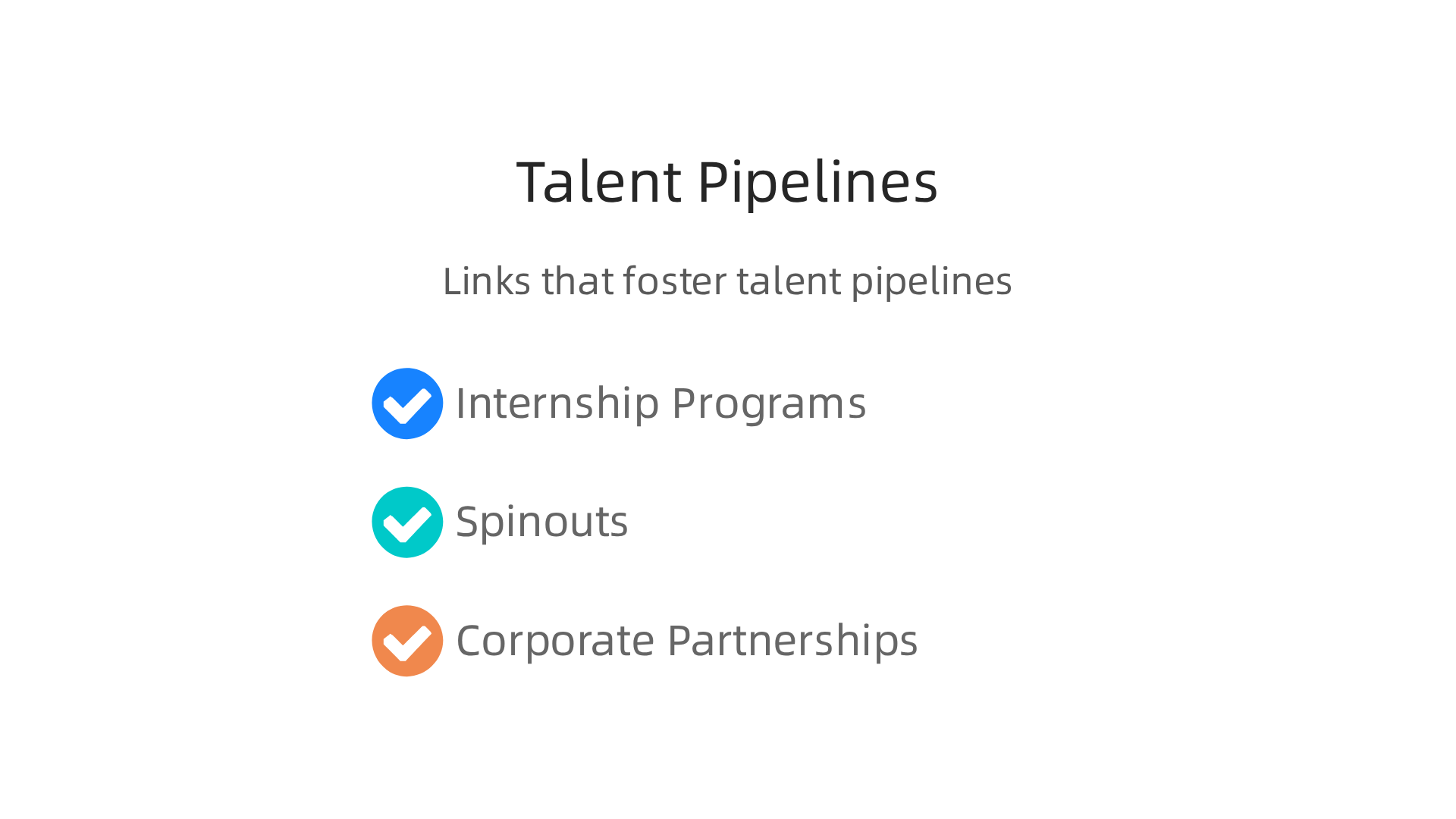
- Internship Programs: Students get to work inside tech companies, gaining real-world experience. This helps companies find new employees and gives students a foot in the door. For instance, knowing how to land a data analyst internship in 2026 can be a direct path into a booming tech sector.
- Spinouts: Sometimes, a new idea or invention from a university lab is so good that it becomes its own company. These are called "spinouts." They bring university research directly into the marketplace, often staying in the local tech city and strengthening its specialized focus.
- Corporate Partnerships: Big companies often team up with universities for research projects. This helps companies solve tough problems and gives universities funding and real-world challenges for their students and faculty. This kind of teamwork makes the local tech industry stronger and more connected.
By making sure there’s a strong talent pipeline and tight links between universities and industries, a tech city can keep growing and innovating. This is true for both western tech hubs, like Silicon Valley, and emerging eastern tech cities, as they all rely on bright minds to drive progress. If you’re curious about where the brightest minds in tech gather, consider learning more about Silicon Valley startups funding talent and future trends in 2026.
For a tech city to truly grow and stand out, it needs more than just smart people and strong schools. It also needs good rules and a solid foundation from its local government. Think of local leaders as the gardeners for the tech ecosystem, making sure everything has what it needs to flourish. This is true for fast-growing eastern tech hubs and long-standing western tech centers.
Local Rules That Help Tech Grow
Local governments play a big part in shaping how a specialized tech city develops. They do this by setting up important rules and programs:
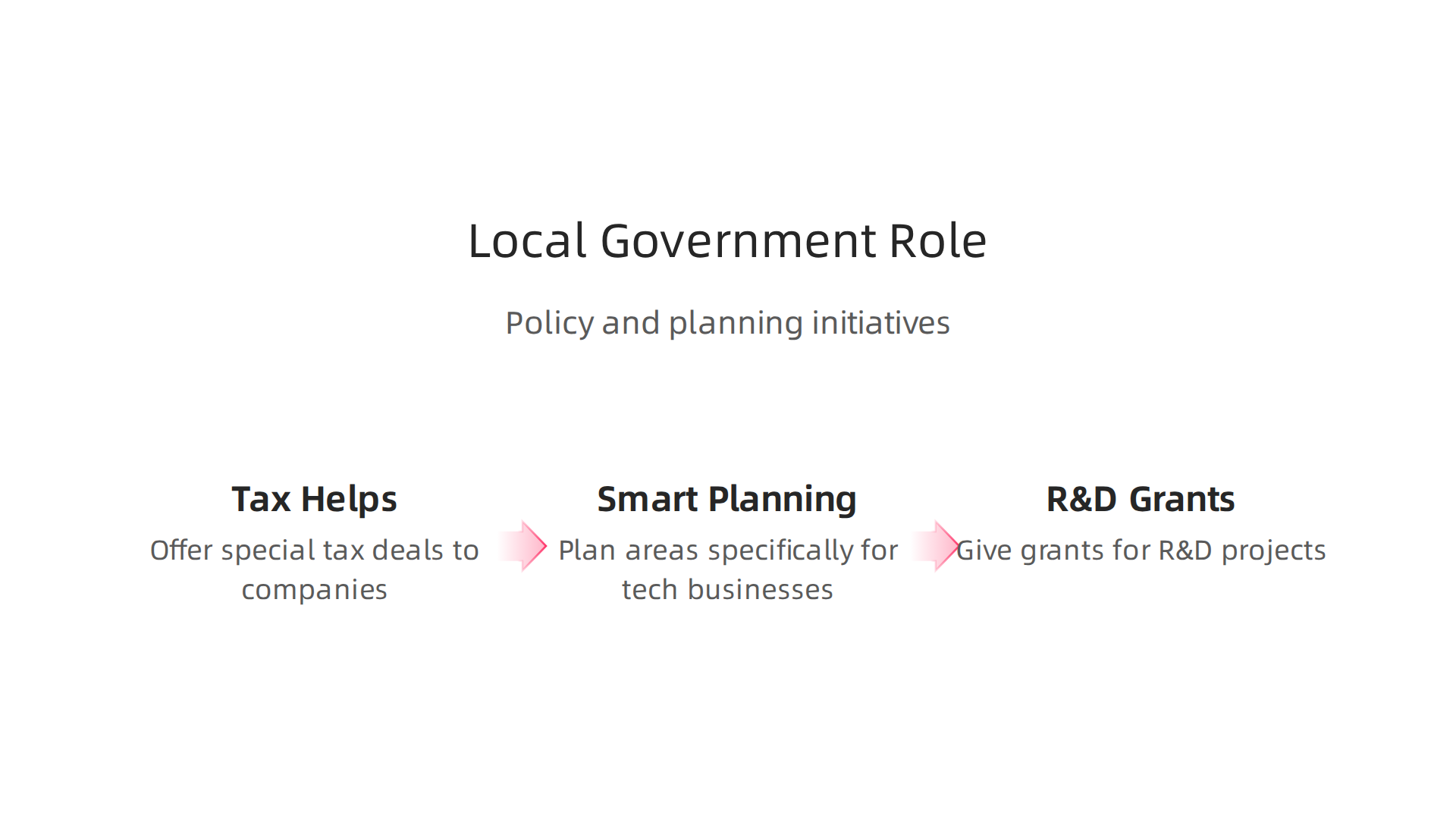
- Tax Helps: Cities can offer special tax deals to tech companies. This means companies pay less in taxes for a while, making it cheaper and more attractive for them to set up shop and grow in that city. This helps bring in new businesses and jobs.
- Smart Planning: Local governments decide how land can be used. By planning areas specifically for tech businesses, called "innovation districts" or "research parks," they create places where companies can easily work together. These areas are designed to help tech companies thrive.
- Money for New Ideas: Governments can also give grants or special funding for research and development (R&D) projects. This money helps companies or universities explore new ideas and build new technologies, pushing the entire tech city forward. For cities looking to improve how they support new ideas, understanding how to boost Enhancing Innovation Capacity in City Government is key.
Building the Right Foundation
Just like a house needs a strong foundation, a tech city needs good infrastructure. This includes:
- Easy Travel: Good public transport, roads, and even bike paths make it simple for people to get to work and for companies to move their goods. This helps the flow of talent and ideas.
- Fast Internet: In 2026, quick and reliable broadband internet is a must-have for any tech business. It’s like the nervous system of a tech city, allowing information to travel quickly and smoothly. Without it, companies that rely on big data or advanced computing like DP technology would struggle.
- Specialized Areas: Creating dedicated research parks or technology zones helps bring tech businesses together. These places often have shared labs, meeting spaces, and easy access to universities, making it easier for new ideas to turn into new companies. They are crucial for what makes a What Makes A Hi Tech City Thrive Inside The Innovation Ecosystem.
All these things together create a welcoming and helpful place for tech companies to start, grow, and innovate. This mix of good rules and strong foundations helps a tech city become a true leader in its chosen field.
Keeping up with how policy and infrastructure affect global tech hubs can be complex, especially with new developments in artificial intelligence changing things constantly.
Get clear daily AI updates from The AI Newsletter Worth Reading.
Getting the foundations right is just one step. For a tech city to truly shine, it also needs to pick its strengths and focus on them. Just like a person might be really good at music or sports, a city can become known for a certain type of technology. This is called sector specialization, and it helps a tech city grow in unique ways.
Sector Specialization: Case Patterns Across AI, Cleantech, Healthtech and Deep Tech
Different kinds of technology have different needs to grow.

What works for an AI startup might not be right for a clean energy company. Understanding these differences helps a tech city plan better.
AI and Deep Tech: Fast Growth, Big Money, Special Skills
Artificial Intelligence (AI) and Deep Tech, which includes things like advanced computing or new materials, often need a lot of money to get started and grow. These areas require highly specialized talent, like AI engineers or data scientists. The demand for AI skills, for example, grew by 45% in the U.S. and Canada by mid-2026, with over 751,000 workers specializing in AI nationwide. Cities that want to lead in these fields must attract these experts and offer the right environment for them.
- Talent Demand: Tech cities that specialize in AI need many workers with specific AI skills. For instance, in 2026, the San Francisco Bay Area and New York City continue to be top spots for AI talent. In fact, New York added more tech workers over three years than San Francisco, showing a strong focus on AI hiring New York added 30,640 tech workers in 3 years, surpassing San ….
- Capital Intensity: This means companies need a lot of investment. Deep Tech, including areas like advanced DP technology, often involves long research periods and expensive equipment. While western tech hubs like New York and San Francisco lead in funding, eastern tech cities are also stepping up. For example, Bengaluru in India led its country’s startup funding in Q1 2026, raising $823 million Bengaluru Leads India’s Startup Funding: $823 Mn in Q1 2026. If you’re looking into these kinds of fields, understanding AI Labs in 2026: A Guide to Funding Innovation and Growth can be very helpful.
- Time-to-Exit: This refers to how long it takes for a startup to either be bought by a bigger company or go public. For AI and Deep Tech, this can sometimes take longer because the technology is so new and complex.
Cleantech and Healthtech: Different Paths to Success
Cleantech (clean energy and environmental technology) and Healthtech (technology for healthcare) also have their own special needs. They often involve working closely with government rules or health systems.
- Pivot Risks: Sometimes, companies in these areas might need to change their plans a lot. For example, new government rules about clean energy might make a company change its product. Healthtech companies might face long approval processes for new medical devices. Cities supporting these sectors need flexible rules and good connections to government and medical groups. The UK government, for example, announced 19 new Technology Ecosystems in 2026 focusing on high-growth sectors like clean energy Skills England annual skills report 2026.
- Talent: While still needing skilled engineers, these sectors might also need people with knowledge in biology, chemistry, or public health.
- Funding: They might get money from different kinds of investors, sometimes including government grants or funds that focus on social good.
Every specialized tech city needs to know its strengths and what its chosen industries need. By focusing on specific tech areas like AI, Cleantech, Healthtech, or Deep Tech, a city can build a strong network of experts, investors, and support systems that help these companies succeed. Knowing where to find the right investors is crucial for any startup. You can learn more about how to Master Investors in Businesses: Identify, Attract, Secure Funding 2026.
Understanding a city’s tech focus helps everyone involved make smart choices. Founders, investors, and even big companies can all benefit from knowing where a city’s tech strengths lie. This means less guessing and more success.
Strategic Playbook: How Founders, Investors, and Corporates Should Act
To really make the most of a tech city’s special areas, different groups need to have their own game plans.
For Founders: Find Your Niche, Attract the Right Money
If you’re starting a company, knowing what your tech city is good at is super important.
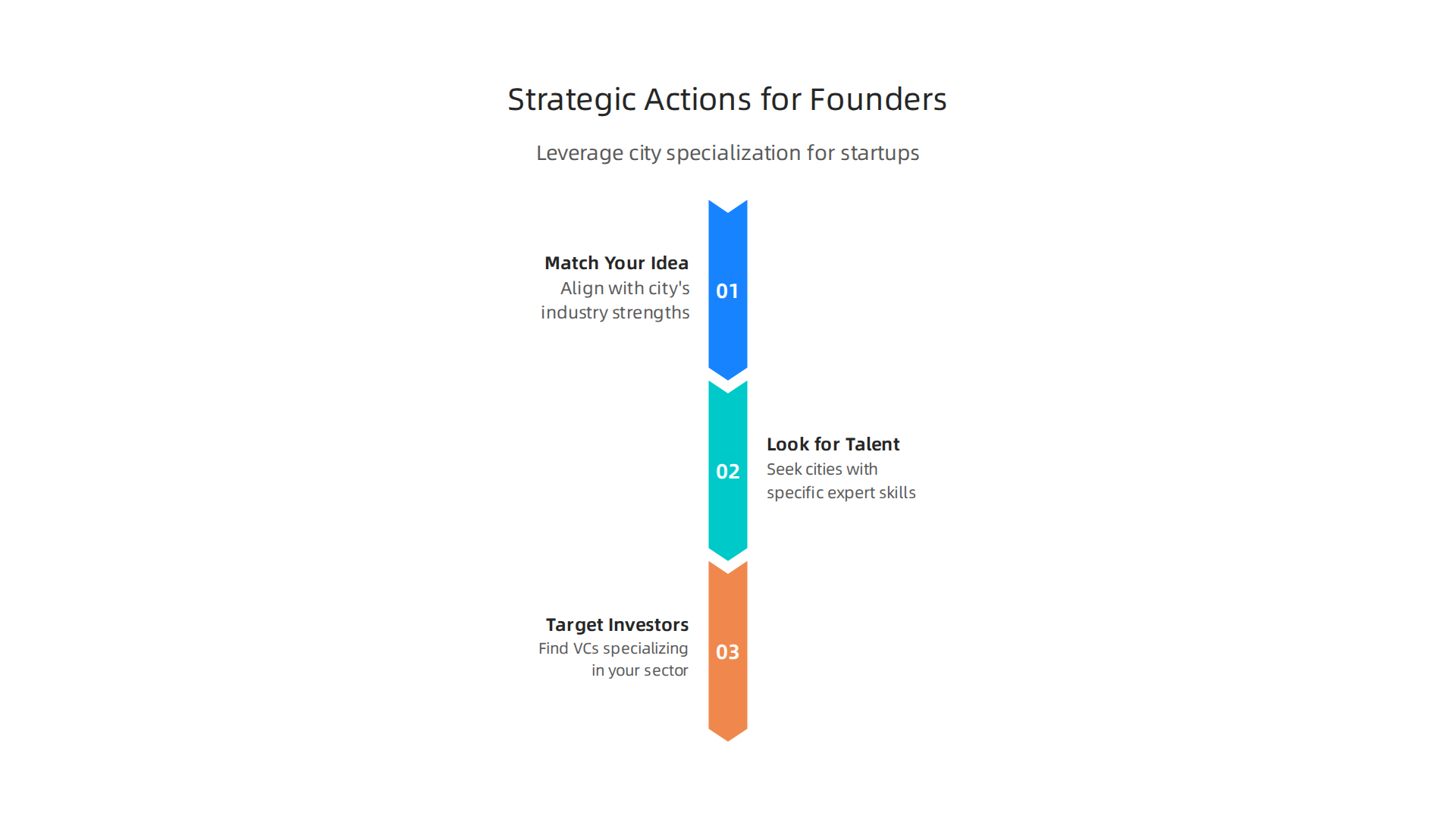
- Match Your Idea to the City’s Strength: If your city is known for AI, it makes sense to start an AI company there. You’ll find more people with the right skills and more investors who understand your product. For instance, cities with many AI specialists offer a clear advantage for how to use AI for startup success.
- Look for Specialized Talent: Deep Tech and AI often need very specific skills. Founders should look for tech cities where these experts gather. The "Tech Talent Map Is Expanding Beyond Its Biggest Markets" in 2026, meaning more places are getting good at tech, not just the usual spots. However, places like the San Francisco Bay Area still have a huge number of tech workers within the tech industry itself, around 61.4% in 2026, offering a deep talent pool 2026, offering a deep talent pool Scoring Tech Talent 2026.
- Target the Right Investors: Not all investors like every kind of tech. If your tech city specializes in clean energy, you’ll find investors who specifically put money into Cleantech. If your product uses advanced DP technology, find investors who understand Deep Tech. This makes getting funding easier. You’ll want to learn more about how to find investors for a startup in 2026.
For Investors: Spot High-Chance Opportunities, Make Smarter Bets
Investors can save time and make better choices by looking at a tech city’s specialties.
- Focus Your Search: Instead of looking everywhere, investors can focus on cities known for sectors they understand well. If you invest in Healthtech, look at cities with strong medical research and hospitals. This is key for spotting what is next, especially when staying on top of news venture capital 2026.
- Reduce Checking Work (Due Diligence): When a city specializes in a tech area, there’s usually a whole network of support around it. This includes experts, other companies, and even testing facilities. This means investors have an easier time checking out if a company is truly good, as much of the groundwork is already laid.
- Watch for Skill Shifts: Pay attention to new reports about where tech skills are growing. For example, a "New Report Examines How AI Is Reshaping Tech Career" in 2026 found that foundational skills like problem-solving are becoming more important in both technical and non-technical roles as AI grows New Report Examines How AI Is Reshaping Tech Career …. This helps you know which cities are building the right talent for the future.
For Corporates: Find Innovation and Grow
Even big, established companies can use this playbook.
- Look for Partnerships: If your company needs new technology, partnering with a startup in a specialized tech city makes sense. For example, a car company might look to a city known for automotive software for new ideas. This is true for both western tech hubs and growing eastern tech centers. Bengaluru, for example, is noted for its AI/ML Engineering and Generative AI Deployment talent in 2026 India’s GCC Tech Talent Landscape:.
- Set Up Innovation Hubs: Big companies can open small offices or "innovation centers" in these specialized cities. This lets them be close to new ideas and talent without moving their whole business.
- Stay Informed: To keep up with fast changes, especially in areas like AI and Deep Tech, corporates should follow curated tech news for founders and investors and reports that highlight emerging trends.
Understanding how a tech city picks its strengths helps everyone make more informed decisions. It’s about playing to a city’s unique advantages to boost success for everyone.
Get clear daily AI updates from The Deep View Newsletter.
The AI Newsletter Worth Reading
Summary
This article explains why ‘Tech City’ thinking matters for founders, investors and corporates by unpacking how concentrated ecosystems—universities, accelerators, co-working spaces, R&D labs, investors and corporate partners—create faster innovation and easier access to talent and capital. It describes the mechanics of sector specialization, showing how focused clusters attract the right investors, produce concentrated deal flow and generate exits that recycle capital back into the ecosystem. The piece covers the role of universities and spinouts, local policy and infrastructure, and how different sectors (AI, deep tech, cleantech, healthtech) demand distinct talent, time-to-exit and funding models. Practical playbooks tell founders how to match their idea to a city, guide investors on where to concentrate due diligence, and show corporates how to partner or set up innovation hubs. Read it to understand where technological advantage is being built in 2026 and to act strategically when choosing locations, partners, or investment targets.