
Drive Startup Growth with Smart GTS Technology Solutions

Running a startup in 2026 can feel like trying to find your way through a giant maze. There are so many new tech tools and ideas popping up all the time. Every day, a new platform or service promises to make things faster, cheaper, or better. This huge amount of information, often scattered in many places, creates a big problem. It makes it really hard for startup leaders and investors to make smart, quick choices about which technologies to use.
This "noise problem" means founders might waste precious time researching or even picking the wrong tools. They might spend money on "geek tech" that sounds cool but doesn’t actually help their business grow. This can slow down important decisions, making it harder to get ahead. Companies like GTS Technology Solutions offer a range of services from IT support to cloud and AI solutions, aiming to help businesses streamline their operations GTS Technology Solutions | IT for the Public Sector. But even with such providers, knowing which specific "gts technology solutions" are right for your startup is key.
This guide is here to help you cut through that confusion. You will learn a clear and simple way to look at, set up, and grow GTS technology solutions that are just right for your startup.

We will focus on how to pick "budget technology" that truly delivers a positive "tech impact," without getting lost in too many choices. This way, you can make smart moves that help your business succeed and get the funding it needs. To better understand the core concepts of technology for your venture, you can read our guide on The Real Definition of Technology for Founders and Investors in 2026.
Ready for more clear insights? Get daily updates on AI and broader tech developments straight to your inbox.
The AI Newsletter Worth Reading
GTS technology solutions cover many different areas that are important for a startup to run well and grow. These are not just one type of tool, but a whole group of services and systems that help a business use technology smartly. Think of it like building a house; you need different parts for the foundation, the walls, the roof, and the electrical system.
Here are some of the main parts that make up GTS technology solutions:
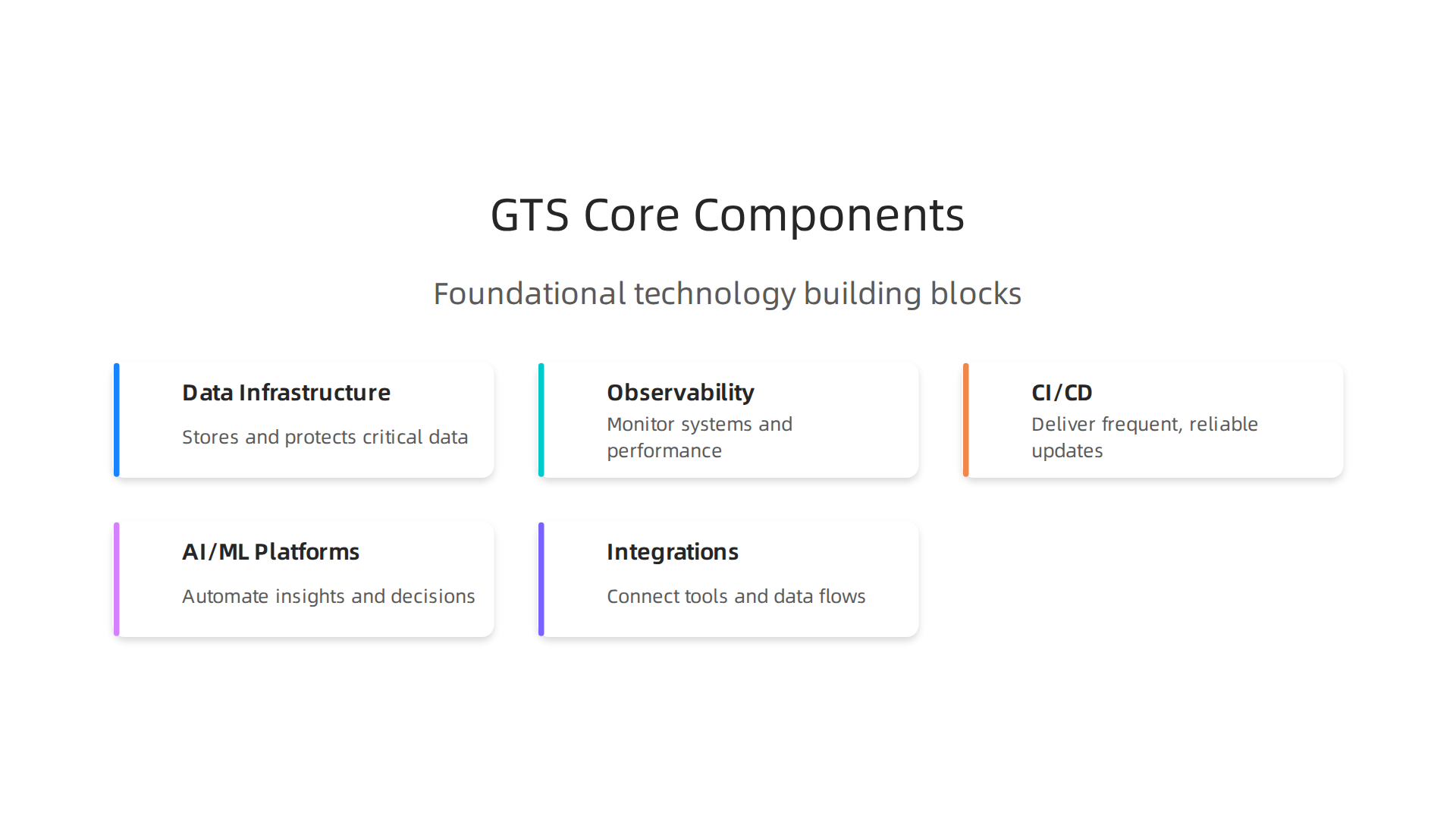
- Data Infrastructure: This is like the foundation of your house. It means how your startup stores, handles, and protects all its important information. Having a good data infrastructure means your data is safe and easy to get when you need it. This helps you get a clear picture of your business. If you want to dive deeper, learn how to build your modern data pipeline for startup success.
- Observability: This is about keeping a close eye on your tech systems. It helps you see if everything is working right, or if there are problems like slow speeds or errors. By watching your systems closely, you can fix issues quickly before they become big headaches.
- CI/CD (Continuous Integration/Continuous Delivery): This is a way to update your software often and smoothly. It means your team can add new features or fix bugs without stopping everything. It helps your startup move fast and adapt to new needs.
- AI/ML Platforms: These are tools that use Artificial Intelligence (AI) and Machine Learning (ML) to help computers learn from data and make smart decisions. Many GTS providers offer these kinds of solutions to modernize IT and use data better Cloud & AI Solutions. For startups, using AI well can create a big "tech impact" by automating tasks and finding new ideas. To understand more, you can read about AI platforms what founders investors and product leaders must know.
- Integrations: Most startups use many different software tools for different jobs. Integrations make sure all these tools can work together and share information easily. This saves time and stops you from having to do things over and over again.
It’s helpful to know the difference between big, all-around GTS services and smaller, specific tools. Some GTS providers offer "platform-level" services. These are like a big toolkit where many solutions are packaged together and designed to work as one system. Other GTS services might be "point solutions," which are single tools designed for one specific job. For example, some companies help classify products for trade, which is a specific type of GTS service GTS Overview and Product Classification | PDF | Xml.
When choosing, it is important to pick GTS technology solutions that truly make a positive "tech impact" for your business. You want to avoid falling for "geek tech" that sounds cool but doesn’t fit your "budget technology" needs or help you reach your goals. The best choices are those that help your startup run better, faster, and smarter, setting you up for growth.
Picking the right GTS technology solutions is key for your startup, especially when you have limited money and time.

Think about what your business needs most right now, and what can wait. It’s like buying tools for a new workshop; you get the basic, most important ones first, then add more specialized tools as your work grows.
What Startups Need First: Early-Stage Priorities
When a startup is just starting, the focus should be on strong foundations. These are the "must-have" GTS technology solutions:
- Data Infrastructure: You need a safe place to keep your customer information and business records. This includes tools for storing data and making sure it’s secure. Having good data management from the start helps you understand your business better and protects important information.
- Basic Security Tools: Protecting your data from online threats is super important. Simple tools that guard against common attacks are a must.
- Essential Integrations: Your everyday software, like email and customer management tools, needs to talk to each other. Simple integrations help stop work from being repeated and make things run smoothly.
- Cost-Effective Cloud Services: Most startups use cloud services to save money on hardware. Choosing smart, affordable cloud options is part of good budget technology management.
These early choices help your business stay stable and grow without big technical problems. You want solutions that give you a clear "tech impact" right away.
What Startups Need Later: Growth-Stage Priorities
As your startup grows, you’ll need more advanced GTS technology solutions. These become important as your team gets bigger and your products or services become more complex:
- Advanced Observability: When you have many customers, you need to know exactly how your systems are performing. Better monitoring helps you find and fix problems faster, keeping your customers happy.
- Robust CI/CD Pipelines: As your software gets updated more often, automated tools for testing and rolling out new features become vital. This helps your team move quickly and reliably.
- AI/ML Platforms: Using Artificial Intelligence and Machine Learning can give your growing startup a big edge. These tools can help with everything from customer service to finding new business insights. For example, understanding how to evaluate AI platforms for your startup in 2026 can guide your choices. The pricing for AI add-ons can vary greatly, so looking at benchmarks can help you get a fair deal and avoid overspending on features that don’t fit your "budget technology" strategy AI Impact on Software Pricing Models 2026.
- Scalable Integrations: As you add more complex software, you’ll need advanced integration tools that can handle large amounts of data flowing between many systems.
Choosing Must-Haves vs. Nice-to-Haves
When your budget is tight, it’s easy to get caught up in flashy "geek tech" that sounds amazing but doesn’t actually solve your core business problems. Here’s how to choose wisely:
- Focus on Core Needs: What problems are holding your business back right now? Pick GTS technology solutions that fix those problems directly.
- Think About "Tech Impact": Will this solution truly make your business run better, save money, or help you get more customers? If not, it might be a "nice-to-have" for later.
- Check Your Budget: Always compare costs. There are often good, cheaper alternatives that provide similar value for early-stage companies. Researching SaaS pricing benchmarks for enterprises in 2026 can offer insights, even if you’re a startup.
- Avoid Over-Complicating Things: Start simple. You can always add more complex tools later as your needs change.
By carefully evaluating GTS technology solutions against your current needs and budget, you can make smart choices that truly help your startup grow.
Get clear daily AI updates from The Deep View Newsletter. The AI Newsletter Worth Reading
When you’ve picked the right gts technology solutions for your startup, the next big step is putting them to use. It’s not a good idea to flip a switch and expect everything to work perfectly. Instead, a smart plan involves rolling out new tech in small steps. This is called a phased implementation plan, and it helps you avoid big problems and see the real "tech impact" faster.
Here’s how to move your new GTS technology solutions from a small test to full use:
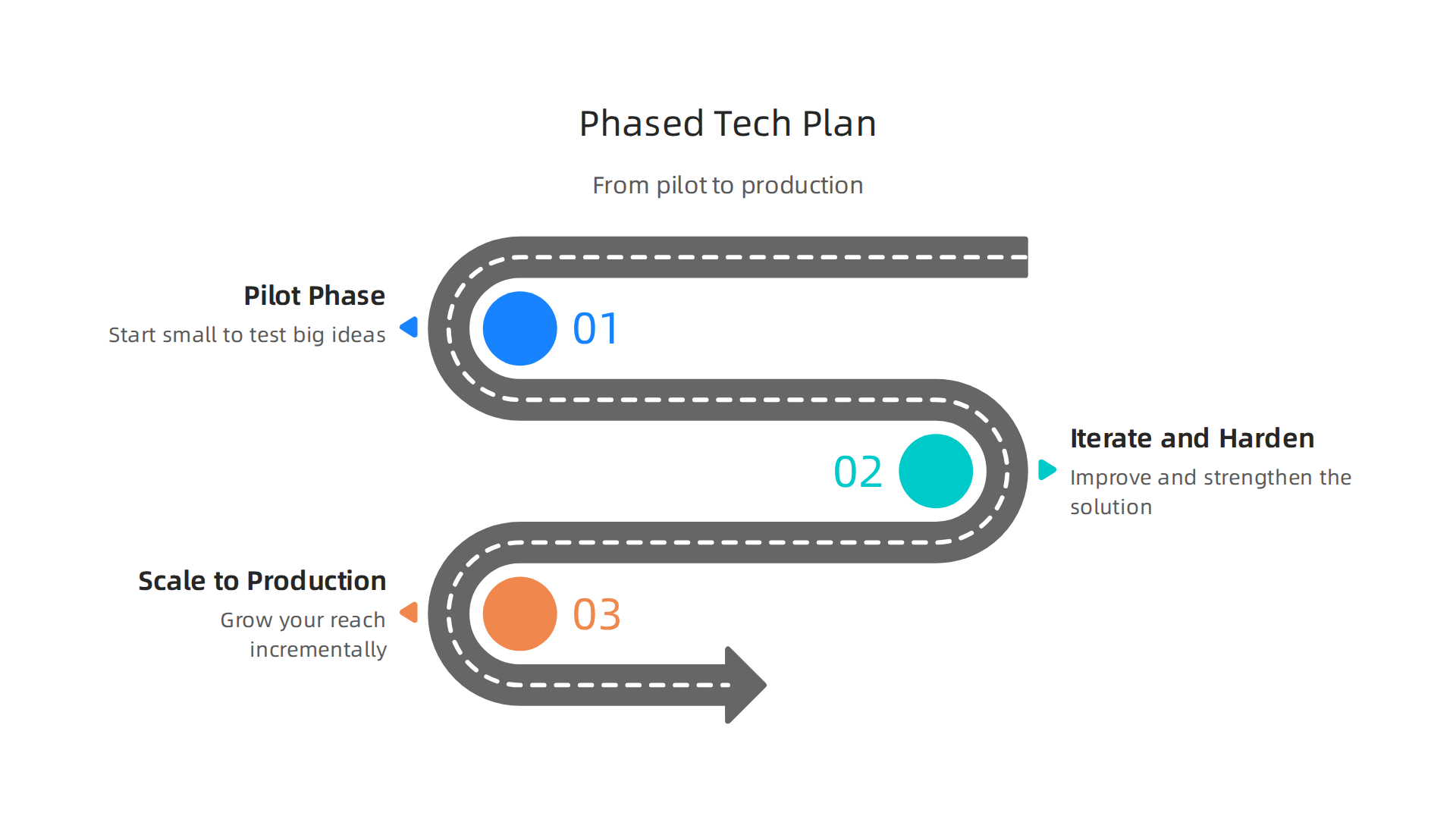
1. The Pilot Phase: Start Small to Test Big Ideas
Imagine you have a new tool for your workshop. You wouldn’t immediately use it on your most important project. You’d test it first on something small. This is what a pilot phase is for.
- Choose a small group: Pick a few users or a small part of your business to try out the new GTS technology solution. Think fewer than 20 people if possible. This helps you test the new system without risking too much.
- Set clear goals: What do you want to learn from this small test? For example, does the new software save time? Is it easy for people to use? You need to set clear success rules for your pilot, like aiming for a high rate of tasks completed correctly.
- Gather feedback: Talk to the pilot group. Ask them what works well and what’s difficult. This feedback is super important.
- Fine-tune: Based on what you learn, make small changes to the technology or how people use it. This helps you get things just right before moving on. According to experts, a pilot helps you refine the process of communicating, deploying, testing, and supporting your new tech rollout.
Starting with a small group allows you to work out the kinks and confirm that your chosen GTS technology solutions actually deliver the expected benefits. This limited pilot in production helps you track how things are going and catch problems early.
2. Iterate and Harden: Make It Better and Stronger
After your pilot, you’ll have a better idea of what needs fixing.
- Improve the solution: Use the feedback to make the GTS technology solutions better. This might mean changing settings, updating user guides, or even asking the tech company for help.
- Boost security: As you get ready to add more users, make sure your security is strong. This means testing for weaknesses and making sure all your data is protected. Protecting against online threats is not a "geek tech" luxury, it’s a must-have.
- Train your team: Make sure your support team knows how to help users with the new technology. They should be ready for questions and problems.
This step is all about making the solution robust and ready for more people to use it.
3. Scale to Production: Growing Your Reach
Once you’re confident in your refined and hardened GTS technology solution, you can start rolling it out to more users.
- Roll out in waves: Instead of giving the new tech to everyone at once, introduce it to groups of users over time. This lets you handle any new problems that come up in smaller, more manageable batches. Experts suggest expanding only when quality and risk levels are stable.
- Keep an eye on things: Even after rolling out, you need to watch how the system is performing. Are there any new issues? Is it still working well for everyone? This ongoing monitoring is key to a smooth rollout. Tools for advanced observability, which help you see exactly how your systems are performing, become very important here.
- Measure outcomes: Compare how things are working now with how they were before. Are you saving money? Are customers happier? This helps you see the true "tech impact" of your investment. You might measure things like how long tasks take or how often errors happen.
Common Pitfalls to Avoid
Rolling out new GTS technology solutions can be tricky. Here are some mistakes to watch out for:
- Doing too much at once: Trying to implement everything for everyone immediately is a recipe for disaster. Stick to the phased approach.
- Ignoring feedback: If your pilot users are telling you something isn’t working, listen to them. Skipping this step can lead to bigger problems later.
- Forgetting training: People need to know how to use new tools. Don’t assume they’ll just figure it out. Proper training saves time and frustration.
- Not planning for problems: Always have a backup plan for when things go wrong. Knowing who to call and what steps to take can make a big difference.
By taking a careful, step-by-step approach to implementing your GTS technology solutions, your startup can make sure new tech truly helps you grow and succeed, delivering a clear tech impact without breaking your "budget technology" strategy. You can also explore how to build your modern data pipeline for startup success to support these new solutions.
After you’ve thought about how to bring new tech into your business, the next big step is to pick the right tools and companies in the first place. Choosing wisely means looking closely at what each vendor offers, how they charge, and if their solution will really help your business grow. This helps ensure your gts technology solutions are a smart move for your "budget technology" plan.
Here’s how to compare vendors and show why your chosen tech is worth the money:
Comparing Vendors: What to Look For
Think of finding the right tech like picking the best helper for a job. You wouldn’t just pick the first one you see. You’d compare them.
- What It Does (Features): First, check if the tech actually solves your problem. Does it have all the tools you need? Are there extra things that might be useful later? Make a list of your must-haves and nice-to-haves.
- How It Plays with Others (Integrations): Most startups use many different software tools. Your new gts technology solutions must work well with the tools you already have. If it doesn’t, you might create more work for yourself. Ask vendors how easily their system connects to your existing software.
- Reliability and Help (SLAs and Support): What happens if the tech stops working? How quickly will the vendor fix it? This is where Service Level Agreements (SLAs) come in. They tell you what kind of support you can expect. Good support means you won’t be left guessing if something goes wrong.
- Clear Costs (Pricing Transparency): No one likes hidden fees. Make sure the vendor’s pricing is clear. Is it a monthly fee, a fee per user, or based on how much you use the service? Understanding all costs upfront helps you stick to your "budget technology" plan. Many companies check pricing benchmarks to get the real picture of what others pay for similar software in 2026, not just the list price. Reports on SaaS Pricing Benchmarks: What Enterprises Pay in 2026 can be very helpful here.
- Customer Stories and Reviews: What do other customers say about them? Look for reviews and case studies. This can give you a real idea of what it’s like to work with the vendor.
For a deeper dive into choosing the right platforms, you can learn how to evaluate AI platforms for your startup in 2026.
Understanding Pricing Models
Tech companies charge in different ways. Knowing these helps you pick the best deal.
- Per-User Pricing: You pay for each person who uses the software. This is common for many tools.
- Usage-Based Pricing: You pay for how much you use the service, like how many tasks you complete or how much data you store. This can be great if your usage varies.
- Outcome-Based Pricing: This is less common but means you pay based on the results you get from the software.
- AI-Specific Pricing: For new tools, especially those using artificial intelligence, pricing can be different. For example, some AI tools charge based on how many "tokens" (small parts of text) they process. Experts note that pricing for core software and AI add-ons often follow different rules, with AI features often billed separately, sometimes on a per-seat model, which ranks last for core software and first for AI. This is a key trend in 2026 as shown in "Why Core Software and AI Can’t Share One Commercial Model".
Building Your Case: ROI and TCO
When you want to buy new tech, you need to show your leaders or investors why it’s a good idea. This means talking about Return on Investment (ROI) and Total Cost of Ownership (TCO).
- ROI (Return on Investment): This simply means how much money you will gain compared to how much you spend. For example, if you spend $100,000 on new tech and it saves you $150,000, your ROI is good.
- TCO (Total Cost of Ownership): This is all the costs tied to the tech, not just the sticker price. It includes things like training, maintenance, support, and even the time it takes your team to learn it.
A Simple Template for Your Case:
To make your case clear, think about these points:
- The Problem: What issue are you trying to fix?
- The Solution: How will this new tech solve it?
- The Cost: What will the tech cost you each year (including all TCO parts)?
- The Benefits (ROI): How will it save money or make more money?
- Savings: Will it cut down on staff time, errors, or other tools?
- Growth: Will it help you get more customers or make more sales?
- Better Work: Will it make your team more efficient or happier?
- The Risk (and how you’ll fix it): What could go wrong, and what’s your plan for it?
By laying out your thinking this way, you show that you’ve done your homework. You’re not just buying fancy "geek tech"; you’re making a smart business choice that will have a positive "tech impact."
Staying up-to-date with the latest developments in AI and technology can give you an edge in vendor evaluations and strategic planning.
Get clear daily AI updates from The AI Newsletter Worth Reading.
Getting ready to use new tech isn’t just about choosing cool features or saving money. It also means looking at some very important things like how safe your data will be, if you follow the rules, and if your new tools will work well with your old ones. These are big items that investors and buyers will check closely. They are "non-negotiables" for showing your business is strong and trustworthy.
Keeping Your Tech Safe and Sound: Security and Compliance
Imagine building a house. You wouldn’t just think about the pretty colors; you’d make sure the roof doesn’t leak and the doors lock. It’s the same with your gts technology solutions.
Security is all about keeping your data and systems safe from bad actors or accidents. This means making sure only the right people can get to your company’s information. For investors, knowing your startup has strong security is key. They want to see that you have a plan for protecting everything. This often includes using a clear guide, like a cloud security framework, to build your safety steps. Experts often advise building a Cloud Security Framework for Your Organization to keep your systems protected.
Compliance means following all the rules and laws. Depending on your business, you might need to follow rules about how you handle customer data, health information, or money. If you don’t follow these rules, it can lead to big fines and trust issues. Investors check this carefully to avoid future problems. They want to see a clear plan for Cloud Security Compliance: A Practical Roadmap for 2026 that shows you know what rules apply to your business and how you plan to meet them.
When investors do their checks, called due diligence, they will ask tough questions about:
- Data Protection: How do you keep sensitive customer or company data safe?
- Access Control: Who can get into your systems, and how do you make sure only they can?
- Regular Checks: Do you test your security often to find weak spots?
- Rule Following: What laws and industry rules do you need to follow, and how do you prove you’re doing it?
This isn’t just "geek tech" stuff; it impacts your whole business and shows you’re serious about long-term growth and preventing risks.
Making Tech Work Together: Integrations and Lifecycle
We talked before about how your new tech needs to play well with other tools. This is super important for how fast your product can grow and how much risk you face.
Integration patterns mean how different software pieces connect and share information. If your new software doesn’t easily talk to your customer list or your accounting system, you’ll have to do a lot of manual work. This slows things down and can lead to mistakes. Good integrations mean less work, faster updates, and a smoother flow for your team. This has a big "tech impact" on how well your business runs.
Thinking about the lifecycle of your tech means planning for how it will grow and change over time. Will your chosen software still work as your company gets bigger? Can you easily add new features or connect to new tools down the road? If your tools don’t integrate well, it can limit what you can do later, making your "budget technology" plan less effective in the long run.
For businesses using advanced tools, knowing how to connect them is crucial. Understanding AI platforms what founders investors and product leaders must know can help ensure your current and future tech choices fit together. Also, learning how to build your modern data pipeline for startup success can help make sure all your data flows smoothly between systems.
Investors will look at these points to see if your gts technology solutions are built for the future. They want to know that your tech won’t become a problem as your business scales.
To truly know if your gts technology solutions are working well and growing with your business, you need to look at specific numbers. These numbers, called metrics, tell a story about your tech. Investors love to see these numbers because they show you’re smart about your choices and that your business is strong.
Metrics That Matter
When you put new tech in place, it’s not enough to just hope it works. You need to measure its success. Here are some key metrics that matter a lot:
- Time-to-Value (TTV): This asks, "How quickly does the new tech start helping us or making money?" A fast time-to-value means your tech is paying off sooner.
- Adoption Rate: This is about how many people actually use the new tool. If many people use it often, that’s a good sign. For example, some reports in 2026 show that companies successfully using AI see adoption rates climb high as they grow.
- Cost Per User: How much does it cost for each person to use the new tech over time? Keeping this low helps your budget technology plan.
- Mean Time To Resolution (MTTR): When something goes wrong, how fast can your team fix it? A quicker fix means less downtime for everyone.
- Task Success Rate: This measures how often users can complete what they need to do with the new tech. If users can finish their tasks easily, the tech is doing its job. When bringing in new tools, especially smart AI systems, experts suggest setting clear success rules for trials, like a task success rate above 90% for main uses 1.
Looking at these numbers helps you see the real tech impact of your choices. It’s like having a report card for your technology. Tracking these metrics can help your startup grow and make smarter decisions, especially when you use tools for driving startup growth with data visualization.
Scaling Lessons and Case Studies
Big tech changes don’t happen all at once. The smartest companies use a plan that involves trying things out in small steps. This is a common lesson learned over and over.
- Start Small (Pilot Program): You don’t give the new tech to everyone at once. Instead, you pick a small group to try it first. This is called a pilot. During this pilot, you closely watch how it works and what problems come up. This first step helps you iron out kinks. For example, when rolling out new systems, it’s wise to start with a small test group to fine-tune the process 2.
- Measure and Learn: During the pilot, you track all those important metrics we just talked about. This helps you understand what’s working and what’s not. You gather feedback from your test group and make changes. It’s crucial to measure outcomes against what you had before, looking at things like task cost, problem-solving speed, and fewer errors 3.
- Grow Slowly: Once the pilot is successful and you’ve fixed the issues, you slowly bring in more users. You keep measuring and fixing as you go. This way, you avoid big problems later. This step-by-step approach makes sure that as you add more users, the quality stays high and risks stay low.
By following these steps, you make sure your gts technology solutions can handle more users and tasks as your business gets bigger. It’s about building a strong tech foundation, one step at a time.
For more in-depth daily insights on artificial intelligence and broader technology developments, consider checking out The AI Newsletter Worth Reading.
1 Enterprise AI Agent Pilot to Production: A Scaling Framework
2 Introduction to Microsoft Global Secure Access Deployment …
3 The CIO’s Playbook for Enterprise AI Strategy in 2026 – Stack AI
Summary
This article guides startup founders and investors through choosing, implementing, and measuring GTS (Global Technical Solutions) technology in 2026 so you avoid wasting time and money on flashy but irrelevant tools. It explains the main GTS components—data infrastructure, observability, CI/CD, AI/ML platforms, and integrations—then breaks down what early-stage and growth-stage companies should prioritize. The piece gives a practical phased rollout plan (pilot, iterate, scale), vendor-comparison criteria (features, integrations, SLAs, pricing), and how to build an ROI/TCO case to win stakeholder buy-in. Security, compliance, and lifecycle planning are treated as non-negotiables, and the article lists the metrics you must track to prove real tech impact. Readers will finish knowing which solutions to buy first, how to test them safely, what to measure, and how to present a clear business case that aligns with a budget technology strategy.