
Venture Capital Analyst: Skills, Daily Work, and Career Paths to Success

The venture capital analyst role is a very important job in the world of investing. These professionals are key players who help find and pick the next big startup companies. Think of them as detectives for new businesses, always on the lookout for fresh ideas and strong teams.

In 2026, as more people are investing in startups, the need for skilled analysts is growing.
What does a venture capital analyst actually do? Their main job is to support investment decisions by providing valuable insights. First, they spend time finding new companies that could be great investments. This is often called "sourcing." They look for founders with exciting ideas and strong potential to grow. Then, they perform "due diligence," which means checking everything about the company very carefully. This includes looking at business plans, market research, and all the money details Venture Capital Analyst — salary, outlook & personality fit. They also build special financial models to figure out if a startup is likely to make a lot of money Venture Capital Analyst — Salary, Skills & Career Guide 2026.
A venture capital analyst also acts as a crucial data specialist. They take a lot of raw information and turn it into smart ideas that help their firm make decisions VC Analyst: In-Depth Guide. Knowing how to use data well is very important for Driving Startup Growth and Investor Decisions with Data Visualization and Annotation Tools. Their findings are essential for firms to choose where to put their money and are a big reason why those firms succeed at investing in startups.
Becoming a venture capital analyst is a fantastic way to start a career in finance and technology. It is often seen as the direct "entry-level front door" to a venture capital firm. In this role, you get to learn how both venture capital and private equity firms operate. Many analysts later move up to become associates or even partners, taking on more responsibility in investment decisions. This position gives you a strong start in understanding startup strategy and the fast-paced investment world.
This guide will help you understand much more about being a venture capital analyst. We will cover everything from the skills you need to how to land the job. We will also explore how to grow and build a successful career in this exciting field.
To stay current with all the latest trends in technology and investing, especially in the world of AI, you might find The AI Newsletter Worth Reading to be a very helpful resource.
A venture capital analyst has a busy day filled with many different tasks that help their firm make smart investment choices. Their daily work involves looking closely at new companies, researching markets, figuring out financial numbers, and writing reports for the team.
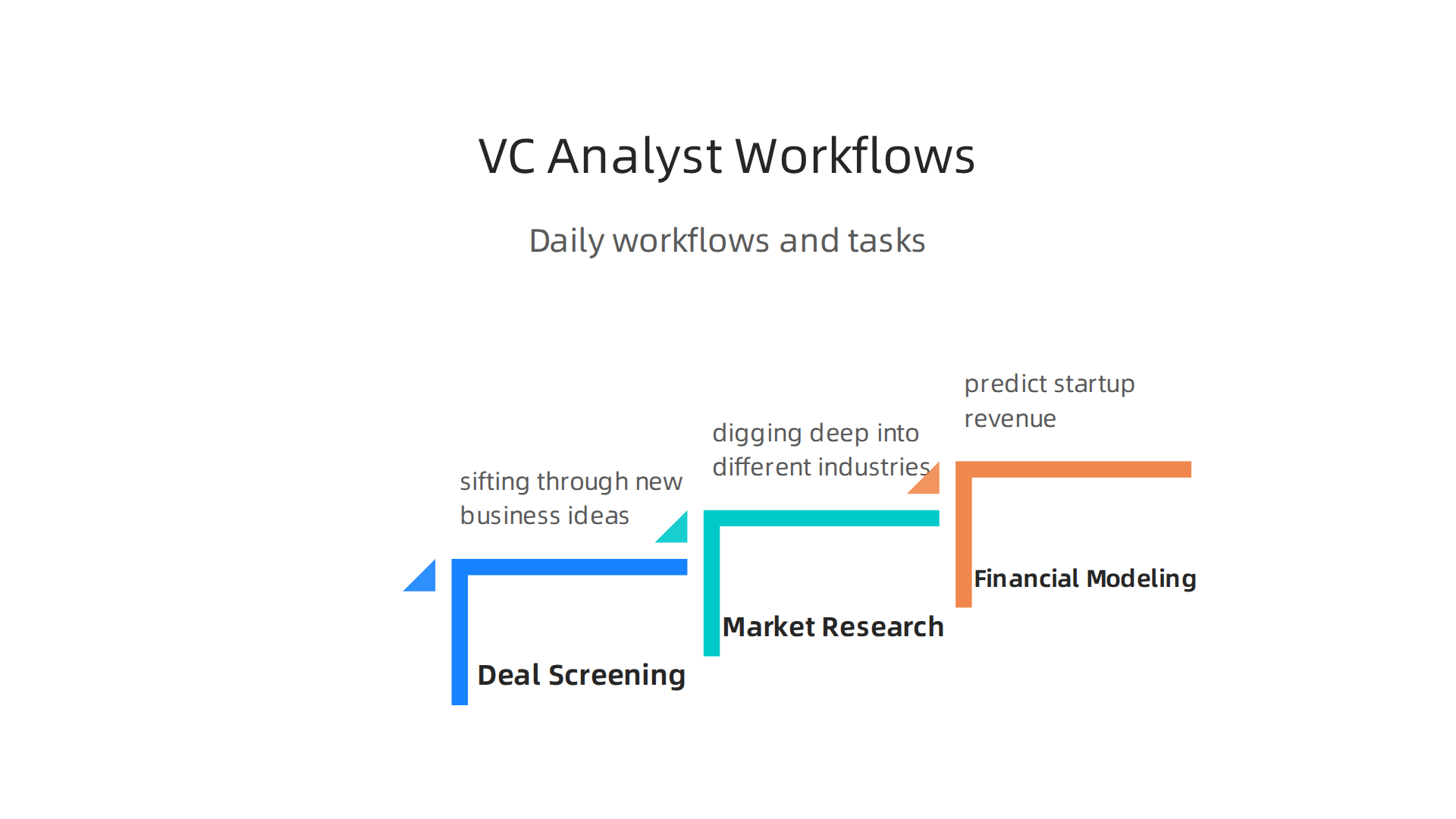
Daily Workflows for a Venture Capital Analyst
A typical day for a venture capital analyst often starts with deal screening. This means sifting through many new business ideas, presentations, and pitches from startups looking for money. The goal is to find those with the best chances of success. They help identify promising opportunities that fit the investment goals of their firm.
Next, a big part of the job is market research. This involves digging deep into different industries to understand trends, competition, and how big a market a new product or service could reach. They look at things like what customers want and how other companies are doing. This research helps the firm see if a startup has a real chance to make a big impact. Analysts also help prepare detailed investment memos, which are internal reports that sum up their findings for the senior partners. These reports cover everything from the company’s business plan to its financial health and market potential Venture Capital Analyst Job Description: Responsibilities.
Financial modeling basics are also a key part of their day. They build simple financial models to predict how much money a startup might make in the future. This helps them understand the financial health of the business and if it is worth investing in startups. While associates and partners might handle the most complex models, analysts lay the groundwork by gathering data and building initial projections.
Core Skills for a Venture Capital Analyst
To do all this well, a venture capital analyst needs a mix of different skills. We can split these into three main groups: quantitative, qualitative, and soft skills.
Quantitative Skills
These are skills related to numbers and data.
- Financial Modeling and Data Analysis: As mentioned, building financial models is very important. This means being good with spreadsheets and understanding how money flows in and out of a business. They are often the
data specialistfor the team, turning raw numbers into clear insights. Strong data analysis skills are a must for this role Venture Capital Analyst – Career Path. If you want to get better at this, you might consider pursuing an online master’s in data science to strengthen your abilities. Learning to use various data analysis software for business growth can also give you a significant advantage.
Qualitative Skills
These skills are about understanding people and bigger ideas.
- Founder Assessment: A
venture capital analystoften talks to startup founders. They need to be able to tell if a founder has a strong vision, good leadership skills, and the drive to make their company succeed. This means reading between the lines and getting a feel for the people behind the business. - Market Sense: Being able to spot new trends and opportunities in the market is crucial. They need to understand which industries are growing and which ideas have the potential to become very popular. This involves a mix of research and intuition How to become a Venture Capital (VC) Analyst.
Soft Skills
These are about how you work with others and manage yourself.
- Communication: Analysts need to clearly explain their findings and ideas to their team, both in writing and when speaking. They write investment memos and present their research, so clear and concise communication is key.
- Time Management and Organization: With many different startups to look at and many tasks to do, a
venture capital analystmust be very organized and good at managing their time. They often balance several projects at once Venture Capital Careers: Work, Salary, Bonuses and Exits. Being able to stay on top of all these demands is a true mark of a professional inventure capital and private equity.
Many resources are available to help you improve these skills and prepare for a career as a venture capital analyst. For instance, exploring various data analytics courses for career success can be a great step.
Career Pathways: From Analyst to Senior Roles (Associate, Principal, Partner)
Once you become a venture capital analyst, your journey in the world of venture capital and private equity is just beginning. Many analysts spend a couple of years learning the ropes before moving up to more senior positions or exploring different opportunities.

Think of it as climbing a ladder, with each step bringing new challenges and responsibilities.
Moving Up in a VC Firm
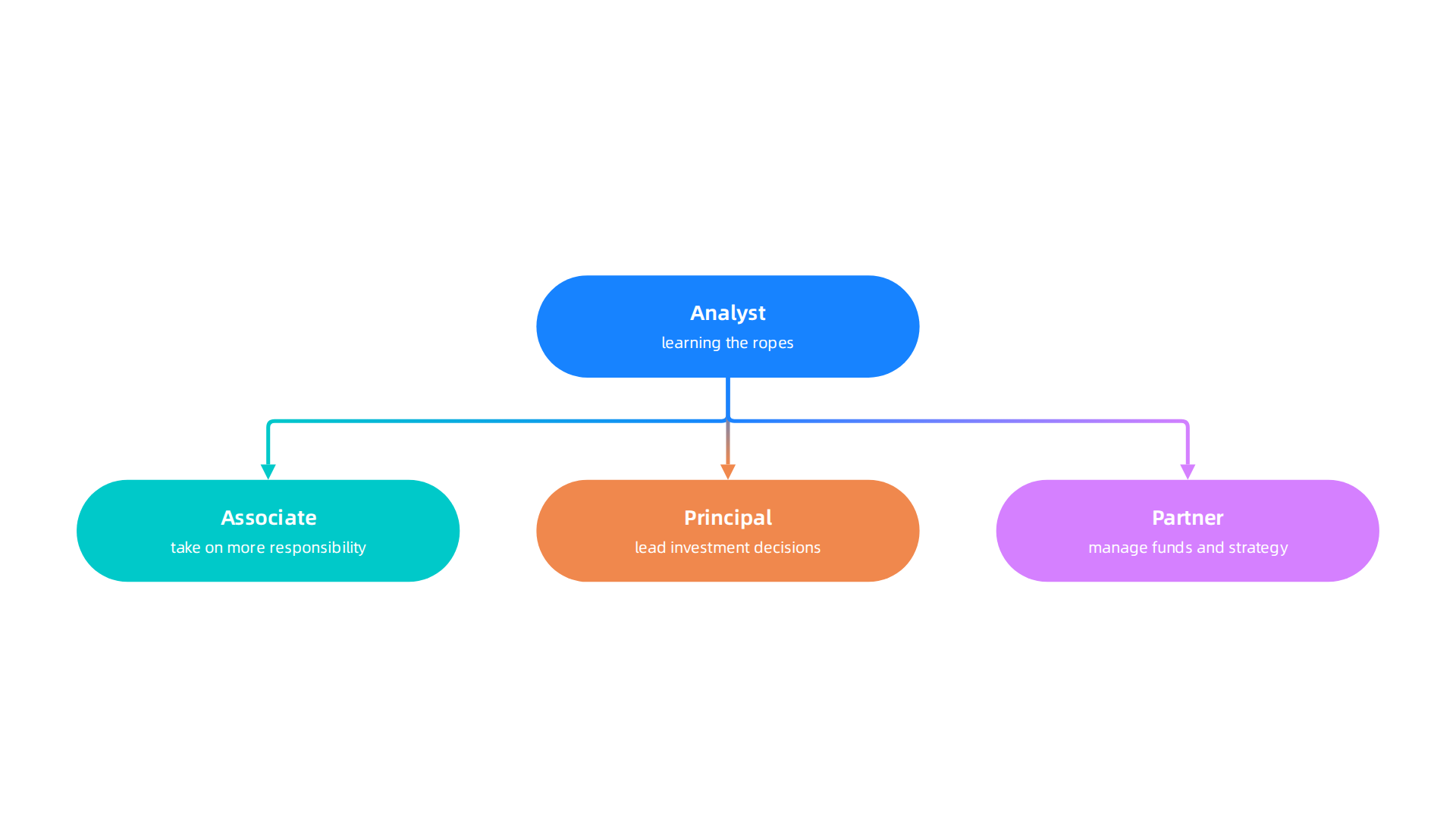
The typical path inside a venture capital firm often goes from Analyst to Associate, then to Principal, and finally to Partner.
-
Associate: After about two to four years as an analyst, many move up to an Associate role. As an Associate, you still do a lot of research and financial work, but you start to take on more direct responsibility for certain deals. You might lead due diligence calls and spend more time talking with startup founders. You also do more in-depth valuation work for
investing in startups. The median base salary for an Associate in 2025 was around $130,000, which is higher than an analyst’s pay according to one survey 2025 Venture Capital Salary Survey. -
Principal: This is a mid-level role where you truly start to make investment decisions. Principals often take the lead on finding new companies to invest in. They manage relationships with founders and other investors. This role requires a strong understanding of the market and the ability to spot winning ideas, similar to a
data specialistbut with a broader view. Getting to this level often takes several more years of experience. -
Partner: This is the top of the ladder. Partners are the decision-makers who manage the firm’s funds, set its investment strategy, and oversee the entire investment process. They often have a lot of experience in the industry, sometimes having been founders themselves or holding senior roles in other companies before joining venture capital. Partners are responsible for bringing in new money from investors and making the biggest calls. Their compensation can vary greatly, often including a share of the fund’s profits, known as "carry" Venture Capital Compensation by Role: What the Data ….
Showing You Are Ready to Move Up
To show you’re ready for the next level, a venture capital analyst needs to do more than just their daily tasks. You need to:
- Take initiative: Find new investment opportunities without being told.
- Build your network: Meet more founders and other investors.
- Show good judgment: Make smart recommendations based on your research.
- Become a leader: Help mentor newer analysts and share your knowledge.
Showing these skills helps the senior partners see you as someone who can handle more responsibility. For those interested in advancing their skills, especially in understanding complex market dynamics, learning how to master AI and data business strategy for 2026 growth can be very beneficial.
Other Career Paths
Not every venture capital analyst stays in venture capital forever. Many choose to use their valuable experience in other ways:
-
Operating Roles: Some analysts go to work directly for a startup, often one they helped the firm invest in. They might take on roles in product management, business development, or even become a founder themselves. Their knowledge of how investors think is very helpful in these roles. This path is often seen as a way to gain hands-on experience in building a business How To Get Into Venture Capital: A Complete Guide.
-
Corporate Roles: Others might move to larger companies, perhaps in their corporate development or strategy teams. Here, they can help bigger businesses make decisions about mergers, acquisitions, or new market entries.
-
Other Investment Firms: Sometimes, analysts move to private equity firms, hedge funds, or other types of investment companies. The skills they learn in venture capital, like financial modeling and market analysis, are useful in many different parts of the finance world. If you’re looking to understand the different types of firms, you might want to learn about how to find investors for a startup in 2026.
There isn’t just one path to success in venture capital. Each role, from analyst to partner, builds on the last, adding more responsibilities and requiring deeper insights into the startup world.
Beyond climbing the career ladder, a successful venture capital analyst also needs to have a strong set of practical skills and know how to use the right tools. These are the "hard skills" that help you dig deep into a company and truly understand if it’s a good investment.
Core Hard Skills for a VC Analyst
To be great at investing in startups, a venture capital analyst needs to master a few key areas:
- Financial Modeling: This is super important. You need to be skilled with programs like Excel or Google Sheets. You’ll build models that guess how much money a startup might make in the future. This includes looking at their costs, sales, and profits. It helps the firm see if a company is worth investing in Venture Capital (VC) Analyst: Salary & Job Description.
- Total Addressable Market (TAM) Sizing: This means figuring out how big the market is for a startup’s product or service. Is it a small niche, or can it grow to serve many people? A good analyst can research and show the potential size of the opportunity, which is key for
venture capital and private equityfirms. - Key Performance Indicator (KPI) Structuring: You’ll need to understand what numbers really matter for a business. For example, how many new customers do they get? How much do existing customers spend? Structuring these KPIs helps track a company’s health and growth. This is where you act like a true
data specialist, making sense of many different pieces of information. - Data-Source Proficiency: Knowing where to find good, reliable information is crucial. This could be public reports, industry studies, or company filings. Being able to quickly get and understand data helps you make smart suggestions.
These skills are vital because a venture capital analyst is responsible for evaluating potential investment opportunities and performing thorough market research Venture Capital Analyst — salary, outlook & personality fit — Traitstack.
Tools and Platforms Used by VC Firms
Working in venture capital also means using special tools. These tools help with everything from finding new companies to keeping track of important contacts and deals.
- Sourcing Platforms: These platforms help analysts find new startups that might be good investments. They often have databases of companies, their funding history, and other important details.
- Customer Relationship Management (CRM) Systems: CRMs are like a digital rolodex and project manager rolled into one. They help VC firms keep track of all their interactions with founders, other investors, and people in their network. Popular CRMs in venture capital include Affinity, HubSpot, and Salesforce, among others, with some being highly specialized for investment firms in 2026 The 5 Best CRMs for Venture Capital Firms in 2026.
- Data Enrichment Tools: These tools gather more information about companies and people to help analysts get a fuller picture. They can provide details like company size, key employees, and technology stacks.
- Competitor Analysis Software: Understanding what a startup’s rivals are doing is very important. These tools help compare companies, look at their market share, and see their strengths and weaknesses.
Having a good handle on these technical skills and tools helps a venture capital analyst make strong recommendations and play a big part in a firm’s success. For anyone keen on improving their analytical capabilities and understanding the tech landscape, continuous learning is key. Staying informed about new technologies and data strategies is critical, especially when evaluating potential investments. To truly stay on top of the latest in technology and how it impacts business strategy, including developments in AI, consider subscribing to The AI Newsletter Worth Reading for clear daily updates.
If you’re interested in learning more about how to put these data skills into practice, exploring options like how to choose the right data analytics courses for career success can be a great next step.
How to Get Hired: Networking, Internships, and Standout Applications
You’ve learned about the important skills and tools a venture capital analyst needs. Now, let’s talk about how to actually get one of these jobs. Getting hired in venture capital can be tough because many firms are small, with fewer than 50 people on their investment teams Venture Capital & Growth Equity Recruiting Guide 2026-2027. But with the right steps, you can stand out.
Networking to Find Your Foot in the Door
Networking is super important in venture capital. It’s how many people find out about jobs and make connections.

- Reach Out to Alumni: Look for people who went to your school and now work in VC. Send them a friendly message to learn about their path.
- Attend VC Events: Go to online or in-person meetings where venture capital firms gather. This helps you meet people and understand what they do.
- Informational Interviews: Ask to have short talks with people already working in the field. This is not about asking for a job right away. It’s about learning from them and getting advice. You can also learn about how venture capital firms hire in 2026 How VC Firms Actually Hire in 2026. These talks help you get noticed and learn more about the industry.
Many roles are not advertised widely, so building relationships can open doors. It’s a common way to get into venture capital How to Get Into Venture Capital: Recruiting and Interviews.
Internships Are Your Best Friend
Internships are one of the best ways to get real experience and show what you can do. Many firms, like those offering a 2026 VC Analyst Summer Program, look for interns who can help with finding deals, checking out companies, and supporting existing investments.
Even a short internship can lead to a full-time job. It lets you prove your skills as a future venture capital analyst and see if the job is a good fit for you. If you are looking to start, explore opportunities like Venture Capital Jobs & Internships | 2026 or even specifically how to land a data analyst internship in 2026.
Make Your Application Shine
When you apply, don’t just send a regular resume. Venture capital firms want to see that you can think like an investor.
- Targeted Investment Memos: Write a short report about a startup you think is interesting. Explain why it would be a good investment or not. This shows you can do the actual work of investing in startups. Many people trying to get VC jobs are asked to do this Venture Capital Jobs & Internships | 2026.
- Project Samples: If you’ve done any data analysis projects, share them. This shows off your skills as a
data specialistand proves you can handle numbers. - Show Your Sourcing Ability: Firms love candidates who can find new and promising startups. Talk about how you research and discover interesting companies. This shows you’re proactive and can bring value. Having sourced companies with your own evaluation work behind them is a concrete way to show you’re ready for a VC role How VC Firms Actually Hire in 2026.
Where to Look for Jobs
There are many places to find jobs for a venture capital analyst. Beyond company websites, you can check specific job boards like VC Analyst & Associate Jobs: How to Land One in 2026 and Venture Capital Job Board – VC Stack. LinkedIn also lists many opportunities, including over 3,000+ Venture Capital Analyst jobs in United States in 2026.
Remember, getting a job in venture capital and private equity takes hard work, good connections, and showing off your skills in the best way possible.
It’s true that getting a job as a venture capital analyst can feel like a big challenge. But here’s a secret: you don’t always need a direct path. Many people break into venture capital from different jobs like startups, banking, or tech. What matters most are the skills you bring and how you show them off.
What Experience Helps You Break Into VC?
People from many backgrounds can become great venture capitalists. It’s about how your past work connects to the needs of a venture capital firm.
- From Banking and Consulting: If you’ve worked in investment banking or as a consultant, you likely have strong skills in looking at numbers and understanding markets. You know how to research companies, check their finances, and figure out if they’re good bets. These skills are super important for a
venture capital analystwho helps decide oninvesting in startups. This kind of background can really help you get into venture capital How To Get Into Venture Capital: A Complete Guide. - From Startups and Tech: Maybe you’ve worked at a startup or a tech company in roles like product management, growth, or engineering. This "operator" experience is very valuable. You’ve seen how businesses are built from the ground up. You know what makes a product successful, how to grow a customer base, and the daily challenges founders face. This helps you understand startups better and see their true potential Startup Operator to Venture Capital: How to Make the Move. People with this experience often have an edge because they speak the same language as founders. These are common career paths leading to a VC role Common Career Paths Leading to a VC Role.
No matter your past job, the key is to show how your skills help a VC firm find and support amazing new companies.
Build Your Own Portfolio: Show What You Can Do
You don’t need a fancy job title to prove you have what it takes for venture capital and private equity. You can build your own "portfolio" of work even before you apply. This shows firms you are serious and already thinking like an investor.
- Sourcing Projects: Start looking for new and exciting startups on your own. Research them deeply. Why do you think they’ll do well? Or why might they struggle? This is called "sourcing" and it’s a big part of a VC’s job. Showing you can find good companies with your own analysis is a clear sign you’re ready How VC Firms Actually Hire in 2026:.
- Market Maps: Pick an industry, like AI in healthcare, and create a map. Who are the main companies? What problems are they solving? How big is the market? This shows you can understand a whole industry, not just one company.
- Investment Memos: Write short reports about why a startup would be a good investment. Pretend you’re trying to convince a partner at a VC firm. Explain your thoughts clearly and with facts. Many people trying to get VC jobs are asked to do this Venture Capital Jobs & Internships | 2026.
- Build a "Shadow Portfolio": Keep a list of companies you would invest in if you had the money. Follow their progress. Did your predictions come true? This shows your investment judgment over time. Building your startup portfolio is one of the main ways to stand out Breaking into VC.
- Show Your Data Skills: If you’re a
data specialist, highlight projects where you used data to find trends or make predictions. Maybe you analyzed market data to see where a new tech product could fit. Getting an online master’s in data science can also boost these skills. For more help with these kinds of tasks, check out a definitive guide to data analysis software.
By doing these things, you’re not just telling firms you can do the job; you’re showing them. This active approach can make a huge difference when you’re aiming to become a venture capital analyst in 2026.
Compensation, Performance Metrics & What VCs Look For
Now, let’s talk about what a venture capital analyst actually earns and how their work is judged. When you start out in venture capital, your pay usually comes in a few parts: a base salary, a bonus, and sometimes something called "carry."
- Base Salary: This is your regular paycheck. In 2026, for an analyst, these salaries can really change. Some reports show the middle range for a
venture capital analystis around $80,000 to $130,000 per year, but it can be much lower or higher depending on the firm and where it is located 2025 Venture Capital Salary Survey. Bigger firms or those in very expensive cities might pay more. - Bonus: This is extra money you get based on how well you and the firm do. It’s often a percentage of your salary.
- Carry: This is a special part of VC pay. It means you get a small share of the profits if the
investing in startupsthat the firm puts money into become very successful. It’s a way for firms to share their big wins with the team. While junior staff like analysts might not get a huge amount of carry right away, it grows as you move up in the world ofventure capital and private equity. Some reports show a significant spread in total cash compensation (base plus bonus) across the industry VC Platform Compensation Survey.
How VCs Measure Your Success
Getting paid is one thing, but how do firms know you’re doing a good job? They look at a few key things:

- Sourcing Pipeline Quality: This means how good are the new companies you find for the firm to invest in? Are they exciting? Do they fit what the firm looks for? Finding strong new startups is a very important part of the job.
- Memo Quality: When you find a company, you write a report, or "memo," about it. This memo explains why the firm should or should not invest. How clear and smart your memos are really matters.
- Portfolio Support: Once a firm invests in a startup, the work isn’t over. Analysts often help these new companies grow. This could mean helping them find good employees, connect with customers, or solve problems. Showing you can help make a startup better is a huge plus.
- Operational Contributions: You might also help the firm itself run better. This could be anything from making internal processes smoother to helping with research on new market trends. Being a
data specialistcan make a big difference here. If you know how to work with data to spot new ideas or understand markets, that’s a powerful skill. Many VCs value team members who can help them better understand the market and make smarter choices, especially in areas like AI and data strategy. You can always learn more about Mastering AI and Data Business Strategy for 2026 Growth.
Summary
A venture capital analyst is the entry-level investigator and data specialist who finds startups, runs due diligence, and builds the financial and market analysis that drives investment decisions. This article explains a typical analyst’s daily workflows—deal screening, market research, memo writing—and the mix of quantitative, qualitative and soft skills required to succeed. It covers core hard skills like financial modeling, TAM sizing, KPI structuring, and the common tools and CRMs used by VC firms. You’ll also learn practical hiring strategies—networking, internships, targeted memos and portfolio projects—that make candidates stand out. The guide maps common career steps from analyst to associate, principal and partner, and describes how compensation (base, bonus, carry) and performance metrics work. Throughout, it stresses the growing importance of data and AI capabilities for evaluating startups in 2026. After reading, you’ll understand what to learn, what projects to build, and how to position yourself to land and advance in a VC analyst role.