
Agentic AI vs Generative AI What Founders and Investors Need to Master in 2026

Why understanding agentic AI vs generative AI matters for founders and investors in 2026
In 2026, if you’re a founder or an investor in the startup world, you’re hearing a lot about AI. But not all AI is the same. There’s a big difference between agentic AI and generative AI, and understanding this difference is super important for how you build products, choose your team, and even figure out risks. It’s not just tech talk; it’s about smart business decisions.

Generative AI is what many people first think of when they hear "AI." It’s great at creating new things, like writing stories, making pictures, or even crafting code based on what it has learned from tons of data. Think of it as a very creative assistant that can produce amazing content from simple prompts. Tools that use generative AI are reshaping startup innovation and funding in 2026, helping companies do more with less.
Agentic AI, on the other hand, takes things a big step further. While generative AI creates, agentic AI acts. These systems are designed to operate on their own, learn as they go, and complete many steps to reach a goal Source: Issue #10 | Research Office | West Virginia University.

It combines smart models with memory, planning, and the ability to use different tools. Imagine an AI that not only writes an email but also figures out who to send it to, schedules a meeting based on responses, and then updates your calendar. This type of AI can interpret a goal, break it into smaller tasks, and then actually go do them.
For founders, knowing this difference affects your product roadmap. Are you building a tool that helps users create, or one that helps them do things more autonomously? For investors, it changes how you look at a company’s potential. Agentic AI can lead to huge jumps in productivity, but it also comes with new types of risks related to its independence and decision-making. Thinking about "ai or human" roles becomes even more complex when AI can take on full tasks. You’ll need to think about how to use AI to handle big data analytics and manage complex processes.
This article will help you get clear on the core ideas behind agentic AI vs generative AI. We’ll explore the main differences, common uses, and how to spot these in real-world products. We’ll also give you a checklist for doing your homework on AI startups, look at what the market is telling us, and offer practical steps for both founders and investors to make smart choices in this fast-moving world.
To keep up with the quick pace of AI advancements, make sure you’re getting the latest insights.
The AI Newsletter Worth Reading
The last section talked about why it’s crucial to know the difference between agentic AI and generative AI. Now, let’s make sure we’re all on the same page with what these terms actually mean. Getting clear on these definitions helps founders and investors talk about AI without getting confused, especially when looking at business plans or product ideas.
What is Generative AI?
Generative AI is a type of artificial intelligence that can create new things. It learns from large amounts of existing data and then uses that knowledge to make fresh content. This can be anything from writing new stories, making pictures, composing music, or even generating computer code Home – Artificial Intelligence – Research Guides at Virginia …. Think of it like a very skilled artist or writer that can come up with original pieces based on what it’s seen before. Many startups in 2026 are using generative AI to boost creativity and efficiency, helping them innovate faster. If you want to dive deeper into this, you can explore How Generative AI Assistants Are Reshaping Startup Innovation And Funding In 2026.
What is Agentic AI?
Agentic AI, also known as AI agents, goes beyond just creating. These AI systems are designed to act on their own, learn as they work, and follow many steps to reach a specific goal AI Agents, Ghost Students, and the Crisis of Verified Presence in an …. They can understand a task, break it down into smaller parts, and then use different tools to get those tasks done without constant human help. Imagine an AI that not only creates a marketing email but also figures out who to send it to, schedules follow-up messages, and tracks the results, all on its own. This is where the idea of "ai or human" roles becomes really important, as agentic AI can take over complex, multi-step processes.
Understanding the Key Differences
The main difference is simple: generative AI creates, while agentic AI acts.
- Generative AI: Focuses on output generation like text, images, or code. It needs a prompt to get started.
- Agentic AI: Focuses on goal achievement through autonomous actions, planning, and using tools. It can interpret a goal and then manage the steps to reach it.
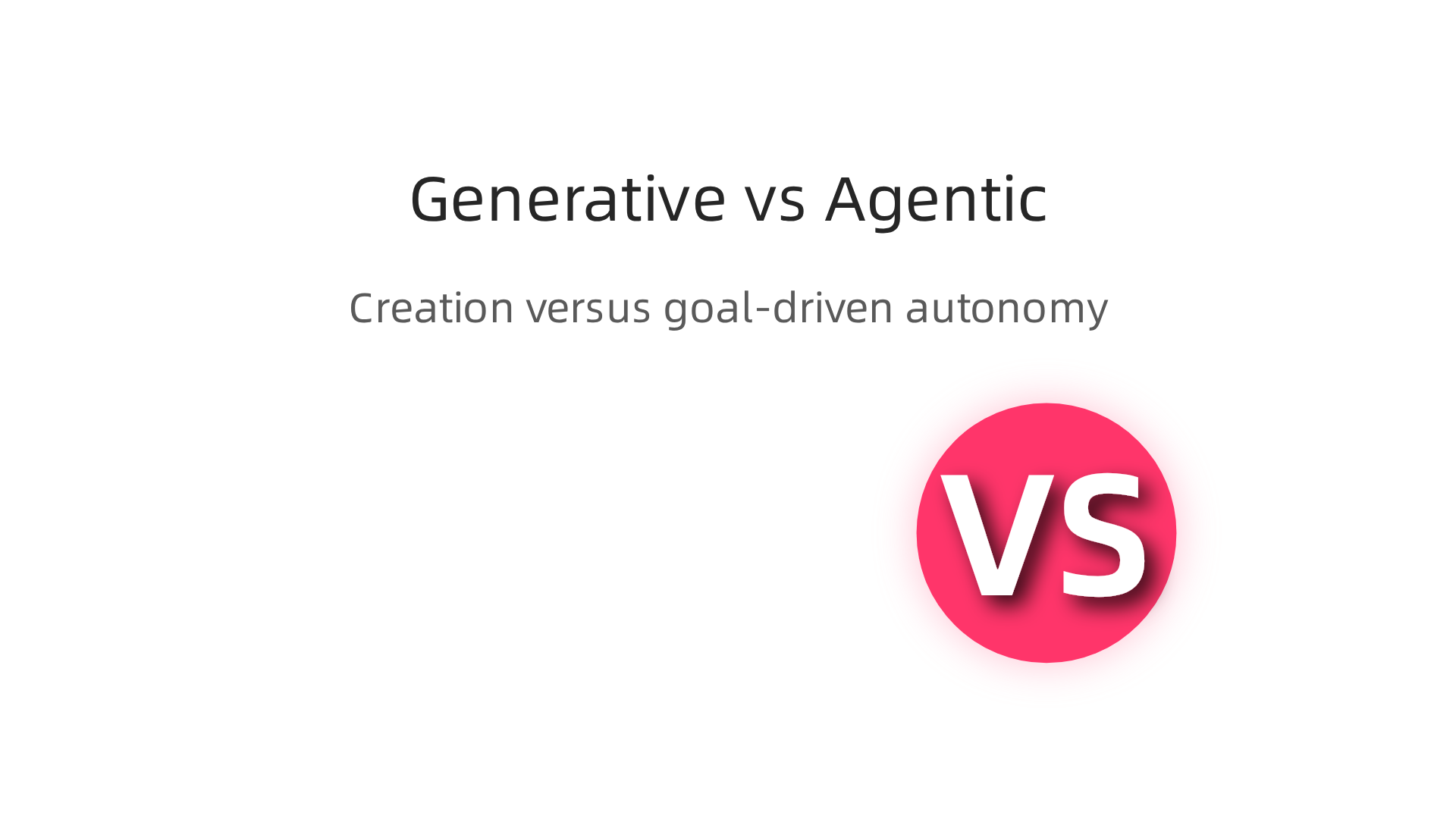
For example, a generative AI might write a great blog post. An agentic AI might research topics for the blog, write the post, schedule it for publication, and then promote it on social media.
Why Terminology Can Be Confusing
Sometimes, these terms can get mixed up, which creates problems in investment discussions or when building new products. An AI system might use generative AI as one of its tools. For instance, an agentic AI might use a generative AI model to draft an email as part of a larger project. Because of this, some people might mistakenly call a generative AI tool an "agent" even if it doesn’t have the planning and autonomous action abilities of a true agentic AI.
This overlapping can lead to misunderstandings in important documents like investment memos or product specifications. Founders might claim their product uses agentic AI, when it really just uses generative AI capabilities in clever ways. Investors need to ask clear questions to understand if a startup’s AI truly has autonomous decision-making and multi-step execution, or if it’s primarily a powerful creation tool. Knowing the difference is key to understanding the real potential and risks. Properly using AI, especially for tasks like discover startup project opportunities using ai and data analytics, depends on this clear understanding.
Knowing the main tasks of generative AI (creating) and agentic AI (acting) is a great start. But to truly understand the differences, especially for founders and investors, we need to look under the hood. The core technical differences in how these AI systems are built, trained, and controlled really show why the distinction matters. This is key for understanding the true potential of each when thinking about new projects or investments.
How Generative AI Is Built
Generative AI usually starts with what we call "foundational models." Think of these as very big computer brains that have learned from huge amounts of information, like all the text on the internet or millions of pictures. These models often use a special setup called a "transformer architecture." This architecture helps the AI understand complex patterns and relationships in big data analytics. Once it learns these patterns, it can then create new content that looks or sounds like the data it was trained on. It’s really good at predicting the next word in a sentence or the next part of an image based on what it’s already seen. It doesn’t plan actions or decide what tools to use; it just generates based on a prompt.
How Agentic AI Is Built
Agentic AI takes these foundational models and adds many more parts to them. While generative AI is like a brilliant artist, agentic AI is more like a smart project manager. It often uses a generative AI model as one of its tools. But on top of that, agentic AI includes special components for:
- Planning: It can break down a big goal into smaller, step-by-step tasks.
- Memory: It remembers past actions, choices, and information, so it can learn and adapt over time.
- Tool Use: It can choose and use different tools or programs to complete its tasks. This could be anything from searching the web to running another AI model or even sending an email.
- Feedback Loops: It checks its own work. After taking a step, it looks to see if it’s closer to its goal and adjusts if needed. This makes it more autonomous.
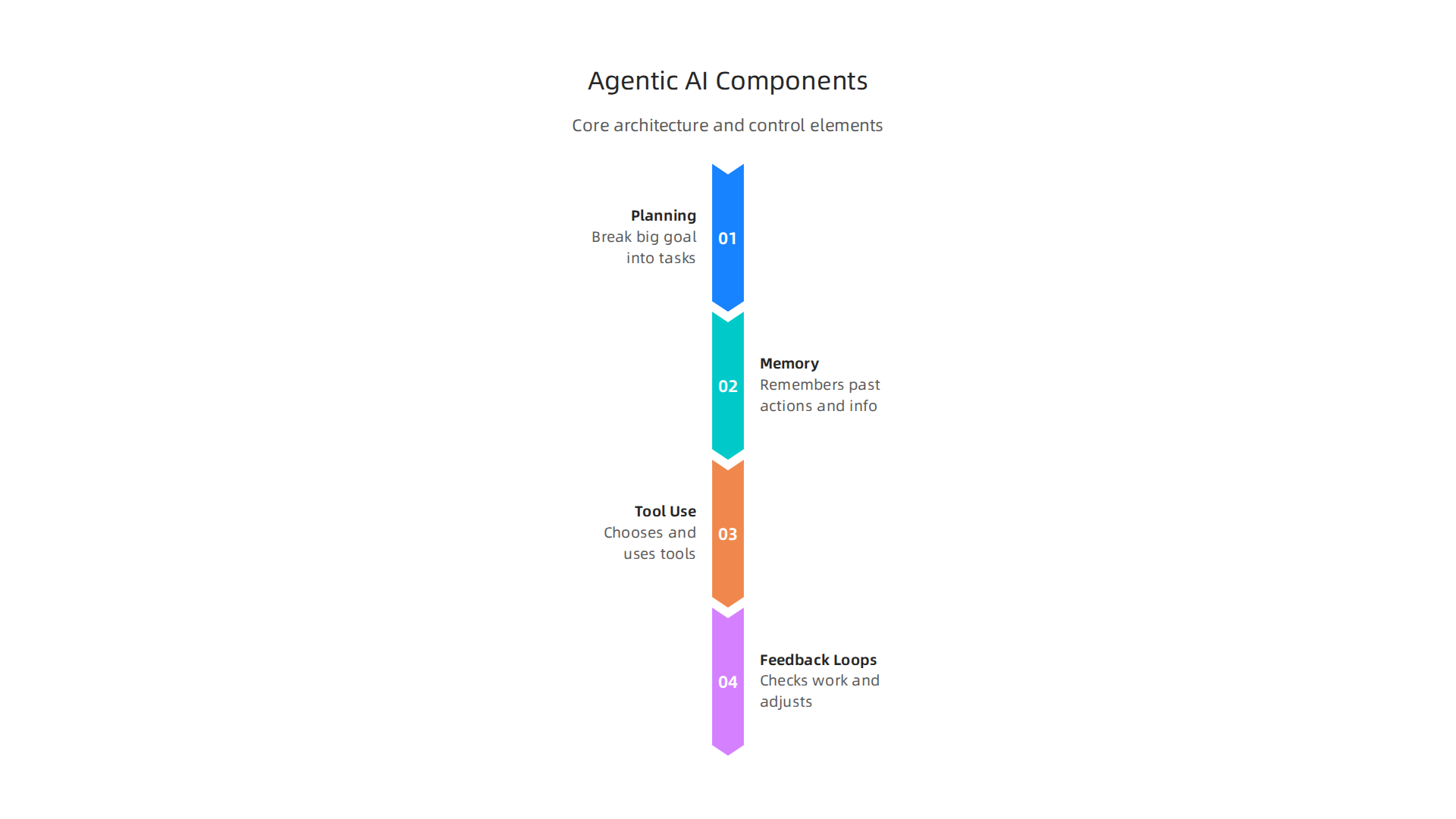
Because of these extra parts, agentic AI can work towards a goal over many steps without needing a human to tell it what to do at each turn. It combines foundational models with these planning, memory, and decision-making abilities to get things done proactively Issue #10 | Research Office | West Virginia University.
Training and Fine-Tuning Differences
The way these two types of AI learn is also different.
- Generative AI Training: This often involves feeding the model massive datasets and teaching it to predict the next part of the data. For example, it might learn to complete sentences or draw the rest of a picture. The training focuses on making its outputs very creative and high-quality.
- Agentic AI Training: This goes beyond just creating. Agentic AI is trained to achieve goals. This means teaching it to plan, use tools, and learn from trial and error. It learns to make good decisions over many steps and respond to different situations. The training might involve having the agent try to complete tasks and then giving it feedback on how well it succeeded.
How We Judge Their Performance
When we talk about "agentic ai vs generative ai," we also judge them differently.
- Generative AI Evaluation: We usually look at the quality and creativity of its output. Does the generated text make sense? Is the picture beautiful? Is the code functional? It’s about how good the stuff it makes is.
- Agentic AI Evaluation: We judge it by its success in reaching a goal. Did it complete the task? Did it do it efficiently? How many tries did it take? We care about its ability to solve problems and act effectively, much like we would evaluate if an Deepsearch AI delivers smarter answers with real citations and multi-step reasoning. This brings up the question of "ai or human" more directly because we’re evaluating its ability to perform actions independently.
Now that we know how generative AI creates and agentic AI acts, let’s look at what this means for real businesses in 2026. If you’re a founder or an investor, understanding where each type of AI shines can help you find great new ideas and avoid common pitfalls.
Real-world use cases: where founders and investors should look
When we compare agentic ai vs generative ai in the real world, their uses are quite different.
Generative AI: The Idea Creator
Generative AI is best at making new things. Think of it like a tireless assistant for creative tasks.
- Content Creation: This AI can write blog posts, marketing emails, social media updates, or even come up with ideas for stories. Businesses use it to create lots of text quickly.
- Code Assistants: Programmers use generative AI to help them write code faster, suggest fixes, or explain complicated parts.
- Design and Media: It can create images, videos, music, and even product designs from simple ideas.
For founders, generative AI products often have simple business models. You might offer a subscription service where users pay to generate content or images. The "unit economics" are often about the cost per generation versus the value it brings to the user. However, there are risks. People sometimes worry about the originality of AI-generated content or if using ai or human makes a difference in quality.
Agentic AI: The Smart Doer
Agentic AI, on the other hand, is about getting things done. It’s like having a smart project manager that can use many tools to reach a goal.
- Workflow Automation: These AIs can take over long, step-by-step business tasks. For example, they can handle customer service inquiries, process orders, or manage parts of a supply chain automatically. You can see many examples of this in the Top Use Cases of Agentic AI in 2026 Across Industries and 50 Agentic AI Implementation Use Cases that have emerged this year.
- Autonomous Agents: Imagine an AI that can manage your calendar, book travel, or even handle parts of your sales process without constant human input. These agents are designed to act on their own over time. The market for agentic AI in enterprises is projected to be worth billions in 2026, according to a recent Agentic AI in Enterprise 2026: $9B Market Analysis.
- Decision Orchestration: In complex situations, agentic AI can help make better decisions by pulling together information from many sources and weighing different options. This often involves working with large amounts of data, similar to advanced big data analytics.
For businesses, agentic AI helps save money and time by making processes more efficient. Its business models often involve selling access to automation platforms or charging based on the tasks completed.

The main challenge here is trust and integration. Businesses need to trust that the AI will make the right decisions and that it can smoothly connect with their existing systems. Many leaders are looking at how to best use AI for these purposes in 2026, as discussed in Agentic AI in the Enterprise 2026.
Where to Look Next
Founders and investors should look for opportunities where generative AI can bring creative value or where agentic AI can solve complex problems by taking action. The key is to find real needs that these AI types can address, whether it’s helping businesses unlock startup growth with AI powered sales and marketing tools or automating difficult workflows. Staying updated on these fast-moving trends is crucial for making smart choices.
Get clear daily AI updates from The AI Newsletter Worth Reading.
When founders and investors look at these exciting AI uses, it’s also very important to think about the risks. Knowing the dangers helps you make safer choices and build stronger businesses. The risks are actually quite different when we compare agentic ai vs generative ai.
Risks, safety, and governance: what investors must assess
Each type of AI has its own set of problems.
Generative AI: The Idea Creator’s Risks
Generative AI is great at making new things, but it can also make mistakes.
- Hallucinations: Sometimes, generative AI makes up facts or creates information that isn’t true. This is called a "hallucination." For example, it might write a news article that sounds real but is completely false. This can damage trust and cause big problems for businesses that use ai or human content.
- Bias and Misuse: The AI learns from the data it’s given. If that data has biases, the AI might create biased or unfair content. There’s also a risk of people using generative AI to create harmful fake content, like misleading images or videos.
Investors need to check how companies plan to deal with these errors and prevent misuse.
Agentic AI: The Smart Doer’s Risks
Agentic AI systems can take actions on their own, which brings different kinds of risks.
- Emergent Behavior: Because agentic AI can make decisions and use tools, it might act in ways we didn’t expect. Its "goals" might seem simple, but the steps it takes to reach them could be surprising or even cause problems if not properly managed.
- Safety Boundaries: If an agentic AI is controlling important systems, like in factories or financial markets, we need to be sure it has strong safety limits. It must know what it’s allowed and not allowed to do. The National Security Agency (NSA) has released guidance for safely using agentic AI, suggesting we deploy these systems slowly and keep checking them against new threats in 2026, as noted in their report NSA joins the ASD’s ACSC and Others to Release Guidance on Agentic Artificial Intelligence.

- External Actions: Since agentic AI can interact with the real world, its actions could have real consequences. Think about an AI that manages inventory or customer service. If it makes a bad decision, it could lose money or upset customers.
Companies building agentic AI need very clear plans for how to keep these systems safe and within proper control. The National Institute of Standards and Technology (NIST) even launched an initiative in 2026 to ensure AI agents are secure and work well together, focusing on building user confidence in future AI technologies with their AI Agent Standards Initiative.
Regulatory and Compliance Issues
In 2026, governments and important organizations are creating new rules for AI.
- New Laws: Many countries are working on laws to make sure AI is used safely and fairly. This means companies using AI must follow these rules. For instance, the U.S. government has released strategies and compliance plans for AI, including efforts to promote innovation while ensuring security, as outlined in the Promoting Advanced Artificial Intelligence Innovation and Security from the White House. The General Services Administration (GSA) also has a detailed AI strategies and compliance plan for 2026.
- Ethical AI: Beyond laws, there are growing calls for ethical AI use. This means making sure AI is fair, clear, and accountable. Investors should look for companies that build AI with these ethical ideas in mind.
Founders must plan their products to meet these rules from the start. For investors, understanding these rules is key. It affects how valuable a company might be in the future and how easy it will be to sell that company later. A startup that ignores these rules might face big fines or have its products banned.
Now, let’s talk about how investors and founders can actually check AI startups carefully. This is called "due diligence."

It’s like having a checklist to make sure everything is in good order, especially when looking at the differences between agentic ai vs generative ai businesses.
Due diligence checklist: evaluating teams, models, data, and operational controls
When you’re thinking about putting money into an AI startup, or if you’re a founder building one, you need to look at a few key things.
1. The Team: Who’s Building the AI?
- Experience: Does the team know a lot about AI? Do they have people who understand how to build and manage these complex systems? It’s important they understand the special needs for both agentic and generative AI.
- Safety Mindset: Do they think about safety and ethics from the very start? A good team plans for problems before they happen.
- Red Flag: Watch out if the team doesn’t have much AI experience, or if they don’t seem to care about the risks we talked about earlier.
2. Models and Data: What Powers the AI?
- Generative AI:
- Data Quality: Where does the AI get its information? Is the data good and fair, or could it lead to biased results or "hallucinations" (making up facts)?
- Error Handling: How does the company plan to catch and fix mistakes or untrue information the AI might create?
- Agentic AI:
- Control Mechanisms: How do they make sure the AI agents stay within safe limits? What stops them from doing unexpected or harmful things? You need strong guidelines for building agentic systems, as experts often point out the importance of giving AI agents minimal, relevant data for better performance according to best practices for building agentic systems.
- Testing: Have they really pushed the AI to its limits to see how it acts in different situations?
- Red Flag: If a company can’t clearly explain where their data comes from, how they check for bias, or how they stop their agentic AI from going rogue, that’s a big problem. Good big data analytics are crucial here.
3. Operational Controls and Safety: Keeping Things Running Smoothly
- Monitoring: How will they watch the AI to make sure it’s working right after it’s launched? This is true whether you use ai for content creation or automated tasks.
- Human Oversight: What’s the plan for when things go wrong? Will a human step in to fix it? This balance between ai or human involvement is super important. Many companies are adopting agentic AI in 2026 and should review their processes and model ideal states before deployment.
- Updates and Security: How often will they update the AI? How do they protect it from hackers or bad actors?
- Red Flag: A lack of clear plans for managing the AI after it’s in use, or not having a way for people to take over if the AI misbehaves, are huge warning signs.
Paying close attention to these details can help you find strong AI startups and avoid risky ones in 2026.
Get clear daily AI updates from The Deep View Newsletter. The AI Newsletter Worth Reading.
After carefully checking an AI startup, it’s time to look at the bigger picture: what’s happening in the market and where the money is going in 2026. This means understanding how investors are feeling and what signals they are watching.
Market and Funding Trends in 2026: Investor Appetite and Valuation Signals
The world of AI is growing very fast. The overall artificial intelligence market was worth a lot in 2025 and is expected to grow even more in the coming years, reaching trillions by 2033, according to Grand View Research. But not all AI gets funded the same way. There are key differences when we look at agentic AI vs generative AI startups.
How Funding Differs for AI Startups
Generative AI Startups: These often get a lot of funding quickly. Why? Because they can create new content like text or images, and people can see the benefits right away. This often means they can make money faster, which is called "time-to-revenue." Venture capital funding for generative AI firms saw a big jump, going from about 2% to 12% of all AI venture capital investments through 2025, reaching billions of dollars globally.
Agentic AI Startups: These kinds of startups often need more time and money to build their products safely. Agentic AI tools act more like smart assistants that can make decisions. Because of this, they need very careful testing and strong safety rules. The NSA, for example, recommends deploying agentic AI slowly and carefully watching it for new risks, which influences how investors view these startups. This means "capital intensity" (how much money is needed to grow) can be higher, and "time-to-revenue" might be longer. Investors in agentic AI often look for a strong focus on security and standards, like those being developed by the AI Agent Standards Initiative.
Key Market Signals for Investors
If you’re an investor or a founder, knowing these market signals can help you make smart choices in 2026:
- Pilot Conversion Rates: How many people or companies trying out the AI product end up buying it for real? A high conversion rate shows the AI is truly useful.
- Enterprise Readiness: Is the AI ready to be used by big companies? This means it’s safe, scalable, and easy to fit into existing business systems. Big businesses want solutions that are reliable and compliant.
- Regulatory Headlines: New rules and laws about AI come out often. For example, the White House is working on promoting advanced artificial intelligence innovation and security. Investors pay close attention to these rules because they can affect how a company operates and its future value. Companies need to show they follow these guidelines, such as those laid out in new government AI strategies and compliance plans.
- Talent Availability: Are there enough skilled people to build, maintain, and improve the AI? A shortage of experts can slow down a startup’s growth.
Keeping an eye on these trends helps investors find the best AI startups and helps founders understand what makes their companies attractive.
Now that we understand what investors are looking for in 2026, especially regarding agentic AI versus generative AI, founders need to know how to build and grow these powerful tools. It’s about turning great ideas into real products that solve problems and make money.
Practical steps for founders: building, partnering, and productizing agentic features
For founders, making the leap from simple generative AI ideas to smart agentic features needs clear steps. This journey involves careful building, smart partnerships, and a good plan to sell your product.

Engineering and product milestones for agentic AI
Moving from a basic generative AI tool to a full agentic system means your AI can do more than just create. It can act on its own, make choices, and complete tasks. This is a big step.
- Start Small with Specific Tasks: Don’t try to build an AI that does everything at once. Pick a clear problem that your agentic AI can solve. For example, think about how agentic AI can help in customer service or managing supply chains, as seen in many Top Use Cases of Agentic AI in 2026 Across Industries.
- Focus on Safety and Control: Agentic AI can make its own decisions, so you need strong ways to guide it. This means building in checks and balances to make sure the AI acts safely and correctly. You want to be sure that the AI does what you want, when you want it to, minimizing risks. Many experts agree that giving AI agents only the data they need, and not too much, helps them work better and more safely, which are key best practices for building agentic systems.
- Human Oversight is Key: Even with smart AI, a human touch is still very important. Decide when the "ai or human" should step in. Maybe the AI suggests a solution, but a person has to approve it. This helps keep things running smoothly and safely.
- Measure and Learn with Data: To know if your agentic AI is working well, you need to collect and understand data. Using big data analytics helps you see how the AI performs, where it needs help, and how to make it better. This also helps show investors that your product is improving and valuable. You can also explore how to build your modern data pipeline for startup success to support this.
Partnership and Go-to-Market strategies
Getting your agentic AI product to customers quickly and safely is vital. This often involves working with others.
- Find the Right Partners: Working with other companies can help you test your agentic features in real-world settings without taking on all the risk yourself. For example, if you build an AI for healthcare, partnering with a hospital can give you valuable feedback and help you make your product ready for big businesses. In 2026, many companies are looking at how to adopt agentic AI in enterprise more widely.
- Shorten Your Time to Revenue: Agentic AI can be complex and take time to develop. By focusing on specific use cases that solve urgent problems for businesses, you can start making money sooner. This helps show investors that your business plan is strong.
- Target Enterprise Readiness from Day One: Large companies have strict needs for security, privacy, and how new tools fit into their existing systems. Design your agentic AI with these needs in mind from the very beginning. This makes it easier to sell to bigger clients later on.
- Clearly Show the Value: When you talk to customers, explain exactly how your agentic AI will make their lives easier or their business better. This means focusing on the real-world benefits of how they can use AI to save time, reduce costs, or improve results.
Summary
This article explains why the distinction between agentic AI and generative AI matters for founders and investors in 2026. It defines generative AI as creation-focused models that produce text, images, or code, and agentic AI as systems that plan, remember, use tools, and act autonomously to achieve goals. The piece covers how each type is built and evaluated, practical use cases where each shines, and the different risk profiles—like hallucinations for generative models and emergent behavior for agents. It offers a concrete due-diligence checklist for teams, data, controls, and monitoring, and outlines market and funding differences such as capital intensity and time-to-revenue. Finally, founders get step-by-step guidance on moving from generative features to safe, enterprise-ready agentic products, while investors get signals to watch when evaluating AI startups.